
Why Black men get razor bumps (and why prep matters more than the razor)
Razor bumps, medically known as Pseudofolliculitis Barbae (PFB), are a common and frustrating issue for many Black men. This isn’t a matter of poor hygiene or technique alone; it’s rooted in the unique characteristics of our hair and skin. Black men typically have coarse, curly hair. When this hair is cut, especially too short or at an improper angle, the sharp tip can retract back into the skin or grow sideways into the follicle wall. This ingrown hair then triggers an inflammatory response, leading to the painful, unsightly bumps we know as razor bumps.
The conventional wisdom often points to the razor as the primary culprit. While the choice of shaving tool is undoubtedly important, it’s a secondary factor. The most critical element in preventing PFB is the preparation of the skin and hair before any blade or trimmer touches your face. A meticulous pre-shave routine softens the hair, lifts it away from the skin, and creates a protective barrier, fundamentally altering the conditions that lead to ingrown hairs. Without proper preparation, even the most advanced razor or trimmer can still cause irritation and bumps.
Understanding this distinction is powerful. It shifts the focus from merely reacting to razor bumps to proactively preventing them. This comprehensive guide will detail an exact pre-shave routine, grounded in both barbershop wisdom and dermatological principles, designed specifically to address the challenges faced by Black men. By mastering these steps, you will not only reduce the incidence of razor bumps but also achieve a smoother, more comfortable shave every time. This approach is about control, precision, and respect for your skin, ensuring that your grooming routine contributes to your overall well-being and confidence. For a deeper dive into understanding and managing this common issue, explore our pillar content on Razor bumps for Black men.
The science behind PFB is clear: it’s a mechanical problem exacerbated by hair structure. When curly hair is cut, the sharp, angled tip is more prone to re-entering the skin. This re-entry can happen externally, where the hair curls back and pierces the skin surface, or internally, where the hair fails to exit the follicle and grows within the dermis. Both scenarios lead to inflammation, redness, and pus-filled lesions. The goal of a pre-shave routine is to minimize these occurrences by making the hair as pliable and accessible as possible, ensuring a clean, straight cut that reduces the likelihood of ingrowth.
Many men make the mistake of rushing into their shave, treating it as a quick chore rather than a crucial step in their grooming regimen. This oversight is precisely why PFB persists. Skipping essential pre-shave steps means you’re attempting to cut stiff, dry hair that’s lying flat against the skin. This forces the razor to tug and pull, leading to an uneven cut and increased irritation. The skin becomes more vulnerable to nicks and micro-abrasions, further paving the way for ingrown hairs and subsequent inflammation. A well-executed pre-shave routine transforms your beard from a formidable obstacle into a cooperative canvas, ready for a smooth, precise shave.
Furthermore, the cumulative effect of poor pre-shave habits can lead to chronic skin issues. Persistent inflammation from razor bumps can result in hyperpigmentation, leaving dark spots that are often more challenging to treat than the bumps themselves. It can also lead to scarring and a perpetually irritated complexion. By investing time in proper preparation, you’re not just preventing immediate discomfort; you’re safeguarding your long-term skin health and appearance. This proactive stance is a hallmark of elevated self-mastery, understanding that true grooming goes beyond superficial fixes. It’s about building a sustainable routine that respects your body’s unique needs.
Consider the analogy of preparing a canvas before painting. A skilled artist doesn’t just grab a brush and start; they prime the canvas, ensuring a smooth, even surface that will accept the paint beautifully. Similarly, your face is the canvas, and the pre-shave routine is your priming process. It’s about creating optimal conditions for the best possible outcome. This involves not just softening the hair but also cleansing the skin, removing impurities, and creating a slick surface that allows the shaving tool to glide effortlessly. This holistic approach significantly reduces friction and trauma, which are primary drivers of razor bumps in Black men.
The emphasis on prep is also a recognition that not all razors are created equal, and even the best razor can fail if the groundwork isn’t laid. A multi-blade cartridge razor, for instance, can be particularly problematic for curly hair if the hair isn’t properly softened and lifted. The first blade pulls the hair, and subsequent blades cut it below the skin’s surface, increasing the chance of ingrowth. A well-prepared beard, however, allows even these razors to perform better, though we will discuss tool choices later. Ultimately, the power to prevent razor bumps lies predominantly in your hands, long before the razor makes contact. This is where true control over your grooming destiny begins.
The 10-minute pre-shave routine (do this in this order)
This routine is designed for maximum effectiveness in preventing razor bumps, focusing on softening, lifting, and protecting. Consistency is key; make this a non-negotiable part of your shaving ritual. Each step builds upon the last, creating an optimal environment for a smooth, irritation-free shave. This isn’t about adding complexity, but about adding precision and purpose to your grooming.
1) Cleanse
As an affiliate site, GFBM may earn from qualifying purchases through product links.
Do this first: Begin by washing your face thoroughly with a gentle face cleanser. This step is non-negotiable. Cleansing removes dirt, oil, and dead skin cells that can clog pores and interfere with the shaving process. A clean surface allows for better contact between the shaving product and your beard, ensuring maximum softening.
Use lukewarm water, not hot, to avoid stripping your skin’s natural oils. Gently massage the cleanser into your beard and skin for at least 30-60 seconds. This action not only cleanses but also begins the process of lifting the hairs and stimulating the follicles. Rinse thoroughly with lukewarm water, ensuring no residue remains. This initial cleanse sets the foundation for everything that follows, ensuring your skin is receptive to the subsequent steps.
A common mistake is to use harsh soaps or cleansers that leave the skin feeling tight and dry. This can compromise your skin’s natural barrier, making it more susceptible to irritation during shaving. Opt for a pH-balanced, sulfate-free cleanser designed for sensitive skin. Look for ingredients like glycerin or hyaluronic acid, which help maintain skin hydration. The goal here is to purify, not to strip, preparing the skin for a comfortable shave.
2) Warm water/soften hair
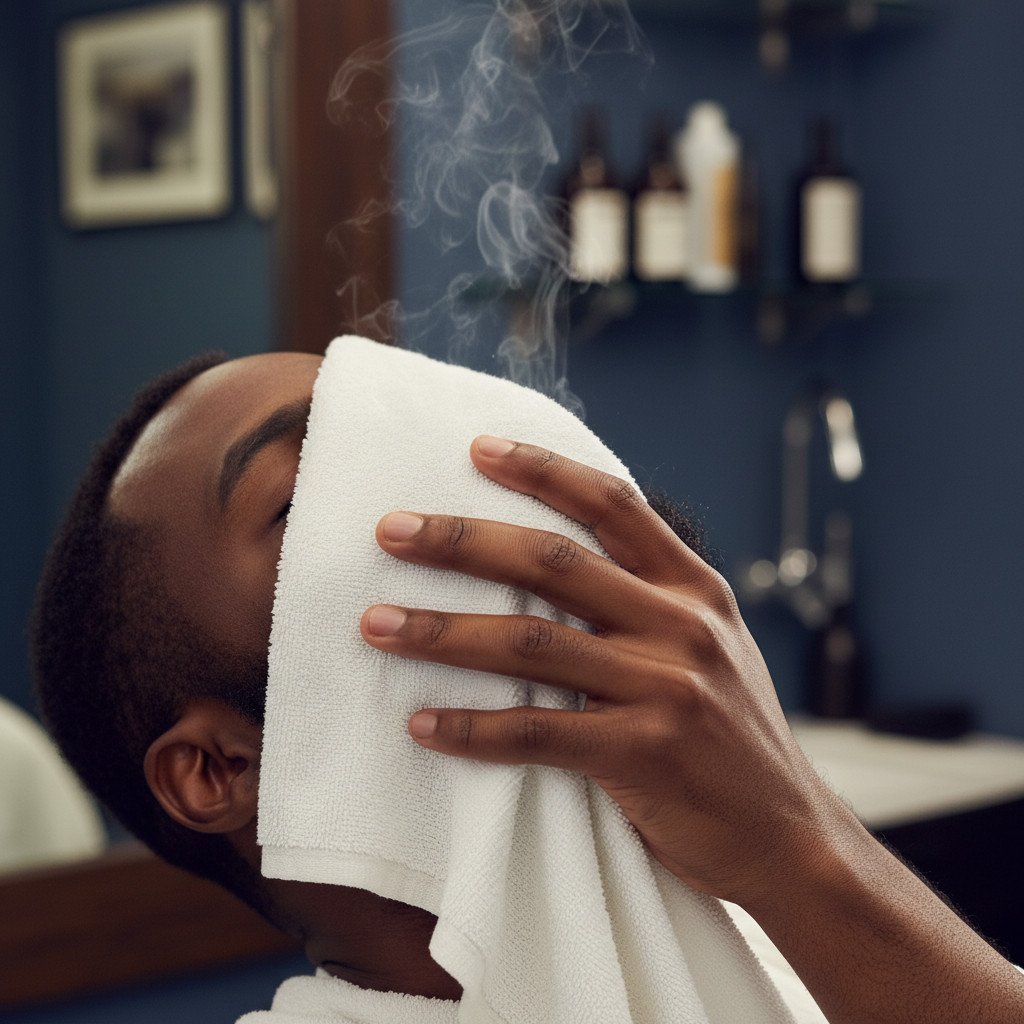
After cleansing, the next critical step is to further soften your beard hair. This makes the hairs more pliable and easier to cut, reducing tugging and pulling. The most effective way to achieve this is through direct exposure to warmth and moisture. Many barbershops use hot towels for this exact reason, and you can replicate this at home.
Soak a clean washcloth in warm water, wring out the excess, and apply it to your face for 2-3 minutes. The steam opens pores and relaxes the hair follicles, allowing the hair to absorb water and become significantly softer. This step is crucial for coarse, curly hair, as it directly addresses the stiffness that often leads to ingrown hairs. Alternatively, shaving immediately after a warm shower can achieve a similar effect, as the steam from the shower will have already softened your beard. The longer the hair is exposed to warmth and moisture, the softer it will become, leading to a smoother cut and less resistance against the blade. This also helps to gently lift the hairs away from the skin, making them more accessible to the razor.
The key here is warmth, not scalding hot water. Excessive heat can dry out the skin, leading to irritation. The goal is to hydrate and relax the hair, not to burn or inflame the skin. This step is often overlooked or rushed, but its impact on shave quality and bump prevention cannot be overstated. Think of it as conditioning your beard before you cut it; a well-conditioned hair strand will yield to the blade with less effort and trauma to the surrounding skin. This preparation is foundational for minimizing friction and ensuring a clean, precise cut. For more insights on optimal tools, consider our guide on best razors and trimmers for Black men.
3) Add slip
Now that your beard is clean and softened, it’s time to introduce a protective layer that provides lubrication and further lifts the hairs. This is where your pre-shave oil or cream comes in. A quality pre-shave product creates a slick barrier between your skin and the blade, allowing the razor to glide effortlessly without causing friction or irritation. It also helps to stand the hairs up, making them easier to cut at the surface.
Apply a small amount of pre-shave oil or a rich shaving cream for sensitive skin to your beard area. Massage it in thoroughly using circular motions, ensuring every hair is coated and the skin beneath is well-lubricated. Allow it to sit for at least 60 seconds, or even longer if your beard is particularly dense or coarse. This allows the product to fully penetrate and work its magic. The goal is to create maximum slip, minimizing the chances of the blade dragging or catching on your skin. This step is paramount for protecting against razor burn and ensuring a comfortable shave, especially for those prone to irritation.
For some, a pre-shave oil followed by a shaving cream offers the ultimate protection. The oil provides a foundational layer of lubrication, while the cream creates a dense, cushioning lather. If you choose this dual approach, apply the oil first, massage it in, and then apply your shaving cream directly over it. The combination works synergistically to provide unparalleled glide and protection. Ensure your shaving cream is specifically formulated for sensitive skin, free from harsh chemicals, and rich in moisturizing ingredients like shea butter or aloe vera. A good lather is dense and stable, not airy or quick-drying, providing sustained protection throughout your shave. This layered approach is a hallmark of a truly premium shaving experience, prioritizing skin health above all else.
4) Choose the right tool for today
Your choice of shaving tool should align with your desired outcome and your skin’s current condition. Not every shave requires the closest possible cut, especially if you’re prone to razor bumps. Sometimes, a less aggressive approach is the smarter choice. This step involves a conscious decision based on your skin’s sensitivity and your beard’s growth pattern. Understanding the capabilities and limitations of different tools is crucial for preventing irritation and achieving a clean look without compromising skin health.
For many Black men, an electric trimmer for men set to a very close stubble length (e.g., 0.5mm or 1mm) is the safest option for daily maintenance. This cuts the hair just above the skin’s surface, significantly reducing the likelihood of ingrown hairs. Trimmers minimize skin contact and eliminate the risk of cutting hair below the skin line. If you opt for a trimmer, ensure the blades are clean and sharp. Dull blades can pull and snag, causing irritation. Regularly oiling your trimmer blades also helps maintain their efficiency and prolongs their lifespan. This method is particularly effective for managing a consistent, well-groomed stubble while actively preventing bumps. For more on this, consult our guide on trimmer routine for razor bumps.
If you prefer a closer shave, a single-blade safety razor or a high-quality electric shaver designed for sensitive skin might be suitable. Avoid multi-blade cartridge razors if you consistently experience razor bumps, as they are notorious for cutting hair below the skin’s surface. With a safety razor, the technique is paramount: light pressure and a sharp blade are essential. For electric shavers, ensure it’s clean and fully charged, and use it on dry skin (unless it’s designed for wet/dry use). The key is to select a tool that respects your skin’s natural tendencies and minimizes trauma. This decision point is where you actively apply your knowledge of your skin and hair to prevent issues before they arise. This informed choice is a cornerstone of effective grooming for Black men, moving beyond generic advice to tailored solutions.
5) Set your “no irritation” rules (grain + pressure)
This final pre-shave step is about mental preparation and establishing a disciplined approach to your shave. It involves two critical components: understanding your hair’s grain and applying the correct pressure. These rules dictate how you will execute the shave itself, ensuring minimal irritation and maximum comfort. Without these guidelines, even the best pre-shave routine can be undermined by improper technique. This is where the wisdom of the barber chair truly comes into play, emphasizing precision and respect for the natural growth of your beard.
Always shave with the grain first. This means shaving in the direction your hair grows. For many Black men, shaving against the grain is a primary cause of razor bumps because it pulls the hair taut and cuts it at an extreme angle, increasing the chance of it retracting and ingrowing. Identify your hair’s growth pattern by running your hand over your beard; the direction that feels smooth is with the grain. Shaving with the grain minimizes irritation and reduces the likelihood of cutting the hair below the skin’s surface. While it may not provide the closest shave initially, it is the safest and most effective method for preventing PFB. If a closer shave is desired, a second pass can be made across the grain, but never against it, and only if your skin can tolerate it without irritation. This graduated approach prioritizes skin health over an aggressively close shave.
Use minimal pressure. Let the weight of the razor or the efficiency of the trimmer do the work. Pressing down too hard forces the blade into the skin, causing nicks, irritation, and cutting hair too short, leading to ingrowns. This is particularly true for safety razors, where the blade is exposed. With an electric trimmer, excessive pressure can cause friction and heat, leading to discomfort. A light, gentle touch is all that’s needed to effectively cut the hair. Think of it as gliding the tool over your skin, rather than digging into it. This light touch, combined with shaving with the grain, forms the bedrock of an irritation-free shave. Mastering these two rules will transform your shaving experience, turning a potential source of discomfort into a smooth, confident ritual. This disciplined approach is a testament to the power of technique over brute force, ensuring longevity for your skin’s health and appearance.
Hair direction mapping (the 60-second step most men skip)
Hair mapping is arguably the most overlooked yet critical step in preventing razor bumps for Black men. It’s the process of identifying the exact direction your beard hair grows on every part of your face and neck. Unlike Caucasian hair, which often grows uniformly downwards, Black men’s beard hair can grow in multiple, often unpredictable, directions on different areas of the face and neck. Ignoring this unique characteristic is a guaranteed path to irritation and ingrown hairs. This isn’t a one-size-fits-all approach; it’s a personalized blueprint for your face, ensuring every stroke of the razor is aligned with your natural growth pattern.
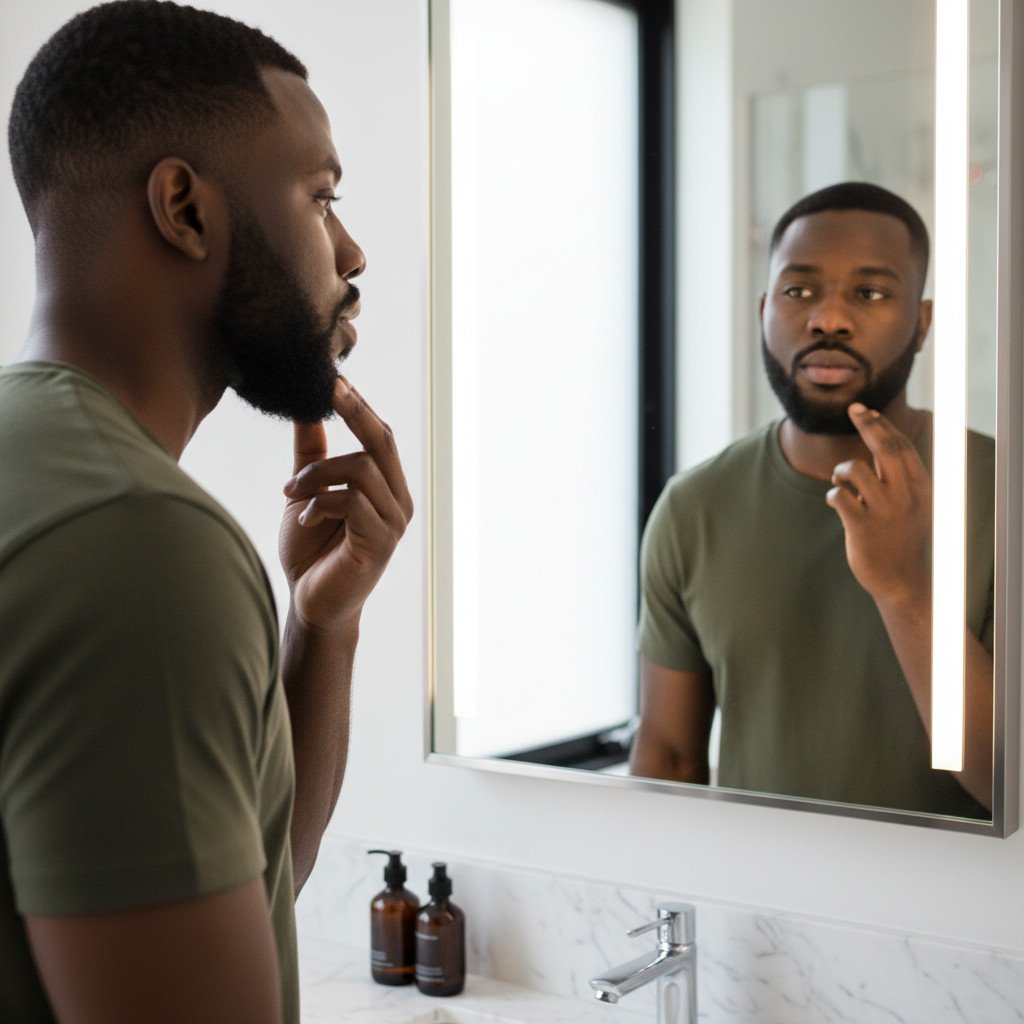
To map your beard growth, allow your beard to grow out for a few days – ideally 3-5 days. Then, gently run your fingertips over different sections of your face and neck. Pay close attention to the sensation. When your fingers move smoothly, you are moving with the grain. When you feel resistance or a prickly sensation, you are moving against the grain. Use a pen and paper, or even your phone’s camera, to sketch out a map of your face and neck, noting the direction of growth with arrows. This visual aid will serve as your personal shaving guide, ensuring you never shave against the grain unknowingly. This meticulous approach might seem excessive at first, but the time invested here pays dividends in reduced irritation and a significantly improved shaving experience. For a detailed guide on this, learn how to map your beard growth.
The neck area is particularly notorious for having complex growth patterns. Hair on the jawline might grow downwards, while hair directly under the chin could grow upwards or even sideways. The sides of the neck often present swirling patterns. Attempting a uniform shave across these varied directions is a recipe for disaster. By mapping, you acknowledge and respect these natural variations, allowing you to adjust your shaving strokes accordingly. This precision ensures that each hair is cut cleanly at the surface, rather than being pulled and cut below, which is the primary mechanism for ingrown hairs. This step is about understanding your unique physiology and tailoring your approach, a cornerstone of effective grooming for Black men.
Once you have your map, commit it to memory or keep it accessible. Before each shave, mentally (or physically) review your map, especially for tricky areas. This conscious awareness prevents impulsive, irritation-inducing strokes. For example, if you know the hair on your upper neck grows upwards, your first pass in that area will be an upward stroke. If the hair on your cheeks grows downwards, your stroke will be downwards. This mindful approach transforms shaving from a mindless chore into a deliberate, controlled act of self-care. It’s about taking ownership of your grooming process, rather than blindly following generic advice that doesn’t account for the unique characteristics of Black men’s hair. This personalized strategy is a powerful tool in your arsenal against razor bumps and irritation, ensuring a consistently smooth and comfortable shave. It is a fundamental shift from reactive treatment to proactive prevention, embodying the principles of elevated self-mastery.
Understanding the nuances of your hair’s growth pattern also informs your choice of shaving tool and technique. For areas with particularly wild or swirling growth, a trimmer might be a safer option than a razor, even for a close shave. Or, you might choose to make multiple passes with a safety razor, each pass following a different grain direction, rather than attempting to achieve closeness in a single, aggressive stroke. This adaptability, guided by your hair map, is what separates a truly effective grooming routine from one that merely perpetuates problems. It’s a testament to the idea that precision and knowledge are more powerful than brute force when it comes to managing coarse, curly hair. This detailed understanding of your own beard is a critical asset in maintaining healthy, bump-free skin.
Pre-shave mistakes that guarantee bumps
Even with the best intentions, certain pre-shave habits can sabotage your efforts and lead directly to razor bumps. Identifying and eliminating these common mistakes is as important as implementing the correct routine. These are the pitfalls that many men fall into, often unknowingly, that perpetuate the cycle of irritation and ingrown hairs. Understanding these errors allows for a more informed and effective approach to your grooming, ensuring that your efforts are not undermined by counterproductive practices. This section serves as a checklist of what to avoid, reinforcing the principles of mindful and strategic shaving.
Dry shaving
This is perhaps the most egregious pre-shave mistake. Attempting to shave a dry beard is akin to trying to cut steel wool with dull scissors. Dry hair is stiff, brittle, and resistant to cutting. Shaving without proper lubrication and hydration forces the blade to drag, pull, and tug at the hairs, causing significant trauma to both the hair follicles and the surrounding skin. This leads to an uneven cut, where hairs are often severed below the skin’s surface or left with jagged edges, making them highly prone to ingrowth. The friction generated also causes immediate razor burn, redness, and micro-abrasions, compromising the skin’s protective barrier. Always ensure your beard is thoroughly wet and lubricated before any blade touches it. This means committing to the cleansing, warm water, and slip steps outlined earlier. Skipping these steps in a rush will inevitably lead to discomfort and bumps. There are no shortcuts to a smooth, irritation-free shave, especially for coarse, curly hair. Dry shaving is a direct assault on your skin’s integrity and should be avoided at all costs. It’s a practice that guarantees irritation and undermines all efforts to achieve a clean, healthy shave. This is a non-negotiable rule for anyone serious about preventing razor bumps.
Too-hot water
While warm water is essential for softening the beard, excessively hot water can be detrimental. Scalding hot water strips the skin of its natural protective oils, leading to dryness, irritation, and inflammation. It can also cause capillaries to dilate, making your skin more sensitive and prone to redness. While the initial sensation might feel good, the long-term effects are counterproductive to preventing razor bumps. The goal is to hydrate and relax the hair, not to scald the skin. Use lukewarm water for cleansing and for your warm towel application. The temperature should be comfortable to the touch, not painfully hot. Think of it as a gentle steam, not a boiling bath. Maintaining the skin’s natural moisture barrier is crucial for its resilience against the trauma of shaving. Compromising this barrier with overly hot water leaves your skin vulnerable to irritation and exacerbates the conditions that lead to PFB. This subtle distinction in water temperature is often overlooked but plays a significant role in skin health and shave comfort. It’s about finding the optimal balance between softening the hair and protecting the skin, a delicate equilibrium that defines a truly effective pre-shave strategy.
Harsh scrubs
Exfoliation is an important step in a comprehensive skincare routine, as it helps remove dead skin cells and prevent clogged pores. However, using harsh, abrasive scrubs immediately before shaving is a common mistake. These types of exfoliants can create micro-tears in the skin, leaving it raw, sensitive, and highly susceptible to irritation from the razor. For men prone to razor bumps, this can worsen the problem by further inflaming the skin and making it more reactive. If you choose to exfoliate, do so gently and ideally on a non-shave day, or at least 12-24 hours before shaving. Opt for chemical exfoliants with salicylic acid or glycolic acid, which gently dissolve dead skin cells without physical abrasion, rather than granular scrubs. If you must use a physical scrub, choose one with very fine, smooth particles and use it with extremely light pressure, and certainly not right before shaving. The skin needs to be calm and intact before shaving, not freshly abraded. Over-exfoliation or using the wrong type of exfoliant at the wrong time can compromise the skin’s barrier function, making it more vulnerable to the mechanical stress of shaving. This is particularly critical for Black men, whose skin can be more prone to post-inflammatory hyperpigmentation from irritation. Gentle care is always the best approach, prioritizing skin integrity above all else.
Shaving against the grain
As emphasized in the hair mapping section, shaving against the grain is a primary driver of razor bumps for Black men. This technique pulls the hair taut, cuts it at an extreme angle, and allows it to retract below the skin’s surface, where it then grows inwards. While it might offer a deceptively close shave initially, the long-term consequences for sensitive skin and curly hair are almost guaranteed irritation and ingrown hairs. This is a fundamental violation of the
Frequently Asked Questions
How long should my pre-shave routine take?
A comprehensive pre-shave routine, including cleansing, warm water application, and applying pre-shave product, should take approximately 5-10 minutes. This dedicated time ensures your beard is adequately prepared, significantly reducing the risk of razor bumps and irritation. Rushing this process often leads to discomfort and subpar results, making the extra few minutes a worthwhile investment in your skin’s health.
Can I use just water to soften my beard?
While warm water is essential for softening, using water alone is often insufficient for coarse, curly hair. Water begins the softening process, but a pre-shave oil or cream provides additional lubrication and a protective barrier. These products further hydrate the hair, lift it away from the skin, and create the necessary slip for a smooth, irritation-free shave, which water cannot achieve on its own.
Should I exfoliate before every shave?
No, you should not exfoliate before every shave, especially with harsh physical scrubs. Over-exfoliation can irritate the skin and make it more susceptible to razor burn and bumps. If you exfoliate, do so gently with a chemical exfoliant (like salicylic acid) 2-3 times a week, ideally on non-shaving days or at least 12-24 hours before shaving. This allows your skin to recover and maintain its protective barrier.
What is the best way to find my hair’s grain?
To find your hair’s grain, allow your beard to grow for a few days. Then, gently run your fingertips across different sections of your face and neck. The direction that feels smooth and offers no resistance is with the grain. The direction that feels prickly or rough is against the grain. You can sketch a map of your face to remember these patterns, as they can vary significantly across different areas.
Is pre-shave oil necessary if I use a good shaving cream?
While a good shaving cream provides lubrication, pre-shave oil offers an additional layer of protection and slip, which is particularly beneficial for Black men with coarse, curly hair and sensitive skin. The oil creates a foundational barrier that minimizes friction, further softening the hair and allowing the razor to glide more smoothly. It acts as an extra safeguard against irritation and razor bumps, enhancing the effectiveness of your shaving cream.
Can a pre-shave routine help with existing razor bumps?
Yes, a proper pre-shave routine can significantly help manage and reduce existing razor bumps by preventing new ones from forming and allowing current ones to heal. By softening hair, lifting it, and ensuring a clean, gentle shave with the grain, you minimize further irritation and trauma to the affected follicles. However, for severe, painful, or infected bumps, consult a dermatologist for appropriate medical treatment.
What if I don’t have 10 minutes for a full pre-shave routine?
Even a condensed version of the pre-shave routine is better than none. If time is extremely limited, prioritize a quick cleanse and a warm water rinse (perhaps during a shower) followed immediately by a high-quality shaving cream. While not ideal, these steps still provide some essential softening and lubrication. However, for optimal results and consistent bump prevention, aim to incorporate the full 10-minute routine whenever possible, as consistency is key.
Shop gentle face cleanser on Amazon
Shop shaving cream for sensitive skin on Amazon
Shop electric trimmer for men on Amazon