Safety Razor vs Cartridge for Black Men: Which One Helps Razor Bumps (and Why)
For Black men, the act of shaving is often more than a routine; it’s a battle against razor bumps, also known as pseudofolliculitis barbae (PFB). This common and frustrating condition occurs when curly hairs, cut too short or at an angle, retract into the skin and grow inwards, causing inflammation, irritation, and sometimes infection. The choice of razor plays a pivotal role in preventing or exacerbating this issue. Understanding the mechanics of different razor types is the first step toward a smoother, bump-free shave.
Many men have been conditioned to believe that more blades equal a better, closer shave. However, for those prone to razor bumps, this often leads to the opposite effect. The design and action of multi-blade cartridge razors can be a primary culprit in the formation of painful ingrown hairs. Conversely, the single-blade approach of a safety razor offers a fundamentally different shaving experience, one that aligns more closely with the physiological needs of curly hair.
This guide will dissect the core differences between safety razors and cartridge razors, explaining how each interacts with your skin and hair. We will explore why one might be a better choice for you, especially if you struggle with Razor bumps for Black men. Our aim is to provide practical, evidence-based insights to help you make an informed decision and achieve a comfortable, irritation-free shave.
Why “more blades” can mean more bumps for Black men
The marketing narrative surrounding cartridge razors often emphasizes the benefits of multiple blades: a closer shave, fewer passes, and supposedly greater comfort. However, for Black men with naturally curly or coarse hair, this multi-blade technology can be counterproductive, directly contributing to the prevalence of razor bumps. The mechanism by which these razors operate is fundamentally at odds with the growth pattern of curly hair, leading to irritation and ingrown hairs.
A typical multi-blade cartridge razor employs a system where the first blade lifts the hair from the follicle, and subsequent blades cut it. This lifting action, often referred to as ‘hysteresis,’ pulls the hair slightly out of the skin before slicing it. While this might result in an incredibly close shave for some, it creates a significant problem for curly hair. When the hair is cut below the skin’s surface, its natural curl pattern dictates that it will retract and grow back into the skin, rather than growing straight out. This is the primary mechanism behind pseudofolliculitis barbae (PFB).
Each additional blade in a cartridge razor exacerbates this issue. With three, four, or even five blades, the hair is pulled and cut multiple times, often at varying angles, increasing the likelihood of it being cut below the skin line. The more blades, the more opportunities for the hair to be tugged and then severed too short. This aggressive cutting action, combined with the inherent curl of the hair, creates the perfect environment for ingrown hairs to form. The hair, once cut, curls back into the follicle or into the adjacent skin, triggering an inflammatory response that manifests as a painful, red bump.
Furthermore, the design of cartridge razors often includes lubricating strips and pivoting heads, which, while intended to enhance comfort, can sometimes mask the underlying irritation being caused. The pressure applied during shaving with a cartridge razor tends to be higher, as users often press down to ensure all blades make contact. This increased pressure can push hair follicles downwards, further contributing to the problem of subsurface cutting and subsequent ingrowth. The cumulative effect of these factors—hair lifting, multiple cuts below the skin, and excessive pressure—makes multi-blade cartridge razors a significant contributor to razor bumps for many Black men.
The repeated trauma to the skin from these aggressive shaves can also lead to hyperpigmentation, where the inflamed bumps leave behind dark spots as they heal. This is a common secondary concern for Black men dealing with chronic razor bumps. Understanding this fundamental flaw in multi-blade design for curly hair is crucial in seeking alternative, more skin-friendly shaving methods. For a deeper dive into managing these issues, consider exploring resources on razor bumps and dark marks.
Safety razor vs cartridge: the real differences
The choice between a safety razor and a cartridge razor boils down to fundamental differences in design, blade exposure, and shaving mechanics. These distinctions directly impact the closeness of the shave, the pressure required, the number of passes needed, and ultimately, the level of skin irritation experienced. For Black men, understanding these nuances is critical for mitigating razor bumps.
Closeness of Shave
Cartridge Razors: Often marketed for their ‘closest shave,’ cartridge razors achieve this by lifting the hair and cutting it below the skin’s surface. The multi-blade system pulls the hair taut with the first blade, allowing subsequent blades to cut it at a point that is effectively negative to the skin plane. This provides an immediate sensation of smoothness but sets the stage for ingrown hairs as the hair retracts and grows back into the skin.
Safety Razors: A safety razor uses a single, sharp blade that cuts the hair precisely at the skin’s surface. There is no lifting or tugging of the hair before the cut. This method aims to cut the hair cleanly without disturbing the follicle or cutting the hair below the skin line. While the initial shave might feel slightly less ‘baby-smooth’ than a cartridge razor’s immediate result, it significantly reduces the risk of ingrown hairs by allowing the hair to grow straight out from the follicle.
Pressure Applied
Cartridge Razors: The design of cartridge razors, with their pivoting heads and multiple blades, often encourages users to apply more pressure. Many believe that pressing harder will achieve a closer shave, and the razor’s flexibility can make this feel comfortable in the moment. However, excessive pressure with a multi-blade system increases the likelihood of skin irritation, razor burn, and cutting hair too short, leading to PFB. The blades are designed to glide, but heavy-handedness overrides this.
Safety Razors: With a safety razor, the mantra is ‘let the razor do the work.’ The weight of the razor itself is usually sufficient to provide the necessary pressure. Applying additional pressure is counterproductive and can lead to nicks, cuts, and irritation. The single blade requires a lighter touch, gliding over the skin and severing the hair without digging in. This gentle approach is far less traumatic for sensitive skin and curly hair follicles.
Number of Passes
Cartridge Razors: While cartridge razors aim to reduce the number of passes needed for a smooth shave, many users still find themselves making multiple passes over the same area to achieve desired closeness. Each pass with a multi-blade razor means repeated lifting and cutting of the hair, multiplying the risk of irritation and ingrown hairs. The aggressive nature of multiple blades means that even a single pass can be quite impactful on the skin.
Safety Razors: A safety razor typically requires more deliberate and fewer passes per area. The goal is to achieve an efficient cut with minimal skin contact. Often, a single pass with the grain, followed by a pass across the grain (if tolerated), is sufficient. The technique focuses on efficient hair removal rather than aggressive skin exfoliation. This reduces overall skin trauma and minimizes the chances of irritation. Learning to map your beard growth, as discussed in guides like Shave Map for the Neck, can further optimize passes.
Irritation and Razor Bumps
Cartridge Razors: Due to the hair-lifting mechanism and the multiple blades cutting below the skin’s surface, cartridge razors are a primary cause of razor bumps and general skin irritation for Black men. The repeated tugging and cutting can inflame follicles, leading to painful bumps, redness, and post-inflammatory hyperpigmentation. The design, while convenient, is often incompatible with the biology of curly hair.

Safety Razors: Safety razors are widely recommended for men prone to razor bumps precisely because they cut the hair at the skin’s surface without lifting. This single-blade action minimizes irritation and prevents the hair from retracting and growing inwards. While there is a learning curve to using a safety razor, the long-term benefits of reduced irritation, fewer ingrown hairs, and a healthier complexion are significant. This makes them a superior choice for sensitive skin and those battling PFB.
In summary, the core difference lies in how each razor interacts with the hair follicle. Cartridge razors prioritize an aggressively close shave by cutting below the skin, a method that often backfires for curly hair. Safety razors prioritize a clean, surface-level cut, which, while requiring more technique, is far gentler and more effective at preventing razor bumps. The investment in learning the safety razor technique pays dividends in skin health and comfort.
Who should choose a safety razor (and who shouldn’t)
Deciding between a safety razor and a cartridge razor isn’t a one-size-fits-all situation. While safety razors offer significant advantages for many, particularly Black men prone to razor bumps, they aren’t the universal solution. Understanding your shaving habits, skin type, hair characteristics, and lifestyle can help you determine the best tool for your grooming arsenal.
Who Should Choose a Safety Razor:
- Men prone to razor bumps (Pseudofolliculitis Barbae – PFB): This is the primary demographic that benefits most. The single-blade design cuts hair at the skin’s surface, preventing the hair from being cut below the follicle and curling back into the skin. If you consistently experience painful, red bumps after shaving, a safety razor is likely your best defense.
- Those with sensitive skin: The gentle, single-pass action of a safety razor, when performed correctly, causes less irritation than the multi-blade tugging of a cartridge razor. Less friction and fewer blades mean less trauma to delicate skin.
- Men with coarse or curly hair: Curly hair is inherently more prone to ingrown hairs. A safety razor respects the natural growth pattern by not pulling the hair before cutting it, allowing it to grow out freely.
- Individuals seeking a more economical and sustainable shave: While the initial investment in a quality safety razor might be higher, replacement blades are significantly cheaper than cartridge refills. Blades are also recyclable, reducing plastic waste.
- Grooming enthusiasts who enjoy a ritualistic approach: Shaving with a safety razor requires more focus, patience, and technique. For those who view grooming as a mindful practice rather than a chore, the safety razor offers a more engaging and satisfying experience.
- Anyone looking for a closer, yet less irritating shave: Once mastered, a safety razor can provide an incredibly close shave without the aggressive skin interaction of a multi-blade system. It’s a different kind of closeness, one that prioritizes skin health.
Who Might Not Be Suited for a Safety Razor (or needs to adjust expectations):
- Men who prioritize speed and convenience above all else: A safety razor requires more time, focus, and a learning curve. It’s not a tool for a rushed, five-minute shave before work. If you need to shave quickly and without much thought, a cartridge razor might still be your preference.
- Individuals with very shaky hands or certain dexterity issues: The exposed blade and need for precise angles mean that a steady hand is crucial. While not inherently dangerous, it requires more control than a cartridge razor.
- Those unwilling to invest time in learning a new technique: Switching to a safety razor isn’t like switching brands of toothpaste. It demands patience, practice, and a willingness to adjust your shaving habits. If you’re not committed to this learning process, you might get frustrated.
- Men who shave infrequently or have very light, straight hair: If you rarely shave and don’t experience razor bumps, the benefits of a safety razor might not outweigh the convenience of a cartridge for your specific needs. For light, straight hair, the multi-blade issues are often less pronounced.
- Travelers who prefer minimal fuss: While travel safety razors exist, the need to manage individual blades and the slightly longer shaving time might be less appealing for frequent travelers seeking maximum efficiency.
Ultimately, the decision is personal. However, if razor bumps are a persistent problem, the evidence strongly points towards adopting a safety razor. It’s an investment in your skin’s health and comfort that, for many Black men, yields transformative results. For those considering the switch, patience and adherence to proper technique are paramount. Exploring different types of razors and trimmers can also provide valuable context for your decision-making process.
How to switch without destroying your neck (first 2 weeks)
As an affiliate site, GFBM may earn from qualifying purchases through product links.
Transitioning from a cartridge razor to a safety razor can feel daunting, especially when you’re already battling razor bumps. The key is patience, precision, and a methodical approach. Your first two weeks are critical for establishing good habits and preventing irritation. Do not rush this process. Your neck, often the most sensitive area and prone to ingrown hairs, requires particular care. Start by committing to a slower, more deliberate shave.
- Week 1, Shave 1: Prep is Paramount.
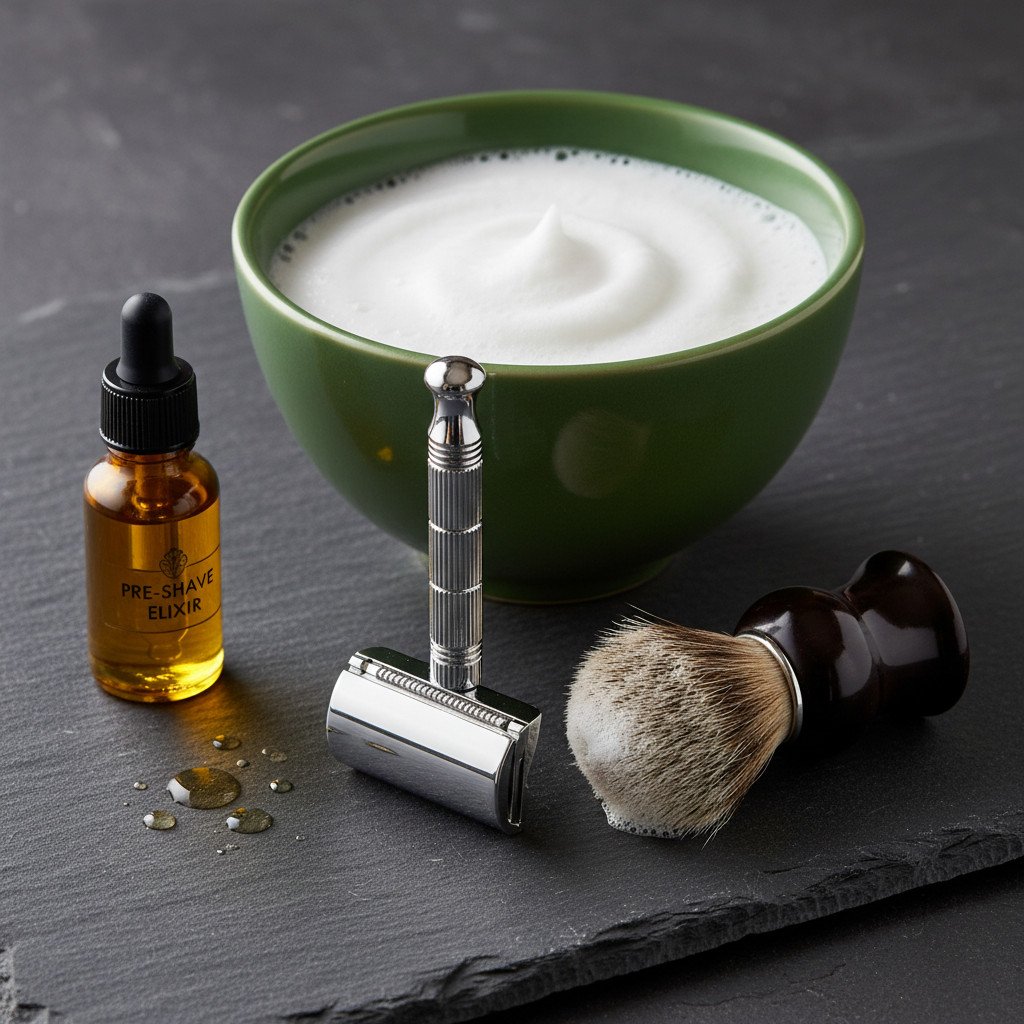
Before your first shave, take a hot shower or apply a hot towel to your face for several minutes. This softens your beard and opens pores. Always use a high-quality pre-shave oil. Apply it generously to your face and neck. Lather up with a rich shaving cream for sensitive skin, ensuring a thick, even layer. This provides lubrication and cushioning. Load a fresh, sharp blade into your safety razor. - Week 1, Shave 2: Master the Angle and Pressure.
The most crucial aspect of safety razor shaving is the angle. Aim for a 30-degree angle between the blade and your skin. Hold the razor lightly; let its weight do the work. Do not apply pressure. Shave only with the grain (in the direction your hair grows). For your neck, this often means shaving downwards. Take short, controlled strokes, about an inch or two at a time. Rinse the blade frequently. - Week 1, Shave 3: Focus on One Pass, With the Grain.
For the first week, stick to a single pass, strictly with the grain. Your goal is not a baby-smooth shave, but a comfortable, irritation-free one. Resist the urge to go against the grain or make multiple passes over the same spot. This minimizes trauma to your skin and allows your follicles to adjust. After rinsing, gently pat your face dry and apply a soothing aftershave balm sensitive skin. - Week 2, Shave 1: Re-evaluate and Refine.
By now, you should be getting a feel for the razor. Pay attention to any areas of irritation. If you’re still experiencing discomfort, review your angle and pressure. Ensure your prep is thorough. Continue with a single pass, with the grain. This consistency builds muscle memory and reinforces good technique. - Week 2, Shave 2: Consider a Second Pass (Across the Grain).
If your skin feels comfortable and free of irritation after the first week, you can cautiously introduce a second pass, across the grain. This means shaving perpendicular to the direction of hair growth. Never go against the grain on your neck during this initial phase. Apply fresh lather for the second pass. Maintain the same light pressure and correct angle. - Week 2, Shave 3: Consistency and Post-Shave Care.
By the end of week two, your technique should be improving. Focus on maintaining consistency in your angle, pressure, and stroke length. After every shave, rinse your face with cool water to close pores, then apply a non-comedogenic, hydrating post-shave balm or moisturizer. This is crucial for preventing dryness and reducing inflammation. If you notice any persistent irritation or new bumps, revert to a single pass with the grain and re-evaluate. Remember, the goal is long-term skin health, not immediate perfect smoothness.
Throughout this transition, remember that patience is your greatest asset. Your skin needs time to adapt, and your hands need time to learn the new movements. Don’t get discouraged by initial imperfections. Each shave is a learning experience. For comprehensive post-shave care, refer to our guide on Post-Shave Care for Black Men.
Table: Your situation → better choice → why
| Situation | Better Tool | Why | What to Avoid |
|---|---|---|---|
| Prone to razor bumps (PFB) | Safety Razor | Single blade cuts hair at skin surface, preventing ingrowth. Less irritation and follicle trauma. | Multi-blade cartridge razors; aggressive against-the-grain passes. |
| Sensitive skin, easily irritated | Safety Razor | Minimal skin contact, less tugging and pulling. Allows for lighter pressure. | Heavy pressure; dry shaving; dull blades; excessive passes. |
| Coarse, curly hair | Safety Razor | Respects natural hair growth pattern, reduces risk of hair curling back into skin. | Shaving too close; cutting hair below skin line; harsh pre-shave products. |
| Prioritize speed and convenience | Cartridge Razor | Quick setup and shave time. Easier to use without much thought or technique. | Rushing the shave; neglecting proper prep and post-shave care. |
| New to shaving, unsure of technique | Cartridge Razor (initially) | More forgiving for beginners due to pivoting head and guard. Lower learning curve. | Aggressive shaving; ignoring razor bumps as they appear; not learning proper technique. |
| Seeking cost-effective, sustainable shave | Safety Razor | Blades are significantly cheaper and recyclable. Less plastic waste over time. | Expensive cartridge refills; disposable razors; frequent razor replacement. |
| Enjoy a mindful, ritualistic grooming routine | Safety Razor | Requires focus and technique, turning shaving into a satisfying ritual. | Rushing the process; treating it as a chore; neglecting the art of the shave. |
| Struggling with hyperpigmentation from bumps | Safety Razor | Reduces inflammation and bumps, which are primary causes of dark spots. | Continuing with irritating shaving methods; picking at bumps; sun exposure without SPF. |
Frequently Asked Questions
What exactly are razor bumps and why are Black men more susceptible?
Razor bumps, medically known as pseudofolliculitis barbae (PFB), occur when shaved hair, particularly curly hair, grows back into the skin instead of out of the follicle. This causes inflammation, redness, and painful bumps. Black men are more susceptible because their hair tends to be curlier and coarser, making it more likely to curl back and re-enter the skin after being cut. The natural curl acts like a spear, penetrating the skin’s surface.
Can I use a safety razor on my head, or is it only for the face?
Yes, a safety razor can absolutely be used for shaving your head. Many men find it provides an incredibly close and smooth head shave while reducing irritation, similar to its benefits for the face. However, head shaving with a safety razor requires even more practice and a very light touch due to the contours of the scalp. Always use a fresh, sharp blade and maintain the correct angle. Consider starting with a milder safety razor if you’re new to head shaving.
How often should I change the blade in my safety razor?
The frequency of changing your safety razor blade depends on your hair type, how often you shave, and the specific blade you’re using. Generally, for Black men with coarse hair, it’s recommended to change the blade every 3-5 shaves to maintain optimal sharpness and minimize irritation. A dull blade is a primary cause of tugging, pulling, and razor burn. Listen to your razor; if it starts to feel less smooth or pulls at your hair, it’s time for a fresh blade.
Is it true that a safety razor gives a closer shave than a cartridge?
This is a common misconception. A cartridge razor often *feels* like it gives a closer shave immediately after because its multi-blade system lifts the hair and cuts it below the skin’s surface. However, this is precisely what leads to razor bumps for men with curly hair. A safety razor, while cutting the hair precisely at the skin’s surface, provides a shave that is optimally close for preventing ingrown hairs and irritation, leading to a healthier, smoother complexion in the long run. It’s a different kind of ‘close’ that prioritizes skin health.
What’s the best way to prepare my skin for a safety razor shave?
Proper preparation is crucial for a comfortable safety razor shave, especially for Black men. Start with a hot shower or apply a hot towel to your face for several minutes. This softens your hair and opens your pores. Next, apply a high-quality pre-shave oil to create a protective barrier and enhance glide. Finally, use a rich, thick shaving cream or soap, lathering it generously to lift the hairs and provide maximum cushioning for the blade. This multi-step prep significantly reduces friction and irritation.
Can I still get razor bumps with a safety razor?
While a safety razor significantly reduces the risk of razor bumps, it doesn’t eliminate it entirely, especially if proper technique isn’t followed. Common mistakes that can still lead to bumps include applying too much pressure, using a dull blade, shaving against the grain too aggressively, or not preparing the skin adequately. It’s essential to maintain a light touch, use a sharp blade, shave with or across the grain, and ensure thorough pre- and post-shave care. If severe bumps persist, consulting a dermatologist is advised.
Are there specific types of safety razors better for Black men?
While the fundamental single-blade design is key, some safety razors are more forgiving than others. Adjustable safety razors allow you to control the blade gap, making them ideal for beginners or those with sensitive skin as you can start with a milder setting. Open comb razors are often more aggressive and better suited for very coarse, thick beards or experienced users. For most Black men starting out, a closed comb, mild-to-medium aggressive safety razor is a good starting point, as it offers a balance of closeness and safety. Experimentation with different blades is also crucial to find what works best for your skin and hair.
Final Thoughts
The journey to a consistently smooth, irritation-free shave, particularly for Black men, often involves a critical re-evaluation of tools and techniques. While cartridge razors offer convenience, their multi-blade design frequently exacerbates the very issues they claim to solve for those prone to razor bumps. The single-blade safety razor, a classic tool, provides a fundamentally different and often superior shaving experience by respecting the natural growth pattern of curly hair.
Switching to a safety razor is an investment—not just financially, but in time and patience. It demands a commitment to learning a new skill, mastering the angle, and understanding the nuances of your own skin and hair. However, the dividends are significant: fewer razor bumps, less irritation, healthier skin, and a more mindful grooming ritual. This shift is about prioritizing skin health over an aggressively close, yet damaging, shave.
Ultimately, the choice between a safety razor and a cartridge razor is a personal one, but for Black men battling pseudofolliculitis barbae, the safety razor stands as a powerful ally. Embrace the learning curve, refine your technique, and commit to a shaving routine that truly serves your skin. Your complexion will thank you for it.
Next reads: Explore more on Razor bumps for Black men, learn to master your Shave map for the neck, and perfect your Post-shave care routine.
Frequently Asked Questions
What exactly are razor bumps and why are Black men more susceptible?
Razor bumps, medically known as pseudofolliculitis barbae (PFB), occur when shaved hair, particularly curly hair, grows back into the skin instead of out of the follicle. This causes inflammation, redness, and painful bumps. Black men are more susceptible because their hair tends to be curlier and coarser, making it more likely to curl back and re-enter the skin after being cut. The natural curl acts like a spear, penetrating the skin’s surface.
Can I use a safety razor on my head, or is it only for the face?
Yes, a safety razor can absolutely be used for shaving your head. Many men find it provides an incredibly close and smooth head shave while reducing irritation, similar to its benefits for the face. However, head shaving with a safety razor requires even more practice and a very light touch due to the contours of the scalp. Always use a fresh, sharp blade and maintain the correct angle. Consider starting with a milder safety razor if you’re new to head shaving.
How often should I change the blade in my safety razor?
The frequency of changing your safety razor blade depends on your hair type, how often you shave, and the specific blade you’re using. Generally, for Black men with coarse hair, it’s recommended to change the blade every 3-5 shaves to maintain optimal sharpness and minimize irritation. A dull blade is a primary cause of tugging, pulling, and razor burn. Listen to your razor; if it starts to feel less smooth or pulls at your hair, it’s time for a fresh blade.
Is it true that a safety razor gives a closer shave than a cartridge?
This is a common misconception. A cartridge razor often *feels* like it gives a closer shave immediately after because its multi-blade system lifts the hair and cuts it below the skin’s surface. However, this is precisely what leads to razor bumps for men with curly hair. A safety razor, while cutting the hair precisely at the skin’s surface, provides a shave that is optimally close for preventing ingrown hairs and irritation, leading to a healthier, smoother complexion in the long run. It’s a different kind of ‘close’ that prioritizes skin health.
What’s the best way to prepare my skin for a safety razor shave?
Proper preparation is crucial for a comfortable safety razor shave, especially for Black men. Start with a hot shower or apply a hot towel to your face for several minutes. This softens your hair and opens your pores. Next, apply a high-quality pre-shave oil to create a protective barrier and enhance glide. Finally, use a rich, thick shaving cream or soap, lathering it generously to lift the hairs and provide maximum cushioning for the blade. This multi-step prep significantly reduces friction and irritation.
Can I still get razor bumps with a safety razor?
While a safety razor significantly reduces the risk of razor bumps, it doesn’t eliminate it entirely, especially if proper technique isn’t followed. Common mistakes that can still lead to bumps include applying too much pressure, using a dull blade, shaving against the grain too aggressively, or not preparing the skin adequately. It’s essential to maintain a light touch, use a sharp blade, shave with or across the grain, and ensure thorough pre- and post-shave care. If severe bumps persist, consulting a dermatologist is advised.
Are there specific types of safety razors better for Black men?
While the fundamental single-blade design is key, some safety razors are more forgiving than others. Adjustable safety razors allow you to control the blade gap, making them ideal for beginners or those with sensitive skin as you can start with a milder setting. Open comb razors are often more aggressive and better suited for very coarse, thick beards or experienced users. For most Black men starting out, a closed comb, mild-to-medium aggressive safety razor is a good starting point, as it offers a balance of closeness and safety. Experimentation with different blades is also crucial to find what works best for your skin and hair.
Shop pre-shave oil on Amazon
Shop shaving cream for sensitive skin on Amazon
Shop safety razor on Amazon
Shop aftershave balm sensitive skin on Amazon
Shop moisturizer on Amazon