
For some dark spots, home skincare isn’t enough
Persistent dark spots, medically known as post-inflammatory hyperpigmentation (PIH), are a common concern for Black men. While a consistent home skincare regimen can significantly improve many cases, some marks prove stubborn. These deeper, more entrenched discolorations often require a targeted approach beyond over-the-counter products. Understanding when to seek professional intervention is the first step toward clearer, more even-toned skin.
Ignoring these persistent marks can lead to prolonged discoloration, impacting skin texture and overall appearance. Professional treatments offer advanced solutions, but it’s crucial to approach them with knowledge and caution. The unique characteristics of melanin-rich skin demand specific considerations to ensure safety and efficacy, preventing further hyperpigmentation.
This guide will demystify professional dark spot treatments, focusing on what works for Black men, what to avoid, and the critical questions to ask your dermatologist. Our goal is to equip you with the information needed to make informed decisions for your skin. For a comprehensive understanding of the condition itself, start here: Hyperpigmentation in Black men.
The Science Behind Stubborn Dark Spots
Post-inflammatory hyperpigmentation occurs when inflammation or injury to the skin triggers an overproduction of melanin. This excess melanin then deposits in the deeper layers of the skin, making it more difficult to fade with topical treatments alone. Common triggers include acne, razor bumps, cuts, burns, and even aggressive exfoliation.
In Black skin, melanocytes (the cells that produce melanin) are more reactive. This means that any inflammatory event, no matter how minor, can result in a more pronounced and longer-lasting dark spot. This heightened reactivity is why treatments must be carefully selected and administered to avoid causing further irritation and, consequently, more hyperpigmentation.
The depth of the melanin deposit also dictates how easily a dark spot will fade. Superficial spots, located in the epidermis, often respond well to consistent topical treatments. Deeper dermal hyperpigmentation, however, requires more intensive methods to reach and break down the melanin, often necessitating professional intervention.
Understanding the cellular mechanisms behind PIH in melanin-rich skin is paramount. Treatments must aim to reduce inflammation, inhibit melanin production, and encourage cell turnover without causing further trauma. This delicate balance is what separates effective treatments from those that can worsen the condition.
What to try at home first (4-week baseline)
Before considering professional treatments, establish a consistent and effective home care routine for at least four weeks. This baseline period allows you to assess the responsiveness of your skin to topical agents and prepares your skin for more intensive procedures if needed. Do this first to ensure your skin is primed for healing and to avoid unnecessary aggressive treatments.
Morning Routine: Protection and Prevention
Your morning routine should focus on antioxidant protection and, most critically, sun defense. Sun exposure is the primary driver of hyperpigmentation, making daily SPF non-negotiable. Start with a gentle cleanser to remove impurities without stripping your skin’s natural oils.
As an affiliate site, GFBM may earn from qualifying purchases through product links.
After cleansing, apply a vitamin C serum. This powerful antioxidant brightens the skin, protects against environmental damage, and helps inhibit melanin production. Look for formulations with L-ascorbic acid at concentrations between 10-20% for optimal efficacy. Apply a few drops to your face and neck, gently patting it in.
Next, apply a lightweight, non-comedogenic moisturizer to hydrate your skin. Even oily skin types benefit from hydration, which helps maintain a healthy skin barrier. Choose a moisturizer that absorbs quickly and doesn’t leave a greasy residue. This step locks in the serum and prepares your skin for the final, crucial step.
The most important step in your morning routine is applying a broad-spectrum face sunscreen SPF 30 or higher. This protects your skin from UVA and UVB rays, which can darken existing spots and trigger new ones. Mineral sunscreens with zinc oxide or titanium dioxide are often preferred for melanin-rich skin as they tend to be less irritating and provide excellent broad-spectrum protection without a white cast if formulated correctly. Reapply every two hours if you are outdoors or sweating.
Evening Routine: Treatment and Repair
Your evening routine is dedicated to treatment and repair, focusing on ingredients that promote cell turnover and reduce melanin production. Begin with a thorough cleanse to remove all traces of sunscreen, dirt, and oil accumulated throughout the day. Consider a double cleanse if you wear heavy sunscreen or have oily skin.
After cleansing, apply a targeted treatment for hyperpigmentation. Ingredients like niacinamide, alpha arbutin, kojic acid, or azelaic acid are excellent choices for fading dark spots. These ingredients work through different mechanisms to inhibit melanin synthesis and reduce inflammation. Start with one active ingredient to gauge your skin’s tolerance.
For those new to retinoids, consider starting with an over-the-counter retinol or retinaldehyde. These vitamin A derivatives accelerate cell turnover, helping to shed pigmented skin cells faster. Introduce them slowly, 2-3 times a week, to avoid irritation. For more advanced guidance on incorporating retinoids, refer to our detailed guide: Retinoid for Black Men: A Beginner’s Guide.
Follow your treatment with a nourishing night cream. This helps to soothe and hydrate your skin, counteracting any potential dryness or irritation from active ingredients. Look for creams rich in ceramides, hyaluronic acid, and peptides to support skin barrier repair. Consistency is key for visible results; stick with this routine diligently for at least four weeks.
Weekly Boosts and Lifestyle Considerations
Beyond daily routines, incorporate weekly treatments and lifestyle adjustments to support your skin’s healing process. A gentle exfoliation 1-2 times a week can help remove dead skin cells and allow your active ingredients to penetrate more effectively. Use a chemical exfoliant like a mild AHA (glycolic or lactic acid) or BHA (salicylic acid) rather than harsh physical scrubs, which can cause micro-tears and worsen hyperpigmentation.
Consider a hydrating or brightening face mask once a week to deliver a concentrated boost of beneficial ingredients. Look for masks containing ingredients like hyaluronic acid, niacinamide, or licorice root extract. These can help calm inflammation and provide an extra layer of hydration, which is crucial for healthy skin barrier function.
Diet and hydration also play a significant role. A diet rich in antioxidants from fruits and vegetables can help combat oxidative stress, which contributes to skin damage and hyperpigmentation. Ensure you are drinking adequate water throughout the day to keep your skin hydrated from within. Stress management techniques can also be beneficial, as stress can exacerbate inflammatory skin conditions.
Finally, avoid picking or squeezing acne lesions or razor bumps. This is a direct pathway to creating new dark spots or worsening existing ones. Allow your skin to heal naturally and address underlying issues like acne or razor bumps with appropriate treatments. For more on how long dark spots take to fade, read: How Long Do Dark Spots Take to Fade in Black Men?
Professional options (overview)
When home care reaches its limits, professional treatments offer more potent solutions to address stubborn dark spots. These procedures are designed to accelerate cell turnover, break down melanin, or reduce inflammation more effectively than topical products alone. However, the unique physiology of melanin-rich skin requires a cautious and informed approach.
Chemical Peels: Controlled Exfoliation
Chemical peels involve applying an acidic solution to the skin to exfoliate the top layers, promoting cell turnover and revealing fresher, less pigmented skin. For Black men, superficial to medium-depth peels are generally preferred. Glycolic acid, lactic acid, salicylic acid, and mandelic acid are common choices. Mandelic acid, derived from almonds, is particularly well-suited for melanin-rich skin due to its larger molecular size, which allows for slower penetration and reduced risk of irritation and post-inflammatory hyperpigmentation.
Melanin-rich skin safety: The key to safe chemical peels for Black skin lies in selecting the correct acid type, concentration, and peel depth. Aggressive peels or those with high concentrations of certain acids (like trichloroacetic acid, TCA, in higher percentages) can cause significant inflammation, leading to worsening hyperpigmentation. A series of milder peels is often more effective and safer than a single aggressive peel. Pre- and post-peel care, including strict sun protection and barrier support, are critical.
Provider experience: Always seek a board-certified dermatologist or a licensed aesthetician with extensive experience treating Black skin. They understand the nuances of melanin production and can tailor the peel to your specific skin type and concerns, minimizing risks. They will also guide you on proper skin preparation before the peel and aftercare to ensure optimal results and prevent complications.
Laser and Light Therapies: Targeted Energy
Laser and light therapies use concentrated light energy to target melanin in the skin, breaking it down so the body can naturally clear it away. Not all lasers are suitable for Black skin, as some can cause excessive heat absorption by melanin, leading to burns, scarring, or worsening hyperpigmentation. This is where expertise becomes paramount.
Melanin-rich skin safety: Q-switched Nd:YAG lasers, picosecond lasers, and certain fractional non-ablative lasers are generally considered safer options for Black skin. These lasers deliver energy in very short pulses, minimizing heat buildup in the surrounding tissue. Intense Pulsed Light (IPL) is often not recommended for darker skin tones due to its broad spectrum of light, which can be absorbed too readily by melanin, increasing the risk of burns and PIH. However, newer IPL devices with advanced filters and cooling systems can sometimes be used cautiously by highly experienced practitioners.
Provider experience: This is perhaps the most critical factor for laser treatments on Black skin. The practitioner must have a deep understanding of laser physics, skin types, and specific parameters (fluence, pulse duration, spot size) to adjust the treatment safely and effectively. Inexperienced providers can cause irreversible damage. Always ask about their experience with treating skin of color and request to see before-and-after photos of their Black patients.
Microneedling: Collagen Induction Therapy
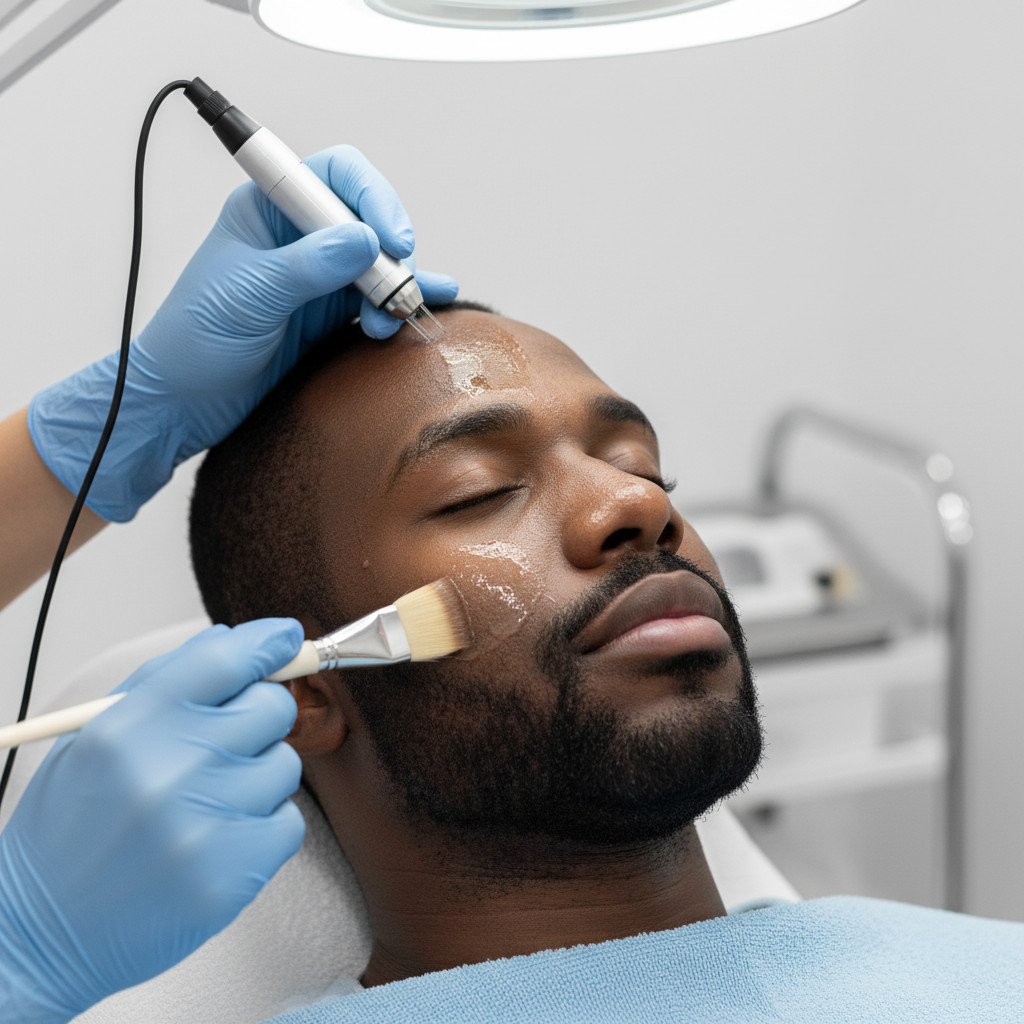
Microneedling, also known as collagen induction therapy, involves using a device with fine needles to create controlled micro-injuries in the skin. These micro-injuries stimulate the skin’s natural healing process, boosting collagen and elastin production. While primarily known for improving texture and fine lines, microneedling can also help fade dark spots by promoting cell turnover and allowing topical treatments to penetrate more deeply.
Melanin-rich skin safety: Microneedling is generally considered safe for Black skin, as it does not involve heat or light energy that can trigger melanin overproduction. However, it’s crucial that the procedure is performed correctly to avoid excessive trauma. The depth of the needles and the technique used are important. Deeper microneedling can be more effective for stubborn spots but also carries a slightly higher risk of irritation if not managed properly.

Provider experience: A skilled practitioner will use appropriate needle depths and techniques to ensure even treatment and minimize irritation. They will also ensure strict hygiene protocols to prevent infection. Microneedling can be combined with topical serums (like vitamin C or hyaluronic acid) during or immediately after the procedure to enhance results, a practice known as
Frequently Asked Questions
Are all professional dark spot treatments safe for Black skin?
No, not all professional dark spot treatments are safe for Black skin. Melanin-rich skin is more prone to post-inflammatory hyperpigmentation (PIH) if treated too aggressively or with inappropriate modalities. It’s crucial to seek providers experienced with skin of color who understand the specific risks and can tailor treatments accordingly, prioritizing safety and efficacy.
How many sessions of professional treatment will I need?
The number of sessions required varies significantly based on the type of treatment, the severity and depth of your dark spots, and your skin’s response. Most treatments, such as chemical peels or microneedling, are performed in a series of 3-6 sessions, spaced several weeks apart. Your dermatologist will provide a personalized treatment plan during your consultation.
What is the downtime after professional dark spot treatments?
Downtime depends on the intensity of the treatment. Superficial chemical peels might result in mild redness and flaking for a few days. More aggressive peels, certain lasers, or deeper microneedling can lead to several days to a week of redness, swelling, and peeling. Your provider will discuss expected downtime and post-care instructions thoroughly.
Can professional treatments guarantee that dark spots won’t return?
Professional treatments can significantly fade existing dark spots, but they do not guarantee that new ones won’t form. Hyperpigmentation is often a response to inflammation or injury. Maintaining a consistent home skincare routine, especially diligent sun protection, and addressing underlying issues like acne or razor bumps, is essential for long-term results and preventing recurrence.
Should I stop my home skincare routine before a professional treatment?
Your dermatologist will provide specific instructions, but generally, you may be asked to pause certain active ingredients like retinoids or strong acids a few days to a week before a professional treatment. However, maintaining a gentle cleansing, moisturizing, and sun protection routine is often encouraged as it helps prepare your skin and supports healing. Always follow your provider’s pre-treatment guidelines.
What is the most effective treatment for very stubborn, deep dark spots?
For very stubborn and deep dark spots, a combination approach is often most effective. This might involve a series of targeted chemical peels, specialized lasers (like picosecond or Q-switched Nd:YAG), or microneedling with adjunctive topical therapies. Prescription-strength topical retinoids or hydroquinone may also be incorporated into your home regimen to support professional treatments. A dermatologist will assess the depth and type of your hyperpigmentation to recommend the optimal strategy.
How much do professional dark spot treatments cost?
The cost of professional dark spot treatments varies widely based on the type of treatment, the number of sessions required, the practitioner’s location and expertise, and the size of the area being treated. Individual chemical peels can range from $100-$300, while laser treatments or microneedling series can cost anywhere from $500 to several thousand dollars. Always inquire about pricing during your consultation.
Shop vitamin C serum on Amazon
Shop face sunscreen SPF 30 on Amazon
Shop topical retinoid on Amazon
Shop hydroquinone cream on Amazon
Shop azelaic acid serum on Amazon