
360 Waves Beginner Routine: The Daily System for Black Men (Brush, Moisturize, Compress)
Achieving crisp, deep 360 waves is a hallmark of refined grooming for many Black men. It’s a statement of discipline, attention to detail, and a commitment to elevated self-care. This guide cuts through the noise, offering a direct, actionable routine designed for beginners. We combine time-tested barbershop wisdom with modern product understanding to simplify your journey to elite waves.
Forget the myths and the endless product recommendations. Success with 360 waves is about consistency, the right technique, and understanding your hair’s natural texture. This isn’t a quick fix; it’s a process of training your hair. The reward is a polished, undeniable look that commands respect.
Mastering this routine will not only give you the waves you desire but also instill a deeper understanding of your hair’s needs. This foundation is crucial for long-term hair health and maintaining your style. For a comprehensive overview of the entire wave journey, explore our pillar guide on 360 waves for Black men.
Waves are training, not magic
The concept of 360 waves is straightforward: you’re training your hair to lay down in a specific pattern, creating a ripple effect that circles your head. This isn’t magic; it’s a consistent application of pressure, moisture, and compression. Your hair, particularly the tightly coiled texture common in Black men, is highly adaptable. With persistent effort, it will conform.
Think of it like sculpting. You start with raw material—your hair—and through repetitive motions, you mold it into the desired form. Every brush stroke, every application of product, every moment spent with a durag on contributes to this transformation. There are no shortcuts, only dedication.
Understanding the ‘why’ behind each step reinforces the importance of consistency. When you brush, you’re not just detangling; you’re directing the hair’s growth pattern. When you moisturize, you’re not just softening; you’re making the hair more pliable and less prone to breakage. When you compress, you’re locking in that trained pattern.
This training process also builds resilience in your hair. Healthy, well-maintained hair is stronger and more capable of holding a wave pattern. Neglecting any part of the routine can set back your progress, making the journey longer and more frustrating. Embrace the process, and the results will follow.
The journey to 360 waves is also an exercise in self-discipline. It requires daily commitment, often multiple times a day. This ritualistic approach to grooming can become a meditative practice, a moment of focus and self-care in a busy world. The visible results serve as a constant reminder of what consistent effort can achieve.
Many beginners get discouraged by slow progress or minor setbacks. It’s crucial to remember that hair growth cycles and individual hair textures vary. What works quickly for one person might take a bit longer for another. Patience is not just a virtue here; it’s a necessity. Trust the process, and your waves will emerge.
For those just starting, the temptation to over-product or try every new trend can be strong. Resist it. Simplicity and consistency are your greatest allies. A focused approach on the core elements—brushing, moisturizing, and compressing—will yield far better results than a scattered, experimental one. This routine is designed to be foundational, providing the bedrock for advanced wave techniques later.
What you need before you start (no extras)
Before you commit to the daily routine, ensure you have the right tools. Investing in quality essentials from the outset saves you time and frustration. Avoid unnecessary products that promise quick fixes; focus on the core items that facilitate hair training and health.
Your hair needs to be at a suitable length to start. Generally, a cut of 1.5 to 2 inches (with the grain) is ideal. Too short, and there’s not enough hair to lay down; too long, and it becomes harder to train. Consult your barber for the perfect starting length.
As an affiliate site, GFBM may earn from qualifying purchases through product links.
Here’s your essential toolkit:
- Quality Wave Brush: You’ll need at least two: a medium-bristle brush for daily training and a soft-bristle brush for finishing and sensitive areas. A hard brush can be introduced later for coarser hair textures once waves are established. Ensure the bristles are firm enough to grab your hair but not so stiff they irritate your scalp. You can find a good wave brush on Amazon.
- Moisturizer or Wave Pomade: This is crucial for keeping your hair soft, pliable, and laying down. Choose a non-greasy, water-based moisturizer or a light wave pomade. Avoid heavy greases that can clog pores and weigh down your hair. The goal is hydration and hold, not excessive shine.
- Durag: An absolute non-negotiable. The durag compresses your hair, locking in the wave pattern you’ve brushed in and protecting your hair from friction and drying. Silk or satin durags are preferred as they minimize friction and retain moisture. A quality durag is essential.
- Shampoo and Conditioner: Gentle, moisturizing formulas are key. Avoid harsh sulfates that strip natural oils. Look for products designed for curly or textured hair. Regular washing and conditioning maintain scalp health and hair pliability. For more on selecting the right products, see our guide on best wave products for Black men.
These items form the foundation of your wave journey. Do not overcomplicate your initial setup. Focus on mastering the technique with these core tools before experimenting with additional products or accessories. Simplicity in the beginning leads to greater clarity and faster progress.
Remember, the quality of your tools directly impacts your results. A cheap, flimsy brush won’t effectively train your hair. A poor-quality durag won’t provide adequate compression. View these as investments in your grooming journey. They will serve you well for months, if not years, if properly maintained.
Beyond the physical tools, an understanding of your hair type is also a crucial ‘tool’. Is your hair fine, medium, or coarse? Does it absorb moisture quickly or slowly? Knowing these characteristics will help you adjust product amounts and brushing intensity. This self-awareness is part of the elevated self-mastery we advocate.
The daily routine (exact AM + PM)
Consistency is the bedrock of 360 waves. This daily routine, broken into morning and evening sessions, provides the structure you need. Adhere to it diligently, and your hair will respond. This isn’t just about brushing; it’s a holistic approach to hair training and health.
AM
Your morning routine sets the tone for the day, reinforcing the wave pattern and protecting your hair. It’s about maintaining the progress made overnight and preparing your waves for public display.
- Remove Durag Carefully: Upon waking, gently remove your durag. Avoid pulling or disturbing your hair. Observe the pattern that has set overnight. This is the result of your previous day’s efforts and the compression from the durag.
- Light Moisturize (Optional, as needed): If your hair feels dry, apply a pea-sized amount of a light, water-based leave in conditioner or moisturizer. Distribute evenly, focusing on the top and crown. Do not over-apply; a little goes a long way. The goal is to add pliability, not to make your hair greasy.
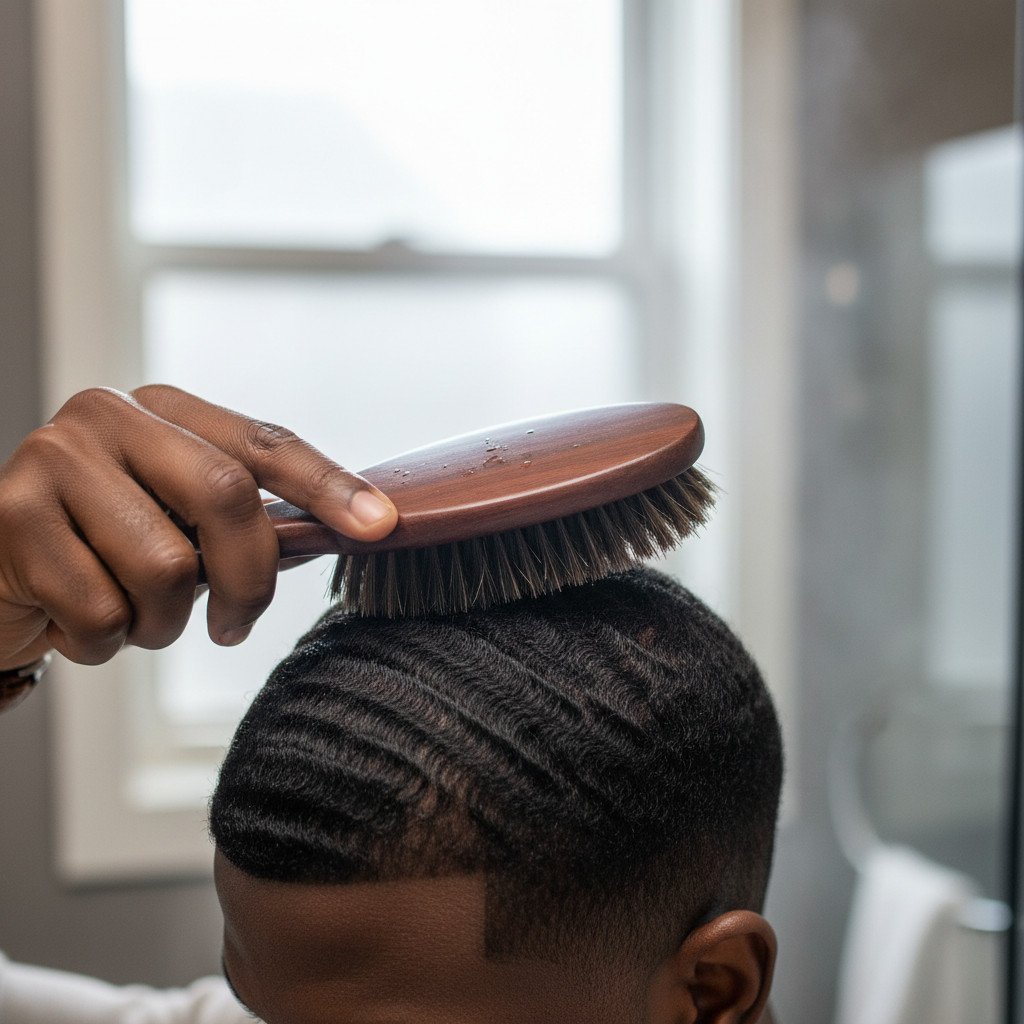
- Brush Session (15-20 minutes): This is your primary morning training session. Using your medium-bristle brush, brush from your crown outwards in all directions. Maintain consistent pressure and brush strokes. Focus on each section of your head: top, sides, and back. Ensure every strand is being directed downwards and outwards from the crown. This reinforces the wave pattern.
- Apply Wave Pomade (Small amount): If you prefer more hold or have particularly stubborn hair, apply a dime-sized amount of light wave pomade. Emulsify it in your hands first to ensure even distribution. Apply with the grain of your waves, smoothing your hair down. This helps lock in the pattern and adds a subtle sheen.
- Final Brush and Go: Do a final, thorough brush-through to ensure all hair is laid flat and the product is evenly distributed. Your waves are now set for the day. You can choose to wear a durag for a short period before leaving the house if you want extra compression, especially if you’re going to be active.
PM
The evening routine is critical for deep training and protection. It’s your most intensive session, preparing your hair for overnight compression and maximizing wave development. This is where the real work happens.
- Wash Day (1-2 times per week): On designated wash days, shampoo and condition your hair. Use a moisturizing shampoo and follow with a deep conditioner. Gently rinse, ensuring no residue is left. Pat dry with a microfiber towel, then proceed to step 2. For more on scalp health, see our guide on hair & scalp health for Black men.
- Deep Moisturize: Apply a generous amount of your chosen moisturizer or leave-in conditioner. Ensure your hair is slightly damp (not soaking wet) to allow for optimal absorption. Work the product through your hair thoroughly, reaching all areas. This is essential for keeping your hair soft and manageable.
- Intensive Brush Session (30-45 minutes): This is your longest and most important brushing session. Use your medium-bristle brush, applying firm, consistent strokes. Brush from the crown outwards in all directions, ensuring you hit all angles. This session is about actively training your hair to lay flat and form the wave pattern. Pay extra attention to areas where waves are slower to develop.
- Apply Wave Pomade (Optional, for extra hold): If desired, apply a slightly larger amount of wave pomade than in the morning. Again, emulsify it first. Smooth it over your hair, following the wave pattern. This provides additional hold and protection overnight. For a deeper dive into product choices, check out best wave products for Black men.
- Secure with Durag: This is a non-negotiable step. Tie your durag firmly but not so tight that it causes discomfort or leaves deep lines. Ensure all hair is completely covered and compressed. The durag will hold your hair in place, flatten it, and lock in moisture overnight. Learn more about optimal compression in our durag vs. wave cap comparison.
Adhering to this routine daily will yield significant results. Remember, consistency over intensity. Short, frequent brushing sessions are more effective than one long, infrequent one. Your hair responds best to regular, gentle persuasion.
Beyond the physical steps, consider the environment. Dry air can strip moisture from your hair, making it brittle. Using a humidifier in your bedroom can help maintain optimal moisture levels, especially during colder months. This small adjustment can significantly aid your wave journey.
Also, pay attention to your diet and hydration. What you put into your body reflects in your hair’s health. A balanced diet rich in vitamins and minerals, coupled with adequate water intake, supports strong, healthy hair growth. This holistic approach aligns with the principles of elevated self-mastery.
Remember to clean your brushes regularly. Product buildup and shed hair can accumulate, making your brush less effective and potentially introducing bacteria to your scalp. A simple wash with warm water and a mild shampoo, followed by air drying, will keep your tools in top condition.
For those times when you’re between barber visits, maintaining your hairline and keeping your hair at the optimal length is crucial. A clean lineup enhances the appearance of your waves. For tips on managing your hair between cuts, refer to our guide on haircut maintenance between barber visits.
The 4-week timeline (what changes each week)
The journey to 360 waves is progressive. While individual results vary, this timeline provides a general expectation of what you can anticipate over the first month. It helps manage expectations and keeps you motivated as you track your progress. Remember, patience and consistency are your greatest assets.
Week 1: Foundation and Adjustment
This week is all about establishing the routine. Your hair is likely still adjusting to being brushed in a specific direction. You might not see visible waves yet, but you’re laying the groundwork. Focus on perfect brush strokes and consistent product application.
- Hair Condition: Your hair will start to feel softer and more manageable due to consistent moisturizing. It might still be a bit resistant to laying down completely.
- Visible Changes: Minimal wave definition. You might see some slight ripples, especially after removing your durag in the morning. Don’t be discouraged; this is normal.
- Focus: Master your brushing angles and ensure full coverage of your scalp. Develop the habit of wearing your durag religiously, especially at night. This is also the time to ensure your hair length is optimal.
Week 2: Early Definition
By the second week, your hair is beginning to understand the assignment. You’ll start to see more noticeable ripples, particularly in areas where your hair naturally lays flatter. The consistency of your routine will begin to pay off.
- Hair Condition: Hair should feel significantly softer and more pliable. It will be easier to brush and lay down.
- Visible Changes: Clearer ripple patterns will start to emerge, especially on the top and sides. The crown area might still be a bit stubborn.
- Focus: Continue with intensive brushing. Begin to identify your ‘problem areas’ where waves are slower to form and dedicate extra brushing time to them. Ensure your durag is tied correctly for maximum compression.
Week 3: Pattern Reinforcement
This week is crucial for reinforcing the emerging wave pattern. Your hair is now more accustomed to the training. You’ll see more connected waves, and the pattern will be more evident even without a durag. This is where motivation often peaks as you see tangible results.
- Hair Condition: Hair should be consistently soft, well-moisturized, and responsive to brushing.
- Visible Changes: Your 360 wave pattern should be clearly visible and more connected around your entire head. The crown should show significant progress.
- Focus: Maintain the intensity of your brushing. Consider introducing a hard brush for short, targeted sessions if your hair is coarse and can handle it, but primarily stick to medium. Ensure your wash days are consistent to prevent product buildup and maintain scalp health.
Week 4: Solidification and Maintenance
By the end of the first month, you should have a well-defined 360 wave pattern. This week transitions from aggressive training to pattern solidification and maintenance. Your routine becomes second nature, and you can begin to fine-tune your approach.
- Hair Condition: Your hair should be healthy, shiny, and holding its wave pattern effectively.
- Visible Changes: Your waves should be deep, connected, and consistent across your entire head. You’ll likely receive compliments.
- Focus: Continue the daily routine with dedication. You can start to experiment slightly with different moisturizers or pomades if you feel the need to optimize, but stick to the basics first. Consider getting your first ‘wolfing’ haircut, where your barber cuts against the grain to enhance wave depth.
This timeline is a guide, not a rigid schedule. Some individuals may see faster results, while others may take a bit longer. The key is to remain consistent and patient. Every day you stick to the routine is a day closer to achieving the deep, defined 360 waves you desire. For a more detailed look at the duration, consult our article on how long to get 360 waves.
Beyond the initial four weeks, your wave journey continues. You’ll enter a phase known as ‘wolfing,’ where you let your hair grow out for an extended period (typically 4-8 weeks) while maintaining your brushing and moisturizing routine. This allows the waves to deepen and become more prominent. A skilled barber will then cut your hair ‘with the grain’ to reveal the full depth of your waves.
During wolfing, your brushing sessions might need to be longer and more intense, as you’re working with longer hair. You might also find a hard brush becomes more useful during this phase. However, always listen to your scalp; if it feels irritated, switch back to a medium or soft brush.
Remember that even after achieving your desired waves, maintenance is key. Waves are not a ‘set it and forget it’ style. They require ongoing commitment to brushing, moisturizing, and proper compression. Any lapse in the routine can lead to the waves fading or becoming less defined.
Consider your lifestyle during this period. If you’re highly active or sweat a lot, you might need to adjust your moisturizing and brushing frequency. Sweat can dry out your hair and disrupt the wave pattern. A quick re-brush and re-compression with a durag after intense activity can help maintain your progress.
The journey is also about learning your hair’s unique characteristics. Some areas of your head might wave up faster than others. Some might require more product or more aggressive brushing. Pay attention to these nuances and adjust your technique accordingly. This personalized approach is what separates good wavers from great ones.
Finally, don’t be afraid to seek advice from experienced wavers or your barber. They can offer personalized tips based on their observations of your hair. The wave community is often supportive and willing to share knowledge, contributing to your overall success.
Table: Mistake → what it causes → fix
| Mistake | What it Causes | Fix |
|---|---|---|
| Inconsistent Brushing | Uneven waves, slow progress, bald spots in wave pattern. | Brush daily, AM & PM. Set alarms. Short, frequent sessions are better than infrequent long ones. |
| Skipping Durag | Frizzy hair, lost wave pattern overnight, dry hair, pillow friction. | Wear durag every night, without fail. Ensure it’s tied snugly but not too tight. |
| Dry Hair / Lack of Moisture | Brittle hair, breakage, difficulty laying down, dull waves. | Moisturize daily. Use water-based leave-in conditioner or light pomade. Adjust amount based on hair’s needs. |
| Over-Product Use | Greasy hair, clogged pores, product buildup, dull waves, scalp irritation. | Use pea-sized amounts. Emulsify product in hands first. Focus on even distribution, not saturation. |
| Wrong Brush Type | Scalp irritation (hard brush too early), ineffective training (soft brush too early). | Start with medium brush. Introduce hard brush only when waves are established and hair is longer. Use soft brush for finishing. |
| Improper Hair Length | Hair too short to wave, hair too long to train effectively. | Get a 1.5-2 inch cut (with the grain) to start. Maintain optimal length with regular barber visits. |
| Brushing Against the Grain | Disrupts wave pattern, creates frizz, prevents hair from laying down. | Always brush from the crown outwards, following the natural growth pattern. Learn your angles. |
Frequently Asked Questions
How often should I wash my hair when trying to get waves?
You should aim to wash your hair 1-2 times per week. Over-washing can strip natural oils, leading to dry and brittle hair, which makes it harder to train. Use a moisturizing shampoo and conditioner to maintain hydration and scalp health. On non-wash days, you can rinse your hair with water and apply conditioner for a refresh.
What’s the best way to tie a durag for optimal compression?
To tie a durag effectively, place the seam in the middle of your head, aligning it with your nose. Bring the two main flaps around the back of your head and cross them, then bring them back to the front and tie them in a knot. Ensure the knot is not too tight to avoid headaches or forehead lines. The goal is firm, even compression across your entire head.
Can I get 360 waves with coarse hair?
Yes, absolutely. Coarse hair can actually produce some of the deepest and most defined 360 waves due to its natural texture. The key is consistent and diligent brushing, ample moisturizing to soften the hair, and strong compression with a durag. You might need to use a slightly firmer brush and more dedicated brushing time, but the results are often spectacular.
How long does it take to see noticeable waves?
Most beginners start to see noticeable ripples and early wave patterns within 2-4 weeks of consistent daily routine. However, to achieve deep, connected 360 waves that are fully established, it can take 2-4 months or even longer, depending on your hair type, length, and dedication to the routine. Patience is crucial.
Do I need to get a specific haircut to start getting waves?
Yes, a proper haircut is foundational. You need to start with your hair cut to an optimal length, typically 1.5 to 2 inches (with the grain). Your barber should understand that you are training for waves and cut your hair in a way that facilitates the wave pattern, often leaving the crown slightly longer. Regular trims with the grain are essential for maintaining and deepening your waves.

What is ‘wolfing’ and why is it important for waves?
Wolfing is the process of letting your hair grow out for an extended period (typically 4-8 weeks) without cutting it, all while maintaining your rigorous brushing and moisturizing routine. It’s important because longer hair has more weight, which helps to pull the hair down and deepen the wave pattern. After a wolfing period, a skilled barber will cut your hair ‘with the grain’ to reveal the full depth and connection of your waves.
My waves are not connecting in certain spots, what should I do?
If your waves aren’t connecting, it’s usually due to inconsistent brushing in those specific areas. Identify the stubborn spots and dedicate extra brushing time to them during your daily sessions. Ensure your brush strokes are firm and consistent, always brushing from the crown outwards. You might also need to apply a tiny bit more moisturizer or pomade to those areas to make the hair more pliable. Review your brushing angles to ensure you’re hitting every part of your head correctly.
Final Thoughts
The journey to 360 waves is a testament to consistency and dedication. It’s more than just a hairstyle; it’s a commitment to a grooming ritual that yields undeniable results. By adhering to this daily routine—brushing, moisturizing, and compressing—you’re not just training your hair; you’re cultivating discipline and an elevated sense of self-mastery.
Remember that progress is not always linear. There will be days when your waves look sharper than others, and moments of frustration are natural. Stay the course. Trust the process. Each brush stroke is an investment in the final outcome. The deep, swirling patterns you achieve will be a direct reflection of your consistent effort and attention to detail.
Embrace the ritual. Enjoy the process of seeing your hair transform. Your waves will become a signature, a visual representation of your commitment to excellence in every aspect of your grooming. This guide provides the blueprint; your dedication will build the masterpiece.
Next reads: 360 waves for Black men, best wave products for Black men, hair & scalp health for Black men.
Frequently Asked Questions
How often should I wash my hair when trying to get waves?
You should aim to wash your hair 1-2 times per week. Over-washing can strip natural oils, leading to dry and brittle hair, which makes it harder to train. Use a moisturizing shampoo and conditioner to maintain hydration and scalp health. On non-wash days, you can rinse your hair with water and apply conditioner for a refresh.
What’s the best way to tie a durag for optimal compression?
To tie a durag effectively, place the seam in the middle of your head, aligning it with your nose. Bring the two main flaps around the back of your head and cross them, then bring them back to the front and tie them in a knot. Ensure the knot is not too tight to avoid headaches or forehead lines. The goal is firm, even compression across your entire head.
Can I get 360 waves with coarse hair?
Yes, absolutely. Coarse hair can actually produce some of the deepest and most defined 360 waves due to its natural texture. The key is consistent and diligent brushing, ample moisturizing to soften the hair, and strong compression with a durag. You might need to use a slightly firmer brush and more dedicated brushing time, but the results are often spectacular.
How long does it take to see noticeable waves?
Most beginners start to see noticeable ripples and early wave patterns within 2-4 weeks of consistent daily routine. However, to achieve deep, connected 360 waves that are fully established, it can take 2-4 months or even longer, depending on your hair type, length, and dedication to the routine. Patience is crucial.
Do I need to get a specific haircut to start getting waves?
Yes, a proper haircut is foundational. You need to start with your hair cut to an optimal length, typically 1.5 to 2 inches (with the grain). Your barber should understand that you are training for waves and cut your hair in a way that facilitates the wave pattern, often leaving the crown slightly longer. Regular trims with the grain are essential for maintaining and deepening your waves.
What is ‘wolfing’ and why is it important for waves?
Wolfing is the process of letting your hair grow out for an extended period (typically 4-8 weeks) without cutting it, all while maintaining your rigorous brushing and moisturizing routine. It’s important because longer hair has more weight, which helps to pull the hair down and deepen the wave pattern. After a wolfing period, a skilled barber will cut your hair ‘with the grain’ to reveal the full depth and connection of your waves.
My waves are not connecting in certain spots, what should I do?
If your waves aren’t connecting, it’s usually due to inconsistent brushing in those specific areas. Identify the stubborn spots and dedicate extra brushing time to them during your daily sessions. Ensure your brush strokes are firm and consistent, always brushing from the crown outwards. You might also need to apply a tiny bit more moisturizer or pomade to those areas to make the hair more pliable. Review your brushing angles to ensure you’re hitting every part of your head correctly.
Shop wave brush on Amazon
Shop moisturizer on Amazon
Shop durag on Amazon
Shop shampoo on Amazon
Shop conditioner on Amazon
Shop leave in conditioner on Amazon
Shop wave pomade on Amazon