
Waves Not Coming In? 360 Waves Troubleshooting for Black Men (Fix the Top 12 Problems)
Achieving crisp, deep 360 waves is a hallmark of refined grooming for Black men. It’s a commitment, a statement, and a skill honed through consistent effort. However, the journey to perfect waves is rarely without its challenges. Many men encounter frustrating plateaus or outright failures in their wave development. Your waves might not be spinning, they might be patchy, or perhaps they simply aren’t as defined as you envision.
This isn’t a sign of defeat. It’s a call for precision. Understanding the common pitfalls and applying targeted solutions is the key to unlocking the full potential of your wave pattern. This guide cuts through the noise, offering direct, actionable advice rooted in both barbershop wisdom and practical experience. We’ll diagnose the issues and provide the exact fixes you need.
If your waves aren’t showing, it’s not for lack of trying, but likely a misstep in technique or product application. Don’t throw in the towel. Let’s get your 360 waves for Black men spinning correctly. We’ll cover everything from brushing technique to product selection, ensuring you have the knowledge to overcome any obstacle on your wave journey.
If your waves aren’t showing, one of these is the reason
The quest for perfect 360 waves is a journey of discipline and precision. When your efforts aren’t yielding the desired results, it’s natural to feel frustrated. However, the solution often lies in identifying a specific, correctable error in your routine. This section outlines the fundamental reasons why waves might not be forming or appearing as defined as they should. Each point represents a common oversight or misunderstanding that, once addressed, can significantly improve your wave pattern.
From inadequate brushing to incorrect product usage, every detail matters. Understanding these foundational issues is the first step toward correcting them. We’ll delve into the nuances of each problem, providing a clear path forward. Remember, consistency and attention to detail are paramount in wave development. Let’s uncover what’s holding your waves back.
Inconsistent Brushing
Perhaps the most common culprit. Irregular brushing, or not brushing enough, prevents your hair from laying down uniformly. Waves are formed by training your hair to grow in a specific direction. If this training is inconsistent, the hair will revert to its natural growth pattern, leading to a lack of definition or patchy waves.
Incorrect Brushing Technique
Brushing without a clear pattern or applying pressure unevenly can disrupt wave formation. Brushing in random directions or missing certain areas will result in an uneven wave pattern. The goal is to create a consistent, circular motion that trains all strands equally.
Poor Hair Preparation
Starting with dry, tangled, or improperly moisturized hair makes it difficult for brushes to effectively lay down the hair. Hair that is too dry can break, while hair that is too oily can become matted, both hindering wave development. Proper preparation sets the stage for effective brushing.
Using the Wrong Brush
Not all brushes are created equal. Using a brush that is too soft for your hair texture, or one that is too hard and causes irritation, can impede progress. The right brush provides the necessary tension to train your hair without causing damage. Different stages of wave development require different brush types.
Lack of Moisturizing
Dry hair is brittle hair. It stands up, breaks easily, and resists laying down. Waves thrive on moisture, which keeps the hair pliable and healthy, allowing it to be trained effectively. Without adequate moisture, your hair will fight against the wave pattern you’re trying to create.
Over-Moisturizing or Product Buildup
While moisture is crucial, too much product or products that aren’t properly washed out can lead to buildup. This buildup weighs hair down, clogs pores, and can prevent waves from forming by creating a barrier between the brush and the hair shaft. It also makes hair appear greasy and dull.
Improper Durag Usage
The durag is your wave protector and shaper. Wearing it incorrectly, too loose, or not consistently can undo all your brushing efforts. The durag’s primary function is to compress the hair, locking in the wave pattern and moisture while you sleep or go about your day.
Infrequent Washing or Clarifying
Product buildup, dead skin, and natural oils can accumulate on the scalp and hair, hindering wave formation and scalp health. A clean scalp and hair are essential for healthy growth and effective wave training. Infrequent washing can lead to dull, lifeless waves and scalp issues.
Hair Length Issues
Hair that is too short won’t have enough length to form a visible wave pattern. Hair that is too long can be difficult to lay down and manage, making it harder to establish deep, consistent waves. Finding the optimal length is crucial for effective wave training.
Genetics and Hair Texture
While everyone can get waves, some hair textures may require more effort and patience. Tighter curl patterns can be more resistant to laying down, requiring more consistent and intense training. Understanding your hair type helps in setting realistic expectations and tailoring your routine.
Scalp Health Neglect
An unhealthy scalp can lead to issues like dandruff, dryness, or irritation, which in turn can affect hair growth and the overall health of your waves. A healthy scalp is the foundation for healthy hair, and thus, healthy waves. Neglecting it can undermine all your wave efforts.
Lack of Patience and Consistency
Waves don’t appear overnight. They are the result of diligent, consistent effort over weeks and months. Giving up too soon or skipping steps will prevent your hair from adapting to the new growth pattern. Patience is not just a virtue; it’s a requirement for wave success.
Quick diagnosis (2-minute checklist)
Before diving deep into solutions, a rapid assessment can often pinpoint the primary issue. This checklist is designed for a quick, self-administered diagnosis. Go through each question and honestly evaluate your routine. The more ‘Yes’ answers you have to the problems listed, the more likely that area is hindering your wave progress. This isn’t about perfection, but about identifying patterns of neglect or incorrect practices. Use this to guide your focus as you read through the detailed solutions that follow.
- Are you brushing for at least 30 minutes total daily?
- Do you brush in consistent, circular motions from your crown outwards?
- Is your hair moisturized before each major brush session?
- Are you using a medium or hard brush for most of your brushing?
- Do you wear a durag every night, ensuring it’s snug but not too tight?
- Do you wash your hair at least once a week?
- Does your hair feel clean, not greasy, after washing?
- Is your hair length between 0.5 to 1.5 inches?
- Do you apply a light moisturizer or pomade daily?
- Is your scalp free from excessive dryness, flakiness, or irritation?
- Have you been consistently following your routine for at least 4-6 weeks?
- Do you feel confident in your brushing angles for all areas of your head?
The top 12 problems (and the exact fix)
Achieving deep, defined 360 waves requires precision and dedication. When your efforts aren’t yielding the desired results, it’s crucial to identify the specific breakdown in your routine. This section systematically addresses the twelve most common problems faced by men striving for perfect waves, providing clear, actionable solutions for each. From fundamental brushing errors to overlooked aspects of hair and scalp health, we cover every angle. Each fix is designed to be practical, evidence-based, and directly applicable to your daily grooming regimen. Let’s diagnose and correct the issues holding back your wave potential.
Problem 1: Inconsistent Brushing Schedule
Many men make the mistake of brushing only when they remember, or only for a few minutes here and there. Waves are a product of consistent training. Your hair needs constant reinforcement to lay down in the desired pattern. Irregular brushing means your hair is constantly fighting against the training, making it difficult for waves to set in.
The Fix: Establish a Non-Negotiable Brushing Routine
As an affiliate site, GFBM may earn from qualifying purchases through product links.
Commit to brushing for at least 30-60 minutes daily, broken into multiple sessions. Divide your brushing into 3-4 sessions throughout the day. For example, 15-20 minutes in the morning, another 10-15 minutes midday, and a final 15-20 minutes before bed. Consistency is more important than marathon sessions. Use a high-quality wave brush that suits your hair texture. This consistent pressure and direction will train your hair effectively. Think of it as muscle memory for your hair; it needs repetition.
Problem 2: Incorrect Brushing Technique and Angles
Brushing randomly or with uneven pressure is counterproductive. Waves form from hair laying down uniformly in a specific direction from your crown. If your technique is haphazard, you’ll end up with patchy waves or no waves at all. Many men struggle with hitting all angles, especially the back and sides, leading to uneven wave patterns.
The Fix: Master Your Brushing Angles and Pressure
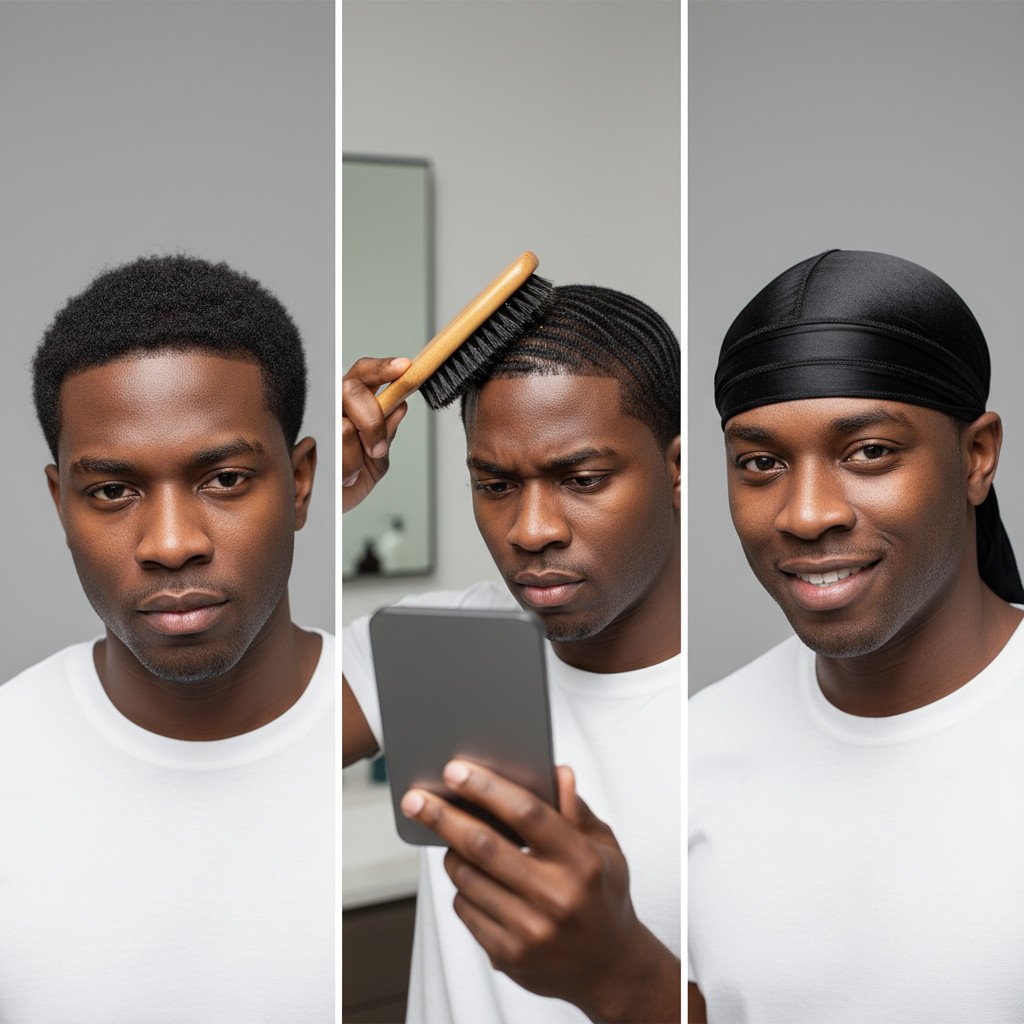
Always brush from your crown outwards. Imagine your crown as the center of a clock. Brush forward from 12 o’clock, right from 3 o’clock, back from 6 o’clock, and left from 9 o’clock. Then, fill in the diagonal angles (1:30, 4:30, 7:30, 10:30). Use a mirror, especially for the back and sides, until you can feel the correct angles. Apply firm, even pressure. The goal is to lay down every strand of hair in the correct direction. Focus on long, deliberate strokes rather than short, choppy ones. This ensures maximum contact and training for your hair.
Problem 3: Dry, Unconditioned Hair
Dry hair is stiff, brittle, and resistant to laying down. It’s also prone to breakage, which can lead to thinning spots and make wave formation nearly impossible. Without proper moisture, your hair will stand up, defying your brushing efforts. This is a fundamental barrier to wave development.
The Fix: Prioritize Daily Moisturizing and Conditioning
Integrate a leave-in conditioner or a light hair moisturizer into your daily routine. After your morning brush session, apply a dime-sized amount of a water-based moisturizer to your hair. Work it in thoroughly, then follow with another light brush session to distribute the product and lay the hair down. On wash days, use a deep conditioner to replenish moisture. Healthy, pliable hair is essential for effective wave training. Look for products with natural oils like argan, jojoba, or shea butter. This will keep your hair soft, manageable, and ready to be trained.
Problem 4: Using the Wrong Type of Brush
Using a brush that’s too soft for your hair texture won’t provide enough tension to lay down coarser hair, while a brush that’s too hard can irritate your scalp and cause damage. Many men stick with one brush type when different stages of wave development or hair lengths require different brushes.
The Fix: Select the Right Brush for Your Hair and Stage
Invest in a range of brushes: soft, medium, and hard. Start your brush sessions with a hard or medium brush to detangle and lay down the hair. As your hair softens and lays down, switch to a soft brush for polishing and maintaining the wave pattern. Soft brushes are also excellent for applying product. For fresh cuts or coarser hair, a hard brush is essential. For daily maintenance and sensitive scalps, a medium or soft brush is ideal. Ensure your brushes have natural boar bristles, as these are best for distributing natural oils and stimulating the scalp.
Problem 5: Product Overload or Buildup
While products are essential, using too much pomade, grease, or heavy creams can lead to significant buildup. This buildup can clog your pores, make your hair greasy, and prevent your waves from truly spinning. It creates a barrier that stops your brush from effectively training your hair, leading to dull, flat, or patchy waves. This also contributes to scalp issues.
The Fix: Use Products Sparingly and Clarify Regularly
Use only a pea-sized amount of pomade or wave butter. Less is often more. Focus on light, water-based moisturizers rather than heavy greases. If you suspect buildup, incorporate a clarifying shampoo into your weekly wash routine. This will strip away excess product and rejuvenate your hair and scalp. After clarifying, always follow up with a moisturizing conditioner to restore hydration. This balance ensures your hair is clean enough to be trained but still adequately moisturized.
Problem 6: Improper Durag Application or Inconsistent Wearing
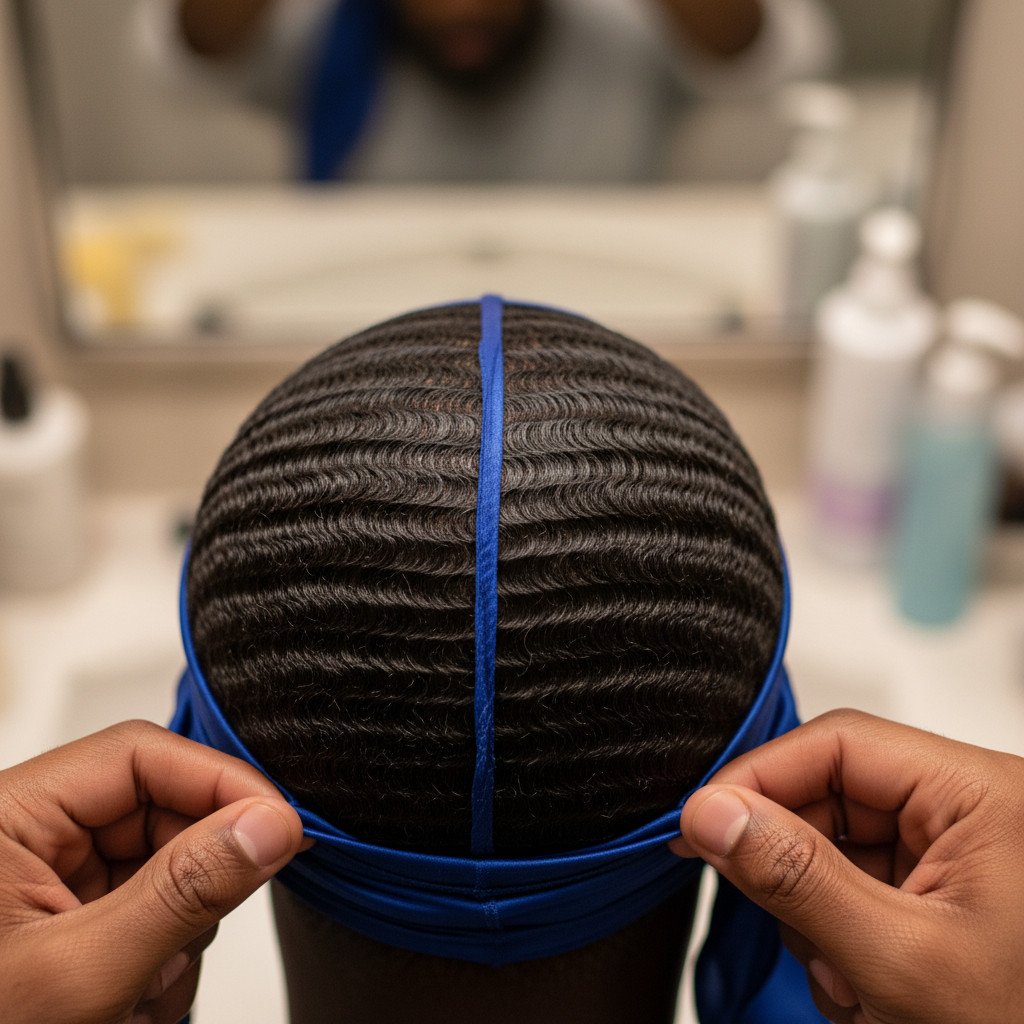
The durag is not just a fashion statement; it’s a critical tool for wave compression. If your durag is too loose, slips off, or isn’t worn consistently (especially overnight), all your brushing efforts can be undone. Without proper compression, your hair will lift, and your waves will lose their definition and depth.
The Fix: Master the Durag Wrap and Wear it Religiously
Wear your durag every night, without fail. Ensure it’s snug enough to provide compression without being uncomfortably tight or cutting off circulation. The seams should be on the outside to prevent lines on your waves. Tie the flaps firmly at the back, then wrap them around your head and tie again at the front or back, creating even pressure. The goal is to lay your hair down flat and lock in moisture. For maximum compression, consider wearing a wave cap over your durag during the day if you’re not going out, or for extra protection at night. This ensures your hair stays laid and your waves deepen.
Problem 7: Infrequent or Incorrect Washing Routine
Washing your hair too often can strip it of natural oils, leading to dryness. Not washing enough leads to product buildup, dirt, and oil accumulation, which hinders wave formation and scalp health. A proper wash routine is essential for clean, healthy hair that can form waves.
The Fix: Implement a Balanced Wash and Style Method
Adopt a ‘wash and style’ method 1-2 times per week. This involves washing your hair, conditioning, applying a light moisturizer, and then brushing your waves in while your hair is still damp. Wear your durag immediately after. Use a sulfate-free shampoo to avoid stripping natural oils. On non-wash days, you can ‘rinse and style’ with just water and conditioner to refresh your hair without fully washing. This routine keeps your hair clean, moisturized, and consistently trained. For a deeper dive into this, check out our guide on waves wash day routine.
Problem 8: Hair Length is Not Optimal
If your hair is too short, there isn’t enough length for the hair to lay down and form a visible wave pattern. If it’s too long, it becomes difficult to manage, lay down, and train effectively, often leading to frizz and loss of definition. Finding the sweet spot is crucial for wave development.
The Fix: Maintain Optimal Hair Length (1 to 1.5 inches)
Aim for a hair length between 1 to 1.5 inches for optimal wave formation. This length provides enough hair to lay down and create a pattern without being too long to manage. Get regular haircuts (every 2-4 weeks) from a barber who understands wave cuts. Ask for a ‘with the grain’ cut to preserve your wave pattern. As your waves deepen, you can experiment with slightly longer lengths, but always ensure your hair is manageable and lays down. For more on maintaining your waves between cuts, read our article on waves maintenance between cuts.
Problem 9: Neglecting Scalp Health
A healthy scalp is the foundation for healthy hair growth. Issues like dandruff, excessive dryness, oiliness, or irritation can impede hair growth, weaken hair strands, and make it difficult for waves to form properly. An unhealthy scalp often leads to unhealthy, dull-looking waves.
The Fix: Prioritize Scalp Care and Hygiene
Regularly massage your scalp to stimulate blood flow. Use a light, non-comedogenic oil (like jojoba or tea tree oil) if your scalp is dry. Ensure your shampoo and conditioner are gentle and suitable for your scalp type. If you experience persistent dandruff or irritation, consider a medicated shampoo. Avoid scratching your scalp vigorously, as this can cause damage. A healthy scalp promotes stronger, healthier hair that is more receptive to wave training. For comprehensive scalp care, refer to our guide on hair & scalp health for Black men.
Problem 10: Lack of Patience and Realistic Expectations
Waves don’t appear overnight. Many men get discouraged after a few weeks if they don’t see significant results and give up. The process of training your hair to form waves takes time, consistency, and patience. Expecting instant results leads to frustration and premature abandonment of the routine.
The Fix: Understand the Wave Journey and Stay Consistent
Recognize that wave development is a marathon, not a sprint. For most men, it takes at least 4-6 weeks of consistent effort to start seeing noticeable ripples, and 3-6 months for deep, defined 360 waves. Document your progress with photos. This allows you to see subtle improvements you might otherwise miss. Stay committed to your daily brushing, moisturizing, and durag routine. The cumulative effect of consistent effort will eventually yield results. Patience is your most powerful tool in this process. To understand the timeline better, read our article on how long to get 360 waves.
Problem 11: Genetics and Hair Texture Challenges
While every Black man can get waves, some hair textures (e.g., very coarse or tightly coiled) may require more intense and prolonged training. If your hair is particularly resistant, you might feel like you’re doing everything right but still not seeing the progress of others. This can be demotivating.
The Fix: Adapt Your Routine to Your Hair Type
If you have a tighter curl pattern, increase your brushing time. You might need to brush for 60-90 minutes daily, broken into shorter, more frequent sessions. Use a harder brush more often to ensure maximum tension and training. Focus on keeping your hair exceptionally moisturized to improve pliability. Consider using a slightly heavier wave pomade (sparingly) to help lay down resistant hair. Understand that your journey might take longer, but with persistence, waves are achievable for all hair textures. It’s about working with your hair, not against it.
Problem 12: Not Wolfing or Wolfing Incorrectly
Wolfing is the process of letting your hair grow out for an extended period (4-8 weeks or more) while maintaining your brushing and durag routine. This allows the longer hair to lay down and deepen the wave pattern. Many men cut their hair too soon, interrupting the wolfing process, or don’t brush enough during wolfing, leading to matted hair.
The Fix: Embrace the Wolfing Process with Increased Brushing
Commit to wolfing for at least 4-6 weeks, or even longer for deeper waves. During this period, significantly increase your brushing time to 60-90 minutes daily. The longer hair requires more effort to lay down. Use a hard brush to penetrate the longer strands and a medium brush for daily maintenance. Keep your hair well-moisturized to prevent tangles and breakage. The durag is even more critical during wolfing to keep the longer hair compressed. When you finally get a cut, ensure your barber cuts ‘with the grain’ to preserve your hard-earned wave pattern. Wolfing is where true wave depth is built.
Table: Symptom → most likely cause → tonight’s move
| Symptom | Most Likely Cause | Tonight’s Move |
|---|---|---|
| Waves are patchy/uneven | Inconsistent brushing angles or missed spots | Focus on using a mirror to hit all angles, especially the back and sides. Brush from crown outwards systematically. |
| Waves not spinning/flat | Insufficient brushing time or dry hair | Increase daily brushing to 60 minutes. Apply a light leave-in conditioner before bed, then durag. |
| Frizz and flyaways | Lack of moisture or improper durag use | Apply a dime-sized amount of wave butter, brush in, then wear a snug durag for at least 8 hours. |
| Scalp irritation/dandruff | Product buildup or dry scalp | Use a clarifying shampoo. Massage scalp with light oil (jojoba/tea tree) if dry. Ensure durag isn’t too tight. |
| Hair stands up after brushing | Hair too short, too dry, or not enough compression | Let hair grow slightly (wolf). Increase moisturizing. Ensure durag is snug and worn immediately after brushing. |
| Waves disappear after wash | Not ‘wash and styling’ correctly or using harsh shampoo | Use sulfate-free shampoo. Brush waves in while damp, apply light product, then durag immediately. |
| Waves are weak/shallow | Not wolfing long enough or using too soft a brush | Extend wolfing period (6-8 weeks). Use a hard brush for initial lay-down, then medium. |
| Hair feels greasy/heavy | Too much product or not clarifying | Reduce product amount significantly. Incorporate a clarifying shampoo into your weekly routine. |
| Edges not laying down | Insufficient brushing on edges or durag not covering properly | Focus extra brush strokes on edges. Ensure durag covers the hairline completely and is tied securely. |
| Hair breaking/thinning | Dryness, harsh brushing, or poor scalp health | Deep condition. Use softer brushes. Check scalp health. Avoid aggressive brushing. |
| Waves only in certain areas | Inconsistent pressure or missed sections during brushing | Use a mirror to observe your brushing pattern. Ensure even pressure across all areas. |
| Waves not progressing | Lack of patience or inconsistent routine | Review entire routine for consistency. Take progress pictures. Commit for another 4-6 weeks before re-evaluating. |
Frequently Asked Questions
How long does it really take to get 360 waves?
The timeline for developing 360 waves varies significantly among individuals, primarily depending on hair texture, consistency of effort, and starting hair length. Generally, most men will begin to see noticeable ripples and a basic wave pattern within 4 to 6 weeks of dedicated, consistent effort. However, achieving deep, defined, and fully connected 360 waves often requires a commitment of 3 to 6 months, and sometimes even longer for very coarse hair textures. Patience and unwavering adherence to your routine are paramount throughout this process.
Can I get waves with any hair texture?
Yes, every Black man can achieve waves, regardless of their specific hair texture. While tighter curl patterns may require more intensive brushing, increased moisturizing, and longer wolfing periods, the fundamental principles of wave training apply universally. The key is to adapt your routine to your hair’s unique needs, ensuring adequate moisture, consistent brushing, and proper compression. Don’t let your hair texture be an excuse; with the right approach, waves are attainable for all.
How often should I wash my hair when trying to get waves?
When developing waves, a balanced washing routine is crucial. Washing your hair 1 to 2 times per week using the ‘wash and style’ method is generally recommended. This frequency allows you to cleanse your scalp and hair of product buildup and dirt without stripping essential natural oils. On non-wash days, a ‘rinse and style’ with just water and conditioner can help refresh your hair and maintain moisture. Always use a sulfate-free shampoo and follow up with a good conditioner to keep your hair healthy and pliable.
What is ‘wolfing’ and why is it important for waves?
Wolfing is the process of allowing your hair to grow out for an extended period, typically 4 to 8 weeks or even longer, while maintaining your regular brushing and durag routine. Its importance lies in giving your hair sufficient length to lay down and deepen the wave pattern. The longer hair has more weight and leverage, making it easier to train and compress into deeper, more defined waves. During wolfing, increased brushing and consistent durag use are critical to prevent matting and ensure the hair is properly trained as it grows.
How do I prevent my waves from getting frizzy?
Frizz is a common enemy of defined waves, often caused by dryness, humidity, or friction. To combat frizz, ensure your hair is consistently moisturized with a light, water-based leave-in conditioner or wave butter. Always wear a durag, especially at night, to compress your hair and protect it from friction against pillows. Avoid touching your hair excessively throughout the day, as this can disrupt the wave pattern and introduce frizz. Regular conditioning and proper durag usage are your best defenses against frizz.
Should I use a hard, medium, or soft brush?
The type of brush you use should depend on your hair length and the stage of your wave development. A hard brush is ideal for wolfing periods or for coarser, freshly cut hair, as it provides maximum tension to lay down resistant strands. A medium brush is versatile and suitable for daily maintenance once your waves start to form, offering a good balance of tension and comfort. A soft brush is best for polishing your waves, distributing natural oils, and for use on shorter hair or sensitive scalps. Many wavers use a combination of brushes in a single session, starting with harder brushes and finishing with softer ones.
Can I swim or get my waves wet?
Yes, you can swim or get your waves wet, but it requires immediate attention afterward to maintain your pattern. Chlorine and saltwater can be drying, so it’s advisable to rinse your hair with fresh water before and after swimming. Immediately after getting your waves wet, perform a ‘wash and style’ or ‘rinse and style’ routine. This involves thoroughly brushing your waves back into place while damp, applying a light moisturizer, and then securing them with a durag. This helps to reset your pattern and prevent frizz or loss of definition.
Final Thoughts
Achieving and maintaining deep, defined 360 waves is a journey that demands consistency, precision, and patience. It’s a commitment to a detailed grooming regimen, but the results—a sharp, polished, and confident look—are undeniably worth the effort. By systematically addressing the common pitfalls outlined in this guide, you equip yourself with the knowledge to overcome any challenge on your wave journey.
Remember, every man’s hair is unique, and while the principles remain constant, your specific routine might need slight adjustments. Pay attention to your hair’s response, be diligent with your brushing, prioritize moisture, and never underestimate the power of a properly tied durag. Your waves are a reflection of your discipline and dedication. Stay consistent, stay patient, and watch your waves deepen into the masterful pattern you desire. The journey to perfect waves is one of self-mastery and refined grooming.
Next reads: The Ultimate Guide to 360 Waves for Black Men, How Long Does it Take to Get 360 Waves?, and Maintaining Your Waves Between Barber Visits.
Frequently Asked Questions
How long does it really take to get 360 waves?
The timeline for developing 360 waves varies significantly among individuals, primarily depending on hair texture, consistency of effort, and starting hair length. Generally, most men will begin to see noticeable ripples and a basic wave pattern within 4 to 6 weeks of dedicated, consistent effort. However, achieving deep, defined, and fully connected 360 waves often requires a commitment of 3 to 6 months, and sometimes even longer for very coarse hair textures. Patience and unwavering adherence to your routine are paramount throughout this process.
Can I get waves with any hair texture?
Yes, every Black man can achieve waves, regardless of their specific hair texture. While tighter curl patterns may require more intensive brushing, increased moisturizing, and longer wolfing periods, the fundamental principles of wave training apply universally. The key is to adapt your routine to your hair’s unique needs, ensuring adequate moisture, consistent brushing, and proper compression. Don’t let your hair texture be an excuse; with the right approach, waves are attainable for all.
How often should I wash my hair when trying to get waves?
When developing waves, a balanced washing routine is crucial. Washing your hair 1 to 2 times per week using the ‘wash and style’ method is generally recommended. This frequency allows you to cleanse your scalp and hair of product buildup and dirt without stripping essential natural oils. On non-wash days, a ‘rinse and style’ with just water and conditioner can help refresh your hair and maintain moisture. Always use a sulfate-free shampoo and follow up with a good conditioner to keep your hair healthy and pliable.
What is ‘wolfing’ and why is it important for waves?
Wolfing is the process of allowing your hair to grow out for an extended period, typically 4 to 8 weeks or even longer, while maintaining your regular brushing and durag routine. Its importance lies in giving your hair sufficient length to lay down and deepen the wave pattern. The longer hair has more weight and leverage, making it easier to train and compress into deeper, more defined waves. During wolfing, increased brushing and consistent durag use are critical to prevent matting and ensure the hair is properly trained as it grows.
How do I prevent my waves from getting frizzy?
Frizz is a common enemy of defined waves, often caused by dryness, humidity, or friction. To combat frizz, ensure your hair is consistently moisturized with a light, water-based leave-in conditioner or wave butter. Always wear a durag, especially at night, to compress your hair and protect it from friction against pillows. Avoid touching your hair excessively throughout the day, as this can disrupt the wave pattern and introduce frizz. Regular conditioning and proper durag usage are your best defenses against frizz.
Should I use a hard, medium, or soft brush?
The type of brush you use should depend on your hair length and the stage of your wave development. A hard brush is ideal for wolfing periods or for coarser, freshly cut hair, as it provides maximum tension to lay down resistant strands. A medium brush is versatile and suitable for daily maintenance once your waves start to form, offering a good balance of tension and comfort. A soft brush is best for polishing your waves, distributing natural oils, and for use on shorter hair or sensitive scalps. Many wavers use a combination of brushes in a single session, starting with harder brushes and finishing with softer ones.
Can I swim or get my waves wet?
Yes, you can swim or get your waves wet, but it requires immediate attention afterward to maintain your pattern. Chlorine and saltwater can be drying, so it’s advisable to rinse your hair with fresh water before and after swimming. Immediately after getting your waves wet, perform a ‘wash and style’ or ‘rinse and style’ routine. This involves thoroughly brushing your waves back into place while damp, applying a light moisturizer, and then securing them with a durag. This helps to reset your pattern and prevent frizz or loss of definition.
Shop wave brush on Amazon
Shop leave-in conditioner on Amazon
Shop hair moisturizer on Amazon
Shop wave pomade on Amazon
Shop clarifying shampoo on Amazon
Shop durag on Amazon