
Your brush can build waves—or irritate your scalp
Achieving deep, defined 360 waves for Black men is an art form, a testament to dedication and precision. At the core of this grooming ritual lies a tool often underestimated: the wave brush. Yet, the choice of brush—soft, medium, or hard—is not merely a preference; it’s a critical decision that impacts not only the quality of your waves but also the health of your scalp. Using the wrong brush at the wrong time can hinder your progress, cause irritation, or even damage your hair follicles.
Understanding the nuances of each brush type and how it interacts with your hair texture and wave development is paramount. This guide cuts through the noise, offering direct, actionable insights rooted in barbershop wisdom and modern understanding. We’ll demystify the brush selection process, ensuring you cultivate perfect waves while maintaining a healthy, comfortable scalp.
The journey to elite waves requires consistency, the right products, and, most importantly, the correct tools. Your wave brush is an extension of your commitment to self-mastery. Let’s ensure it’s the right one.
Soft vs medium vs hard (how to choose)
The distinction between soft, medium, and hard wave brushes lies primarily in the stiffness and density of their bristles. Each type serves a specific purpose in the wave development process, catering to different hair lengths, textures, and stages of wave progression. Choosing correctly is fundamental to both wave formation and scalp health.
Soft Wave Brushes: Gentle Definition and Finish
Soft wave brushes are characterized by their pliable, often longer bristles. These brushes are designed for gentle stimulation and are ideal for several key applications. Their primary role is to lay down the top layer of hair, enhancing shine and providing a smooth, polished finish without causing undue stress on the scalp or hair follicles. They are particularly effective for fresh haircuts or when your hair is at a shorter length, as they can maneuver through fine, delicate strands without pulling.
For those with sensitive scalps or finer hair textures, a soft brush is often the starting point and a consistent finisher. It helps distribute natural oils and styling products evenly, contributing to a healthy sheen. While they don’t offer the deep pull needed for initial wave training, they are indispensable for maintaining definition and achieving that final, laid-down look. Think of the soft brush as your detailing tool, perfecting the surface and encouraging consistent pattern development without aggressive manipulation.
Their gentle nature also makes them suitable for daily use, especially for multiple brushing sessions throughout the day, ensuring your waves remain neat and undisturbed. They are crucial for the final stages of your brushing routine, ensuring every strand is in place and the wave pattern is crisp.
Medium Wave Brushes: The Workhorse for Wave Training
Medium wave brushes are the most versatile and often the most used brush type in a waver’s arsenal. They strike a balance between the gentle touch of a soft brush and the deep penetration of a hard brush. The bristles are firmer and denser than soft brushes, allowing them to effectively grab and pull hair, training it into the desired wave pattern. This makes them the workhorse for the critical wave training phase.
When your hair reaches a medium length—typically after a few weeks of growth from a fresh cut—a medium brush becomes indispensable. It provides the necessary tension to create and deepen wave patterns without being overly aggressive. It’s robust enough to work through thicker hair textures and longer lengths, ensuring that the hair is consistently laid down and trained from the root. This consistent pulling action is what coaxes the hair into forming the characteristic S-shape of a wave.
The medium brush is excellent for daily brushing sessions, especially during the bulk of your wolfing period. It helps to maintain the progress made with a hard brush (if used) and continues to refine the wave pattern. It’s the brush you’ll likely spend the most time with, as it offers the optimal blend of effectiveness and comfort for sustained wave development. For many, a high-quality medium brush is the cornerstone of their wave journey, offering reliable performance across various stages.
Hard Wave Brushes: Deep Penetration and Aggressive Training
Hard wave brushes feature the stiffest and densest bristles among the three types. Their primary function is to aggressively pull and lay down hair, particularly effective for longer hair lengths and coarser textures. These brushes are designed for deep penetration, reaching the scalp to train hair from the root, which is crucial for establishing and deepening wave patterns during a wolfing session.
When your hair is at its longest during a wolf—often 6-8 weeks or more of growth—a hard brush provides the necessary force to detangle and manipulate the hair into submission. It’s essential for breaking forks and ensuring that even the most stubborn strands conform to the wave pattern. The aggressive nature of a hard brush means it should be used with caution, especially if you have a sensitive scalp. Overuse or improper technique can lead to irritation, redness, or even folliculitis.
Hard brushes are best employed during dedicated, intense brushing sessions, particularly when your hair is thick and requires significant effort to lay down. They are not typically recommended for daily, all-day use, nor for those with very short hair or sensitive scalps. Instead, they are specialized tools for specific phases of your wave journey, offering unparalleled effectiveness in training stubborn hair and deepening established patterns. Mastering the use of a hard brush is a sign of advanced wave technique, understanding when and how to apply its power for maximum benefit without compromising scalp health.
Brush progression (what to use as your waves deepen)
The journey to elite waves is dynamic, requiring an adaptive approach to your tools. As your hair grows and your wave patterns deepen, your brush selection should evolve. This strategic progression ensures you’re always using the most effective tool for your current hair length and wave development stage, optimizing results while safeguarding your scalp.
Starting with a Fresh Cut (0-2 weeks growth)
Immediately after a fresh haircut, your hair is at its shortest. At this stage, your scalp is most exposed and sensitive. Always begin with a soft wave brush. The gentle bristles will stimulate the scalp, distribute natural oils, and begin the process of laying down the nascent wave pattern without causing irritation. This phase is about establishing the foundation and getting your hair accustomed to being brushed in a consistent direction. Aggressive brushing with a medium or hard brush at this stage can lead to scalp damage and hinder early wave development.
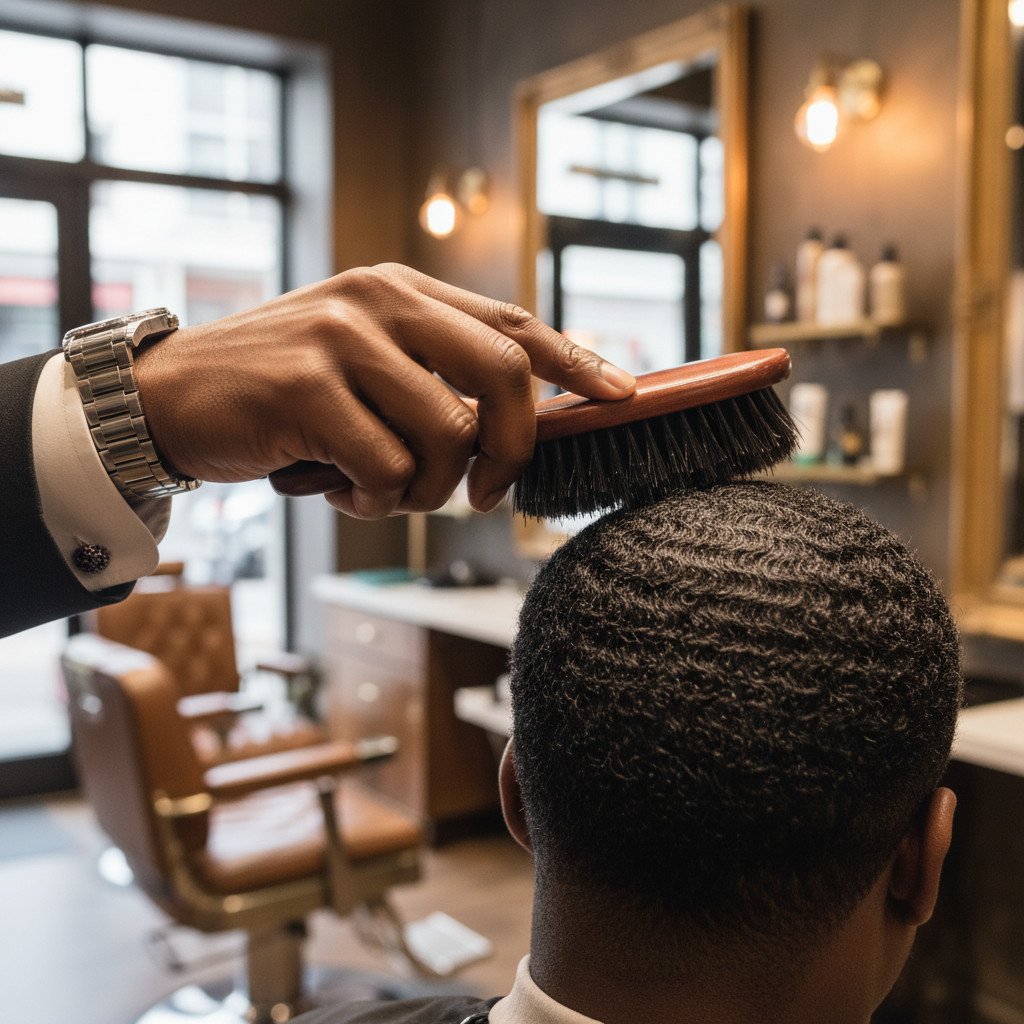
Focus on light, consistent strokes. This initial period is crucial for setting the direction of your waves. Even if you can’t see visible waves yet, the consistent brushing trains the hair follicles. Use this time to perfect your brushing angles and ensure full coverage of your head. A soft brush also helps to gently exfoliate the scalp, removing dead skin cells without abrasion, which is beneficial for overall scalp health.
Entering the Wolfing Phase (2-6 weeks growth)
As your hair begins to grow out, typically around 2-3 weeks post-cut, you’ll enter the initial wolfing phase. Your hair will be long enough to require more tension to lay down effectively. This is when you’ll transition to a medium wave brush. The medium brush provides the necessary pull to train the hair into deeper patterns, moving beyond surface-level definition.
During this period, the medium brush becomes your primary tool. It’s robust enough to work through the increasing hair length and density, ensuring that the hair is consistently pulled and laid flat. This continuous training is vital for establishing the S-curve of the waves. You might still use a soft brush for finishing touches, especially before durag application, to ensure all strands are perfectly laid down and shiny.
The medium brush is your workhorse for building density and depth in your wave pattern. It helps to prevent forks and encourages uniform wave development across your entire head. Consistency in brushing technique with the medium brush during this phase will dictate the quality and depth of your waves as they mature.
Deep Wolfing and Advanced Training (6+ weeks growth)
When your wolfing period extends beyond 6 weeks, and your hair becomes significantly longer and thicker, you’ll likely need to incorporate a hard wave brush. This is typically reserved for advanced wavers or those with particularly coarse hair textures that require substantial force to lay down. The hard brush provides maximum pull, essential for reaching the roots of longer hair and aggressively training stubborn strands.
Use the hard brush strategically. It’s powerful for breaking forks, deepening existing patterns, and ensuring that even the longest hairs conform. However, its aggressive nature means it should be used with caution. Limit hard brushing sessions to avoid scalp irritation. Many wavers use a hard brush for the initial passes during a brushing session, then follow up with a medium brush to refine and smooth, and finally a soft brush for the finish.
This advanced stage often involves a rotation of all three brush types: hard for initial training, medium for sustained work, and soft for polishing. The goal is to maximize wave depth and definition without compromising scalp health. Listen to your scalp; if you experience discomfort, reduce the intensity or switch to a softer brush. This progression is not rigid; it adapts to your hair’s unique response and your personal comfort level, always prioritizing healthy wave development.
Brushing technique (exact method)
As an affiliate site, GFBM may earn from qualifying purchases through product links.
Effective brushing technique is as crucial as the brush itself. It’s not just about moving the brush across your head; it’s about precision, pressure, and consistency. Mastering this technique ensures maximum wave development, prevents damage, and promotes a healthy scalp. Follow these steps meticulously for optimal results.
- Prepare Your Hair and Scalp: Always start with clean, moisturized hair. Before each brushing session, ensure your hair is slightly damp or has a light application of a wave pomade or natural oil. This provides lubrication, reduces friction, and helps the hair lay down more effectively. Dry brushing can cause breakage and static.
- Section Your Head: Mentally divide your head into four quadrants: top, front, left side, and right side. This systematic approach ensures no area is neglected and helps maintain consistent brushing angles. Some wavers also include a crown area, treating it as a fifth, central point.
- Determine Your Wave Pattern: Identify your natural hair growth pattern. Most wavers aim for a 360-degree pattern, brushing from the crown outwards in all directions. For the top, brush forward. For the sides, brush down towards your cheeks. For the back, brush down towards your neck. Consistency in these directions is paramount for uniform waves.
- Apply Consistent Pressure and Strokes: Use firm, even pressure. The goal is to pull the hair from the root, laying it flat against the scalp. Use long, overlapping strokes. Avoid short, choppy movements. Each stroke should be deliberate and cover a significant area. For a soft brush, the pressure will be lighter, focusing on the surface. For a medium brush, apply moderate pressure to engage more hair. For a hard brush, use firm pressure, but be mindful of your scalp to avoid irritation.
- Utilize the Right Brush for the Right Stage: As discussed, use a soft wave brush for fresh cuts and finishing, a medium wave brush for general training and wolfing, and a hard wave brush for deep wolfing and stubborn areas. Transition between brushes as your hair length and wave depth evolve.
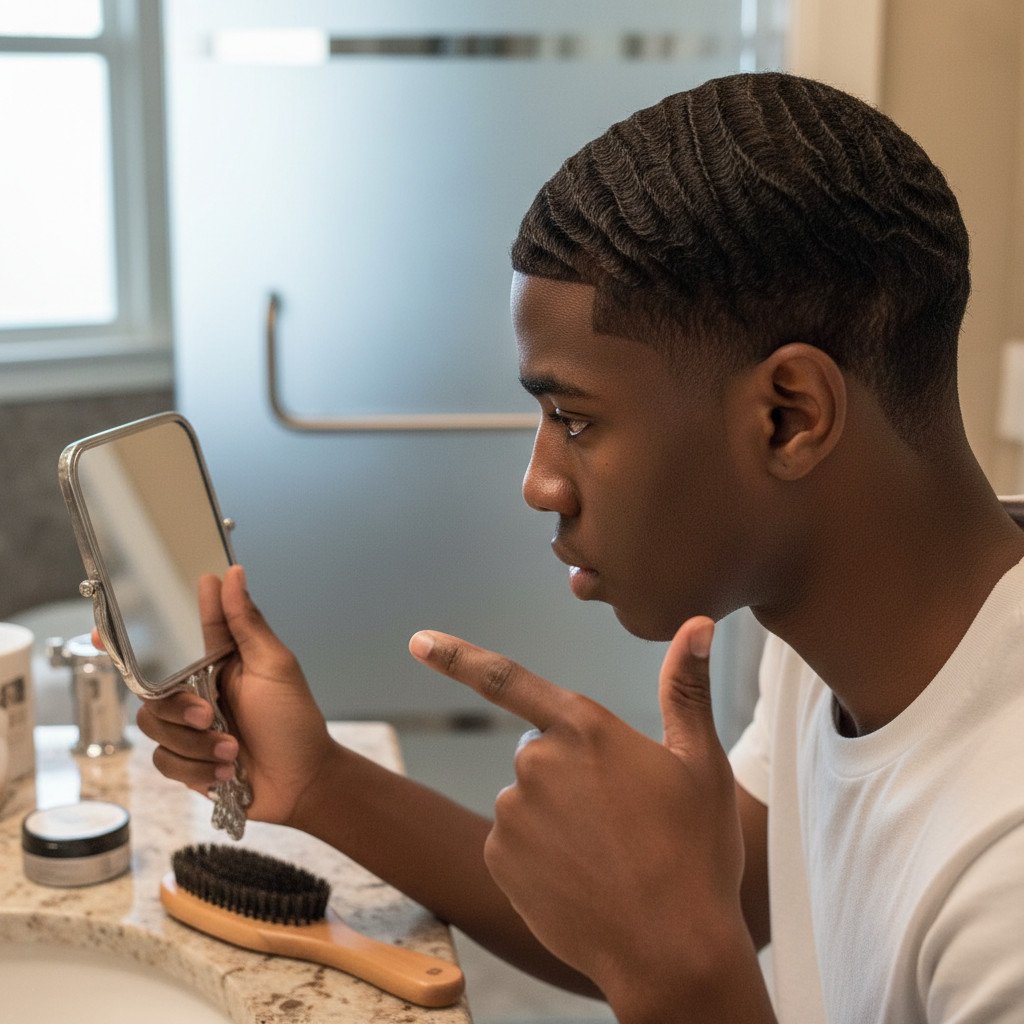
- Check Your Progress: Use a hand mirror to regularly check the back and sides of your head. This ensures you’re maintaining consistent angles and covering all areas. Many wavers use a two-mirror technique: one large wall mirror and a hand mirror to see all angles. This self-correction is vital for developing a uniform wave pattern.
Remember, consistency is key. Aim for multiple brushing sessions throughout the day, even short ones. The cumulative effect of consistent, correct brushing will yield the best results. Over-brushing with excessive force, especially with a hard brush, can lead to scalp irritation or hair damage. Listen to your scalp and adjust your technique accordingly. The goal is progress, not pain.
Table: Hair length → brush type → minutes per session
Understanding the optimal brush type and brushing duration based on your current hair length is crucial for efficient wave development and scalp health. This table provides a clear, actionable guide to help you tailor your routine as your hair grows. Adhering to these guidelines ensures you’re maximizing your efforts and using the right tool for the job at every stage of your wave journey.
| Hair Length (Weeks Growth) | Recommended Brush Type(s) | Minutes Per Session (Each Quadrant) | Total Daily Brushing (Minutes) |
|---|---|---|---|
| 0-2 Weeks (Fresh Cut) | Soft Wave Brush | 2-3 minutes | 10-15 minutes (2-3 sessions) |
| 2-4 Weeks (Early Wolf) | Soft & Medium Wave Brush | 3-5 minutes | 20-30 minutes (3-4 sessions) |
| 4-6 Weeks (Mid Wolf) | Medium Wave Brush (primary), Soft (finishing) | 5-7 minutes | 30-45 minutes (3-5 sessions) |
| 6-8+ Weeks (Deep Wolf) | Hard Wave Brush (initial), Medium (primary), Soft (finishing) | 7-10 minutes | 45-60+ minutes (4-6 sessions) |
| Post-Cut/Maintenance | Soft & Medium Wave Brush | 3-5 minutes | 15-25 minutes (2-3 sessions) |
This table serves as a general guideline. Individual hair texture and growth rate may necessitate slight adjustments. Coarser hair might require a quicker transition to a medium or hard brush, while finer hair might benefit from extended use of a soft brush. Always prioritize scalp comfort and health. If you experience irritation, reduce pressure or switch to a softer brush. The minutes per session are for each quadrant of your head (top, front, left, right, and crown if applicable), ensuring thorough coverage. Total daily brushing is the cumulative time spent, ideally broken into multiple shorter sessions throughout the day, rather than one long session.
Final Thoughts
The journey to achieving and maintaining elite 360 waves is a commitment, a blend of discipline, patience, and precise technique. Your choice of wave brush—soft, medium, or hard—is not a trivial decision but a foundational element of this process. Understanding when and how to deploy each brush type is what separates consistent wave development from frustrating stagnation. It’s about respecting your hair’s unique texture and growth patterns, adapting your tools as your hair evolves through different lengths and wolfing stages.
Remember, the goal is not just to create waves, but to cultivate them healthily. Aggressive brushing with the wrong tool can lead to scalp irritation, breakage, and even impede your progress. Listen to your hair and scalp. If a brush feels too harsh, scale back. If your waves aren’t deepening, consider if you need a firmer brush or more consistent pressure. This adaptive approach, combined with regular moisturizing, proper durag use, and consistent brushing, forms the bedrock of exceptional wave development.
Ultimately, the wave brush is an extension of your dedication. Choose wisely, brush deliberately, and embrace the process. Your waves are a reflection of your commitment to self-mastery and attention to detail. Keep pushing, keep brushing, and watch your crown transform. For further insights into your wave journey, consider these reads: 360 waves beginner routine, waves troubleshooting for Black men, and scalp exfoliation for Black men.
Frequently Asked Questions
How often should I brush my waves?
Consistency is key for waves. Aim for multiple brushing sessions throughout the day, ideally 3-5 sessions, each lasting 10-15 minutes. The cumulative effect of frequent, shorter sessions is more effective than one long, intense session, as it continuously trains the hair to lay down and form the wave pattern.
Can I use a hard brush on a fresh cut?
No, it is strongly advised against using a hard brush on a fresh cut. Your scalp is most sensitive at this stage, and a hard brush can cause irritation, redness, and even damage hair follicles. Always start with a soft wave brush immediately after a haircut to gently stimulate the scalp and begin laying the hair down.
What is ‘wolfing’ and how does it relate to brush choice?
Wolfing is the process of letting your hair grow out for an extended period (typically 4-12 weeks) without a haircut, while continuously brushing to deepen and establish wave patterns. During wolfing, as your hair gets longer and thicker, you’ll progressively need to transition from a soft to a medium, and eventually a hard brush, to effectively pull and train the longer strands.
How do I know if I’m using the wrong brush?
Signs you might be using the wrong brush include scalp irritation, redness, flaking, or discomfort after brushing. If your waves aren’t deepening despite consistent effort, or if you notice hair breakage, your brush might be too soft for your current hair length, or you might be using too much force with a hard brush. Listen to your scalp and observe your hair’s response.
Should I brush my hair wet or dry for waves?
It’s best to brush your hair when it’s slightly damp or has a light application of moisturizer or wave product. Brushing completely dry hair can cause friction, static, and breakage, especially with firmer brushes. The moisture helps the hair lay down smoothly and reduces potential damage, making the brushing process more effective and comfortable.
How do I clean my wave brushes?
To maintain hygiene and brush effectiveness, clean your wave brushes regularly. Use a comb to remove trapped hair from the bristles. Then, wash the bristles with a mild shampoo and lukewarm water, gently scrubbing to remove product buildup. Rinse thoroughly, shake off excess water, and let the brush air dry with the bristles facing down to prevent water from collecting in the base.
What if I have a sensitive scalp?
If you have a sensitive scalp, prioritize comfort and health above all else. Start and primarily use a soft wave brush, even during wolfing phases, if firmer brushes cause discomfort. When transitioning to a medium brush, do so gradually and apply lighter pressure. Consider shorter brushing sessions and ensure your scalp is well-moisturized to minimize irritation. Scalp health is paramount for healthy hair growth and wave development.
Shop wave pomade on Amazon
Shop soft wave brush on Amazon
Shop medium wave brush on Amazon
Shop hard wave brush on Amazon
Shop hand mirror on Amazon