
How Long Does It Take to Get 360 Waves? Real Timelines for Black Men (and What Speeds It Up)
Achieving crisp, deep 360 waves is a hallmark of refined Black male grooming. It’s a statement of discipline, style, and a deep understanding of your hair. However, one of the most common questions we hear is, “How long does it actually take to get 360 waves?” The answer isn’t a simple number; it’s a journey influenced by several factors, but with consistent effort, the results are undeniable.
Many men embark on this journey with enthusiasm, only to become discouraged when immediate results aren’t visible. Patience is not just a virtue here; it’s a necessity. Understanding the realistic timeline and the commitment involved is crucial for success. This guide will demystify the process, providing clear expectations and actionable strategies to help you achieve the waves you desire.
For a comprehensive overview of the entire process, from start to finish, delve into our guide on 360 waves for Black men. This resource serves as your foundational text for mastering this iconic style, covering everything from hair preparation to advanced maintenance techniques. It’s the ultimate blueprint for those serious about their wave game.
Most men quit too early—that’s the real problem
The allure of 360 waves is strong, but the commitment required often catches newcomers off guard. Many aspiring wavers begin with intense brushing sessions and a strict routine, only to see minimal progress in the first few weeks. This initial lack of visible results can be disheartening, leading to a premature abandonment of the process. The truth is, wave development is a marathon, not a sprint.
The biggest hurdle isn’t a lack of technique or the wrong products; it’s often the psychological battle against impatience. Hair doesn’t transform overnight. It requires consistent training, conditioning, and protection to lay down and form the desired ripple effect. Those who succeed understand that persistence is the most powerful tool in their grooming arsenal.
Think of it like building muscle. You don’t go to the gym once and expect a six-pack. You commit to a routine, you push through plateaus, and you trust the process. The same applies to waves. Your hair needs time to adapt to the new growth pattern. Quitting too soon means you never allow your hair the opportunity to respond to the training you’re providing.
Furthermore, misconceptions about instant results, often fueled by social media highlights, can set unrealistic expectations. What you see online are often the culmination of months or even years of dedicated work. Focusing on the journey and celebrating small victories, rather than demanding immediate perfection, is key to staying motivated and seeing your waves through to their full potential. The men who achieve truly exceptional waves are those who understand that consistency trumps intensity in the long run.
Timeline factors (what changes the speed)
The speed at which 360 waves develop is not uniform for everyone. Several critical factors play a significant role in determining your individual timeline. Understanding these elements will help you set realistic expectations and tailor your routine for optimal results.
Hair Texture
Your natural hair texture is arguably the most influential factor. African American hair types range from soft, loose curls to tightly coiled, coarse strands. Generally, hair with a looser curl pattern (often referred to as 3C or 4A) may show wave development more quickly because the hair is naturally more pliable and easier to lay down. The natural curl pattern already has a tendency to form S-shapes, which are the foundation of waves.
Conversely, men with very coarse, tightly coiled hair (4B or 4C) may find the process takes longer. This hair type often has more resistance to being laid flat and trained into a wave pattern. It requires more intense and consistent brushing, deeper conditioning, and longer compression periods to break down the natural curl memory and encourage it to conform. However, once established, waves in coarser hair types can often appear deeper and more defined due to the hair’s inherent volume and strength. It’s not about one texture being better, but about understanding the unique demands of your own hair.
Current Hair Length and Cut
The length of your hair is crucial. You cannot effectively train waves if your hair is too short or too long. For beginners, starting with a fresh haircut, typically a 1.5 to 2 guard with the grain, is ideal. This length provides enough hair to lay down and train, but not so much that it becomes unruly or difficult to compress. If your hair is too short (e.g., a 0.5 or 1 guard), there isn’t enough length for the hair to form a ripple pattern, and brushing will have minimal impact on the overall direction.
If your hair is too long, it becomes harder to manage, lay down evenly, and compress effectively. The longer the hair, the more prone it is to tangling and standing up, making it difficult to establish a consistent pattern. Regular haircuts are essential throughout the waving process. Maintaining an optimal length (usually between a 1.5 to 3 guard, depending on your texture and desired wave depth) ensures that your brushing efforts are productive and that new hair growth continues to follow the established wave pattern. A skilled barber who understands wave cuts is invaluable here.
Consistency of Your Routine
This is perhaps the most controllable and impactful factor. Sporadic brushing, inconsistent wash days, or neglecting to wear your durag will significantly prolong the timeline. Waves are a result of training your hair to grow in a specific direction and lay flat. This training requires relentless repetition.
Daily brushing, ideally for 20-30 minutes spread throughout the day, is non-negotiable. Each brush stroke contributes to laying the hair down and reinforcing the wave pattern. Skipping days or having short, half-hearted sessions will undermine your progress. Similarly, maintaining a consistent wash and style routine ensures your hair is clean, moisturized, and primed for training. The more consistent you are with every aspect of your routine – brushing, moisturizing, compressing, and washing – the faster and more defined your waves will become. There are no shortcuts to consistency; it is the bedrock of wave development.
Wash Days and Hair Health
While often overlooked, the frequency and method of your wash days significantly impact wave development. Over-washing with harsh shampoos can strip your hair of natural oils, leading to dryness, breakage, and frizz, which are detrimental to wave formation. Conversely, not washing enough can lead to product buildup and an unhealthy scalp, impeding hair growth and making it difficult for hair to lay flat. A balanced wash day routine, typically once or twice a week, using moisturizing shampoos and conditioners, is crucial.
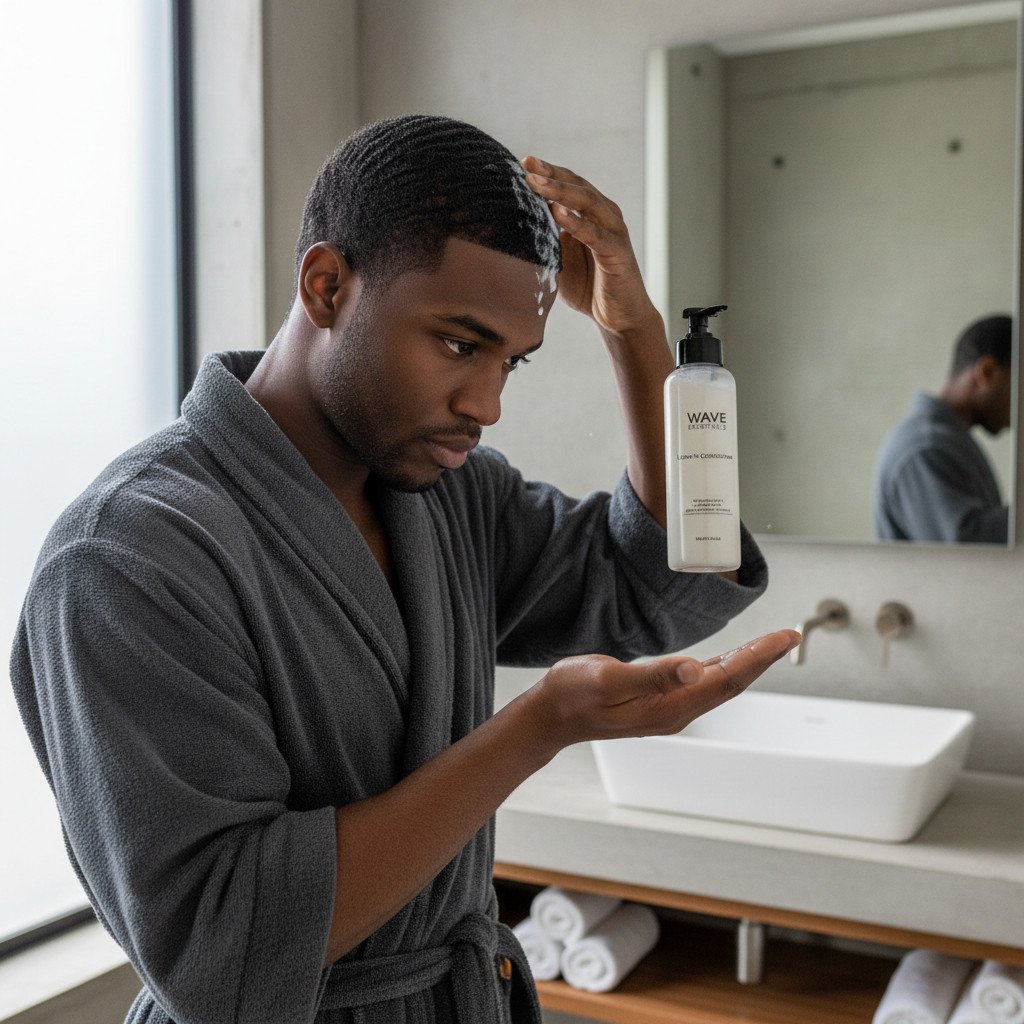
During wash days, the ‘wash and style’ method is paramount. This involves brushing your hair while shampooing and conditioning to ensure the hair remains laid down and the wave pattern is reinforced even during cleansing. Post-wash, applying a leave-in conditioner and immediately compressing your hair helps lock in moisture and maintain the pattern. Healthy hair, free from breakage and dryness, is more pliable and responsive to training, thus accelerating wave development. Neglecting hair health will inevitably slow down your progress.
For a detailed guide on maintaining your wave pattern during cleansing, refer to our comprehensive waves wash day routine. This guide provides step-by-step instructions to ensure your hair remains laid and moisturized, reinforcing your wave pattern even as you clean it.
Compression (Durags and Wave Caps)
Compression is the silent workhorse of wave development. Wearing a durag or a wave cap consistently, especially immediately after brushing sessions and while sleeping, is non-negotiable. Compression physically holds your hair down, reinforcing the trained wave pattern and preventing it from curling up or frizzing. It also helps to lock in moisture and protect your hair from friction against pillows or other surfaces.
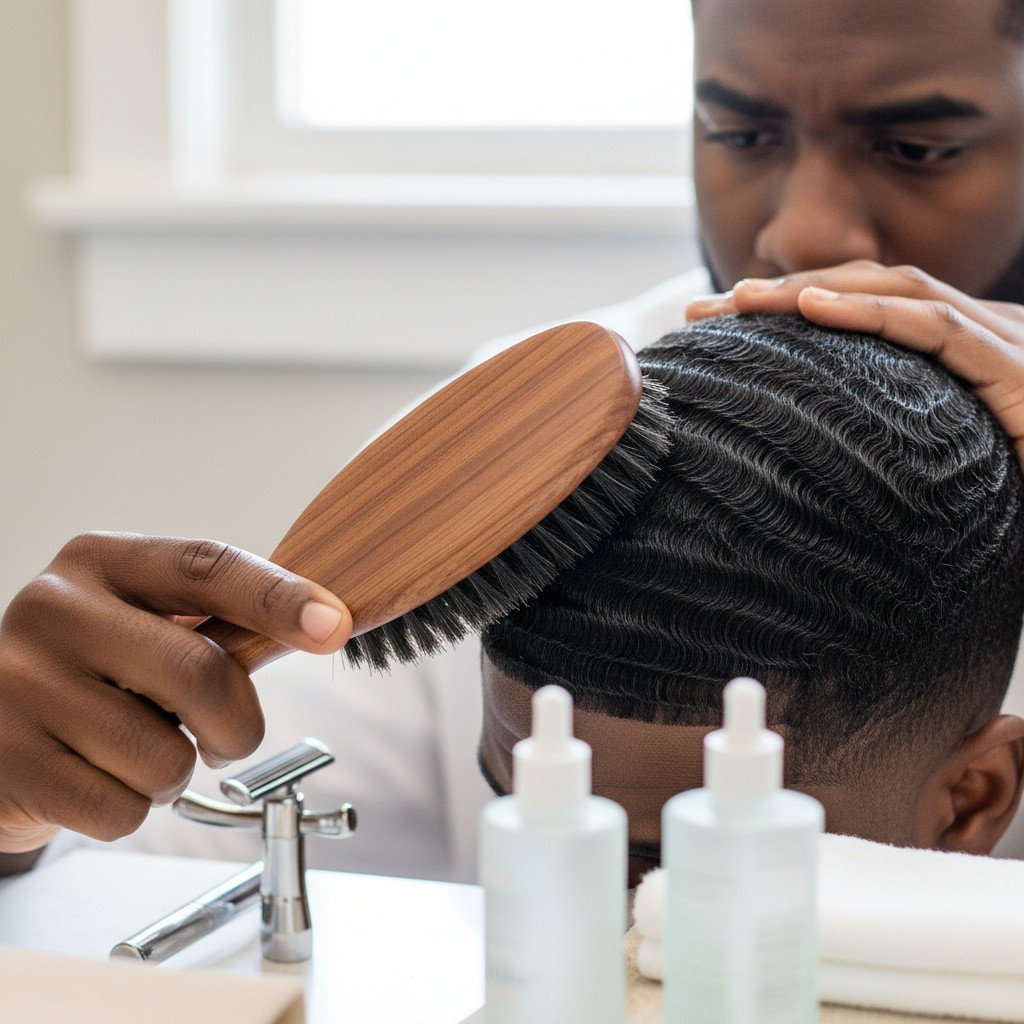
The longer and more consistently you compress your hair, the faster it will adapt to the desired laid-down state. For beginners, wearing a durag for several hours a day, in addition to overnight, can significantly accelerate progress. As your waves become more established, you might reduce daytime compression, but overnight compression remains vital for maintaining definition and preventing frizz. Neglecting compression is like training for a sport but skipping the recovery; you’ll undermine all your hard work. The quality of your durag also matters; opt for silk or satin materials that reduce friction and maintain moisture.
Timeline by experience level (beginner vs returning waver)
The journey to 360 waves varies significantly depending on your starting point. A complete novice will experience a different timeline and set of challenges compared to someone who has had waves before and is returning to the process.
Beginner Waver Timeline
For someone entirely new to 360 waves, the process requires establishing foundational habits and training hair that has never been laid down consistently. This initial phase is often the most challenging and requires the most patience.
- Week 1-2: The Foundation Phase. During these first two weeks, your primary goal is to establish a consistent brushing routine and learn the correct angles. Your hair will likely be at an optimal length (1.5-2 guard). You’ll be brushing multiple times a day, focusing on proper technique to lay your hair down. Visible waves will be minimal, if present at all. You might see some slight ripples or a more laid-down appearance, but don’t expect deep, defined patterns yet. The focus here is on consistency and building muscle memory. Your hair is just beginning to understand the new direction it’s being trained to grow in.
- Week 3-4: Emerging Patterns. By the end of the first month, if you’ve been consistent, you should start seeing more noticeable ripples, especially in areas like the crown and the sides. These won’t be perfectly defined, but the pattern will be undeniable. This is a crucial motivational period. Continue with intense brushing, consistent moisturizing, and constant durag wear. Your hair is slowly but surely adapting. You might also notice your hair feeling softer and more manageable due to the consistent conditioning.
- Month 2-3: Developing Depth and Definition. This is where the magic truly begins to happen for consistent beginners. Your waves will start to gain significant depth and definition. The ripple effect will be more pronounced, and you’ll begin to see the distinct 360-degree pattern forming around your head. At this stage, you’ll be refining your brushing angles, ensuring all areas of your head are covered. Regular haircuts (every 2-3 weeks) become vital to maintain optimal length and keep the wave pattern sharp. You’ll likely be more confident in your routine and seeing clear results.
- Month 4-6+: Wolfing and Refinement. Beyond three months, you’ll enter the ‘wolfing’ phase, where you let your hair grow out longer than usual (e.g., 6-8 weeks between cuts) while maintaining rigorous brushing and compression. This allows the waves to deepen and connect. The longer the hair, the more pronounced the wave pattern can become, provided it’s consistently laid down. This phase is about refining your waves, achieving maximum depth, and ensuring the connections are seamless. By 4-6 months, a dedicated beginner should have well-established, deep 360 waves.
Returning Waver Timeline
For someone who has had 360 waves in the past, the journey is often quicker because their hair has a ‘memory’ of the wave pattern. The hair follicles have been trained before, making it easier to revert to the wave state.
- Week 1-2: Rapid Re-establishment. A returning waver will likely see significant progress within the first two weeks. Their hair, having been trained previously, will respond much faster to brushing and compression. Ripples and even clear patterns can emerge quickly, sometimes within days, especially if the hair hasn’t been cut too short or gone too long without being waved. The muscle memory of the hair follicles is still present, making the retraining process highly efficient.
- Week 3-4: Deepening and Connection. By the end of the first month, a returning waver can expect to have well-defined, connecting waves. The focus shifts from establishing the pattern to deepening it and ensuring seamless connections across the entire head. They might already be entering a light wolfing phase to build more depth. The hair is more cooperative, and the process feels more like maintenance than starting from scratch.
- Month 2-3: Full Restoration and Advanced Wolfing. Within two to three months, a returning waver should have fully restored their 360 waves, often achieving a level of depth and definition that a beginner might take 4-6 months to reach. This period is dedicated to advanced wolfing techniques, perfecting connections, and maintaining peak wave health. They will be fine-tuning their routine, experimenting with different products, and ensuring their waves are at their absolute best.
Regardless of your experience level, consistency remains the universal key. A returning waver who is inconsistent will take longer than a dedicated beginner. Your hair responds to the effort you put in, every single day.
What speeds it up (without damaging your hair)
As an affiliate site, GFBM may earn from qualifying purchases through product links.
While patience is paramount, there are definitive strategies you can employ to accelerate your 360 wave journey without compromising the health and integrity of your hair. These methods focus on optimizing your routine and providing your hair with the best possible environment for wave development.
- Master Your Brushing Technique and Consistency: This is the single most important factor. You must brush daily, multiple times a day, for a cumulative total of at least 20-30 minutes. Do this first: Ensure your brushing technique is correct, brushing from the crown outwards in all directions (front, sides, back). Use a high-quality wave brush that suits your hair texture – a hard brush for wolfing, a medium brush for daily training, and a soft brush for laying down fresh cuts and finishing. Consistent, even strokes are more effective than sporadic, intense sessions. The more you brush, the more you train your hair to lay down.
- Prioritize Compression (Durag Usage): Wearing a durag is non-negotiable for speeding up wave development. Do this first: Wear your durag immediately after brushing sessions to lock in the pattern. It physically compresses your hair, reinforcing the wave pattern and preventing it from curling up or frizzing. Wear it overnight, every night, and for several hours during the day, especially after moisturizing or brushing. A high-quality durag made of silk or satin will reduce friction and help retain moisture, further benefiting your hair health. Consistent compression is the fastest way to lay your hair down.
- Maintain Optimal Hair Moisture and Health: Dry, brittle hair will not form waves effectively. Do this first: Establish a consistent moisturizing routine. Use a good quality leave in conditioner daily or every other day, and follow up with a light wave pomade or butter to seal in moisture and provide hold. Healthy, well-hydrated hair is more pliable and responsive to training. Avoid products with harsh chemicals or excessive alcohol that can dry out your hair. Regular deep conditioning treatments (once a week or bi-weekly) will also contribute to hair strength and elasticity.
- Implement a Strategic Wash and Style Routine: Your wash days aren’t just for cleaning; they’re crucial for wave training. Do this first: Perform a ‘wash and style’ every time you shampoo. This involves brushing your hair while the shampoo and conditioner are in, ensuring the hair stays laid and the pattern is reinforced. Use a moisturizing shampoo and conditioner. After rinsing, apply your leave-in conditioner and immediately put on your durag. This method helps to lay your hair down from the root, which is essential for deep, connecting waves.
- Regular, Strategic Haircuts: While it might seem counterintuitive to cut your hair when trying to grow waves, regular trims are essential. Do this first: Find a barber who understands how to cut for waves. A fresh cut, typically a 1.5 or 2 guard with the grain, every 2-3 weeks (or 4-6 weeks during wolfing), removes untrainable ends and allows new, healthy hair to grow in following the established pattern. An uneven or overgrown cut can hinder wave progression. During wolfing, longer periods between cuts allow waves to deepen, but still require a clean-up every few weeks to maintain shape and control.
- Protect Your Waves While You Sleep: Your sleep environment can undo all your hard work. Do this first: Always wear your durag to bed. For an added layer of protection and to prevent friction that can cause frizz and disrupt your pattern, consider sleeping on a silk pillowcase. This minimizes friction and helps retain your hair’s natural moisture, contributing to healthier, more defined waves.
By diligently applying these strategies, you’ll not only accelerate your wave development but also ensure your hair remains healthy and strong throughout the process. Consistency across all these points is what truly makes the difference.
Table: Week range → what you should see → what to focus on
This table provides a generalized timeline for a beginner, outlining what you can realistically expect to see at different stages and what your primary focus should be during those periods. Remember, individual results may vary based on hair texture, consistency, and adherence to the routine.
| Week Range | What You Should See | What To Focus On |
|---|---|---|
| Weeks 1-2 | Minimal visible waves; hair appears more laid down. Slight ripples might be noticeable in good lighting. Hair feels softer. | Establishing routine: Consistent daily brushing (20-30 min total), proper brushing angles, daily moisturizing, constant durag wear (especially overnight and after brushing). Learning the ‘wash and style’ method. |
| Weeks 3-4 | Noticeable ripples forming, particularly on the top and sides. Crown area might show some definition. Hair is easier to manage. | Consistency & reinforcement: Intensify brushing sessions, ensure even coverage. Refine moisturizing techniques. Maintain strict durag usage. Get your first wave-friendly haircut if needed (1.5-2 WTG). |
| Weeks 5-8 (Month 2) | Waves gaining depth and definition across the entire head. Connections starting to form. Hair feels consistently laid and trained. | Deepening the pattern: Focus on connecting waves, especially at the crown and back. Consider starting a light wolfing phase (go 4 weeks between cuts). Continue rigorous brushing and moisturizing. |
| Weeks 9-12 (Month 3) | Well-established, deep 360 waves with good connections. Visible pattern even without a durag. Hair is fully trained. | Refinement & wolfing: Extend wolfing periods (5-6 weeks). Focus on maintaining wave integrity, preventing frizz, and addressing any weak spots. Regular deep conditioning. |
| Months 4-6+ | Elite-level, highly defined, deep 360 waves with seamless connections. Maximum depth and shine. | Advanced maintenance: Continue strategic wolfing and cuts. Experiment with different products to optimize shine and hold. Focus on scalp health and overall hair vitality to maintain peak wave quality. |
This table serves as a roadmap, but your personal journey may involve slight deviations. The key is to remain disciplined and adapt your routine as your hair responds.
Frequently Asked Questions
Navigating the world of 360 waves often brings up a host of questions, especially for those new to the journey. Here, we address some of the most common inquiries to provide clarity and guidance.
How often should I brush my hair for 360 waves?
For optimal results, you should brush your hair multiple times a day, aiming for a cumulative total of 20-30 minutes. This can be broken down into 3-5 sessions of 5-10 minutes each. Consistency is more important than intensity, so daily, even brushing is crucial for training your hair to lay down and form the wave pattern.
What products are essential for getting 360 waves?
Essential products include a good quality wave brush (hard, medium, and soft), a moisturizing shampoo and conditioner, a leave-in conditioner, and a wave pomade or butter. A durag or wave cap is also absolutely critical for compression. Avoid products with harsh chemicals or excessive buildup, as they can hinder wave development and hair health.
Can I get 360 waves with any hair type?
While all African American hair types can achieve 360 waves, the timeline and effort required will vary. Looser curl patterns (3C/4A) may see results faster, while tighter coils (4B/4C) require more consistent and rigorous brushing and compression. Patience and dedication are key, regardless of your specific hair texture.
How often should I get a haircut when trying to get waves?
Initially, a fresh cut (1.5-2 guard with the grain) is ideal. Once you start waving, regular trims every 2-3 weeks are important to maintain optimal length and shape. During ‘wolfing’ phases, you might extend cuts to 4-6 weeks to allow waves to deepen, but still require a clean-up to maintain the pattern and prevent frizz.
What is ‘wolfing’ and why is it important for waves?
‘Wolfing’ is the process of letting your hair grow out longer than usual (typically 4-8 weeks between cuts) while maintaining your rigorous brushing and compression routine. It’s important because the increased hair length provides more hair to lay down, allowing the waves to deepen, connect, and become more prominent. It’s a critical phase for achieving truly deep and defined 360 waves.
How do I prevent frizz and maintain my waves?
Preventing frizz involves consistent compression with a durag (especially overnight), using moisturizing products, and avoiding harsh hair treatments. A silk pillowcase can also reduce friction. Regular ‘wash and style’ routines help maintain the pattern, and strategic haircuts keep your waves sharp and manageable, preventing them from becoming unruly.
My waves are not connecting, what should I do?
If your waves aren’t connecting, it often indicates inconsistent brushing in certain areas, particularly the crown or back. Focus extra brushing time on these weaker spots, ensuring your brush strokes are even and cover all angles. Increase your durag wear, and ensure your hair is adequately moisturized. Sometimes, a fresh, wave-friendly haircut can also help reset and connect the pattern.
Final Thoughts
The journey to achieving deep, defined 360 waves is a testament to consistency, patience, and a deep understanding of your hair. It’s not about quick fixes or overnight transformations; it’s about the relentless dedication to a routine that trains your hair to conform to a new, elegant pattern. The timelines provided offer a realistic roadmap, but your personal progress will ultimately be a reflection of the effort you invest daily.
Embrace the process, celebrate the small victories, and remember that every brush stroke, every moisturizing session, and every moment under your durag contributes to the masterpiece forming on your head. The true reward isn’t just the waves themselves, but the discipline and self-mastery cultivated along the way. Your waves are a visible representation of your commitment to elevated grooming.
Next reads: Master your technique with our ultimate guide to 360 waves, perfect your beginner routine, and ensure flawless wash days.
Frequently Asked Questions
How often should I brush my hair for 360 waves?
For optimal results, you should brush your hair multiple times a day, aiming for a cumulative total of 20-30 minutes. This can be broken down into 3-5 sessions of 5-10 minutes each. Consistency is more important than intensity, so daily, even brushing is crucial for training your hair to lay down and form the wave pattern.
What products are essential for getting 360 waves?
Essential products include a good quality wave brush (hard, medium, and soft), a moisturizing shampoo and conditioner, a leave-in conditioner, and a wave pomade or butter. A durag or wave cap is also absolutely critical for compression. Avoid products with harsh chemicals or excessive buildup, as they can hinder wave development and hair health.
Can I get 360 waves with any hair type?
While all African American hair types can achieve 360 waves, the timeline and effort required will vary. Looser curl patterns (3C/4A) may see results faster, while tighter coils (4B/4C) require more consistent and rigorous brushing and compression. Patience and dedication are key, regardless of your specific hair texture.
How often should I get a haircut when trying to get waves?
Initially, a fresh cut (1.5-2 guard with the grain) is ideal. Once you start waving, regular trims every 2-3 weeks are important to maintain optimal length and shape. During ‘wolfing’ phases, you might extend cuts to 4-6 weeks to allow waves to deepen, but still require a clean-up to maintain the pattern and prevent frizz.
What is ‘wolfing’ and why is it important for waves?
‘Wolfing’ is the process of letting your hair grow out longer than usual (typically 4-8 weeks between cuts) while maintaining your rigorous brushing and compression routine. It’s important because the increased hair length provides more hair to lay down, allowing the waves to deepen, connect, and become more prominent. It’s a critical phase for achieving truly deep and defined 360 waves.
How do I prevent frizz and maintain my waves?
Preventing frizz involves consistent compression with a durag (especially overnight), using moisturizing products, and avoiding harsh hair treatments. A silk pillowcase can also reduce friction. Regular ‘wash and style’ routines help maintain the pattern, and strategic haircuts keep your waves sharp and manageable, preventing them from becoming unruly.
My waves are not connecting, what should I do?
If your waves aren’t connecting, it often indicates inconsistent brushing in certain areas, particularly the crown or back. Focus extra brushing time on these weaker spots, ensuring your brush strokes are even and cover all angles. Increase your durag wear, and ensure your hair is adequately moisturized. Sometimes, a fresh, wave-friendly haircut can also help reset and connect the pattern.
Shop wave brush on Amazon
Shop durag on Amazon
Shop leave in conditioner on Amazon
Shop silk pillowcase on Amazon
Shop moisturizing shampoo on Amazon
Shop wave pomade on Amazon