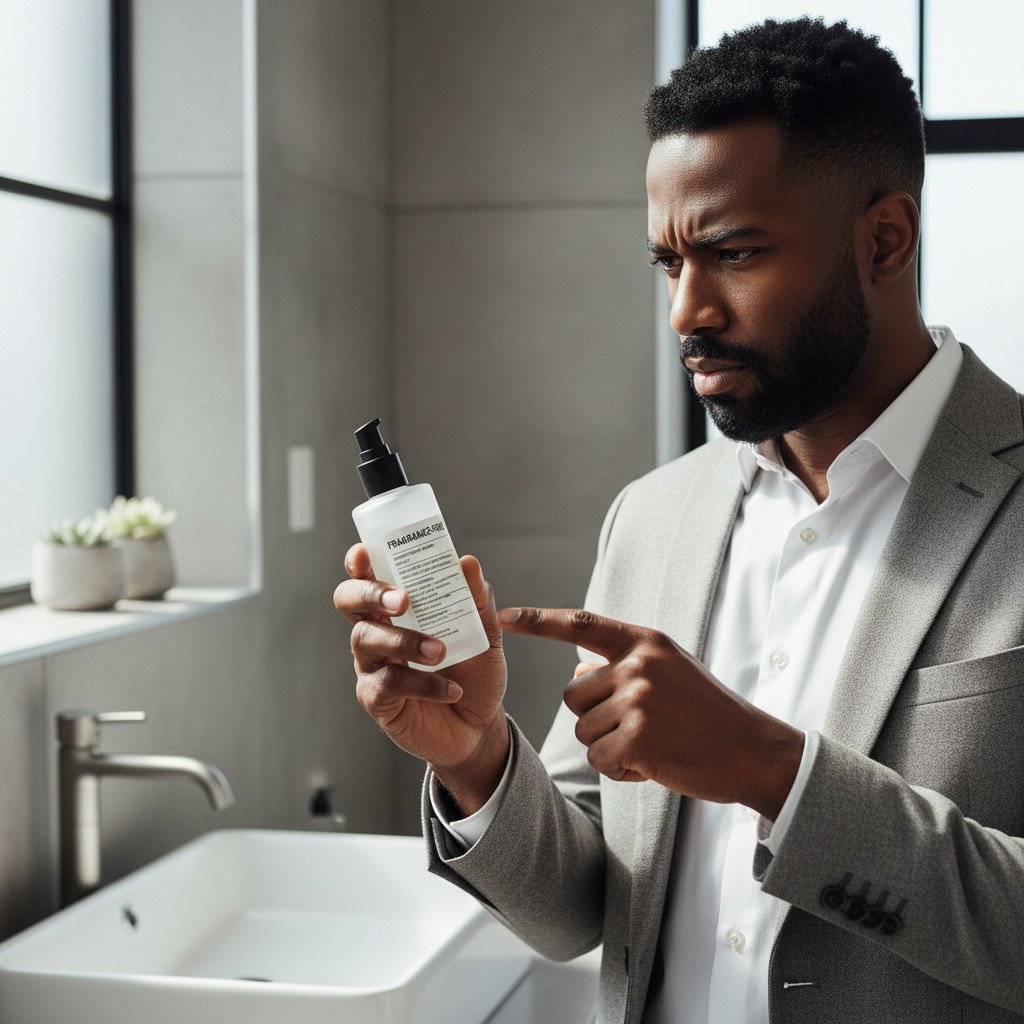
Fragrance-Free vs Unscented for Black Men: The Sensitive Skin Difference That Stops Burning
For Black men, navigating the world of skincare can be complex, especially when sensitive skin is a factor. The promise of a smooth, irritation-free complexion often clashes with the reality of products that sting, burn, or leave behind an unwelcome rash. This isn’t just about comfort; it’s about maintaining skin health, preventing hyperpigmentation, and achieving that refined look without compromise. The culprit, more often than not, lurks in an unexpected place: fragrance.
Many men assume that if a product doesn’t smell like a perfume counter, it’s safe for sensitive skin. This assumption is a common pitfall. The distinction between ‘fragrance-free’ and ‘unscented’ is not merely semantic; it’s a critical difference that can make or break your skin care for Black men journey, particularly if you’re prone to irritation, redness, or breakouts. Understanding this nuance is the first step toward building a regimen that truly soothes and protects your skin, rather than secretly harming it.
This guide will cut through the marketing jargon, providing you with the precise knowledge needed to identify and select products that genuinely respect your skin’s delicate balance. We’ll explore why fragrance is such a common irritant, demystify the labels, and equip you with practical strategies to avoid hidden triggers. By the end, you’ll be able to confidently choose products that support a healthy, calm complexion, ensuring your grooming routine enhances, not detracts from, your skin’s natural resilience.
If products sting, fragrance is a top suspect
That familiar sting, the sudden redness, or the lingering itch after applying a new product isn’t just an inconvenience; it’s your skin’s alarm system. For many Black men, especially those with sensitive skin, these reactions are often directly attributable to fragrance. It’s a pervasive ingredient, found in everything from cleansers and moisturizers to shaving creams and aftershaves. Its purpose is simple: to make products smell appealing. Its effect on sensitive skin, however, can be anything but.
Fragrance, whether natural or synthetic, is a leading cause of contact dermatitis, a type of eczema characterized by red, itchy, inflamed skin. For Black skin, this inflammation can be particularly problematic, as it often leads to post-inflammatory hyperpigmentation (PIH) – those dark spots that linger long after the initial irritation has subsided. This means that a product causing a temporary sting today could lead to visible discoloration weeks or even months down the line. This is why addressing the root cause of irritation is paramount for maintaining an even skin tone and clear complexion.
The issue stems from the complex chemical compounds that make up ‘fragrance.’ A single fragrance can contain dozens, even hundreds, of individual chemicals. Many of these are known allergens or irritants. When these compounds come into contact with sensitive skin, they can trigger an immune response. This response manifests as inflammation, which can break down the skin’s natural barrier, making it even more susceptible to further irritation and moisture loss. It’s a vicious cycle that can be difficult to break without identifying and eliminating the offending ingredients.
Consider the cumulative effect. If your cleanser, moisturizer, and aftershave all contain fragrance, your skin is being exposed to a cocktail of potential irritants multiple times a day. Even if a single product causes only a mild reaction, the constant exposure can overwhelm your skin’s defenses, leading to chronic sensitivity and persistent issues. This is why a holistic approach to fragrance avoidance across your entire sensitive skin routine is not just recommended, but essential.
Beyond the immediate burning or itching, fragrance can also contribute to other skin concerns common among Black men. It can exacerbate dryness, making already dry skin feel tighter and more uncomfortable. It can trigger breakouts in acne-prone individuals by inflaming follicles. And for those battling razor bumps, the irritation caused by fragranced shaving products can worsen inflammation around hair follicles, leading to more severe pseudofolliculitis barbae (PFB). The impact is far-reaching, highlighting why a critical eye towards product ingredients, especially fragrance, is a non-negotiable step for anyone serious about elevating their skin health.
The good news is that avoiding fragrance is an actionable step. It requires diligence and a keen eye for labels, but the payoff – calmer, clearer, more resilient skin – is well worth the effort. By understanding what to look for and what to avoid, you can proactively protect your skin from unnecessary stress and irritation, paving the way for a healthier, more confident appearance.
Fragrance-free vs unscented: the real definition
This is where many men get tripped up, and it’s a distinction that can significantly impact your sensitive skin. The terms ‘fragrance-free’ and ‘unscented’ are often used interchangeably by consumers, but in the world of skincare, they carry vastly different meanings. Understanding this difference is crucial for making informed product choices that truly protect your skin.
Fragrance-Free: The Gold Standard for Sensitive Skin
When a product is labeled ‘fragrance-free,’ it means that no fragrance ingredients have been added to the formulation. This includes both synthetic perfumes and natural essential oils, which can also be potent irritants. The absence of these ingredients is intentional and verified. For sensitive skin, this is the safest bet. A truly fragrance-free product will have no scent from added compounds, and any subtle smell it possesses will be solely from its active ingredients.
The key takeaway here is the complete omission of fragrance compounds. Manufacturers who label their products as ‘fragrance-free’ are typically diligent about ensuring their entire ingredient list avoids known scent-producing chemicals. This commitment extends beyond just the obvious perfumes; it encompasses a broader range of compounds that might be used to impart a smell, even if that smell isn’t traditionally thought of as a ‘fragrance.’
Unscented: A Potential Trap
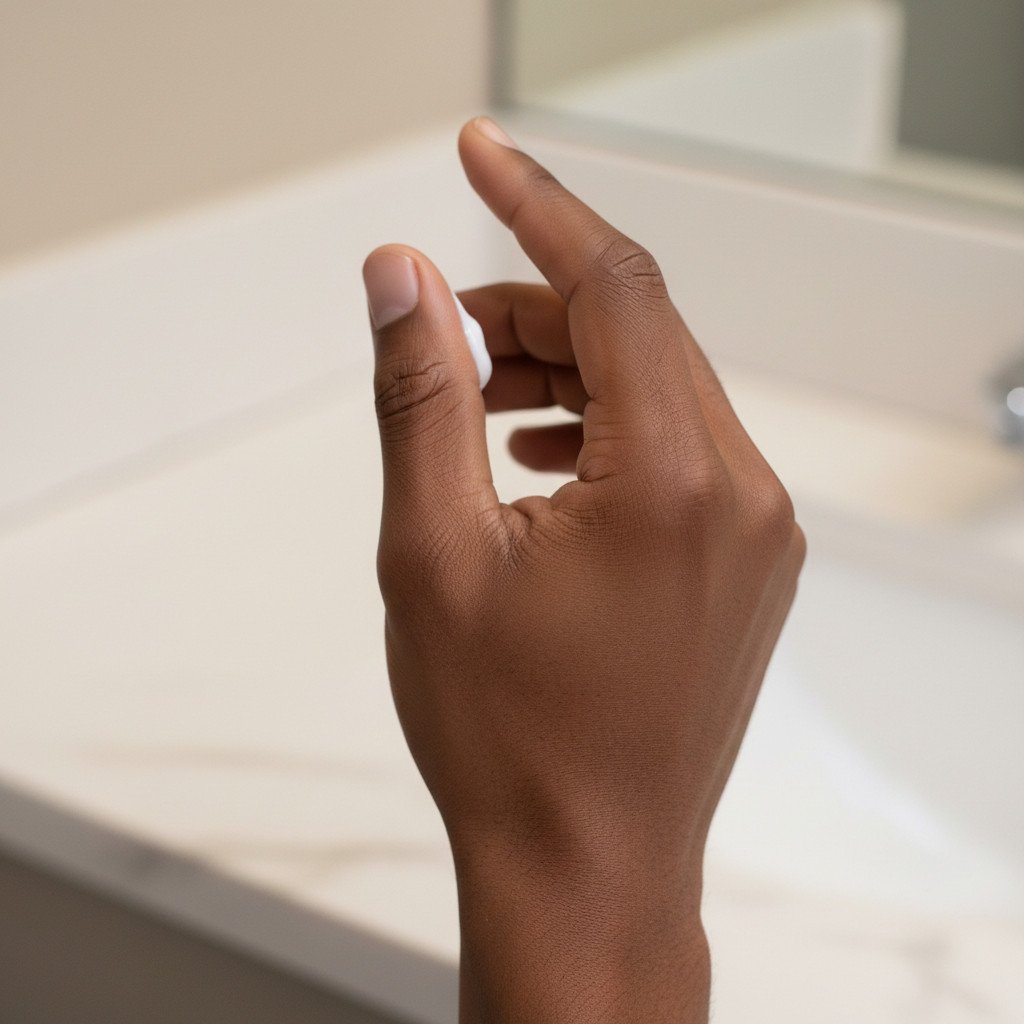
The term ‘unscented’ is far more ambiguous and, frankly, often misleading. An ‘unscented’ product means that it has no discernible scent. However, this lack of scent is often achieved by adding masking fragrances. These are chemical compounds specifically designed to neutralize or cover up the natural odor of the product’s raw ingredients. While the product may not smell like anything, it still contains fragrance chemicals that can irritate sensitive skin.
Think of it like this: if a product’s base ingredients have a strong or unpleasant smell, a manufacturer might add a masking fragrance to make it appear ‘unscented.’ Your nose won’t detect a scent, but your skin’s immune system might still react to the hidden fragrance compounds. This is a common tactic to make products more palatable to a broader audience without truly removing potential irritants. For someone with sensitive skin, an ‘unscented’ label can be a dangerous red herring, leading them to believe a product is safe when it is not.
Why the Confusion?
Part of the confusion stems from regulatory loopholes and the lack of strict, universal definitions for these terms across all markets. While some regulatory bodies are moving towards clearer guidelines, the onus often falls on the consumer to be educated. Marketers know that ‘unscented’ sounds appealing, and without deeper knowledge, it’s easy to fall for the illusion of safety.
The Bottom Line: Always Choose Fragrance-Free
For Black men with sensitive skin, the choice is clear: always prioritize products explicitly labeled ‘fragrance-free.’ This designation offers the highest assurance that you are avoiding the broad spectrum of chemicals known to cause irritation. If a product simply says ‘unscented,’ proceed with extreme caution and scrutinize the ingredient list for any hidden fragrance components. When in doubt, err on the side of caution and opt for a product that makes a clear, unambiguous claim of being fragrance-free.
This distinction is not just academic; it has real-world implications for your skin health. By understanding and applying this knowledge, you empower yourself to select products that genuinely support your skin’s well-being, helping you maintain a calm, clear, and confident complexion without the burning, itching, or hyperpigmentation that often accompanies hidden irritants.
This careful approach extends to all aspects of your grooming, from your daily beginner’s skincare routine to specialized treatments. Every product that touches your skin has the potential to either soothe or irritate. Making the informed choice for fragrance-free products is a fundamental step in building a resilient and healthy skin barrier.
Common “hidden fragrance” names to recognize
Navigating ingredient lists can feel like deciphering a foreign language, especially when manufacturers use euphemisms or chemical names for fragrance. While ‘fragrance’ or ‘parfum’ are the most obvious red flags, many other ingredients can function as fragrances or masking agents, triggering reactions in sensitive skin. Being able to recognize these hidden culprits is a powerful tool in protecting your complexion.
The term ‘fragrance’ itself is often a catch-all. Due to trade secret laws, companies are not always required to disclose the individual chemical components that make up their proprietary fragrance blends. This means a single line item like ‘fragrance’ can represent dozens or even hundreds of different chemicals, some of which are common allergens. This lack of transparency is precisely why fragrance-free products are so important for sensitive skin – they bypass this entire problematic category.
However, the challenge doesn’t end there. Many natural extracts and essential oils, often marketed as ‘clean’ or ‘natural,’ can be just as irritating as synthetic fragrances. While they come from plants, their chemical compounds can still elicit strong allergic or irritant responses. For sensitive skin, ‘natural’ does not automatically equate to ‘safe.’
Here are some common hidden fragrance names and categories to look for in ingredient lists. This list is not exhaustive, but it covers many of the frequent offenders:
- Parfum: The most common alternative to ‘fragrance,’ often used in European products.
- Linalool: A naturally occurring terpene alcohol found in many flowers and spice plants, often used for its floral scent.
- Limonene: A cyclic terpene, a common allergen, found in citrus rinds and many other plants.
- Geraniol: A monoterpenoid alcohol, found in geranium and other essential oils, with a rose-like scent.
- Citronellol: Another monoterpenoid, found in rose and geranium oils, with a floral scent.
- Eugenol: A phenylpropene, found in clove oil, cinnamon, and nutmeg, with a spicy aroma.
- Farnesol: A natural organic compound found in essential oils like citronella, neroli, and rose.
- Benzyl Alcohol: Can be used as a preservative, but also as a fragrance component or solvent.
- Benzyl Salicylate: An ester of benzyl alcohol and salicylic acid, used as a fragrance ingredient and UV absorber.
- Cinnamal (Cinnamaldehyde): Found in cinnamon and cassia, a common allergen.
- Coumarin: Found in tonka beans, vanilla grass, and cinnamon, with a sweet, hay-like odor.
- Hexyl Cinnamal: A common fragrance ingredient with a floral, jasmine-like scent.
- Hydroxycitronellal: A synthetic fragrance compound with a lily-of-the-valley scent.
- Alpha-Isomethyl Ionone: A synthetic fragrance with a floral, woody scent.
- Essential Oils (e.g., Lavender Oil, Tea Tree Oil, Peppermint Oil, Citrus Oils): While often lauded for their natural properties, these are concentrated plant extracts that contain numerous fragrance compounds and can be highly irritating for sensitive skin. Always check for specific essential oils if a product claims to be ‘natural’ but not explicitly ‘fragrance-free.’
- Aromas: A vague term that often implies the presence of fragrance.
- Flavor: While typically used in lip products, ‘flavor’ often contains fragrance compounds.
The key is to be a detective. If you have sensitive skin, any ingredient that sounds like it could be a scent – especially those ending in ‘-ol’ or ‘-ene’ – warrants a closer look. When in doubt, stick to products that clearly state ‘fragrance-free’ and have a minimal ingredient list. The fewer ingredients, the less chance of encountering a hidden irritant. This vigilance is a cornerstone of managing sensitive skin and preventing the flare-ups that can lead to discomfort and hyperpigmentation.
How to shop: the 60-second label check
Armed with the knowledge of what to look for, you can now approach product aisles with confidence. The ’60-second label check’ is a practical, efficient method to quickly identify skin-friendly products and filter out potential irritants. This isn’t about memorizing every chemical name; it’s about developing a systematic approach to label reading that prioritizes your skin’s health. This quick scan will save you time, money, and most importantly, prevent unnecessary skin reactions.
As an affiliate site, GFBM may earn from qualifying purchases through product links.
Here’s your step-by-step protocol for smart shopping:
- Scan for ‘Fragrance-Free’ First: This is your primary filter. Look for prominent labeling on the front of the product that explicitly states ‘fragrance-free,’ ‘no added fragrance,’ or ‘free of perfume.’ If you see ‘unscented,’ proceed with extreme caution. If neither is present, assume it contains fragrance.
- Flip to the Ingredient List: Don’t trust front-of-package claims alone. Turn the product over and locate the full ingredient list (often labeled ‘Ingredients,’ ‘INCI,’ or ‘Composition’). This is where the truth lies, often in fine print.
- Search for ‘Fragrance’ or ‘Parfum’: Your immediate goal is to find these two words. If either ‘fragrance’ or ‘parfum’ appears anywhere in the list, put the product back. It contains added fragrance, regardless of any other claims.
- Look for Hidden Fragrances (Quick Scan): After checking for ‘fragrance’/’parfum,’ quickly scan the list for the common hidden names we discussed earlier (e.g., Linalool, Limonene, Geraniol, Citronellol, Eugenol, Benzyl Alcohol, essential oils like Lavender Oil, Peppermint Oil). While you won’t memorize all of them, recognizing a few key ones or any ingredient that sounds like a plant extract or a chemical ending in ‘-ol’ or ‘-ene’ is a good indicator to be wary. If you spot several, it’s safer to avoid.
- Consider the Product’s Natural Scent (If Applicable): If a product is genuinely fragrance-free, it might still have a faint, natural scent from its raw ingredients. This is normal and usually harmless. For instance, a product with colloidal oatmeal might have an oat-like smell. The key is that this scent isn’t from added fragrance chemicals. When choosing a fragrance-free face wash, for example, it might have a very subtle, almost neutral scent, which is perfectly acceptable.
- Prioritize Minimalist Formulations: Generally, the shorter the ingredient list, the better for sensitive skin. Fewer ingredients mean fewer potential irritants. When selecting a fragrance-free face moisturizer, look for one with a focused list of hydrating and barrier-supporting ingredients, rather than a long list of botanical extracts that could harbor hidden irritants. Similarly, for a shaving cream for sensitive skin, a simple, emollient-rich formula without a strong scent profile is ideal.
This 60-second check empowers you to make quick, informed decisions. It transforms shopping from a guessing game into a strategic mission to protect your sensitive skin. Remember, consistency in avoiding fragrance across all your products is key. Even a single fragranced product in an otherwise fragrance-free routine can trigger a reaction, undermining all your efforts. Be diligent, be smart, and your skin will thank you.
Table: Product type → safest wording → red flags
To further simplify your product selection process, this table provides a quick reference guide, outlining what to look for and what to avoid across common grooming product categories. This is designed to be a rapid decision-making tool, helping you make the best choices for your sensitive skin at a glance.

| Product Type | Safest Wording to Look For | Red Flags to Avoid | Additional Notes for Black Men’s Skin |
|---|---|---|---|
| Cleansers (Face & Body) | Fragrance-Free, For Sensitive Skin, Hypoallergenic (when paired with fragrance-free) | Fragrance, Parfum, Unscented (without further verification), Essential Oils (e.g., Lavender, Peppermint, Citrus), Menthol, Eucalyptus | Avoid harsh sulfates that can strip natural oils, leading to dryness and potential irritation. Look for gentle, hydrating formulas. |
| Moisturizers (Face & Body) | Fragrance-Free, Non-Comedogenic, Dermatologist Tested, Allergy Tested | Fragrance, Parfum, Unscented, Linalool, Limonene, Geraniol, Synthetic Dyes | Prioritize ceramides, hyaluronic acid, glycerin, and shea butter for barrier repair and intense hydration. Prevents ashiness and supports even tone. |
| Shaving Creams/Gels/Foams | Fragrance-Free, For Sensitive Skin, Hypoallergenic, Non-Irritating | Fragrance, Parfum, Menthol, Alcohol (high concentrations), Eucalyptus, Tea Tree Oil, Citrus Oils | Crucial for preventing razor bumps and irritation. Look for rich, lubricating formulas that create a protective barrier. Consider brush-less creams for less friction. |
| Aftershaves/Balms | Fragrance-Free Balm, Alcohol-Free, Soothing, Calming | Fragrance, Parfum, Alcohol (especially high concentrations), Witch Hazel (can be drying), Menthol, Cooling Agents | Balms are generally better than splashes for sensitive skin. Focus on ingredients like aloe vera, allantoin, and bisabolol to reduce redness and promote healing. |
| Sunscreen | Fragrance-Free, Mineral Sunscreen (Zinc Oxide, Titanium Dioxide), Broad Spectrum, Non-Comedogenic | Fragrance, Parfum, Oxybenzone, Octinoxate (chemical filters can irritate sensitive skin) | Mineral sunscreens are less irritating and often provide a better physical barrier. Look for tinted mineral sunscreens to avoid a white cast on darker skin tones. Essential for preventing hyperpigmentation. |
| Serums/Treatments | Fragrance-Free, Targeted for Sensitivity, Specific Active Ingredients (e.g., Niacinamide, Centella Asiatica) | Fragrance, Parfum, High concentrations of exfoliating acids (unless specifically formulated for sensitive skin), Retinoids (start low and slow) | Introduce new active ingredients one at a time. Niacinamide is excellent for barrier support and evening skin tone without irritation. |
| Beard Oils/Balms | Fragrance-Free, Unscented (verify ingredients), Natural Oils (e.g., Jojoba, Argan, Sweet Almond) | Fragrance, Parfum, Essential Oils (e.g., Cedarwood, Sandalwood, Bergamot – unless specifically tested and tolerated) | While natural oils are good, many essential oils used for scent can irritate facial skin. Opt for pure carrier oils or blends explicitly free of added fragrance. |
This table serves as a quick cheat sheet. Always remember that even within ‘safest wording,’ individual sensitivities can vary. The ultimate test is how your skin reacts. However, by adhering to these guidelines, you significantly reduce the risk of irritation and pave the way for a more comfortable and effective grooming routine.
Frequently Asked Questions
Here are answers to some of the most common questions Black men have about fragrance and sensitive skin.
Final Thoughts
Navigating the world of skincare with sensitive skin demands vigilance, especially when it comes to fragrance. For Black men, this vigilance is not just about comfort; it’s about preserving skin health, preventing hyperpigmentation, and achieving a consistently clear, even-toned complexion. The distinction between ‘fragrance-free’ and ‘unscented’ is a critical piece of knowledge that empowers you to make informed decisions, protecting your skin from hidden irritants that can cause burning, itching, and lasting discoloration.
By adopting the 60-second label check and understanding the common hidden fragrance names, you transform from a passive consumer into an active advocate for your skin. This proactive approach minimizes exposure to known irritants, allowing your skin’s natural barrier to strengthen and heal. Remember, a truly fragrance-free product is the safest bet, ensuring that what you apply to your skin is working for you, not against you.
Your journey to optimal skin health is a continuous one, built on consistent, informed choices. Embrace the power of knowledge, prioritize gentle, fragrance-free formulations, and observe how your skin responds. The result will be a calmer, clearer, and more resilient complexion that reflects the care and attention you invest. This commitment to detail is the hallmark of elevated self-mastery in grooming.
Next Reads: For a complete guide to managing sensitive skin, explore our Sensitive Skin Routine for Black Men. To understand the broader spectrum of skin health, delve into our comprehensive Skin care for Black men pillar. If you’re struggling with irritation from shaving, our guide on Razor Bumps for Black Men offers targeted solutions.
Frequently Asked Questions
Can natural fragrances like essential oils irritate sensitive skin?
Yes, absolutely. While often perceived as ‘safer’ or ‘healthier,’ natural essential oils are highly concentrated plant extracts containing numerous chemical compounds that can be potent allergens and irritants for sensitive skin. Ingredients like lavender oil, tea tree oil, and various citrus oils are common culprits, causing reactions similar to synthetic fragrances. Always treat essential oils with caution if you have sensitive skin and prioritize truly fragrance-free products.
Why do some products labeled ‘unscented’ still bother my skin?
Products labeled ‘unscented’ often contain masking fragrances. These are chemicals added to neutralize or cover up the natural, sometimes unpleasant, odor of the product’s raw ingredients, making the product appear to have no scent. However, these masking agents are still fragrance compounds and can trigger allergic reactions or irritation in sensitive skin, even if your nose doesn’t detect a smell. For sensitive skin, ‘fragrance-free’ is always the safer choice.
How can I tell if an ingredient is a hidden fragrance if it’s not ‘fragrance’ or ‘parfum’?
Beyond ‘fragrance’ or ‘parfum,’ look for specific chemical names that are known fragrance components, such as Linalool, Limonene, Geraniol, Citronellol, Eugenol, and Benzyl Alcohol. Also, be wary of general terms like ‘aroma’ or specific essential oils listed individually (e.g., ‘Lavender Oil,’ ‘Peppermint Oil’). If an ingredient sounds like a plant extract known for its scent or ends in ‘-ol’ or ‘-ene,’ it’s wise to be cautious. When in doubt, prioritize products with minimal ingredient lists and explicit ‘fragrance-free’ claims.
Does fragrance cause hyperpigmentation in Black skin?
Directly, fragrance causes inflammation and irritation. In Black skin, any form of inflammation, including that caused by fragrance, can trigger post-inflammatory hyperpigmentation (PIH). This means the red, itchy, or burning reaction from a fragranced product can lead to dark spots that linger long after the initial irritation has subsided. Avoiding fragrance is therefore a crucial step in preventing PIH and maintaining an even skin tone.
Are there any benefits to fragrance in skincare products?
From a skin health perspective, there are no benefits to fragrance in skincare products. Its primary purpose is aesthetic – to make a product smell pleasant and enhance the user experience. For sensitive skin, the risks of irritation, allergic reactions, and potential long-term damage (like hyperpigmentation) far outweigh any perceived benefit of a pleasant scent. Prioritizing skin health means opting for fragrance-free formulations.
What should I do if I suspect a product is irritating my skin due to fragrance?
If you suspect a product is causing irritation due to fragrance, stop using it immediately. Gently cleanse your skin with a mild, fragrance-free cleanser and apply a soothing, fragrance-free moisturizer to help calm the skin barrier. Observe your skin for a few days to see if the irritation subsides. If symptoms persist or worsen, consult a dermatologist. Patch testing new products on a small area of skin before full application can help prevent widespread reactions.
Shop fragrance-free face wash on Amazon
Shop fragrance-free face moisturizer on Amazon
Shop shaving cream for sensitive skin on Amazon