

Best Sunscreen for Black Men (No White Cast)
Sunscreen is non-negotiable. For Black men, it’s not just about preventing sunburn; it’s about protecting your skin from hyperpigmentation, premature aging, and skin cancer. The myth that darker skin tones don’t need sun protection is dangerous and false. Melanin provides some natural protection, but it is not a complete shield. Your skin requires consistent, effective defense against UV radiation.
The primary barrier for many Black men has been the dreaded white cast. Traditional sunscreens often leave a chalky, ashy residue that is particularly visible on darker skin tones. This is a legitimate concern that has deterred countless men from consistent sunscreen use. This guide cuts through the noise, offering practical solutions to find and use sunscreens that disappear seamlessly into your skin, leaving no trace but protection.
We address the science, the application techniques, and the common pitfalls. You will learn how to choose the right formula, apply it correctly, and integrate it into your daily regimen. This isn’t about guesswork; it’s about informed decisions for optimal skin health. Your skin deserves protection that works and looks good.
Quick Steps: Applying Sunscreen for No White Cast
As an affiliate site, GFBM may earn from qualifying purchases through product links.
Achieving invisible sun protection is straightforward when you follow these steps:
- Cleanse: Start with a clean face. Use a gentle face cleanser to remove impurities without stripping your skin.
- Hydrate: Apply your regular facial moisturizer. Allow it to absorb fully for a minute or two.
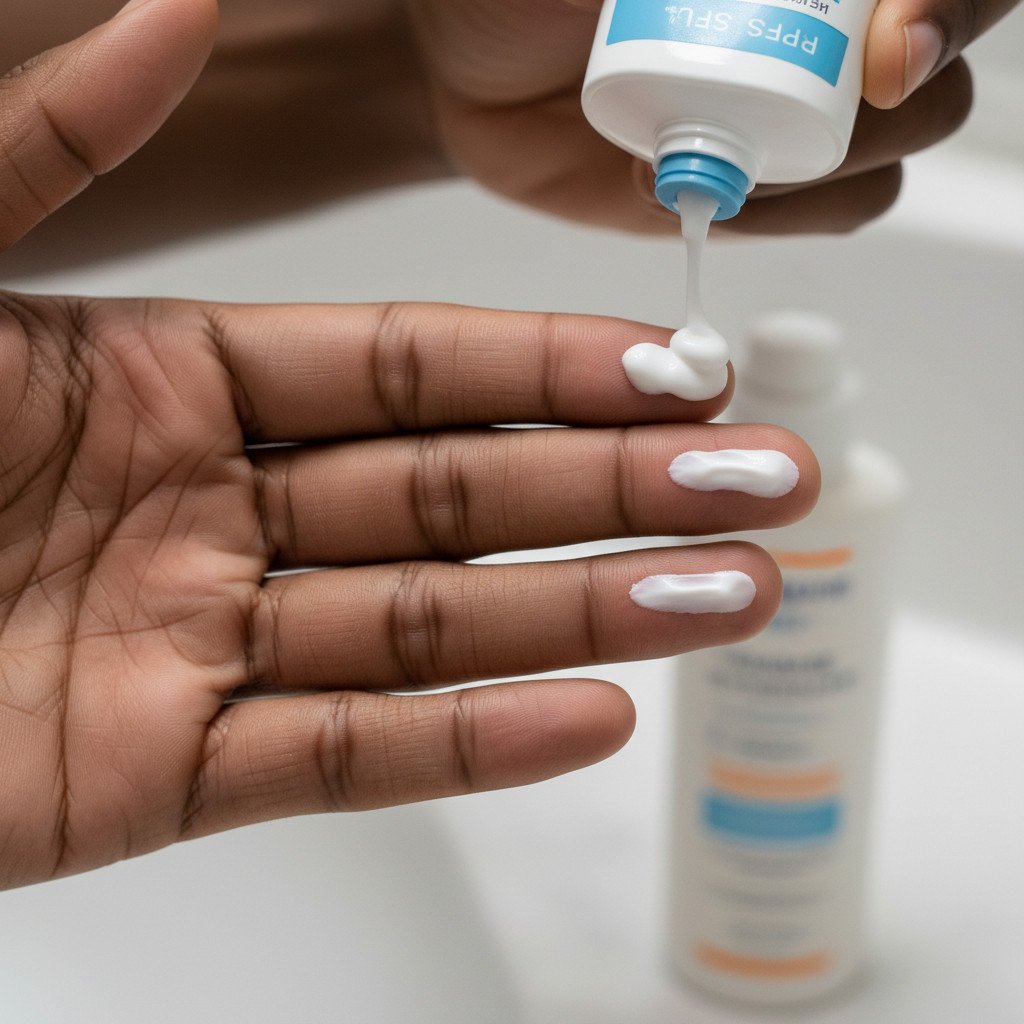
- Dispense: Squeeze a generous amount of sunscreen onto your fingertips. Aim for at least a nickel-sized dollop for your face and neck.
- Dot: Distribute small dots of sunscreen evenly across your face, neck, and ears. This prevents clumping.
- Blend: Gently pat and spread the sunscreen using upward and outward motions. Avoid rubbing vigorously.
- Melt In: Continue patting and lightly massaging until the sunscreen visibly disappears. This may take 30-60 seconds.
- Wait: Allow the sunscreen to set for 5-10 minutes before applying any makeup or additional products.
- Reapply: Reapply every two hours when outdoors, or immediately after sweating or swimming.
The Unseen Threat: Why Sunscreen is Essential for Black Men
The notion that Black men are immune to sun damage is a dangerous misconception. While melanin offers a natural SPF of approximately 7-13, it does not block all UV radiation. This partial protection can lead to a false sense of security, often resulting in less consistent sun protection practices and delayed diagnosis of sun-related skin issues. Understanding the specific risks and benefits is crucial for comprehensive skin health.
Dispelling the Melanin Myth: More Than Just Sunburn
Melanin, the pigment responsible for skin color, is a natural photoprotectant. It absorbs and scatters UV radiation, reducing the immediate signs of sun damage like sunburn. This is why Black men generally experience fewer sunburns compared to individuals with lighter skin tones. However, ‘fewer’ does not mean ‘none,’ and sunburn is just one aspect of sun damage. The real threats are often invisible until they manifest as long-term problems.
Skin Cancer Risk: Not Immune, Just Different
Skin cancer, including melanoma, basal cell carcinoma, and squamous cell carcinoma, can affect all skin types. For Black men, these cancers are often diagnosed at later stages, leading to poorer prognoses. This delay is partly due to the misconception that darker skin is immune, leading to less vigilance from both individuals and sometimes healthcare providers. When skin cancer does occur in Black men, it frequently appears in less sun-exposed areas like the palms of the hands, soles of the feet, under the nails, or in mucous membranes. These acral lentiginous melanomas are aggressive and require early detection. Consistent sunscreen use on all exposed skin, combined with regular self-examinations, is a critical preventative measure.
Hyperpigmentation: The Sun’s Unwanted Signature
Hyperpigmentation is a common concern for Black men. Post-inflammatory hyperpigmentation (PIH) often follows acne breakouts, razor bumps, or other forms of skin trauma. Sun exposure significantly worsens and prolongs PIH. UV radiation stimulates melanin production, causing existing dark spots to become darker and new ones to form. Even without visible sunburn, daily sun exposure can exacerbate uneven skin tone and make it harder to fade dark marks. Sunscreen acts as a shield, preventing the sun from triggering this excess melanin production, making it an indispensable tool in managing and preventing hyperpigmentation. For those already battling dark spots, consistent sunscreen application is the most effective way to prevent their worsening and support the efficacy of other corrective treatments. Learn more about managing hyperpigmentation.
Premature Aging: Beyond Wrinkles
While Black skin tends to show visible signs of aging, such as fine lines and wrinkles, later than lighter skin types, it is not immune to photoaging. Sun exposure accelerates the breakdown of collagen and elastin, leading to skin laxity, uneven texture, and a dull complexion. The cumulative effect of years of unprotected sun exposure can manifest as leathery skin, enlarged pores, and a loss of firmness. Sunscreen preserves the structural integrity of your skin, maintaining its youthful resilience and even tone for longer. It’s an investment in the long-term health and appearance of your skin, protecting against the slow, insidious damage that accumulates over decades.
Sun Damage and Skin Barrier Health
Chronic sun exposure can compromise the skin’s natural barrier function. A weakened skin barrier is less effective at retaining moisture and protecting against environmental aggressors, leading to dryness, sensitivity, and increased susceptibility to irritation. This is particularly relevant for Black men who may already experience issues like dryness or ashiness. Sunscreen helps maintain the integrity of the skin barrier, supporting its ability to function optimally and keeping your skin hydrated and resilient. Understand how to repair your skin barrier.
Understanding Sunscreen Types: Chemical vs. Mineral
The white cast issue primarily stems from the type of sunscreen active ingredients. Sunscreens generally fall into two categories: mineral (physical) and chemical. Each works differently and has distinct characteristics that impact their suitability for darker skin tones.
Mineral Sunscreens: The Physical Shield
Mineral sunscreens, also known as physical sunscreens, use zinc oxide and/or titanium dioxide as their active ingredients. These natural minerals sit on the surface of the skin, creating a physical barrier that reflects and scatters UV rays away from the skin. Think of it as a tiny mirror shield.
Pros of Mineral Sunscreens:
- Broad-Spectrum Protection: Both zinc oxide and titanium dioxide offer broad-spectrum protection against UVA and UVB rays.
- Gentle: They are generally well-tolerated by sensitive skin because they don’t penetrate the skin. This makes them a good choice for those prone to irritation or allergies.
- Immediate Protection: They work immediately upon application; no waiting period is required for them to become effective.
- Reef-Safe: Many mineral formulations are considered reef-safe, making them an environmentally conscious choice.
Cons of Mineral Sunscreens:
- White Cast: This is the primary drawback. Zinc oxide and titanium dioxide are white powders. Unless micronized (ground into very fine particles) or tinted, they can leave a noticeable white or grayish film, especially on darker skin tones.
- Thicker Texture: They can sometimes feel heavier or thicker on the skin compared to chemical sunscreens.
- Requires Thorough Blending: To minimize white cast, mineral sunscreens often require more effort to blend into the skin.
For Black men seeking mineral sunscreens, look for formulations that are explicitly labeled ‘tinted,’ ‘sheer,’ ‘invisible,’ or ‘micronized.’ Iron oxides are often added to tinted mineral sunscreens to help them blend better with darker skin tones.
Chemical Sunscreens: The Absorbing Agents
Chemical sunscreens use organic compounds like oxybenzone, avobenzone, octinoxate, octisalate, homosalate, and octocrylene. These ingredients absorb UV radiation, convert it into heat, and then release that heat from the skin. They act like a sponge, soaking up the harmful rays.
Pros of Chemical Sunscreens:
- No White Cast: This is their major advantage. Chemical sunscreens are typically clear and absorb seamlessly into the skin, making them ideal for darker complexions where a white cast is a significant concern.
- Lighter Texture: They often have a lighter, more cosmetically elegant feel, making them pleasant for daily wear.
- Easier to Blend: They spread easily and require less effort to disappear into the skin.
Cons of Chemical Sunscreens:
- Potential for Sensitivity: Some individuals, particularly those with sensitive skin, may experience irritation or allergic reactions to certain chemical filters.
- Waiting Period: They need about 15-20 minutes to fully absorb and become effective before sun exposure.
- Less Reef-Safe: Some chemical filters, like oxybenzone and octinoxate, have been linked to coral reef damage, although research is ongoing.
- Heat Generation: The conversion of UV light to heat can theoretically be a concern for those with conditions exacerbated by heat, like melasma, though this effect is generally minimal for most users.
For Black men, chemical sunscreens are often the go-to for their invisible finish. If you have sensitive skin, consider formulations with newer generation chemical filters that are often less irritating.
Hybrid Sunscreens: The Best of Both Worlds?
Some sunscreens combine both mineral and chemical filters. These hybrid formulations aim to leverage the benefits of both types—offering broad-spectrum protection with a more cosmetically elegant, less white-cast finish. They can be an excellent option for those who want the gentleness of mineral filters but the invisibility of chemical ones.
What to Look for: Key Features for Black Skin
When selecting a sunscreen, certain features are paramount for Black men to ensure efficacy, comfort, and an invisible finish.
Broad-Spectrum Protection: Your Non-Negotiable Shield
Always choose a sunscreen labeled ‘broad-spectrum.’ This means it protects against both UVA and UVB rays. UVB rays are primarily responsible for sunburn, while UVA rays contribute to premature aging, hyperpigmentation, and skin cancer. Both are damaging, and comprehensive protection is essential.
SPF 30 or Higher: The Minimum Standard
The American Academy of Dermatology recommends an SPF of 30 or higher for daily use. SPF (Sun Protection Factor) indicates how well a sunscreen protects against UVB rays. An SPF 30 sunscreen blocks approximately 97% of UVB rays, while SPF 50 blocks about 98%. The difference in protection above SPF 30 is marginal, but consistency is key. Don’t fall for the trap of thinking a higher SPF means you can apply less or less frequently.
No White Cast: The Aesthetic Imperative
This is often the deal-breaker. Look for sunscreens specifically formulated to be ‘sheer,’ ‘invisible,’ ‘clear,’ ‘tinted,’ or ‘no white cast.’ These formulations often use micronized mineral filters, chemical filters, or a combination of both. Read reviews from other darker-skinned individuals if possible.
Formulation: Texture and Finish
Sunscreen texture matters for comfort and integration into your routine. Consider your skin type:
- Oily Skin: Look for ‘matte,’ ‘oil-free,’ ‘non-comedogenic,’ or ‘gel’ formulations. These will help control shine and prevent clogged pores.
- Dry Skin: Opt for ‘hydrating,’ ‘lotion,’ or ‘cream’ formulations that provide additional moisture.
- Normal/Combination Skin: Most formulations will work, but a lightweight lotion or fluid is often preferred for daily wear.
The finish—matte, natural, or dewy—is also a personal preference. Many men prefer a natural or matte finish to avoid looking overly shiny.
Water Resistance: For Active Lifestyles
If you’re active, sweat frequently, or plan to swim, choose a water-resistant sunscreen. These are typically labeled ‘water-resistant’ for 40 or 80 minutes. Remember that ‘waterproof’ claims are misleading; no sunscreen is truly waterproof. Reapplication after water exposure or heavy sweating is critical.
Fragrance-Free: A Wise Choice for Sensitive Skin
Fragrances, both synthetic and natural, are common irritants and can trigger allergic reactions or sensitivity, especially for those with reactive skin. Opt for ‘fragrance-free’ formulations to minimize the risk of irritation. ‘Unscented’ can sometimes mean masking fragrances are used, so ‘fragrance-free’ is the safer bet. Understand the difference between fragrance-free and unscented.
Non-Comedogenic: Preventing Breakouts
This label indicates that the product has been formulated not to clog pores. For men prone to acne or breakouts, a non-comedogenic sunscreen is essential to prevent new blemishes from forming.
Application Techniques for an Invisible Finish
Applying sunscreen correctly is just as important as choosing the right one. Proper technique ensures even coverage, maximum protection, and, critically, no white cast on darker skin.
The Two-Finger Rule: Getting the Right Amount
Most people don’t apply enough sunscreen. For your face and neck, squeeze out a line of sunscreen onto your index and middle fingers. This ‘two-finger rule’ generally provides the recommended 1/4 teaspoon amount needed for adequate protection. Don’t skimp; using too little significantly reduces the stated SPF.
Layering Order: Sunscreen Last (Almost)
Sunscreen should be the last step in your skincare routine before any makeup (if applicable). Here’s the standard order:
- Cleanse: Wash your face.
- Treatments: Apply any serums or targeted treatments (e.g., for acne or hyperpigmentation).
- Moisturizer: Apply your daily hydrating face moisturizer. Allow it to absorb fully for 1-2 minutes.
- Sunscreen: Apply your chosen sunscreen.
Applying sunscreen over a fully absorbed moisturizer creates a smoother canvas, allowing the sunscreen to spread more easily and blend seamlessly without pilling.
The Dot and Pat Method: Blending for Disappearance
Instead of squeezing a large dollop onto your palm and rubbing it in, try the dot and pat method:
- Dot: Dispense the appropriate amount of sunscreen onto your fingertips. Then, dot small amounts evenly across your entire face, neck, and any other exposed areas (ears, hairline, back of neck).
- Pat: Gently pat the sunscreen into your skin using your fingertips. Use light, upward, and outward motions. Avoid aggressive rubbing, which can cause pilling or uneven application.
- Blend: Continue patting and lightly massaging until the sunscreen visibly disappears into your skin. This may take 30-60 seconds, especially with mineral sunscreens. Be patient.
- Feather Edges: Pay attention to your hairline, jawline, and around your ears to ensure no visible lines or streaks.
This method helps distribute the product evenly, making it easier for the skin to absorb and minimizing the appearance of any white cast.
Allow Absorption Time: Patience is Key
After application, give your sunscreen 5-10 minutes to set and fully absorb before touching your face excessively or applying anything else. This allows the formula to stabilize and reduces the likelihood of pilling or transfer.
Reapplication Rules: Consistency is Protection
Sunscreen is not a one-and-done application for the day. Its effectiveness diminishes over time due to sweat, oil, friction, and environmental factors. Reapplication is crucial for continuous protection:
- Every Two Hours: Reapply sunscreen every two hours when you are outdoors, regardless of the SPF.
- After Sweating/Swimming: Reapply immediately after swimming, heavy sweating, or towel drying, even if the product is water-resistant.
- Daily Baseline: Even on cloudy days or when mostly indoors, a morning application is essential. UV rays penetrate clouds and windows.
For reapplication over facial hair or during the day, consider sunscreen sticks or sprays for convenience, ensuring even coverage. However, sprays can be tricky to apply adequately; ensure you spray enough to see a visible sheen and then blend.
Common Mistakes Black Men Make with Sunscreen
Avoiding sunscreen is a major mistake, but even those who use it can fall into common traps that compromise its effectiveness or lead to dissatisfaction. Understanding these pitfalls is the first step to correcting them.
1. Not Using Enough Sunscreen
Mistake: Applying a thin layer, thinking it’s sufficient or to avoid a white cast.
Impact: Reduces the actual SPF significantly. If you apply half the recommended amount, you don’t get half the SPF; you get much less. Your skin is left under-protected, vulnerable to hyperpigmentation, and sun damage.
Fix: Adhere to the ‘two-finger rule’ (about a nickel-sized amount for the face and neck). It might feel like a lot initially, but proper blending techniques will help it disappear. It’s better to use slightly more than too little.
2. Not Reapplying Frequently Enough
Mistake: Applying sunscreen once in the morning and assuming it lasts all day.
Impact: Sunscreen degrades and wears off. After a few hours, especially with sweat, friction, or water, its protective capabilities diminish significantly. This leaves your skin exposed for most of the day.
Fix: Reapply every two hours when outdoors, or immediately after swimming or heavy sweating. If you’re mostly indoors but near windows, a midday reapplication can still be beneficial. Keep a travel-sized sunscreen handy for easy reapplication.
3. Relying Solely on SPF in Moisturizer or Makeup
Mistake: Believing that the SPF in your moisturizer or foundation provides adequate protection.
Impact: While SPF-infused products offer some protection, they rarely provide the full SPF listed because people typically don’t apply them in the generous amounts required for full efficacy. Furthermore, these products are often not broad-spectrum or water-resistant.
Fix: Use a dedicated, broad-spectrum sunscreen with an SPF of 30 or higher as the last step in your morning routine. Think of SPF in other products as a bonus, not your primary defense.
4. Skipping Sunscreen on Cloudy Days or Indoors
Mistake: Assuming sun protection is only necessary on bright, sunny days or when directly outdoors.

Impact: Up to 80% of UV rays can penetrate clouds. UVA rays, which contribute to aging and hyperpigmentation, can also pass through windows. Daily, year-round protection is crucial regardless of visible sunlight or location.
Fix: Make sunscreen a non-negotiable part of your daily routine, every single day, rain or shine, indoors or out. Consistency is paramount for long-term skin health.
5. Not Protecting All Exposed Skin
Mistake: Only applying sunscreen to the face, neglecting other exposed areas.
Impact: Areas like the neck, ears, hands, and scalp (especially if bald or thinning) are just as susceptible to sun damage, hyperpigmentation, and skin cancer. These areas are often overlooked until damage is visible.
Fix: Extend sunscreen application to your neck, ears, hands, and any other skin exposed to the sun. For the scalp, consider a dedicated scalp sunscreen, a hat, or a spray sunscreen.
6. Not Patch Testing New Sunscreens
Mistake: Applying a new sunscreen all over your face without checking for adverse reactions.
Impact: Chemical sunscreens, in particular, can sometimes cause irritation or allergic reactions in sensitive individuals. Applying it broadly without testing can lead to widespread redness, itching, or breakouts.
Fix: Always perform a patch test with new products. Apply a small amount to an inconspicuous area, like behind your ear or on your jawline, for a few days to check for any adverse reactions before full facial application. Learn how to patch test effectively.
7. Not Checking Expiration Dates
Mistake: Using sunscreen that has expired or been open for too long.
Impact: Sunscreen ingredients can degrade over time, losing their effectiveness. An expired sunscreen offers little to no protection, leaving your skin vulnerable.
Fix: Check the expiration date on your sunscreen. Most sunscreens are good for 2-3 years from the manufacturing date, but once opened, their efficacy can diminish faster. If there’s no explicit expiration date, look for a ‘period after opening’ (PAO) symbol, typically a jar icon with a number and ‘M’ (e.g., 12M for 12 months). Discard any sunscreen that has changed in color, consistency, or smell.
Troubleshooting Common Sunscreen Issues for Black Men
Even with the right product, issues can arise. Here’s how to troubleshoot common sunscreen complaints, especially relevant for darker skin tones.
Problem: White Cast
Cause: Most often, this is due to mineral sunscreens (zinc oxide, titanium dioxide) that aren’t micronized or tinted enough. It can also happen if too much product is applied at once or not blended thoroughly.
Fixes:
- Switch to Chemical or Tinted Mineral: If you’re using a non-tinted mineral sunscreen, try a chemical formula or a mineral sunscreen specifically labeled ‘tinted’ or ‘sheer’ for darker skin tones. Tinted options often contain iron oxides to match various complexions.
- Warm and Blend: Dispense the sunscreen onto your fingertips, rub them together briefly to warm the product, then dot it onto your face. Pat and blend in small sections, allowing each section to absorb before moving to the next.
- Layer Thinly: If applying a thick cream, apply it in two thinner layers, allowing the first to absorb before the second.
- Wait and Watch: Some mineral sunscreens need a few minutes to ‘melt’ into the skin and become less visible. Give it 5-10 minutes before judging the final finish.
Problem: Pilling (Sunscreen Balls Up)
Cause: Pilling occurs when products don’t layer well together. This can be due to: too many layers, not allowing previous layers to dry, incompatible ingredients (e.g., silicone-based products over water-based ones), or the sunscreen itself having a tendency to pill.
Fixes:
- Allow Absorption Time: Ensure your moisturizer and any serums are fully absorbed and dry (1-2 minutes) before applying sunscreen.
- Simplify Your Routine: If you use many layers, try to streamline your morning routine.
- Change Application Technique: Instead of rubbing, try patting the sunscreen onto your skin. Rubbing can cause products to ball up.
- Check Ingredients: If one product is silicone-based (often ends in -cone, -siloxane), ensure your other products are compatible or try a different sunscreen formulation.
- Try a Different Sunscreen: Some sunscreens are simply more prone to pilling. Experiment with different brands and formulations.
Problem: Greasy/Shiny Finish
Cause: The sunscreen formulation is too rich for your skin type, or you’re applying too much. This is common for those with oily or combination skin.
Fixes:
- Choose Matte/Oil-Free Formulas: Look for sunscreens specifically labeled ‘matte,’ ‘oil-free,’ ‘gel,’ or ‘fluid.’ These are designed to minimize shine.
- Blotting Papers: Carry blotting papers to dab away excess oil throughout the day without disturbing your sunscreen.
- Setting Powder: A light dusting of translucent setting powder can help mattify the finish, especially in the T-zone.
- Adjust Moisturizer: Ensure your moisturizer isn’t overly heavy. A lighter, oil-free moisturizer underneath can help.
Problem: Eye Sting/Irritation
Cause: Certain chemical filters (especially oxybenzone, avobenzone) can migrate and irritate sensitive eyes. Sweat can also carry sunscreen into the eyes.
Fixes:
- Switch to Mineral Sunscreen Around Eyes: Mineral sunscreens (zinc oxide, titanium dioxide) are generally less irritating for the eyes. You can use a mineral formula specifically for the eye area and a chemical one for the rest of your face.
- Use Sunscreen Sticks: Sunscreen sticks are often wax-based and less likely to migrate into the eyes.
- Apply Away from Lash Line: Apply sunscreen slightly away from the immediate lash line, then gently pat it closer.
- Wear Sunglasses: Sunglasses not only protect your eyes from UV but also create a physical barrier against sunscreen migration.
Problem: Breakouts/Acne
Cause: The sunscreen is comedogenic (clogging pores), or you’re not cleansing properly at the end of the day. Some ingredients can also trigger breakouts in sensitive individuals.
Fixes:

- Choose Non-Comedogenic: Always select sunscreens labeled ‘non-comedogenic.’
- Double Cleanse: At night, perform a double cleanse. Start with an oil-based cleanser or micellar water to break down sunscreen, makeup, and oil, then follow with your regular water-based cleanser. This ensures all traces of sunscreen are removed.
- Check Ingredients: If you suspect a specific ingredient is causing issues, try a formula with different active filters.
- Exfoliate Regularly (and Gently): Gentle exfoliation 2-3 times a week can help prevent pore clogging, but don’t over-exfoliate, especially if your skin is sensitive. Learn about proper exfoliation for Black men.
Beyond the Face: Full-Body Sun Protection
Sun protection isn’t just for your face. Your entire body is exposed to UV radiation, and neglecting other areas can lead to uneven skin tone, premature aging, and increased risk of skin cancer. A comprehensive approach means protecting all exposed skin, from head to toe.
Neck and Ears: Often Overlooked
These areas are highly susceptible to sun damage and skin cancer. The skin on the neck is thin and prone to showing signs of aging, while the ears are a common site for skin cancers due to their constant exposure and often forgotten status. Always extend your facial sunscreen down your neck and carefully apply it to the front and back of your ears.
Scalp: Crucial for Bald or Thinning Hair
If you have a bald head, thinning hair, or a closely shaved cut, your scalp is directly exposed to the sun. The scalp is a common site for basal cell and squamous cell carcinomas. Use a dedicated scalp sunscreen, a spray sunscreen, or, ideally, wear a hat when outdoors for extended periods. A wide-brimmed hat offers the best protection.
Hands: The First to Show Age
Your hands are almost constantly exposed to the sun and are one of the first areas to show signs of aging, such as sunspots (lentigines) and loss of elasticity. Apply sunscreen to the backs of your hands every morning and reapply throughout the day, especially after washing them. Keep a small tube of hand cream with SPF in your car or at your desk.
Arms and Legs: Daily Exposure
When wearing short sleeves or shorts, your arms and legs are directly exposed. Apply a generous amount of body sunscreen to these areas. For ease of application, consider a spray or lotion formula that spreads easily. Remember to cover the tops of your feet if wearing open-toed shoes.
Lips: A Vulnerable Spot
The lips are very sensitive to sun damage and can develop sun-induced changes, including actinic cheilitis (a precancerous condition). Use a lip balm with an SPF of 30 or higher. Reapply frequently, especially after eating or drinking.
The Role of Protective Clothing
While sunscreen is vital, it’s not the only defense. Incorporate protective clothing into your sun safety strategy:
- Hats: A wide-brimmed hat (at least 3 inches all around) provides excellent protection for your face, ears, and neck.
- Sunglasses: Look for sunglasses that block 99-100% of both UVA and UVB rays. This protects your eyes and the delicate skin around them.
- UV-Protective Clothing: Clothing with a UPF (Ultraviolet Protection Factor) rating offers measurable sun protection. Many brands offer stylish options for active wear or everyday use.
Combining sunscreen with protective clothing offers the most comprehensive defense against the sun’s harmful rays.
Sunscreen and Your Skincare Routine: Integration is Key
Sunscreen isn’t an add-on; it’s an integral part of a complete skincare regimen. Integrating it seamlessly ensures consistent protection and optimizes the benefits of your other products.
Morning Routine: The Final Step
Sunscreen should always be the last step in your morning skincare routine, applied after your cleanser, treatments, and moisturizer. This allows your other products to absorb fully and create a smooth base for the sunscreen. Applying it last ensures it forms the outermost protective layer on your skin.
Example Morning Routine:
- Cleanse: Gentle facial cleanser.
- Treat: Serum (e.g., Vitamin C for antioxidants, Niacinamide for tone).
- Moisturize: Lightweight facial moisturizer.
- Protect: Broad-spectrum sunscreen SPF 30+.
Evening Routine: The Essential Removal
Equally important is properly removing sunscreen at the end of the day. Sunscreens, especially water-resistant and mineral formulas, can be tenacious and, if not fully removed, can contribute to clogged pores and breakouts.
Double Cleansing: The Gold Standard
For effective sunscreen removal, especially for those with oily skin or who wear makeup, double cleansing is highly recommended:
- Oil-Based Cleanser: Start with an oil cleanser, balm, or micellar water. These products are excellent at dissolving oil-based sunscreen, makeup, and sebum. Gently massage onto dry skin, then emulsify with a little water and rinse.
- Water-Based Cleanser: Follow with your regular foaming or gel cleanser to remove any remaining residue and cleanse your skin thoroughly.
This two-step process ensures your skin is clean and ready to absorb your evening treatments, preventing potential issues like breakouts or dullness.
Sunscreen and Other Active Ingredients
Sunscreen works synergistically with many active skincare ingredients, enhancing their benefits and preventing adverse effects.
- Vitamin C: A powerful antioxidant, Vitamin C helps neutralize free radicals generated by UV exposure. When paired with sunscreen, it provides enhanced protection against environmental damage.
- Retinoids (Retinol, Tretinoin): Retinoids increase skin cell turnover, which can make your skin more sensitive to the sun. Consistent, diligent sunscreen use is absolutely critical when using retinoids to prevent irritation, sunburn, and hyperpigmentation.
- AHAs/BHAs (Exfoliants): Alpha Hydroxy Acids (like glycolic acid) and Beta Hydroxy Acids (like salicylic acid) exfoliate the skin, removing dead cells and revealing newer, more sensitive skin underneath. This increased sensitivity necessitates strict sunscreen application to prevent sun damage and hyperpigmentation. Exfoliate safely, especially with sensitive skin.
Never skip sunscreen when using these active ingredients. It’s not just about protection; it’s about making sure your investment in these other products pays off without counteracting their benefits.
Practical Myth-Busting for Black Men and Sunscreen
Persistent myths about sunscreen and dark skin continue to hinder consistent protection. It’s time to dismantle these misconceptions with facts.
Myth 1: Black Skin Doesn’t Need Sunscreen Because It Doesn’t Burn
Fact: While darker skin tones burn less easily due to higher melanin content, they are not immune to sunburn. More importantly, sun damage extends far beyond visible sunburn. UV radiation causes DNA damage, accelerates aging, exacerbates hyperpigmentation, and significantly increases the risk of skin cancer, regardless of skin tone. The absence of a visible burn doesn’t mean the absence of harm. This myth is dangerous because it leads to under-protection and delayed diagnosis of serious conditions.
Myth 2: Sunscreen Prevents Vitamin D Absorption
Fact: This is a common concern, but research indicates that daily sunscreen use does not lead to Vitamin D deficiency. Most people do not apply sunscreen perfectly or consistently enough to block 100% of UV rays. Furthermore, even minimal incidental sun exposure is often sufficient for Vitamin D synthesis. If you are concerned about your Vitamin D levels, consult a healthcare professional. Dietary sources and supplements are reliable ways to ensure adequate Vitamin D without compromising sun protection.
Myth 3: Sunscreen is Only for the Beach or Summer
Fact: UV radiation is present year-round, regardless of the season or weather. Clouds block some sunlight, but not all UV rays. UVA rays, which contribute to aging and skin cancer, penetrate clouds and even windows. Therefore, daily, year-round sunscreen application is essential, whether you’re at the beach, in the city, or simply sitting by a window indoors. Consistency is the cornerstone of effective sun protection.
Myth 4: Darker Skin Doesn’t Get Skin Cancer
Fact: This is a critically dangerous myth. Black individuals absolutely get skin cancer, including melanoma, basal cell carcinoma, and squamous cell carcinoma. The difference is that these cancers are often diagnosed at later stages in darker skin, leading to poorer prognoses. This delay is partly due to the misconception that Black skin is immune, leading to less vigilance. When skin cancer does occur in Black men, it often appears in less sun-exposed areas (like palms, soles, under nails), making regular self-examinations and professional skin checks vital, in addition to sunscreen use on all exposed skin.
Myth 5: All Sunscreens Leave a White Cast on Dark Skin
Fact: This was a valid concern in the past, but sunscreen technology has advanced significantly. Many modern sunscreens, especially chemical formulations and tinted mineral sunscreens, are specifically designed to be sheer and invisible on all skin tones, including darker complexions. The market now offers numerous options that blend seamlessly without leaving any white or ashy residue. It’s about choosing the right product and applying it correctly, not about avoiding sunscreen altogether.

Myth 6: Sunscreen is Only for Women
Fact: Skincare, including sun protection, is for everyone. Skin health is not gender-specific. Men’s skin is just as susceptible to sun damage, aging, and skin cancer as women’s. Prioritizing skin health, including daily sunscreen use, is a sign of self-care and intelligence, not a gendered activity. This outdated stereotype often prevents men from adopting essential grooming practices that benefit their long-term health and appearance.
When to Stop and Get Help: Safety First
While sunscreen is generally safe and beneficial, paying attention to your skin’s reactions is important. Know when to pause your routine and seek professional advice.
Signs of Irritation or Allergic Reaction:
- Persistent Redness: If your skin remains red, inflamed, or develops a rash after using a new sunscreen.
- Intense Itching or Burning: A mild tingle might be normal for some active ingredients, but severe, persistent itching or a burning sensation is a sign of irritation.
- Swelling: Any noticeable swelling, especially around the eyes or lips.
- Hives or Bumps: New, unexplained bumps or hives.
If you experience any of these symptoms, immediately discontinue use of the product. Gently wash the area with a mild, fragrance-free cleanser and apply a soothing, non-active moisturizer. If symptoms persist or worsen, consult a dermatologist or healthcare provider.
Signs of Sun Damage or Skin Concerns:
- New or Changing Moles: Any mole that changes in size, shape, color, or texture, or one that bleeds, itches, or crusts.
- Non-Healing Sores: A sore or lesion that doesn’t heal within a few weeks.
- Unusual Growths: Any new, suspicious growth on your skin.
- Severe or Worsening Hyperpigmentation: If dark spots are rapidly darkening or spreading despite consistent sunscreen use and other treatments, it warrants a professional evaluation.
Regular self-skin exams are crucial for early detection. If you notice anything concerning, do not delay in seeing a dermatologist. Early detection of skin cancer significantly improves treatment outcomes.
General Skin Health Concerns:
- Persistent Acne or Breakouts: If your sunscreen seems to be consistently causing or worsening acne, despite choosing non-comedogenic formulas and double cleansing, you may need a different product or professional guidance.
- Extreme Dryness or Oiliness: If your skin’s balance is significantly disrupted after introducing a new sunscreen, leading to extreme dryness or excessive oil production, it might not be the right fit.
A dermatologist can help identify the root cause of persistent skin issues and recommend appropriate products or treatments tailored to your skin type and concerns. Never hesitate to seek professional medical advice for any persistent or concerning skin conditions.
Conclusion: Your Skin, Protected and Confident
Choosing and consistently applying the best sunscreen for Black men, one that leaves no white cast, is a fundamental act of self-care. It’s about more than just aesthetics; it’s about safeguarding your skin against hyperpigmentation, premature aging, and the very real threat of skin cancer. The days of chalky, ashy sunscreens are behind us. Modern formulations offer invisible, effective protection that integrates seamlessly into your daily routine.
Embrace broad-spectrum, SPF 30+ sunscreens, whether chemical for a truly invisible finish or tinted mineral for sensitive skin. Apply generously, reapply diligently, and extend protection to every exposed area of your body. Dispel the myths that suggest darker skin is immune to sun damage. Your skin is resilient, but it requires consistent defense. Make sunscreen a non-negotiable part of your daily regimen, and you’ll preserve your skin’s health, clarity, and youthful vitality for years to come. This is about elevating your grooming, taking control of your skin’s future, and stepping out with confidence, knowing your skin is protected, without compromise.
Frequently Asked Questions
Why do Black men need sunscreen?
Black men need sunscreen to protect against hyperpigmentation, premature aging, and skin cancer. While melanin provides some natural protection, it is not a complete shield against harmful UV radiation, which can still cause damage and exacerbate existing skin conditions.
What kind of sunscreen won’t leave a white cast on dark skin?
For an invisible finish, Black men should look for chemical sunscreens or tinted mineral sunscreens. Chemical sunscreens absorb into the skin without a visible residue, while tinted mineral sunscreens use iron oxides to blend seamlessly with darker complexions.
How much sunscreen should I apply to my face?
For adequate protection, apply a generous amount of sunscreen to your face and neck, roughly equivalent to a nickel-sized dollop or what fits on your index and middle fingers (the ‘two-finger rule’). Most people apply too little, which significantly reduces the stated SPF.
How often should Black men reapply sunscreen?
Sunscreen should be reapplied every two hours when outdoors, or immediately after swimming, heavy sweating, or towel drying. Even on cloudy days or when mostly indoors, a morning application is essential as UV rays can penetrate clouds and windows.
Can sunscreen help with dark spots or hyperpigmentation?
Yes, consistent sunscreen use is crucial for preventing and managing dark spots (hyperpigmentation). Sun exposure stimulates melanin production, making existing dark spots darker and forming new ones. Sunscreen acts as a shield, preventing this exacerbation and allowing other treatments to work effectively.
Is mineral or chemical sunscreen better for Black skin?
Both mineral and chemical sunscreens can be effective. Chemical sunscreens are often preferred for their clear, no-white-cast finish. Mineral sunscreens are gentler for sensitive skin but require careful selection of micronized or tinted formulas to avoid a white cast on darker skin tones.
Does sunscreen prevent Vitamin D absorption?
No, daily sunscreen use does not typically lead to Vitamin D deficiency. Most people don’t apply sunscreen perfectly, and incidental sun exposure is usually sufficient for Vitamin D synthesis. If concerned, consult a healthcare professional for dietary or supplement advice.
What does ‘broad-spectrum’ mean in sunscreen?
‘Broad-spectrum’ means the sunscreen protects against both UVA and UVB rays. UVB rays cause sunburn, while UVA rays contribute to premature aging, hyperpigmentation, and skin cancer. Comprehensive protection against both types of rays is essential for overall skin health.
Can I skip sunscreen if I’m indoors all day?
It is advisable to still apply sunscreen even when indoors, especially if you are near windows. UVA rays, which contribute to aging and hyperpigmentation, can penetrate glass. Consistent daily protection, regardless of location, is key to preventing cumulative sun damage.
How do I prevent sunscreen from pilling on my face?
To prevent pilling, ensure your moisturizer and any serums are fully absorbed and dry before applying sunscreen. Use a patting motion rather than rubbing, and consider simplifying your morning routine to fewer layers. Some sunscreens are also less prone to pilling than others.
Should I use a separate sunscreen for my body?
While facial sunscreens can be used on the body, body sunscreens are often more cost-effective and come in larger sizes. Ensure any body sunscreen you use is broad-spectrum, SPF 30+, and formulated to absorb well without a white cast, especially on exposed areas like the neck, ears, and hands.
What’s the best way to remove sunscreen at the end of the day?
The best way to remove sunscreen, especially water-resistant or mineral formulas, is by double cleansing. Start with an oil-based cleanser or micellar water to dissolve the sunscreen, then follow with your regular water-based cleanser to thoroughly clean your skin and prevent clogged pores.
Shop face cleanser on Amazon
Shop facial moisturizer on Amazon
Shop hydrating face moisturizer on Amazon