
This guide focuses on a monthly review that improves grooming decisions. The aim is a routine that is clear, repeatable, and comfortable, without unnecessary products or aggressive technique.
Use it to assess wasted products, inconsistent habits, recurring irritation, changing skin needs, and poorly maintained tools. Start with the basics, change one variable at a time, and judge progress over several weeks rather than after one application.
For the broader foundation, use the GFBM grooming lifestyle hub.
How to Put This Guide Into Practice

The most useful way to apply this guide is to make one controlled change at a time. Start by writing down what you currently use, how often you use it, and what your skin or hair does during the following twenty-four hours. That short record prevents guesswork. It also helps you separate a product problem from a technique problem, a weather change, or simple inconsistency.
For this topic, the central goal is a monthly review that improves grooming decisions. Build around that goal before adding optional products. Keep the core routine visible and easy to reach. Store the items in application order, clean the tools that touch your face, and remove anything that repeatedly burns, stings, flakes, or leaves heavy buildup. A routine should be easy to repeat on a rushed morning and a tired night, not only when you have extra time.
Week 1: Establish a Baseline
During the first week, avoid chasing fast results. Use the smallest dependable routine and observe wasted products, inconsistent habits, recurring irritation, changing skin needs, and poorly maintained tools. Take two clear photos in the same lighting: one at the start and one after seven days. Note comfort after cleansing, midday oil or tightness, the condition of the beard and neck, and any new bumps or marks. Do not judge progress from a single mirror check after a bad shave or a long day.
Week 2: Correct Technique Before Buying More
In the second week, examine pressure, timing, product amount, water temperature, and tool cleanliness. Many grooming problems are intensified by rushing, repeated passes, aggressive scrubbing, or using far more product than the skin can comfortably handle. Correcting technique is inexpensive and gives every product a fairer test. If you introduce something new, patch test it and keep the rest of the routine stable.
Week 3: Add One Targeted Upgrade
Choose one upgrade that directly addresses the most important concern you recorded. That may be a gentler cleanser, a lighter or richer moisturizer, a different shaving tool, a targeted treatment, or a sunscreen that blends without a distracting cast. Use it according to the label and resist combining several strong ingredients. When irritation appears, return to the basic routine instead of trying to treat the reaction with more actives.
Week 4: Review Results and Set the Next Month
At the end of four weeks, compare your notes and photos. Look for fewer new bumps, less tightness, better hydration, more predictable oil control, improved comfort, or a routine that is simply easier to complete. Dark marks and texture often require more time, so judge whether the process is moving in the right direction rather than demanding a finished result. Keep what works, remove what does not, and choose only one priority for the next month.
A Practical Decision Framework
| What you notice | Likely adjustment | What not to do |
|---|---|---|
| Burning, persistent stinging, or sudden sensitivity | Pause strong treatments and use a gentle cleanser and moisturizer | Add another acid, scrub, or fragranced product |
| New bumps after shaving | Review beard direction, pressure, blade condition, and shave closeness | Pick the bumps or repeatedly shave over them |
| Dryness or visible ashiness | Use lukewarm water and apply a suitable moisturizer to slightly damp skin | Use harsher soap or longer hot showers |
| Heavy oil or product buildup | Reduce product amount and choose lighter textures | Strip the face several times a day |
| Dark marks that are not improving | Prevent new inflammation, use sunscreen, and stay consistent with one treatment | Scrub aggressively or change products every few days |
Seek a dermatologist when you have painful or cystic acne, spreading irritation, signs of infection, severe or scarring razor bumps, unexplained hair loss, or a skin change that persists. A grooming routine can support healthy habits, but it cannot diagnose or replace medical care.
The Imperative of a Monthly Grooming Audit for Black Men
Why a monthly audit, you might ask? Just as the seasons shift and evolve, so too do the needs of your skin and hair. Environmental factors, stress levels, dietary changes, and even the natural aging process all conspire to alter your complexion and coiffure. For Black men, these considerations are often amplified by specific concerns such as hyperpigmentation, ingrown hairs, excess oil production, and maintaining optimal moisture levels in a variety of climates. A diligent, monthly review ensures that your grooming arsenal remains perfectly calibrated to address these dynamic requirements, preventing issues before they arise and optimizing your natural radiance. It’s an investment in enduring excellence, a commitment to presenting your best self, always.
Understanding the Unique Needs of Melanin-Rich Skin
Melanin, the pigment responsible for our rich skin tones, offers natural protection against UV radiation but also makes our skin more prone to certain conditions. Post-inflammatory hyperpigmentation (PIH), for instance, can leave dark spots after acne breakouts or minor injuries. Pseudofolliculitis barbae (PFB), commonly known as razor bumps, is another prevalent concern due to the curvature of hair follicles in Black men. Our skin also tends to be more susceptible to dryness, requiring consistent and thoughtful hydration. A monthly audit allows you to monitor these specific concerns, adjust your product choices, and refine your techniques to foster a truly healthy, even-toned, and resilient complexion.
Beyond Skin: Hair, Beard, and Body Care Considerations
The audit extends beyond facial skincare. Your hair, whether a close-cut fade, luscious locs, or a distinguished beard, demands specialized attention. Textured hair can be prone to dryness and breakage, requiring specific cleansing, conditioning, and styling strategies. Beards, too, have their own ecosystem, needing proper cleansing, conditioning, and oiling to prevent itchiness, flakiness, and promote healthy growth. Body care, often an afterthought, is equally crucial for maintaining overall skin health, addressing concerns like ashiness, body acne, or dryness. This holistic approach ensures every aspect of your grooming routine is harmonized and effective.
Phase 1: The Deep Dive – Assessing Your Current Routine

The first step in any effective audit is a thorough assessment of what you’re currently doing. Think of yourself as a meticulous scientist, observing, documenting, and analyzing. This isn’t about judgment; it’s about understanding and improvement.
Step 1.1: Inventory Your Products
Gather every single product you use—from your face wash to your body lotion, your shampoo to your beard oil. Lay them out. Check expiration dates. Note the ingredients. Are they suitable for your skin and hair type? Are they designed to address your specific concerns?
- Cleansers: Are they stripping or hydrating? Do they contain harsh sulfates?
- Treatments: Serums, toners, spot treatments. Are they targeting hyperpigmentation, acne, or fine lines?
- Moisturizers: Are they providing adequate hydration without feeling greasy?
- Sunscreens: Is it broad-spectrum? SPF 30 or higher? Does it leave a white cast?
- Hair Products: Shampoos, conditioners, leave-ins, stylers. Are they nourishing or drying?
- Beard Products: Washes, conditioners, oils, balms. Are they promoting softness and growth?
- Shaving Products: Pre-shave oils, creams, aftershaves. Are they minimizing irritation and bumps?
Step 1.2: Evaluate Your Techniques
How you apply products is just as important as the products themselves. Are you rushing through your routine? Are you using the correct tools? Are your hands clean?
- Cleansing: Are you gently massaging for at least 60 seconds? Using lukewarm water?
- Shaving: Are you shaving with the grain? Using a sharp blade? Preparing your skin properly?
- Exfoliating: Are you over-exfoliating or not exfoliating enough? Using chemical or physical exfoliants appropriately?
- Moisturizing: Are you applying to damp skin to lock in moisture?
- Hair Styling: Are you using heat protectants? Are you detangling gently?
Step 1.3: Observe Your Skin & Hair
This is the most crucial part. Dedicate time to truly observe your skin and hair in varying conditions. What do you notice?
- Skin Texture: Is it smooth? Rough? Bumpy?
- Skin Tone: Is it even? Are there new dark spots? Redness?
- Hydration Levels: Does your skin feel tight or supple after cleansing? Throughout the day?
- Oiliness: Are you excessively oily in certain areas? Or dry?
- Breakouts: Where are they occurring? How often?
- Razor Bumps/Irritation: Are they frequent? Persistent?
- Hair Health: Is it shiny? Dull? Prone to breakage? Itchy scalp?
- Beard Health: Is it soft? Brittle? Flaky skin underneath?
Keep a small journal or use your phone to jot down these observations. This qualitative data will be invaluable for making informed adjustments.
Phase 2: The Refinement – Optimizing Your Routine
Now that you have a clear picture of your current state, it’s time to make strategic adjustments. This phase is about upgrading, replacing, and introducing new elements that will serve your skin and hair better.
Step 2.1: Curating Your Product Selection
Based on your observations and inventory, it’s time to make some discerning choices. Focus on ingredients that are beneficial for melanin-rich skin and textured hair.
For Facial Skincare:
- Gentle Cleanser: Opt for sulfate-free, hydrating cleansers. Look for ingredients like glycerin, ceramides, and hyaluronic acid.
- Targeted Treatments:
- Hyperpigmentation: Niacinamide, Vitamin C, Alpha Arbutin, Kojic Acid, Tranexamic Acid.
- Acne: Salicylic Acid (BHA), Benzoyl Peroxide (use sparingly), a fragrance-free formula.
- Anti-Aging: Retinoids (start slow!), Peptides, Antioxidants.
- Moisturizer: A non-comedogenic, rich yet non-greasy formula. Look for ceramides, shea butter, squalane.
- Sunscreen: A mineral-based (zinc oxide, titanium dioxide) or chemical sunscreen that blends seamlessly without a white cast. SPF 30+.
- Exfoliant: A gentle chemical exfoliant (AHA/BHA) 2-3 times a week to prevent ingrown hairs and improve texture.
For Shaving & Beard Care:
- Pre-Shave Oil: To create a protective barrier and soften hairs.
- Shaving Cream/Gel: A rich, lubricating formula that minimizes friction.
- Aftershave Balm: Alcohol-free, soothing, and hydrating. Look for aloe vera, witch hazel, chamomile.
- Beard Wash & Conditioner: Specifically formulated for facial hair, to cleanse without stripping.
- Beard Oil/Balm: To moisturize the beard and the skin underneath, preventing itchiness and promoting softness.
For Hair Care:
- Sulfate-Free Shampoo: To cleanse without stripping natural oils.
- Hydrating Conditioner: To restore moisture and improve manageability.
- Leave-In Conditioner/Moisturizer: Essential for daily hydration and protection.
- Styling Products: Gels, creams, pomades that offer hold without flaking or drying.
- Scalp Treatment: Oils or serums for dryness, itchiness, or promoting growth.
For Body Care:
- Hydrating Body Wash: Avoid harsh soaps that strip moisture.
- Rich Body Lotion/Cream: Especially after showering, to lock in moisture. Look for shea butter, cocoa butter, ceramides.
- Exfoliating Body Scrub (1-2x/week): To prevent ingrown hairs and rough patches on the body.
Step 2.2: Perfecting Your Techniques & Tools
Small adjustments in technique can yield significant results.
- Shaving: Consider switching to a single-blade safety razor or an electric shaver designed for sensitive skin to minimize razor bumps. Always shave with the grain.
- Exfoliation: If using a physical scrub, be gentle. For chemical exfoliants, start with a lower concentration and frequency.
- Product Application: Apply products to slightly damp skin to enhance absorption. Use clean hands or applicators.
- Hair Care: Detangle hair gently with a wide-tooth comb or your fingers while wet and conditioned. Minimize heat styling or use a heat protectant.
- Consistency: The most effective technique is consistent application. Stick to your routine daily.
Step 2.3: Lifestyle & Holistic Wellness Integration
Grooming isn’t just external; it’s deeply connected to your overall well-being. Incorporate these holistic practices:
- Diet: A balanced diet rich in antioxidants, healthy fats (omega-3s), and vitamins (A, C, E) supports skin and hair health from within.
- Hydration: Drink plenty of water throughout the day to keep skin supple and hair moisturized.
- Sleep: Adequate sleep allows your body to repair and regenerate, impacting skin clarity and hair vitality.
- Stress Management: Chronic stress can exacerbate skin conditions like acne and eczema. Incorporate mindfulness, exercise, or hobbies.
- Regular Exercise: Improves circulation, delivering nutrients to skin cells and promoting a healthy glow.
Phase 3: The Implementation & Ongoing Monitoring
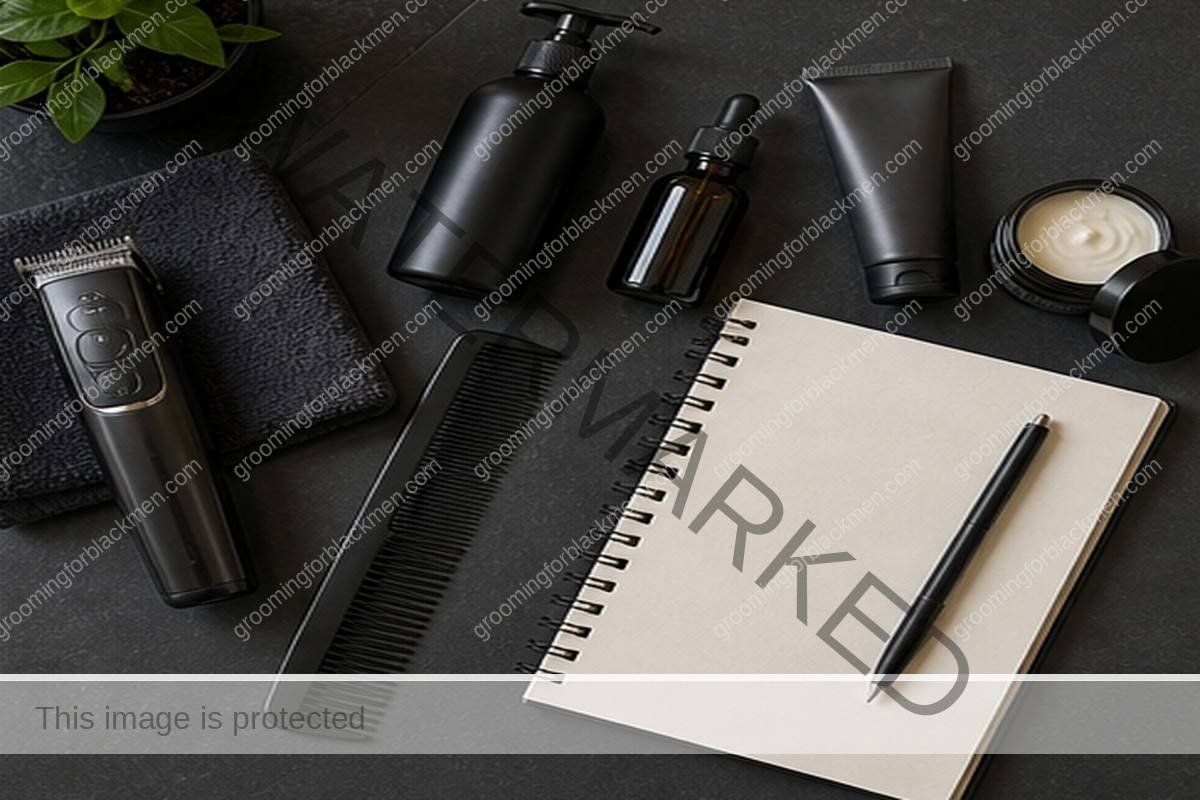
With your refined routine in hand, the next step is consistent implementation and continuous monitoring. Remember, this is an ongoing journey, not a destination.
Step 3.1: Building Your Daily & Weekly Rituals
Structure your routine into manageable daily and weekly rituals. Consistency is paramount for seeing results.
Daily Morning Routine:
- Cleanse: Gentle facial cleanser.
- Shave (if applicable): Pre-shave, shave, aftershave balm.
- Treat: Apply targeted serums (Vitamin C, Niacinamide).
- Moisturize: Apply facial moisturizer.
- Protect: Apply broad-spectrum SPF 30+ sunscreen.
- Hair/Beard: Apply leave-in conditioner/beard oil, style as desired.
Daily Evening Routine:
- Cleanse: Gentle facial cleanser (double cleanse if wearing heavy sunscreen or products).
- Treat: Apply targeted serums (Retinoids, Hyaluronic Acid, Hyperpigmentation treatments).
- Moisturize: Apply facial moisturizer.
- Hair/Beard: Apply hair moisturizer/scalp oil/beard balm as needed.
Weekly Rituals:
- Exfoliate (2-3x/week): Chemical exfoliant for face, body scrub for body.
- Deep Condition Hair (1x/week): Use a hydrating hair mask.
- Face Mask (1x/week): Hydrating or clarifying mask depending on skin needs.
- Beard Mask (1x/week): If you have a longer beard, a dedicated beard mask can provide extra nourishment.
Table: Sample Monthly Routine Audit Checklist
Use this checklist to guide your monthly review process:
| Category | Audit Questions | Action Taken |
|---|---|---|
| Facial Cleanser | Does my skin feel clean but not stripped? Any new dryness or irritation? | |
| Treatments (Serums) | Are my target concerns (hyperpigmentation, acne, aging) improving? Any new reactions? | |
| Moisturizer | Is my skin consistently hydrated throughout the day/night? Does it feel heavy or light enough? | |
| Sunscreen | Am I using it daily? Does it blend well? Any white cast or pilling? | |
| Exfoliant | Is my skin texture smooth? Am I experiencing fewer ingrown hairs? Am I over/under-exfoliating? | |
| Shaving Products | Are razor bumps or irritation minimized? Is my shave smooth and comfortable? | |
| Beard Care | Is my beard soft, hydrated, and itch-free? Is the skin underneath healthy? | |
| Hair Care | Is my hair moisturized, strong, and manageable? Is my scalp healthy? | |
| Body Care | Is my body skin hydrated and smooth? Any dry patches or body acne? | |
| Tools & Accessories | Are my razors, combs, brushes clean and in good condition? | |
| Lifestyle Factors | How has my diet, hydration, sleep, and stress been this month? |
Step 3.2: When to Seek Professional Guidance
While a DIY audit is powerful, sometimes professional expertise is invaluable. Consider consulting a board-certified dermatologist or a skilled barber/stylist if:
- You experience persistent or worsening skin conditions (severe acne, eczema, chronic razor bumps).
- You have concerns about unusual moles or skin changes.
- You’re struggling with significant hair loss or scalp issues.
- You want personalized product recommendations tailored to complex needs.
A professional can offer medical-grade treatments, prescribe medications, or provide specialized advice that takes your unique physiology into account. This is not a sign of failure but a testament to your commitment to optimal health and appearance.
Table: Common Concerns for Black Men & Solutions
Addressing prevalent issues with targeted strategies:
| Concern | Characteristics | Recommended Solutions | Product Examples |
|---|---|---|---|
| Pseudofolliculitis Barbae (PFB) / Razor Bumps | Inflamed bumps, redness, and ingrown hairs after shaving, especially on the neck and jawline. | Switch to single-blade razor or electric shaver, shave with the grain, use pre-shave oil, gentle exfoliation (BHA), alcohol-free aftershave. | Safety Razor, Salicylic Acid Toner, Aloe Vera Aftershave Balm |
| Post-Inflammatory Hyperpigmentation (PIH) | Dark spots or patches left behind after acne, cuts, or irritation. More common and persistent in melanin-rich skin. | Consistent sunscreen use (daily!), targeted serums with Niacinamide, Vitamin C, Alpha Arbutin, Kojic Acid. Gentle exfoliation. | Vitamin C Serum, Niacinamide Serum, Mineral Sunscreen |
| Dryness & Ashiness | Skin feels tight, flaky, or appears dull and ashy, especially on body and face. | Hydrating cleansers, rich moisturizers with ceramides/hyaluronic acid/shea butter, apply moisturizer to damp skin, drink plenty of water. | Ceramide Moisturizer, Shea Butter Body Cream, Hydrating Cleanser |
| Excess Oil & Acne | Shiny skin, enlarged pores, frequent breakouts (papules, pustules, cysts). | Gentle foaming cleanser, Salicylic Acid (BHA) toner/serum, non-comedogenic moisturizer, clay masks (1x/week). Avoid harsh scrubbing. | Foaming Cleanser, BHA Serum, Non-comedogenic Lotion |
| Dull or Uneven Skin Tone | Lack of radiance, overall unevenness in complexion, sometimes distinct from PIH. | Regular gentle exfoliation (AHA/BHA), Vitamin C serum, consistent hydration, daily sunscreen. | Glycolic Acid Toner, Brightening Vitamin C Serum, Moisturizer with SPF |
| Brittle/Dry Hair & Beard | Hair lacks shine, feels rough, prone to breakage, beard feels coarse and itchy. | Sulfate-free shampoos, hydrating conditioners, leave-in conditioners, beard oils/balms, deep conditioning masks, minimize heat. | Sulfate-Free Shampoo, Leave-In Conditioner, Natural Beard Oil |
Use a Minimum Routine on Busy Days
A routine only works when it survives real life. Decide in advance what you will do when you are tired, traveling, short on time, or dealing with irritation. For this topic, the minimum should still support a monthly review that improves grooming decisions. Keep the essential products together, use them in the same order, and avoid adding an untested product simply because the full routine feels inconvenient.
On a busy day, protect the steps that prevent new problems. That usually means gentle cleansing when needed, careful technique, moisturizer, and daytime sunscreen on exposed skin. Optional treatments can wait. Skipping one treatment is usually less disruptive than rushing through several strong products and creating irritation that takes days to settle.
Track Comfort as Well as Appearance
Use a short weekly note to track wasted products, inconsistent habits, recurring irritation, changing skin needs, and poorly maintained tools. Record burning, itching, tightness, new bumps, flaking, and how long discomfort lasts. Also note changes in weather, shaving frequency, workouts, or a new product. This makes it easier to identify patterns and prevents you from blaming the wrong step.
Judge progress over several weeks. Fewer new bumps, less stinging, steadier hydration, and faster recovery are meaningful improvements even when dark marks have not fully faded. Change one variable at a time and give your skin a fair chance to respond.
Know When Home Care Is Not Enough
Stop a new product if it causes persistent burning, swelling, blistering, or a spreading rash. Seek a dermatologist for painful or cystic acne, signs of infection, scarring razor bumps, unexplained hair loss, or symptoms that keep worsening despite a simplified routine. Grooming guidance can support daily care, but it cannot diagnose a medical condition.
Related GFBM Guides
Use these guides to extend the routine without adding unrelated steps:
- beginner grooming routines
- patch-testing guide
- one-time grooming tool guide
- budget grooming routine
- five-minute morning routine
Product Categories Worth Comparing
Affiliate disclosure: GFBM may earn a commission from qualifying Amazon purchases, at no extra cost to you.
Choose by function rather than hype. Patch test leave-on products, introduce one change at a time, and stop using anything that causes persistent burning, swelling, or worsening irritation.
- Gentle Facial Cleanser: compare ingredient lists, fragrance level, texture, and return policy before buying. Browse gentle facial cleanser options on Amazon.
- Electric Trimmer: compare ingredient lists, fragrance level, texture, and return policy before buying. Browse electric trimmer options on Amazon.
- Grooming Tool Cleaning Kit: compare ingredient lists, fragrance level, texture, and return policy before buying. Browse grooming tool cleaning kit options on Amazon.
Frequently Asked Questions About Monthly Grooming Audits for Black Men

Q1: How often should I truly audit my grooming routine?
A: A full, comprehensive audit, like the one outlined here, is ideal once a month. This allows you to observe changes in your skin and hair over a complete cycle and make informed adjustments. However, daily vigilance and minor tweaks based on immediate feedback (e.g., skin feeling dry today, need extra moisturizer) are also important. Think of the monthly audit as your strategic planning session, and daily care as your tactical execution.
Q2: What are the most common mistakes Black men make in their grooming routines?
A: Several common pitfalls include: 1) Using harsh, stripping cleansers that disrupt the skin barrier and lead to dryness or overproduction of oil. 2) Neglecting daily sunscreen, which is crucial for preventing hyperpigmentation and premature aging, even with melanin’s natural protection. 3) Aggressive shaving techniques or using dull blades, leading to razor bumps and irritation. 4) Skipping moisturization for both face and body, resulting in ashiness and compromised skin health. 5) Not using products specifically formulated for textured hair and melanin-rich skin, which have unique needs.
Q3: Can I use the same moisturizer for my face and body?
A: While some general-purpose lotions might suffice for both, it’s generally recommended to use separate products. Facial moisturizers are typically formulated to be non-comedogenic (won’t clog pores), lighter in texture, and often contain active ingredients targeting specific facial concerns like fine lines or hyperpigmentation. Body lotions can be thicker and richer, designed to address larger areas of dryness without the same concern for pore clogging. However, if you have particularly dry skin on your face, a rich body cream that is also non-comedogenic might work, but always patch test first.
Q4: How do I know if a product is causing irritation or helping my skin?
A: Pay close attention to your skin’s immediate and delayed reactions. Signs of irritation include redness, itching, stinging, burning, excessive dryness, or new breakouts. If you introduce a new product, do so one at a time and observe your skin for at least a week. If you suspect a product is problematic, discontinue use. Conversely, positive signs include improved texture, reduced breakouts, faded dark spots, increased hydration, and an overall healthy glow. Keep a simple journal to track new products and your skin’s response.
Q5: Is it necessary to use a separate sunscreen if my moisturizer has SPF?
A: While a moisturizer with SPF is better than no SPF at all, it’s often not sufficient. To achieve the stated SPF on the label, you typically need to apply a generous amount (about a quarter teaspoon for the face alone). Most people don’t apply enough moisturizer to reach this level. For optimal protection, especially if you’re prone to hyperpigmentation or spend time outdoors, it’s best to use a dedicated broad-spectrum sunscreen with at least SPF 30 as the last step in your morning skincare routine, after your moisturizer.
Q6: What’s the best way to deal with ingrown hairs on my face and body?
A: Prevention is key. For facial hair, consider switching to a single-blade safety razor or electric shaver, shaving with the grain, and using a pre-shave oil. Gentle chemical exfoliation (with Salicylic Acid/BHA) 2-3 times a week can help keep pores clear and prevent hairs from getting trapped. For body ingrowns, regular gentle exfoliation with a body scrub or a BHA body wash can be effective. Avoid picking or digging at ingrown hairs, as this can lead to infection and hyperpigmentation. If severe, consult a dermatologist.
Q7: How can I maintain a healthy, moisturized beard without it feeling greasy?
Keep the routine centered on a monthly review that improves grooming decisions. Consistent basics, careful technique, and measured changes will do more than a crowded shelf. Review your results monthly, remove steps that repeatedly cause irritation, and get professional help for painful, infected, scarring, or persistent symptoms.
Build the Supporting Routine
Use the simple three-step skincare routine for Black men as the foundation. If you are unsure how rich or light your products should feel, first identify your skin type.
Before adding a leave-on treatment, follow the GFBM patch-test process. Men dealing with shaving irritation should also review the guide to preventing razor bumps on Black skin.