
Acne Marks for Black Men: Practical Grooming Guide
Acne marks-those stubborn dark spots that linger long after a breakout-are a common frustration for Black men. If you’ve noticed that every pimple seems to leave a mark, you’re not alone. Rich brown skin is more likely to develop visible dark spots (post-inflammatory hyperpigmentation) after inflammation. Whether you’re dealing with razor bumps, ingrown hairs, or classic acne, the aftermath can stick around for months or longer, affecting your confidence and grooming goals.
But there’s no need for shame or defeat. The reality is, acne marks are a normal part of having melanin-rich skin. The key is understanding what’s happening, what makes it worse, and how to build a routine that respects your skin while actually getting results. Forget miracle claims and influencer hype-this guide is about practical, proven steps you can take, starting today, to manage and reduce acne marks over time.
This acne marks for Black men practical grooming guide is built for men who want real answers, not empty promises. You’ll learn why these marks happen, what mistakes to avoid, and how to choose products and routines that actually work for your skin. If you’re ready to take control of your grooming and see steady progress, you’re in the right place.
For a broader look at managing dark spots and hyperpigmentation, see our complete guide to dark spots & hyperpigmentation for Black men.
Real-Life Shaving Scenarios for Acne Marks for Black Men

A razor bump routine has to work on ordinary days, not just when you have extra time. Think about the moments that usually pressure you into bad decisions: an early meeting, a last-minute date, a barber appointment after work, a workout before a shave, or a week when your skin is already irritated but you still want to look sharp. Those are the moments when Black men often get pulled toward extra pressure, extra passes, or products that burn because they feel like they are ?doing something.?
The better move is to build a decision system. If your skin is calm, your tool is clean, and the hair has been softened, you can follow the planned routine. If your neck is tender, bumps are raised, or dark marks are still fresh, choose the lower-risk option: trim instead of shaving close, clean up only the edges, or give the area more time. A disciplined routine is not about shaving at any cost. It is about choosing the cleanest look your skin can handle that day.
Pressure is the detail that separates a routine from a problem. When a blade or trimmer is not doing the work, pressing harder usually makes things worse. It can cut the hair too low, scrape the surface, and leave curly hair with more opportunity to re-enter the skin. Use fewer passes, keep the skin relaxed, and stop treating smoothness as the only sign of success. For bump-prone skin, slightly less close can mean much cleaner over the next several days.
Budget and schedule matter here too. You do not need every tool on the market to handle acne marks for black men. You need clean tools, a routine you repeat, and enough patience to avoid changing five things at once. If you upgrade anything, upgrade the step that causes the most irritation: the blade, trimmer guard, shave gel, aftercare, or barber communication. The goal is not a luxury shelf. The goal is a routine that protects your face and still fits your life.
How to Audit Progress Without Chasing a Perfect Shave

Judge the routine by how your skin behaves after the shave, not only by how close it looks in the mirror. Are bumps less angry the next day Is the neck calmer after work Are dark marks showing up less often because you are not reopening irritation Can you maintain a sharp look with fewer emergency fixes Those are meaningful wins, even if the shave is not the closest one you have ever had.
If the routine is not working, change one thing at a time. Start with pressure, frequency, tool cleanliness, and aftercare before buying more products. If bumps are painful, infected, spreading, scarring, or not improving despite careful routine changes, bring in a dermatologist or qualified clinician. That is not overreacting. It is protecting your skin before the problem becomes harder to manage.
Real-Life Shaving Scenarios for Acne Marks for Black Men
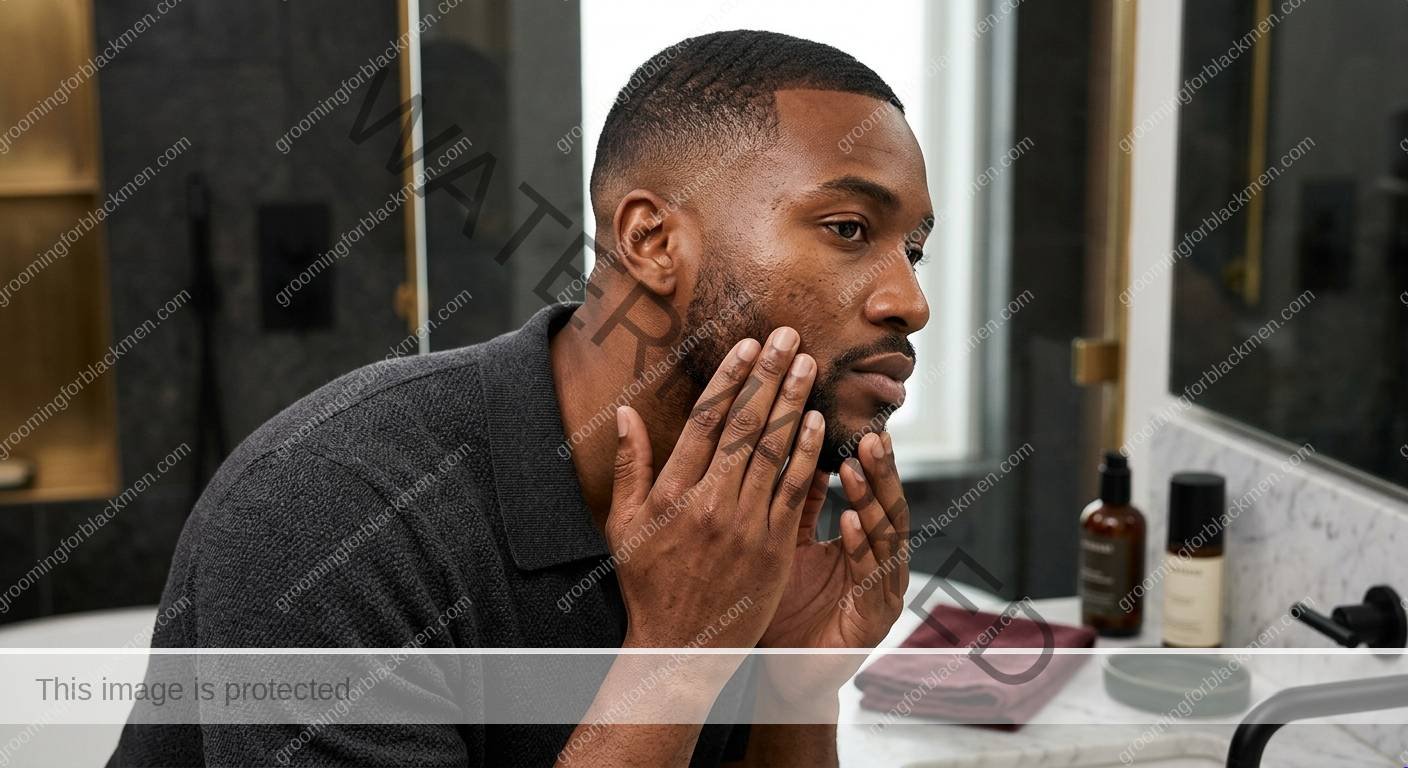
A razor bump routine has to work on ordinary days, not just when you have extra time. Think about the moments that usually pressure you into bad decisions: an early meeting, a last-minute date, a barber appointment after work, a workout before a shave, or a week when your skin is already irritated but you still want to look sharp. Those are the moments when Black men often get pulled toward extra pressure, extra passes, or products that burn because they feel like they are ?doing something.?
The better move is to build a decision system. If your skin is calm, your tool is clean, and the hair has been softened, you can follow the planned routine. If your neck is tender, bumps are raised, or dark marks are still fresh, choose the lower-risk option: trim instead of shaving close, clean up only the edges, or give the area more time. A disciplined routine is not about shaving at any cost. It is about choosing the cleanest look your skin can handle that day.
Pressure is the detail that separates a routine from a problem. When a blade or trimmer is not doing the work, pressing harder usually makes things worse. It can cut the hair too low, scrape the surface, and leave curly hair with more opportunity to re-enter the skin. Use fewer passes, keep the skin relaxed, and stop treating smoothness as the only sign of success. For bump-prone skin, slightly less close can mean much cleaner over the next several days.
Budget and schedule matter here too. You do not need every tool on the market to handle acne marks for black men. You need clean tools, a routine you repeat, and enough patience to avoid changing five things at once. If you upgrade anything, upgrade the step that causes the most irritation: the blade, trimmer guard, shave gel, aftercare, or barber communication. The goal is not a luxury shelf. The goal is a routine that protects your face and still fits your life.
How to Audit Progress Without Chasing a Perfect Shave
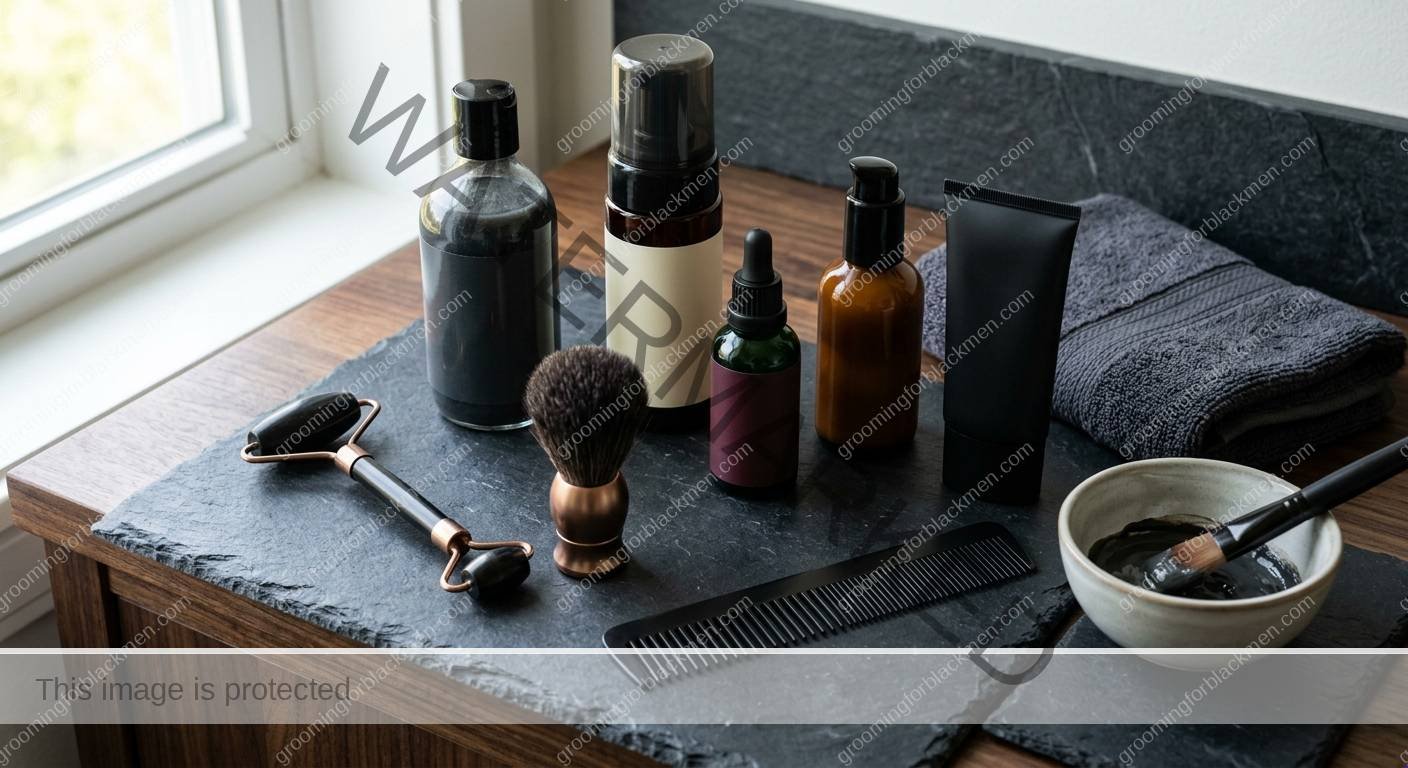
Judge the routine by how your skin behaves after the shave, not only by how close it looks in the mirror. Are bumps less angry the next day Is the neck calmer after work Are dark marks showing up less often because you are not reopening irritation Can you maintain a sharp look with fewer emergency fixes Those are meaningful wins, even if the shave is not the closest one you have ever had.
If the routine is not working, change one thing at a time. Start with pressure, frequency, tool cleanliness, and aftercare before buying more products. If bumps are painful, infected, spreading, scarring, or not improving despite careful routine changes, bring in a dermatologist or qualified clinician. That is not overreacting. It is protecting your skin before the problem becomes harder to manage.
Real-Life Shaving Scenarios for Acne Marks for Black Men

A razor bump routine has to work on ordinary days, not just when you have extra time. Think about the moments that usually pressure you into bad decisions: an early meeting, a last-minute date, a barber appointment after work, a workout before a shave, or a week when your skin is already irritated but you still want to look sharp. Those are the moments when Black men often get pulled toward extra pressure, extra passes, or products that burn because they feel like they are ?doing something.?
The better move is to build a decision system. If your skin is calm, your tool is clean, and the hair has been softened, you can follow the planned routine. If your neck is tender, bumps are raised, or dark marks are still fresh, choose the lower-risk option: trim instead of shaving close, clean up only the edges, or give the area more time. A disciplined routine is not about shaving at any cost. It is about choosing the cleanest look your skin can handle that day.
Pressure is the detail that separates a routine from a problem. When a blade or trimmer is not doing the work, pressing harder usually makes things worse. It can cut the hair too low, scrape the surface, and leave curly hair with more opportunity to re-enter the skin. Use fewer passes, keep the skin relaxed, and stop treating smoothness as the only sign of success. For bump-prone skin, slightly less close can mean much cleaner over the next several days.
Budget and schedule matter here too. You do not need every tool on the market to handle acne marks for black men. You need clean tools, a routine you repeat, and enough patience to avoid changing five things at once. If you upgrade anything, upgrade the step that causes the most irritation: the blade, trimmer guard, shave gel, aftercare, or barber communication. The goal is not a luxury shelf. The goal is a routine that protects your face and still fits your life.
How to Audit Progress Without Chasing a Perfect Shave
Judge the routine by how your skin behaves after the shave, not only by how close it looks in the mirror. Are bumps less angry the next day Is the neck calmer after work Are dark marks showing up less often because you are not reopening irritation Can you maintain a sharp look with fewer emergency fixes Those are meaningful wins, even if the shave is not the closest one you have ever had.
If the routine is not working, change one thing at a time. Start with pressure, frequency, tool cleanliness, and aftercare before buying more products. If bumps are painful, infected, spreading, scarring, or not improving despite careful routine changes, bring in a dermatologist or qualified clinician. That is not overreacting. It is protecting your skin before the problem becomes harder to manage.
Real-Life Shaving Scenarios for Acne Marks for Black Men
A razor bump routine has to work on ordinary days, not just when you have extra time. Think about the moments that usually pressure you into bad decisions: an early meeting, a last-minute date, a barber appointment after work, a workout before a shave, or a week when your skin is already irritated but you still want to look sharp. Those are the moments when Black men often get pulled toward extra pressure, extra passes, or products that burn because they feel like they are ?doing something.?
The better move is to build a decision system. If your skin is calm, your tool is clean, and the hair has been softened, you can follow the planned routine. If your neck is tender, bumps are raised, or dark marks are still fresh, choose the lower-risk option: trim instead of shaving close, clean up only the edges, or give the area more time. A disciplined routine is not about shaving at any cost. It is about choosing the cleanest look your skin can handle that day.
Pressure is the detail that separates a routine from a problem. When a blade or trimmer is not doing the work, pressing harder usually makes things worse. It can cut the hair too low, scrape the surface, and leave curly hair with more opportunity to re-enter the skin. Use fewer passes, keep the skin relaxed, and stop treating smoothness as the only sign of success. For bump-prone skin, slightly less close can mean much cleaner over the next several days.
Budget and schedule matter here too. You do not need every tool on the market to handle acne marks for black men. You need clean tools, a routine you repeat, and enough patience to avoid changing five things at once. If you upgrade anything, upgrade the step that causes the most irritation: the blade, trimmer guard, shave gel, aftercare, or barber communication. The goal is not a luxury shelf. The goal is a routine that protects your face and still fits your life.
How to Audit Progress Without Chasing a Perfect Shave
Judge the routine by how your skin behaves after the shave, not only by how close it looks in the mirror. Are bumps less angry the next day Is the neck calmer after work Are dark marks showing up less often because you are not reopening irritation Can you maintain a sharp look with fewer emergency fixes Those are meaningful wins, even if the shave is not the closest one you have ever had.
If the routine is not working, change one thing at a time. Start with pressure, frequency, tool cleanliness, and aftercare before buying more products. If bumps are painful, infected, spreading, scarring, or not improving despite careful routine changes, bring in a dermatologist or qualified clinician. That is not overreacting. It is protecting your skin before the problem becomes harder to manage.
Why This Matters for Black Men
Melanin is your skin’s natural armor, but it also means your skin reacts differently to inflammation. When you get a pimple, razor bump, or even a scratch, your skin responds by producing extra pigment as it heals. This process is called post-inflammatory hyperpigmentation (PIH), and it’s much more common and visible in Black men than in lighter skin tones.
These dark spots can last for months, sometimes longer than the original breakout. They can show up anywhere you shave, get breakouts, or experience irritation-cheeks, jawline, neck, and forehead are common trouble spots. For many men, these marks can affect self-esteem, professional confidence, and even shape grooming choices (like growing a beard to cover marks).
Understanding how your skin works isn’t about shame-it’s about power. When you know what’s behind acne marks, you can make smarter choices and build routines that actually respect your skin’s needs. For more on the science and impact of hyperpigmentation, read our hyperpigmentation guide for Black men.
What Usually Goes Wrong
Most men want fast results, but impatience and misinformation can make acne marks worse. Here’s what typically goes wrong:
- Picking or squeezing pimples: This increases inflammation and the risk of deeper, longer-lasting dark spots.
- Using harsh scrubs or alcohol-heavy products: Over-exfoliating or stripping your skin disrupts healing and triggers more pigment production.
- Skipping sunscreen: UV exposure darkens existing marks and slows fading, even on rich brown skin.
- Ignoring ingredient safety: Some “lightening” or “fading” products contain harsh or unsafe ingredients that can damage melanin-rich skin.
- Expecting overnight results: Fading acne marks is a slow process. Chasing quick fixes usually leads to irritation or disappointment.
Many routines are built on trial and error, but when it comes to grooming for Black men, discipline and the right information matter. For a deeper dive into ingredient safety, check our safe ingredient guide for Black men.
What to Do Instead
Managing acne marks is about consistency, patience, and choosing products that support your skin’s natural healing. Here’s a disciplined approach that respects your skin’s needs:
- Cleanse gently, twice daily: Use a mild, non-stripping cleanser to remove oil and debris without irritating your skin. Avoid harsh scrubbing or hot water.
- Moisturize daily: Hydrated skin heals better and is less likely to overproduce pigment. Choose a lightweight, non-comedogenic moisturizer.
- Apply targeted serums: Look for serums with ingredients like niacinamide, azelaic acid, or licorice root-these support even tone without harsh bleaching.
- Use sunscreen, every day: Broad-spectrum, oil-free sunscreen is essential. UV exposure makes dark spots darker and slows all progress.
- Shave with care: Use a sharp blade, shave in the direction of hair growth, and avoid dry shaving. This reduces irritation and new marks.
- Leave pimples alone: Don’t pick, squeeze, or dig at bumps. Let them heal naturally to avoid deeper pigment changes.
- Be patient: Fading marks can take weeks to months. Stick to your routine and track progress monthly, not daily.
For more on managing razor bumps and preventing dark marks, see our razor bumps and dark marks guide.
Building a Realistic Routine: Step by Step
Consistency is the foundation of progress. Here’s how to build a practical, sustainable routine that fits your lifestyle and delivers results over time:
-
Morning Routine:
- Cleanse: Use a gentle cleanser to remove overnight oil and sweat. Avoid scrubbing-massage in with fingertips, rinse with lukewarm water.
- Serum (if using): Apply a pea-sized amount of a targeted serum for dark spots. Let it absorb fully.
- Moisturize: Hydrate your skin with a non-comedogenic moisturizer. This helps maintain your skin barrier and supports healing.
- Sunscreen: Apply a broad-spectrum, oil-free sunscreen (SPF 30+). Don’t skip, even if you’re indoors-UV rays penetrate windows.
-
Evening Routine:
- Cleanse: Wash away the day’s sweat, oil, and pollutants. If you shave in the evening, do it after cleansing.
- Serum (optional): If your skin tolerates it, apply your serum again at night. Some men prefer once daily-listen to your skin.
- Moisturize: Nighttime hydration is key for recovery and fading marks.
-
Weekly:
- Gentle exfoliation: Once or twice a week, use a mild chemical exfoliant (like a low-strength glycolic or lactic acid product). Avoid physical scrubs.
- Self-check: Take a photo once a month in the same lighting to track progress. Don’t obsess daily-look for steady improvement over time.
For more on realistic routines and troubleshooting, see our post-inflammatory hyperpigmentation guide.
Real-Life Scenarios: Navigating Common Triggers
Acne marks don’t just show up after classic acne-they’re often triggered by everyday grooming challenges. Here’s how to handle common situations:
- Razor Bumps (Pseudofolliculitis Barbae): Shaving irritation is a top cause of dark marks on the jawline and neck. Switch to a single-blade razor or electric shaver, shave after a shower, and always use a moisturizing shave gel. If bumps appear, avoid shaving until they heal and use a calming, fragrance-free moisturizer.
- Ingrown Hairs: Resist the urge to dig or tweeze. Instead, apply a warm compress to soften the skin and let the hair work its way out. Consistent exfoliation (once or twice weekly) can help prevent new ingrowns.
- Workout Sweat: Sweat and friction from athletic gear can trigger breakouts and marks. Shower as soon as possible after exercising, use a gentle cleanser, and avoid tight, non-breathable fabrics on the face and neck.
- Stress and Sleep: High stress and poor sleep can worsen breakouts and slow healing. Prioritize rest and stress management-your skin will reflect your discipline.
For more on grooming with coarse or curly hair and beard care, see our beard care guide for Black men.
Product and Tool Criteria for Acne Marks
Choosing the right products is about more than brand names-it’s about ingredients, texture, and how they fit your routine. Here’s what to look for:
- Gentle, sulfate-free cleansers: Avoid anything that leaves your skin tight or dry. Look for “gentle cleanser for acne prone skin.”
- Non-comedogenic moisturizers: These won’t clog pores or trigger new breakouts.
- Targeted serums for dark spots: Ingredients like niacinamide, azelaic acid, vitamin C, and licorice root are proven for fading marks in melanin-rich skin. Avoid hydroquinone unless prescribed by a professional.
- Oil-free, broad-spectrum sunscreen: Must be SPF 30 or higher. Look for “oil free sunscreen for dark skin”-modern formulas won’t leave a gray or purple cast.
- Single-blade razors or electric shavers: These minimize irritation and lower the risk of new marks from shaving.
GFBM may earn a small commission from qualifying purchases, but product examples are included to clarify criteria, not to promise results.
- Browse gentle cleansers for acne-prone skin
- Browse dark spot serums for men
- Browse oil-free sunscreens for dark skin
For more on sunscreen’s role in fading dark marks, see our sunscreen for dark marks guide.
How to Troubleshoot: When Progress Stalls
Most acne marks fade with consistent, gentle care. But sometimes, marks are stubborn or you may notice other issues. Here’s when to adjust your approach or seek professional help:
- If marks aren’t fading after several months: Review your routine for missed steps (especially sunscreen) and consider adding a targeted serum.
- If you notice spreading, pain, or infection: Don’t self-treat. See a dermatologist or qualified clinician for proper care.
- If you develop scarring (indentations, raised bumps): These require professional evaluation. Topical products won’t fix true scars.
- If irritation or burning occurs: Stop new products and return to basics. Some ingredients can be too strong for sensitive skin.
- If you’re unsure about product safety: Always check for fragrance, alcohol, or harsh “lightening” agents. When in doubt, consult a professional or see our ingredient safety guide.
For persistent or severe cases, a dermatologist can offer prescription options and in-office treatments tailored for melanin-rich skin. Never feel pressured to “fix” your skin overnight-progress is steady, not instant.
Frequently Asked Questions
How long do acne marks take to fade on Black skin
On rich brown skin, acne marks (post-inflammatory hyperpigmentation) often take several months to fade. With consistent gentle care and sunscreen, most marks lighten over 3-6 months. Deeper or older marks may take longer. Patience and discipline are key-avoid harsh treatments that can set you back.
What ingredients should Black men look for in dark spot serums
Focus on ingredients proven safe and effective for melanin-rich skin, such as niacinamide, azelaic acid, vitamin C, and licorice root extract. Avoid harsh bleaching agents or high-strength acids unless under professional guidance. For a curated list, see our ingredient safety guide.
Does sunscreen really matter for fading acne marks on dark skin
Yes. UV exposure darkens existing marks and slows healing, even if your skin rarely burns. Daily use of oil-free, broad-spectrum sunscreen is non-negotiable for fading marks and preventing new ones. For practical tips, see our sunscreen for dark marks guide.
Can shaving make acne marks worse
Shaving with dull blades, against the grain, or without proper prep can cause irritation, ingrown hairs, and new dark spots. Use a sharp blade, shave after softening hair, and follow up with a gentle moisturizer. For more, read our razor bump prevention guide.
Are there safe ways to exfoliate acne marks on Black skin
Gentle chemical exfoliants (like low-strength glycolic or lactic acid) can help, but avoid harsh scrubs or frequent use. Limit exfoliation to 1-2 times per week and always follow with moisturizer and sunscreen. If irritation occurs, scale back or consult a professional.
What’s the difference between acne marks and acne scars
Acne marks (hyperpigmentation) are flat, dark spots left after inflammation. Acne scars are changes in skin texture-indentations or raised areas. Topical products can help marks, but true scars often require professional treatments. Learn more in our acne scars guide for Black men.
When should I see a dermatologist about acne marks
See a dermatologist if marks are painful, spreading, infected, or not improving after several months of disciplined care. Also seek help if you notice scarring, or if over-the-counter routines cause irritation or make things worse. A professional can tailor treatments for your skin’s unique needs.
Acne marks respond best to routines that reduce new inflammation first. If breakouts keep restarting, even a strong dark-spot product will struggle, so the routine has to calm the cycle before chasing an even tone.
What to Do Next
Managing acne marks as a Black man is about more than products-it’s about understanding your skin, building a disciplined routine, and sticking with it. Start by simplifying your grooming: cleanse gently, moisturize daily, use a targeted serum, and never skip sunscreen. Track your progress monthly, not daily, and avoid the temptation of harsh or untested treatments.
If you want to expand your knowledge or troubleshoot specific issues, explore our guides on dark spots & hyperpigmentation, post-inflammatory hyperpigmentation, and razor bumps and dark marks. Remember, progress is steady and personal-respect your skin, stay consistent, and don’t hesitate to seek professional support if needed.