
Gym Grooming for Black Men: Practical Grooming Guide is about looking prepared without turning grooming into a performance. For Black men, presence is not just cologne or a fresh cut. It is skin that feels calm, hair and beard choices that fit your texture, hygiene that holds up through the day, and a routine that makes sense for the room you are walking into.
This guide focuses on gym grooming for black men with a practical, disciplined lens. If you want the larger system, start with the Black men grooming lifestyle hub. Here, we will narrow the work to gym grooming: what usually goes wrong, what to simplify, and how to build a routine that travels with real life.
Why This Grooming Moment Matters

Gym Grooming sounds simple until the day is busy, the weather shifts, the barber appointment is still three days away, or your skin reacts to something that seemed harmless. The point is not to look untouched by life. The point is to have a reliable reset. Rich brown skin can show irritation as bumps, rough patches, or dark marks. Coarse hair, curls, waves, and beards can need more moisture and better tool discipline than generic advice admits.
A strong lifestyle routine also protects your confidence. You should not have to overthink whether you look ready for the gym, airport, office, date, interview, wedding, or a regular day outside. The routine should give you a baseline: clean, comfortable, intentional, and not overdone. That baseline is what makes presence feel natural instead of forced.
The best approach is situational. A gym routine has to handle sweat without over-scrubbing. A travel routine has to stay compact without forgetting shaving, deodorant, moisture, and scalp or beard needs. A work routine has to hold up under close conversation and long hours. Once you understand the setting, your product and tool choices get easier.
What Usually Throws the Routine Off

Waiting until the last minute
Last-minute grooming makes men reach for whatever is closest. That is how harsh scrubs, too much fragrance, rough shaving, dirty trimmers, and heavy products become part of the routine. A few minutes of planning beats a rushed fix that leaves your skin tight or your beard looking uneven.
Over-correcting instead of resetting
When something feels off, it is tempting to do more: more fragrance, more brushing, more oil, more shaving, more product. More is not always cleaner. Sometimes the better move is to cleanse gently, moisturize, use the right tool, and stop touching the area. Grooming should not punish your skin for being human.
Ignoring texture and environment
Generic men’s grooming advice often assumes one skin type, one hair type, and one schedule. That does not work well for Black men. Your hairline, beard density, curl pattern, scalp comfort, sweat level, and skin sensitivity all change the plan. If you need a nearby routine comparison, read the related GFBM guide and keep the decision focused on your actual day.
The Practical Presence Plan

Start with three questions: What will my skin deal with today? What will my hair, beard, or scalp need today? What setting am I walking into? Those questions keep the routine practical. A gym day may need sweat management and a post-workout rinse. Travel may need compact products and clean tools. Work may need moisture, lint control, and a steady fragrance choice. Dating or formal events may need sharper edges but less experimental product use.
Build the routine in layers. First layer: cleanse and manage odor without stripping the skin. Second layer: moisturize the face, beard area, scalp, or body where dryness shows up. Third layer: protect exposed skin, especially if dark marks or sun exposure matter. Fourth layer: finish hair, beard, or clothing details. The order matters because fragrance and styling should sit on top of good hygiene, not cover for skipped basics.
Example product categories
GFBM may earn a small commission from qualifying purchases. These are category examples, not guarantees. Choose based on comfort, ingredient tolerance, portability, and whether the product fits your actual routine.
- gym toiletry bag for men: use this when it directly supports the setting.
- deodorant for sensitive skin men: choose comfort and reliability over heavy claims.
- body wipes for men: compare options, but do not buy more than the routine can use.
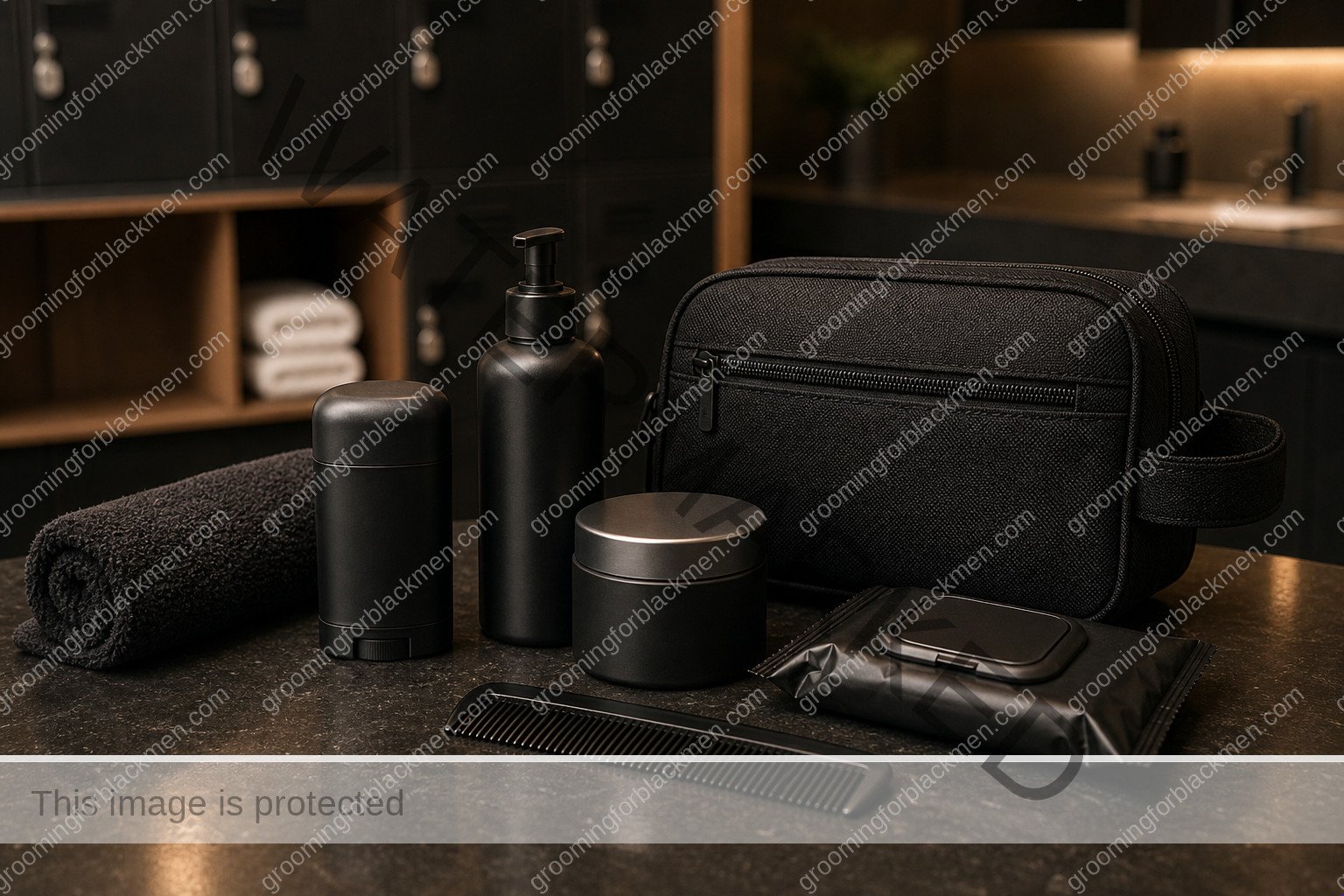
Keep one small kit for the setting you repeat most. If you train often, build a gym kit. If you travel often, build a travel kit. If workdays are long, keep a work bag refresh kit. The kit should not become a second bathroom shelf. It should solve predictable problems: sweat, dryness, shine, lint, breath, beard shape, hairline touch-ups, or fragrance control.
Troubleshooting When It Is Not Working
If your skin feels tight, reduce harsh cleansing and add moisture before adding actives. If bumps show up after shaving or lineups, review pressure, blade condition, direction, and aftercare. If fragrance feels too loud, use less and avoid layering every scented product at once. If your hair or beard looks dry, check whether you are using water-based moisture before oils or balms.
If irritation is painful, spreading, infected-looking, bleeding, or not improving, stop experimenting and talk with a dermatologist or qualified clinician. A lifestyle routine should support your comfort. It should never pressure you to push through a reaction just to look polished.

Frequently Asked Questions
Is gym grooming really necessary?
It is necessary if the situation keeps exposing the same weak spot in your routine. The goal is not perfection. The goal is being prepared enough that small grooming issues do not control your confidence.
How much should I carry with me?
Carry only what solves a predictable problem. A small kit can be enough: deodorant, wipes or cleanser, moisturizer, comb or brush, lip balm, and one tool that fits your hair or beard needs.
Can I use the same routine every day?
Yes, but adjust the finish. Your base can stay steady while the setting changes. A gym day, interview, and wedding do not need the same amount of fragrance, styling, or tool work.
What if my skin is sensitive?
Keep the routine simple and avoid harsh scrubs, heavy fragrance near irritated areas, and rushed shaving. Introduce one change at a time so you can tell what helps and what causes problems.
How do I avoid looking overdone?
Make hygiene and texture the priority, then use fragrance and styling lightly. The cleanest presence often comes from restraint: fresh skin, neat beard or hair, clean clothes, and a calm finish.
What should I fix first?
Fix the most visible or uncomfortable issue first. That might be dryness, bumps, odor, lint, beard shape, or hairline maintenance. One reliable fix is better than five rushed extras.
When should I see a professional?
See a barber, dermatologist, or clinician when the issue goes beyond normal upkeep: painful bumps, scarring, infection signs, persistent scalp irritation, or grooming problems that keep returning despite gentle changes.
What to Do Next
Gym grooming works best when it is treated as preparation, not damage control. The goal is not to carry your whole bathroom in a duffel bag. The goal is to know what usually breaks down after a hard session: sweat drying on the skin, odor building in damp clothes, scalp irritation under hats, beard dryness, or a rushed change before work, class, or the rest of the day.
Start with one honest audit of your gym routine. Look at what happens before training, immediately after training, and once you get home. If your skin feels tight after every shower, simplify the cleanser and bring moisture back sooner. If your beard feels rough after workouts, keep a small beard comb or light conditioning product in the kit instead of waiting until the end of the day. If your scalp gets itchy under a cap or durag, pay attention to sweat, fabric, and how long you leave damp material sitting against the skin.
Build the gym kit around repeatable jobs: cleanse, dry, moisturize, deodorize, and reset your hair or beard enough to move through the day with control. A practical kit can include travel-size cleanser, a clean towel, deodorant, moisturizer, lip balm, a comb or brush, and one small fragrance option used lightly. Keep anything sharp, spillable, or easy to forget in a separate pouch so the routine stays clean and fast.
Do not use the gym as an excuse to over-scrub, over-fragrance, or chase a harsh reset. Sweat does not make your skin dirty in a moral sense; it just needs to be managed before salt, friction, and damp clothing start creating problems. Clean up with enough discipline to protect your skin barrier, then get out of the mirror. The routine should support your training, not compete with it.
Run a three-workout test
For the next three workouts, do not change everything. Test the routine like a man who wants answers. After workout one, notice what happens when you do the bare minimum: towel off, change clothes, deodorize, and moisturize only where you actually feel dry. After workout two, add a post-workout cleanse or body wipe if the first version left sweat sitting too long. After workout three, adjust the hair, beard, or scalp step. This keeps the routine honest because you are not guessing from one rushed day.
Use a simple scorecard. Did your face feel tight? Did your beard feel dry? Did your scalp itch under a hat? Did your shirt hold odor after the drive home? Did you feel comfortable walking into the next room without trying to hide that you came from the gym? The answers tell you what belongs in the kit. A good gym routine solves the repeat problem. It does not need to impress anybody with how many products you own.
Separate the locker-room routine from the home routine
One common mistake is expecting the locker room to do the work of a full bathroom. The locker-room routine should be fast and controlled. Clean the sweat-prone areas, dry the skin, reset odor, manage the beard or hair enough to look intentional, and get into clean clothes. Save deeper shaving, exfoliation, scalp treatment, and product experiments for home. That separation keeps the public routine practical and lowers the chance that you irritate your skin while rushing.
If you train before work, keep the locker-room plan especially tight. Face and body care should come before fragrance. A light fragrance can finish the routine, but it should not be used to cover sweat, damp fabric, or skipped deodorant. If your gym bag has a scent problem, wash the bag, rotate towels, and replace damp clothes faster. Odor control starts with clean fabric and dry storage, not with spraying more product into a closed bag.
Protect the skin you are training in
Black men’s skin can show irritation as bumps, roughness, or dark marks after friction and sweat build up. That matters in the gym because collars, compression shirts, hats, lifting straps, headphones, and towels all rub against the same areas repeatedly. If you notice dark marks along the neck, shoulders, chest, forehead, or beard line, look at friction first. A harsh product is not always the cause. Sometimes the issue is damp fabric, tight gear, dirty towel use, or repeated pressure in the same place.
When irritation appears, simplify. Use a gentle cleanse, moisturize the area, avoid scratching, and reduce friction where you can. If the area is painful, draining, hot, spreading, or not improving, stop treating it like a normal grooming problem and get professional guidance. The gym should build discipline, not train you to ignore skin that is clearly asking for a different plan.
Keep the gym bag clean enough to trust
A grooming kit fails when the bag itself becomes dirty. Build a weekly reset. Empty the bag, throw out wrappers, wash towels, wipe down bottles, check caps for leaks, and remove anything you have not used in a month. Replace the towel before it smells. Wash the cap or head covering that takes the most sweat. Clean the comb or brush if it lives in the bag. This is basic maintenance, but it is the difference between a kit that helps and a kit that quietly creates new problems.
Use small containers only when they make the routine easier to repeat. A travel bottle of cleanser is useful if it seals well and gets used. A random half-empty bottle with a loose cap is not. A dedicated pouch for grooming items keeps them away from shoes, sweaty wraps, and damp clothes. The cleaner the system, the less mental effort it takes to use it.
Choose the next guide based on the weak point
If the gym is only one part of a larger lifestyle routine, decide what is actually weak. If the routine falls apart when you travel, the issue is portability. If it falls apart before work, the issue is speed and order. If it falls apart because the bag gets messy, the issue is maintenance. If it falls apart because you keep buying products that do not fit your real schedule, the issue is decision-making, not effort.
For a broader routine structure, return to the Black men grooming lifestyle hub. If you travel with your gym bag or train before work, read the travel grooming guide for Black men next. If you need a faster weekday version, compare this with the 5-minute morning routine for Black men. Keep the system simple enough to repeat, then refine one weak point at a time.
Use timing instead of extra products
The most useful upgrade may be timing. If you sit in sweaty clothes for an hour after training, even a strong product lineup has to work harder. Change sooner. Dry the areas that hold moisture. Give your face, neck, chest, underarms, groin area, and feet enough attention to avoid damp fabric sitting against the skin. If you cannot shower right away, a temporary wipe-down and clean shirt can still be better than waiting until sweat dries completely.
Timing also matters before training. If you apply heavy fragrance, thick beard product, or greasy hair product right before a workout, sweat can move it around and make the finish feel messy. Keep the pre-gym routine lighter. Save the fuller finish for after you clean up. That one change can make the whole routine feel cleaner without buying anything new.
Match the routine to the type of workout
A lifting day, basketball run, outdoor cardio session, and quick hotel-gym workout do not create the same grooming problem. A heavy sweat day needs better clothing rotation and faster cleanup. A lifting day may create more friction from straps, collars, benches, and towels. Outdoor training may require more attention to sunscreen on exposed skin, especially if you are managing dark marks. A quick session before work may require the fastest possible reset: cleanse key areas, dry fully, moisturize visible dryness, control odor, and fix hair or beard shape enough to look deliberate.
Think in categories instead of panic. Sweat problem: clean and dry sooner. Friction problem: adjust fabric, fit, towel habits, or gear placement. Beard problem: comb, condition lightly, and avoid over-oiling damp skin. Scalp problem: rotate headwear, let material dry, and clean the scalp on a schedule that fits your hair. Fragrance problem: use less, apply after cleanup, and avoid stacking every scented product in the bag.
Keep grooming tools separate from training gear
Grooming tools should not live loose beside shoes, sweaty wraps, resistance bands, or damp clothes. Use one small pouch for skin and hygiene products, one separate spot for hair or beard tools, and a breathable section or bag for used clothes. This is not about being precious. It is about keeping bacteria, odor, lint, and product leaks from creating problems you then try to fix with more grooming.
Clean the tools that touch your face or scalp. A comb, brush, razor guard, trimmer attachment, or beard tool can carry oil, dead skin, lint, and product residue. If the tool stays in the gym bag, it needs routine cleaning. If you would not want it touching your face after sitting on a locker-room bench, do not let it roll around uncovered in the bag.
Respect the difference between fresh and stripped
Fresh skin is not the same as stripped skin. A post-workout cleanse should leave you comfortable, not tight and shiny. If your face or body feels squeaky, itchy, or dry after every gym shower, the product may be too harsh or you may be washing too aggressively. Black men dealing with bumps, dryness, or dark marks often need a calmer approach: cleanse enough to remove sweat and grime, then replace moisture before the skin gets tight.
The same logic applies to beard and scalp care. A beard does not need to be drenched in oil to look cared for. A scalp does not need to be scratched hard to feel clean. A hairline does not need constant touch-ups to look intentional. The strongest gym grooming routines are measured. They do the job, protect the skin, and leave room for the rest of the day.
Make the routine easier to repeat
If the kit is too complicated, you will skip it when life gets busy. Put the items in the order you use them. Keep a towel where you can grab it. Restock before the bottle is empty. Use smaller containers only if they do not leak. Keep one backup deodorant or lip balm in the bag if those are the items you forget most often. Repetition is easier when the setup does not make you think.
Do not judge the routine by one perfect day. Judge it by a normal week. Can you use it after a rushed workout? Can you use it when the locker room is crowded? Can you use it before work without taking too long? Can you keep the bag clean? If the answer is no, simplify. A routine that survives real life is more valuable than a routine that only works when the schedule is calm.
Set a weekly reset rule
Once a week, reset the whole system. Empty the bag completely. Put clean towels back in. Remove used clothes, wrappers, and empty containers. Check whether deodorant, cleanser, moisturizer, wipes, lip balm, or beard product is running low. Wipe down bottles that picked up residue. Let the bag air out instead of zipping odor and moisture into it. This takes a few minutes, but it prevents the gym bag from becoming the reason the routine fails.
The weekly reset also protects your money. Most men do not need more products. They need to stop losing the products they already bought, stop carrying items that never get used, and stop letting one messy bag make the routine feel harder than it is. If a product has been in the kit for weeks without being used, remove it. If the same item keeps saving the day, keep it stocked. Let real use decide the kit.
Use the mirror for checks, not criticism
The locker-room mirror should not become a place where you start picking your skin apart. Use it for checks: Is sweat cleaned up? Is the beard sitting right? Is the hairline or cap line presentable? Is there product residue around the nose, beard, or hairline? Are your clothes clean enough for the next room? Once those checks are done, move on. Gym grooming is supposed to help you transition, not trap you in self-correction.
This matters because a disciplined routine can quietly turn into pressure if you let every small texture, bump, shine point, or hair out of place become a problem. Black men’s grooming should make room for real skin, real hair, and real schedules. You can be clean, sharp, and intentional without trying to look untouched. The standard is prepared, not artificial.
Know when to upgrade the system
Upgrade only after the basic system is consistent. If you are already changing clothes quickly, managing sweat, keeping the bag clean, moisturizing dry areas, and controlling odor, then a better pouch, towel, cleanser, trimmer guard, or beard product might make sense. If the basics are not happening yet, upgrades will not fix the routine. They will just add more objects to a system that already feels scattered.
The best upgrade is usually the one that removes friction. A leak-proof travel bottle may matter more than a fancy product. A second clean towel may matter more than another fragrance. A separate pouch for tools may matter more than buying more tools. A routine gets stronger when each item has a job, a place, and a reason to stay.
If you train at different times of day, build the kit around the hardest transition. A Saturday workout with nowhere to be does not need the same support as a lunch-break lift before a meeting or an early morning session before a commute. For the harder days, plan for skin, hair, beard, clothes, and scent in that order. Skin comes first because irritation shows up later. Hair and beard come next because they shape the finished look. Clothes and scent finish the reset, but they should not be used to cover up skipped hygiene.
That order keeps the routine grounded. It also helps you avoid overpacking. If an item does not clean, dry, moisturize, protect, organize, or help you leave the gym looking composed, it probably does not belong in the everyday kit. Keep specialty items at home unless they solve a problem that actually happens after training.
The next step is simple: pack the smallest kit that solves the problem you actually have, use it for three workouts, then remove anything that did not earn its place. That is how gym grooming becomes a system instead of another bag full of products.