
A haircut can lose its just-left-the-chair finish without needing another full cut. The useful question is what has changed: loose hair that needs arranging, an outline you want your barber to tidy, a shape that no longer sits how you want, or skin that needs attention before another blade touches it. Those are different jobs. Treating all four as a reason to recut your edges can leave you doing more work without liking the result.
This haircut maintenance guide is about making that decision between appointments and explaining it clearly at your next visit. It is not a fade tutorial or a fixed calendar for every Black man’s hair. Your preferred silhouette, hair length, styling habits, budget and comfort belong in the plan. The Black men grooming lifestyle hub puts that plan alongside the rest of your everyday grooming.
Decide what needs attention before reaching for a tool

Look at your hair in its ordinary, unforced state before deciding that the cut has gone wrong. Remove the hat or covering, arrange your hair as you normally wear it, and check the front, both sides and the back. Use comfortable lighting rather than chasing every stray hair under a magnifying mirror. You are deciding whether the shape works for you, not trying to make both sides of your head identical.
Separate appearance from sensation. A softer-looking outline is an appearance preference. A tender area, persistent bumps or a newly thinning patch is not just an untidy finish. Do not use a sharper line as the test of whether an uncomfortable area is better.
- Reset: Your preferred shape is still there, but the hair needs its usual care or arrangement. Start without cutting.
- Ask about a touch-up: You like the overall cut but want a specific finishing area reviewed. Ask your barber what that service includes before booking.
- Discuss a reshape or full cut: The outline, bulk or length no longer suits the style you want. Explain the change rather than requesting the closest possible finish everywhere.
- Pause cosmetic correction: Discomfort, recurring bumps or new thinning changes the priority. Seek appropriate clinical advice rather than treating the area as a styling problem.
These are planning categories, not a diagnosis or a rule about how many days a haircut should last. A cut you enjoy as it grows can be working well even when it no longer looks exactly as it did on appointment day.
Make a grow-out note your barber can use

A useful note is more specific than “it stopped looking fresh.” Write down which part bothers you first, what you were doing when you noticed it, and whether you had already washed or arranged your hair. If you take reference photos for yourself, use similar lighting and angles so a brighter light or a flattened side does not become the whole explanation.
For example: “I still like the top, but the area around my ears is what I want tidied first.” Or: “The shape is fine in the morning, but I don’t know how to arrange this side after wearing my work hat.” Those descriptions give your barber something to discuss. They do not assume that more hair has to come off.
Keep one note about comfort as well. Record where you felt soreness or noticed bumps and whether they followed a particular service. You do not need to identify the cause yourself. A clear account is more useful than arriving with a product name and asking it to solve an unidentified problem.
Use a short barber handoff
- Keep: The length, shape or detail you liked and want to retain.
- Review: The exact area that stopped working for you.
- Avoid: A finish, product or previous experience you do not want repeated.
- Plan: How you want to wear your hair until the next visit, including any grow-out goal.
A handoff might read: “Keep the length on top. Let’s review the bulk near my ears. I don’t want my front line moved back to make it straighter. I want something I can arrange myself before work.” That is a preference brief, not a set of clipper instructions. Let the barber assess what is possible with your current cut.
Try a non-cutting reset before booking an extra service
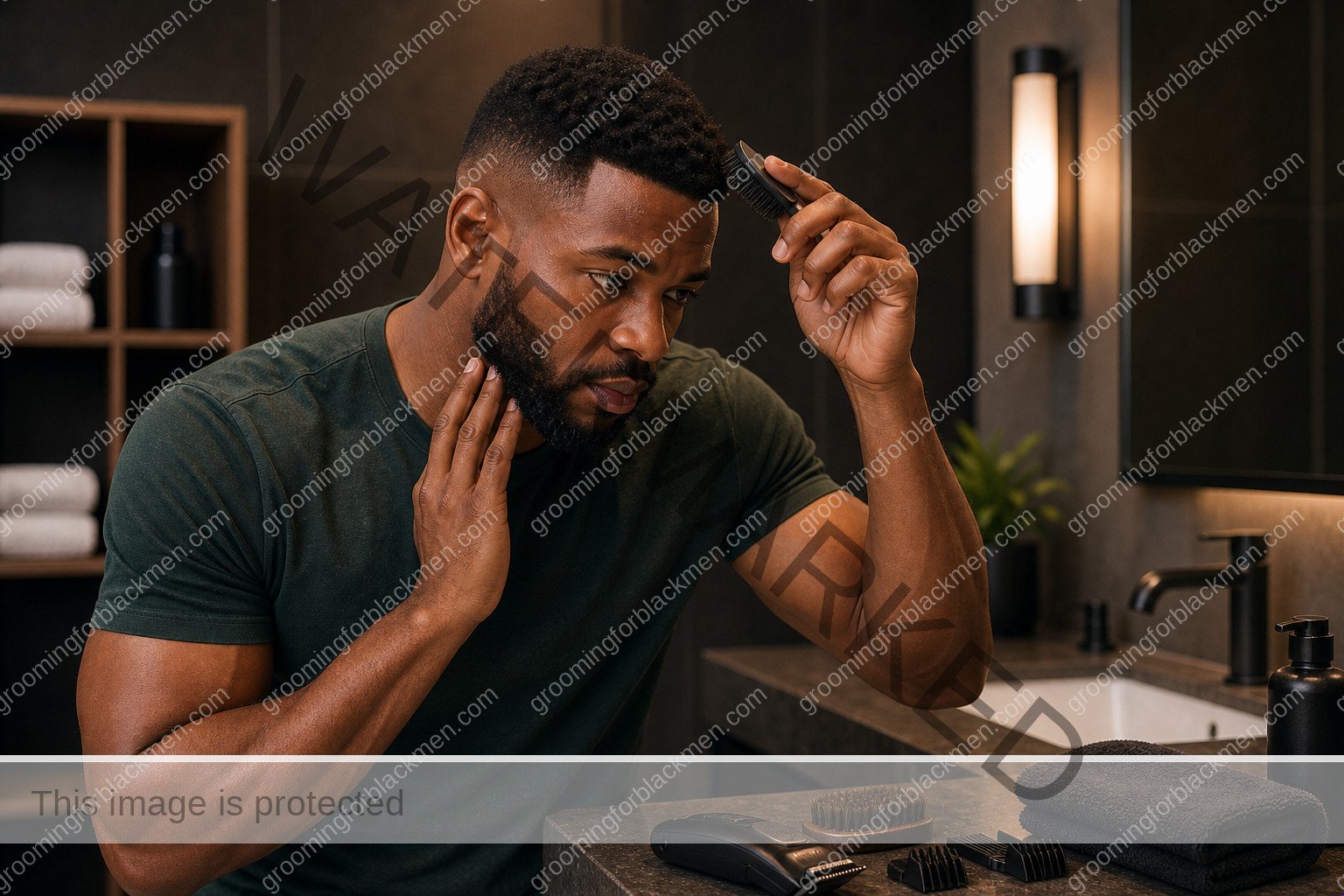
If your scalp feels comfortable and the issue is how the hair sits, begin with your established care routine. Deal with residue when your hair needs washing, follow the product directions, and arrange it with tools suited to how you wear it. Do not skip washing solely to preserve the appearance of a fresh cut. Equally, an untidy morning is not a reason to introduce several unfamiliar products at once.
The American Academy of Dermatology’s Black-hair care guidance recommends conditioner when washing. That supports maintaining basic care, not a universal wash-day calendar for every scalp or haircut. Use your own established needs and any clinician’s advice rather than building a new schedule around this article.
Be restrained with brushing. The AAD’s hair-damage guidance cautions against excessive brushing and pulling. Repeatedly working the same area is not a substitute for a haircut decision. If arranging the hair is no longer giving you a shape you like, stop treating effort as the missing ingredient and discuss the cut.
Keep home upkeep within skills you already have. This guide does not ask you to recreate a fade, cut a new front line, or experiment with an unfamiliar blade setting. If you need the separate home-upkeep discussion, use the existing between-barber-visits guide. Here, the decision is whether that is the job you need at all.
Book the service that matches the change
Ask what your barber means by a touch-up. Shops and individual barbers may use that label differently. Before making an appointment, describe the area you want reviewed, ask what will be cut, and confirm whether that service can meet your goal. Do not assume that a short appointment means the same treatment with less discussion.
If you like the length but not the shape, say both. If you are growing your hair, explain what you are trying to retain before agreeing to a tidy-up. “Make it neat” can conceal two different expectations: you may mean preserve the grow-out, while someone else may understand it as returning to the previous shorter shape.
Use your budget as part of this conversation without treating it as an instruction to push through discomfort. You can ask which parts of a style you can manage yourself and which would require another appointment. You can also choose a different finish or grow-out plan. The answer need not be a larger tool collection.
Plan for an event without inventing a universal booking interval
For a wedding, interview or photographs, start with your own previous cuts: when did you most enjoy the shape, and did the finish feel comfortable? Discuss that experience with your barber when you book. There is no single number of days before an event that works for every cut, skin response or personal preference.
If you do not yet know how a particular service will look or feel afterward, do not build your whole event plan around an unfamiliar, last-minute change. Ask about a familiar alternative. The objective is a plan you understand, including what you will do at home, not a promise that nothing will change between the chair and the event.
Keep tools optional and matched to a real job
Owning a trimmer is not a requirement for maintaining every haircut. Before buying something, name the task and decide whether you can safely do it yourself. If you cannot explain what an accessory will do with the device you own, leave it out of the purchase until you have checked compatibility and instructions.
GFBM may earn a small commission from qualifying purchases. These are category examples, not guarantees. Choose based on comfort, ingredient tolerance, portability, and whether the product fits your actual routine.
- haircut maintenance brush: consider the brush’s intended use and whether it suits your existing way of arranging your hair. Do not buy a firmer brush to force a sharp outline.
- beard trimmer for Black men: this is a beard-tool category, not proof that a particular device can recreate a scalp fade. Check the manufacturer’s intended use before considering it for another task.
- clipper guard set: match accessories to the exact device. An apparently similar attachment is not enough information to choose a cutting length or assume it will fit.
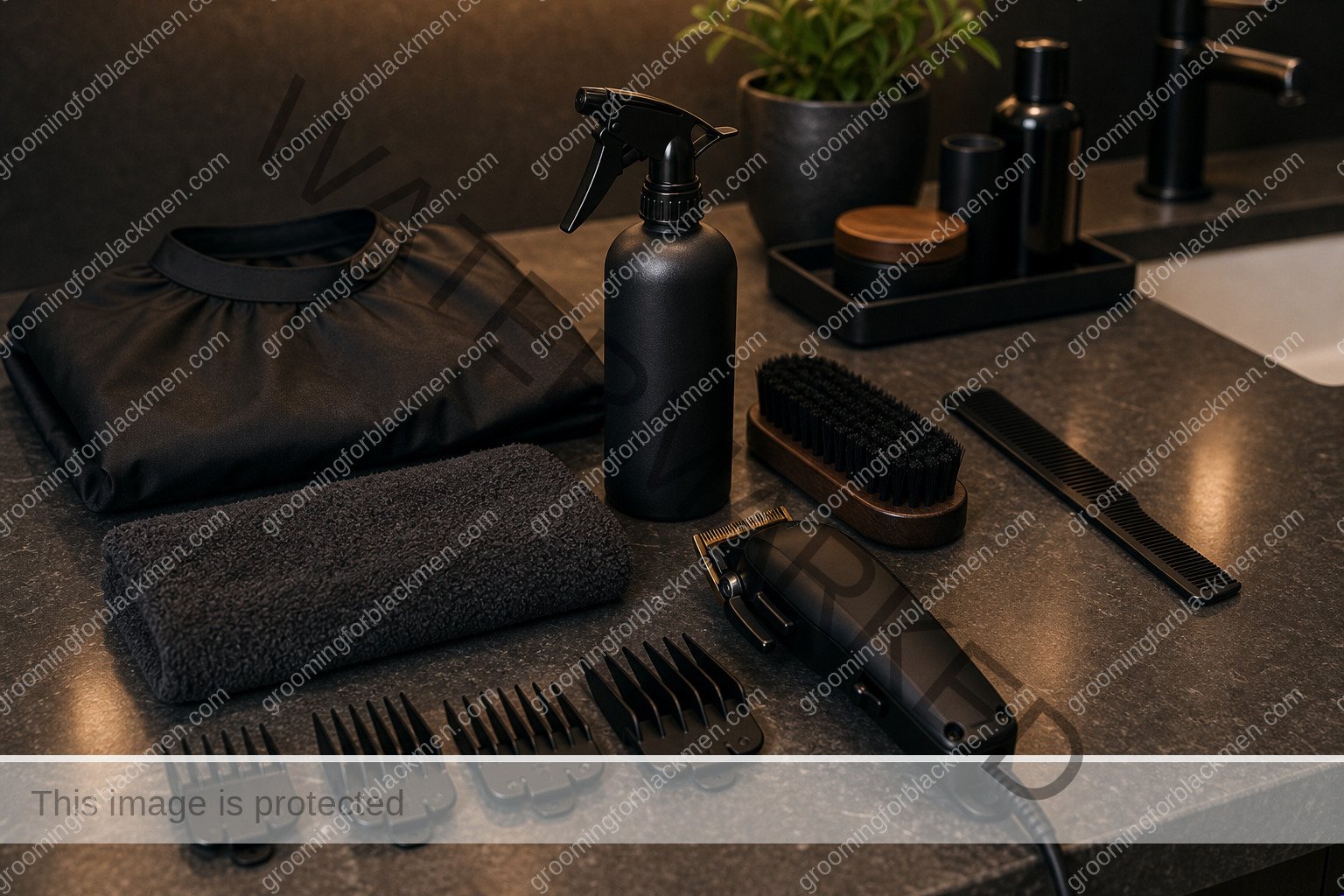
Keep the instructions for the tool you actually use. Cleaning, drying, lubrication and any disinfection requirements depend on the device and relevant product directions; this article does not provide a universal chemical recipe. A purchase link is not an endorsement of every listing in a search, and no product here has been independently tested for this guide.
Use the barber conversation to establish the boundary between upkeep and cutting. If a small job becomes repeated attempts to make the line match, stop. You do not have to complete a home correction simply because you started one, and buying another attachment does not resolve uncertainty about where the original line should be.
Do not cut your way through bumps or thinning
A rough-looking area may need a different response from the rest of the haircut. Avoid plucking hairs out of bumps or repeatedly trying to get a closer finish over an uncomfortable area. The AAD explains the relationship between short-cut, coarse curly hairs and ingrown hairs in its razor-bump guidance for darker skin tones. It also recommends dermatologist assessment when changes to shaving technique do not resolve recurring bumps.
That source addresses facial shaving; it is not a scalp-lineup schedule. The British Association of Dermatologists’ pseudofolliculitis information likewise describes inflammation associated with trapped hairs. Neither lets you identify every neck or scalp bump from a mirror. Similar-looking problems can need different care.
Tell your barber about discomfort before the service begins. Seek medical assessment for recurring or worsening bumps, suspected infection, scarring or new hair loss rather than asking a barber to diagnose them. A haircut can change the outline around an area, but it is not a treatment for an unexplained skin or hair change.

Frequently Asked Questions
How often should I book a haircut?
Start with the style you want to maintain and how you feel about its grow-out. Note when the shape stops working for you and discuss that with your barber. This guide does not prescribe a weekly or fortnightly cut, and a medical concern should not wait for a cosmetic appointment.
How do I know whether I need a touch-up or a full cut?
Name what you want changed. If the overall shape and length still suit you, ask whether the specific area can be reviewed in a touch-up. If you want different proportions or length, explain that instead. Confirm the service scope before booking rather than relying on the label alone.
Can I keep my line looking newly cut without trimming it?
You can maintain your usual care and arrange your hair without cutting, but that is not the same as recreating a new lineup. Decide whether you are comfortable with the current finish. If not, ask your barber what can be done while respecting the line and length you want to preserve.
What should I tell my barber when I am growing my hair?
Say what you are growing toward, what length you want retained, and which area bothers you now. Bring a realistic reference if helpful. Ask the barber to explain how the proposed service fits your grow-out before agreeing to it.
Should I buy clippers to save on appointments?
Only consider the task you actually intend to do, your ability to do it, the device instructions and the total cost. You can decide that home cutting is not for you. A different appointment plan may be a better choice than a device bought without a clear use.
What if I notice bumps after a lineup?
Do not keep shaving the area or pick the bumps to improve the finish. Tell your barber what happened, and seek a dermatologist’s assessment if the problem persists or worsens. The appearance alone does not establish whether it is an ingrown-hair problem or something else.
What if one side seems to grow out differently?
Check it after your normal arrangement, under similar lighting, before deciding it needs cutting. Make a note or take a reference photo for your barber. A new thinning patch or change accompanied by scalp symptoms calls for clinical advice, not repeated efforts to make the sides match.
What to Do Next
Make one decision today: keep the cut and reset its arrangement, ask about a defined touch-up, discuss a different shape, or pause for a skin or scalp concern. Write the reason in one sentence. That sentence is your next appointment brief, not another routine to carry around.
If your next appointment is connected to a job interview, use the interview grooming guide for the wider preparation. If the challenge is fitting upkeep into ordinary mornings, the daily presence routine addresses that separate job. The Black men grooming lifestyle hub connects those situations without making every haircut question into a whole-body grooming project.
At your next visit, take the keep/review/avoid/plan note and ask which parts of the result need professional upkeep. A useful maintenance plan is one you and your barber understand in the same way, with room for your hair to grow and no expectation that comfort has to be traded for a sharper edge.