Find Your Beard Type (Black Men): The Simple Test + The Right Routine After
Many Black men treat every beard the same, leading to persistent itch, flakes, patchiness, or even razor bumps. This common oversight stems from a lack of understanding: not all beards are created equal. Your beard is unique, and a one-size-fits-all approach guarantees frustration.
Ignoring your beard’s specific characteristics—its density, coarseness, curl pattern, and the condition of the skin beneath it—is a direct route to common grooming pitfalls. You might be using products that are too heavy or too light, washing too often or not enough, or detangling in a way that causes breakage. The result? A beard that looks unkempt, feels uncomfortable, and actively works against your efforts.
This guide cuts through the noise. We provide simple, at-home tests to accurately identify your beard type. Understanding these core traits is the foundation for a routine that eliminates common problems and fosters a healthier, more manageable beard. Stop guessing and start grooming with precision.
Quick Answer: What “Beard Type” Really Means (and Why It Matters)
Your beard type is a combination of natural characteristics that dictate how it grows, feels, and responds to care. Understanding these factors is crucial for selecting the right products and techniques, preventing issues like dryness, breakage, and irritation.
- Density: This refers to how much hair you have, or how closely packed individual hair follicles are on your face. High density means a full, thick appearance; low density might look sparse or patchy.
- Coarseness: This describes how thick each individual hair strand is. Coarse hair is thick and strong; fine hair is thin and delicate.
- Curl Pattern/Growth Direction: This defines the natural shape of your beard hairs, ranging from tight coils (kinky/curly) to waves or straighter growth. This pattern significantly impacts how your beard tangles and traps moisture.
- Porosity: While often overlooked, porosity indicates how well your beard hair absorbs and retains moisture. High porosity hair absorbs quickly but loses moisture fast; low porosity hair resists absorption but retains moisture once it’s in.
- Skin-Under-Beard Condition: The health of the skin beneath your beard is paramount. It can be naturally oily, dry, sensitive, or prone to conditions like eczema or folliculitis. This dictates your cleansing and moisturizing needs.
Each of these elements plays a critical role in determining your beard’s specific needs. Ignoring them is like trying to build a house without knowing the foundation. Let’s identify your beard’s true nature.
The 3 Simple At-Home Tests: Uncover Your Beard’s Truth
Forget complex lab tests. These three simple, repeatable assessments will give you the foundational knowledge you need to tailor your grooming routine. Perform these tests on a clean, dry beard for the most accurate results.
Test 1: Density Test – How Full is Your Beard?
What it measures: The number of hair follicles per square inch, indicating how thick or sparse your beard appears.
How to perform:
- Ensure your beard is clean and dry.
- Stand in front of a mirror with good, natural lighting.
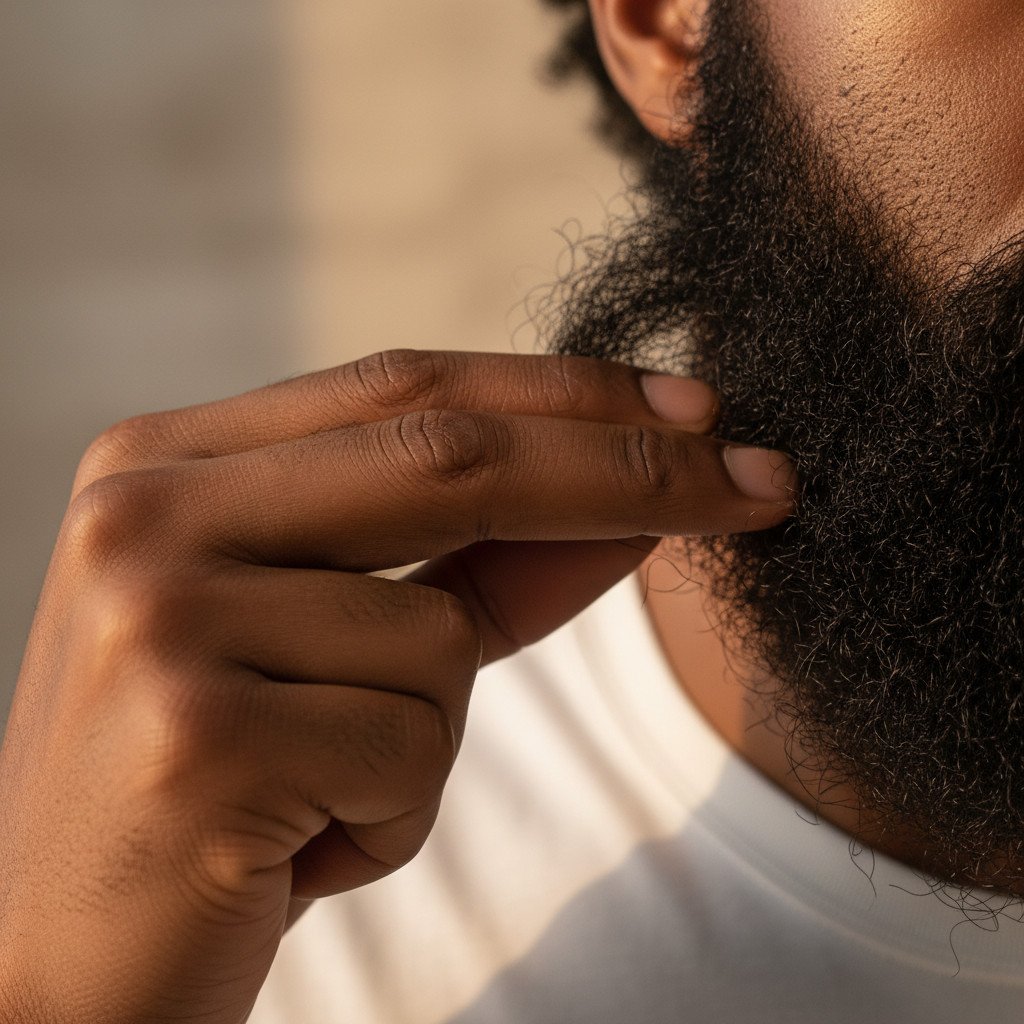
- Using your fingers, gently part sections of your beard, starting from the cheek and moving down to the chin and neck.
- Observe your skin through the parted hair.
How to interpret your result:
- Low Density: You can easily see your skin through the hair, even without parting it significantly. Your beard might appear thin or patchy.
- Medium Density: You can see some skin when you part the hair, but it’s not immediately visible. Your beard has a decent fullness.
- High Density: It’s difficult to see your skin, even when you try to part the hair. Your beard appears very full and thick.
Why it matters: Density influences how much product you need and how easily products penetrate to the skin. Lower density might require less product to avoid greasiness, while higher density needs thorough application to reach all hairs and the skin.
Test 2: Coarseness Test – How Thick Are Your Strands?
What it measures: The individual thickness of your beard hairs.
How to perform:
- Gently pluck a single beard hair (or find one that has naturally shed).
- Hold the hair strand between your thumb and forefinger.
- Roll the hair between your fingers, feeling its texture.
How to interpret your result:
- Fine: The hair strand is barely noticeable between your fingers. It feels delicate and soft. Fine hair is more prone to breakage if handled roughly.
- Medium: You can feel the hair strand, but it’s not stiff or rough. This is the most common texture.
- Coarse: The hair strand feels thick, strong, and possibly wiry or rough between your fingers. Coarse hair can be more resistant to styling and moisture penetration but is generally robust.
Why it matters: Coarseness dictates how well your beard holds shape, how easily it absorbs moisture, and what type of products will be most effective. Coarse hair often benefits from heavier, more emollient products, while fine hair can be weighed down by them.
Test 3: Dryness/Flake Test – What’s Your Skin’s Baseline?
What it measures: The natural oil production and hydration levels of the skin beneath your beard.
How to perform:
- Wash your beard thoroughly with a mild beard wash.
- Do not apply any products (oils, balms, moisturizers) for 24 hours.
- After 24 hours, observe your skin and beard roots.
How to interpret your result:
- Dry/Flaky Skin: Your skin feels tight, possibly itchy, and you might notice small flakes at the roots of your beard hairs. This indicates a need for consistent, deep hydration and gentle cleansing.
- Normal/Balanced Skin: Your skin feels comfortable, not overly oily or dry. There’s no itch or flaking. This is ideal, but still requires regular moisturizing to maintain.
- Oily Skin: Your skin and beard roots appear shiny or feel greasy. This suggests your sebaceous glands are active, and you might need lighter products and more frequent, but still gentle, cleansing.
Why it matters: The health of your skin directly impacts your beard. Dry skin leads to beard itch and beard dandruff. Oily skin can lead to clogged pores and breakouts. Tailoring your routine to your skin type prevents these common issues.
Beard Type Breakdown: Nuances for Black Men
While the tests above provide a solid foundation, understanding the specific characteristics common among Black men’s beards refines your approach.
Thin vs. Thick Density
Thin Density: If your beard is naturally sparse, the goal is often to maximize the appearance of fullness. This means focusing on healthy growth, minimizing breakage, and using techniques that don’t clump hairs together. Lighter products that don’t weigh down individual strands can be beneficial. Regular, gentle brushing can help distribute natural oils and stimulate follicles. Be mindful of over-trimming, especially if you’re trying to achieve a fuller look.
Thick Density: A dense beard often appears full and robust. The challenge here is ensuring products penetrate to the skin and that all hairs receive adequate moisture. Detangling can be more involved, and product buildup is a higher risk. You might need to use more product and spend more time working it through. Regular washing and deep conditioning are vital to prevent dryness and tangles.
Fine vs. Coarse Strands
Fine Strands: Delicate and prone to breakage, fine beard hairs require gentle handling. Avoid harsh brushing or combing, especially when dry. Lighter oils and balms are generally preferred to avoid weighing down the hair. Focus on strengthening ingredients and protective styling to prevent damage. Fine hair can also absorb products quickly, so consistent application is key.
Coarse Strands: Robust and often wiry, coarse beard hairs can be resistant to moisture and styling. They benefit from richer, heavier conditioning products like beard butters or thicker balms that provide deep hydration and hold. Detangling requires patience and a wide-tooth comb. Coarse hair can also be prone to ingrown hairs if not properly managed, particularly along the neckline. Ensure thorough moisturization to soften the hair and reduce stiffness.
Curly/Kinky vs. Straighter Growth
The vast majority of Black men’s beards exhibit a curly or kinky growth pattern. This characteristic is perhaps the most defining aspect of a Black man’s beard and profoundly impacts its care.
- Curly/Kinky Growth: These tight coils and spirals are beautiful but come with specific needs. The natural bends and turns make it harder for natural oils to travel down the hair shaft, leading to dryness. This pattern also makes the beard highly prone to tangling and knotting. Each curl is a potential point of breakage if not handled with care. Ingrown hairs are also a significant concern, especially on the neck and cheek lines, as the hair can curl back into the skin. This beard type thrives on consistent moisture, gentle detangling, and protection.
- Wavy/Straighter Growth: While less common, some Black men may have wavier or straighter beard hair. This type is generally less prone to extreme dryness and tangling compared to kinky textures, but still requires proper hydration. Ingrown hairs can still occur, but often with less frequency than tightly coiled hair.
Why curl pattern matters: The tighter the curl, the greater the need for intense moisture, gentle handling, and proactive measures against ingrown hairs. Products that provide slip for detangling and seal in moisture are paramount.
Porosity and Moisture Retention: The Unsung Hero
Porosity refers to your hair’s ability to absorb and retain moisture. While often discussed for head hair, it’s equally important for your beard. Think of your beard hair like a sponge: how easily does it soak up water, and how quickly does it dry out?
Simple Porosity Test
Take a few clean, product-free beard hairs and drop them into a glass of water. Observe for a few minutes:
- High Porosity: Hair sinks quickly. This means the hair cuticle is open, absorbing moisture rapidly but also losing it just as fast. Your beard will feel dry quickly after moisturizing.
- Low Porosity: Hair floats on top or takes a long time to sink. The cuticle is tightly closed, making it harder for moisture to penetrate initially, but once it’s in, it stays. Products might sit on top of your beard.
- Medium Porosity: Hair slowly sinks to the middle of the glass. This is generally balanced and easier to manage.
Why Porosity Matters for Your Routine
- High Porosity Beards: Need heavier, richer products that seal in moisture. Layering products (e.g., a light oil followed by a butter) can be very effective. Regular deep conditioning is beneficial. Avoid excessive heat, which can further open the cuticle.
- Low Porosity Beards: Benefit from lighter, water-based products that can penetrate the cuticle. Applying products to a slightly damp beard can help. Gentle heat (like a warm towel) can temporarily open the cuticle to allow products to absorb better. Avoid heavy butters or oils that just sit on the surface.
Understanding porosity helps you choose not just what products to use, but how to use them for maximum effectiveness.
Beard Type vs. Beard Problems
Many common beard problems aren’t random; they’re often a direct result of misaligning your grooming routine with your beard type. Recognizing this connection is the first step to resolving them.
- Itch and Flakes: These are frequently symptoms of dry skin under the beard. This can be caused by harsh washing, insufficient moisturizing, or using products that don’t penetrate your specific beard type (e.g., light oil on high porosity, coarse hair). Product buildup can also irritate the skin.
- Breakage and Shedding: Often linked to dryness, rough detangling, or using the wrong tools. Fine hair is inherently more fragile, but even coarse hair will break if it’s dry and snagged.
- Patchiness: While often genetic, exacerbating factors include poor skin health, inflammation from ingrown hairs, or breakage that thins out existing growth.
- Ingrown Hairs/Razor Bumps: Extremely common with curly/kinky beard hair, especially on the neck and cheek lines where hair is cut short. This occurs when the hair curls back into the skin. Improper shaving techniques and lack of skin preparation are major contributors.
The good news is that once you identify your beard type, you can directly address these issues with targeted solutions, moving beyond temporary fixes to sustainable health.
Your Results → Your Routine: The Decision Map
Now that you’ve identified your beard type, it’s time to route you to the specific guidance you need. This decision map will direct you to the most relevant next steps on GroomingForBlackMen.com.
- If you’re starting from zero and want the full setup, covering everything from washing to moisturizing and styling:
Go to: Beginner Beard Care Routine (Black Men)
Why: This page provides a comprehensive, step-by-step foundation for daily beard maintenance, essential for any new beard journey.
- If you don’t know what moisturizing product to use—oil, balm, or butter—and need to understand their differences and best uses:
Go to: Beard Oil vs. Balm vs. Butter (Black Men)
Why: This guide breaks down product categories, helping you select the ideal moisturizer based on your beard’s density, coarseness, and desired hold.

- If you need a beard wash schedule tailored to your lifestyle and beard type, to avoid dryness or excessive oiliness:
Go to: Beard Wash: How Often (Black Men)
Why: Proper cleansing frequency is crucial for skin health and preventing buildup, directly impacting itch and flakes.
- If your beard tangles constantly, sheds excessively, or experiences breakage during detangling:
Go to: Best Beard Brush & Comb (Black Men)
Why: Using the correct tools and techniques for detangling is vital to prevent damage, especially for curly and coarse textures.
- If shaping your neckline consistently causes irritation, ingrown hairs, or razor bumps:
Go to: How to Shape Your Beard (Black Men)
Why: Correct shaping techniques, particularly for the neckline, are key to preventing common shaving-related skin issues.
- If you’re dealing with persistent beard itch right now and need immediate relief and long-term solutions:
Go to: Beard Itch (Black Men)
Why: This page addresses the root causes of beard itch and provides actionable steps to soothe and prevent irritation.
- If you have flakes in your beard, indicating dryness or a skin condition:
Go to: Beard Dandruff (Black Men)
Why: Flakes are a sign of underlying skin issues; this guide helps you identify the cause and implement an effective treatment plan.
- If growth is patchy and you need a game plan to maximize fullness and improve overall appearance:
Go to: Patchy Beard (Black Men)
Why: This resource offers strategies to address patchiness, focusing on optimizing conditions for healthier, more uniform growth.
- If your “beard problem” is actually razor bumps or ingrown hairs from shaving or trimming:
Go to: Razor Bumps (Black Men) and Post-Shave Care (Black Men)
Why: These pages provide comprehensive solutions for preventing and treating razor bumps and ingrown hairs, common issues for Black men.
If You Only Do 3 Things: The Essentials
Even if you’re overwhelmed by all the information, mastering these three fundamental practices will drastically improve your beard’s health and appearance.
- Wash Correctly: Use a dedicated beard wash (not harsh shampoo) 1-3 times a week, depending on your activity level and skin type. Focus on cleansing the skin underneath the beard. Rinse thoroughly with lukewarm water. Over-washing or using hot water strips natural oils, leading to dryness and irritation.
- Moisturize Correctly: Apply a beard oil, balm, or butter daily (or every other day, based on your skin’s needs). Work the product down to the skin to hydrate it first, then distribute through the beard hair. Choose products appropriate for your beard’s density, coarseness, and porosity. Consistency is key.
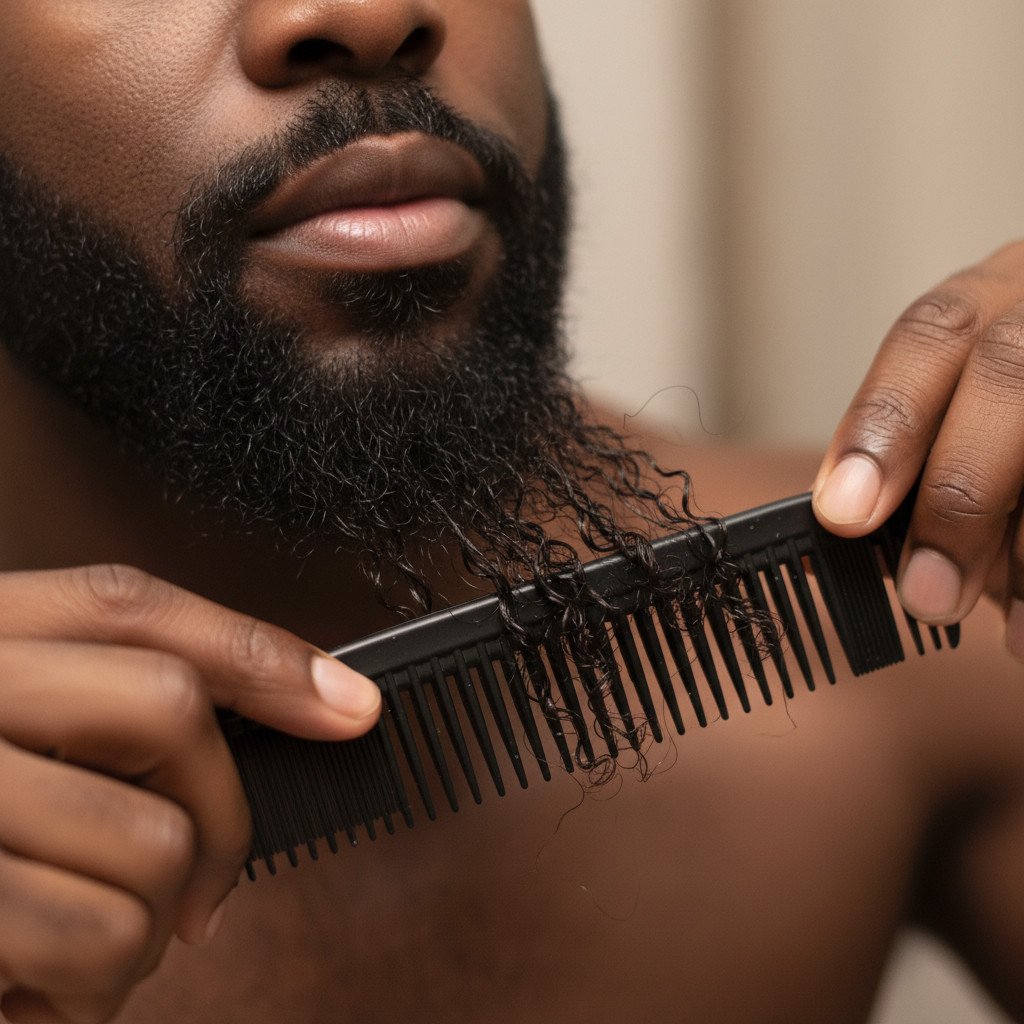
- Detangle Gently: Use a wide-tooth comb or a quality beard brush. Always detangle when your beard is slightly damp or has product in it to provide slip. Start from the ends and work your way up to the roots, holding the hair to prevent pulling. Never dry brush or comb a curly, coarse beard aggressively.
Product Categories by Beard Type: A Simple Checklist
Choosing the right product isn’t about brand names; it’s about understanding categories and how they serve your specific beard type. Here’s a simplified breakdown:
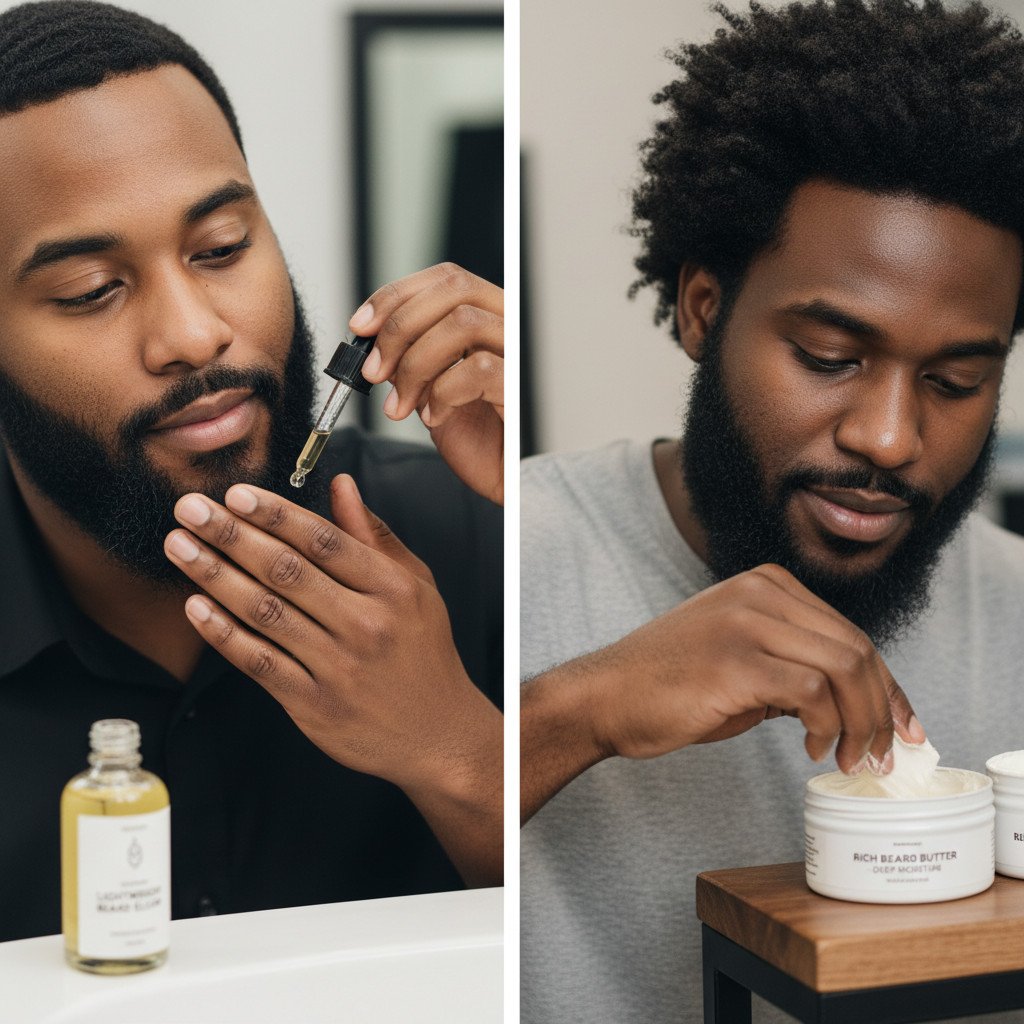
Beard Oils
- Function: Primarily for moisturizing the skin underneath the beard and softening the hair. Provides shine and helps with minor detangling.
- Best for: All beard types, especially crucial for dry skin under beard. Lighter oils for fine/medium density; slightly richer oils for coarse/dense beards. Essential for skin health.
- Frequency: Daily application, typically after washing or showering.
Beard Balms
- Function: Offers conditioning, light hold, and protection. Often contains butters and waxes in addition to oils.
- Best for: Medium to coarse beards that need some shaping or control. Good for sealing in moisture. Can be too heavy for very fine beards.
- Frequency: Daily, after oil, or on its own for light styling.
Beard Butters
- Function: Deep conditioning, intense moisture, and a softer hold than balm. Rich in natural butters.
- Best for: Coarse, dense, curly/kinky, and high porosity beards that require significant moisture. Excellent for overnight conditioning.
- Frequency: Daily, especially for dry beards, or as an overnight treatment.
General Rule: Fine/low density beards often do well with lighter oils and minimal balm. Coarse/high density/curly beards generally benefit from richer oils, balms, and especially butters to combat dryness and manage texture.
How to Detangle/Brush/Comb by Beard Type (Breakage Prevention)
Detangling is not a one-size-fits-all process. Your beard’s density, coarseness, and curl pattern dictate the best approach to prevent breakage and maintain length.
For Fine/Medium Density Beards:
- Tools: A quality beard brush (boar bristle or synthetic) for daily grooming and distribution of oils. A fine-tooth comb for precision styling if needed, but use sparingly.
- Technique: Apply a small amount of beard oil or leave-in conditioner first. Gently brush downwards to smooth and distribute product. If using a comb, start from the ends and work up, using light pressure.
- Frequency: Daily brushing is usually fine. Combing as needed for styling.
- Key: Avoid excessive pulling. Fine hair breaks easily.
For Coarse/Dense/Curly/Kinky Beards:
- Tools: A wide-tooth comb or a pick is essential for detangling. A firm boar bristle brush can be used for shaping and stimulating the skin, but never for detangling knots.
- Technique: Always detangle when the beard is damp and has a generous amount of conditioner, oil, or butter to provide slip. Start from the very ends of your beard, gently working out tangles. Hold the hair section above the tangle to minimize pulling on the roots. Work in small sections. Once detangled, you can use a brush for styling and to encourage curl definition.
- Frequency: Detangle thoroughly 1-3 times a week after washing or when applying significant product. Daily touch-ups with a pick might be necessary.
- Key: Patience and lubrication are paramount. Dry combing or brushing will lead to significant breakage and damage.
Skin Under the Beard Matters
Your beard grows from your skin. If the skin underneath is unhealthy, irritated, or neglected, your beard will suffer. This is where many men make their biggest mistake, focusing solely on the hair and ignoring the foundation.
Dry, itchy, or flaky skin under the beard is not just uncomfortable; it can impede healthy beard growth, lead to inflammation, and contribute to issues like beard dandruff or even folliculitis. The skin here is often deprived of light and air, creating a unique microclimate that needs specific care.
Key actions:
- Gentle Cleansing: Use a mild beard wash that cleanses without stripping natural oils.
- Direct Moisturizing: When applying beard oil or butter, ensure you massage it directly into the skin beneath your beard. This is its primary function.
- Exfoliation (Carefully): Gentle manual exfoliation with a beard brush can help prevent ingrown hairs and remove dead skin cells. Chemical exfoliants (like salicylic acid) can be used for acne-prone skin, but consult a professional first when dealing with a beard.
For a deeper dive into overall facial skin health, especially relevant for the beard area, refer to our comprehensive guide on Skincare for Black Men.
Common Mistakes: What Ruins Growth and Causes Itch/Flakes
Even with the best intentions, common missteps can sabotage your beard efforts. Avoid these pitfalls:
- Washing beard like scalp daily with harsh cleanser: Your beard hair and facial skin are different from your scalp. Daily washing with harsh shampoos strips natural oils, leading to extreme dryness, itch, and flakes.
- Using hot water only: Hot water opens the cuticle too much, leading to moisture loss and dryness. Always use lukewarm water for washing and rinsing, finishing with a cool rinse to help seal the cuticle.
- Applying product to beard hair but not the skin underneath: Beard oils and balms are primarily designed to nourish the skin. If you only coat the hair, the skin remains dry, leading to itch, flakes, and poor growth.
- Dry brushing curly/coarse beard: Brushing or combing a dry, curly, or coarse beard without any lubrication is a direct path to breakage, split ends, and damage. Always use a product with slip.
- Over-trimming/over-shaping neckline leading to bumps: Aggressive or frequent trimming of the neckline, especially against the grain, can cause hairs to retract and curl back into the skin, resulting in razor bumps and irritation. Learn proper shaping techniques to avoid this.
- Ignoring your beard’s curl pattern: Treating a kinky beard like a straight one will lead to tangles, breakage, and frustration. Embrace its natural texture and adapt your methods.
- Inconsistent routine: Skipping moisturizing or detangling days leads to a cycle of dryness and damage. Consistency is the bedrock of a healthy beard.
- Using body lotion or hair conditioner from your head on your beard: These products are not formulated for facial skin or beard hair. They can clog pores, cause breakouts, or leave your beard feeling greasy or dry.
- Not cleaning your grooming tools: Brushes and combs accumulate dead skin, product residue, and bacteria. Dirty tools can reintroduce these to your beard and skin, leading to issues.
- Expecting instant results: Healthy beard growth and improvement take time. Be patient and consistent with your tailored routine.
Troubleshooting: Symptom → Likely Cause → Fix
Here’s how to diagnose and address common beard issues based on your beard type and routine:
- Symptom: Beard feels dry an hour after moisturizing.
- Likely Cause: High porosity beard hair that loses moisture quickly, or you’re using a product that’s too light for your beard’s coarseness/density. Could also be insufficient product applied to the skin.
- Fix: Use a heavier beard butter or a richer oil. Apply product to a slightly damp beard to trap more moisture. Consider layering a light oil with a butter. Ensure you’re massaging product thoroughly into the skin.
- Symptom: Beard is soft but skin underneath itches.
- Likely Cause: Product buildup on the skin, dryness of the skin itself (despite soft hair), or an ingredient in your product is irritating your skin. Could also be infrequent washing.
- Fix: Increase washing frequency slightly (e.g., from once a week to twice) with a gentle beard wash. Ensure you’re rinsing thoroughly. Double-check that your beard oil is reaching the skin. Consider switching to a simpler product with fewer ingredients if irritation persists. Refer to Beard Itch (Black Men).
- Symptom: Flakes in beard right after wash.
- Likely Cause: Your beard wash is too harsh, or you’re using water that’s too hot, stripping natural oils and causing immediate dryness and flaking. Could also be residual product from previous applications.
- Fix: Switch to a gentler, sulfate-free beard wash. Use lukewarm water for washing and rinsing. Ensure you’re rinsing thoroughly to remove all product. Follow immediately with a good moisturizer. Refer to Beard Dandruff (Black Men).
- Symptom: Beard tangles constantly.
- Likely Cause: Curly/kinky beard hair, lack of proper detangling technique, or insufficient lubrication during detangling. Could also be dryness causing hairs to snag.
- Fix: Always detangle when damp with a wide-tooth comb and a generous amount of conditioner or oil/butter. Start from the ends. Increase moisturizing frequency. Consider a silk pillowcase to reduce friction overnight. Refer to Best Beard Brush & Comb (Black Men).
- Symptom: Neck bumps after line-ups/shaping.
- Likely Cause: Ingrown hairs due to curly hair being cut too short, shaving against the grain, or improper pre/post-shave care.
- Fix: Avoid shaving too close to the skin on the neck. Shave with the grain. Use a sharp razor or a quality trimmer with a guard. Implement a robust post-shave care routine. Consider growing your neckline slightly lower to avoid shaving over sensitive areas. Refer to Razor Bumps (Black Men) and How to Shape Your Beard (Black Men).
- Symptom: Patchy areas look worse when you grow it out.
- Likely Cause: Natural growth patterns (genetics), but also potential breakage in thinner areas, or insufficient care allowing existing hairs to become brittle.
- Fix: Focus on optimizing overall beard health: consistent moisturizing, gentle handling, and a balanced diet. Allow time for growth. Consider styles that camouflage thinner areas. Refer to Patchy Beard (Black Men).
- Symptom: Beard feels greasy and heavy.
- Likely Cause: Using too much product, product is too heavy for your beard type (e.g., butter on fine hair), or infrequent washing leading to buildup.
- Fix: Reduce the amount of product used. Switch to lighter oils or balms. Increase washing frequency slightly with a gentle cleanser. Ensure thorough rinsing.
- Symptom: Beard is stiff and hard to manage.
- Likely Cause: Severe dryness, especially common with coarse, high porosity, or tightly coiled beards. Lack of proper conditioning.
- Fix: Incorporate beard butter or a rich leave-in conditioner. Apply products to a damp beard. Consider a weekly deep conditioning treatment. Ensure products are penetrating to the core of the hair shaft.
- Symptom: Beard hair feels rough and brittle.
- Likely Cause: Lack of moisture, damage from heat styling, harsh chemicals, or aggressive detangling.
- Fix: Focus on intense hydration with oils and butters. Avoid heat. Use gentle detangling methods. Consider a protein treatment if damage is severe, but sparingly.
- Symptom: Persistent redness or bumps under the beard.
- Likely Cause: Ingrown hairs, folliculitis (inflammation of hair follicles), or allergic reaction to a product.
- Fix: Stop using any new products immediately. Ensure proper cleansing and moisturizing. Avoid shaving or trimming the affected area. If persistent or painful, seek professional advice.
When to Get Help (Safety)
While most beard issues can be resolved with proper grooming, some symptoms warrant professional attention. Do not hesitate to consult a dermatologist or healthcare provider if you experience:
- Signs of infection: Increasing pain, warmth, redness, swelling, or pus-filled bumps.
- Severe, persistent rash: A rash that doesn’t improve with basic care or spreads rapidly.
- Painful swelling: Especially if accompanied by fever or general malaise.
- Sudden, unexplained hair loss patches: This could indicate an underlying medical condition.
- Any concern that causes significant discomfort or worry.
Your health is paramount. When in doubt, seek professional advice.
Conclusion: Master Your Beard, Master Your Grooming
Identifying your beard type is not just a theoretical exercise; it’s the most practical step you can take towards a healthier, more manageable, and more impressive beard. You now possess the tools to understand your beard’s unique characteristics—its density, coarseness, curl pattern, porosity, and the condition of the skin beneath it. This knowledge empowers you to move beyond generic advice and implement a routine that truly works.
By applying the simple tests outlined here, you’ve gained clarity. You know whether your beard needs lighter hydration or deep conditioning, gentle detangling with a wide-tooth comb or daily brushing, and how to prevent common issues like itch, flakes, and bumps. This isn’t about chasing trends; it’s about respecting your natural growth and providing it with the precise care it demands.
Stop fighting your beard and start working with it. Use this guide as your foundation, and let it lead you to a grooming regimen that delivers consistent results. A well-cared-for beard is a reflection of intentional self-mastery. Embrace the process, stay consistent, and watch your beard transform.
For further guidance on building your ultimate grooming regimen, explore our comprehensive Beard Care pillar.
Frequently Asked Questions
How do I know if my beard is coarse?
To determine if your beard is coarse, pluck a single beard hair or find one that has shed naturally. Roll the hair strand between your thumb and forefinger. If it feels thick, strong, or wiry, your beard is likely coarse. Fine hair would feel barely noticeable and delicate.
Why is my beard itchy even after oil?
Your beard might still be itchy after oil for several reasons: the oil isn’t reaching the skin underneath, the oil isn’t rich enough for your skin’s dryness, you have product buildup, or an ingredient is causing irritation. Ensure you massage the oil deeply into the skin, and consider a heavier moisturizer like beard butter if dryness persists. Refer to our beard itch guide for more solutions.
How often should I wash my beard?
The ideal washing frequency for your beard depends on your skin type, activity level, and beard type. Generally, washing 1-3 times a week with a dedicated beard wash is sufficient. Over-washing or using harsh shampoos can strip natural oils and lead to dryness and irritation. Consult our guide on beard wash frequency for a tailored schedule.
Do I need a brush or a comb?
For most Black men with curly or kinky beards, a wide-tooth comb or a pick is essential for detangling to prevent breakage. A quality beard brush (like a boar bristle brush) is excellent for distributing oils, stimulating the skin, and shaping, but should not be used to detangle knots in dry, curly hair. You likely need both for different purposes.
Why do I get bumps on my neck after shaping?
Bumps on your neck after shaping are often ingrown hairs or razor bumps, a common issue for Black men with curly beard hair. This occurs when hair is cut too short, shaves against the grain, or curls back into the skin as it regrows. To prevent this, avoid shaving too close, shave with the grain, and implement a thorough post-shave care routine that soothes and protects the skin.
What does beard density mean?
Beard density refers to how closely packed your hair follicles are on your face. High density means a full, thick beard appearance, while low density can result in a sparser or patchier look. Understanding your density helps determine how much product you need and how easily it penetrates to the skin.
How do I test my beard’s porosity?
To test your beard’s porosity, take a few clean, product-free beard hairs and drop them into a glass of water. If the hairs sink quickly, you likely have high porosity. If they float or take a long time to sink, you have low porosity. If they slowly sink to the middle, you have medium porosity.
Can my beard type change?
While your fundamental beard type (density, coarseness, curl pattern) is largely genetic and won’t change, the health and condition of your beard can significantly improve or worsen based on your care routine. Consistent, tailored grooming can make a coarse beard softer, a dry beard more moisturized, and reduce issues like breakage or flakes, making it appear healthier and more manageable.
What are the common mistakes Black men make with their beards?
Common mistakes include washing daily with harsh shampoos, using only hot water, applying product only to the hair and not the skin, dry brushing curly beards, and over-trimming the neckline causing bumps. These errors often lead to dryness, breakage, itch, flakes, and ingrown hairs. Understanding your beard type helps avoid these pitfalls.
Should I use beard oil, balm, or butter?
The choice between oil, balm, and butter depends on your beard’s needs. Beard oil is primarily for skin hydration and softening hair. Balm provides conditioning and light hold. Butter offers deep conditioning and a softer hold, ideal for coarse, dense, or very dry beards. Many men use a combination, such as oil for the skin and butter for the hair.
Why is my beard always dry?
Your beard is likely always dry due to insufficient moisture, high porosity hair that loses moisture quickly, or using products that aren’t rich enough for your beard type. Ensure you’re consistently applying a good quality beard oil or butter, massaging it into the skin, and consider applying products to a damp beard to lock in hydration.
How can I prevent ingrown hairs in my beard?
To prevent ingrown hairs, especially common with curly beards, avoid shaving too close to the skin, shave with the grain, and use a sharp, clean razor or a quality trimmer with a guard. Implement a consistent pre-shave routine to soften hair and a post-shave routine with soothing, anti-inflammatory products to calm the skin and prevent irritation.
Shop wide-tooth comb on Amazon
Leave a Reply