Acne Scars and Dark Marks in Black Men: The Routine That Fades Spots Without Breaking You Out
For Black men, achieving clear, even-toned skin often feels like an uphill battle. The journey to a smooth complexion can be complicated by post-inflammatory hyperpigmentation (PIH), commonly referred to as dark marks or spots, which are a direct consequence of acne. These marks, often mistakenly called “acne scars,” are not true scars but rather a discoloration that lingers long after the breakout has healed. Understanding this distinction is the first step toward effective treatment.
This guide cuts through the noise, offering a science-backed, practical routine designed specifically for the unique needs of Black skin. We’ll differentiate between actual scarring and the more common dark marks, then provide a structured AM and PM regimen to fade discoloration without causing further irritation or breakouts. Our approach prioritizes consistency, gentle care, and the right active ingredients, ensuring you can reclaim a confident, clear complexion.
We understand the frustration of dealing with persistent dark spots. Many generic skincare routines fail to address the specific challenges faced by Black skin, often leading to more irritation or ineffective results. This comprehensive guide is built on the principles of respect, authority, and practical wisdom, delivering actionable steps for lasting improvement. We’ll equip you with the knowledge and tools to effectively manage and fade these marks, revealing the healthy skin beneath.
Most “acne scar” routines are too aggressive for Black skin
The common narrative around treating acne scars often overlooks the specific physiological responses of melanin-rich skin. Many popular treatments, while effective for lighter skin tones, can be overly aggressive for Black skin, leading to increased inflammation and, ironically, worsening hyperpigmentation in Black men. This cycle of irritation and discoloration is a significant barrier to achieving a clear complexion.
Black skin is inherently more prone to post-inflammatory hyperpigmentation (PIH) due to higher melanin content. Any trauma, including acne lesions, cuts, or even harsh treatments, can trigger an overproduction of melanin, resulting in dark spots that can take months or even years to fade. Therefore, a gentle yet effective approach is paramount. Aggressive exfoliation, high concentrations of certain acids, or invasive procedures without proper pre- and post-care can exacerbate the problem, making dark spots darker and more persistent.
Our strategy focuses on minimizing irritation while maximizing the efficacy of proven ingredients. We advocate for a consistent, patient approach that respects the skin’s natural healing process and melanin production. This means selecting products and techniques that gently encourage cell turnover, inhibit melanin production, and protect the skin barrier, rather than stripping or traumatizing it. Understanding this fundamental difference is crucial for any Black man seeking to address post-acne marks effectively.
The goal is not to bleach the skin, but to gently and safely encourage an even skin tone. This requires a nuanced understanding of ingredient selection and application. For instance, while some ingredients are powerful, their concentration and frequency of use must be carefully managed to avoid adverse reactions. This tailored approach ensures that your efforts lead to visible improvement without unintended side effects, fostering healthier, more resilient skin over time.
Acne scars vs post-acne dark marks (what you likely have)
It’s crucial to distinguish between true acne scars and post-inflammatory hyperpigmentation (PIH), often referred to as dark marks. Most Black men dealing with the aftermath of acne are contending with PIH, not actual scarring. Understanding this difference is fundamental to choosing the correct treatment strategy and setting realistic expectations for results. Misidentifying the issue can lead to ineffective treatments and prolonged frustration.
True acne scars are permanent changes in the skin’s texture. These occur when there’s significant damage to the collagen and elastin fibers beneath the skin’s surface. They manifest in several forms:
- Icepick scars: Small, deep, narrow holes that look like the skin has been pierced by an icepick.
- Boxcar scars: Broad, oval or round depressions with sharply defined vertical edges.
- Rolling scars: Broad depressions with sloping edges, giving the skin a wavy, uneven appearance.
- Hypertrophic scars/Keloids: Raised, firm scars that occur when the skin produces too much collagen during healing. Keloids, in particular, are more common in Black skin and can extend beyond the original wound site.
These types of scars often require more intensive treatments, such as professional procedures like microneedling, laser resurfacing, or chemical peels, which must be performed with extreme caution on Black skin to avoid further hyperpigmentation. For raised scars like keloids, dermatological intervention, including steroid injections or surgical removal, might be necessary. It’s important to consult with a dermatologist experienced in treating Black skin for these conditions.
Post-inflammatory hyperpigmentation (PIH), on the other hand, is a temporary discoloration of the skin. It appears as flat, dark spots—ranging from brown to black—that are left behind after an inflammatory lesion, such as an acne breakout, has healed. This darkening occurs because the inflammation triggers melanocytes (the cells that produce melanin) to overproduce pigment. PIH does not alter the skin’s texture; the surface remains smooth.
PIH is far more common in Black skin due to higher melanin content and the skin’s natural tendency to produce more pigment in response to inflammation or trauma. While PIH can be incredibly stubborn and take months or even years to fade naturally, it is treatable with consistent, targeted skincare. The good news is that PIH is not permanent and can be significantly improved with the right routine, which we will detail below. This distinction is critical because the treatments for PIH are generally less invasive and focus on inhibiting melanin production and accelerating cell turnover, rather than restructuring the skin’s architecture.
Understanding that you likely have PIH allows for a more focused and effective treatment plan. It shifts the focus from aggressive scar revision to gentle, consistent pigment correction. This knowledge empowers you to choose the right products and maintain a routine that truly works for your skin, leading to a clearer, more even complexion over time. For more general information on dark spots, refer to our guide on dark spots in Black men.
AM routine (protect tone)
The morning routine is all about protection and prevention. Its primary goals are to shield your skin from environmental aggressors, particularly UV radiation, and to provide a foundational layer of antioxidants. These steps are crucial for preventing new dark marks and ensuring that existing ones don’t worsen. Consistency in your AM regimen is non-negotiable for visible results.
Cleanse Gently
Do this first: Start your day with a gentle, hydrating cleanser. Avoid harsh, stripping cleansers that contain sulfates or strong exfoliants, as these can disrupt your skin barrier and lead to irritation, potentially worsening hyperpigmentation. A mild cleanser removes overnight buildup without stripping your skin of its natural oils. Use lukewarm water and your fingertips to gently massage the cleanser onto your face for about 30-60 seconds, then rinse thoroughly. Pat your skin dry with a clean, soft towel.
This initial step sets the stage for the rest of your routine by ensuring a clean canvas. It also helps to maintain the skin’s delicate pH balance, which is essential for healthy barrier function. Remember, the goal is to cleanse, not to scrub or irritate.
Apply Vitamin C Serum
After cleansing, apply a high-quality vitamin C serum. Vitamin C is a powerful antioxidant that brightens the skin, evens out tone, and protects against free radical damage caused by UV exposure and pollution. It also plays a role in inhibiting melanin production, making it an excellent ingredient for fading dark spots. Look for serums containing L-ascorbic acid, the most potent form of vitamin C, in concentrations between 10-20%.
Dispense 3-5 drops onto your fingertips and gently press it into your face and neck. Allow the serum to fully absorb for a minute or two before moving to the next step. Consistent use of vitamin C can significantly improve skin radiance and reduce the appearance of existing dark marks over time. This step is a cornerstone of any effective hyperpigmentation treatment plan, offering both corrective and protective benefits.

Hydrate with a Lightweight Moisturizer
Even if your skin tends to be oily, a lightweight, non-comedogenic moisturizer is essential. Hydration helps to maintain a healthy skin barrier, which is crucial for reducing inflammation and supporting the skin’s natural healing process. A compromised skin barrier can lead to increased sensitivity and a slower fading of dark marks. Choose a moisturizer that is free of heavy oils and fragrances, which can irritate sensitive skin or clog pores.
Apply a dime-sized amount evenly across your face and neck. Look for ingredients like hyaluronic acid, ceramides, or glycerin, which draw moisture into the skin without feeling heavy. This step locks in the benefits of your serum and prepares your skin for sunscreen application. Proper hydration also contributes to a smoother, more supple complexion, enhancing the overall appearance of your skin.
Apply Broad-Spectrum Sunscreen
Do this first: This is arguably the most critical step in your AM routine for fading dark spots and preventing new ones. UV radiation is the primary trigger for melanin production and can significantly darken existing hyperpigmentation. A broad-spectrum lightweight face sunscreen with an SPF of 30 or higher is non-negotiable, every single day, regardless of weather or whether you’re indoors. For Black men, choosing a sunscreen that doesn’t leave a white cast is essential. Mineral sunscreens with micronized zinc oxide or titanium dioxide, or chemical sunscreens formulated for darker skin tones, are excellent choices.
Apply a generous amount – about a nickel-sized dollop for your face and neck – as the last step in your morning routine. Reapply every two hours if you’re outdoors or sweating. Consistent and adequate sunscreen application is the single most effective way to protect your skin from further hyperpigmentation and allow your other treatments to work. Without it, all other efforts to fade dark spots will be severely undermined. For more detailed recommendations, consult our guide on best sunscreen for Black men.
PM routine (treat slowly)
The evening routine is dedicated to treatment and repair. While you sleep, your skin undergoes its most intensive repair processes, making it the ideal time to apply active ingredients that target dark spots and encourage cell turnover. Patience and consistency are key, as results will not appear overnight. This routine focuses on gentle exfoliation and pigment inhibition to gradually fade discoloration.
Double Cleanse (Optional, but Recommended)
If you wear sunscreen, makeup, or live in a polluted environment, consider double cleansing. Start with an oil-based cleanser or balm to dissolve sunscreen, dirt, and impurities without stripping the skin. Follow with your gentle, hydrating water-based cleanser to thoroughly clean your pores. This ensures all traces of the day’s grime are removed, allowing your treatment products to penetrate more effectively.
Double cleansing is particularly beneficial for those prone to breakouts, as it helps prevent clogged pores that can lead to new acne lesions and subsequent dark marks. It’s a thorough yet gentle way to prepare your skin for the active ingredients that follow, ensuring maximum efficacy without irritation.
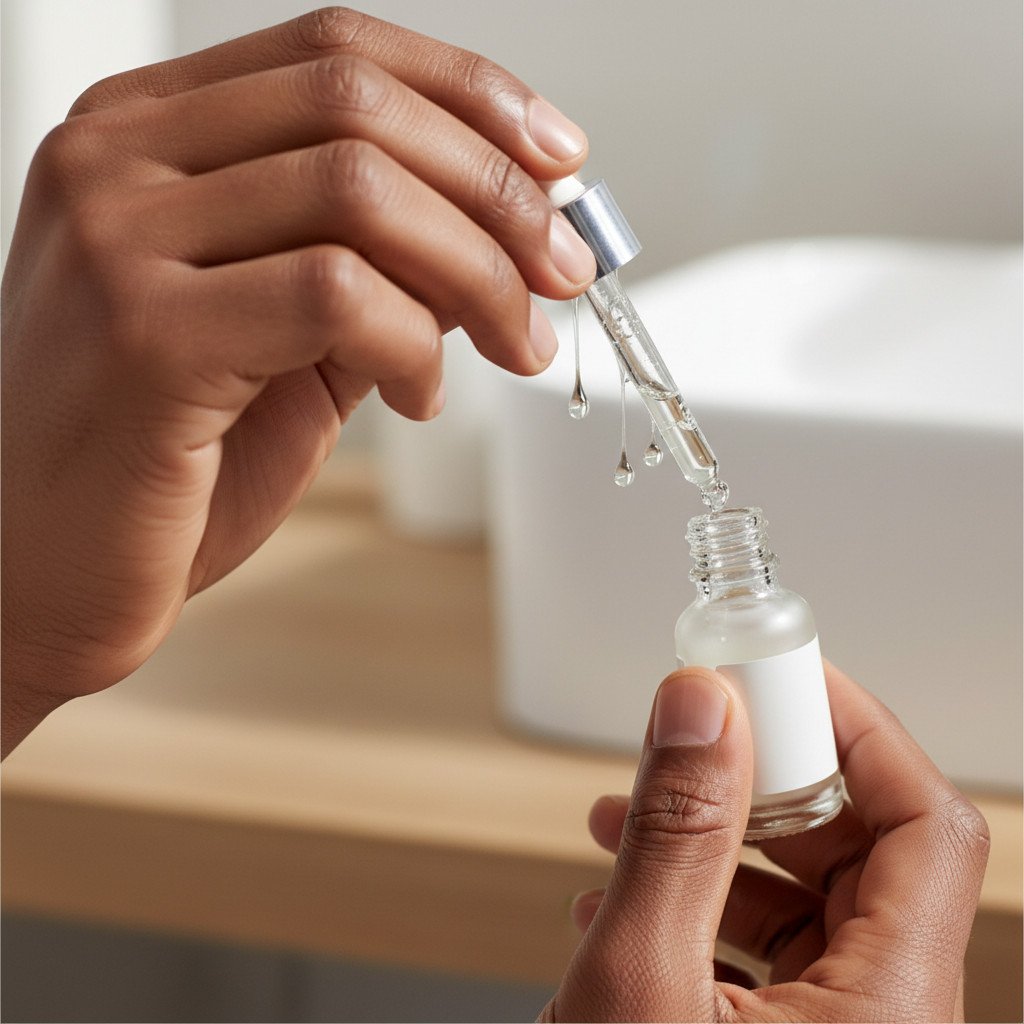
Apply Treatment Serum (Retinoid or other pigment inhibitor)
Do this first: After cleansing and patting your skin dry, apply your chosen treatment serum. For fading dark spots, retinoids (like retinol or tretinoin) are gold standard due to their ability to accelerate cell turnover and inhibit melanin production. Start with a low concentration of retinol serum 2-3 times a week and gradually increase frequency as your skin tolerates it. If you’re new to retinoids, our retinoid guide for beginners offers detailed advice.
Alternatively, if retinoids are too strong or you prefer other options, consider serums containing ingredients like alpha arbutin, kojic acid, azelaic acid, or tranexamic acid. These ingredients also work to reduce melanin production and improve skin tone. Apply a pea-sized amount to your face and neck, avoiding the immediate eye area. Allow it to absorb completely before the next step. This step is the workhorse of your dark spot fading routine, actively targeting the pigment at its source.
Spot Treat (Optional)
If you have particularly stubborn dark spots, you can apply a targeted spot treatment. These often contain higher concentrations of pigment-inhibiting ingredients like hydroquinone (use under dermatologist guidance and for limited periods), or a combination of acids. Apply a tiny amount directly onto the dark spots, avoiding the surrounding skin. This focused approach can help accelerate the fading of specific, persistent marks.
However, exercise caution with spot treatments, especially those containing hydroquinone, as overuse can lead to paradoxical darkening or irritation. Always follow product instructions carefully and consider consulting a dermatologist if you’re unsure. This step is an amplifier for your main treatment, not a replacement.
Seal with a Rich Moisturizer
The final step in your PM routine is to seal in all the active ingredients and provide ample hydration. A richer, more occlusive non-comedogenic moisturizer will help to support your skin barrier, prevent moisture loss, and counteract any potential dryness or irritation from your treatment serums. This is especially important when using retinoids, which can sometimes cause initial dryness.
Apply a generous amount to your face and neck. Look for moisturizers with ceramides, peptides, or fatty acids to help repair and strengthen the skin barrier overnight. This step ensures your skin remains comfortable and resilient, allowing it to focus on healing and regeneration while you sleep. A well-moisturized skin barrier is less prone to inflammation, which in turn helps prevent new hyperpigmentation.
Table: Skin situation → best first ingredient lane → frequency
| Skin Situation | Best First Ingredient Lane | Frequency | Notes for Black Skin |
|---|---|---|---|
| Mild PIH (new, light spots) | Vitamin C, Niacinamide, Alpha Arbutin | Daily (AM/PM) | Gentle, preventative, and corrective. Excellent for overall brightening. |
| Moderate PIH (stubborn, older spots) | Retinoids (Retinol), Azelaic Acid, Kojic Acid | 2-3 times/week (PM), gradually increase | Start low, go slow. Retinoids can cause initial irritation; buffer with moisturizer. |
| Severe PIH (deep, widespread spots) | Prescription Retinoids (Tretinoin), Hydroquinone (short-term), Tranexamic Acid | As directed by dermatologist (PM) | Consult a dermatologist. Hydroquinone use must be monitored to prevent ochronosis. |
| Acne-prone skin with PIH | Salicylic Acid (BHA), Azelaic Acid, Niacinamide | Daily (AM/PM, alternate actives) | Addresses both active acne (acne in Black men) and PIH. Avoid over-exfoliation. |
| Sensitive skin with PIH | Niacinamide, Azelaic Acid, Bakuchiol | Daily (AM/PM) | Focus on barrier support. Patch test new products. Avoid strong acids initially. |
| Uneven skin tone (no specific spots) | Vitamin C, Niacinamide, Glycolic Acid (low % AHA) | Daily (AM/PM), AHA 2-3 times/week (PM) | AHAs can improve texture and tone, but use cautiously to avoid irritation. |
This table provides a strategic roadmap for selecting the most appropriate active ingredients based on your specific skin concerns. Remember that consistency is paramount, and it’s always wise to introduce new active ingredients one at a time to gauge your skin’s reaction. For severe or persistent issues, professional guidance is invaluable.
Understanding the Science of Hyperpigmentation in Black Skin
To effectively combat dark marks, it’s essential to understand the science behind why Black skin is more susceptible to hyperpigmentation. Melanin, the pigment responsible for skin, hair, and eye color, is produced by cells called melanocytes. Black skin contains more active melanocytes and produces a larger, more stable form of melanin (eumelanin) compared to lighter skin tones.
When inflammation occurs—whether from acne, a cut, or even harsh skincare products—it triggers a cascade of events that leads to an overproduction and uneven distribution of melanin. This process is known as post-inflammatory hyperpigmentation (PIH). The body’s natural response to trauma in melanin-rich skin is to produce more pigment as a protective mechanism, which unfortunately results in the dark spots we see.
This heightened melanocyte activity means that even minor irritations can leave a lasting mark. Therefore, the core principle of treating PIH in Black men is to minimize inflammation at every turn. This includes using gentle cleansers, avoiding abrasive scrubs, protecting the skin from UV radiation, and introducing active ingredients slowly and strategically to prevent irritation. Understanding this biological predisposition allows us to tailor our approach for maximum efficacy and minimal side effects.
The duration of PIH can vary significantly. Some spots may fade within a few months, while others can persist for a year or more. The depth of the pigment also plays a role; superficial PIH (epidermal) tends to fade faster than deeper PIH (dermal). Consistent use of the right ingredients, combined with diligent sun protection, is the most effective way to accelerate the fading process and prevent new marks from forming. Patience is not just a virtue; it’s a necessity in this journey.
Key Ingredients for Fading Dark Marks
Navigating the world of skincare ingredients can be overwhelming, but certain actives stand out for their proven efficacy in treating hyperpigmentation in Black skin. These ingredients work through various mechanisms, including inhibiting melanin production, accelerating cell turnover, and providing antioxidant protection. Combining these strategically within your routine can yield significant results.
- Retinoids (Retinol, Tretinoin): These vitamin A derivatives are powerhouse ingredients. They accelerate cell turnover, bringing new, unpigmented skin cells to the surface faster, while also inhibiting melanin transfer to keratinocytes. Tretinoin (prescription) is stronger than retinol (over-the-counter). Start with low concentrations and gradually increase frequency to minimize irritation.
- Vitamin C (L-Ascorbic Acid): A potent antioxidant that brightens the skin by inhibiting tyrosinase, an enzyme crucial for melanin production. It also protects against environmental damage that can worsen hyperpigmentation. Use in the morning for antioxidant benefits.
- Niacinamide (Vitamin B3): This versatile ingredient reduces inflammation, strengthens the skin barrier, and interferes with the transfer of melanin from melanocytes to skin cells. It’s well-tolerated by most skin types and can be used both morning and night.
- Alpha Arbutin: A natural derivative of hydroquinone, alpha arbutin works by inhibiting tyrosinase, thus reducing melanin production. It’s generally considered less irritating than hydroquinone and is a good option for sensitive skin.
- Azelaic Acid: Found naturally in grains, azelaic acid has anti-inflammatory, antibacterial, and mild exfoliating properties. It also inhibits tyrosinase, making it effective for PIH, and is often well-tolerated by sensitive and acne-prone skin.
- Kojic Acid: Derived from fungi, kojic acid also works by inhibiting tyrosinase activity, thereby reducing melanin synthesis. It’s often found in combination with other brightening agents.
- Tranexamic Acid: This ingredient helps to reduce the interaction between skin cells and melanocytes, thereby decreasing melanin production and inflammation. It’s particularly effective for stubborn or melasma-like hyperpigmentation.
- AHAs (Alpha Hydroxy Acids – Glycolic Acid, Lactic Acid): These acids exfoliate the skin’s surface, helping to shed pigmented cells and improve skin texture. Use cautiously on Black skin, starting with lower concentrations and infrequent use to avoid irritation.
When incorporating these ingredients, remember the principle of
Frequently Asked Questions
How long does it take for dark spots to fade in Black men?
The time it takes for dark spots to fade varies significantly. Superficial spots (epidermal) might fade in a few months, while deeper ones (dermal) can take six months to over a year. Consistency with your routine, especially sun protection, is crucial for accelerating the process. Patience and diligent application of active ingredients are key to seeing results.
Can I use hydroquinone for dark spots?
Hydroquinone is a potent skin lightener that can be effective for severe hyperpigmentation. However, it should be used under the guidance of a dermatologist, typically for short periods (e.g., 3-4 months) to avoid potential side effects like ochronosis (paradoxical skin darkening) or irritation, especially in Black skin. It’s not recommended for long-term, unsupervised use.
What’s the most important step to prevent new dark marks?
The most important step is daily, consistent application of a broad-spectrum sunscreen with SPF 30 or higher. UV radiation is the primary trigger for melanin production and can significantly darken existing hyperpigmentation while also causing new spots. Without diligent sun protection, all other efforts to fade dark spots will be severely undermined.
Is exfoliation good for dark spots on Black skin?
Gentle exfoliation can be beneficial for dark spots by helping to shed pigmented skin cells and promote cell turnover. However, aggressive exfoliation can cause irritation and worsen hyperpigmentation in Black skin. Opt for chemical exfoliants like AHAs or BHAs at low concentrations, or retinoids, and introduce them slowly into your routine. Always prioritize gentle methods.
When should I see a dermatologist for my dark spots?
You should see a dermatologist if your dark spots are not responding to over-the-counter treatments after several months, if they are particularly deep or widespread, or if you suspect you have true acne scars (like icepick or boxcar scars). A dermatologist can offer prescription-strength treatments, professional procedures, and personalized advice tailored to your specific skin needs and concerns.
Can diet affect my dark spots?
While diet doesn’t directly cause or cure dark spots, a healthy, anti-inflammatory diet can support overall skin health and potentially reduce acne breakouts, which are the root cause of many dark marks. Foods rich in antioxidants, vitamins, and omega-3 fatty acids can promote skin healing and reduce inflammation. Conversely, a diet high in processed foods and sugar may exacerbate acne.
Are natural remedies effective for fading dark spots?
Some natural ingredients like turmeric, aloe vera, or lemon juice are often touted for dark spots, but scientific evidence supporting their efficacy is limited, and some can even cause irritation or photosensitivity, especially lemon juice. While some plant-derived ingredients like licorice root or mulberry extract have promising properties, relying solely on unproven natural remedies may delay effective treatment. Stick to evidence-based ingredients for reliable results.
Shop gentle cleanser on Amazon
Shop vitamin C serum on Amazon
Shop lightweight moisturizer on Amazon
Shop broad-spectrum sunscreen on Amazon