
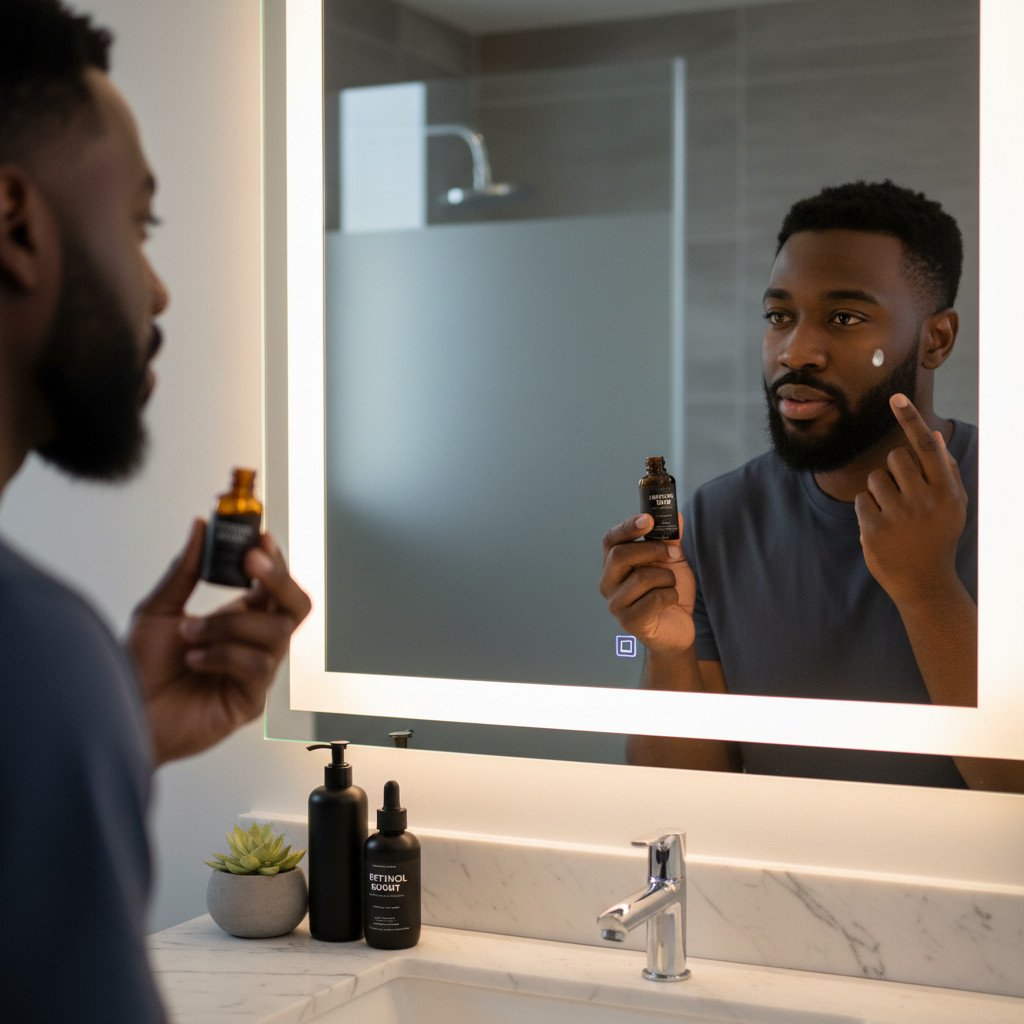
Retinoids for Black Men (Beginner Guide): Fade Dark Spots Without Peeling Your Face
For Black men, achieving an even skin tone and fading hyperpigmentation can be a persistent challenge. Dark spots, often a result of post-inflammatory hyperpigmentation (PIH) from acne, razor bumps, or minor injuries, can linger for months, sometimes even years. While many solutions exist, one ingredient stands out for its proven efficacy: retinoids.
Retinoids are derivatives of Vitamin A, renowned for their ability to accelerate cell turnover, stimulate collagen production, and improve skin texture and tone. They are powerful tools in the fight against uneven skin tone and the visible signs of aging. However, their potency also means they come with a learning curve, especially for those with melanin-rich skin.
This guide cuts through the noise, offering a practical, step-by-step approach for Black men to incorporate retinoids into their routine. Our focus is on maximizing benefits while minimizing irritation, ensuring you can fade dark spots effectively and safely. Understanding how to properly introduce and use these powerful compounds is key to unlocking their full potential for a clearer, more uniform complexion.
Retinoids work—but irritation is the price if you rush
The promise of retinoids is compelling: smoother skin, reduced fine lines, and a more even complexion. For Black men, the most significant draw is their ability to significantly fade Hyperpigmentation in Black men, including stubborn post-inflammatory hyperpigmentation. They do this by speeding up cell turnover, which helps shed pigmented skin cells faster, revealing newer, less pigmented skin underneath. They also inhibit melanin production, directly addressing the root cause of dark spots.
However, this powerful action comes with a potential downside: irritation. Redness, dryness, flaking, and sensitivity are common side effects, especially when starting. This initial period, often called “retinization,” can be discouraging. For Black skin, improper use can lead to further hyperpigmentation, ironically worsening the very issue you’re trying to solve. This is why a cautious, informed approach is not just recommended, but essential.
Many men rush into using retinoids daily or choose a strength too high for their skin, leading to a compromised skin barrier. When the skin barrier is damaged, it becomes more susceptible to irritation, inflammation, and even new dark spots. The key to successful retinoid use lies in patience and a strategic introduction, allowing your skin to adapt gradually. This measured approach ensures you reap the benefits without suffering the common pitfalls.
Understanding the science behind retinoids helps demystify their power. They bind to specific receptors in skin cells, influencing gene expression that regulates cell growth, differentiation, and inflammation. This deep cellular action is why they are so effective, but also why their introduction requires careful management. We’ll outline a plan that respects your skin’s biology, ensuring a smooth transition to a clearer complexion.
The journey to clearer skin with retinoids is a marathon, not a sprint. Expect to see initial changes in texture and tone within a few weeks, but significant fading of dark spots typically takes 2-3 months of consistent use. Full results, including improved skin elasticity and reduced fine lines, can take 6 months to a year. Commitment to the process, along with proper sun protection, is non-negotiable for success.
Retinoid basics (plain English)
Retinoids are a family of Vitamin A derivatives that work by communicating with your skin cells. Think of them as a highly effective coach, telling your skin cells to behave younger and healthier. This communication leads to several beneficial changes, making them a cornerstone in advanced skincare routines, particularly for addressing concerns common in Black skin.
The most common forms you’ll encounter are retinol, retinaldehyde (or retinal), and prescription retinoids like tretinoin. Retinol is the most widely available over-the-counter option. It’s effective but requires two conversion steps in the skin to become retinoic acid, the active form. This slower conversion makes it gentler, ideal for beginners.
Retinaldehyde is a step up from retinol. It only needs one conversion step to become retinoic acid, making it faster-acting and more potent than retinol, but still generally less irritating than prescription options. It offers a good balance of efficacy and tolerability for many.
Prescription retinoids, such as tretinoin (Retin-A), adapalene (Differin, now available OTC in lower strengths), and tazarotene, are the most potent. They are direct forms of retinoic acid or require minimal conversion, meaning they work faster and more intensely. These are often reserved for more severe acne or significant hyperpigmentation and should be used under a dermatologist’s guidance.
Regardless of the type, all retinoids work by accelerating cellular turnover. This means old, damaged, and pigmented skin cells are shed more quickly, making way for new, healthy cells. This process is crucial for fading dark spots and improving overall skin texture. They also stimulate collagen production, which helps plump the skin and reduce the appearance of fine lines and wrinkles.
Another key benefit is their ability to regulate oil production, which can help prevent acne breakouts—a common precursor to dark spots. By keeping pores clear and reducing inflammation, retinoids address the root causes of many skin concerns. Their anti-inflammatory properties also contribute to a calmer, more even complexion over time.
The strength of a retinoid product is usually indicated by a percentage (e.g., 0.25% retinol). For beginners, especially those with sensitive skin, starting with a lower concentration (0.25%–0.5% retinol) is always recommended. This allows your skin to gradually build tolerance, minimizing the initial irritation that can lead to discomfort or further skin issues.
Consistency is paramount with retinoids. Sporadic use will not yield the desired results. Once your skin has adapted, regular application, typically a few nights a week, is necessary to maintain the benefits. Patience and adherence to a structured routine are your best allies in harnessing the power of these remarkable ingredients.
Remember, retinoids make your skin more sensitive to the sun. Daily, broad-spectrum sunscreen use is non-negotiable when incorporating any retinoid into your routine. This protects your skin from UV damage, which can worsen hyperpigmentation and counteract the benefits of the retinoid. Sun protection is the final, essential piece of the retinoid puzzle.
Who should NOT start with a retinoid
While retinoids are powerful and beneficial, they are not for everyone, especially not as a starting point. Introducing a retinoid when your skin is already compromised can do more harm than good, leading to significant irritation, inflammation, and potentially worsening existing conditions. It’s crucial to assess your skin’s current state before diving in.
Do NOT start with a retinoid if you have:
- Extremely sensitive skin: If your skin reacts easily to new products, experiences frequent redness, or feels tight and uncomfortable, you need to address this sensitivity first. A compromised skin barrier will only be further irritated by retinoids.
- Active eczema flare-up: Retinoids can exacerbate eczema, causing increased dryness, itching, and inflammation. Wait until your eczema is completely under control and your skin barrier is healthy before considering a retinoid.
- Broken or compromised skin barrier: This can manifest as flaking, peeling, unusual tightness, stinging, or redness. If your skin feels raw or looks irritated, focus on repairing your skin barrier with gentle, hydrating products. Retinoids will only worsen a damaged barrier.
- Open wounds, cuts, or active, inflamed breakouts: Applying retinoids to broken skin can cause intense stinging, irritation, and potentially hinder the healing process. Address active skin issues and allow your skin to heal before introducing a retinoid.
- Sunburn: Never apply retinoids to sunburned skin. The skin is already inflamed and damaged, and retinoids will intensify this irritation. Allow your skin to fully recover from sun exposure first.
- Allergic reactions to Vitamin A derivatives: Though rare, some individuals may have an allergy. If you’ve had adverse reactions to similar ingredients in the past, consult a dermatologist.
- Pregnancy or breastfeeding: Oral retinoids are known teratogens, and while topical absorption is minimal, most dermatologists advise against using topical retinoids during pregnancy or breastfeeding as a precautionary measure. Always consult your doctor.
If any of these conditions apply to you, your priority should be to soothe and strengthen your skin barrier. Focus on a simple routine with a gentle cleanser, a rich moisturizer, and consistent sunscreen. Once your skin is calm, hydrated, and resilient, you can then consider a gradual introduction to a low-strength retinoid. Patience here is not just a virtue, but a necessity for healthy, clear skin.
For those with conditions like rosacea, while some retinoids can be beneficial under strict medical supervision, starting on your own is not advisable. The potential for flare-ups is high. Always consult a dermatologist for personalized advice if you have chronic skin conditions.
Remember, the goal is to improve your skin, not to cause further distress. Listen to your skin. If it’s telling you it’s not ready, respect that signal. A healthy skin barrier is the foundation for any effective skincare routine, especially one involving powerful actives like retinoids. Building that foundation first will ensure a much smoother and more successful retinoid journey.
If you’re unsure whether your skin is ready, it’s always best to consult with a dermatologist. They can provide a professional assessment and guide you on the safest and most effective path forward. This is particularly important for Black men who may experience unique skin sensitivities or concerns related to hyperpigmentation.
The 8-week beginner plan (exact schedule)
Starting retinoids requires a strategic, slow approach to allow your skin to adapt and build tolerance. This 8-week plan is designed for Black men to minimize irritation and maximize results, focusing on a gradual increase in frequency. Consistency within this structured approach is paramount.
Week 1–2: Introduction – Once a week
Goal: Introduce your skin to the retinoid and observe its initial reaction. This is about establishing a baseline and ensuring no immediate adverse effects beyond mild dryness.
- Frequency: Apply your chosen low-strength retinoid (e.g., 0.25% retinol) only once a week. Choose a specific night, like Sunday, and stick to it.
- Application: Apply a pea-sized amount to clean, dry skin after cleansing. You can use the “sandwich method” (moisturizer, retinoid, moisturizer) if your skin is particularly sensitive.
- Focus: Monitor for excessive redness, stinging, or peeling. Mild dryness or a slight tingle is normal. If irritation is significant, reduce the amount or skip a week.
- Crucial: Daily morning sunscreen is non-negotiable.
Week 3–4: Building Tolerance – Twice a week
Goal: Gradually increase exposure as your skin begins to adapt. Most men will notice less initial stinging and dryness by this point.
- Frequency: If Week 1-2 went well with minimal irritation, increase application to twice a week. Space out applications (e.g., Tuesday and Friday nights) to give your skin recovery time.
- Application: Continue with a pea-sized amount. The sandwich method can still be employed if needed.
- Focus: Observe if irritation levels remain stable or decrease. If irritation increases, revert to once a week for another two weeks.
- Crucial: Maintain daily morning sunscreen.
Week 5–8: Consistent Adaptation – Three times a week
Goal: Establish a consistent routine where your skin is comfortably tolerating the retinoid. This phase is where you start seeing more noticeable improvements in texture and tone.
- Frequency: If Week 3-4 was well-tolerated, increase to three times a week. Ensure there’s at least one night between applications (e.g., Monday, Wednesday, Saturday).
- Application: Continue with a pea-sized amount. By now, you might be able to apply the retinoid directly to clean skin before moisturizer, but listen to your skin.
- Focus: Your skin should feel more resilient, and irritation should be minimal to non-existent. You might notice a subtle glow or smoother texture.
- Crucial: Daily morning sunscreen is paramount.
Beyond Week 8:
After 8 weeks, if your skin is tolerating three times a week with no issues, you can consider increasing to every other night, or even nightly if your skin allows. Some men find that 3-4 times a week is their sweet spot for optimal results without irritation. There’s no need to rush to daily use if your skin is happy and improving with less frequent application.
If you wish to increase the strength of your retinoid, do so only after your skin has fully adapted to your current strength for several months. When upgrading, revert to the once-a-week schedule with the new strength and repeat the gradual introduction process. This method ensures continuous progress without overwhelming your skin.
Throughout this entire process, hydration and sun protection are your non-negotiable allies. A robust moisturizer applied generously, both morning and night, will support your skin barrier. And remember, the best sunscreen for Black men is one you’ll use daily, without fail, to protect your progress and prevent new dark spots.
Night routine (exact steps)
The night routine is where your retinoid does its heavy lifting. Precision and consistency are key to maximizing its benefits while minimizing potential irritation. Follow these steps meticulously for optimal results.
- Cleanse: Begin by thoroughly cleansing your face to remove dirt, oil, and any residual sunscreen. Use a gentle face cleanser that won’t strip your skin of its natural moisture. Lather a small amount with water, massage onto your face in circular motions for 30-60 seconds, then rinse thoroughly with lukewarm water. Pat your skin dry with a clean towel.
- Dry completely: This step is critical. After cleansing, wait 10-20 minutes for your skin to be completely dry. Applying retinoids to damp skin can increase absorption and lead to greater irritation. Ensure your face feels dry to the touch before proceeding. This buffer time allows your skin’s pH to rebalance and reduces the risk of stinging.
- Buffer moisturizer (optional, but recommended for beginners): If you have sensitive skin or are just starting, apply a thin layer of a non-comedogenic, hydrating moisturizer before your retinoid. This creates a buffer, reducing the direct impact of the retinoid and minimizing irritation. Allow it to absorb for a few minutes.
- Retinoid: Dispense a pea-sized amount of your retinol serum or cream onto your fingertip. Dot it onto your forehead, cheeks, nose, and chin. Gently spread it evenly across your entire face, avoiding the immediate eye area, corners of the nose, and mouth, as these areas are more prone to irritation. Use light, upward strokes until absorbed. Less is more; using too much will not speed up results and will only increase irritation.
- Moisturize: After applying your retinoid (and allowing it to absorb for a few minutes if you didn’t use a buffer), apply a generous amount of a rich, barrier repair moisturizer. This step is non-negotiable. Retinoids can be drying, and a good moisturizer will help counteract this, support your skin barrier, and reduce flaking. Look for ingredients like ceramides, hyaluronic acid, and niacinamide.
- Sunscreen next morning reminder: Always remember that retinoids increase your skin’s sensitivity to the sun. Even if you’re only using them at night, broad-spectrum SPF 30+ sunscreen is mandatory every single morning. Apply it generously as the last step of your morning routine to protect your skin and preserve your results.
This routine, executed consistently on your retinoid nights, will set you up for success. On non-retinoid nights, simply follow steps 1, 3 (if desired), and 5. Focus on hydration and barrier support on those off-nights. This balanced approach is critical for managing the retinization process and achieving a clear, even complexion.
For those dealing with persistent how long dark spots fade in Black men, combining retinoids with other actives on alternating nights can be effective. For instance, you might use a retinoid three nights a week and a niacinamide serum for Black men on other nights. Niacinamide can help calm inflammation and further support barrier function, creating a synergistic effect.
Another excellent pairing for fading dark spots is vitamin C for Black men. Vitamin C, a powerful antioxidant, can be used in your morning routine to brighten skin and protect against environmental damage, complementing the night-time work of your retinoid. Just ensure you’re not layering too many actives at once, especially when starting out.
Table: Problem → why it happens → fix
| Problem | Why it happens | Fix |
|---|---|---|
| Excessive Dryness/Flaking | Skin barrier disruption; too much product; too frequent use; lack of hydration. | Reduce frequency (e.g., from 3x to 2x/week); use less product (pea-sized); apply retinoid over moisturizer (sandwich method); increase use of thick, occlusive moisturizer; ensure skin is completely dry before application. |
| Redness/Irritation/Stinging | Skin not acclimated; product too strong; application on damp skin; using other harsh actives simultaneously. | Lower retinoid strength; reduce frequency; ensure skin is completely dry; temporarily stop other actives (AHAs/BHAs, Vitamin C); buffer with moisturizer; apply a soothing balm. |
| Increased Breakouts (Purging) | Accelerated cell turnover pushing impurities to the surface; normal initial phase. | This is often temporary (4-6 weeks). Continue consistent use unless irritation is severe. Focus on gentle cleansing and moisturizing. If persistent or severe, consult a dermatologist. |
| Dark Spots Worsening | Inflammation from irritation leading to new PIH; inadequate sun protection. | Immediately reduce frequency/strength; focus on calming skin; ensure diligent, daily broad-spectrum SPF 30+ sunscreen use, reapplying as needed. Consult a dermatologist if it persists. |
| No Visible Results | Not enough time; inconsistent use; product not potent enough; underlying issues not addressed. | Be patient (results take 2-3 months for spots, 6-12 for aging); ensure consistent use as per schedule; consider a slightly higher strength after full acclimation; review entire routine for other contributing factors. |
| Pilling/Product Balling Up | Too much product; not allowing layers to absorb; incompatible product textures. | Use less product; allow each layer (cleanser, buffer, retinoid, moisturizer) to fully absorb (5-10 mins between); apply thinner layers; check product compatibility (water-based vs. oil-based). |
Addressing these common issues proactively will ensure a smoother retinoid journey. Listen to your skin and adjust your routine as needed. Patience and consistent, gentle care are your most powerful tools.
Frequently Asked Questions
What is the difference between retinol and tretinoin?
Retinol is an over-the-counter retinoid that requires two conversion steps in the skin to become retinoic acid, the active form. This makes it gentler and slower-acting. Tretinoin, on the other hand, is a prescription-strength retinoid that is pure retinoic acid, meaning it’s much more potent and works directly without conversion, leading to faster, more dramatic results but also a higher risk of irritation. Beginners should always start with retinol.
Can I use retinoids every night?
While some people can eventually tolerate nightly retinoid use, it is not recommended for beginners. Start with once or twice a week and gradually increase frequency over several months as your skin builds tolerance. Many men find that 3-4 nights a week is sufficient to see excellent results without causing excessive dryness or irritation. Listen to your skin and prioritize consistency over daily application.
How long does it take to see results from retinoids?
Patience is key with retinoids. You might notice initial improvements in skin texture and brightness within 4-6 weeks. However, significant fading of dark spots (hyperpigmentation) typically takes 2-3 months of consistent use. For more profound changes like reduced fine lines and improved collagen, expect to see results over 6-12 months. Consistency and daily sun protection are crucial for achieving and maintaining these benefits.

Do retinoids make dark spots worse before they get better?
In some cases, retinoids can initially cause a phenomenon called “purging,” where increased cell turnover brings underlying congestion to the surface, leading to temporary breakouts. If irritation is severe, it can also lead to new post-inflammatory hyperpigmentation, making existing dark spots appear worse. This is why a slow, gradual introduction and diligent sun protection are vital to prevent worsening hyperpigmentation. If new dark spots appear due to irritation, reduce frequency and focus on calming your skin.
What should I avoid when using retinoids?
When using retinoids, avoid other potentially irritating active ingredients on the same night, such as AHAs (glycolic acid, lactic acid), BHAs (salicylic acid), and strong physical exfoliants. These can over-exfoliate and compromise your skin barrier. Also, avoid waxing areas where you apply retinoids, as your skin will be more sensitive and prone to tearing. Most importantly, never skip daily broad-spectrum sunscreen, as retinoids make your skin more sensitive to UV damage.
Can I use retinoids if I have sensitive skin?
Yes, but with extreme caution and a very gradual approach. Start with the lowest possible strength (e.g., 0.25% retinol) once a week, using the “sandwich method” (moisturizer-retinoid-moisturizer). Prioritize barrier-supporting ingredients in your routine and ensure your skin is completely dry before application. If irritation persists or is severe, consult a dermatologist. Some individuals with extremely sensitive skin or conditions like rosacea may find retinoids too irritating, even with a careful approach.
Is purging normal with retinoids?
Yes, purging is a common and often temporary side effect when starting retinoids. It occurs because retinoids accelerate cell turnover, bringing existing congestion (clogged pores, microcomedones) to the surface faster. This can manifest as a temporary increase in breakouts, blackheads, or whiteheads. Purging typically lasts for 4-6 weeks. If breakouts are new, painful, or persist beyond this timeframe, it might be irritation or a reaction to another product, and you should consult a dermatologist.
Final Thoughts
Incorporating retinoids into your grooming routine as a Black man is a powerful step towards achieving a clearer, more even-toned complexion. The journey requires patience, consistency, and a deep understanding of how these potent ingredients interact with your skin. By following a gradual introduction plan and prioritizing barrier support and daily sun protection, you can effectively fade dark spots and improve overall skin health without succumbing to common pitfalls like irritation and inflammation.
Remember that your skin is unique, and listening to its signals is paramount. Adjust your frequency, product amount, and buffering techniques as needed. The goal is not to rush the process but to build a sustainable routine that yields lasting results. With dedication, retinoids can transform your skin, revealing a smoother, more radiant appearance that reflects your commitment to elevated self-mastery.
If you encounter persistent irritation, worsening hyperpigmentation, or have concerns about your skin’s reaction, do not hesitate to consult a board-certified dermatologist. They can provide personalized guidance, prescribe stronger formulations if necessary, and ensure your journey to clearer skin is safe and effective. Your confidence in your skin is a reflection of the care you invest in it.
Next reads: Understanding Hyperpigmentation in Black Men, Building a Sensitive Skin Routine for Black Men, and Finding the Best Sunscreen for Black Men.
Frequently Asked Questions
What is the difference between retinol and tretinoin?
Retinol is an over-the-counter retinoid that requires two conversion steps in the skin to become retinoic acid, the active form. This makes it gentler and slower-acting. Tretinoin, on the other hand, is a prescription-strength retinoid that is pure retinoic acid, meaning it’s much more potent and works directly without conversion, leading to faster, more dramatic results but also a higher risk of irritation. Beginners should always start with retinol.
Can I use retinoids every night?
While some people can eventually tolerate nightly retinoid use, it is not recommended for beginners. Start with once or twice a week and gradually increase frequency over several months as your skin builds tolerance. Many men find that 3-4 nights a week is sufficient to see excellent results without causing excessive dryness or irritation. Listen to your skin and prioritize consistency over daily application.
How long does it take to see results from retinoids?
Patience is key with retinoids. You might notice initial improvements in skin texture and brightness within 4-6 weeks. However, significant fading of dark spots (hyperpigmentation) typically takes 2-3 months of consistent use. For more profound changes like reduced fine lines and improved collagen, expect to see results over 6-12 months. Consistency and daily sun protection are crucial for achieving and maintaining these benefits.
Do retinoids make dark spots worse before they get better?
In some cases, retinoids can initially cause a phenomenon called “purging,” where increased cell turnover brings underlying congestion to the surface, leading to temporary breakouts. If irritation is severe, it can also lead to new post-inflammatory hyperpigmentation, making existing dark spots appear worse. This is why a slow, gradual introduction and diligent sun protection are vital to prevent worsening hyperpigmentation. If new dark spots appear due to irritation, reduce frequency and focus on calming your skin.
What should I avoid when using retinoids?
When using retinoids, avoid other potentially irritating active ingredients on the same night, such as AHAs (glycolic acid, lactic acid), BHAs (salicylic acid), and strong physical exfoliants. These can over-exfoliate and compromise your skin barrier. Also, avoid waxing areas where you apply retinoids, as your skin will be more sensitive and prone to tearing. Most importantly, never skip daily broad-spectrum sunscreen, as retinoids make your skin more sensitive to UV damage.
Can I use retinoids if I have sensitive skin?
Yes, but with extreme caution and a very gradual approach. Start with the lowest possible strength (e.g., 0.25% retinol) once a week, using the “sandwich method” (moisturizer-retinoid-moisturizer). Prioritize barrier-supporting ingredients in your routine and ensure your skin is completely dry before application. If irritation persists or is severe, consult a dermatologist. Some individuals with extremely sensitive skin or conditions like rosacea may find retinoids too irritating, even with a careful approach.
Is purging normal with retinoids?
Yes, purging is a common and often temporary side effect when starting retinoids. It occurs because retinoids accelerate cell turnover, bringing existing congestion (clogged pores, microcomedones) to the surface faster. This can manifest as a temporary increase in breakouts, blackheads, or whiteheads. Purging typically lasts for 4-6 weeks. If breakouts are new, painful, or persist beyond this timeframe, it might be irritation or a reaction to another product, and you should consult a dermatologist.
Shop gentle face cleanser on Amazon