Find Your Hair Type (Black Men): The Simple Test + The Right Routine After
Many Black men blame “my hair” for persistent issues like dryness, flaking, or product buildup. The truth is, your hair isn’t the problem. The real issue often lies in a mismatch between your hair’s unique characteristics, your scalp’s condition, and your daily grooming routine. Understanding your hair and scalp is the foundation of effective grooming.
This guide cuts through the noise. We’ll show you how to identify the specific factors that truly impact your routine: your hair’s porosity, strand thickness, density, and, critically, your scalp type. Forget generic advice. This is about building a routine that works for your hair and your scalp, ensuring health, moisture, and style.
Quick Answer: What “Hair Type” Means (and What Matters More)
When most people talk about “hair type,” they often focus on curl pattern. While curl pattern is part of the story, it’s only one piece. For Black men, a truly effective grooming strategy requires understanding several key characteristics:
- Curl Pattern: This describes the shape of your hair strands as they grow from your scalp. It ranges from straight to wavy, curly, and coily. For Black men, curl patterns are typically tightly coiled, often forming S-shapes or Z-shapes. This pattern influences how moisture travels down the hair shaft and how easily tangles form.
- Density: This refers to how many individual hair strands you have on your scalp. You can have fine hair strands but high density, meaning you have many fine hairs. Or you could have thick strands but low density. Density impacts how full your hair looks, how much product you need, and how long it takes to dry.
- Strand Thickness: This is the diameter of a single hair strand. It can be fine, medium, or coarse. Fine hair is delicate and prone to breakage, while coarse hair is more resilient but can feel rougher. This impacts product weight and how easily your hair can be manipulated.
- Porosity: This is your hair’s ability to absorb and retain moisture. It’s arguably the most critical factor for Black men’s hair, directly influencing how well products work and how often you need to moisturize. High porosity hair absorbs moisture quickly but loses it just as fast. Low porosity hair resists moisture but retains it once absorbed.
- Scalp Type: Your scalp is the foundation of healthy hair. It can be oily, dry, sensitive, or prone to buildup. Confusing a dry scalp with dandruff, or ignoring product buildup, leads to ineffective routines and ongoing issues. Understanding your scalp is paramount to addressing flaking, itching, and discomfort.
While curl pattern is visually apparent, it’s porosity, density, strand thickness, and especially scalp type that dictate the products and techniques you should use. Focusing solely on curl pattern is a common misstep. Let’s get into the practical tests that will give you real answers.
The 4 Simple At-Home Tests for Your Hair & Scalp
These tests are quick, require no special tools, and provide actionable insights into your hair and scalp. Perform them on clean, product-free hair for the most accurate results.
1. Porosity Test: How Your Hair Handles Water
Your hair’s porosity determines how well it absorbs and retains moisture. This is a game-changer for Black men’s hair, which is naturally prone to dryness due to its coiled structure.
How to Perform the Test:
- After washing your hair with a clarifying shampoo and rinsing thoroughly, let it air dry completely without any products.
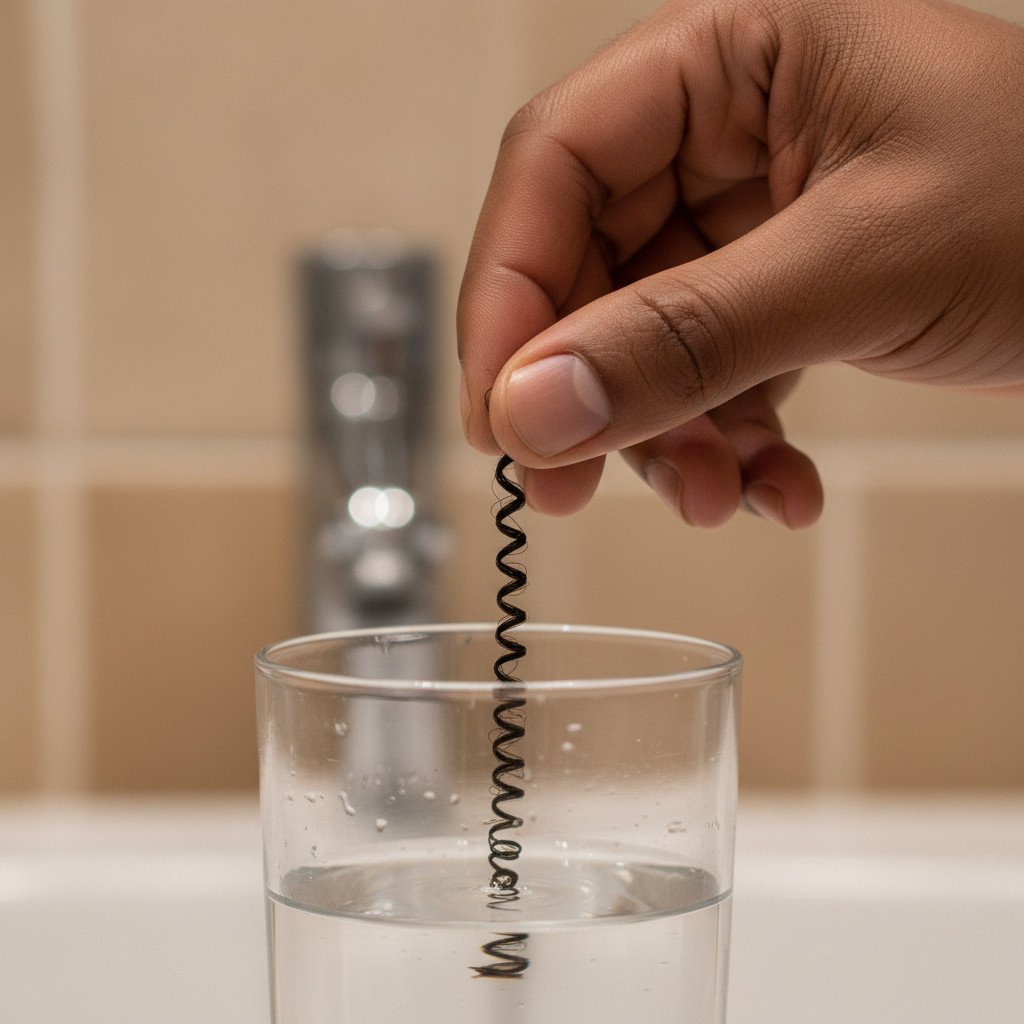
- Take a single strand of hair and drop it into a glass of room-temperature water.
- Observe the strand for 2-4 minutes.
Interpreting Your Results:
- Low Porosity: The hair strand floats on top or just below the surface.
- What it means: Your hair cuticles are tightly closed, making it difficult for moisture to penetrate. Once moisture gets in, it stays in. Products tend to sit on top of your hair rather than absorbing.
- Routine implications: You need lightweight products that won’t cause buildup. Use indirect heat (like a steamer or warm towel) to help products penetrate. Avoid heavy butters and oils that can suffocate your hair. Focus on water-based leave-ins and lighter creams.
- Medium Porosity: The hair strand slowly sinks to the middle of the glass.
- What it means: Your hair cuticles are neither too open nor too closed. Your hair absorbs and retains moisture well.
- Routine implications: This is often considered ideal. Your hair can handle a wider range of products. Maintain a balanced routine with good cleansing, conditioning, and moisturizing.
- High Porosity: The hair strand quickly sinks to the bottom of the glass.
- What it means: Your hair cuticles are open or damaged, allowing moisture to enter and exit very easily. This can be due to genetics, heat damage, chemical treatments, or environmental factors.
- Routine implications: Your hair craves moisture and needs products that will seal it in. Use heavier creams, butters, and oils to lock in hydration. Protein treatments can help strengthen the hair shaft. Avoid excessive heat and harsh chemicals.
2. Strand Thickness Test: Fine, Medium, or Coarse?
The thickness of your individual hair strands affects how your hair feels, how it responds to products, and its susceptibility to damage.
How to Perform the Test:
- Take a single strand of hair and rub it between your thumb and forefinger.
- Compare its feel to a piece of sewing thread.
Interpreting Your Results:
- Fine: You can barely feel the strand, or it feels like a very thin piece of silk. It’s much thinner than a sewing thread.
- What it means: Fine hair is delicate and prone to breakage. It can be easily weighed down by heavy products.
- Routine implications: Use lightweight shampoos and conditioners. Opt for lighter leave-in conditioners and styling products. Be gentle when detangling.
- Medium: You can feel the strand distinctly, and it feels similar to a sewing thread.
- What it means: Medium hair is generally resilient and holds styles well. It’s less prone to breakage than fine hair.
- Routine implications: Your hair can handle a wider range of products. Focus on maintaining a balanced routine.
- Coarse: The strand feels thick and strong, noticeably thicker than a sewing thread.
- What it means: Coarse hair is robust and can withstand more manipulation. However, it can also feel rough and may require more moisture to stay soft.
- Routine implications: Your hair can handle richer, heavier products. It may require more intense conditioning and moisturizing to maintain softness and prevent dryness.
3. Density Test: How Much Hair Do You Have?
Hair density is about the number of hairs on your head, not the thickness of individual strands. It impacts how much product you need and how you style your hair.
How to Perform the Test:
- Part your dry hair in several sections across your scalp.
- Look in a mirror under good lighting.
Interpreting Your Results:
- Low Density: You can easily see your scalp through your hair, even without parting it.
- What it means: You have fewer hair strands per square inch. Your hair may appear thinner or less full.
- Routine implications: Use lighter products to avoid weighing down your hair. Focus on techniques that create volume. You may need less product overall.
- Medium Density: You can see some of your scalp when you part your hair, but it’s not easily visible otherwise.
- What it means: You have an average number of hair strands.
- Routine implications: Your hair is versatile. Focus on maintaining balance in your routine.
- High Density: It’s difficult to see your scalp, even when you part your hair. Your hair appears very full.
- What it means: You have a large number of hair strands. Your hair can appear very thick and voluminous.
- Routine implications: You will likely need more product to cover all your hair. Detangling can take longer. Ensure products are evenly distributed to avoid buildup.
4. Scalp Type & Buildup Test: The Foundation of Hair Health
Your scalp’s condition is often the root cause of many hair problems. This test helps you understand if your scalp is oily, dry, or prone to buildup.
How to Perform the Test:
- Wash your hair thoroughly with a clarifying shampoo.
- Do not apply any products to your scalp or hair.
- Observe your scalp 24-48 hours after washing.
Interpreting Your Results:
- Oily Scalp: Your scalp feels greasy, and your hair roots appear oily within 24-48 hours. You might experience itching or flaking that feels oily.
- What it means: Your sebaceous glands are overactive, producing excess sebum. This can lead to greasy hair, clogged follicles, and sometimes a specific type of dandruff (seborrheic dermatitis).
- Routine implications: You may need to wash more frequently with a balancing or clarifying shampoo. Avoid heavy oils and butters directly on the scalp.
- Dry Scalp: Your scalp feels tight, itchy, and you see small, white, dry flakes that easily fall off. Your hair might also feel dry and brittle.
- What it means: Your scalp lacks sufficient moisture and natural oils. This can be due to genetics, harsh products, environmental factors, or infrequent washing.
- Routine implications: Use moisturizing, sulfate-free shampoos and conditioners. Incorporate scalp treatments designed for dryness. Avoid hot water and harsh styling products.
- Product Buildup: Your hair feels coated, heavy, dull, or greasy even after washing. You might see a white or grayish residue on your scalp or hair strands. Your hair struggles to absorb moisture.
- What it means: Residue from styling products, conditioners, or natural oils has accumulated on your scalp and hair. This can clog follicles and prevent moisture from penetrating.
- Routine implications: Incorporate regular clarifying washes. Consider scalp exfoliation. Re-evaluate your product choices for lighter alternatives, especially if you have low porosity hair.
- Sensitive Scalp: Your scalp easily becomes red, itchy, or irritated after using certain products, or in response to environmental changes.
- What it means: Your scalp reacts strongly to irritants.
- Routine implications: Opt for fragrance-free, dye-free, and hypoallergenic products. Patch test new products.
Distinguishing Scalp Conditions: Dry Scalp vs. Dandruff vs. Buildup
It’s crucial to differentiate these, as their solutions vary. A dry scalp presents with small, white, powdery flakes and a tight, itchy feeling. Dandruff (seborrheic dermatitis) often involves larger, yellowish, oily flakes, redness, and persistent itching, sometimes accompanied by a greasy scalp. Product buildup manifests as a dull, coated appearance, difficulty absorbing moisture, and visible residue. Misdiagnosing these leads to ineffective treatment.
Curl Pattern Overview: Practical Application
While we emphasize porosity and scalp type, understanding your curl pattern still provides context for styling and detangling. For Black men, hair typically falls into the Type 3 (curly) or Type 4 (coily) categories.
- Type 3 (Curly): Hair forms distinct S-shaped curls that are well-defined. It can range from loose spirals (3A) to tight, springy curls (3C).
- Practical Impact: More prone to frizz, requires good moisture. Can be easily weighed down if fine.
- Type 4 (Coily): Hair forms tight, often Z-shaped coils that are densely packed. It can range from soft, fine coils (4A) to coarse, wiry coils (4C).
- Practical Impact: Most prone to shrinkage and dryness. Requires significant moisture and gentle handling to prevent breakage.
Regardless of your specific curl pattern, the principles of moisture retention, gentle handling, and scalp health remain paramount. Your curl pattern influences how you detangle, how you apply products (e.g., raking vs. praying hands), and how easily your hair tangles, but porosity and scalp condition dictate the type of products.
Porosity Explained: Simple + What It Changes
Think of your hair strand like a pinecone. The outer layer, the cuticle, is made of overlapping scales. Porosity describes how tightly these scales are closed or how open they are.
- Low Porosity: The scales are tightly closed. Water and products struggle to get in, but once they do, they’re locked in. This hair often looks shiny and takes a while to get fully wet. It also takes a long time to dry.
- What it changes: You need to use lighter, water-based products that don’t sit on the surface. Heat (from a warm towel or steamer) helps open the cuticles for better absorption. Avoid heavy oils and butters as they cause buildup.
- High Porosity: The scales are open or lifted. Water and products easily enter but also escape quickly. This hair often feels dry, absorbs water quickly, and dries fast. It’s more prone to frizz and breakage.
- What it changes: You need heavier, richer products that can seal the open cuticles and lock in moisture. Layering products (liquid, cream, oil) is effective. Protein treatments can help strengthen the hair.
Understanding your porosity is the key to selecting the right moisturizers, conditioners, and styling products that actually work for your hair, instead of just sitting on top or evaporating too quickly.
Scalp Type and Scalp Conditions: Dry Scalp vs. Dandruff vs. Buildup
Your scalp is living skin, just like your face. Its health directly impacts your hair’s ability to grow strong and healthy. Ignoring scalp issues is a primary reason for persistent hair problems.
- Dry Scalp: This is a lack of moisture in the skin of your scalp. Symptoms include small, white, powdery flakes that easily fall off, tightness, and itching. Your hair may also feel dry. It’s often caused by harsh shampoos, infrequent washing (allowing product to dry out the skin), or environmental factors.
- What it changes: Focus on gentle, moisturizing shampoos and conditioners. Incorporate scalp serums or oils designed to hydrate the skin. Avoid hot water.
- Dandruff (Seborrheic Dermatitis): This is a chronic inflammatory condition where the scalp produces too much oil, leading to an overgrowth of a common yeast (Malassezia). Symptoms include larger, yellowish, oily flakes, redness, and intense itching. The scalp often feels greasy.
- What it changes: Requires medicated shampoos containing active ingredients like zinc pyrithione, selenium sulfide, or ketoconazole. Regular washing is crucial to manage oil production.
- Product Buildup: This is the accumulation of styling products, conditioners, natural oils, and environmental debris on your scalp and hair. Symptoms include dull, heavy-feeling hair, difficulty absorbing moisture, and visible white/grayish residue. It can also lead to itching and clogged follicles.
- What it changes: Regular use of clarifying shampoos is essential. Scalp exfoliation can help remove stubborn residue. Re-evaluate heavy product usage, especially if you have low porosity hair.
Confusing these conditions leads to using the wrong products and prolonging discomfort. For example, treating dandruff with a dry scalp moisturizer will only make dandruff worse by adding more oil to an already oily, inflamed scalp.
Your Results → Your Routine: A Decision Map
Now that you’ve identified your hair and scalp characteristics, here’s how to translate that knowledge into an effective routine. This decision map routes you to specific guides on GroomingForBlackMen.com, ensuring you get targeted advice.
If you don’t know what your scalp issue is:
- Go to: Dandruff vs Dry Scalp: The Definitive Guide for Black Men (This page helps you accurately diagnose your specific scalp condition before you treat it.)
If you have persistent dandruff-type flakes (oily, yellowish flakes, redness, intense itch):
- Go to: Dandruff for Black Men: Causes, Cures, & Prevention (This guide provides targeted solutions for managing and eliminating dandruff.)
If your scalp is tight, dry, and flaky but not greasy (small, white, powdery flakes):
- Go to: Dry Scalp for Black Men: Relief & Long-Term Solutions (This page offers strategies to hydrate and soothe a dry, irritated scalp.)
If your scalp just itches and you’re not sure why (no clear flakes or visible issues):
- Go to: Itchy Scalp for Black Men: Uncover the Cause & Find Relief (This guide helps you pinpoint the underlying reasons for scalp itch and how to address them.)
If your hair feels coated, heavy, or won’t absorb moisture, or you see residue:
- Go to: Product Buildup Reset for Black Men: Cleanse & Clarify (This page details how to effectively remove buildup and restore your hair’s health and absorption.)
If you need a wash schedule that fits your scalp + lifestyle:
- Go to: How Often to Wash Hair (Black Men): The Optimal Schedule (This guide helps you determine the ideal washing frequency based on your hair and scalp type.)
If you need to pick the right cleanser category for your hair and scalp:

- Go to: Best Shampoo for Black Men: Your Guide to Clean & Healthy Hair (This page breaks down different shampoo types and helps you choose the best one for your needs.)
If moisturizing always leads to grease or buildup, or your hair still feels dry:
- Go to: Moisturize Hair Without Buildup (Black Men): The Right Way (This guide teaches you how to effectively hydrate your hair without creating heavy residue.)
If you want a safe “deep clean” approach for your scalp:
- Go to: Scalp Exfoliation for Black Men: Deep Clean for Healthier Hair (This page explains the benefits and methods of scalp exfoliation to remove dead skin and buildup.)
If you wear braids, twists, or other protective styles and want to maintain scalp health:
- Go to: Protective Styles & Scalp Health for Black Men: Maintain Your Foundation (This guide offers essential tips for keeping your scalp healthy while wearing protective styles.)
If you’re wave-curious and want a beginner track:
- Go to: 360 Waves for Black Men: The Ultimate Guide and 360 Waves Beginner Routine: Your First Steps to Defined Waves (These resources provide a complete roadmap for starting and maintaining your wave journey.)
If You Only Do 3 Things…
If the detailed information feels overwhelming, remember these three core principles. They are the bedrock of healthy hair for Black men, regardless of your specific type or condition:
- Clean Your Scalp Correctly: Your scalp is skin. It needs regular, effective cleansing to remove dirt, oil, and product buildup. Use a shampoo appropriate for your scalp type. Don’t just rinse your hair; actively cleanse your scalp.
- Moisturize Smart: Hydration is critical. Use water-based leave-in conditioners and moisturizers. Then, seal that moisture in with an oil or butter appropriate for your hair’s porosity. Don’t just apply product; ensure it’s absorbed.
- Avoid Buildup: Heavy products, infrequent washing, and low porosity hair are a recipe for buildup. Regularly clarify your hair and scalp. Choose products wisely based on your porosity and density.
Mastering these three areas will resolve most common hair and scalp issues.
Product Categories by Hair/Scalp Type: Your Essential Checklist
This checklist provides general guidance. Always refer to the specific routine pages linked above for tailored recommendations.
For Low Porosity Hair:
- Shampoo: Clarifying or lightweight moisturizing shampoo. Avoid heavy, creamy formulas.
- Conditioner: Lightweight, water-based rinse-out conditioner.
- Leave-in Conditioner: Light, milky, or spray-on leave-in.
- Moisturizer/Sealant: Lightweight oils (e.g., grapeseed, jojoba, argan) or light creams. Avoid heavy butters.
- Styling Products: Gels or mousses with minimal oil content.
For High Porosity Hair:
- Shampoo: Moisturizing, sulfate-free shampoo.
- Conditioner: Rich, creamy, deep conditioning treatments.
- Leave-in Conditioner: Creamy, heavier leave-in conditioner.
- Moisturizer/Sealant: Heavier oils (e.g., castor, olive, avocado) or rich butters (e.g., shea butter, mango butter) to seal.
- Styling Products: Creams and gels that offer strong hold and moisture.
For Dry Scalp:
- Shampoo: Hydrating, sulfate-free shampoo.
- Conditioner: Moisturizing conditioner.
- Scalp Treatment: Hydrating scalp serums or light oils (e.g., jojoba, almond) applied directly to the scalp.
For Oily Scalp / Dandruff:
- Shampoo: Medicated shampoo (for dandruff) or balancing/clarifying shampoo (for oily scalp).
- Conditioner: Lightweight conditioner, applied primarily to hair strands, avoiding the scalp.
- Scalp Treatment: Anti-fungal or oil-regulating scalp treatments (for dandruff).
For Fine Hair Strands:
- Shampoo & Conditioner: Volumizing or lightweight formulas.
- Styling Products: Mousses or light gels to add hold without weight.
For Coarse Hair Strands:
- Shampoo & Conditioner: Rich, moisturizing, smoothing formulas.
- Styling Products: Creams, butters, and heavier gels to soften and define.
Remember, product choice is only one part of the equation. Application technique and consistency are equally important. Shop clarifying shampoos on Amazon to start your routine reset.
Common Mistakes: What Ruins Moisture and Triggers Flakes
Many Black men fall into common traps that undermine their grooming efforts. Avoiding these mistakes is as crucial as knowing what to do.
1. Treating Dandruff Like “Just Dryness” (and Vice Versa)
This is perhaps the most frequent and damaging mistake. Dry scalp flakes are small, white, and powdery, accompanied by tightness. Dandruff flakes are larger, often yellowish, oily, and come with an inflamed, greasy scalp. Applying heavy oils to
Frequently Asked Questions
How do I know my hair porosity?
Perform the float test: Drop a clean, product-free strand of hair into a glass of water. If it floats, you likely have low porosity. If it sinks quickly, you have high porosity. If it slowly sinks to the middle, you have medium porosity.
What’s the difference between dandruff and dry scalp?
Dry scalp flakes are small, white, and powdery, often accompanied by scalp tightness. Dandruff (seborrheic dermatitis) flakes are typically larger, yellowish, oily, and come with an inflamed, greasy, and intensely itchy scalp. They require different treatments.
Why is my scalp itchy after I wash?
An itchy scalp after washing can be due to harsh shampoos stripping natural oils, hot water, product residue, or an underlying condition like dry scalp or even a reaction to ingredients. Ensure your shampoo is gentle and rinse thoroughly.

How often should Black men wash their hair?
The ideal frequency depends on your scalp type, activity level, and product usage. Oily scalps may need washing 2-3 times a week, while dry scalps might benefit from once a week or every 10 days. Always focus on cleansing the scalp, not just the hair.
Why does my hair feel dry but also greasy?
This often indicates product buildup. Heavy products can sit on the hair and scalp, making it feel greasy, while simultaneously preventing moisture from penetrating the hair shaft, leaving the hair itself dry. A clarifying shampoo can help reset this.
Does curl pattern matter more than porosity?
For Black men, porosity often matters more than curl pattern for product selection. While curl pattern influences styling and detangling, porosity dictates how well your hair absorbs and retains moisture, directly impacting product effectiveness.
Can my hair porosity change?
Yes, hair porosity can change due to factors like heat damage, chemical treatments (coloring, relaxers), environmental exposure, or even aging. Regular assessment helps you adjust your routine as needed.
What’s the best way to moisturize low porosity hair?
For low porosity hair, use lightweight, water-based leave-in conditioners. Apply them to damp hair, and consider using indirect heat (like a warm towel) to help open the cuticles for better absorption. Seal with a light oil.
How do I deal with product buildup?
Regularly use a clarifying shampoo, especially if you use many styling products or have low porosity hair. Scalp exfoliation can also help remove stubborn residue and dead skin cells. Re-evaluate your product choices for lighter options.
Should I oil my scalp if it’s dry?
If your scalp is dry, a light, non-comedogenic oil like jojoba or almond oil can help, but it’s crucial to ensure it’s actual dryness and not dandruff. For dandruff, adding oil can worsen the condition. Focus on hydrating scalp serums first.
What if my hair is fine but dense?
If you have fine strands but high density, your hair will look full but can be easily weighed down. Use lightweight products to avoid flatness and buildup, but ensure you use enough product to cover all your strands evenly.
When should I see a professional for scalp issues?
Seek professional help from a dermatologist or trichologist if you experience severe redness, oozing, pain, bald patches, persistent hair loss, or if your symptoms worsen or don’t improve despite consistent routine changes.
Shop clarifying shampoo on Amazon
Shop medicated shampoo on Amazon
Shop moisturizing shampoo on Amazon
Shop lightweight conditioner on Amazon
Shop deep conditioning treatments on Amazon
Shop leave-in conditioner on Amazon
Leave a Reply