
Hair loss in Black men is common—start with the cause
Hair loss in Black men is a common concern, impacting self-perception and confidence. It’s not merely a cosmetic issue; it often signals underlying factors that require attention. Understanding the root cause is the first, most critical step toward effective management and potential reversal. This is not a diagnosis, but a guide to understanding common patterns and actionable steps.
Many factors contribute to hair loss, ranging from genetics and lifestyle to specific grooming practices. Unlike generalized thinning, hair loss in Black men frequently presents in distinct patterns, often linked to scalp health and hair texture. Addressing these specific causes requires a targeted approach, moving beyond generic solutions.
Before you consider any treatment, you must identify what’s causing your hair to thin or fall out. This foundational understanding will guide your choices, ensuring you invest your time and resources wisely. Without this clarity, efforts can be misguided, leading to frustration and continued hair loss. For comprehensive insights into maintaining a healthy scalp and robust hair, explore our pillar content on Hair & scalp health for Black men.
The 5 most common patterns (simple descriptions)
Hair loss manifests in various ways, each with distinct characteristics and underlying causes. Recognizing the specific pattern affecting you is crucial for determining the most effective course of action. Generic treatments often fail because they don’t address the particular mechanism of your hair loss. Understanding these patterns helps demystify the process and empowers you to seek appropriate solutions.
1. Androgenetic Alopecia (Male Pattern Baldness)
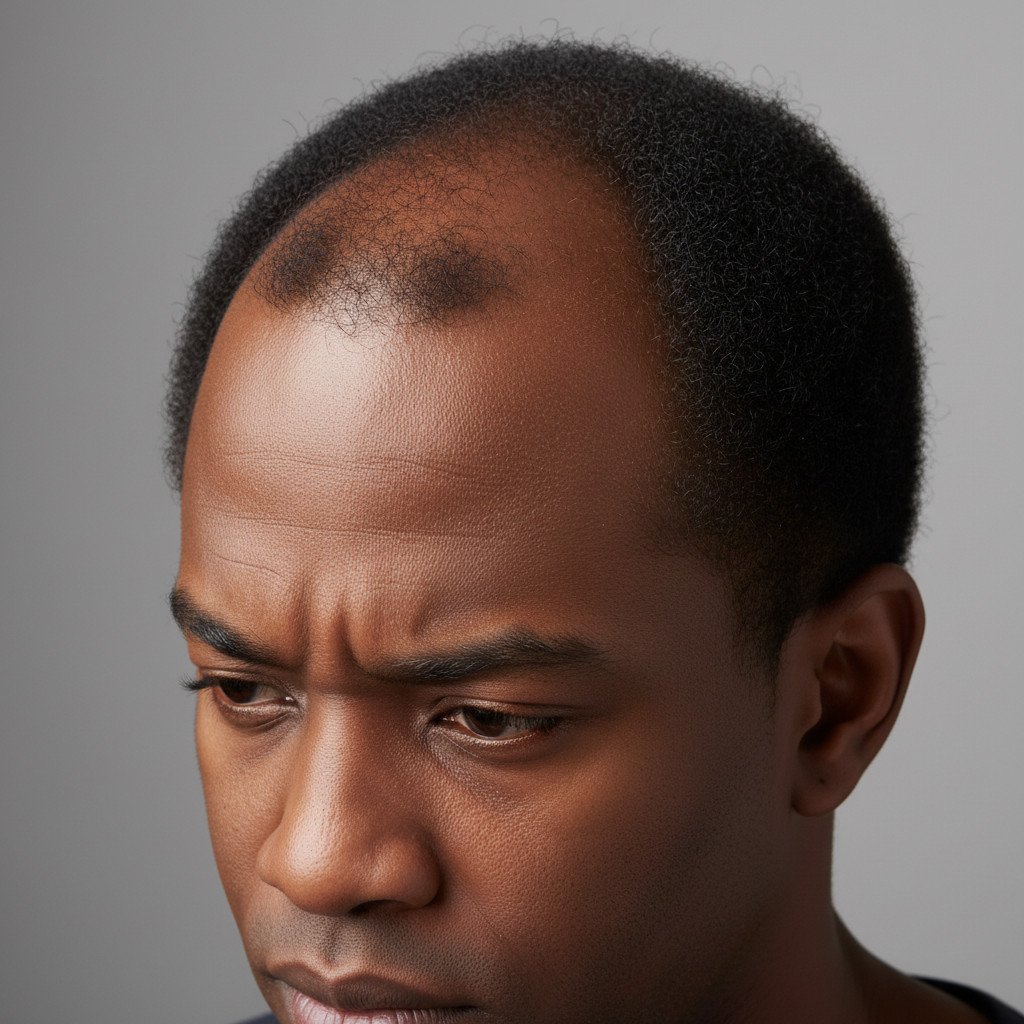
Androgenetic alopecia is the most prevalent form of hair loss in men, characterized by a receding hairline and thinning at the crown. This condition is primarily genetic, passed down through families, and is influenced by male hormones called androgens. Specifically, dihydrotestosterone (DHT), a potent derivative of testosterone, plays a significant role.
DHT binds to receptors in genetically susceptible hair follicles, causing them to shrink and eventually stop producing hair. This miniaturization process leads to shorter, finer, and lighter hairs over time, culminating in complete hair loss in affected areas. The pattern typically begins with a receding hairline, often forming an ‘M’ shape, and thinning at the vertex (crown) of the head. Over time, these areas can expand and merge, leading to extensive baldness.
While genetics set the predisposition, the onset and severity can vary. It can begin as early as the late teens or early twenties, progressing gradually over decades. Early intervention is key for managing androgenetic alopecia, as treatments are generally more effective when initiated before significant follicle miniaturization has occurred. This condition is chronic and progressive, meaning consistent management is required to maintain results.
2. Traction Alopecia
Traction alopecia results from prolonged or repetitive tension on the hair follicles. This type of hair loss is particularly common in Black men due to certain hairstyles that exert constant pulling on the hair. Tight braids, cornrows, dreadlocks, weaves, and even excessively tight ponytails or hair ties can all contribute to this condition.
The continuous pulling damages the hair follicle, leading to inflammation and, eventually, permanent scarring. Initially, you might notice small bumps or redness around the follicles, followed by thinning and hair loss in the areas most affected by tension. The hairline, temples, and nape of the neck are particularly vulnerable, as these areas often bear the brunt of tight styling.
Early stages of traction alopecia are often reversible by simply changing styling habits. However, if the pulling continues for an extended period, the damage to the follicles can become irreversible, resulting in permanent hair loss in the affected areas. It’s crucial to recognize the signs early and modify your grooming routine to prevent permanent damage. Choosing looser styles and avoiding excessive tension are primary preventative measures.
3. Central Centrifugal Cicatricial Alopecia (CCCA)
Central Centrifugal Cicatricial Alopecia (CCCA) is a distinct form of scarring alopecia predominantly observed in individuals of African descent. It is characterized by inflammation and progressive destruction of hair follicles, leading to permanent hair loss and scarring. The condition typically begins at the crown or vertex of the scalp and gradually spreads outwards in a centrifugal pattern.
The exact cause of CCCA is not fully understood, but it is believed to involve a combination of genetic predisposition, hair care practices, and inflammatory responses. Tight hairstyles, chemical relaxers, and excessive heat styling have been implicated as potential triggers or exacerbating factors, though they are not considered the sole cause. Inflammation around the hair follicles leads to their destruction and replacement by scar tissue, preventing new hair growth.
Symptoms often include itching, burning, tenderness, and sometimes pustules or crusting on the scalp. As the condition progresses, the scalp in affected areas may appear smooth, shiny, and devoid of follicular openings due to scarring. Early diagnosis and intervention by a dermatologist are critical for managing CCCA, as treatment aims to reduce inflammation and halt the progression of scarring to preserve remaining hair. Once scarring is established, hair loss is permanent in those areas.
4. Alopecia Areata
Alopecia areata is an autoimmune condition where the body’s immune system mistakenly attacks healthy hair follicles. This leads to sudden, patchy hair loss, typically on the scalp, but it can affect any hair-bearing area of the body. The hallmark of alopecia areata is the appearance of smooth, round, coin-sized patches of hair loss, often without any signs of inflammation or scarring.
The condition can range from small, isolated patches (alopecia areata monolocularis) to complete loss of hair on the scalp (alopecia totalis) or even the entire body (alopecia universalis). The course of alopecia areata is unpredictable; hair can regrow spontaneously, fall out again, or new patches can appear. It affects individuals of all ages, genders, and ethnicities, though its presentation can sometimes be more pronounced or noticeable in individuals with darker hair due to the contrast with the scalp.
While the exact trigger for the immune system attack is unknown, genetic factors and environmental triggers are thought to play a role. Stress, infections, or other autoimmune conditions can sometimes precede an episode. Treatment focuses on suppressing the immune response in the hair follicles to encourage regrowth, but there is no permanent cure. A dermatologist is essential for diagnosis and management.
5. Telogen Effluvium
Telogen effluvium is a temporary form of hair loss characterized by excessive shedding of resting (telogen) hairs. This condition occurs when a significant number of hair follicles prematurely enter the telogen phase due to a physiological stressor. Normally, about 10-15% of hair is in the telogen phase at any given time, but with telogen effluvium, this percentage can increase dramatically, leading to noticeable hair shedding.
Common triggers include severe physical or emotional stress, major surgery, significant illness (like high fever or severe infection), rapid weight loss, nutritional deficiencies (especially iron or zinc), certain medications, and hormonal changes (e.g., thyroid dysfunction). The shedding typically begins 2-4 months after the triggering event and can last for several months. Unlike other forms of hair loss, telogen effluvium usually results in diffuse thinning across the scalp rather than distinct patches or patterns.
The good news is that telogen effluvium is generally reversible once the underlying cause is identified and addressed. Hair follicles are not permanently damaged; they simply enter a prolonged resting phase. Once the body recovers from the stressor, hair growth typically resumes, and the hair density gradually returns to normal. Patience is key, as full recovery can take 6-12 months. A thorough medical history and sometimes blood tests are necessary to identify the trigger.
Your first 30 days (what to do before buying everything)
Before you invest in expensive products or commit to complex routines, take these foundational steps. The first 30 days are about observation, adjustment, and establishing a baseline. This period is crucial for understanding your specific situation and avoiding common pitfalls that can exacerbate hair loss or waste resources. Hasty decisions often lead to ineffective solutions.
1. Document Your Hair Loss
Do this first: Take clear, well-lit photos of your scalp from multiple angles (top, front, sides, crown). Repeat this every 2-4 weeks. This visual record provides objective evidence of progression or improvement, which is far more reliable than memory. Note any changes in shedding, itching, or scalp irritation.
Keep a journal. Record daily observations: how much hair you lose during washing or styling, any scalp sensations, and products used. This detailed log will be invaluable when discussing your concerns with a professional. It helps identify patterns and potential triggers that might otherwise go unnoticed.
2. Review Your Grooming Practices
Evaluate your current hair care routine. Are you using harsh shampoos or styling products? Are you applying excessive heat with blow dryers or flat irons? Tight hairstyles, such as braids, dreadlocks, or cornrows, can cause significant tension on hair follicles, leading to traction alopecia. Even a tight baseball cap worn daily can contribute to friction and stress on the hairline.
Consider making immediate, gentle adjustments. Loosen tight styles. Reduce heat styling. Opt for wider-tooth combs instead of fine-toothed ones, especially when detangling wet hair. Switch to a gentle shampoo and conditioner designed for sensitive scalps or textured hair. These small changes can significantly reduce mechanical stress on your hair and scalp.
3. Assess Your Diet and Lifestyle
Your overall health directly impacts hair health. A balanced diet rich in essential nutrients is fundamental for robust hair growth. Ensure you’re consuming adequate protein, iron, zinc, biotin, and vitamins A, C, D, and E. Deficiencies in these areas can lead to hair thinning and loss.
Stress is another significant factor. Chronic stress can push hair follicles into a resting phase prematurely, leading to increased shedding (telogen effluvium). Implement stress-reduction techniques such as meditation, regular exercise, or sufficient sleep. Hydration is also key; drink plenty of water throughout the day to support overall bodily functions, including hair health.
4. Consult a Professional
After 30 days of observation and gentle adjustments, if hair loss persists or worsens, seek professional advice. A dermatologist, especially one specializing in hair and scalp conditions, can provide an accurate diagnosis. They can differentiate between various types of hair loss and recommend targeted treatments.
Before your appointment, compile your photo log, journal entries, and a list of all products you use. Be prepared to discuss your medical history, diet, and lifestyle. This comprehensive information will help the dermatologist make an informed assessment and create an effective treatment plan tailored to your specific needs.
Daily routine (scalp-focused)
A consistent, scalp-focused daily routine is paramount for managing and potentially reversing hair loss. The health of your hair begins at the root, within the scalp. Neglecting scalp care can undermine even the most advanced hair treatments. This routine emphasizes gentle care, stimulation, and protection, creating an optimal environment for hair growth.
1. Gentle Cleansing (2-3 times per week)
Use a sulfate-free, moisturizing shampoo that cleanses without stripping natural oils. Focus on massaging the shampoo into your scalp with your fingertips, not your nails, to lift dirt, oil, and product buildup. This gentle action stimulates blood flow without causing irritation. Follow with a hydrating conditioner, applying it from mid-shaft to ends, and detangle carefully with a wide-tooth comb while the conditioner is still in.
2. Scalp Massage (Daily)
Incorporate a daily scalp massage. This can be done with your fingertips or a scalp massager. Spend 5-10 minutes gently massaging your entire scalp in circular motions. This practice increases blood circulation to the hair follicles, delivering essential nutrients and oxygen, which are vital for healthy hair growth. It also helps relieve tension and can aid in product absorption.
3. Topical Treatment Application (As directed)
If prescribed by a dermatologist, apply topical treatments such as minoxidil or specific serums directly to the scalp. Follow the instructions precisely regarding dosage and frequency. Ensure your scalp is clean and dry before application. Consistent and correct application is key to seeing results. These treatments often work by stimulating follicles or blocking hormones that contribute to hair loss.
4. Protect Your Hair (Nightly)
Protect your hair while you sleep to minimize friction and moisture loss. Use a silk durag or a silk pillowcase. Cotton absorbs moisture from your hair and creates friction, leading to breakage and frizz. Silk, on the other hand, allows hair to glide smoothly, preserving moisture and reducing mechanical stress. This simple step can make a significant difference in maintaining hair integrity and preventing further damage.
When to see a dermatologist (clear triggers)
While many common hair loss concerns can be managed with lifestyle adjustments and over-the-counter products, certain signs warrant immediate professional medical attention. Delaying a visit to a dermatologist can sometimes lead to irreversible damage or indicate a more serious underlying health issue. Knowing when to seek expert advice is crucial for effective treatment and preserving your hair.
Sudden or Rapid Hair Loss
If you experience a sudden and noticeable increase in hair shedding over a short period, consult a dermatologist. This could manifest as handfuls of hair coming out during washing, brushing, or even just running your hands through your hair. Rapid hair loss can be a symptom of telogen effluvium, alopecia areata, or other acute conditions that require prompt diagnosis and treatment. Do not dismiss this as normal shedding.
Persistent Itching, Burning, or Pain
Scalp discomfort that goes beyond mild dryness or occasional itchiness is a red flag. Persistent itching, a burning sensation, tenderness, or outright pain on your scalp could indicate an inflammatory condition, infection, or a form of scarring alopecia. Conditions like Central Centrifugal Cicatricial Alopecia (CCCA) often present with these symptoms, and early intervention is vital to prevent permanent follicle destruction and scarring.
Scalp Lesions, Rashes, or Oozing
Any unusual skin changes on your scalp, such as new bumps, pustules, open sores, crusting, or areas that are oozing fluid, demand immediate medical evaluation. These symptoms can be indicative of fungal infections (like tinea capitis), bacterial infections, folliculitis, or inflammatory dermatoses. Untreated infections or inflammatory conditions can lead to permanent hair loss and scarring if not addressed promptly and correctly.
Scalp Scarring or Smooth, Shiny Patches
If you notice areas on your scalp that appear smooth, shiny, and completely devoid of hair follicles, this is a strong indicator of scarring alopecia. In these conditions, the hair follicle is permanently destroyed and replaced by scar tissue, meaning hair will not regrow naturally. Early diagnosis and treatment are critical to halt the progression of scarring and preserve any remaining hair follicles in unaffected areas. Once scarring is established, hair loss is permanent in that specific location.
Hair Loss Accompanied by Other Symptoms
Hair loss that occurs alongside other systemic symptoms can signal an underlying medical condition. These symptoms might include unexplained weight loss or gain, fatigue, changes in skin or nails, joint pain, muscle weakness, or irregular menstrual cycles (in female partners, but important to be aware of). Conditions like thyroid disorders, autoimmune diseases, nutritional deficiencies, or hormonal imbalances can all manifest with hair loss as a symptom. A comprehensive medical workup is necessary in such cases to identify and treat the primary condition.
Lack of Improvement with Home Care
If you’ve diligently followed a consistent, gentle hair care routine, made lifestyle adjustments, and used over-the-counter products for several months without any noticeable improvement in your hair loss, it’s time to see a professional. Self-treating without a clear diagnosis can delay effective treatment and potentially worsen the condition. A dermatologist can offer prescription-strength treatments, advanced diagnostic tests, and personalized advice that goes beyond general recommendations.
Concern About Hair Loss Progression
Even if your hair loss doesn’t present with acute symptoms, but you are increasingly concerned about its progression, a dermatologist visit is warranted. Early intervention for conditions like androgenetic alopecia can significantly impact the long-term outcome. A professional can provide peace of mind, an accurate diagnosis, and a proactive management plan tailored to your specific situation and concerns. Do not hesitate to seek expert opinion if your hair loss is causing you distress.

Table: Sign you notice → possible cause → best next step
| Sign You Notice | Possible Cause | Best Next Step |
|---|---|---|
| Receding hairline, thinning crown | Androgenetic Alopecia (Male Pattern Baldness) | Consult a dermatologist for diagnosis and treatment options (e.g., minoxidil, finasteride). |
| Hair loss along hairline, temples, or nape due to tight styles | Traction Alopecia | Immediately loosen tight hairstyles; switch to protective styles; consult a dermatologist if loss is significant. |
| Itching, burning, tenderness, smooth shiny patches on crown spreading outwards | Central Centrifugal Cicatricial Alopecia (CCCA) | Urgent: See a dermatologist specializing in hair loss for immediate diagnosis and anti-inflammatory treatment. |
| Sudden, round, smooth patches of hair loss | Alopecia Areata | Consult a dermatologist for diagnosis and treatment to stimulate regrowth. |
| Increased shedding (handfuls of hair) 2-4 months after stressful event | Telogen Effluvium | Identify and address the underlying stressor; ensure balanced nutrition; consult a doctor if shedding persists. |
| Excessive dandruff, redness, greasy scales, itching | Seborrheic Dermatitis | Use medicated shampoos (e.g., ketoconazole, selenium sulfide); maintain good scalp hygiene; consult a dermatologist if severe. |
| Hair breakage, dullness, lack of growth | Nutritional Deficiencies (e.g., iron, zinc, protein) | Review diet; consider blood tests with your doctor; take supplements under medical guidance. |
| Scalp bumps, pustules, soreness, crusting | Folliculitis, Fungal/Bacterial Infection | See a dermatologist for diagnosis and appropriate antimicrobial or anti-inflammatory treatment. |
| General thinning, brittle hair, fatigue, weight changes | Thyroid Issues, Autoimmune Disease, Systemic Illness | Consult your primary care physician for a full medical workup and blood tests. |
Frequently Asked Questions
What are the primary causes of hair loss in Black men?
Hair loss in Black men is often multifactorial. Common causes include androgenetic alopecia (genetic male pattern baldness), traction alopecia from tight hairstyles, and Central Centrifugal Cicatricial Alopecia (CCCA), which is a scarring alopecia. Other factors like nutritional deficiencies, stress, and certain medical conditions can also contribute. Understanding the specific cause is key to effective treatment.
Can diet and lifestyle changes help with hair loss?
Absolutely. A balanced diet rich in protein, iron, zinc, and vitamins is crucial for hair health. Chronic stress can exacerbate hair loss, so stress management techniques are beneficial. Adequate sleep and hydration also play a role. While diet and lifestyle alone may not reverse genetic hair loss, they can significantly improve overall hair and scalp health and support treatment outcomes.
Are there specific grooming practices Black men should avoid to prevent hair loss?
Yes, certain grooming practices can contribute to hair loss, particularly traction alopecia. Avoid excessively tight hairstyles like braids, cornrows, or dreadlocks that pull on the hair follicles. Limit the use of harsh chemical relaxers, perms, and excessive heat styling. Opt for looser styles, use wide-tooth combs, and handle your hair gently, especially when wet, to minimize breakage and follicle stress.
When should I consider seeing a dermatologist for hair loss?
You should see a dermatologist if you experience sudden or rapid hair loss, persistent scalp itching, burning, or pain, or notice any scalp lesions, rashes, or oozing. If you observe smooth, shiny patches indicating scarring, or if your hair loss is accompanied by other systemic symptoms, professional evaluation is crucial. If home remedies and gentle care haven’t yielded results after a few months, it’s time for expert advice.
What are the most effective treatments for male pattern baldness?
For male pattern baldness (androgenetic alopecia), the most effective treatments are typically minoxidil (topical) and finasteride (oral). Minoxidil helps stimulate hair growth and slow hair loss, while finasteride works by blocking the production of DHT, the hormone responsible for follicle miniaturization. These treatments are most effective when started early and used consistently under medical supervision. Hair transplant surgery is also an option for suitable candidates.
How can I protect my hair while I sleep?
Protecting your hair at night is a simple yet effective step to prevent friction and moisture loss. Sleeping on a silk or satin pillowcase is highly recommended as these materials cause less friction than cotton, reducing breakage and frizz. Alternatively, wearing a silk or satin durag or bonnet can provide similar protection, keeping your hair moisturized and minimizing tangles. This helps maintain hair integrity and promotes healthier growth.
Is hair loss always permanent?
No, hair loss is not always permanent. The reversibility depends on the underlying cause. Conditions like telogen effluvium, which is stress-induced shedding, are usually temporary once the trigger is removed. Traction alopecia can be reversible if caught early and styling habits are changed. However, scarring alopecias like CCCA, once scarring occurs, result in permanent hair loss in affected areas. Androgenetic alopecia is progressive but can be managed with ongoing treatment to slow progression and stimulate regrowth.
Final Thoughts
Addressing hair loss in Black men requires a proactive, informed approach. Understanding the specific type of hair loss you’re experiencing is the cornerstone of effective treatment. From genetic predispositions to styling practices and underlying health conditions, each factor plays a role in the health and density of your hair. Do not underestimate the power of early intervention and consistent care.
By adopting a scalp-focused routine, making conscious lifestyle choices, and knowing when to seek professional help, you empower yourself to manage and potentially reverse hair loss. Remember, your hair is an extension of your overall health and identity. Invest in its care with the same dedication you apply to other aspects of your well-being. For further reading on related topics, consider exploring Hair & scalp health for Black men, Receding hairline in Black men, and Bald head care for Black men.
Frequently Asked Questions
What are the primary causes of hair loss in Black men?
Hair loss in Black men is often multifactorial. Common causes include androgenetic alopecia (genetic male pattern baldness), traction alopecia from tight hairstyles, and Central Centrifugal Cicatricial Alopecia (CCCA), which is a scarring alopecia. Other factors like nutritional deficiencies, stress, and certain medical conditions can also contribute. Understanding the specific cause is key to effective treatment.
Can diet and lifestyle changes help with hair loss?
Absolutely. A balanced diet rich in protein, iron, zinc, and vitamins is crucial for hair health. Chronic stress can exacerbate hair loss, so stress management techniques are beneficial. Adequate sleep and hydration also play a role. While diet and lifestyle alone may not reverse genetic hair loss, they can significantly improve overall hair and scalp health and support treatment outcomes.
Are there specific grooming practices Black men should avoid to prevent hair loss?
Yes, certain grooming practices can contribute to hair loss, particularly traction alopecia. Avoid excessively tight hairstyles like braids, cornrows, or dreadlocks that pull on the hair follicles. Limit the use of harsh chemical relaxers, perms, and excessive heat styling. Opt for looser styles, use wide-tooth combs, and handle your hair gently, especially when wet, to minimize breakage and follicle stress.
When should I consider seeing a dermatologist for hair loss?
You should see a dermatologist if you experience sudden or rapid hair loss, persistent scalp itching, burning, or pain, or notice any scalp lesions, rashes, or oozing. If you observe smooth, shiny patches indicating scarring, or if your hair loss is accompanied by other systemic symptoms, professional evaluation is crucial. If home remedies and gentle care haven’t yielded results after a few months, it’s time for expert advice.
What are the most effective treatments for male pattern baldness?
For male pattern baldness (androgenetic alopecia), the most effective treatments are typically minoxidil (topical) and finasteride (oral). Minoxidil helps stimulate hair growth and slow hair loss, while finasteride works by blocking the production of DHT, the hormone responsible for follicle miniaturization. These treatments are most effective when started early and used consistently under medical supervision. Hair transplant surgery is also an option for suitable candidates.
How can I protect my hair while I sleep?
Protecting your hair at night is a simple yet effective step to prevent friction and moisture loss. Sleeping on a silk or satin pillowcase is highly recommended as these materials cause less friction than cotton, reducing breakage and frizz. Alternatively, wearing a silk or satin durag or bonnet can provide similar protection, keeping your hair moisturized and minimizing tangles. This helps maintain hair integrity and promotes healthier growth.
Is hair loss always permanent?
No, hair loss is not always permanent. The reversibility depends on the underlying cause. Conditions like telogen effluvium, which is stress-induced shedding, are usually temporary once the trigger is removed. Traction alopecia can be reversible if caught early and styling habits are changed. However, scarring alopecias like CCCA, once scarring occurs, result in permanent hair loss in affected areas. Androgenetic alopecia is progressive but can be managed with ongoing treatment to slow progression and stimulate regrowth.