
The Science of Scalp Health: Understanding Your Hair’s Needs
For Black men, the question of how often to wash hair transcends simple hygiene; it’s a critical component of maintaining optimal Hair & scalp health for Black men. Our hair textures and scalp physiology present unique considerations that demand a tailored approach. Over-washing can strip essential moisture, leading to dryness and breakage, while under-washing can result in product buildup, clogged follicles, and scalp issues. Finding the right balance is paramount for a healthy, vibrant mane.
This guide cuts through the noise, offering practical, evidence-based strategies to determine your ideal wash frequency. We’ll explore the factors influencing your hair’s needs, from hair type and lifestyle to common scalp concerns. Understanding these elements is the first step toward a consistent routine that supports both hair strength and scalp vitality. It’s about informed choices, not just habit.
Your hair and scalp are dynamic systems. They respond to environmental factors, product choices, and internal health. A routine that works today might need adjustment tomorrow. This comprehensive approach ensures you are equipped with the knowledge to adapt and thrive.
Why ‘Daily’ Doesn’t Always Apply to Black Hair
The conventional wisdom of daily hair washing, often promoted for other hair types, can be detrimental to Black hair. Our hair, characterized by its unique curl patterns and natural oils, requires a different consideration. The natural oils produced by the scalp, known as sebum, travel down the hair shaft more slowly due to the coiled structure. This means our hair tends to be naturally drier and more susceptible to moisture loss.
Stripping these vital oils daily with harsh shampoos can lead to chronic dryness, frizz, and increased breakage. It’s not about neglecting hygiene; it’s about respecting the biological realities of our hair. A less frequent, more intentional washing schedule helps preserve natural moisture and maintain the integrity of the hair strand. This approach fosters an environment where hair can truly flourish.
Understanding this fundamental difference is crucial for developing an effective grooming regimen. It empowers you to make choices that genuinely benefit your hair, rather than following generic advice that may do more harm than good. Your hair deserves a routine designed for its specific needs.
Key Factors Influencing Wash Frequency
Determining your optimal wash frequency is not a one-size-fits-all equation. Several key factors play a significant role in how often your hair needs cleansing. These include your specific hair type, your daily activities, the products you use, and any underlying scalp conditions. Each of these elements contributes to the overall health and cleanliness of your hair and scalp.
Consider your environment and lifestyle. Do you work in a dusty environment? Are you frequently exposed to pollutants? These external factors can necessitate more frequent washing. Conversely, a more sedentary lifestyle might allow for longer intervals between washes. It’s about a holistic assessment.
Paying close attention to these variables allows you to fine-tune your routine. This adaptability is key to maintaining consistent hair and scalp health. Don’t be afraid to experiment and observe how your hair responds to different schedules.
Hair Type and Texture
The natural characteristics of your hair are perhaps the most influential factor in determining wash frequency. Black men’s hair typically ranges from wavy to tightly coiled, each with its own specific needs. Tightly coiled hair, for instance, tends to be drier due to the slower distribution of natural oils from the scalp down the hair shaft.
Coarse, Tightly Coiled Hair: This hair type benefits from less frequent washing, typically once every 7-14 days. The goal is to retain as much natural moisture as possible. Over-washing can lead to extreme dryness and make the hair more brittle. Focus on gentle cleansing and deep conditioning.
Medium to Loose Curls/Waves: For hair with a looser curl pattern, washing every 3-7 days might be appropriate. While still prone to dryness, these textures can accumulate product buildup more readily. Balance cleansing with moisturizing to prevent both dryness and residue.
Fine Hair: Though less common, some Black men have finer hair strands. This type can become greasy more quickly and might benefit from washing every 2-4 days. Use lightweight products to avoid weighing it down. The key is to observe your hair’s natural oil production and adjust accordingly.
Understanding your specific hair type is the foundation of an effective washing schedule. It allows you to anticipate its needs and provide appropriate care. This personalized approach yields the best results for hair health and appearance.
Lifestyle and Activity Level
Your daily routine and physical activity significantly impact how quickly your hair and scalp become dirty or oily. An active lifestyle, especially one involving regular workouts, will naturally require more frequent washing than a sedentary one. Sweat, dirt, and environmental pollutants all contribute to buildup.
High Activity (Daily Workouts, Manual Labor): If you sweat heavily or are exposed to dust and grime regularly, you might need to rinse your hair more often, perhaps even daily with water or a co-wash. A full shampoo might still be limited to 2-3 times a week to avoid stripping. For those who hit the gym frequently, consider our guide on gym grooming for Black men to keep your hair fresh without over-washing.
Moderate Activity (Occasional Workouts, Office Job): For those with a more balanced routine, washing every 5-7 days often suffices. You’ll still need to cleanse away moderate buildup, but your scalp won’t be producing excessive sweat or oil. This allows for a consistent, manageable schedule.
Low Activity (Sedentary Lifestyle): If your activity level is minimal, you might be able to extend your wash cycle to 10-14 days. Your hair and scalp will accumulate less external dirt and sweat, allowing natural oils to provide maximum conditioning. Always monitor for signs of buildup or discomfort.
Adjusting your wash frequency to your lifestyle ensures you’re cleansing when necessary without over-drying. It’s about responding to the demands you place on your hair and scalp. Listen to your body and your hair.
Product Usage and Buildup
The types and quantities of styling products you use directly influence how often your hair needs to be washed. Heavy creams, pomades, gels, and waxes can accumulate on the hair and scalp, leading to dullness, flakiness, and even clogged follicles. This buildup can impede hair growth and irritate the scalp.
Heavy Product Users: If you regularly use thick or oil-based products, you’ll likely need to wash more frequently, perhaps every 3-5 days. A clarifying shampoo may be necessary periodically to remove stubborn residue. This ensures your scalp can breathe and your hair remains receptive to moisture.
Light Product Users: Those who use minimal or water-based products can often extend their wash cycles. These products tend to rinse out more easily and leave less residue. A wash every 7-10 days might be sufficient, allowing natural oils to thrive.
No Product Users: If you use no styling products at all, your wash frequency will primarily depend on your hair type and activity level. You’ll mostly be cleansing away natural oils, sweat, and environmental dirt. This can often mean longer intervals between washes.
Be mindful of how products feel on your hair and scalp. If your hair feels heavy, greasy, or looks dull, it’s a clear sign of buildup. Regular cleansing is essential to prevent these issues and maintain a healthy environment for your hair. The right product choice can also reduce the need for frequent washing.
Scalp Conditions
Existing scalp conditions significantly dictate your washing frequency. Issues like dandruff, dry scalp, or excessive oiliness require specific approaches to cleansing. Neglecting these conditions can exacerbate symptoms and lead to discomfort or more severe problems.
Dandruff: If you’re dealing with dandruff, you might need to wash more frequently with a specialized anti-dandruff shampoo, perhaps 2-3 times a week initially. The active ingredients need regular contact with the scalp to be effective. As symptoms improve, you can gradually reduce frequency. It’s crucial to distinguish between dandruff and dry scalp, as the treatments differ. For clarity, read our guide on dandruff vs. dry scalp for Black men.
Dry Scalp: A dry scalp often benefits from less frequent washing to preserve natural oils. Washing once every 7-14 days with a moisturizing shampoo is often recommended. Focus on hydrating treatments and leave-in conditioners. Over-washing will only worsen dryness and irritation.
Oily Scalp: While less common for Black hair, an oily scalp may require more frequent washing, perhaps every 3-5 days, with a balancing shampoo. The goal is to control sebum production without over-stripping, which can paradoxically lead to more oil. Avoid heavy conditioners near the scalp.
If you experience persistent itching, redness, sores, or oozing, consult a dermatologist. These symptoms could indicate a more serious underlying condition requiring medical attention. Self-treating without proper diagnosis can prolong discomfort.
The Ideal Wash Day Routine: A Step-by-Step Guide
A well-executed wash day is more than just shampooing; it’s a comprehensive process designed to cleanse, condition, and protect your hair and scalp. For Black men, this routine is crucial for maintaining moisture, preventing breakage, and fostering healthy hair growth. Each step plays a vital role in the overall health of your hair.
Consistency is key. Establishing a predictable wash day routine helps your hair and scalp adapt and thrive. It also allows you to monitor how your hair responds to different products and techniques. This structured approach removes guesswork and promotes optimal results.
Remember, this is a template. Adjust the frequency and specific products based on your individual needs, as discussed in the previous section. The goal is to create a sustainable routine that works for you.
Pre-Poo Treatment (Optional but Recommended)
A pre-poo treatment, applied before shampooing, acts as a protective barrier, preventing the shampoo from stripping too much natural oil from your hair. This step is particularly beneficial for dry or brittle hair, helping to maintain moisture levels during the cleansing process. It’s an investment in your hair’s long-term health.
How to: Apply a lightweight oil (like jojoba, argan, or coconut oil) or a specialized pre-poo conditioner to dry or slightly damp hair, focusing on the ends and mid-shaft. Gently massage it into your scalp as well. Leave it on for at least 15-30 minutes, or even overnight for an intensive treatment. This allows the oils to penetrate and protect the hair cuticle.
This preparatory step can significantly reduce post-wash dryness and tangles. It makes the entire wash process smoother and more beneficial. Consider it an essential primer for your hair.
Gentle Cleansing: Shampooing Smart
The shampooing step is critical for removing dirt, product buildup, and excess oil from your scalp and hair. However, for Black men, it’s essential to use a gentle approach to avoid stripping vital moisture. The choice of shampoo and the technique you use are paramount.
Choose the Right Shampoo: Opt for a sulfate-free, moisturizing shampoo. Sulfates can be harsh and excessively drying for our hair type. If you have specific scalp concerns like dandruff, use a targeted anti-dandruff shampoo. For general cleansing, a hydrating formula is ideal. For those seeking the best options, consult our guide on best shampoo for Black men.
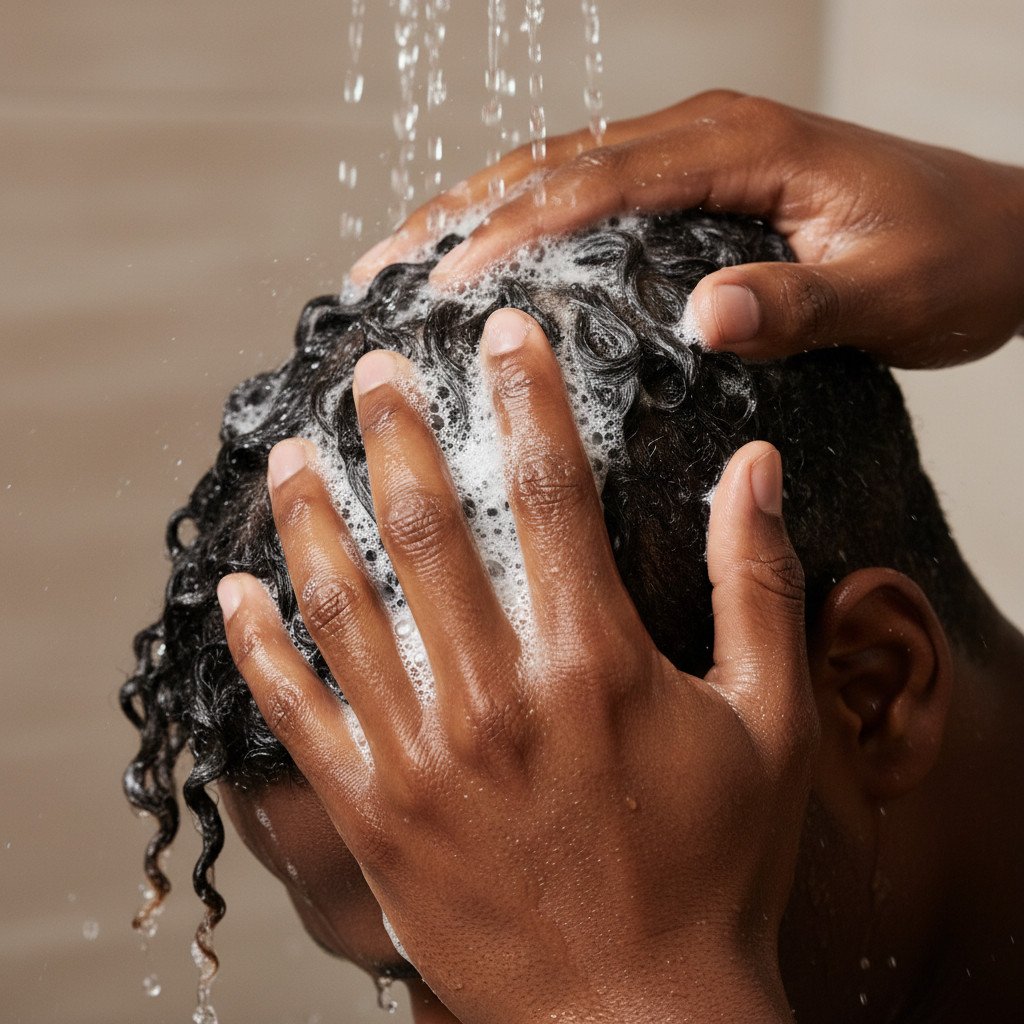
Technique: Wet hair thoroughly with lukewarm water. Apply a small amount of shampoo to your scalp and gently massage with your fingertips, not your nails. Focus on the scalp, as this is where most of the buildup occurs. Allow the lather to run down the hair strands; there’s no need to aggressively scrub the ends. Rinse thoroughly until the water runs clear. Do not use hot water, as it can further strip oils and open cuticles excessively.
If your hair feels particularly dirty or has heavy product buildup, a second, lighter shampoo application might be necessary. Always follow with a conditioner to replenish moisture. This careful cleansing prevents damage and prepares your hair for the next steps.
Deep Conditioning: The Moisture Imperative
Deep conditioning is arguably the most crucial step for Black men’s hair, providing intense hydration and nourishment that regular conditioners cannot match. This step helps to restore moisture, improve elasticity, and strengthen the hair shaft, reducing breakage. It’s a non-negotiable for healthy hair.
How to: After shampooing, gently squeeze excess water from your hair. Apply a generous amount of deep conditioner, ensuring even distribution from root to tip. For enhanced penetration, cover your hair with a plastic cap and apply indirect heat (e.g., from a hooded dryer or a warm towel) for 15-30 minutes. The heat helps open the hair cuticles, allowing the conditioner to penetrate deeper. Rinse thoroughly with cool water to seal the cuticles and lock in moisture.
Frequency: Deep condition at least once a week, or every time you shampoo. If your hair is particularly dry or damaged, you might benefit from more frequent deep conditioning sessions. This consistent moisture infusion is vital for maintaining softness and manageability.
Leave-in Conditioner and Moisturizer
After cleansing and conditioning, a leave-in conditioner and moisturizer provide ongoing hydration and protection. These products help to detangle, reduce frizz, and keep your hair soft and supple until your next wash. They form the foundation of your daily moisture regimen.
Leave-in Conditioner: While hair is still damp, apply a lightweight leave-in conditioner. This helps to seal in moisture from the deep conditioner and provides an initial layer of protection. It also makes detangling easier, reducing the risk of breakage. Distribute evenly throughout your hair.

Moisturizer/Hair Cream: Follow with a rich, creamy moisturizer or hair lotion. Look for products containing natural butters (shea, mango) and oils (jojoba, argan). Apply in sections, ensuring each strand receives attention. This step is crucial for sealing in moisture and providing lasting hydration.
Styling Oil (Optional): If your hair is particularly dry or you desire extra shine, you can follow with a light sealing oil. This oil helps to lock in the moisture from the leave-in and cream, creating a protective barrier. Apply sparingly to avoid a greasy look. This layering approach, often called the LOC (Liquid-Oil-Cream) or LCO (Liquid-Cream-Oil) method, is highly effective for Black hair.
Drying and Styling
How you dry and style your hair significantly impacts its health and appearance. Aggressive drying or heat styling can cause damage and negate the benefits of your wash day routine. Gentle techniques are always preferred.
Drying: Avoid rubbing your hair vigorously with a regular cotton towel, as this can cause friction, frizz, and breakage. Instead, gently blot excess water with a microfiber towel or an old cotton t-shirt. These materials are much gentler on the hair cuticle. Air drying is often the best option for Black hair. If you must use a blow dryer, use it on a cool or low-heat setting with a diffuser attachment to minimize heat damage.
Detangling: Always detangle your hair when it’s damp and coated with conditioner or leave-in. Use your fingers first to gently work through large knots, then follow with a wide-tooth comb or a detangling brush, starting from the ends and working your way up to the roots. Never detangle dry hair, as this is a primary cause of breakage.
Styling: Once your hair is dry or mostly dry, you can proceed with your desired style. Whether it’s a natural afro, twists, braids, or waves, ensure your hair is adequately moisturized before styling. This helps prevent frizz and keeps your style looking fresh. This careful approach to drying and styling preserves the integrity of your hair.
Tailoring Your Wash Schedule: Specific Scenarios
The general guidelines for washing frequency are a starting point. Your specific hair characteristics, lifestyle, and styling choices will require adjustments. This section delves into various scenarios, providing tailored advice to help you fine-tune your wash schedule. Understanding these nuances ensures your routine is truly optimized for your hair’s unique needs.
Consider this an adaptive framework. Your hair’s needs can change with the seasons, new products, or even stress levels. Being attuned to these shifts allows for proactive adjustments, preventing potential issues before they escalate. It’s about responsive care.
This personalized approach is what elevates good grooming to great grooming. It moves beyond generic advice to a truly bespoke regimen. Take the time to observe and understand your hair’s signals.
For Dry or Brittle Hair
If your hair tends to be dry, brittle, or prone to breakage, your wash frequency should prioritize moisture retention above all else. Over-washing will exacerbate these issues, stripping the hair of its already limited natural oils. The goal is to cleanse effectively without dehydrating.
Frequency: Wash every 7-14 days. Some individuals with extremely dry hair might even extend this to every 3 weeks, provided their scalp remains healthy and free of buildup. The longer intervals allow natural sebum to adequately coat and protect the hair strands.
Product Focus: Use an ultra-moisturizing, sulfate-free shampoo. Follow with a rich, hydrating deep conditioner, potentially leaving it on for longer periods (30+ minutes) with heat. Incorporate a leave-in conditioner and a heavy cream or butter daily to maintain moisture between washes. Consider a pre-poo treatment with nourishing oils before each wash. Avoid products with drying alcohols.
Technique: Be extra gentle during washing and detangling. Use cool water for rinsing to help seal the cuticle and retain moisture. Minimize heat styling. This careful, moisture-centric approach is vital for restoring and maintaining the health of dry, brittle hair.
For Oily Scalp or Excessive Buildup
While less common for Black hair, some individuals experience an oily scalp or significant product buildup. This can lead to a greasy appearance, clogged pores, and potential scalp irritation. In these cases, a slightly more frequent wash schedule is necessary, but still with caution.
Frequency: Wash every 3-7 days. The exact frequency will depend on the severity of oiliness or buildup. The aim is to cleanse away excess sebum and residue without triggering a rebound effect where the scalp produces even more oil due to over-stripping.
Product Focus: Use a balancing or clarifying shampoo once every 2-4 weeks to remove stubborn buildup. For regular washes, opt for a gentle, sulfate-free shampoo that cleanses without being overly harsh. Follow with a lightweight conditioner, applied primarily to the hair strands, avoiding the scalp if it’s very oily. Avoid heavy creams and oils directly on the scalp; focus them on the hair ends. A clarifying shampoo can be a powerful tool here.
Technique: Focus shampoo application on the scalp, massaging gently to lift dirt and oil. Ensure thorough rinsing. If using a clarifying shampoo, follow immediately with a deep conditioner to replenish moisture to the hair strands. Monitor your scalp’s response; if it becomes too dry or irritated, reduce frequency or switch to a milder shampoo. This balanced approach manages oiliness effectively.
For Active Lifestyles and Athletes
Regular physical activity, especially workouts that induce heavy sweating, presents a unique challenge for hair and scalp health. Sweat, combined with dirt and bacteria, can lead to odor, itching, and clogged follicles. However, frequent shampooing can be too drying.
Frequency: This is where flexibility is key. You might need to cleanse your hair more frequently than someone with a sedentary lifestyle. A full shampoo every 5-7 days might be supplemented with co-washing or water rinses in between. For further insights, refer to our guide on gym grooming for Black men.
Post-Workout Rinse/Co-wash: After a heavy workout, rinse your hair thoroughly with lukewarm water to remove sweat and surface dirt. If your hair feels particularly grimy, use a co-wash (conditioner-only wash) or a very gentle, sulfate-free shampoo. This cleanses without stripping. Apply a leave-in conditioner afterward to rehydrate.
Product Focus: Keep a gentle, moisturizing shampoo and a hydrating conditioner on hand. Consider a dry shampoo for scalp refreshment if you’re between washes and need a quick fix, though these should not replace actual cleansing. Focus on products that replenish moisture lost through sweat.
Technique: When rinsing, focus on massaging the scalp to dislodge sweat and buildup. Ensure your hair is completely dry before styling or tying it up to prevent bacterial growth. This adaptive strategy keeps your hair fresh and healthy despite an active routine.
For Protective Styles (Braids, Twists, Locs)
Protective styles are excellent for retaining length and minimizing manipulation, but they still require attention to scalp hygiene. Neglecting to cleanse can lead to buildup, odor, and scalp issues. The challenge is to clean the scalp without disturbing the style.
Frequency: Wash every 1-3 weeks, depending on the style’s duration and your scalp’s needs. Longer intervals are possible if your scalp remains comfortable and free of irritation. However, do not neglect cleansing for too long.
Product Focus: Use a diluted, clarifying or moisturizing shampoo applied directly to the scalp with an applicator bottle. This allows you to target the scalp without saturating the entire style. Follow with a lightweight, rinse-out conditioner, again focusing on the scalp and exposed hair. A leave-in spray or light oil can be used daily to moisturize the scalp and hair. Avoid heavy creams that can cause buildup within the style.
Technique: Gently massage the diluted shampoo into your scalp, using your fingertips. Rinse thoroughly, ensuring no residue is left behind. Squeeze excess water from the braids/twists and allow them to air dry completely to prevent mildew. If using a blow dryer, use a cool setting. For locs, ensure they are fully dry to prevent internal mildew. This careful approach maintains scalp health while preserving your protective style.
For Hair Loss Concerns
If you are experiencing hair thinning or loss, your wash frequency and product choices become even more critical. While washing itself doesn’t cause hair loss, an unhealthy scalp environment can exacerbate it. The goal is to maintain a clean, balanced scalp that supports healthy growth.
Frequency: Wash every 5-7 days, or as advised by a professional. The aim is to keep the scalp clean and free of buildup that can clog follicles, but not so frequently that it causes irritation or excessive dryness. A balanced approach is crucial.
Product Focus: Use a gentle, sulfate-free shampoo. Some individuals may benefit from shampoos containing ingredients like ketoconazole (if prescribed for fungal issues) or minoxidil (for specific types of hair loss). Avoid harsh chemicals, heavy oils, and products that leave significant residue. Follow with a lightweight conditioner. Consider scalp treatments or serums designed to promote hair growth, applied to a clean scalp.
Technique: Be extremely gentle during washing and styling to minimize tension and pulling, which can worsen hair loss. Use lukewarm water. If you notice sudden, patchy hair loss, severe itching, redness, or scalp sores, consult a dermatologist immediately. These symptoms require professional diagnosis and treatment. Your wash routine should support, not hinder, any treatment plan.
The Role of Water Temperature and Type
The temperature of the water you use and even its mineral content can significantly impact your hair and scalp health. These seemingly minor details play a crucial role in how effectively your hair is cleansed and how well it retains moisture. Understanding these factors allows for a more refined wash day approach.
Ignoring water quality can undermine even the best product choices. It’s an often-overlooked aspect of hair care that can make a substantial difference. Pay attention to how your hair feels after washing and consider these adjustments.
This holistic view ensures every element of your wash routine contributes positively to your hair’s vitality. Don’t underestimate the power of water.
Lukewarm Water for Cleansing
When washing your hair, lukewarm water is your best ally. It’s effective enough to open the hair cuticles slightly, allowing shampoo to cleanse thoroughly and conditioner to penetrate. However, it’s not so hot that it strips essential oils or causes excessive dryness.
Benefits: Lukewarm water helps to dissolve product buildup and dirt without being overly harsh on the scalp. It also allows for optimal absorption of conditioning treatments. This balanced temperature promotes a healthy cleansing environment.
Avoid Hot Water: Very hot water can be detrimental. It strips the scalp of its natural oils, leading to dryness and potential irritation. It also opens the hair cuticle excessively, making hair more prone to frizz and damage. Over time, this can weaken the hair shaft and contribute to breakage. Always opt for lukewarm water for the shampooing phase.
This simple adjustment can significantly improve the efficacy of your wash routine and the overall health of your hair. It’s a foundational principle of gentle hair care.
Cool Water for Rinsing
After conditioning, rinsing with cool water is a critical step for sealing the hair cuticle. This helps to lock in moisture, enhance shine, and reduce frizz. It’s the perfect finishing touch to your wash day routine, providing a protective layer.
Benefits: Cool water helps to close the hair cuticle, which smooths the hair shaft and makes it appear shinier. By sealing the cuticle, it also helps to trap moisture inside the hair, keeping it hydrated for longer. This reduces frizz and improves overall hair manageability. It’s a simple, yet highly effective technique.
Technique: After thoroughly rinsing out your conditioner with lukewarm water, switch to cool water for the final rinse. Allow the cool water to run over your hair for about 30 seconds to a minute. You’ll notice an immediate difference in how your hair feels—smoother and more resilient.
Incorporating this cool water rinse is a small change with significant benefits for the health and appearance of your hair. It’s an easy way to boost moisture retention and shine.
Hard Water vs. Soft Water
The mineral content of your tap water can impact your hair’s health. Hard water, which contains high levels of minerals like calcium and magnesium, can leave a residue on your hair and scalp, leading to dullness, dryness, and buildup. Soft water, with lower mineral content, is generally better for hair.
Hard Water Issues: Mineral buildup from hard water can make hair feel rough, look dull, and be difficult to manage. It can also prevent shampoos and conditioners from working effectively. Over time, hard water can contribute to breakage and scalp irritation. You might notice soap scum in your shower or a film on your skin if you have hard water.
Solutions for Hard Water:
- Shower Filter: Installing a shower filter can significantly reduce the mineral content in your water, making it softer and gentler on your hair and skin. This is a long-term solution that benefits your entire grooming routine.
- Clarifying Shampoo: Use a clarifying shampoo once every 2-4 weeks to remove mineral buildup. Be sure to follow with a deep conditioner to replenish moisture.
- Apple Cider Vinegar Rinse: A diluted apple cider vinegar rinse (1 part ACV to 3-4 parts water) can help to remove mineral residue and restore your hair’s pH balance. Use this sparingly, perhaps once a month, after shampooing and before conditioning.
If you suspect you have hard water, addressing this issue can dramatically improve your hair’s response to your wash routine. It’s an investment in the foundational quality of your hair care.
Recognizing Your Hair’s Signals: When to Wash
Your hair and scalp communicate their needs through various signs. Learning to interpret these signals is crucial for adjusting your wash frequency effectively. Relying solely on a calendar can lead to either over-washing or under-washing, both of which can compromise hair health. It’s about intuitive, responsive care.
Becoming attuned to these indicators empowers you to make informed decisions. This personalized approach ensures your hair receives exactly what it needs, precisely when it needs it. Trust your observations more than rigid schedules.
This section will guide you through the common signs that indicate it’s time for a wash, or conversely, that you might be washing too often. Your hair will tell you what to do.
Signs It’s Time to Wash
Several indicators suggest your hair and scalp are ready for a cleanse. Ignoring these signs can lead to discomfort, irritation, and potential hair issues. Pay close attention to both visual cues and how your scalp feels.
- Itchy Scalp: Persistent itching is a primary sign of product buildup, dirt, or even bacterial growth on the scalp. A good wash can alleviate this discomfort.
- Visible Buildup: If you see flakes, residue from styling products, or a dull film on your hair strands or scalp, it’s time to cleanse. This buildup can clog follicles and prevent moisture from penetrating.
- Greasy or Oily Hair/Scalp: While Black hair is generally drier, some individuals or specific areas (e.g., hairline) can become oily. If your hair feels heavy, stringy, or looks excessively shiny from oil, a wash is needed.
- Dullness and Lack of Shine: Clean hair reflects light better. If your hair looks lifeless and lacks its usual luster, it might be coated with dirt or product, signaling a need for cleansing.
- Unpleasant Odor: Sweat, environmental pollutants, and product buildup can lead to an unpleasant smell. A thorough wash will refresh your hair and scalp.
- Loss of Curl Definition: If your natural curl pattern appears limp, stretched out, or undefined, it could be due to buildup weighing it down. Cleansing can restore its bounce and shape.
Responding promptly to these signals helps maintain a healthy scalp environment and vibrant hair. Don’t wait until your hair feels severely uncomfortable.
Signs You Might Be Washing Too Often
Just as under-washing can cause problems, over-washing can be equally detrimental, especially for Black hair. Recognizing the signs of over-washing helps you scale back your frequency and protect your hair’s natural moisture balance.
- Excessive Dryness: If your hair feels constantly parched, brittle, or rough to the touch shortly after washing, you’re likely stripping too much moisture.
- Increased Frizz: Over-washing can lift the hair cuticle, leading to more frizz and a less defined curl pattern. Your hair struggles to retain its natural smoothness.
- Scalp Irritation/Flakiness (not dandruff): A dry, irritated, or flaky scalp that isn’t true dandruff can be a sign of over-stripping. The scalp’s natural barrier is compromised.
- Hair Feels “Squeaky Clean” (in a bad way): While clean hair is good, if it feels excessively stripped and squeaky, it indicates that too many natural oils have been removed. It should feel clean but still soft.
- Faster Oil Production: Sometimes, an over-stripped scalp will try to compensate by producing even more oil, leading to a cycle of frequent washing and oiliness.
- Increased Breakage: Dry, brittle hair is more prone to breakage. If you notice more hair shedding or snapping, over-washing could be a contributing factor.
If you observe these signs, consider extending the time between your washes or switching to a gentler shampoo and conditioning routine. Your hair needs its natural oils to thrive.
Weekly Hair Care Plan: A Sample Routine
Establishing a consistent weekly hair care plan is foundational for Black men’s hair health. This routine integrates washing, conditioning, and daily maintenance to ensure your hair remains moisturized, strong, and manageable. This is a template; adjust it to your specific needs and observations.
A structured approach eliminates guesswork and ensures all aspects of hair care are addressed. It’s about building habits that consistently support your hair’s vitality. This plan provides a clear roadmap.
Remember, consistency is more important than intensity. Small, regular efforts yield significant long-term benefits. Commit to a plan that works for you.
| Day | Action | Purpose | Key Products/Techniques |
|---|---|---|---|
| Wash Day (e.g., Sunday) | Full Wash & Deep Condition | Thorough cleansing, intense moisture replenishment, detangling. | Pre-poo (optional), Moisturizing Shampoo, Deep Conditioner (with heat), Leave-in Conditioner, Hair Cream/Oil. Cool water rinse. Gentle detangling. |
| Day 2-3 (e.g., Monday/Tuesday) | Moisture Refresh | Maintain hydration, prevent dryness. | Light mist of water or leave-in spray. Apply a small amount of hair cream/oil to ends and dry areas. |
| Day 4-5 (e.g., Wednesday/Thursday) | Scalp Check & Light Moisture | Assess scalp health, address any dryness. | Examine scalp for dryness/itchiness. Apply light oil directly to scalp if needed. Re-moisturize hair as on Day 2-3. |
| Day 6-7 (e.g., Friday/Saturday) | Prep for Next Wash | Minimize tangles, protect ends. | Apply a heavier leave-in or light oil to ends. Consider a loose protective style (e.g., large twists) overnight to prevent tangles. |
| Post-Workout (as needed) | Rinse or Co-wash | Remove sweat and refresh scalp without stripping. | Thorough water rinse or co-wash. Apply leave-in conditioner. |
Daily Maintenance Between Washes
What you do between wash days is just as important as the wash itself. Daily maintenance focuses on preserving moisture, protecting your hair, and minimizing manipulation. This proactive approach helps extend the life of your wash and keeps your hair healthy.
- Moisturize Daily (or every other day): Use a lightweight leave-in conditioner or hair cream to rehydrate your hair. Focus on the ends, which are the oldest and driest parts. A light mist of water can also help reactivate products.
- Seal with an Oil: After moisturizing, apply a light sealing oil (like jojoba, grapeseed, or almond oil) to lock in the moisture. This creates a barrier against environmental dryness.
- Protect at Night: Sleep on a satin or silk pillowcase, or wear a satin/silk bonnet or durag. Cotton absorbs moisture from your hair and causes friction, leading to dryness and breakage. This simple step makes a significant difference.
- Minimize Manipulation: Avoid excessive brushing, combing, or touching your hair throughout the day. Over-manipulation can lead to frizz and breakage. Style your hair once and leave it alone.
- Hydrate from Within: Drink plenty of water. Proper hydration supports overall health, including the health of your hair and scalp.
Consistent daily care reinforces the benefits of your wash day. It’s a continuous cycle of nourishment and protection that leads to stronger, healthier hair. Don’t neglect these small but impactful habits.
When to Consider a Reset Wash
Sometimes, despite your best efforts, your hair might feel weighed down, dull, or unresponsive to products. This is often a sign of significant product buildup or mineral accumulation. A “reset wash” using a clarifying shampoo can be beneficial to remove all residue and start fresh.
When to do it: Consider a reset wash every 4-6 weeks, or whenever your hair feels unusually heavy, greasy, or your usual products aren’t performing as effectively. If you’ve been using a lot of heavy styling products or have hard water, you might need it more frequently.
How to do it: Replace your regular moisturizing shampoo with a clarifying shampoo. Apply it to wet hair, focusing on the scalp, and gently massage. You might notice less lather initially; that’s often a sign of heavy buildup. Rinse thoroughly. Follow immediately with an intensive deep conditioning treatment, as clarifying shampoos can be stripping. Leave the deep conditioner on for at least 20-30 minutes with heat. Finish with your leave-in and moisturizer.
A reset wash should not be done too frequently, as it can be drying. It’s a powerful tool for occasional deep cleansing, ensuring your hair and scalp are truly clean and ready to absorb moisture and nutrients. Use it judiciously for optimal results.
Beyond the Wash: Holistic Hair Health
Achieving optimal hair health for Black men extends beyond just how often you wash. It encompasses a holistic approach that includes nutrition, stress management, and even the tools you use. Every aspect of your lifestyle contributes to the vitality of your hair and scalp. It’s about cultivating an environment where your hair can thrive.
This comprehensive perspective recognizes that hair health is a reflection of overall well-being. Addressing these broader factors can enhance the effectiveness of your grooming routine and lead to more resilient, vibrant hair. Don’t overlook the interconnectedness of your health.
Embrace these additional considerations as integral parts of your grooming journey. They are not add-ons, but foundational elements for truly elevated self-mastery. Your hair deserves this complete attention.
Nutrition and Hydration
What you put into your body directly impacts the health of your hair. A balanced diet rich in essential nutrients and adequate hydration are fundamental for strong, healthy hair growth. Hair is made of protein, so a consistent supply is crucial.
- Protein: Ensure you consume enough lean proteins (chicken, fish, eggs, beans, lentils) to provide the building blocks for hair.
- Vitamins and Minerals: Key nutrients include Biotin (B7), Vitamin D, Vitamin E, Iron, Zinc, and Omega-3 fatty acids. These support hair growth, scalp health, and shine. Incorporate leafy greens, nuts, seeds, and fatty fish into your diet.
- Water: Stay well-hydrated. Water transports nutrients to your hair follicles and keeps your scalp moisturized from within. Aim for at least 8 glasses of water daily.
Consider nutritional deficiencies if you notice persistent hair issues. While supplements can help, a whole-food diet is always the best source of nutrients. Your plate is a powerful tool for hair health.
Stress Management
Chronic stress can have a significant negative impact on hair health, potentially leading to increased shedding or even conditions like telogen effluvium. Managing stress is not just good for your mind; it’s good for your hair.
Impact: Stress can disrupt the hair growth cycle, pushing more hairs into the resting (telogen) phase prematurely. It can also exacerbate scalp conditions like dandruff or psoriasis. The body diverts resources away from non-essential functions like hair growth during periods of high stress.
Solutions: Implement stress-reducing practices into your daily routine. This could include meditation, regular exercise, adequate sleep, spending time in nature, or engaging in hobbies. Prioritize self-care. If stress feels overwhelming, consider speaking with a professional.
A calm mind contributes to a calm body, and a calm body is better equipped to support healthy hair growth. Don’t underestimate the power of mental well-being.
Proper Tools and Techniques
The tools you use and how you handle your hair can either promote health or cause damage. Investing in the right implements and employing gentle techniques are crucial for minimizing breakage and maintaining hair integrity.
- Wide-Tooth Comb/Detangling Brush: Always use these for detangling, starting from the ends and working your way up. Never use fine-tooth combs on wet, curly hair.
- Satin/Silk Pillowcase or Bonnet: Protect your hair from friction and moisture loss while you sleep.
- Microfiber Towel: Gently blot excess water from your hair instead of rubbing with a rough cotton towel.
- Low-Heat Styling: Minimize heat exposure. If you must use heat, always apply a heat protectant and use the lowest effective temperature.
- Gentle Hands: Be mindful and gentle when washing, detangling, and styling. Avoid pulling, tugging, or harsh manipulation.
Using the right tools and techniques reduces mechanical stress on your hair, preventing unnecessary breakage and preserving its natural strength. This attention to detail is a hallmark of elevated grooming.
Conclusion: Mastering Your Wash Routine
Mastering how often to wash your hair as a Black man is a journey of understanding, observation, and adaptation. There’s no universal answer, but by considering your hair type, lifestyle, product usage, and scalp health, you can craft a personalized routine that fosters optimal health and appearance. This isn’t just about cleanliness; it’s about nurturing your crown with informed, intentional care.
Your hair is a reflection of your commitment to self-mastery. By listening to its signals and responding with appropriate care, you cultivate resilience, vibrancy, and confidence. Embrace the process, adjust as needed, and enjoy the benefits of a truly healthy, well-maintained mane.
Continue your journey towards exceptional hair care by exploring Hair & scalp health for Black men, discovering the best shampoo for Black men, and understanding the difference between dandruff vs. dry scalp for Black men.
Frequently Asked Questions
Is it bad for Black men to wash their hair every day?
Yes, washing Black hair daily is generally not recommended. Our hair tends to be naturally drier, and daily shampooing can strip essential oils, leading to dryness, frizz, and breakage. Most Black men benefit from washing every 3-14 days, depending on their hair type and lifestyle, to maintain moisture and health.
How often should I co-wash my hair?
Co-washing (conditioner-only washing) can be done more frequently than shampooing, typically 2-3 times a week, especially if you have an active lifestyle or very dry hair. It helps to refresh the hair and scalp without stripping natural oils. However, it should not completely replace shampooing, as conditioner alone may not remove all buildup.
What are the signs I’m washing my hair too much?
Signs of over-washing include excessive dryness, increased frizz, a constantly itchy or flaky scalp (not dandruff), hair that feels ‘squeaky clean’ and stripped, or even increased hair breakage. If you notice these symptoms, try extending the time between your washes and focusing on hydrating products.
How do I deal with an itchy scalp if I’m not washing frequently?
If your scalp is itchy between washes, it could be due to dryness or product buildup. Try applying a light, soothing scalp oil or a leave-in scalp treatment directly to the affected areas. Ensure your wash day includes a thorough scalp massage and a good rinse. If itching persists or is accompanied by sores, consult a dermatologist.
Should I use a clarifying shampoo regularly?
Clarifying shampoos are excellent for removing heavy product buildup and mineral deposits from hard water, but they can be stripping if used too often. For most Black men, using a clarifying shampoo once every 4-6 weeks is sufficient. Always follow with a deep conditioning treatment to replenish moisture.
Does wearing a durag or bonnet affect wash frequency?
Wearing a durag or bonnet at night helps protect your hair from friction and moisture loss, which can potentially allow you to extend the time between washes. By preserving your style and moisture, these protective coverings can reduce the need for more frequent cleansing. However, ensure your hair and scalp are clean and dry before covering to prevent bacterial growth.
Can diet impact how often I need to wash my hair?
Indirectly, yes. A healthy diet rich in proteins, vitamins, and minerals supports overall hair and scalp health, potentially reducing issues like excessive oiliness or dryness. Well-nourished hair and a balanced scalp might allow for a more consistent and less frequent wash schedule, as the hair is naturally stronger and more resilient.
Shop moisturizing shampoo on Amazon
Shop anti-dandruff shampoo on Amazon