
How to Map Your Beard Growth (Neck Included): The Missing Step for Black Men Who Get Razor Bumps
For Black men, shaving is often more than a routine; it’s a strategic endeavor. The texture and curl pattern of our hair make us particularly susceptible to razor bumps for Black men, also known as pseudofolliculitis barbae. These painful, unsightly bumps form when hair curls back into the skin after being cut, leading to inflammation and irritation. The key to preventing them often lies not just in the tools or products you use, but in understanding the very foundation of your beard: its growth pattern.
Many men shave against the grain, especially on the neck, believing it provides a closer shave. While this might be true for some hair types, for coarse, curly hair, it’s a direct invitation for ingrown hairs. Shaving against the grain cuts the hair at an acute angle, making it easier for the sharpened tip to re-enter the skin as it grows back. This fundamental misunderstanding of one’s own beard growth is a primary culprit behind chronic razor bumps.
Mastering your shave begins with mapping your beard’s unique topography. This isn’t a complex scientific process, but a mindful observation that empowers you to shave with, not against, your natural growth. By understanding exactly which direction your hair grows in each area of your face and neck, you can significantly reduce irritation, eliminate razor bumps, and achieve a smoother, healthier complexion. This guide will walk you through the precise method for mapping your beard, ensuring every shave is a step towards a bump-free future.
If you shave “up” on your neck, this is probably why you get bumps
The neck area is notoriously problematic for many Black men when it comes to shaving. The hair here often grows in multiple, unpredictable directions, and it’s common for men to shave upwards, against the grain, in an attempt to get a clean line or a closer shave. This technique, while seemingly effective in the short term, is a major contributor to the formation of razor bumps. When you shave against the grain, you are pulling the hair up and cutting it below the skin’s surface, or at a sharp angle that encourages it to burrow back into the skin as it regrows.
This aggressive cutting action, combined with the natural curl of our hair, creates the perfect storm for pseudofolliculitis barbae. The hair, now cut sharply and often too short, struggles to grow out of the follicle. Instead, it curves back into the skin, causing inflammation, redness, and painful bumps. Repeatedly shaving against the grain in the same area exacerbates the issue, leading to chronic irritation and even hyperpigmentation over time. Understanding this mechanism is the first step towards breaking the cycle of bumps and achieving a smoother, healthier shave.
The solution isn’t to stop shaving, but to shave smarter. By identifying the exact direction of hair growth on your neck, you can adjust your shaving technique to move with the grain, or at least across it, rather than against it. This reduces the likelihood of the hair being cut too short or at an angle that promotes ingrowth. It’s a subtle but profound shift that can transform your shaving experience and significantly reduce the occurrence of razor bumps. This careful approach is a cornerstone of effective grooming for Black men, prioritizing skin health over an aggressively close shave that ultimately harms the skin.
Many men are simply unaware of their neck hair’s true growth pattern. They assume it grows uniformly downwards, or they’ve been taught to shave a certain way without understanding the biological implications for their specific hair type. The neck often presents the most complex growth patterns, with hair swirling, growing sideways, or even upwards in different sections. Without proper mapping, shaving this area becomes a guessing game, often resulting in irritation and bumps. Taking the time to map your neck hair is an investment in your skin’s long-term health and comfort.
Furthermore, the skin on the neck can be more sensitive than other areas of the face. The combination of sensitive skin, complex hair growth patterns, and aggressive shaving techniques creates a perfect storm for persistent razor bumps. Addressing this requires a methodical approach, starting with precise mapping and followed by a gentle, informed shaving technique. This detailed understanding of your unique beard growth is not just a recommendation; it’s a necessity for achieving a consistently smooth, bump-free shave, particularly in the challenging neck region. It’s about respecting your skin and hair, rather than battling against them.
How to map your grain in 5 minutes (exact method)
Mapping your beard grain is a foundational step in preventing razor bumps and achieving a comfortable shave. This isn’t a one-time exercise; hair growth patterns can subtly shift over time, or you might discover nuances you missed previously. Dedicate five minutes to this process before your next shave. It requires no special tools beyond what you likely already have.
- Grow it out slightly: For the most accurate mapping, allow your beard to grow for at least 2-3 days, or even a week if possible. This makes the direction of hair growth much more visible. Attempting to map stubble can be misleading as the hairs are too short to clearly indicate their natural trajectory. The longer the hair, the easier it is to observe its true direction.
- Cleanse your face: Wash your face with a gentle cleanser. This removes oils and dead skin cells that might obscure your view. Pat your face dry. A clean, dry surface allows for clearer observation of hair follicles and their growth patterns. Ensure there’s no product residue that could interfere with the tactile feedback.
- Use a hand mirror and good lighting: Stand in front of a well-lit mirror, preferably with natural light. Use a small hand mirror to get close-up views of different sections of your face and neck, especially the tricky areas like under the jawline and the lower neck. Good lighting is crucial for distinguishing hair direction.
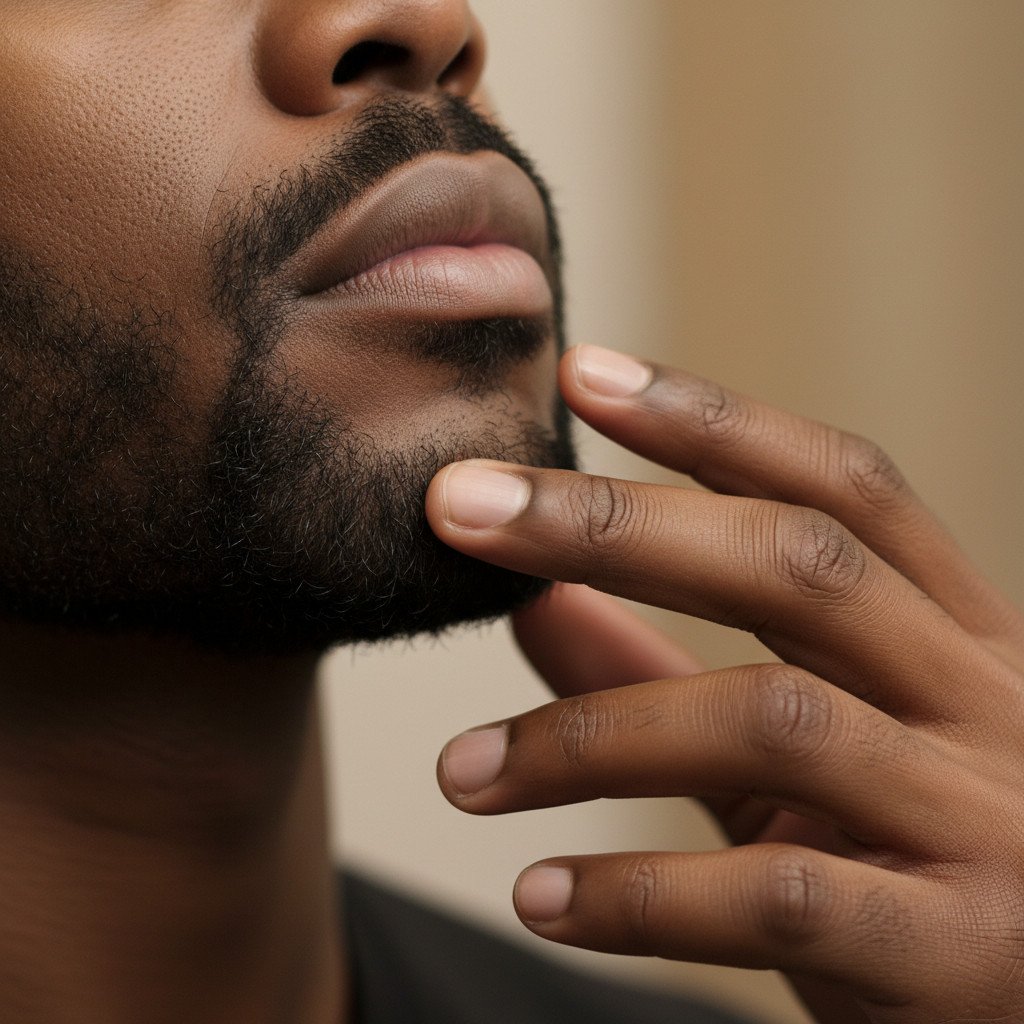
- Feel the growth: This is the most critical step. Gently rub your fingers over small sections of your beard. Pay close attention to the sensation. When you rub with the grain, your fingers will glide smoothly over the hair. When you rub against the grain, you will feel resistance, and the hairs will stand up slightly or feel prickly. This tactile feedback is often more reliable than visual observation alone, especially for fine or lighter hairs.
- Section by section: Do not try to map your entire face at once. Break it down into distinct zones: cheeks, chin, upper lip, jawline, and especially the neck. For each zone, systematically rub your fingers in different directions (up, down, left, right, and diagonally) to identify the path of least resistance. You might find that hair grows in different directions even within a small area.
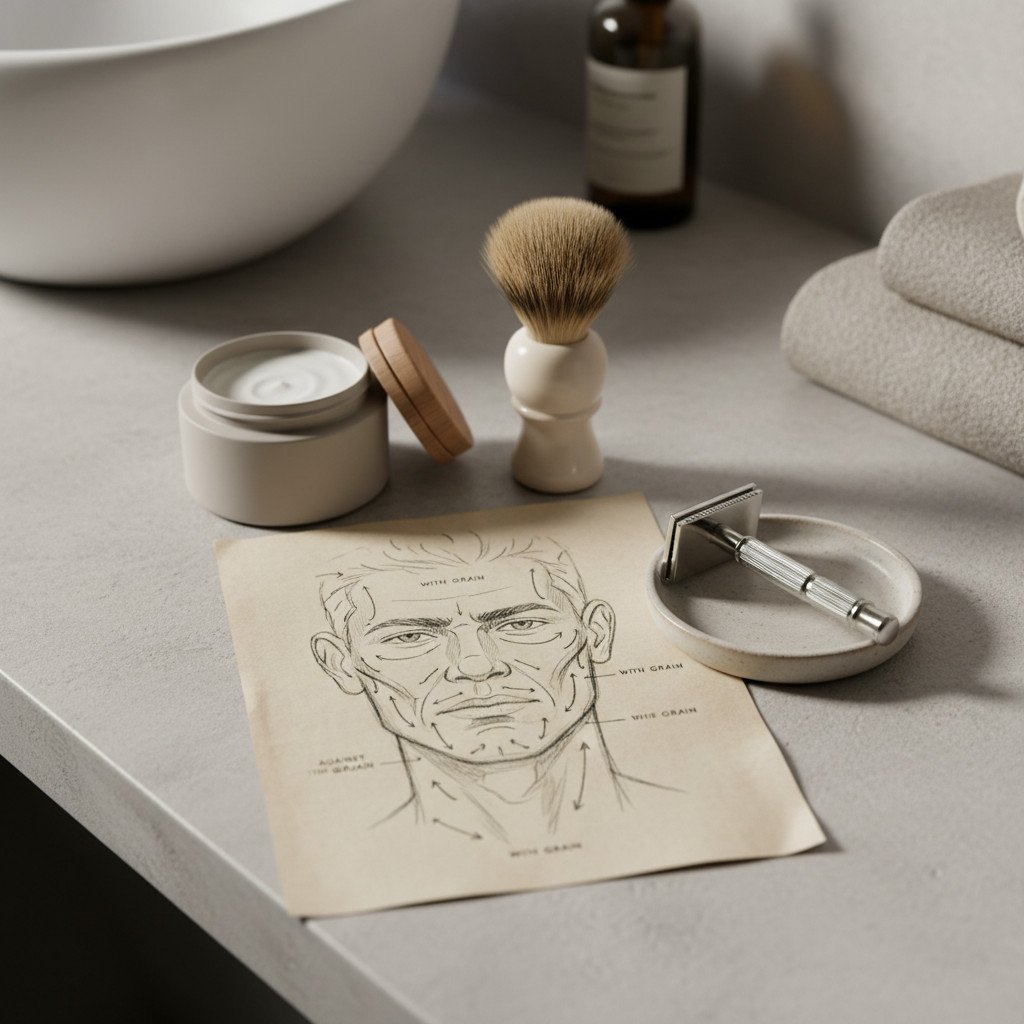
- Document your map: Once you’ve identified the predominant growth direction for each zone, consider sketching a simple face map on paper or making a mental note. Use arrows to indicate the direction of growth. This visual aid will serve as your guide for future shaves. Pay particular attention to the neck, as its growth patterns are often the most complex and varied. Repeat this mapping process periodically, as hair growth can sometimes change or you may refine your understanding over time.
For those with very fine or sparse hair, or if you’re struggling to feel the grain, an alternative method involves using a small piece of clear tape. Press the tape onto a section of hair and then slowly peel it off. Observe the direction the hairs are pulled out; this often indicates the direction of growth. However, the tactile method is generally preferred as it’s less irritating to the skin. Once you have your map, you’re ready to adjust your shaving technique for a smoother, bump-free experience. This meticulous approach is essential for preventing ingrown hairs and maintaining healthy skin, particularly for Black men prone to razor bumps.
Another valuable tool for mapping, especially for those with very short stubble or who prefer not to grow their beard out significantly, is an electric trimmer without a guard. Gently run the trimmer over your skin in different directions. The direction that cuts the hair most effectively and with the least resistance is likely with the grain. The direction that pulls or snags the hair is against the grain. This method provides immediate feedback and can be particularly useful for identifying tricky growth patterns on the neck and jawline. Always use a light touch to avoid irritation.
Remember, your beard map is unique to you. There’s no universal pattern. What works for one man’s cheek may not work for his chin, or for another man entirely. This personalized approach is what sets effective grooming apart from generic shaving advice. Embrace the process of understanding your own hair; it’s a fundamental step towards achieving a consistently comfortable and bump-free shave. This detailed mapping ensures that every stroke of your razor or trimmer is aligned with your natural hair growth, minimizing irritation and maximizing skin health. It’s an investment in your skin’s well-being that pays dividends in comfort and appearance.
How to shave each zone once you know your grain
Once you’ve meticulously mapped your beard’s growth patterns, the next step is to translate that knowledge into a refined shaving technique. The goal is to shave with the grain as much as possible, or at least across it, to minimize irritation and prevent ingrown hairs. This approach prioritizes skin health over an aggressively close shave, which is often counterproductive for Black men prone to razor bumps. Remember, a comfortable, bump-free shave is more desirable than a shave that is microscopically close but leaves your skin inflamed.
Cheeks: For most men, hair on the cheeks grows downwards. Therefore, your primary shaving passes should be in a downward direction. Apply minimal pressure; let the weight of the razor do the work. If you desire a slightly closer shave after the first pass, you can do a second pass across the grain (e.g., sideways towards your ear or nose), but never directly against it. Always reapply a thin layer of shave cream or gel before any subsequent passes to maintain lubrication and protection. The skin here is generally less sensitive than the neck, but still requires respect.
Jawline: The jawline can be tricky, as hair often grows downwards on the upper part and then transitions to growing sideways or even slightly upwards as it approaches the neck. Follow your map precisely. Shave downwards on the upper jaw, then adjust your angle to shave with the grain along the curve of your jaw. This might mean shaving horizontally or diagonally in certain sections. Use short, controlled strokes. The contour of the jaw requires careful blade manipulation to ensure consistent contact without excessive pressure. This area often benefits from a slightly different blade angle than flatter areas.
Neck: This is often the most challenging zone. Your map is your ultimate guide here. You will likely find hair growing in multiple directions—downwards, sideways, and even upwards in patches. Always shave with the grain first. This might mean making several passes in different directions within the same small area. For instance, if a section of your neck hair grows towards your left ear, shave in that direction. If another section grows upwards towards your chin, shave upwards. The key is to adapt your stroke to the hair’s natural direction. Avoid stretching the skin too tautly, as this can pull hairs out of their natural position and increase the risk of ingrowns. Use a light touch and allow the razor to glide. For particularly sensitive areas or stubborn growth, consider using a safety razor for better control and less blade exposure compared to multi-blade cartridges, which can cause excessive irritation.
Blade Angle and Pressure: Regardless of the zone, maintaining the correct blade angle and applying minimal pressure are paramount. For most razors, aim for a blade angle of about 30 degrees relative to the skin. Too steep an angle (e.g., 45 degrees or more) can lead to nicks and irritation, while too shallow an angle (e.g., 15 degrees or less) can cause the blade to drag. Let the razor’s weight do the cutting. Pressing down hard doesn’t get a closer shave; it only increases irritation and the likelihood of cutting the hair below the skin’s surface, promoting ingrowns. Think of it as skimming the surface rather than digging into it. This gentle approach is crucial for preventing razor bumps and maintaining healthy skin, especially for Black men with coarse, curly hair.
Number of Passes: For most Black men, a single pass with the grain is often sufficient to prevent razor bumps. If you require a closer shave for professional or personal reasons, consider a second pass across the grain, never against it. Always re-lather before a second pass to protect the skin. Avoid multiple passes over the same area without re-lathering, as this strips the skin of its protective barrier and increases friction. The less trauma your skin experiences, the better. A two-pass shave (one with the grain, one across the grain) is generally the maximum recommended for sensitive skin prone to bumps. After shaving, always follow with a soothing post-shave balm to calm the skin and lock in moisture. This comprehensive approach, combining precise mapping with careful technique, forms the cornerstone of a truly effective and bump-free shaving routine.
Understanding the nuances of your skin and hair is an ongoing process. Your skin’s sensitivity can fluctuate with hydration levels, stress, and even weather changes. Therefore, while your beard map provides a consistent guide, remain attuned to how your skin feels during and after each shave. If a particular area feels irritated, re-evaluate its growth pattern and adjust your technique accordingly. This adaptive approach ensures that your shaving routine remains optimized for your skin’s current condition, preventing the onset of razor bumps and maintaining a consistently smooth complexion. This level of self-awareness is a hallmark of elevated self-mastery in grooming.
For men who prefer a closer shave without risking bumps, consider incorporating a pre-shave oil. This creates an additional layer of lubrication, allowing the razor to glide more smoothly and reducing tugging and pulling. A good pre-shave oil can make a significant difference, especially when performing across-the-grain passes. It helps to soften the hair and protect the skin, making the shaving process less abrasive. This small addition to your pre-shave routine for Black men can elevate your shave quality and further minimize irritation.
The choice of razor also plays a critical role. While multi-blade cartridges offer convenience, they can sometimes cut hair too short and lift hairs before cutting, increasing the risk of ingrowns. A single-blade safety razor or a high-quality electric shaver designed for sensitive skin can be a better option for many Black men. These tools reduce the number of blades making contact with the skin, thereby reducing irritation. Experiment with different tools to find what works best for your specific hair and skin type. Understanding the safety razor vs. cartridge for Black men debate is crucial for informed decisions.
Ultimately, shaving should not be a painful experience. By investing the time to map your beard and then applying a thoughtful, gentle technique, you can transform your shaving routine from a source of frustration into a moment of self-care. This proactive approach to grooming not only prevents razor bumps but also contributes to overall skin health and confidence. It’s about working with your body, not against it, to achieve the best possible results. This mastery over your shave is a testament to embracing practical barbershop wisdom combined with modern understanding of skin physiology.
Table: Zone → common grain direction → safer shave direction
| Zone | Common Grain Direction | Safer Shave Direction (First Pass) | Common Mistake |
|---|---|---|---|
| Cheeks | Mostly Downwards | Downward | Shaving upwards against the grain for closeness. |
| Upper Lip | Mostly Downwards | Downward | Shaving upwards, causing irritation. |
| Chin | Can be varied: Down, Outwards, Swirls | Follow specific grain (often downward or outward) | Aggressive upward strokes or multiple passes. |
| Jawline | Often Downwards, then Sideways/Outwards along the curve | Follow specific grain (down, then sideways) | Shaving straight down over the curve, missing grain. |
| Neck (Upper) | Highly varied: Down, Up, Sideways, Swirls | Follow specific grain for each section | Uniformly shaving upwards or downwards. |
| Neck (Lower) | Highly varied: Down, Up, Sideways, Swirls | Follow specific grain for each section | Aggressive upward strokes to define the neckline. |
Frequently Asked Questions
Mapping your beard grain is a critical step in preventing razor bumps and achieving a comfortable shave. This approach is especially vital for Black men, whose hair texture often predisposes them to pseudofolliculitis barbae. Understanding the nuances of your beard’s growth pattern allows for a tailored shaving technique that minimizes irritation and promotes healthy skin. This section addresses common questions about beard mapping and its role in a superior grooming routine.
What is beard mapping and why is it important for Black men?
Beard mapping is the process of identifying the exact direction your facial and neck hair grows in different areas. For Black men, it’s crucial because our hair tends to be coarse and curly. When cut incorrectly (e.g., against the grain), these hairs can curl back into the skin, causing painful razor bumps (pseudofolliculitis barbae). Mapping allows you to shave with the grain, significantly reducing the risk of ingrown hairs and irritation, leading to a smoother, healthier complexion.
How often should I map my beard?
Initially, you should map your beard thoroughly. After that, it’s a good practice to re-evaluate your map periodically, perhaps every few months, or if you notice new irritation in specific areas. Hair growth patterns can subtly change over time, or you might have missed a nuanced section during your initial mapping. Regular checks ensure your shaving technique remains aligned with your current growth patterns, maintaining optimal results.
Can I map my beard if I keep it very short?
While it’s easier to map when your hair has some length (2-3 days of growth), you can still get a good idea with very short stubble. The tactile method—gently rubbing your fingers over the skin—is still effective. You’ll feel resistance when rubbing against the grain. Alternatively, using a small electric trimmer without a guard can help identify growth direction by observing which way the trimmer glides smoothly. This ensures you can maintain a close shave without sacrificing skin health.
What if my hair grows in multiple directions in one small area?
It’s common, especially on the neck, for hair to grow in swirls or multiple directions within a small zone. In such cases, you must adapt your shave. Instead of a single long stroke, use multiple short strokes, each following the specific grain direction of that micro-section. This might mean shaving in an arc or changing directions frequently. Patience and precision in these areas are key to preventing irritation, ensuring every hair is addressed with respect to its natural growth.
Does mapping help with existing razor bumps or hyperpigmentation?
Yes, mapping and then shaving with the grain is a primary step in preventing *new* razor bumps. By stopping the cause of ingrown hairs, you allow existing bumps to heal. Over time, this reduction in inflammation can also help diminish post-inflammatory hyperpigmentation (dark spots) that often result from chronic razor bumps. For severe bumps or persistent dark spots, consult a dermatologist for targeted treatment, but proper shaving technique is foundational for long-term improvement. For more on managing dark spots, refer to dark spots for Black men.
What tools are best for shaving with the grain after mapping?
After mapping, the best tools are those that allow for precise, single-pass shaving with minimal irritation. A single-blade safety razor is often recommended as it cuts hair at the skin’s surface without lifting and tugging multiple times. High-quality electric shavers designed for sensitive skin can also be effective, especially rotary shavers that adapt to facial contours. The key is to choose a tool that respects your skin and hair, allowing you to follow your map without aggressive cutting. For a deeper dive into shaving tools, explore safety razor vs. cartridge for Black men.
Can I still get a close shave by only shaving with the grain?
While shaving strictly with the grain might not yield the absolute closest shave possible (like an aggressive against-the-grain shave would), it provides a sufficiently close and significantly more comfortable shave for Black men prone to razor bumps. The slight difference in closeness is a worthwhile trade-off for healthy, bump-free skin. If a closer shave is desired, a second pass across the grain (never against) with fresh lather can be considered, but always prioritize skin health. A comfortable, irritation-free shave is the ultimate goal.
Final Thoughts
Mastering your beard map is not just a technique; it’s a fundamental shift in your approach to grooming. For Black men, this understanding is paramount to overcoming the persistent challenge of razor bumps and achieving truly healthy, smooth skin. It moves beyond generic advice, offering a personalized, scientific method to respect your unique hair growth patterns. By taking the time to map your grain, you are investing in a future of comfortable, irritation-free shaves and a more confident appearance.
This meticulous process, combined with the right tools and a thoughtful pre- and post-shave care for Black men routine, forms the bedrock of superior grooming. It’s about empowering yourself with knowledge and applying it consistently. Embrace this wisdom, and transform your shaving experience from a chore into a ritual of self-mastery. For further reading and to enhance your grooming knowledge, explore Razor bumps for Black men, learn about a comprehensive pre-shave routine for Black men, and understand the benefits of a safety razor vs. cartridge for Black men.
Frequently Asked Questions
What is beard mapping and why is it important for Black men?
Beard mapping is the process of identifying the exact direction your facial and neck hair grows in different areas. For Black men, it’s crucial because our hair tends to be coarse and curly. When cut incorrectly (e.g., against the grain), these hairs can curl back into the skin, causing painful razor bumps (pseudofolliculitis barbae). Mapping allows you to shave with the grain, significantly reducing the risk of ingrown hairs and irritation, leading to a smoother, healthier complexion.
How often should I map my beard?
Initially, you should map your beard thoroughly. After that, it’s a good practice to re-evaluate your map periodically, perhaps every few months, or if you notice new irritation in specific areas. Hair growth patterns can subtly change over time, or you might have missed a nuanced section during your initial mapping. Regular checks ensure your shaving technique remains aligned with your current growth patterns, maintaining optimal results.
Can I map my beard if I keep it very short?
While it’s easier to map when your hair has some length (2-3 days of growth), you can still get a good idea with very short stubble. The tactile method—gently rubbing your fingers over the skin—is still effective. You’ll feel resistance when rubbing against the grain. Alternatively, using a small electric trimmer without a guard can help identify growth direction by observing which way the trimmer glides smoothly. This ensures you can maintain a close shave without sacrificing skin health.
What if my hair grows in multiple directions in one small area?
It’s common, especially on the neck, for hair to grow in swirls or multiple directions within a small zone. In such cases, you must adapt your shave. Instead of a single long stroke, use multiple short strokes, each following the specific grain direction of that micro-section. This might mean shaving in an arc or changing directions frequently. Patience and precision in these areas are key to preventing irritation, ensuring every hair is addressed with respect to its natural growth.
Does mapping help with existing razor bumps or hyperpigmentation?
Yes, mapping and then shaving with the grain is a primary step in preventing *new* razor bumps. By stopping the cause of ingrown hairs, you allow existing bumps to heal. Over time, this reduction in inflammation can also help diminish post-inflammatory hyperpigmentation (dark spots) that often result from chronic razor bumps. For severe bumps or persistent dark spots, consult a dermatologist for targeted treatment, but proper shaving technique is foundational for long-term improvement. For more on managing dark spots, refer to https://groomingforblackmen.com/skincare/dark-spots-black-men/.
What tools are best for shaving with the grain after mapping?
After mapping, the best tools are those that allow for precise, single-pass shaving with minimal irritation. A single-blade safety razor is often recommended as it cuts hair at the skin’s surface without lifting and tugging multiple times. High-quality electric shavers designed for sensitive skin can also be effective, especially rotary shavers that adapt to facial contours. The key is to choose a tool that respects your skin and hair, allowing you to follow your map without aggressive cutting. For a deeper dive into shaving tools, explore https://groomingforblackmen.com/shaving/safety-razor-vs-cartridge-black-men/.
Can I still get a close shave by only shaving with the grain?
While shaving strictly with the grain might not yield the absolute closest shave possible (like an aggressive against-the-grain shave would), it provides a sufficiently close and significantly more comfortable shave for Black men prone to razor bumps. The slight difference in closeness is a worthwhile trade-off for healthy, bump-free skin. If a closer shave is desired, a second pass across the grain (never against) with fresh lather can be considered, but always prioritize skin health. A comfortable, irritation-free shave is the ultimate goal.