
Dark Spots for Black Men (Post-Acne Marks / PIH)
Dark spots. They are a common concern, particularly for Black men. These marks, often left behind after acne, cuts, or irritation, are more than just cosmetic. They are a signal from your skin, indicating a healing process that has gone awry, leaving behind a visible reminder. This guide cuts through the noise, providing a direct, actionable path to understanding, preventing, and fading these marks.
We will address Post-Inflammatory Hyperpigmentation (PIH), the primary culprit behind dark spots in Black skin. You will learn what causes it, how to prevent it, and a practical routine to fade existing marks. This is not about quick fixes but about consistent, informed action. Your skin deserves a clear, even tone. Let’s achieve it.
Understanding Dark Spots: Post-Inflammatory Hyperpigmentation (PIH)
Before you can fade dark spots, you must understand what they are. For Black men, the vast majority of dark spots fall under the category of Post-Inflammatory Hyperpigmentation, or PIH. This is not a scar; it’s a discoloration. Scars alter the texture of the skin; PIH alters its color.
What is Post-Inflammatory Hyperpigmentation (PIH)?
PIH occurs when your skin responds to inflammation or injury by producing an excess of melanin. Melanin is the pigment that gives skin its color. When there’s an injury—be it a pimple, a cut, a razor bump, or even a scratch—the skin’s natural healing process can sometimes go into overdrive, depositing too much melanin in that area. This overproduction results in a darker patch of skin that lingers long after the initial injury has healed.
Black skin is particularly susceptible to PIH. This is due to the higher concentration and reactivity of melanocytes, the cells responsible for producing melanin. While this abundance of melanin provides natural protection against UV radiation, it also means that any inflammation can more easily trigger an overproduction of pigment, leading to more pronounced and persistent dark spots.
Common Triggers of PIH in Black Men
Understanding the triggers is the first step toward prevention. For Black men, several factors commonly lead to PIH:
- Acne: This is arguably the most frequent cause. Any form of acne—from small whiteheads to deep cystic breakouts—can leave a dark spot. The inflammation associated with acne signals the melanocytes to produce more pigment.
- Razor Bumps (Pseudofolliculitis Barbae): Shaving irritation is a significant contributor. When hair curls back into the skin, causing inflammation and infection, the resulting bumps often heal into dark spots. This is a chronic issue for many Black men, leading to persistent PIH on the face and neck.
- Cuts and Scrapes: Minor injuries, even those that seem insignificant, can trigger PIH. A small cut from shaving, a scratch, or an abrasion can all result in a lasting dark mark.
- Eczema or Dermatitis: Inflammatory skin conditions can cause significant itching and irritation. The constant scratching and inflammation can easily lead to PIH in affected areas.
- Burns: Even minor burns, such as those from hot water or chemicals, can disrupt the skin’s pigment production and result in dark spots as they heal.
- Sun Exposure: While not a direct trigger of PIH, sun exposure significantly worsens existing dark spots. UV radiation stimulates melanin production, making existing PIH darker and more resistant to fading. This is why sunscreen is not optional; it’s essential.
The key takeaway here is that any inflammatory event can lead to PIH. The goal, therefore, is to minimize inflammation and protect the skin during and after healing.
The Difference: PIH vs. Other Skin Discolorations
It’s important to differentiate PIH from other types of skin discoloration:
- Post-Inflammatory Erythema (PIE): These are red or pink marks, often seen in lighter skin tones after acne. They indicate damage to capillaries and are not typically hyperpigmentation. PIE usually fades on its own faster than PIH.
- Melasma: This appears as larger, blotchy patches of discoloration, often symmetrical on the face. It’s primarily triggered by hormonal changes (e.g., pregnancy, certain medications) and sun exposure. While Black men can get melasma, PIH is far more common for isolated dark spots.
- Scars: True scars involve a change in skin texture—either raised (hypertrophic/keloid) or indented (atrophic). PIH is flat; it’s solely a color change.
Focusing on PIH means addressing the specific mechanisms of melanin overproduction triggered by inflammation. This understanding guides our approach to treatment.
The Anchor Habit: Sunscreen for Dark Spots
Before discussing any treatment, we must establish the non-negotiable foundation: consistent sunscreen use. This is not an optional step; it is the anchor habit that makes every other effort worthwhile. Without it, you are fighting an uphill battle against your own skin’s natural response to light.
Why Sunscreen is Non-Negotiable for PIH
Think of it this way: every time your skin is exposed to UV radiation, your melanocytes get a signal to produce more melanin. This is your body’s natural defense mechanism against sun damage. While beneficial for preventing sunburn and skin cancer, it is detrimental when you’re trying to fade dark spots.
- Prevents Worsening: Sun exposure will make existing dark spots darker and more stubborn. The sun acts like a spotlight on your PIH, intensifying its appearance and making it harder to fade.
- Prevents New Spots: By protecting your skin from UV radiation, you reduce the likelihood of new inflammation-induced dark spots forming or becoming prominent.
- Protects Healing Skin: When your skin is healing from acne or irritation, it is particularly vulnerable. Sunscreen provides a protective barrier, allowing the skin to recover without additional pigment stimulation.
- Maximizes Treatment Efficacy: Any active ingredients you use to fade dark spots (like retinoids or vitamin C) will be less effective, or even counteracted, if you are not consistently using sunscreen. It’s like trying to fill a bucket with a hole in the bottom.
Choosing the Right Sunscreen for Black Skin
The primary concern for many Black men when it comes to sunscreen is the dreaded white cast. This chalky, ashy residue is a deal-breaker. Fortunately, formulations have advanced significantly.
- Broad-Spectrum SPF 30+: Always look for “broad-spectrum” to ensure protection against both UVA (aging) and UVB (burning) rays. SPF 30 is the minimum recommended; higher is better, especially if you spend extended time outdoors.
- Chemical vs. Mineral:
- Chemical Sunscreens: These absorb UV rays and convert them into heat. They tend to be lighter in texture and less likely to leave a white cast. Common active ingredients include avobenzone, oxybenzone, octinoxate, and octisalate.
- Mineral Sunscreens: These use zinc oxide and/or titanium dioxide to physically block UV rays. Older formulations were notorious for white casts, but newer micronized or tinted mineral sunscreens are much better. They are often preferred for sensitive skin.
- No White Cast Formulations: Look for terms like “sheer,” “invisible,” “gel,” “fluid,” “water-gel,” or “tinted.” Many brands now specifically formulate sunscreens for darker skin tones.
- Non-Comedogenic: This means it won’t clog pores, which is crucial if acne is a trigger for your PIH.
- Hydrating: Some sunscreens include hydrating ingredients like hyaluronic acid, which can be beneficial for overall skin health.
Apply sunscreen generously as the last step in your morning routine, after moisturizer. Reapply every two hours if you are sweating, swimming, or have prolonged sun exposure. Make it a habit. No excuses.
For a deeper dive into selecting sunscreens that work for Black skin, refer to our guide on Best Sunscreen for Black Men (No White Cast).
The Gentle Fade Routine: A Step-by-Step Approach
Fading dark spots requires patience and consistency. This routine is designed to be effective yet gentle, minimizing irritation that could lead to new PIH. It combines active ingredients with supportive care.
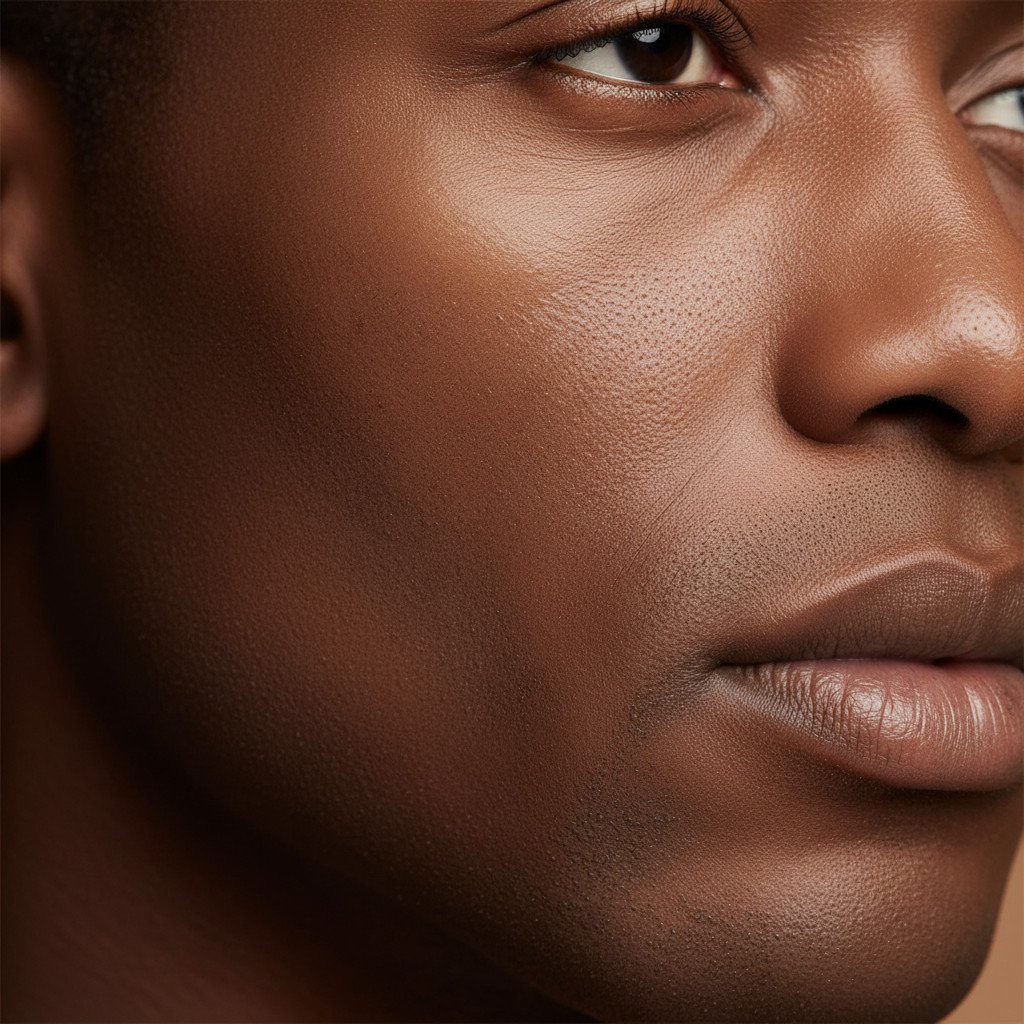
Quick Steps: Gentle Fade Routine (Copy/Paste)
Morning Routine:
- Cleanse with a gentle, hydrating cleanser.
- Apply a Vitamin C serum.
- Apply a hydrating moisturizer.
- Apply broad-spectrum SPF 30+ sunscreen (non-negotiable).
Evening Routine:
- Cleanse with a gentle, hydrating cleanser.
- Apply a retinoid (2-3 times per week, gradually increasing).
- Apply a hydrating moisturizer.
Weekly:
- Exfoliate with a chemical exfoliant (AHA/BHA) 1-2 times per week.
Step 1: Gentle Cleansing (Morning & Evening)
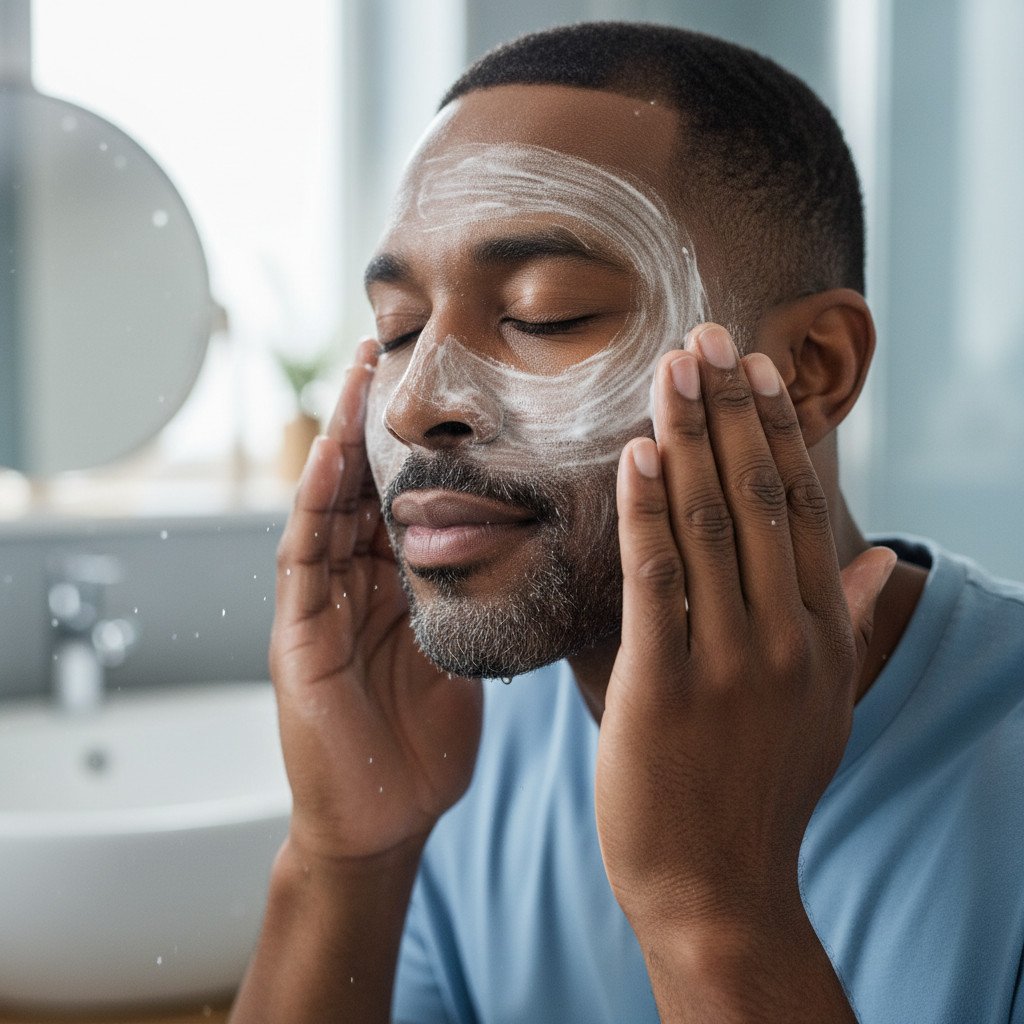
Your cleanser sets the tone for your entire routine. Harsh cleansers strip the skin, compromise the skin barrier, and can lead to irritation—which, as we know, can trigger PIH. Opt for a gentle, hydrating, and fragrance-free cleanser.
- Purpose: Remove impurities, excess oil, and product residue without stripping natural oils or causing irritation.
- Product Type: Look for a gentle hydrating cleanser, often labeled as “cream,” “milk,” or “gel” cleansers. Avoid harsh foaming agents like sulfates if your skin is sensitive.
- How to Use: Wet your face with lukewarm water. Dispense a small amount of cleanser into your palms, lather gently, and massage onto your face in circular motions for 30-60 seconds. Rinse thoroughly with lukewarm water and pat dry with a clean towel.
Step 2: Targeted Treatment – Vitamin C (Morning)
Vitamin C is a powerful antioxidant and a key player in fading dark spots. It works by inhibiting tyrosinase, an enzyme crucial for melanin production. It also brightens overall skin tone and protects against environmental damage.
- Purpose: Brighten skin, reduce melanin production, and provide antioxidant protection.
- Product Type: A stable form of Vitamin C serum, such as L-Ascorbic Acid (preferably 10-20%) or its derivatives (e.g., THD Ascorbate, Sodium Ascorbyl Phosphate). Look for opaque packaging to protect it from light and air.
- How to Use: After cleansing and patting your face dry, apply 3-5 drops of Vitamin C serum to your entire face, focusing on areas with dark spots. Allow it to absorb for a minute before proceeding.
Step 3: Targeted Treatment – Retinoids (Evening, 2-3x/week)
Retinoids are derivatives of Vitamin A and are gold standard ingredients for many skin concerns, including PIH. They work by increasing cell turnover, which helps to shed pigmented skin cells faster. They also stimulate collagen production and can improve overall skin texture.
- Purpose: Accelerate cell turnover, promote shedding of pigmented cells, and improve skin texture.
- Product Type: Start with an over-the-counter retinol or retinaldehyde. If your skin tolerates it well after several months, you might consider a prescription-strength tretinoin under guidance.
- How to Use: In the evening, after cleansing, apply a pea-sized amount of retinoid to your entire face. Start slowly: 2-3 times per week, on non-consecutive nights. Gradually increase frequency as your skin builds tolerance. Always apply to dry skin to minimize irritation.
- Important: Retinoids can cause initial dryness, redness, or peeling. This is normal but indicates you should go slower. Never use retinoids on the same night as strong exfoliants.
Step 4: Hydration & Barrier Support (Morning & Evening)
A healthy skin barrier is crucial for managing PIH. A compromised barrier can lead to more inflammation and slower healing. A good moisturizer supports your skin’s natural defenses.
- Purpose: Hydrate skin, support the skin barrier, and reduce irritation.
- Product Type: Choose a fragrance-free moisturizer that is non-comedogenic. Look for ingredients like ceramides, hyaluronic acid, glycerin, and niacinamide.
- How to Use: Apply a generous amount of moisturizer to your face and neck after your serums (Vitamin C in the morning, retinoid in the evening).
Step 5: Exfoliation (Weekly, 1-2x/week)
Exfoliation helps to remove dead skin cells from the surface, which can contain excess pigment. Chemical exfoliants are generally preferred over physical scrubs for PIH, as scrubs can be too harsh and cause micro-tears, potentially leading to more PIH.
- Purpose: Gently remove pigmented surface skin cells and promote cell turnover.
- Product Type: Alpha Hydroxy Acids (AHAs) like glycolic acid or lactic acid are excellent for surface exfoliation and brightening. Beta Hydroxy Acids (BHAs) like salicylic acid are good for oily and acne-prone skin, as they penetrate pores.
- How to Use: 1-2 times per week, in the evening, after cleansing. Apply the exfoliant to your face, avoiding the eye area. Leave on for the recommended time (if it’s a rinse-off product) or allow to absorb (if it’s a leave-on serum/toner). Follow with moisturizer.
- Important: Do not use on the same night as retinoids. If your skin is sensitive, start with once a week or use a lower concentration. Over-exfoliation can cause irritation and worsen PIH.
For more detailed guidance on exfoliation, refer to our comprehensive article on Exfoliation for Black Men: How Often?
Additional Brightening & Fading Ingredients
Beyond Vitamin C and retinoids, other ingredients can support your PIH fading efforts:
- Niacinamide (Vitamin B3): This versatile ingredient helps reduce inflammation, strengthens the skin barrier, and can inhibit the transfer of melanin to skin cells. It’s well-tolerated and often found in serums and moisturizers.
- Alpha Arbutin: A natural derivative of hydroquinone, alpha arbutin inhibits tyrosinase activity, reducing melanin production. It’s gentler than hydroquinone but effective.
- Kojic Acid: Derived from fungi, kojic acid also inhibits tyrosinase, making it effective for brightening.
- Azelaic Acid: This ingredient reduces inflammation, has antibacterial properties, and can inhibit tyrosinase. It’s particularly useful if you also struggle with active acne or rosacea.
You don’t need all of these. Incorporating one or two, especially if they are in your chosen serums or moisturizers, can provide additional benefits. Avoid layering too many active ingredients at once, especially when starting, to prevent irritation.
What Makes Dark Spots Worse (And How to Avoid It)
Understanding what exacerbates PIH is as crucial as knowing how to treat it. Avoiding these pitfalls will significantly speed up your progress and prevent new spots.
Sun Exposure Without Protection
This cannot be overstated. Unprotected sun exposure is the single biggest enemy of fading dark spots. UV radiation stimulates melanocytes, making existing spots darker and triggering new ones. Even on cloudy days, UV rays penetrate. Make sunscreen a daily, year-round commitment.
Picking, Popping, and Squeezing
Every time you pick at a pimple, squeeze a blackhead, or scratch an irritated area, you are introducing more inflammation and trauma to the skin. This direct injury signals your skin to produce more melanin, guaranteeing a dark spot. Hands off your face. Let blemishes heal naturally or treat them with targeted acne products.
Harsh Physical Exfoliants and Scrubs
While exfoliation is beneficial, aggressive physical scrubs (apricot kernel, walnut shells, harsh brushes) can create micro-tears and irritation, especially on sensitive Black skin. This trauma leads directly to PIH. Stick to gentle chemical exfoliants (AHAs/BHAs) or very fine, non-abrasive physical exfoliants if you must use one.
Over-Exfoliation
Even good chemical exfoliants can cause problems if overused. Using them too frequently or in too high concentrations can compromise your skin barrier, leading to redness, sensitivity, and inflammation. This inflammation, in turn, can trigger PIH. Follow product instructions, start slowly, and listen to your skin.
Using Irritating or Fragranced Products
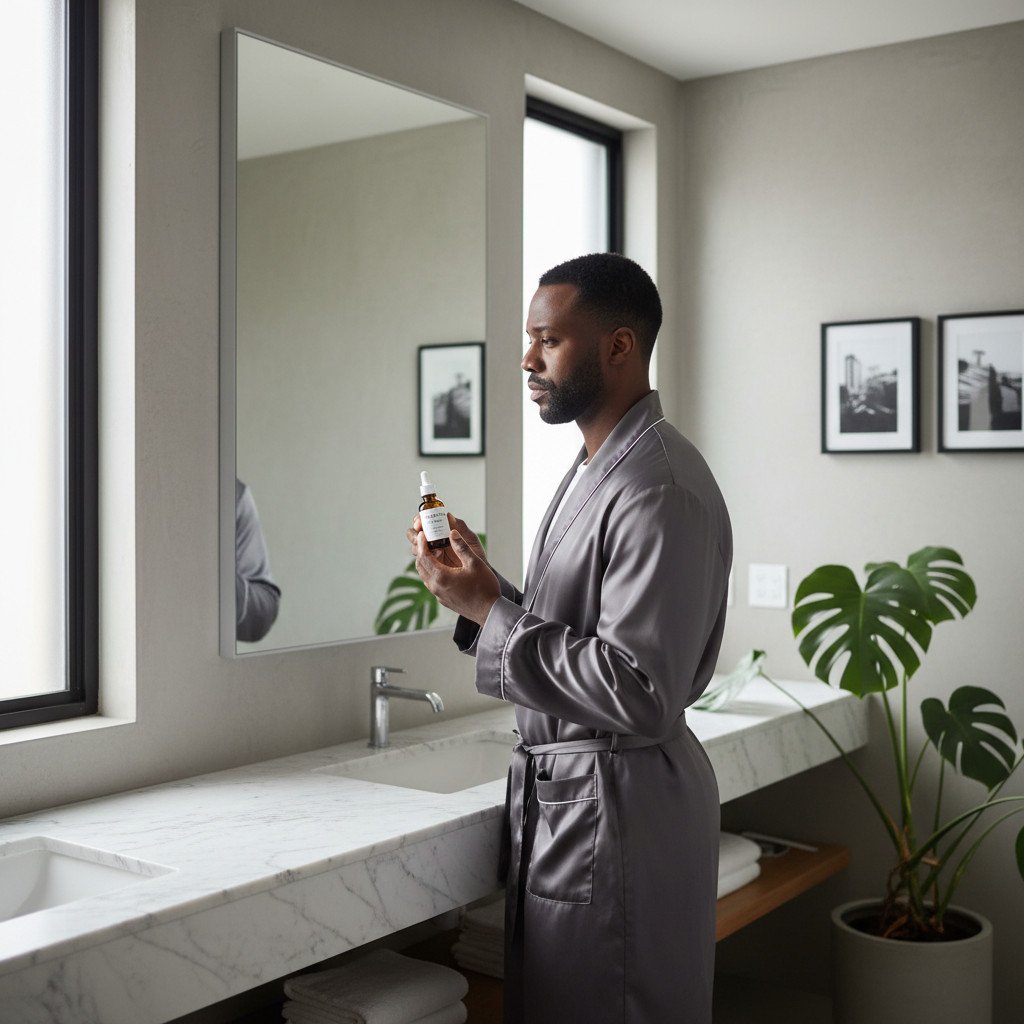
Many skincare products contain artificial fragrances, essential oils, or denatured alcohol, which can be irritating to sensitive skin. For Black men, whose skin is prone to PIH, any irritation is a risk factor. Opt for fragrance-free, alcohol-free formulations whenever possible. Patch test new products to ensure they don’t cause a reaction.
For more on identifying and avoiding irritants, review our guide on Fragrance-Free vs. Unscented for Black Men.
Neglecting Razor Bump Prevention
Razor bumps are a primary source of inflammation and PIH for many Black men. If you’re not actively preventing them, you’re continuously creating new dark spots. A proper shaving technique, pre-shave preparation, and post-shave care are essential.
Explore our resources on Razor Bumps for Black Men, Pre-Shave Routine for Black Men, and Post-Shave Care for Black Men to minimize this trigger.
Realistic Timelines for Fading Dark Spots
Managing expectations is crucial when treating PIH. This is not an overnight fix. Patience and consistency are your most powerful tools.
Why PIH Fades Slowly
The reason dark spots take time to fade is rooted in the skin’s biological processes:
- Cell Turnover Cycle: Your skin naturally sheds and replaces cells. This process, called cell turnover, takes about 28-40 days for an adult. For PIH to fade, the pigmented cells on the surface need to be shed and replaced by new, unpigmented cells. Active ingredients like retinoids and exfoliants speed this up, but it still takes time.
- Depth of Pigment: The melanin causing the dark spot can be located at different depths within the skin. Superficial pigment fades faster than deeper pigment.
- Melanocyte Activity: The melanocytes in the affected area are still prone to overproducing pigment if triggered. This means consistent protection (sunscreen) and gentle care are needed to allow them to normalize.
General Timeline Expectations
While individual results vary based on skin type, spot severity, consistency of routine, and trigger avoidance, here are some general timelines:
- Minor, Recent Spots: Small, light spots that are relatively new (weeks to a few months old) may start to show noticeable improvement within 3-6 months of consistent treatment.
- Moderate Spots: More pronounced or older spots may take 6-12 months to fade significantly.
- Severe or Deep-Seated Spots: Very dark, stubborn, or deeply pigmented spots could take 12-24 months, or even longer, to fully resolve. Some may never completely disappear but can be significantly lightened.
It’s important to remember that “fading” means a gradual reduction in intensity and size, not instant erasure. You’ll likely notice a subtle lightening over weeks and months, not days. Take progress photos every month or two to track your improvement, as daily changes can be hard to perceive.
Common Mistakes to Avoid When Treating Dark Spots
Even with the right routine, certain missteps can hinder progress or even worsen your PIH. Be aware of these common errors:
Inconsistency
The most common mistake. Skipping sunscreen, missing nights with your retinoid, or neglecting your routine for days at a time will undermine all your efforts. Skincare is a marathon, not a sprint. Consistency is paramount.
Over-Treating / Product Hopping
Using too many active ingredients at once, or constantly switching products every few weeks, prevents your skin from adapting and seeing the full benefits of any single product. It also increases the risk of irritation. Stick to a core routine for at least 3-4 months before evaluating and making changes.
Ignoring Sun Protection
As emphasized, this is a critical error. Without daily, consistent sunscreen, every other step in your routine is less effective. You’re essentially creating new dark spots while trying to fade old ones.
Picking and Popping Blemishes
Any new inflammation can trigger new PIH. Picking at acne or razor bumps is a direct pathway to more dark spots. Resist the urge. Let your products work, or seek professional extraction if necessary.
Using Harsh or Abrasive Products
Physical scrubs, harsh toners with high alcohol content, or aggressive cleansing brushes can all irritate the skin, disrupt the barrier, and lead to inflammation. This inflammation, again, triggers PIH. Opt for gentle, soothing formulations.
Lack of Patience
Expectations of immediate results lead to frustration and giving up. Understand that PIH fades slowly. Celebrate small victories and trust the process.
Not Addressing the Root Cause
If your PIH is primarily caused by recurring acne or razor bumps, simply treating the dark spots without addressing the underlying issue is futile. You’ll be in a constant cycle of new spots forming. Focus on managing your acne or preventing razor bumps first.
For recurring acne, consider our guide on Acne for Black Men. For razor bumps, consult Razor Bumps for Black Men.
Troubleshooting Your Dark Spot Routine
Even with a solid routine, you might encounter issues. Here’s how to troubleshoot common problems:
Symptom: Dark Spots Aren’t Fading / Getting Darker
- Possible Cause 1: Inconsistent sunscreen use.
- Fix: Re-evaluate your sunscreen application. Are you using enough? Reapplying? Using it daily, even indoors or on cloudy days? This is the most common reason for lack of progress.
- Possible Cause 2: Not addressing the root cause (e.g., new acne breakouts, recurring razor bumps).
- Fix: Focus on preventing new inflammation. If acne is the issue, ensure your acne treatment is effective. If razor bumps, refine your shaving technique and post-shave care.
- Possible Cause 3: Insufficient strength or consistency of active ingredients.
- Fix: Ensure you’re using your Vitamin C and retinoid consistently. If after several months there’s no progress, you might consider a slightly stronger concentration (e.g., moving from a 0.25% retinol to 0.5% or 1%, or consulting a professional for prescription options).
- Possible Cause 4: Over-exfoliation or irritation.
- Fix: Reduce the frequency of retinoids and exfoliants. Simplify your routine to basics (cleanser, moisturizer, SPF) for a week or two to let your skin recover, then slowly reintroduce actives.
Symptom: Skin is Irritated, Red, Dry, or Peeling
- Possible Cause 1: Overuse of active ingredients (retinoids, exfoliants, Vitamin C).
- Fix: Reduce the frequency of these products. If using a retinoid every night, drop back to 2-3 times a week. If exfoliating twice a week, reduce to once. Ensure you’re not using retinoids and strong exfoliants on the same night.
- Possible Cause 2: Compromised skin barrier.
- Fix: Focus on barrier repair. Temporarily stop all active ingredients. Use a gentle cleanser and a rich, barrier-supporting moisturizer (look for ceramides, cholesterol, fatty acids). See our guide on Skin Barrier Repair for Black Men.
- Possible Cause 3: Product sensitivity (fragrance, alcohol, specific ingredients).
- Fix: Check your product labels for common irritants. Consider switching to truly fragrance-free and alcohol-free options. Perform a patch test for any new product.
Symptom: New Dark Spots Appearing
- Possible Cause 1: New inflammation (acne, razor bumps, picking).
- Fix: Address the source of inflammation. Implement an effective acne treatment plan. Refine your shaving routine to prevent razor bumps. Stop picking your skin.
- Possible Cause 2: Sun exposure without protection.
- Fix: Reinforce your commitment to daily, consistent, and generous sunscreen application.
- Possible Cause 3: Allergic reaction or irritation to a new product.
- Fix: Discontinue any recently introduced products. Perform a patch test before trying new items.
When to Stop and Get Help
While this guide provides a robust framework for managing PIH, there are times when professional intervention is necessary. Your skin is an organ; pay attention to its signals.
Signs You Need Professional Help:
- Severe Irritation or Allergic Reaction: If you experience persistent redness, itching, burning, swelling, or a rash that doesn’t subside after stopping products, consult a dermatologist. This could be an allergic reaction or severe irritation.
- Worsening Acne or New, Painful Breakouts: If your acne is severe, cystic, or spreading, and over-the-counter treatments aren’t effective, a dermatologist can prescribe stronger medications to control the inflammation and prevent further PIH.
- Infection: Signs of infection include pus, increasing pain, warmth, red streaks, or fever. Do not try to treat an infection at home; seek medical attention immediately.
- No Improvement After 6-12 Months: If you’ve been consistently following a diligent routine for 6-12 months with no noticeable improvement in your dark spots, it’s time to consult a dermatologist. They can offer stronger prescription treatments (e.g., higher-strength retinoids, hydroquinone, chemical peels, laser treatments) and assess for other underlying conditions.
- Uncertainty About Diagnosis: If you’re unsure if your spots are truly PIH or another condition (like melasma or a fungal infection), a dermatologist can provide an accurate diagnosis.
A board-certified dermatologist specializing in skin of color will have the expertise to guide you. They can offer tailored advice, prescription-strength solutions, and in-office procedures that are safe and effective for Black skin.
Preventing Future Dark Spots: A Holistic Approach
The best way to deal with dark spots is to prevent them from forming in the first place. This requires a proactive, holistic approach that integrates good skincare habits with overall wellness.
Consistent Skincare Routine
A foundational, consistent skincare routine is your first line of defense. This means:
- Gentle Cleansing: Always use a mild cleanser to avoid stripping your skin and causing irritation.
- Hydration: Keep your skin well-moisturized to maintain a healthy skin barrier. A strong barrier is less prone to inflammation and better equipped to heal.
- Daily Sun Protection: This is non-negotiable. Sunscreen prevents existing spots from darkening and new spots from forming.
- Targeted Treatments: Incorporate ingredients like Vitamin C and niacinamide into your daily routine for their brightening and anti-inflammatory benefits.
For a basic starting point, consider our Beginner’s Skincare Routine for Black Men or the Simple 3-Step Skincare Routine for Black Men.
Manage Underlying Conditions
If your dark spots are a result of recurring issues, addressing the root cause is paramount:
- Acne Management: Implement an effective acne treatment plan. This might involve salicylic acid, benzoyl peroxide, or a dermatologist’s guidance for prescription options. Controlling breakouts means fewer opportunities for PIH.
- Razor Bump Prevention: Master your shaving technique. Use a sharp blade, shave with the grain, and incorporate pre-shave and post-shave products designed to reduce irritation. Consider an electric shaver or clippers if traditional wet shaving consistently causes bumps.
- Eczema/Psoriasis Control: Work with a healthcare professional to manage chronic inflammatory skin conditions to reduce flare-ups and subsequent PIH.
Avoid Picking and Popping
This bears repeating: keep your hands off your face. Any manipulation of blemishes or irritation introduces trauma and significantly increases the likelihood and severity of PIH. Let your skincare products do the work or consult a professional for safe extractions.
Protect Your Skin from Trauma
Be mindful of activities that can cause skin injuries. This includes being careful during sports, avoiding harsh physical exfoliation, and being gentle when drying your face (pat, don’t rub).
Healthy Lifestyle Choices
Your skin reflects your overall health:
- Diet: A balanced diet rich in antioxidants (fruits, vegetables) can support skin health. Some find that reducing inflammatory foods (e.g., excessive sugar, processed foods) helps manage acne.
- Hydration: Drink plenty of water to keep your skin hydrated from within.
- Stress Management: Chronic stress can exacerbate inflammatory skin conditions like acne. Find healthy ways to manage stress (exercise, meditation, hobbies).
- Adequate Sleep: Your skin repairs itself while you sleep. Prioritize 7-9 hours of quality sleep each night.
By taking a comprehensive approach that combines targeted treatment with proactive prevention and healthy lifestyle choices, you empower your skin to heal and maintain an even, clear tone. This journey requires dedication, but the results—confident, healthy skin—are well worth the effort.
Remember, your skin is resilient. With the right knowledge and consistent effort, you can effectively manage and fade dark spots, revealing the clear, even tone you desire. This is about mastery of your grooming, and it begins with understanding and respecting your skin.
Frequently Asked Questions
What are dark spots for Black men?
For Black men, dark spots are primarily Post-Inflammatory Hyperpigmentation (PIH). These are discolorations left behind after inflammation or injury, such as acne, razor bumps, or cuts, due to excess melanin production. They are flat, color changes, not textural scars.
Why are Black men more prone to dark spots?
Black skin has a higher concentration and reactivity of melanocytes, the cells producing pigment. This means any inflammation or injury more easily triggers an overproduction of melanin, leading to more pronounced and persistent dark spots compared to lighter skin tones.
How long does it take for dark spots to fade?
Fading dark spots is a gradual process. Minor, recent spots may show improvement in 3-6 months. More severe or older spots can take 6-12 months or even longer. Consistency with your routine and sun protection is crucial for seeing results.
What is the most important step to fade dark spots?
Consistent daily use of a broad-spectrum SPF 30+ sunscreen is the most critical step. Sun exposure makes existing dark spots darker and triggers new ones, counteracting any fading efforts. It is non-negotiable for effective treatment.
Can picking pimples make dark spots worse?
Yes, absolutely. Picking, popping, or squeezing pimples, razor bumps, or any blemishes introduces more inflammation and trauma to the skin. This directly signals your skin to produce more melanin, leading to darker, more stubborn, and potentially new dark spots.
What ingredients help fade dark spots?
Key ingredients include Vitamin C (an antioxidant that inhibits melanin production), retinoids (increase cell turnover to shed pigmented cells), and chemical exfoliants like AHAs (remove pigmented surface cells). Niacinamide, alpha arbutin, and azelaic acid also support fading.
Should I use physical scrubs for dark spots?
No, harsh physical scrubs are generally not recommended for dark spots. They can cause micro-tears and irritation, which can lead to more inflammation and subsequently worsen PIH. Opt for gentle chemical exfoliants instead.
When should I see a dermatologist for dark spots?
Consider seeing a dermatologist if you experience severe irritation, worsening acne, signs of infection, or if your dark spots show no improvement after 6-12 months of consistent at-home treatment. They can provide stronger prescription options and professional guidance.
Can dark spots be prevented?
Yes, prevention is key. This involves consistent gentle skincare, daily sunscreen, managing underlying conditions like acne or razor bumps, avoiding picking at your skin, and adopting healthy lifestyle choices. Minimizing inflammation is the core principle.
Is it okay to use multiple active ingredients at once?
When starting, it’s best to introduce active ingredients one at a time and slowly. Using too many strong actives simultaneously can cause irritation, which can worsen PIH. For example, use retinoids and chemical exfoliants on separate nights.
Do I need a special sunscreen for Black skin?
You need a broad-spectrum SPF 30+ sunscreen that does not leave a white cast. Many modern chemical and micronized mineral sunscreens are formulated to be sheer on darker skin tones. Look for terms like ‘sheer,’ ‘invisible,’ or ‘gel’ formulations.
What is the role of hydration in fading dark spots?
Proper hydration with a good moisturizer is crucial for maintaining a healthy skin barrier. A strong, intact skin barrier is less prone to inflammation and irritation, which are primary triggers for PIH. It also supports the skin’s natural healing process.
Shop gentle hydrating cleanser on Amazon
Shop Vitamin C serum on Amazon
Shop fragrance-free moisturizer on Amazon