Find Your Skin Type (Black Men): The Simple Test + The Right Routine After
Many Black men mislabel their facial skin type, leading to a cycle of ineffective products and frustration. You buy what you think you need, but without understanding your skin’s true nature, you’re likely making common routine mistakes that worsen issues like razor bumps, dark marks, and dryness. This isn’t about guessing; it’s about accurate identification.
Understanding your skin type is the foundation of an effective grooming regimen. It dictates the products you should use, the frequency of application, and how to best address specific concerns. Stop wasting time and money on solutions that aren’t tailored to you. This guide provides simple, at-home tests to pinpoint your skin type and then directs you to the precise routine you need to achieve clear, healthy, and resilient skin.
Quick Answer: What Skin Type Means (And What It Doesn’t)
Your skin type is its inherent characteristic – how it naturally behaves. It’s largely genetic and determines its oil production, hydration levels, and overall resilience.
- Oily Skin: Produces excess sebum, leading to shine, larger pores, and a propensity for breakouts.
- Dry Skin: Produces insufficient sebum, resulting in tightness, flakiness, and a dull appearance.
- Combination Skin: Features both oily and dry/normal areas, typically an oily T-zone (forehead, nose, chin) with drier cheeks.
- Normal Skin: Balanced, neither excessively oily nor dry, with minimal concerns and a smooth texture.
It’s crucial to understand that sensitivity and dehydration are not skin types; they are conditions that can affect any skin type. You can have oily, sensitive skin or dry, dehydrated skin. Misidentifying a condition as a type leads to incorrect treatment and persistent problems.
Why Skin Type Matters for Black Men
Black men’s skin often has unique characteristics, including higher melanin content, which offers some natural sun protection but also makes it more prone to hyperpigmentation and dark spots from inflammation or injury. Our skin can also be more susceptible to razor bumps (pseudofolliculitis barbae) and ingrown hairs. Understanding your skin type allows you to select products and practices that support its natural barrier, minimize irritation, and effectively manage these common concerns without causing further damage.
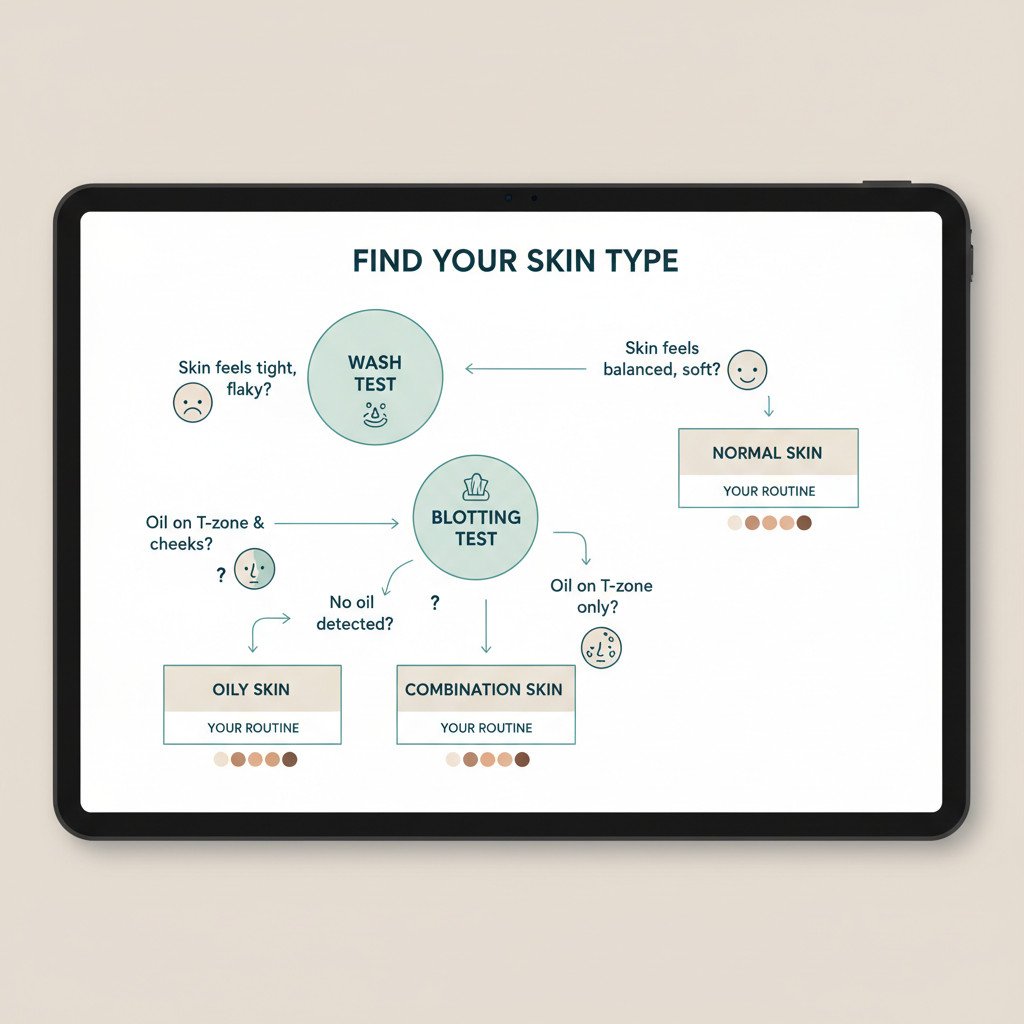
The 3 Simple At-Home Tests to Identify Your Skin Type
Forget complex questionnaires. These three practical tests, done at home, will give you clear insights into your skin’s true nature. For the most accurate results, perform these tests when your skin is clean and free of products.
Test 1: The Wash Test (The Most Reliable)
This test assesses your skin’s natural oil production and hydration levels after cleansing.
- Cleanse: Wash your face with a gentle, pH-balanced cleanser. Avoid harsh soaps or scrubs.
- Pat Dry: Gently pat your face dry with a clean towel. Do not rub.
- Wait: Do not apply any products (toner, serum, moisturizer, etc.). Wait 30-60 minutes.
- Observe: Pay close attention to how your skin feels and looks.
How to Interpret the Wash Test:
- Oily: Your face feels greasy or shiny all over, especially on your forehead, nose, and chin. Pores may appear enlarged.
- Dry: Your face feels tight, stretched, or even flaky. You might notice dullness or rough patches.
- Combination: Your T-zone (forehead, nose, chin) feels oily or looks shiny, while your cheeks feel normal or slightly dry.
- Normal: Your face feels comfortable, neither tight nor greasy. It looks balanced and smooth, with no noticeable shine or dryness.
Test 2: The Blotting Paper Test (Confirms Oiliness)
This test is excellent for confirming oil production throughout the day.
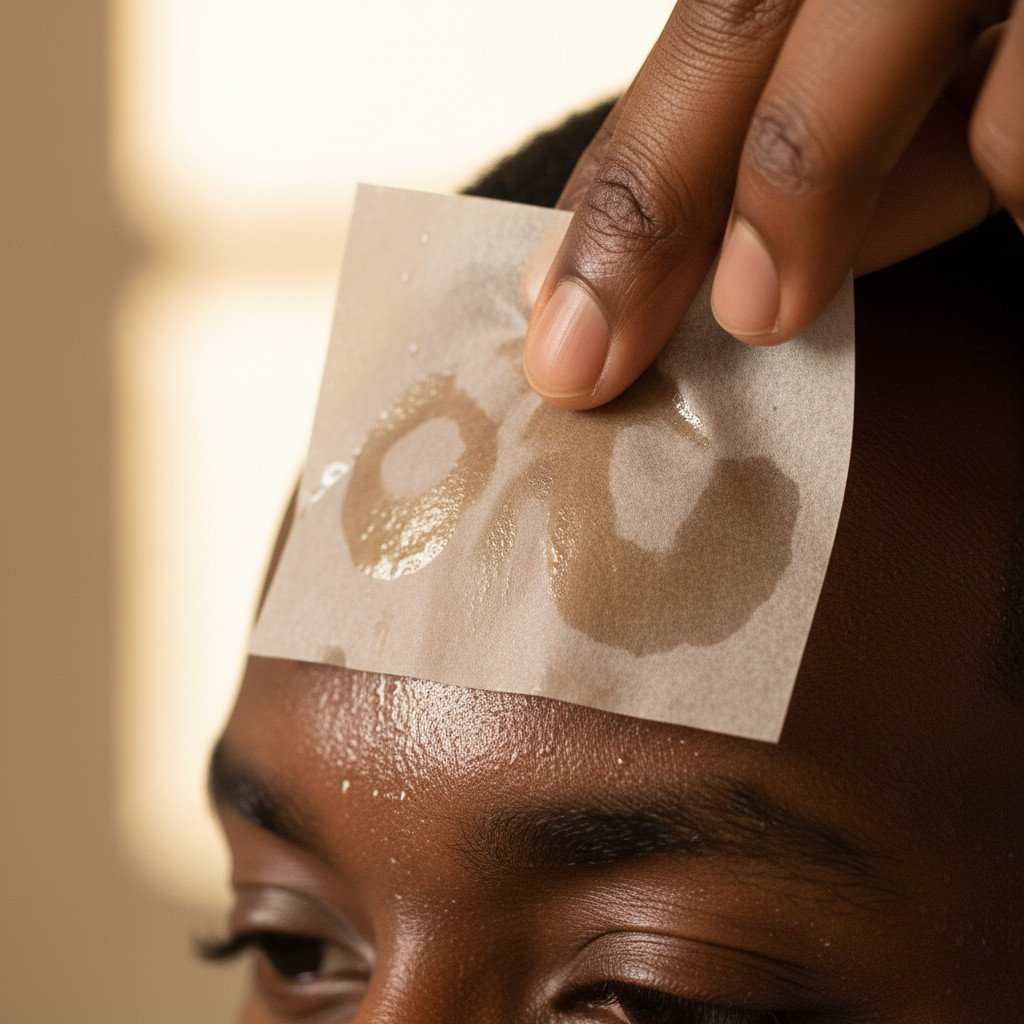
- Cleanse & Wait: Wash your face and wait at least 2-3 hours without applying any products. This allows your skin’s natural oils to surface.
- Blot: Take a clean blotting paper (or a thin tissue) and gently press it against different areas of your face: forehead, nose, chin, and cheeks.
- Examine: Hold the blotting paper up to a light and observe the oil residue.
How to Interpret the Blotting Paper Test:
- Oily: The blotting paper shows significant oil spots from all areas of your face, especially the T-zone.
- Dry: The blotting paper shows little to no oil spots from any area.
- Combination: The blotting paper shows oil spots primarily from your T-zone, with little to no oil from your cheeks.
- Normal: The blotting paper shows minimal oil from your T-zone and no oil from your cheeks.
Test 3: The End-of-Day Shine Test (Daily Observation)
This is a less formal, but still useful, daily observation test.
- Go About Your Day: After your morning routine, simply observe your skin throughout the day.
- Check Mid-Day/End-of-Day: Around midday or by the end of your day, look in a mirror.
How to Interpret the End-of-Day Shine Test:
- Oily: Your entire face is noticeably shiny or greasy, requiring frequent blotting.
- Dry: Your face feels tight, looks dull, and you might notice some flakiness or dry patches.
- Combination: Your T-zone is shiny, but your cheeks remain normal or feel a bit dry.
- Normal: Your skin maintains a balanced appearance with minimal shine, feeling comfortable throughout the day.
Skin Type Breakdown: Beyond the Basics
Let’s dive deeper into what each skin type means for your grooming routine.
Oily Skin
Characteristics:
- Excessive sebum production, leading to a constant shine, especially in the T-zone.
- Enlarged or visible pores.
- Prone to acne, blackheads, and whiteheads due to clogged pores.
- Makeup (if applicable) tends to slide off or crease easily.
- Skin often feels thick or robust.
Common Mistakes: Over-washing with harsh cleansers, skipping moisturizer, using abrasive scrubs, which can strip the skin and trigger even more oil production.
Key Focus: Balancing oil production, keeping pores clear, and maintaining hydration without adding greasiness.
Dry Skin
Characteristics:
- Lack of natural oil production, resulting in a tight, sometimes itchy feeling.
- Dull, rough, or flaky texture.
- Fine lines and wrinkles may be more pronounced.
- Pores are often small and less visible.
- Can feel sensitive or easily irritated, especially after cleansing.
- Ashiness is a common concern for Black men with dry skin.
Common Mistakes: Using hot water, harsh soaps, or not moisturizing immediately after washing. Ignoring the need for gentle exfoliation.

Key Focus: Restoring the skin’s barrier, providing deep and lasting hydration, and preventing moisture loss.
Combination Skin
Characteristics:
- A mix of oily and dry/normal areas.
- Typically, an oily T-zone (forehead, nose, chin) with larger pores and shine.
- Cheeks can be normal, dry, or even sensitive.
- Requires a targeted approach, treating different areas differently.
Common Mistakes: Treating the entire face as oily (leading to dry cheeks) or treating it as dry (leading to clogged T-zone pores). Using a one-size-fits-all product approach.
Key Focus: Balancing the oily areas while nourishing the drier ones, often requiring different product types or application methods for different facial zones.
Normal Skin
Characteristics:
- Well-balanced, neither too oily nor too dry.
- Smooth texture with minimal imperfections.
- Pores are small and barely visible.
- Rarely experiences sensitivity or breakouts.
- Feels comfortable throughout the day.
Common Mistakes: Neglecting a routine because skin is
Frequently Asked Questions
How do I know if I have combination skin?
You likely have combination skin if your T-zone (forehead, nose, chin) gets oily and shiny throughout the day, while your cheeks feel normal, dry, or even tight. The wash test and blotting paper test will clearly show this difference across your face.
Can I be oily and still need moisturizer?
Absolutely. Oily skin still requires hydration. Skipping moisturizer can dehydrate your skin, prompting it to produce even more oil to compensate. Choose a lightweight, non-comedogenic moisturizer designed for oily skin to provide essential hydration without clogging pores.
What’s the difference between dry skin and dehydrated skin?
Dry skin is a skin type characterized by a lack of oil production, meaning it naturally produces less sebum. Dehydrated skin is a condition that can affect any skin type (even oily skin) and means your skin lacks water. Dehydrated skin often feels tight and can look dull or show fine lines, even if it’s producing oil.
Why does everything burn when I apply skincare?
If products consistently burn or sting, it’s a strong indicator of sensitive skin or a compromised skin barrier. You might be using products that are too harsh, over-exfoliating, or your skin is simply reactive. Pause all active ingredients and focus on gentle, soothing products to repair your skin barrier.
Does sunscreen work on dark skin without white cast?
Yes, modern sunscreens are formulated to be invisible on darker skin tones. Look for mineral sunscreens with micronized zinc oxide or titanium dioxide, or chemical sunscreens that blend seamlessly. Many brands now offer excellent options specifically designed to leave no white cast.
How often should Black men cleanse their face?
Most Black men should cleanse their face twice a day: once in the morning and once before bed. This removes impurities, excess oil, and prepares the skin for other products. If your skin is very dry or sensitive, once daily in the evening might be sufficient, followed by a rinse with water in the morning.
Should I use a toner?
Toners are not always necessary but can be beneficial depending on your skin type. If you have oily or acne-prone skin, a toner with ingredients like salicylic acid can help control oil and clear pores. For dry or sensitive skin, a hydrating or soothing toner can add an extra layer of moisture and comfort.
Can diet affect my skin type?
While diet doesn’t change your inherent skin type (oily, dry, etc.), it can significantly impact skin conditions and overall health. A diet rich in processed foods, sugar, and unhealthy fats can exacerbate issues like acne and inflammation, while a balanced diet with plenty of water, fruits, and vegetables supports healthy skin function.
Is it normal for my skin to feel tight after washing?
If your skin feels tight after washing, it’s a sign that your cleanser is too harsh or that your skin is dehydrated. A good cleanser should leave your skin feeling clean but comfortable, not stripped. Switch to a gentle, hydrating cleanser and follow immediately with a moisturizer.
What if my skin type changes over time?
Your skin type can evolve due to age, hormonal changes, climate, or lifestyle. For example, skin often becomes drier with age. It’s important to re-evaluate your skin’s needs periodically and adjust your routine accordingly. The tests outlined here can be repeated anytime you notice significant changes.
How do I know if my skin barrier is damaged?
A damaged skin barrier often presents as increased sensitivity, redness, dryness, flakiness, and a feeling of tightness or stinging when products are applied. Your skin might also be more prone to breakouts or infections. Focus on gentle, hydrating, and barrier-repairing ingredients to restore its health.
Can stress impact my skin type?
Stress doesn’t change your fundamental skin type, but it can certainly worsen existing conditions. For example, stress can trigger increased oil production in oily skin types, leading to breakouts, or exacerbate sensitivity in those prone to it. Managing stress is a crucial part of maintaining overall skin health.
Leave a Reply