

Patch Testing for Black Men: How to Try New Skincare Without Getting Burned
Navigating the vast world of skincare can feel like walking through a minefield, especially when your skin is prone to irritation, hyperpigmentation, or breakouts. For Black men, these concerns are often amplified. Our skin, while resilient, is also highly reactive to certain ingredients and improper product introductions. A misstep can lead to anything from uncomfortable rashes to persistent dark spots, setting back your grooming goals significantly.
This isn’t about fear; it’s about strategy. It’s about understanding your skin’s unique language and responding with precision. Skincare for Black men is not a one-size-fits-all endeavor. What works for one brother might cause issues for another. The key to successful product integration, particularly for those with sensitive skin, lies in a methodical approach: patch testing and careful product introduction.
We’ve all been there. Excited by a new serum or cleanser, we apply it liberally, only to wake up with an unwelcome surprise. This guide is designed to prevent those surprises. We’ll equip you with a foolproof protocol to test new products safely, minimize adverse reactions, and build a skincare routine that genuinely serves your skin’s health and appearance. This isn’t just about avoiding irritation; it’s about preserving your skin’s barrier, preventing post-inflammatory hyperpigmentation, and ensuring every product you use contributes positively to your complexion. Let’s get into the details.
Most “reactions” happen because men test products the wrong way
The allure of immediate results often overrides common sense when it comes to new skincare products. Many men, eager to tackle a specific concern like acne or dryness, will apply a new product directly to their face, sometimes even layering it with other new products. This impulsive approach is the primary culprit behind most adverse skin reactions. When a reaction occurs, it becomes impossible to pinpoint the exact product or ingredient responsible, leading to confusion, frustration, and often, a complete abandonment of potentially beneficial products.
Consider the typical scenario: you buy a new cleanser, a new serum, and a new moisturizer all at once. You use them all together, excited for a fresh start. Within a day or two, your skin breaks out, turns red, or feels uncomfortably itchy. Now what? Was it the cleanser? The serum? The moisturizer? Or perhaps a combination of ingredients that didn’t play well together? Without a systematic testing approach, you’re left guessing, and your skin pays the price.
Beyond immediate discomfort, these reactions can have lasting consequences for Black men. Our skin is more prone to post-inflammatory hyperpigmentation (PIH), meaning any inflammation or irritation, even minor, can leave behind dark spots that take months to fade. A simple rash from a poorly tested product can lead to a new battle against uneven skin tone. This makes a careful, deliberate approach not just advisable, but essential.
Another common mistake is ignoring the “sensitive skin” label. Many products, even those marketed for general use, contain active ingredients or fragrances that can be problematic. If you have sensitive skin, diving headfirst into a new product without testing is akin to gambling with your complexion. Even if a product is labeled “hypoallergenic” or “dermatologist-tested,” individual reactions can still occur. These labels are helpful starting points but do not guarantee universal compatibility.
Furthermore, some reactions aren’t immediate. They can be cumulative, developing after several days or even weeks of consistent use. This makes it even harder to identify the culprit if multiple new products have been introduced simultaneously. A proper patch test isolates the new product, allowing you to observe its effects in a controlled manner before committing it to your entire face.
The goal of patch testing is not just to avoid negative reactions, but to ensure that every product you incorporate into your routine is truly beneficial and compatible with your skin. It’s an investment in your skin’s long-term health and clarity, preventing setbacks and building a foundation for consistent, positive results. This methodical approach is a cornerstone of advanced skincare, moving beyond trial-and-error to informed decision-making.
The patch test method (exact steps)
Patch testing is a non-negotiable step for anyone serious about their skin health, especially if you’re a Black man prone to sensitivity or hyperpigmentation. This isn’t a suggestion; it’s a protocol. Follow these steps precisely to minimize risk and maximize your chances of a successful product integration. This method is designed to isolate reactions, making it clear what works and what doesn’t.
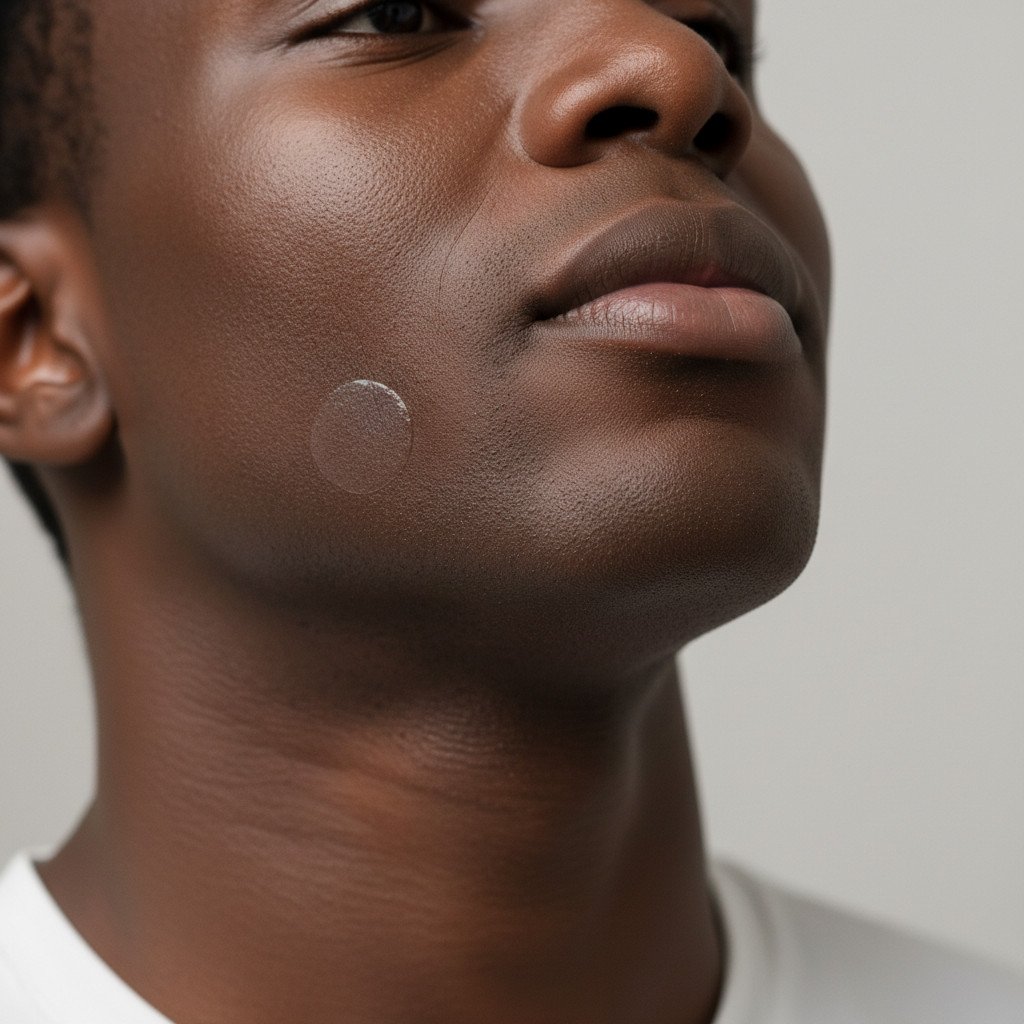
- Choose Your Test Area Wisely: Select a small, inconspicuous area of skin that is representative of your facial skin’s sensitivity. The most common and effective spots are behind the ear, on the side of the neck near the jawline, or on the inner forearm. These areas are less exposed to environmental factors and typically react similarly to facial skin, but any reaction will be less visible. Avoid areas that are already irritated or compromised.
- Cleanse the Test Area: Before applying any new product, ensure the chosen test area is clean and dry. Use a gentle, fragrance-free face wash to remove any existing products, dirt, or oils. Pat the skin dry with a clean towel. This creates a neutral canvas for the test.
- Apply a Small Amount of the New Product: Dispense a pea-sized amount of the product onto your fingertip. Apply it directly to the clean, dry test area. Ensure the application is thin and even, covering an area roughly the size of a quarter. Do not rub it in excessively; just enough to cover the skin. If it’s a wash-off product (like a cleanser or mask), follow its instructions for duration, then rinse and observe. For leave-on products, proceed to the next step.
- Observe for Immediate Reactions: After application, wait 15-30 minutes. During this initial period, monitor the area for any immediate signs of irritation: redness, itching, burning, stinging, or swelling. While some products, especially those with active ingredients, might cause a very mild tingling sensation, anything beyond that is a red flag. If you experience a strong, uncomfortable reaction, wash the product off immediately with cool water and a gentle cleanser.
- Reapply and Wait 24-48 Hours: If no immediate reaction occurs, reapply the product to the same test area once or twice daily for the next 24-48 hours, mimicking how you would use it on your face. This extended observation period is crucial because some reactions are delayed. During this time, avoid washing the test area excessively or applying other products to it.
- Monitor for Delayed Reactions: Throughout the 24-48 hour period, continuously check the test area for any signs of irritation. Look for persistent redness, itching, dryness, flakiness, bumps, or any other unusual changes. Pay close attention to the texture of your skin in that area. A healthy patch test area should remain unchanged.
- Interpret Your Results:
- No Reaction: If, after 24-48 hours, the test area shows no signs of irritation, redness, itching, or discomfort, the product is likely safe for broader application on your face. Proceed with caution and introduce it slowly into your routine (as detailed in the next section).
- Mild Reaction (e.g., slight redness, mild itch): Even a mild reaction indicates potential sensitivity. This product might not be suitable for your skin, or it might require even slower introduction and less frequent use. Consider if the benefit outweighs the risk. If it’s an active ingredient, a very mild, temporary tingle might be normal, but persistent discomfort is not.
- Strong Reaction (e.g., burning, significant redness, swelling, hives, bumps): Discontinue use immediately. This product is not compatible with your skin and should be avoided. Do not attempt to reintroduce it.
- Rinse and Reassess: Once the test period is complete and you’ve interpreted the results, gently rinse the test area. If you experienced a negative reaction, apply a soothing, barrier repair moisturizer to help calm the skin. If the test was successful, you’re ready to consider integrating the product into your full routine, but remember, slow and steady wins the race.
How to introduce actives (the 4–8 week rule)
Successfully patch testing a product is only half the battle. Introducing it correctly into your full routine, especially when dealing with potent actives like retinoids, AHAs, or BHAs, is equally critical. For Black men, this phase demands extra patience and precision to prevent irritation that can lead to hyperpigmentation. The 4–8 week rule is a guideline, not a strict deadline, emphasizing a gradual increase in frequency and concentration.
Phase 1: The Initial Introduction (Weeks 1-2)
Start by applying the new active product only once or twice a week. For example, if it’s a serum, use it on Tuesday and Friday evenings. This allows your skin to gradually acclimate to the new ingredient without being overwhelmed. During this phase, pay close attention to how your skin responds. Look for any signs of redness, dryness, flaking, or increased sensitivity. These are indicators that your skin might need more time to adjust, or that the product might be too strong for daily use.
It’s crucial to apply the active product to clean, dry skin. After applying the active, wait 10-15 minutes for it to fully absorb before following up with a hydrating, barrier-supporting moisturizer. This layering technique helps to buffer the active and reduce potential irritation. Avoid introducing any other new products during this initial phase. Your goal is to isolate the new active’s effects.
Phase 2: Gradual Increase (Weeks 3-4)
If your skin tolerates the active well during the first two weeks (no significant irritation or adverse reactions), you can gradually increase the frequency. Move from 1-2 times a week to 3 times a week, or every other night. Continue to monitor your skin closely. Some actives, like retinol serum, might cause a phenomenon known as “purging,” where skin temporarily breaks out as cell turnover increases. While this can be frustrating, it’s often a sign the product is working. However, if purging is accompanied by extreme redness, burning, or persistent discomfort, it’s not purging; it’s irritation, and you should scale back or discontinue.
Ensure your supporting routine remains consistent and focused on hydration and barrier repair. This means using a gentle cleanser, a rich moisturizer, and a broad-spectrum sunscreen daily. These foundational products help mitigate any potential side effects from the active ingredient.
Phase 3: Building Tolerance (Weeks 5-8 and Beyond)
If your skin continues to respond positively, you can slowly increase frequency further. For many actives, the goal is often daily or nightly use, but this isn’t always necessary or even advisable for everyone. Some individuals with sensitive skin may find that 3-4 times a week is their optimal frequency for certain actives, providing benefits without irritation. Listen to your skin above all else.
For very potent actives, such as prescription retinoids, the introduction phase might extend beyond 8 weeks. It’s not uncommon to take 3-6 months to build up to daily use for such ingredients. The key is never to rush the process. If you experience irritation at any point, reduce the frequency or take a break, allowing your skin to recover before attempting to reintroduce the product at a lower frequency.
Key Considerations for Actives:
- Start Low, Go Slow: Always begin with the lowest concentration of an active ingredient. If you’re using a retinoid, for example, start with 0.1% or 0.25% before considering higher percentages.
- Buffer with Moisturizer: For highly potent actives, you can apply your moisturizer first, then the active, to create a buffer. This can significantly reduce irritation.
- Sun Protection is Non-Negotiable: Many actives increase sun sensitivity. Daily use of a broad-spectrum sunscreen with at least SPF 30 is absolutely essential, especially for Black men who are susceptible to hyperpigmentation from sun exposure.
- Avoid Overlapping Actives: When introducing a new active, avoid using other strong actives (e.g., don’t introduce a new AHA serum and a new retinol serum at the same time). Introduce one at a time, allowing your skin to fully adjust before considering another.
- Listen to Your Skin: Your skin is your best guide. If it feels tight, dry, red, or itchy, it’s telling you to slow down. Pushing through irritation will only lead to a compromised skin barrier and potential long-term issues like hyperpigmentation.
By adhering to this methodical introduction, you empower your skin to adapt, ensuring that new products become beneficial additions to your routine rather than sources of frustration. This disciplined approach is a hallmark of effective skincare for Black men, leading to clearer, healthier, and more resilient skin.
Table: Reaction type → what it likely means → what to do
| Reaction Type | What It Likely Means | What to Do |
|---|---|---|
| Redness & Itching (Mild) | Mild irritation, sensitivity to an ingredient, or initial adjustment to an active. Could be a minor allergic reaction or contact dermatitis. | Reduce frequency of use. Apply a soothing, barrier-repairing moisturizer. If it persists, discontinue. Consider a product with fewer ingredients. |
| Burning & Stinging (Moderate to Severe) | Significant irritation, product is too strong, or a definite allergic reaction. Your skin barrier may be compromised. | Wash off immediately with cool water. Discontinue use. Apply a bland, soothing moisturizer. Consult a dermatologist if severe or persistent. |
| Dryness & Flaking | Product is stripping natural oils, increasing cell turnover too rapidly (common with retinoids/exfoliants), or your skin barrier is impaired. | Reduce frequency. Pair with a hydrating serum and a rich moisturizer. Ensure adequate hydration. If using actives, consider buffering. |
| Breakouts (Small bumps, whiteheads, blackheads) | Product is comedogenic (clogging pores), or you’re experiencing a “purging” phase from an active (e.g., retinoids, AHAs). | If it’s purging, it usually resolves within 2-6 weeks. Continue use if mild and improving. If it worsens or spreads beyond typical breakout areas, discontinue. Check for comedogenic ingredients. |
| Hives, Swelling, Blisters | Severe allergic reaction (contact urticaria). This is a serious reaction. | Discontinue use immediately. Wash off thoroughly. Seek medical attention if swelling is significant, breathing is affected, or reaction is widespread. |
| Darkening of Skin (Hyperpigmentation) | Inflammation from irritation has triggered melanin production. Common in Black skin. | Discontinue the irritating product. Focus on calming and healing the skin. Introduce products with ingredients like niacinamide, vitamin C, or alpha arbutin to address PIH once irritation subsides. Protect with SPF daily. |
| Increased Oiliness | Product is too stripping, causing skin to overcompensate by producing more oil. Or, product is too occlusive for your skin type. | Switch to a gentler cleanser. Use a lighter, non-comedogenic moisturizer. If using an active, ensure it’s not over-exfoliating. |
| No Reaction (Positive) | Product is likely compatible with your skin. | Proceed with slow, gradual introduction into your full routine, as outlined in the “How to introduce actives” section. Continue to monitor. |
Frequently Asked Questions
Patch testing and careful product introduction are cornerstones of a successful skincare journey, particularly for Black men navigating sensitive skin and the risk of hyperpigmentation. This methodical approach ensures that every product you introduce is a step forward, not a step back. Remember, your skin is a complex organ, and understanding its unique needs requires patience, observation, and a commitment to a disciplined routine.
By adopting the patch testing protocol and the 4–8 week rule for actives, you empower yourself to make informed decisions about your skincare. This isn’t about avoiding products; it’s about selecting the right ones for your specific skin type and concerns, integrating them intelligently, and building a resilient, healthy complexion. Trust the process, listen to your skin, and you’ll build a routine that truly works for you, enhancing your natural glow without the unwanted side effects.
This journey is about self-mastery and respect for your body. Your skin deserves the best, and the best comes from a thoughtful, evidence-based approach. Continue to educate yourself, consult with professionals when needed, and always prioritize your skin’s health above all else. The result will be a complexion that not only looks good but feels good, reflecting the care and attention you’ve invested.
Frequently Asked Questions
Can I skip patch testing if a product is labeled ‘for sensitive skin’?
While products labeled ‘for sensitive skin’ are formulated to minimize irritation, individual sensitivities vary widely. It is always recommended to patch test, especially for Black men, as any irritation can lead to post-inflammatory hyperpigmentation. These labels are a good starting point, but not a guarantee against personal reactions.
What if I experience a mild reaction during patch testing?
A mild reaction (slight redness, minor itch) indicates potential sensitivity. You should either discontinue the product or re-evaluate if the benefits outweigh the risk for your skin. If you decide to proceed, introduce it even more slowly and less frequently, ensuring your skin barrier is well-supported with hydrating products. If the reaction doesn’t subside or worsens, stop use immediately.

How long should I wait between introducing different new products?
After successfully patch testing a product, introduce it into your full routine one at a time. Allow your skin at least 2-4 weeks to fully adjust to one new product before attempting to introduce another. This staggered approach helps you identify the culprit if an adverse reaction occurs and prevents overwhelming your skin with too many changes at once.
Is ‘purging’ the same as a breakout from a bad product?
No, purging is distinct from a typical breakout. Purging occurs when active ingredients (like retinoids or AHAs) accelerate cell turnover, bringing underlying congestion to the surface as temporary breakouts. It usually happens in areas where you typically break out, lasts 2-6 weeks, and then improves. A breakout from a bad product often appears in new areas, worsens over time, and is accompanied by persistent irritation, redness, or itching beyond normal adjustment.
What should I do if I get a severe allergic reaction?
If you experience a severe allergic reaction such as significant swelling, hives, blistering, or difficulty breathing, discontinue the product immediately and wash it off thoroughly with cool water. Seek immediate medical attention or consult a dermatologist. Do not attempt to reintroduce the product at any point.
Can I patch test multiple products at once?
While technically possible to patch test different products on different areas of your body simultaneously, it is not recommended. If a reaction occurs, it can still be confusing to manage multiple test sites. For best results and clear identification of product compatibility, test one new product at a time following the recommended protocol. Patience prevents problems.
How does patch testing help prevent hyperpigmentation in Black men?
Patch testing directly prevents hyperpigmentation by identifying products that cause irritation before they are applied to the entire face. For Black men, any inflammation or irritation, even mild, can trigger post-inflammatory hyperpigmentation (PIH), leading to dark spots. By catching problematic products early, you avoid the inflammatory response and thus prevent the subsequent PIH, preserving an even skin tone.
Should I patch test natural or organic products too?
Absolutely. ‘Natural’ and ‘organic’ do not equate to ‘non-irritating’ or ‘hypoallergenic.’ Many natural ingredients, such as essential oils, botanical extracts, or certain plant-derived acids, can be potent allergens or irritants. Always patch test any new product, regardless of its marketing claims, to ensure it’s compatible with your skin.
What if my skin reacts to a product I’ve used for a long time?
Skin sensitivity can develop over time due to various factors like changes in environment, diet, stress, hormonal fluctuations, or a compromised skin barrier. If a previously well-tolerated product suddenly causes a reaction, discontinue use. Reassess your entire routine, focusing on barrier repair. You may need to re-patch test the product after your skin has recovered, or find an alternative.
Are there any products I don’t need to patch test?
While it’s generally safest to patch test everything, some very basic, inert products like plain petroleum jelly or mineral oil, or products specifically designed for extremely compromised skin (e.g., post-procedure balms), might be considered lower risk. However, for any product containing active ingredients, fragrances, essential oils, or a long list of chemicals, patch testing is non-negotiable. When in doubt, patch test.
Shop fragrance-free face wash on Amazon