

Sunscreen for Dark Marks for Black Men: Practical Grooming Guide
Dark marks and hyperpigmentation are persistent skin concerns for many Black men, especially those with rich brown skin and coarse or curly facial hair. Whether your dark spots come from shaving irritation, acne, or old scars, the right grooming approach can make a real difference. One of the most overlooked but essential tools in your routine is sunscreen. If you’re still thinking sunscreen isn’t for you, or you’re tired of greasy, chalky formulas, this guide is built to cut through the noise. Here, you’ll get grounded, practical advice on how sunscreen fits into grooming for Black men, why it matters for dark marks, and how to pick products that actually work for your skin and lifestyle.
This isn’t about miracle cures or hype. It’s about discipline, consistency, and understanding what your skin needs to recover and protect itself. You’ll find clear answers, not empty promises. If you’re ready to take control of dark spots and hyperpigmentation, start with the basics and build a routine that respects your skin’s needs. For a deeper dive into the full picture of dark spots and hyperpigmentation in Black men, check out our comprehensive guide. This article focuses on sunscreen’s role—why it matters, what goes wrong, and how to get it right.
Why This Matters for Black Men

Many Black men believe melanin offers full protection from the sun. While melanin does provide some natural defense, it’s not enough to prevent sun-induced damage—especially when it comes to dark marks and hyperpigmentation. When your skin is healing from a cut, bump, or breakout, UV exposure can make the resulting mark darker and more stubborn. This is called post-inflammatory hyperpigmentation (PIH), and it’s a top concern for men with rich brown skin.
Consistent sunscreen use helps prevent new dark marks from forming and stops existing spots from getting worse. It’s not about avoiding the sun entirely—it’s about protecting your skin’s ability to heal evenly. If you’re investing in grooming products, exfoliants, or treatments for dark spots, skipping sunscreen can undo all your progress. For more on the science of PIH and how it affects Black men, see our post-inflammatory hyperpigmentation guide.
Bottom line: Sunscreen isn’t just for the beach or summer days. It’s a daily tool for any Black man serious about clear, even-toned skin.
What Usually Goes Wrong

Most Black men skip sunscreen for one of three reasons: bad experiences with white cast, greasy finishes, or the belief that darker skin doesn’t need it. Here’s what typically goes wrong:
- White Cast: Many sunscreens leave a visible, chalky residue on brown skin. This is especially common with older mineral formulas.
- Greasy or Heavy Feel: Some sunscreens feel oily or clog pores, making them uncomfortable for daily use—especially if you have coarse facial hair or sweat easily.
- Breakouts and Irritation: Thick, fragranced, or alcohol-heavy sunscreens can trigger breakouts or irritation, making dark marks worse.
- Inconsistent Use: If sunscreen feels like a hassle or doesn’t fit your routine, you’re less likely to use it consistently. This makes it hard to see results.
- Ignoring Sun Exposure: UV rays penetrate clouds and windows. Even if you spend most of your day indoors or in the car, your skin is still exposed.
Trying to “spot treat” dark marks without sun protection is like patching a roof but leaving holes uncovered. For a breakdown of how sun exposure interacts with dark spots, see our hyperpigmentation in Black men resource.
What to Do Instead

Success comes from a disciplined, practical approach. Here’s what works:
- Make Sunscreen Non-Negotiable: Apply sunscreen every morning, year-round, even if you’re not planning to be outside for long.
- Choose the Right Formula: Look for sunscreens designed for dark skin—these are less likely to leave a white cast or feel greasy. Tinted mineral sunscreens can also help blend seamlessly.
- Layer with Your Routine: Apply sunscreen as the last step after moisturizer. If you use serums or treatments for dark marks, sunscreen locks in the benefits and prevents further damage.
- Focus on Problem Areas: Pay extra attention to areas prone to dark marks—jawline, cheeks, neck, and anywhere you shave.
- Reapply as Needed: If you’re sweating, swimming, or outside for hours, reapply every two hours. For daily routines, one solid morning application is usually enough.
- Be Consistent: Sunscreen only works if you use it regularly. Build it into your grooming routine until it’s second nature.
Pairing sunscreen with a smart grooming routine is the foundation for fading dark marks and preventing new ones. For more on building a routine that targets both razor bumps and dark marks, see our razor bumps and dark marks guide.
Step-by-Step: Building a Sunscreen Routine That Works
Consistency and technique are everything. Here’s how to make sunscreen a seamless part of your grooming routine, especially if you’re dealing with dark marks or hyperpigmentation:
- Start with a Clean Face: Use a gentle, non-stripping cleanser to remove sweat, oil, and overnight buildup. This helps sunscreen absorb evenly and reduces the risk of clogged pores. If you’re using a beard wash, make sure it’s sulfate-free and doesn’t leave residue.
- Apply Targeted Treatments: If you use serums or creams for dark marks (like niacinamide, vitamin C, or azelaic acid), apply them to clean skin. Allow each layer to absorb for 30–60 seconds.
- Moisturize: Hydrated skin heals better and looks healthier. Choose a lightweight, non-comedogenic moisturizer if you have oily or acne-prone skin. For dry skin, a richer cream may be needed, but avoid anything too heavy under sunscreen.
- Apply Sunscreen (SPF 30+): Use a nickel-sized amount for your face and neck. Dot it around your face, then blend evenly—don’t forget your ears, jawline, and the back of your neck if you keep your hair short. If you have a beard, gently work sunscreen into the skin beneath your facial hair.
- Let It Set: Wait at least 2–3 minutes before heading outside or layering makeup (if you use it). This helps the sunscreen form an even, protective layer.
- Reapply if Needed: If you sweat heavily, wipe your face, or spend extended time outdoors, reapply every two hours. For most indoor days, a single morning application is enough.
For more on layering products and building a routine that addresses both hyperpigmentation and razor bumps, see our razor bumps and dark marks guide.
Product and Tool Criteria
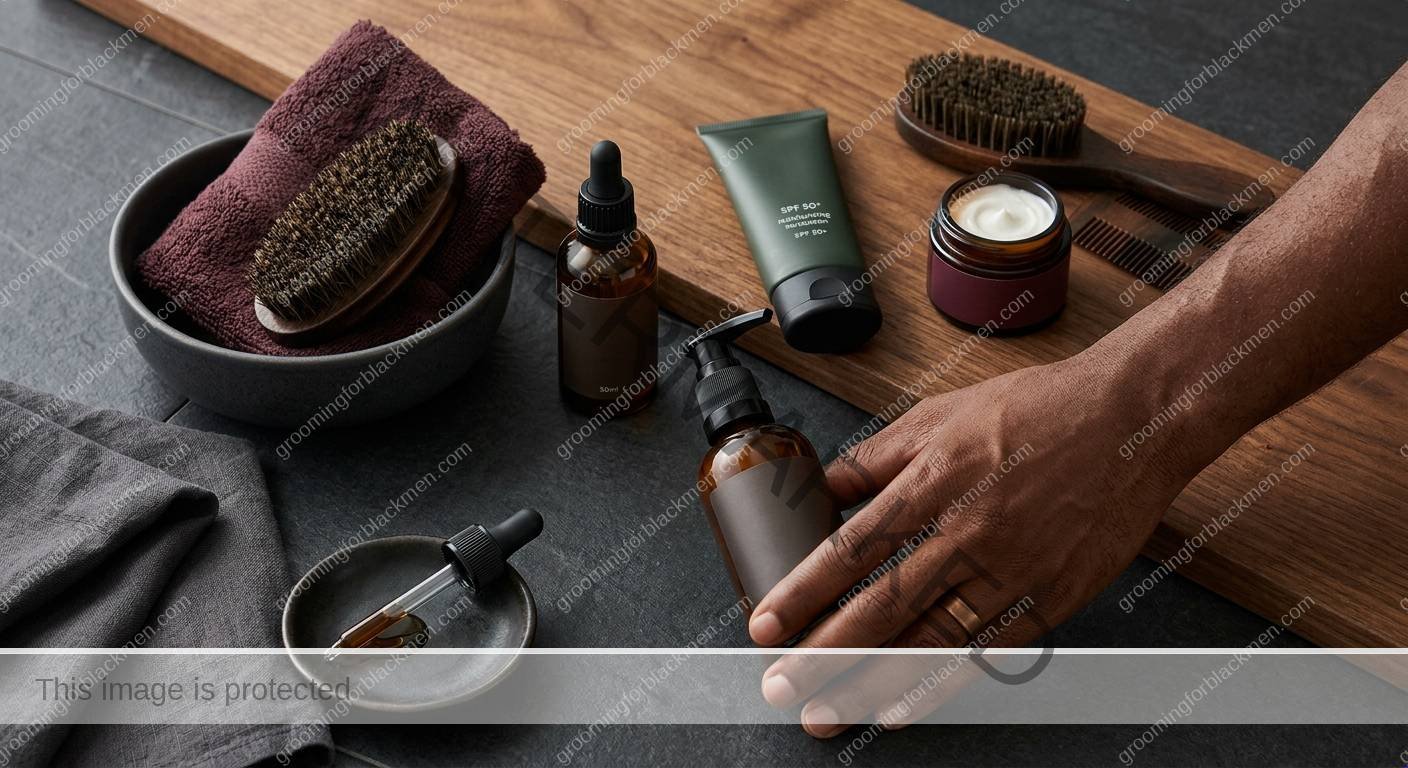
Not all sunscreens are created equal—especially for Black men with rich brown skin. Here’s what to look for:
- SPF 30 or Higher: This is the minimum for daily protection. Higher SPF offers more margin for error, but SPF 30 is a solid baseline.
- Broad Spectrum: Protects against both UVA (aging) and UVB (burning) rays. Look for “broad spectrum” on the label.
- No White Cast: Seek out formulas labeled “invisible,” “sheer,” or “for dark skin.” Tinted mineral sunscreens are also good options.
- Oil-Free or Non-Comedogenic: Especially if you’re prone to breakouts or have coarse facial hair, oil-free formulas are less likely to clog pores.
- Fragrance-Free or Low Fragrance: Reduces the risk of irritation, especially if you have sensitive skin or are treating dark marks with other products.
- Lightweight Texture: Gels, fluids, or lightweight creams tend to work best for daily use.
- Water Resistance: Useful if you sweat heavily or spend time outdoors, but not essential for everyone.
GFBM may earn a small commission from qualifying purchases, but product examples are included to clarify criteria, not to promise results.
- Sunscreen for dark skin men: Search for invisible or sheer formulas that blend without residue.
- Tinted mineral sunscreen for men: Tinted options can help even out skin tone and mask dark marks while protecting.
- Oil free sunscreen for dark skin: Best for men who want a matte finish or are prone to breakouts.
For a deeper breakdown of sunscreen types and how to avoid white cast, see our best sunscreen for Black men with no white cast guide.
Real-Life Scenarios: Sunscreen in Action
Understanding how sunscreen fits into your day-to-day life makes it easier to stay consistent. Here are some scenarios and how to handle them:
- Morning Rush: If you’re short on time, use a moisturizer with SPF 30+ as a two-in-one step. Keep your sunscreen next to your toothbrush or beard oil so you never forget.
- Beard Care: Work sunscreen into the skin beneath your beard. Use your fingertips to part your facial hair and press sunscreen into the skin—don’t just rub it on top.
- Gym Sessions: Sweat can break down sunscreen. If you work out outdoors, reapply after your session. For indoor workouts, a morning application usually holds up unless you towel off your face.
- Office or Remote Work: UV rays can penetrate windows. If your desk is near a window or you spend time in the car, daily sunscreen is still necessary.
- Travel: Pack a travel-sized sunscreen in your bag. If you’re flying or driving long distances, reapply before heading out and after arrival.
- Outdoor Activities: For extended outdoor time, use water-resistant sunscreen and reapply every two hours. Don’t forget your ears, neck, and any exposed scalp.
For more on adapting your grooming routine to real-life situations, see our summer skin care guide for Black men.
How Sunscreen Interacts with Other Grooming Steps
Sunscreen is most effective when it works in harmony with your other grooming products. Here’s how to layer and troubleshoot:
- Exfoliation: Gentle exfoliation (1–2 times a week) helps fade dark marks, but it also makes your skin more sensitive to the sun. Always follow exfoliation with sunscreen.
- Shaving: Shaving can cause micro-cuts and irritation, leading to PIH. Apply sunscreen after shaving to protect healing skin. For tips on shaving with coarse or curly hair, see our razor bump prevention guide.
- Treatments for Dark Marks: Ingredients like retinol, vitamin C, and hydroquinone can make your skin more sun-sensitive. Sunscreen is non-negotiable if you use these treatments.
- Moisturizers and Oils: Apply moisturizer before sunscreen. If you use facial oils, apply them after sunscreen only if needed for extra shine control.
For a full breakdown of how to combine sunscreen with other products, see our dark spots and hyperpigmentation guide.
Common Mistakes and How to Avoid Them
Even with the best intentions, it’s easy to slip up. Here are mistakes to watch for—and how to stay on track:
- Using Too Little: Skimping on sunscreen leaves your skin exposed. Use a nickel-sized amount for your face and neck, and more for other exposed areas.
- Missing Key Areas: Don’t forget your ears, back of your neck, and the skin under your beard. These spots are often overlooked and prone to dark marks.
- Inconsistent Application: Sunscreen only works if you use it every day. Make it as automatic as brushing your teeth.
- Not Reapplying: If you’re outside for long periods, sweating, or swimming, reapply every two hours.
- Layering Issues: If your sunscreen pills or rubs off, let each layer of your routine absorb fully before applying the next.
Troubleshooting and When to Get Help

Even with the right products, you might run into issues. Here’s how to troubleshoot common problems:
- Still Seeing White Cast? Try applying sunscreen in thin layers, warming it between your hands first. Tinted or gel formulas are less likely to show.
- Breakouts or Irritation? Switch to a fragrance-free, oil-free sunscreen. Avoid formulas with alcohol or heavy oils. If irritation persists, pause use and consult a dermatologist.
- Greasy Feel? Use a mattifying moisturizer underneath, or blot with a clean tissue after application. Powder sunscreens can help touch up shine during the day.
- Dark Marks Not Improving? Sunscreen prevents new damage but doesn’t erase marks overnight. Combine with a steady routine of gentle exfoliation and targeted treatments. If marks are painful, spreading, or not improving after months of consistent care, see a qualified clinician.
- Shaving-Related Marks? Pair sunscreen with a disciplined shaving routine. For prevention tips, see our razor bump prevention guide.
If you notice painful, infected, spreading, or persistent irritation, don’t try to fix it yourself. See a dermatologist or qualified clinician for professional advice. For ingredient safety and what to avoid, check our ingredient safety guide.
Adapting Sunscreen and Skincare for Your Lifestyle
Building a practical grooming routine around sunscreen for dark marks for Black men means understanding how your daily life impacts your skin. Whether you’re at work, in the barber’s chair, hitting the gym, or spending time outdoors, the way you use sunscreen and other products can make a difference in how effectively you manage dark spots and hyperpigmentation.
Work and Commute: Keeping Protection Consistent
If you work indoors, you might think sunscreen isn’t necessary. However, UVA rays can penetrate windows and contribute to dark marks. Apply sunscreen every morning as the final step in your grooming routine, regardless of your work environment. If your commute involves walking, biking, or public transport, reapply sunscreen if you’ll be outside for more than two hours, especially during peak sunlight.
- Desk Job: Choose a lightweight, non-greasy sunscreen that won’t leave a white cast. Some formulas are designed to blend seamlessly with rich brown skin.
- Outdoor Work: Opt for water-resistant, broad-spectrum sunscreens. Consider a stick or spray for easy reapplication during breaks.
- On-the-Go: Keep a travel-sized sunscreen in your bag or car for quick touch-ups.
Barber Visits and Haircuts: Protecting Fresh Skin
Barber visits can sometimes irritate the skin, especially if you get a close shave or edge-up. Freshly shaved or lined-up areas are more vulnerable to sun damage and hyperpigmentation. After a cut, wait until your skin has calmed before applying sunscreen. If your barber uses a razor or trimmer on your face or neck, ask them to avoid harsh aftershaves that can sting or dry out your skin.
- Apply sunscreen gently to freshly shaved areas, using clean hands to avoid irritation.
- Consider a fragrance-free, sensitive skin formula if you’re prone to razor bumps or irritation. For more on this, see the razor bump marks guide.
- If you notice increased sensitivity or redness after a haircut, give your skin a day to recover before using active treatments like retinoids or vitamin C.
Shaving and Grooming: Timing Your Sunscreen
Shaving can cause micro-abrasions, making your skin more susceptible to irritation and dark marks. To minimize risk:
- Shave in the evening when possible, so your skin has time to recover overnight.
- Apply sunscreen the next morning, not immediately after shaving, to reduce stinging or burning sensations.
- If you shave in the morning, use a gentle, hydrating sunscreen designed for sensitive skin. Avoid formulas with alcohol or heavy fragrance.
- Pair sunscreen with a soothing moisturizer to help restore your skin barrier.
Workouts and Outdoor Activities: Sweat-Proof Protection
Physical activity increases sweat and oil production, which can break down sunscreen faster. If you’re working out outdoors or playing sports, choose a water- and sweat-resistant sunscreen. Reapply every two hours, or immediately after heavy sweating or towel-drying.
- Look for non-comedogenic formulas that won’t clog pores or cause breakouts.
- For gym sessions indoors, sunscreen is still important if you’ll be near windows or heading outside afterward.
- Use a gentle cleanser post-workout to remove sweat, oil, and sunscreen residue, then reapply if you’re heading back outside.
Budget-Friendly Sunscreen Strategies
Quality sunscreen doesn’t have to break the bank. Focus on the essentials: broad-spectrum SPF 30 or higher, non-comedogenic, and a formula that works for your skin tone. Drugstore brands often offer effective options without the premium price tag.
- Test travel sizes or sample packs before committing to a full-size product.
- Consider multipurpose moisturizers with SPF for a streamlined, cost-effective routine.
- Consistency matters more than brand—apply every day, not just when you’re outside for long periods.
Managing Sensitive Skin and Product Reactions
Melanin-rich skin can be more reactive to certain ingredients, especially fragrances, alcohols, and harsh preservatives. If you have sensitive skin, opt for mineral (physical) sunscreens with zinc oxide or titanium dioxide. These are less likely to cause irritation and are often recommended for those prone to eczema or razor bumps.
- Patch test new products on a small area before applying to your whole face.
- Avoid layering too many actives (like retinoids, vitamin C, or exfoliating acids) with sunscreen until you know how your skin responds.
- If you experience burning, stinging, or breakouts, pause new products and focus on gentle cleansing, moisturizing, and sunscreen until your skin calms down.
What Realistic Progress Looks Like
When using sunscreen for dark marks, Black men should expect gradual, steady improvement—not overnight results. The main role of sunscreen is to prevent existing dark spots and hyperpigmentation from getting worse and to support the effectiveness of other treatments. With consistent use, you may notice your marks slowly fading and your overall skin tone evening out.
- New dark marks may stop getting darker or inflamed.
- Older marks may gradually lighten over months with daily protection.
- Skin texture and tone may become smoother and more uniform.
- Breakouts or irritation may decrease as your skin barrier strengthens.
Progress depends on factors like genetics, the depth of pigmentation, and how well you stick to your routine. Sunscreen is a foundational step, but pairing it with targeted treatments (like niacinamide or vitamin C) can enhance results. For a deeper dive, check out the dark spots and hyperpigmentation guide.
How to Avoid Making Dark Marks Worse
Melanin-rich skin is prone to post-inflammatory hyperpigmentation, meaning even minor irritation can lead to new or darker marks. Here’s how to protect your skin and prevent setbacks:
- Don’t skip sunscreen: Unprotected sun exposure can darken existing marks and trigger new ones, even on brown skin.
- Avoid harsh scrubs: Physical exfoliants can cause microtears, leading to more hyperpigmentation. Opt for gentle chemical exfoliants if needed, and use them sparingly.
- Be gentle with active ingredients: Overusing retinoids, acids, or vitamin C can irritate skin and worsen dark marks. Introduce one active at a time and monitor your skin’s response. For more, see the retinoids guide or vitamin C guide.
- Hands off: Picking, scratching, or squeezing bumps can cause trauma and increase pigmentation.
- Moisturize daily: Hydrated skin is less likely to become inflamed or irritated, supporting your skin’s natural healing process.
Remember, patience and consistency are key. If you notice new marks appearing or existing ones worsening despite your efforts, it may be time to reassess your routine.
When to Simplify, Pause, or Consult a Dermatologist
Sometimes, less is more. If your skin starts to feel irritated, overly dry, or you’re breaking out more than usual, it’s wise to simplify your routine:
- Scale back to the basics: gentle cleanser, moisturizer, and sunscreen.
- Pause actives like retinoids, acids, or vitamin C until your skin calms down.
- Reintroduce one product at a time to identify potential triggers.
Consider seeing a dermatologist if:
- Your dark marks are spreading, deepening, or not improving after several months of consistent care.
- You experience persistent irritation, burning, or allergic reactions to multiple products.
- You have underlying skin conditions (like eczema or severe acne) that make at-home management difficult.
A dermatologist can recommend prescription treatments or in-office procedures tailored to melanin-rich skin. They can also help you build a routine that fits your lifestyle and budget, ensuring you get the best results without unnecessary risk.
For those just starting out, the dark spots starter routine offers a practical approach to building a foundation before layering on more advanced treatments.
Frequently Asked Questions
Do Black men really need sunscreen if they have dark skin?
Yes. While melanin offers some natural protection, it’s not enough to prevent sun-induced dark marks and hyperpigmentation. Sunscreen is essential for protecting healing skin and preventing new spots.
Will sunscreen make my dark marks fade faster?
Sunscreen doesn’t erase dark marks, but it prevents them from getting darker and helps your skin heal more evenly. For best results, use sunscreen alongside other targeted treatments.
How do I avoid white cast from sunscreen on brown skin?
Choose sunscreens labeled “invisible,” “sheer,” or “for dark skin.” Tinted mineral sunscreens are also a good option. Apply in thin layers and blend well.
Can I use sunscreen if I have oily or acne-prone skin?
Yes. Look for oil-free, non-comedogenic formulas. These are less likely to clog pores or trigger breakouts. Lightweight gels or fluids work well for oily skin.
How much sunscreen should I use on my face?
Use about a nickel-sized amount for your face and neck. Make sure to cover all exposed areas, including ears and the back of your neck if you have a short haircut.
Do I need to reapply sunscreen if I’m indoors all day?
If you’re exposed to sunlight through windows or spend time near screens, it’s still smart to use sunscreen in the morning. Reapply if you sweat, wipe your face, or spend extended time outdoors.
What should I do if sunscreen irritates my skin?
Switch to a fragrance-free, gentle formula. Avoid alcohol-heavy or thick, greasy products. If irritation continues, stop use and consult a dermatologist or qualified clinician.
What to Do Next
Building a disciplined grooming routine starts with the basics. If you’re serious about tackling dark marks and hyperpigmentation, make sunscreen a non-negotiable part of your daily lineup. Choose a formula that fits your skin’s needs and your lifestyle, and use it consistently. Pair sunscreen with gentle cleansing, targeted treatments, and smart shaving habits for the best results.
For a full breakdown of how to address dark spots and hyperpigmentation, explore our dark spots and hyperpigmentation guide. If you’re struggling with shaving-related marks, check our razor bumps and dark marks guide. For ingredient safety and how to avoid common irritants, see our ingredient safety guide. Stay disciplined, stay consistent, and protect your skin every day—your future self will thank you.