
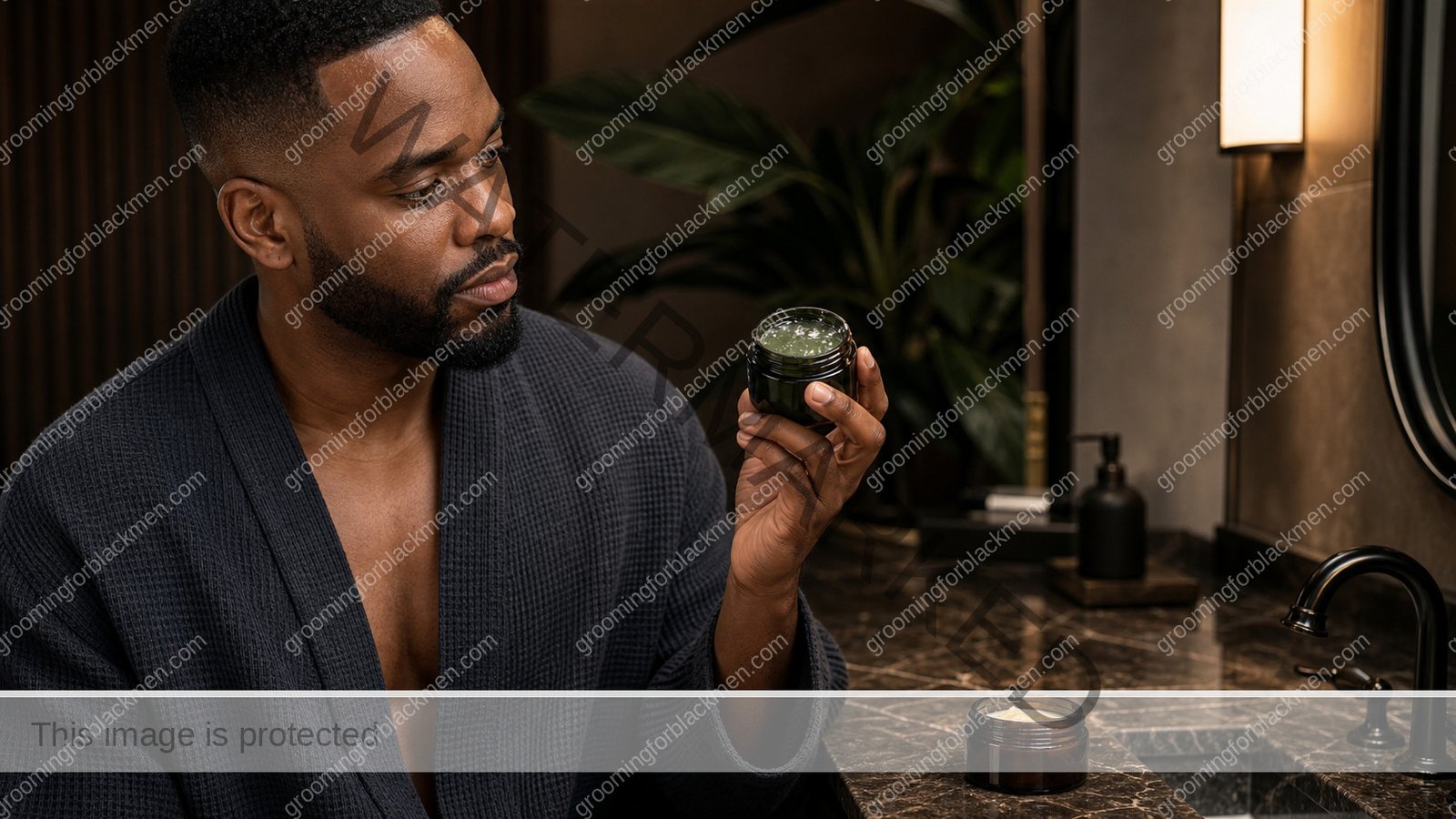
The Best Moisturizers for Black Men: Lightweight to Heavy-Duty is for the man who wants a clear decision, not another shelf full of promises. The best moisturizer is not one universal jar. It is the lightest texture that keeps your face comfortable for the conditions you are actually in. This guide compares gels, lotions, creams, and heavier occlusive options so Black men can match moisture to oil level, shaving, climate, beard area, and barrier condition.
Black skin is not difficult skin. It is skin whose irritation and inflammation can leave highly visible, long-lasting marks, especially around acne and shaving. This article sits inside the GFBM skincare guide for Black men and the relevant routine cluster. The goal is a routine that respects richly melanated skin without shame, colorism, or manufactured urgency.
The Quick Answer
The best moisturizer is not one universal jar. It is the lightest texture that keeps your face comfortable for the conditions you are actually in. This guide compares gels, lotions, creams, and heavier occlusive options so Black men can match moisture to oil level, shaving, climate, beard area, and barrier condition. Start by naming one problem, choosing the least aggressive step that can address it, and keeping the rest of the routine steady. Burning, peeling, and a squeaky finish are not proof of progress.

Why This Matters for Black Men
Moisturizers do more than add oil
A moisturizer can include humectants that attract water, emollients that smooth rough spaces, and occlusives that reduce water loss. Most formulas combine these jobs in different proportions. Texture tells you something, but the ingredient list and real after-feel matter more than the marketing category.
The useful question is not whether this point appears in a marketing claim. It is whether it changes the next decision. Keep the routine anchored to comfort, repeatability, and the visible pattern on your own face. Rich brown skin can hide bright redness, so tenderness, heat, itching, gray-brown discoloration, and new sensitivity deserve the same attention.
Ashiness is a surface signal, not a measure of cleanliness
Dry, rough skin scatters light and can look gray or ashy on rich brown skin. That visibility does not mean a man is dirty or neglectful. It means the surface may need gentler cleansing, better timing, a richer texture, or protection from dry air and wind.
This distinction protects both the skin and the budget. When the job of a step is clear, a man can compare formulas without assuming expensive means effective. It also makes stopping easier: if the product does not perform its named job or makes the face less comfortable, loyalty to the purchase is not required.
Oil level and water comfort are separate decisions
Oily skin can still feel tight after washing, while dry skin can break out from a formula that is too occlusive. Choose by how the face behaves over several hours. Gel and lotion textures often suit oilier conditions; creams and balms can help drier zones or seasons.
Think in trends rather than one-day snapshots. Shaving, weather, sleep, exercise, and workplace exposure can change the face temporarily. Compare similar days and similar lighting. That keeps normal variation from becoming a new diagnosis and prevents a short-lived change from triggering an unnecessary shelf reset.
Shaving changes what the beard area tolerates
Freshly shaved skin may sting with fragrance or strong actives. A simple moisturizer can reduce dry after-feel without replacing sound shave technique. Under a beard, lighter products may reach the skin more easily than waxy formulas that sit on the hair.
For Black men, prevention includes preventing new inflammation. A routine that looks sophisticated but repeatedly creates stinging, bumps, or peeling is working against the long-term appearance goal. Calm skin gives any optional treatment a fairer environment and reduces the chance that irritation leaves a persistent mark.
Climate can change the winner
A moisturizer that works in humid summer may fail during cold wind and indoor heat. A winter cream may feel heavy during outdoor labor in August. Owning two textures for different conditions can be more rational than searching for one product that never needs adjustment.
The point is control, not perfection. Skin can be healthy while showing pores, texture, oil, beard shadow, and more than one tone. Use the information to reduce avoidable discomfort and damage; do not turn ordinary features of a human face into defects that require constant correction.

What Usually Goes Wrong
Choosing by gendered marketing
A black bottle labeled for men does not reveal whether the formula is fragrance-heavy, lightweight, or suitable after shaving. Read the ingredients, texture, directions, and return policy. Skin function matters more than packaging.
A better move is to remove one source of stress and watch the response. Keep cleanser, moisturizer, sunscreen, and shave technique as stable as possible. That controlled change gives useful evidence and avoids the familiar pattern of treating irritation with another active, then buying a third product to repair the second.
Applying moisturizer to completely dry skin
Applying after cleansing while the face is still slightly damp can help trap water. This does not mean dripping wet, and it does not fix a formula that irritates. It simply gives a suitable moisturizer a better starting condition.
Pay attention to the sequence around the problem: cleansing, shaving, treatment, moisturizer, sunscreen, sweat, and environmental exposure. A brief note on the day symptoms appear can reveal more than a long ingredient debate. The face often responds to combinations and timing, not one ingredient in isolation.
Using too much heavy product on acne-prone areas
A rich cream or balm can be useful on dry cheeks yet feel congesting through an oily T-zone. Use different amounts by zone. Non-comedogenic labeling can help narrow choices but is not a guarantee.
Do not let a fast cosmetic effect overrule comfort. A suddenly matte, tight, or peeled surface may look different without being healthier. If the price of that effect is burning or worsening discoloration, the routine has failed its practical job even if the label promised rapid transformation.
Blaming moisturizer for sunscreen cast
A gray finish may come from the sunscreen, product pilling, or too many layers rather than inadequate moisture. Test each layer separately and allow products to settle before replacing the moisturizer.
This is also where budget discipline matters. Replacing a suitable basic product because an ad created a new worry wastes money and adds uncertainty. Finish a comfortable product when it is doing its job; replace it when evidence from repeated use shows a real problem.
Expecting moisturizer to treat every condition
Moisturizer supports comfort and barrier function, but it does not diagnose eczema, seborrheic dermatitis, acne, infection, or allergy. Persistent itch, rash, painful cracks, drainage, or widespread scale deserves evaluation.
If the reaction is painful, spreading, blistering, infected-looking, causing scars, or involving the eyes or breathing, stop self-experimenting. Bring the product list and timeline to a qualified clinician. Grooming advice can guide low-risk choices, but it cannot diagnose a rash from written symptoms.
The Gentle, Practical Plan
Use this sequence as a decision framework. Each step has one job, a review point, and a reason to pause. You do not need to complete every optional step for the routine to count.
Step 1: Identify your dominant problem
Choose the main issue: midday grease, post-wash tightness, flaky cheeks, beard-area dryness, winter ashiness, or irritation from an active. One named problem makes the texture decision clearer.
Keep the first attempt deliberately simple. Use the label amount, avoid rubbing harder than necessary, and do not add a second new product on the same day. The goal of the first week is to understand tolerance, not to force a visible transformation before the skin has had time to respond.
Step 2: Start with the lightest likely texture
Oily or humid conditions often suit gel or gel-cream. Normal or combination skin may prefer lotion. Dry skin, cold weather, or retinoid use may need cream. Very dry spots can use a small amount of balm over cream.
Fit the step to real life. Consider early shifts, gym days, travel, facial hair, and whether the product has enough time to settle before sunscreen or PPE. A theoretically excellent formula that is too sticky, fragranced, expensive, or slow for the schedule is not the best practical choice.
Step 3: Check humectants, emollients, and occlusives
Common humectants include glycerin and hyaluronic acid; emollients include ceramides and fatty alcohols; occlusives include petrolatum and dimethicone. You do not need all of them in equal amounts. The formula should solve the actual after-feel.
Set a stop rule before beginning. Persistent burning, swelling, rash, painful peeling, drainage, or new dark patches are reasons to pause. Return to the tolerated base and let the face settle. Continuing through clear irritation is not consistency; it is losing control of the experiment.
Step 4: Patch test and begin with a small amount
Apply to a limited area for several days, especially if fragrance or breakouts are concerns. Then use a measured amount on the face. More product can create shine and pilling without adding useful comfort.
Use clean hands and measured product. Extra product rarely shortens a cosmetic timeline, but it can increase residue, pilling, and irritation. Around facial hair, work gently toward the skin rather than scraping the surface or leaving every layer sitting on the beard.
Step 5: Apply by zone
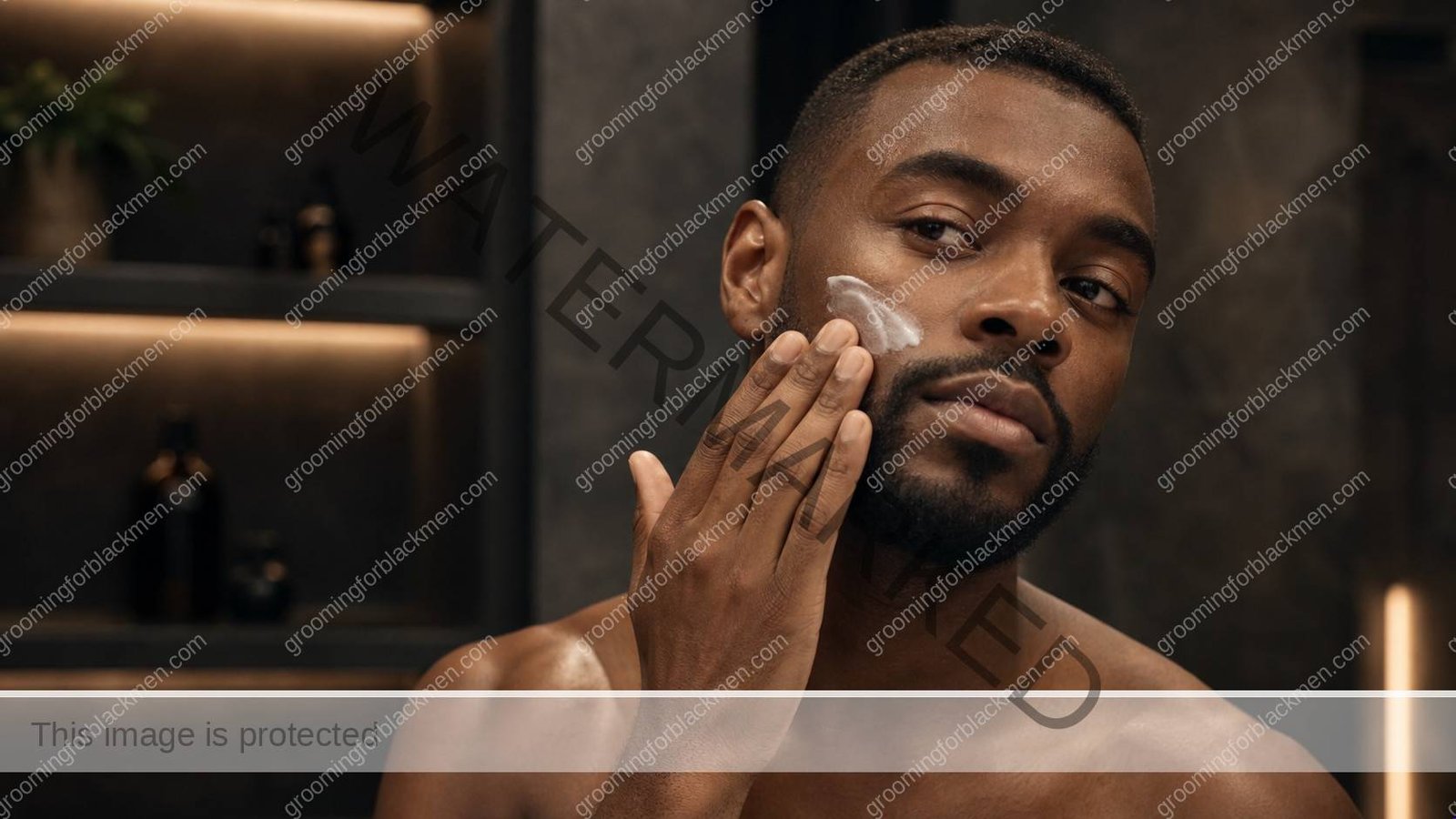
Spread a thin layer across the face, then add a little more to dry cheeks, corners of the mouth, or the beard line. Use less through naturally oily areas. Press gently instead of rubbing hard.
Review the result on a date, not every hour. Comfort can be assessed quickly, but tone, texture, and acne patterns need longer. Monthly photographs in similar lighting are more honest than moving between a bathroom mirror, a car mirror, and a phone camera throughout the day.
Step 6: Test it with sunscreen and shaving
A daytime moisturizer must cooperate with sunscreen. An after-shave moisturizer must not sting persistently. Test those real combinations before judging a product from a quiet night at home.
When the step works, keep it boring. There is no prize for adding another active to a routine that already solves the problem. Stability leaves room for the face to recover from shaving, weather, and work instead of demanding constant adaptation to new products.
Step 7: Review after two to four weeks
Look for less tightness, less visible flaking, fewer irritation events, acceptable shine, and no clear increase in clogged or painful bumps. Adjust texture or amount before adding another treatment product.
If the step is useful only under certain conditions, document that. A richer texture may belong to winter nights, while a lighter one belongs under summer sunscreen. Context-specific use is informed grooming, not inconsistency, as long as the purpose of each version remains clear.
Product Criteria and Examples
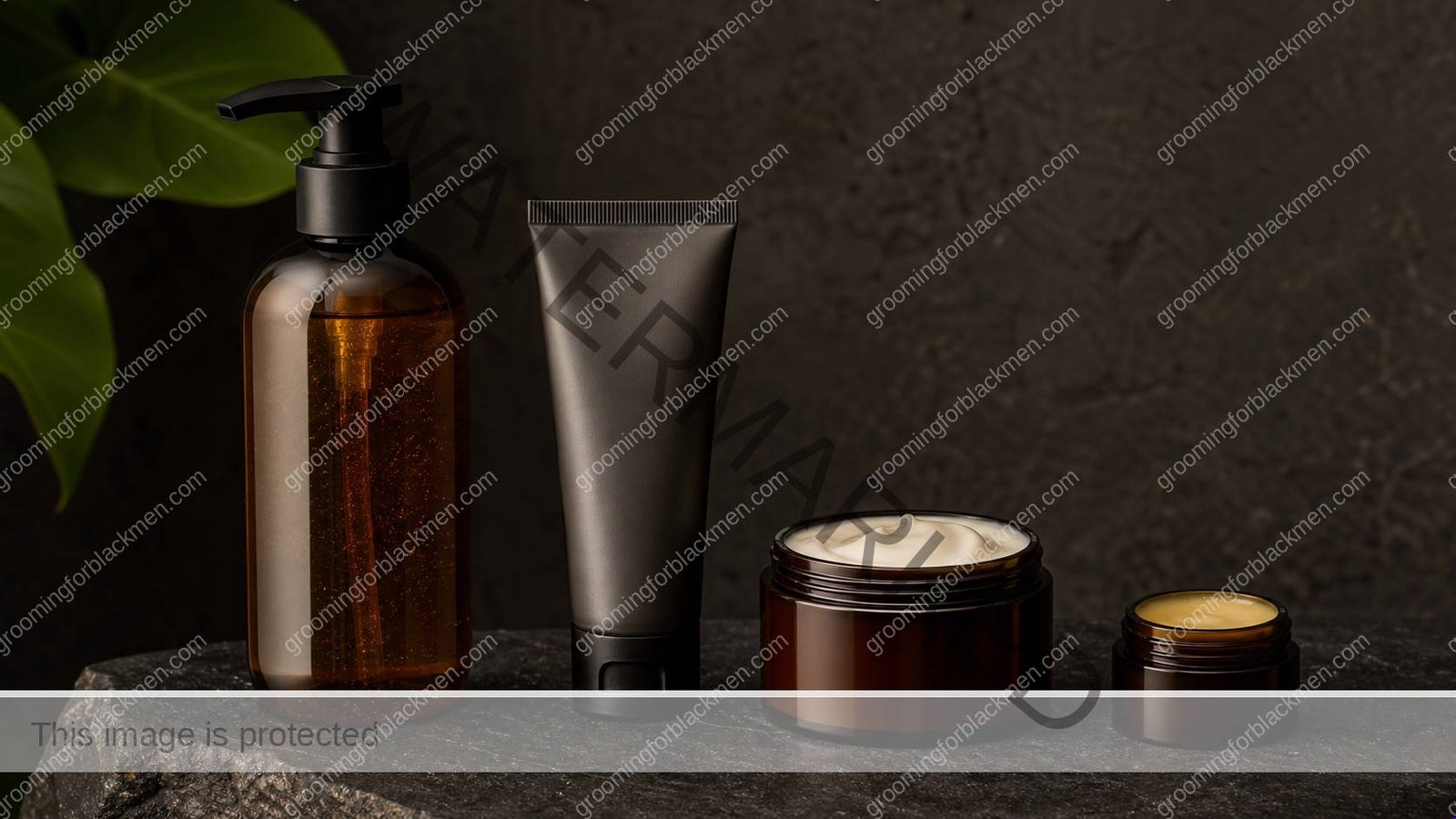
A lightweight option should settle without a sticky film and may use glycerin, hyaluronic acid, ceramides, or dimethicone in a gel or lotion base. A richer cream should provide longer comfort without fragrance-driven sting. A heavy-duty balm or petrolatum-based layer is best reserved for very dry areas or short-term barrier support, not automatically spread thickly over every acne-prone zone.
Affiliate disclosure: GFBM may earn from qualifying purchases through the Amazon search links below. They are category examples for comparison, not guarantees, prescriptions, or proof that a higher price will work better.
- lightweight gel moisturizer for men: compare the complete formula, texture, packaging, directions, and return policy before buying.
- fragrance free face cream for dry skin men: compare the complete formula, texture, packaging, directions, and return policy before buying.
- facial balm for dry skin men: compare the complete formula, texture, packaging, directions, and return policy before buying.
Criteria come before brand. Check whether the product performs its named job, cooperates with the rest of the routine, and remains comfortable over a full day. A product that works only when used in a tiny amount, hidden under another layer, or followed by a repair purchase is not providing good value.
Real-Life Scenarios
Oily face, dry beard line
Use a gel or light lotion overall, then add a little more moisturizer beneath the beard with fingertips. Avoid coating beard hair so heavily that product never reaches the skin.
Change the smallest variable that answers this situation. Keep the protective basics intact and avoid treating one difficult day as proof that the whole routine is wrong. A short record of what happened before and after the change will make the next decision more accurate.
Ashiness returns after two hours
Review cleanser strength, apply on slightly damp skin, and move one texture richer. Wind, air conditioning, and indoor heat can increase water loss. The fix may be timing and environment, not another exfoliant.
The face may be reacting to timing or friction rather than the headline ingredient. Review shaving, sweat, headwear, pillowcases, phone contact, and product layering. That practical audit is more useful than buying a stronger version of the same category without understanding the trigger.
Retinol nights
Use a plain fragrance-free cream before or after retinol according to your tolerance and product directions. If peeling or burning continues, reduce retinol frequency. Moisturizer should support a safe schedule, not conceal overuse.
Use sensation as evidence. On deep skin, inflammation may appear as tenderness, heat, itch, ash-gray change, or later darkening instead of bright redness. Stop when discomfort persists. A routine should make the day easier, not require a private argument with your face.
Hot, humid outdoor work
Choose a light layer that can settle before PPE and sunscreen. Heavy balm can trap heat and feel uncomfortable. Keep richer product for nighttime or dry zones unless the skin clearly needs more.
If the pattern keeps returning despite a controlled routine, professional evaluation becomes the efficient next step. Bring photographs, product names, work exposures, shaving details, and a timeline. Specific evidence helps a clinician distinguish ordinary irritation from a condition that needs treatment.
Troubleshooting and Progress Checks
Review comfort first. Less tightness, less burning, fewer new irritation events, and a routine you can complete are real progress. Then review the cosmetic goal in similar lighting at sensible intervals. Daily close inspection can turn normal pores, texture, beard shadow, and lighting changes into false evidence of failure.
When a new product causes persistent burning, swelling, rash, severe peeling, painful bumps, drainage, or worsening discoloration, stop forcing the schedule. Return to the tolerated cleanser, moisturizer, and sunscreen as appropriate. Seek professional care for symptoms that are painful, spreading, infected-looking, scarring, rapidly changing, or not improving.
For a connected next question, read fixing ashiness after moisturizing and outdoor-work skincare. These links stay within the same planned skincare group so the reader can move through one coherent system.

How to Judge Results Without Guessing
Build a baseline
Before changing best moisturizer for Black men face, spend one week noting how the face feels after washing, at midday, after shaving, and at night. Record tightness, stinging, flaking, unusual shine, new bumps, and new dark marks. You are not monitoring every pore. You are learning the face’s ordinary rhythm so a later change has an honest comparison.
Separate comfort from appearance
Comfort can improve before a dark mark or fine line changes. Less stinging and fewer irritated bumps matter because a calmer barrier makes consistency possible. If the mirror seems temporarily smoother while the face is burning or peeling, do not call that success. The cosmetic goal never outranks skin safety.
Control one variable
Write down the date, product, frequency, shave timing, and any unusual work or exercise exposure. Keep the rest of the routine stable. If several products change together, a result may appear without revealing the cause. Controlled changes protect the budget and make it easier to remove only the failing layer.
Account for season and schedule
Humidity, cold wind, indoor heat, outdoor labor, and close shaving change what the skin tolerates. Keep the function of the routine stable while adjusting texture or timing. A lighter summer product and richer winter product can both be correct. Context is not inconsistency when each choice has a clear job.
Know when professional care is the efficient choice
Seek a board-certified dermatologist or another qualified clinician when a concern is painful, rapidly changing, bleeding, infected-looking, causing scars, or not improving with a consistent gentle approach. For Black men, a clinician experienced with skin of color can be helpful, but the immediate priority is someone qualified who listens, examines the pattern, and does not dismiss the effect of pigmentation or shaving.
Keep a useful product record
Photograph the front label, ingredient list, lot code, and opening date before the packaging becomes worn. Record the amount and frequency you actually use, not the schedule you intended to follow. If the manufacturer changes a formula or the replacement bottle behaves differently, that record gives you something concrete to compare. It also helps a dermatologist review the routine without relying on a product name that may cover several versions. Keep receipts during the trial period and check the return policy before opening backup bottles.
Measure value beyond the shelf price
A low price is not automatically affordable if the product causes irritation, requires corrective purchases, or sits unused because the texture does not fit the day. Compare cost per use, package stability, return options, and whether the formula replaces or adds a step. A plain product that you finish comfortably can provide more value than a prestige formula used twice and abandoned. Do not stock multiples until the first container has proved useful across normal shaving, work, exercise, and weather conditions.
Finally, define success before advertising changes the target. Success may mean less post-wash tightness, fewer inflamed beard bumps, more predictable midday shine, or fewer new dark marks. Write that standard beside the review date. If a well-tolerated product does not perform its named job after a fair trial, removing it is a sound decision. If it does perform, keeping the routine stable is usually more useful than adding a new problem for the next product to solve.
Use the same discipline when something goes wrong. Do not discard every basic step because one treatment failed. Preserve the cleanser, moisturizer, sunscreen, or shave practice that has already proved comfortable, and repair only the layer connected to the problem. This keeps the routine understandable and protects good work from being lost during troubleshooting.
That approach also makes future shopping easier. You will know which function needs improvement, which textures already work, and which ingredients or conditions caused trouble. A clear record turns the next purchase into a focused decision instead of another full-routine gamble.
Evidence Behind the Guidance
The sources below define the safe boundaries of this guide. Study populations and finished formulas do not perfectly predict how every Black man will respond, so evidence is presented as support for reasonable decisions rather than a guarantee of a personal result.
- American Academy of Dermatology: moisturizer guidance
- American Academy of Dermatology: dry skin relief
- American Academy of Dermatology: simple skincare on a budget
Frequently Asked Questions
What is the best moisturizer for Black men’s faces?
There is no single winner. Oily skin often prefers gel or light lotion, normal or combination skin may suit lotion or gel-cream, and dry or irritated skin may need cream. Choose the lightest texture that maintains comfort without obvious congestion or persistent shine.
Can moisturizer fix an ashy face?
It often helps when ashiness comes from surface dryness, but cleanser strength, application timing, weather, sunscreen cast, and skin conditions also matter. Apply on slightly damp skin and reassess after several hours. Persistent itchy or inflamed scale may need professional care.
Should oily Black skin use moisturizer?
Usually some moisture is helpful, but the amount can be small and the texture light. A gel, gel-cream, or fluid lotion may support comfort. If sunscreen provides enough daytime moisture, a separate morning layer may be unnecessary.
Is petrolatum safe for the face?
Plain petrolatum is an effective occlusive and can help very dry or irritated areas, but a thick full-face layer may feel heavy for acne-prone men. Use a small amount over moisturizer where needed and stop if a clear pattern of congestion develops.
Do I need a separate beard moisturizer?
Not necessarily. A light facial moisturizer can often reach the skin beneath a short beard. Longer beard hair may benefit from a separate conditioner or oil, but those products should not replace care for the skin underneath.
Why does moisturizer burn after shaving?
Fresh micro-injuries, fragrance, alcohol, acids, retinoids, or a damaged barrier may cause stinging. Use a plain formula and gentler shave technique. Persistent burning, swelling, rash, or worsening dark marks means stop and reassess.
How do I know a moisturizer is clogging my pores?
Look for a repeatable increase in similar bumps after introduction, not one random blemish. Keep the rest of the routine stable and observe for several weeks if comfortable. Painful or scarring acne should be treated with professional guidance rather than endless moisturizer swaps.
What to Do Next
The best moisturizer is not one universal jar. It is the lightest texture that keeps your face comfortable for the conditions you are actually in. This guide compares gels, lotions, creams, and heavier occlusive options so Black men can match moisture to oil level, shaving, climate, beard area, and barrier condition. Choose one small step you can repeat this week and leave the rest of the routine alone long enough to learn from it. A product does not become more effective because the routine feels punishing, and your skin is not failing because it needs a slower pace.
Continue with managing oily skin without stripping or building a skincare routine in your 40s. Each guide answers a nearby decision without requiring you to rebuild the whole routine.