This guide focuses on a careful preparation sequence before shaving. The aim is a routine that is clear, repeatable, and comfortable, without unnecessary products or aggressive technique.
Use it to assess coarse facial hair, razor drag, ingrown hairs, irritation, uneven growth direction, and dark marks. Start with the basics, change one variable at a time, and judge progress over several weeks rather than after one application.
For the broader foundation, use the GFBM razor-bumps hub.
How to Put This Guide Into Practice
The most useful way to apply this guide is to make one controlled change at a time. Start by writing down what you currently use, how often you use it, and what your skin or hair does during the following twenty-four hours. That short record prevents guesswork. It also helps you separate a product problem from a technique problem, a weather change, or simple inconsistency.
For this topic, the central goal is a careful preparation sequence before shaving. Build around that goal before adding optional products. Keep the core routine visible and easy to reach. Store the items in application order, clean the tools that touch your face, and remove anything that repeatedly burns, stings, flakes, or leaves heavy buildup. A routine should be easy to repeat on a rushed morning and a tired night, not only when you have extra time.
Week 1: Establish a Baseline
During the first week, avoid chasing fast results. Use the smallest dependable routine and observe coarse facial hair, razor drag, ingrown hairs, irritation, uneven growth direction, and dark marks. Take two clear photos in the same lighting: one at the start and one after seven days. Note comfort after cleansing, midday oil or tightness, the condition of the beard and neck, and any new bumps or marks. Do not judge progress from a single mirror check after a bad shave or a long day.
Week 2: Correct Technique Before Buying More
In the second week, examine pressure, timing, product amount, water temperature, and tool cleanliness. Many grooming problems are intensified by rushing, repeated passes, aggressive scrubbing, or using far more product than the skin can comfortably handle. Correcting technique is inexpensive and gives every product a fairer test. If you introduce something new, patch test it and keep the rest of the routine stable.
Week 3: Add One Targeted Upgrade
Choose one upgrade that directly addresses the most important concern you recorded. That may be a gentler cleanser, a lighter or richer moisturizer, a different shaving tool, a targeted treatment, or a sunscreen that blends without a distracting cast. Use it according to the label and resist combining several strong ingredients. When irritation appears, return to the basic routine instead of trying to treat the reaction with more actives.
Week 4: Review Results and Set the Next Month
At the end of four weeks, compare your notes and photos. Look for fewer new bumps, less tightness, better hydration, more predictable oil control, improved comfort, or a routine that is simply easier to complete. Dark marks and texture often require more time, so judge whether the process is moving in the right direction rather than demanding a finished result. Keep what works, remove what does not, and choose only one priority for the next month.
A Practical Decision Framework

| What you notice | Likely adjustment | What not to do |
|---|---|---|
| Burning, persistent stinging, or sudden sensitivity | Pause strong treatments and use a gentle cleanser and moisturizer | Add another acid, scrub, or fragranced product |
| New bumps after shaving | Review beard direction, pressure, blade condition, and shave closeness | Pick the bumps or repeatedly shave over them |
| Dryness or visible ashiness | Use lukewarm water and apply a suitable moisturizer to slightly damp skin | Use harsher soap or longer hot showers |
| Heavy oil or product buildup | Reduce product amount and choose lighter textures | Strip the face several times a day |
| Dark marks that are not improving | Prevent new inflammation, use sunscreen, and stay consistent with one treatment | Scrub aggressively or change products every few days |
Seek a dermatologist when you have painful or cystic acne, spreading irritation, signs of infection, severe or scarring razor bumps, unexplained hair loss, or a skin change that persists. A grooming routine can support healthy habits, but it cannot diagnose or replace medical care.
Understanding the Unique Challenges of Shaving for Black Men

Before we delve into the art of the pre-shave routine, it’s imperative to acknowledge the specific physiological factors that make shaving a distinct experience for Black men. Our hair, often characterized by its tight curl pattern, and our skin, prone to certain types of irritation, require a tailored approach. Ignoring these unique attributes is often the root cause of common shaving woes.
The Culprit: Pseudofolliculitis Barbae (PFB)
Pseudofolliculitis barbae, more commonly known as razor bumps or ingrown hairs, is perhaps the most prevalent and frustrating issue faced by Black men who shave. This condition occurs when sharply cut hairs, especially those with a tight curl, recoil and grow back into the skin instead of out of the follicle. The body then perceives these ingrown hairs as foreign objects, triggering an inflammatory response that results in painful, itchy, and often unsightly bumps. Over time, PFB can lead to hyperpigmentation, scarring, and even infection. Understanding that PFB is a direct consequence of how hair interacts with the skin post-shave is the first step in preventing it.
Skin Sensitivity and Hyperpigmentation
Melanin-rich skin, while possessing incredible resilience and a natural shield against sun damage, can be more susceptible to post-inflammatory hyperpigmentation (PIH). This means that any irritation, cuts, or bumps from shaving can leave behind dark spots that take time to fade. Therefore, minimizing inflammation and trauma during the shaving process is paramount not only for immediate comfort but also for maintaining an even, radiant complexion.
Hair Texture and Growth Patterns
The tightly coiled nature of Black men’s facial hair is both a blessing and a challenge. While it contributes to a distinguished appearance, it also increases the likelihood of hairs curling back into the skin. Furthermore, growth patterns can be varied and unpredictable, requiring a strategic approach to shaving that respects the direction of hair growth rather than aggressively cutting against it.
The Philosophy of a Superior Pre-Shave Routine
A truly effective pre-shave routine isn’t about adding extra steps; it’s about optimizing each stage to prepare your skin and hair for the closest, most comfortable shave possible, all while mitigating the risks of irritation and ingrown hairs. Think of it as laying the perfect foundation for a masterpiece. This preparation softens the hair, lifts it away from the skin, lubricates the surface, and cleanses away impurities, creating an ideal environment for your razor to glide effortlessly.
Step-by-Step Guide: The Ultimate Pre-Shave Routine for Black Men
This detailed guide walks you through each crucial step, explaining its purpose and offering product recommendations tailored for melanin-rich skin and textured hair.
Step 1: The Warm Water Wash – Opening the Gates to a Better Shave
The very first step in any superior shave begins with warm water. This isn’t just about cleanliness; it’s about preparation. Warm water opens up the pores, softens the hair follicles, and makes the hair shafts more pliable and easier to cut. It also helps to relax the skin, reducing tension that can lead to nicks and irritation.
How to Execute:
- Warm Shower: The ideal scenario is to shave after a warm shower. The steam and warmth will have already done much of the preparatory work.
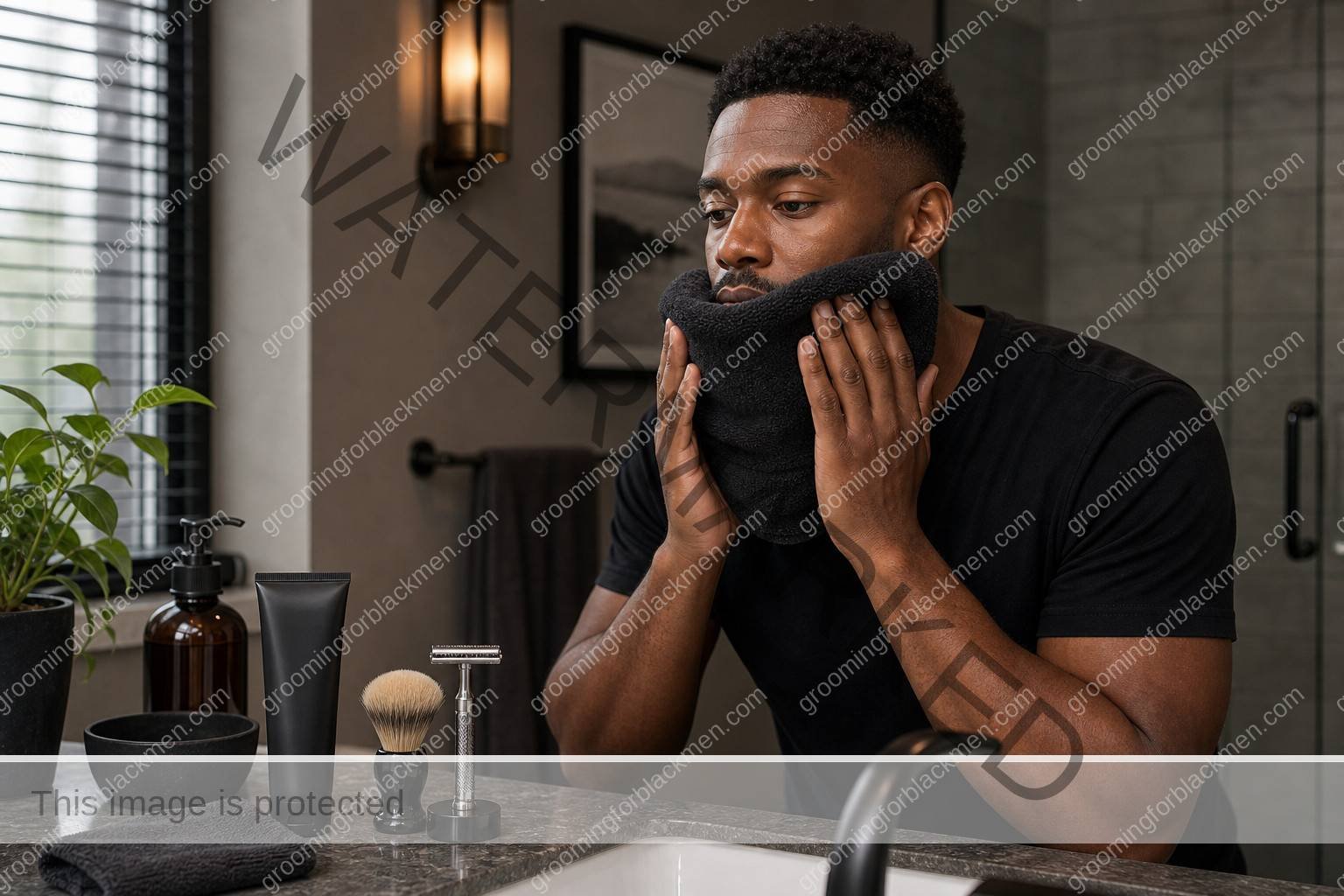
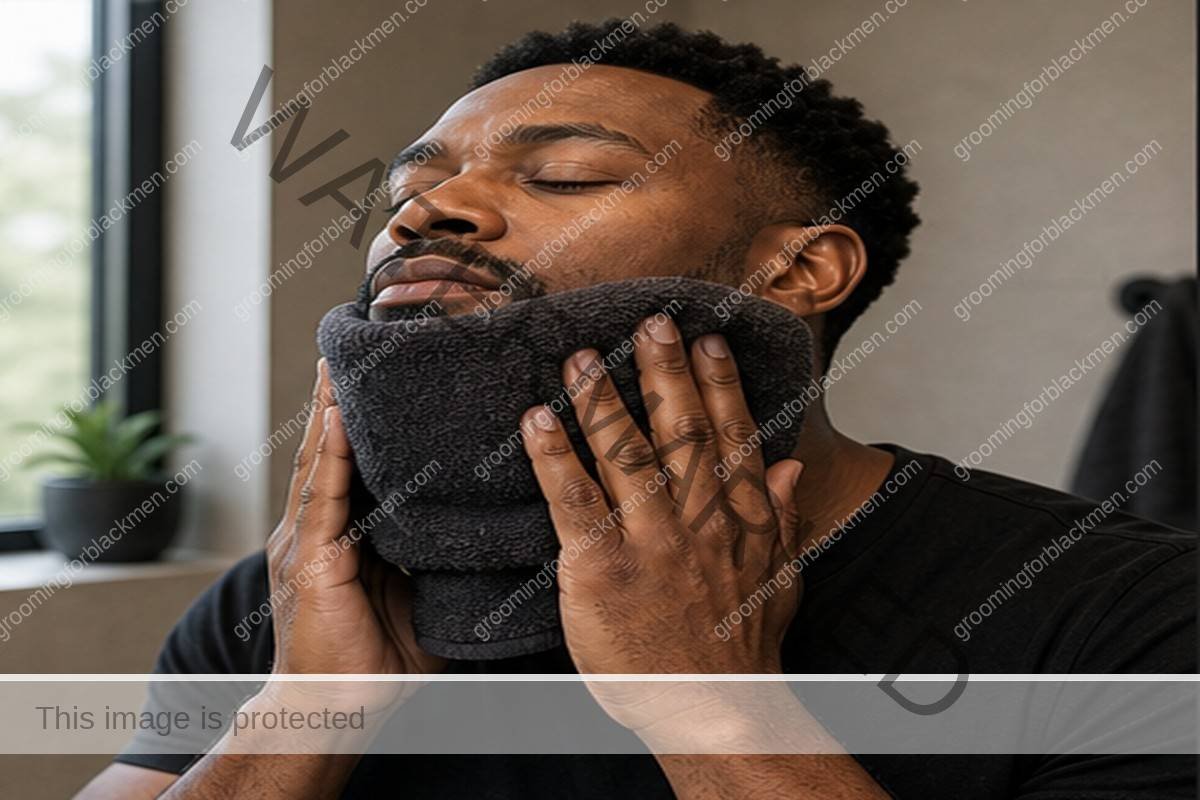
- Hot Towel Compress: If a shower isn’t feasible, soak a clean washcloth in hot water (ensure it’s not scalding), wring it out, and apply it to your face for 2-3 minutes. Reapply as it cools. This replicates the effect of a steam treatment.
- Warm Water Splash: At the very least, splash your face thoroughly with warm water for about 30-60 seconds.
While this step doesn’t require a specific product, ensuring your water is warm and your face is clean is key. Consider a gentle facial cleanser if you haven’t just showered.
Step 2: The Gentle Cleanse – Purifying the Canvas
After softening your skin and hair with warm water, the next crucial step is to cleanse. This removes dirt, oil, dead skin cells, and any lingering impurities that could clog pores, dull your razor, or lead to infection. A clean canvas is essential for a smooth, irritation-free shave.
Why it Matters for Black Men:
Cleansing helps to lift hairs away from the skin, preventing them from being trapped and becoming ingrown. It also ensures that your razor glides over a clean surface, reducing friction and the risk of razor burn. For those prone to acne or oiliness, this step is non-negotiable.
How to Execute:
- Apply a small amount of a gentle, non-foaming or low-foaming facial cleanser to your damp face.
- Massage in circular motions, paying extra attention to the beard area, for about 30-60 seconds.
- Rinse thoroughly with warm water.
Look for cleansers that are pH-balanced, non-comedogenic, and free from harsh sulfates that can strip the skin. Ingredients like salicylic acid or glycolic acid in mild concentrations can be beneficial for exfoliation, but always opt for gentle formulations.
Step 3: The Exfoliation – Unearthing the Path to Smoothness
Exfoliation is a game-changer, particularly for Black men battling ingrown hairs. This step gently removes dead skin cells that can trap hair follicles, allowing hairs to grow freely outwards rather than curling back into the skin. It also helps to lift existing ingrown hairs to the surface, making them easier to shave.
Types of Exfoliation:
- Physical Exfoliants (Scrubs): These use fine particles (e.g., jojoba beads, finely ground oats) to manually buff away dead skin. Choose scrubs with very fine, spherical particles to avoid micro-tears in the skin. Avoid harsh, abrasive scrubs with large, irregular particles.
- Chemical Exfoliants (AHAs/BHAs): Alpha Hydroxy Acids (AHAs) like glycolic or lactic acid, and Beta Hydroxy Acids (BHAs) like salicylic acid, work by dissolving the bonds between dead skin cells. BHAs are particularly effective for oily or acne-prone skin as they are oil-soluble and can penetrate deeper into pores.
How to Execute:
- Frequency: Exfoliate 2-3 times a week, not daily, to avoid over-exfoliation and irritation.
- Application: Apply a small amount of your chosen exfoliant to your damp face, gently massaging in circular motions for 30-60 seconds. Focus on areas prone to ingrown hairs.
- Rinse: Rinse thoroughly with warm water.
For sensitive skin or those new to exfoliation, start with a gentle chemical exfoliant or a very fine physical scrub. For persistent ingrown hairs, a product containing salicylic acid can be highly effective.
Step 4: The Pre-Shave Oil or Balm – The Protective Barrier
This is arguably the most critical step for Black men prone to razor bumps and irritation. A high-quality pre-shave oil or balm creates a protective barrier between your skin and the razor blade. It further softens the hair, allows the razor to glide more smoothly, and significantly reduces friction and tugging. This translates to fewer nicks, less irritation, and a much more comfortable shave.
Key Benefits:
- Lubrication: Provides an extra layer of slickness for the razor.
- Protection: Shields the skin from direct blade contact, minimizing irritation.
- Hair Softening: Further softens coarse hair, making it easier to cut.
- Moisture: Locks in hydration, preventing dryness post-shave.
How to Execute:
- After cleansing and exfoliating (if applicable), pat your face lightly, leaving it slightly damp.
- Dispense a few drops of pre-shave oil or a small amount of balm into your palms.
- Gently massage it into your beard area, ensuring even coverage. Allow it to absorb for 30-60 seconds before applying your shaving cream.
Look for oils rich in natural emollients like jojoba oil, grapeseed oil, argan oil, or castor oil. fragranced oils like tea tree or eucalyptus can offer antiseptic benefits, but ensure they are diluted and suitable for sensitive skin. Balms often contain shea butter or cocoa butter for intense hydration.
Step 5: The Shaving Cream/Soap – The Cushioning Cloud
While technically part of the shave itself, the quality and application of your shaving cream or soap are integral to the pre-shave preparation. A rich, dense lather provides a thick cushion, lifts the hairs, and maintains moisture, allowing the razor to cut cleanly without dragging or pulling.
Why Lather Matters:
- Lifting Hairs: A good lather helps to stand the hairs upright, presenting them optimally for the blade.
- Lubrication: Adds another layer of slickness for the razor.
- Moisture Retention: Keeps the skin and hair hydrated throughout the shave.
How to Execute:
- Brush Application (Recommended): For the best results, use a shaving brush. Dip the brush in warm water, then load it with shaving soap or cream. Work it into a rich, voluminous lather in a bowl or directly on your face.
- Finger Application: If using a cream, apply a generous, even layer with your fingertips, ensuring full coverage of the beard area.
- Allow to Sit: Let the lather sit on your face for 1-2 minutes before starting to shave. This gives it more time to soften the hairs.
Avoid aerosol foams, which often contain drying alcohols. Opt for traditional shaving creams or soaps that produce a rich, dense lather. Ingredients like glycerin, shea butter, and natural oils are excellent for hydration and protection.
Choosing the Right Tools: Beyond the Routine
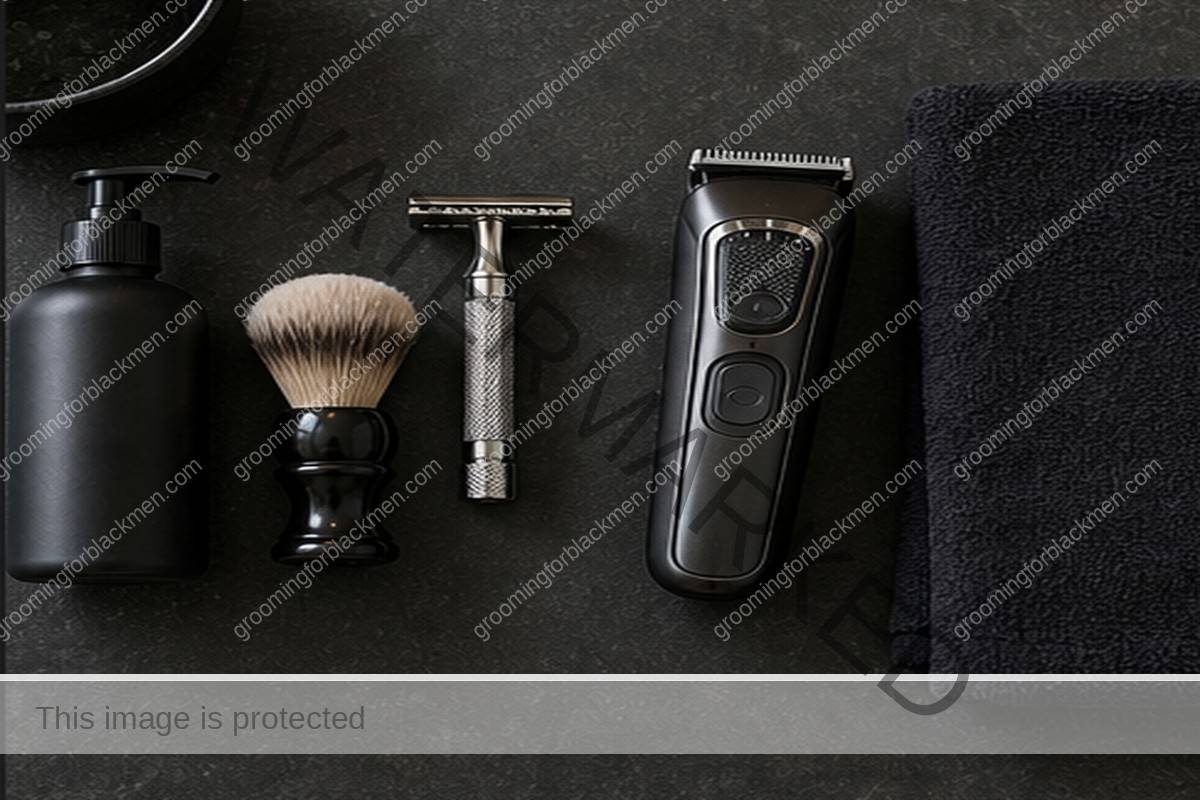
While the pre-shave routine is paramount, the tools you use also play a significant role in preventing irritation and achieving a smooth shave. Consider these options:
Razor Selection:
- Single-Blade Razors (Safety Razor or Straight Razor): Often recommended for Black men as they cut the hair at skin level rather thanbelow, reducing the likelihood of ingrown hairs. They require a learning curve but can provide an incredibly close and comfortable shave.
- Electric Shavers (Foil or Rotary): Can be a good option for those prone to severe razor bumps, as they don’t cut as close to the skin. Look for models designed for sensitive skin.
- Cartridge Razors (Multi-Blade): If using these, opt for fewer blades (2-3) and ensure they are sharp. Replace cartridges frequently. Avoid pressing too hard.
Blade Sharpness:
A dull blade is your enemy. It drags, pulls, and causes irritation. Always use a fresh, sharp blade. For cartridge razors, replace them every 5-7 shaves or sooner if you feel any tugging. For safety razors, blades are inexpensive, so replace them frequently (every 3-5 shaves).
The Shaving Technique: A Brief Interlude
Even with the best pre-shave routine, poor technique can undo all your efforts. Here are quick tips for the actual shave:
- Shave with the Grain: Always shave in the direction of hair growth on your first pass. This is crucial for preventing ingrown hairs.
- Light Pressure: Let the razor do the work. Pressing too hard will only cause irritation and nicks.
- Short Strokes: Use short, controlled strokes.
- Rinse Blade Frequently: Rinse your razor under warm water after every few strokes to prevent clogging.
- Second Pass (Optional): If you desire a closer shave, re-lather and shave across the grain (perpendicular to hair growth). Avoid shaving against the grain if you are prone to razor bumps.
Post-Shave Care: Sealing the Deal
Your grooming ritual isn’t complete until you’ve properly cared for your skin post-shave. This step is vital for soothing, hydrating, and protecting your freshly shaved face.
Step 1: Rinse with Cold Water
Immediately after shaving, rinse your face thoroughly with cold water. This helps to cool and calm the skin, soothe the skin, and remove any residual shaving cream or stray hairs.
Step 2: Apply an Aftershave Balm or Lotion
Avoid alcohol-based aftershaves, which can dry out and irritate the skin. Instead, opt for a soothing, hydrating aftershave balm or lotion. Look for ingredients like aloe vera, witch hazel (alcohol-free), glycerin, shea butter, and hyaluronic acid.
Benefits:
- Soothes Irritation: Calms any redness or burning sensation.
- Hydrates: Replenishes moisture lost during shaving.
- Protects: Creates a protective barrier against environmental stressors.
- Prevents Ingrown Hairs: Some aftershaves contain mild exfoliants or anti-inflammatory agents to further combat PFB.
How to Execute:
- Pat your face gently with a clean towel until almost dry.
- Dispense a small amount of aftershave balm into your palms and gently massage it into your shaved areas.
Look for non-comedogenic, fragrance-free options if you have sensitive skin. Products specifically formulated to prevent ingrown hairs often contain salicylic acid or glycolic acid in gentle concentrations.
Step 3: Moisturize (Daily)
Even if your aftershave is hydrating, a dedicated daily moisturizer is essential for maintaining skin health, especially for melanin-rich skin. Moisturizing helps to lock in hydration, improve skin barrier function, and prevent dryness and flakiness.
Choose a lightweight, non-comedogenic moisturizer with SPF for daytime use. At night, a richer cream can be beneficial. Look for ingredients like ceramides, hyaluronic acid, and niacinamide.
Troubleshooting Common Shaving Issues for Black Men
Even with an optimal routine, issues can arise. Here’s how to address them:
Persistent Razor Bumps (PFB):
- Re-evaluate Technique: Ensure you are consistently shaving with the grain.
- Consider a Different Razor: Switch to a single-blade safety razor or an electric shaver if you’re using a multi-blade cartridge.
- Topical Treatments: Consult a dermatologist for prescription-strength treatments containing retinoids or topical antibiotics if severe. Over-the-counter options with salicylic acid or glycolic acid can also help.
- Temporary Shaving Break: If bumps are severe, consider letting your beard grow out for a few days or weeks to allow the skin to heal.
Hyperpigmentation (Dark Spots):
- Prevention is Key: Minimize irritation and inflammation to prevent new spots.
- Sun Protection: Always use a broad-spectrum SPF 30+ moisturizer daily to prevent existing spots from darkening and new ones from forming.
- Targeted Treatments: Look for ingredients like Vitamin C, Niacinamide, Alpha Arbutin, Kojic Acid, or Azelaic Acid in serums or creams to help fade existing dark spots.
Dryness and Flakiness:
- Hydrating Cleanser: Ensure your cleanser isn’t stripping your skin.
- Increase Moisturizer: Use a richer moisturizer, especially at night.
- Humidifier: Consider a humidifier in dry environments.
- Hydrating Serums: Add a hyaluronic acid serum to your routine.
Related GFBM Guides
Use these guides to extend the routine without adding unrelated steps:
- beard-grain mapping guide
- razor and trimmer guide
- sensitive-skin shaving guide
- safety-razor comparison
- post-shave care guide
Product Categories Worth Comparing
Affiliate disclosure: GFBM may earn a commission from qualifying Amazon purchases, at no extra cost to you.
Choose by function rather than hype. Patch test leave-on products, introduce one change at a time, and stop using anything that causes persistent burning, swelling, or worsening irritation.
- Pre-Shave Oil: compare ingredient lists, fragrance level, texture, and return policy before buying. Browse pre-shave oil options on Amazon.
- Sensitive-Skin Shave Cream: compare ingredient lists, fragrance level, texture, and return policy before buying. Browse sensitive-skin shave cream options on Amazon.
- Electric Trimmer: compare ingredient lists, fragrance level, texture, and return policy before buying. Browse electric trimmer options on Amazon.
Frequently Asked Questions About Pre-Shave Routines for Black Men
Q1: How often should I exfoliate if I’m prone to razor bumps?
A: For Black men prone to razor bumps (PFB), exfoliation is a crucial step, but balance is key. Start with exfoliating 2-3 times a week. If your skin tolerates it well and you see improvement, you can maintain this frequency. If you experience any irritation, reduce it to once or twice a week. The goal is to gently remove dead skin cells and lift ingrown hairs without causing further inflammation. Opt for gentle chemical exfoliants (like those with salicylic acid) or very fine physical scrubs, and always follow up with a good moisturizer. Over-exfoliation can strip your skin’s natural barrier, leading to more irritation and potentially worsening hyperpigmentation, so listen to your skin.
Q2: Can I skip the pre-shave oil if my shaving cream is very moisturizing?
A: While a high-quality, moisturizing shaving cream is essential, a pre-shave oil or balm offers an additional, distinct layer of protection that is particularly beneficial for Black men. Pre-shave oil creates a slick barrier directly on the skin, reducing friction and drag between the blade and your face. This helps prevent the razor from cutting too close or causing micro-abrasions that lead to razor bumps and irritation. For those with sensitive skin, coarse hair, or a history of PFB, the pre-shave oil acts as an indispensable buffer. Think of it as an extra insurance policy for a truly comfortable and irritation-free shave. While you can skip it, we highly recommend it as a foundational step for optimal results.
Q3: What’s the best type of razor for Black men to prevent ingrown hairs?
A: The best type of razor for Black men to prevent ingrown hairs is generally a single-blade razor. This includes traditional safety razors or straight razors. Multi-blade cartridge razors can cut hair below the skin’s surface, increasing the likelihood of tightly coiled hairs curling back into the skin and causing PFB. Single-blade razors cut the hair at or just above the skin’s surface, significantly reducing this risk. If you prefer the convenience of an electric shaver, a foil shaver can also be a good option as it provides a less aggressive cut than many rotary shavers and multi-blade cartridges. Whichever razor you choose, ensure the blades are always sharp, and you’re using proper technique (shaving with the grain, light pressure).
Q4: How do I know if I’m shaving with or against the grain?
A: To determine your hair’s growth direction (the grain), gently run your fingertips over your beard area. If it feels smooth, you are moving with the grain. If it feels rough or prickly, you are moving against the grain. Hair growth patterns can vary across different parts of your face and neck, so it’s important to map your beard. For example, hair on your cheeks might grow downwards, while hair on your neck might grow upwards or sideways. Take the time to observe and understand your unique growth pattern. For the first pass, always shave with the grain to minimize irritation and prevent ingrown hairs. If a closer shave is desired, a second pass across the grain (perpendicular to growth) can be done, but avoid going against the grain directly if you are prone to razor bumps.
Q5: My skin still feels dry and tight after shaving, even with a balm. What else can I do?
A: If your skin still feels dry and tight, it indicates a need for more hydration and barrier support. First, double-check your cleanser to ensure it’s not stripping your skin – opt for a gentle, hydrating, sulfate-free formula. Next, consider adding a hydrating serum, such as one with hyaluronic acid, after your aftershave balm and before your moisturizer. Hyaluronic acid is a powerful humectant that draws moisture into the skin. Also, ensure your daily moisturizer is robust enough; look for ingredients like ceramides, shea butter, glycerin, or squalane. Using a humidifier in your bedroom can also help, especially in dry climates. Lastly, ensure you’re drinking enough water throughout the day, as internal hydration reflects on your skin’s health.
Q6: Are there any natural remedies that can help with razor bumps?
A: Yes, several natural ingredients can offer soothing and anti-inflammatory benefits for razor bumps, though they should complement, not replace, a proper pre-shave routine.
- Aloe Vera: Known for its cooling and anti-inflammatory properties. Apply pure aloe vera gel (from the plant or a high-quality product) to soothe irritated skin.
- Witch Hazel (Alcohol-Free): A natural astringent that can reduce inflammation and redness. Ensure it’s alcohol-free to avoid dryness.
- a fragrance-free formula: Has antiseptic and anti-inflammatory properties. Dilute a few drops in a carrier oil (like jojoba or grapeseed) before applying to affected areas. Do a patch test first.
- Warm Compresses: Applying a warm, moist compress to existing ingrown hairs can help bring them to the surface.
Remember, consistency is key, and if bumps persist or worsen, consult a dermatologist.
Q7: How long should I let my pre-shave oil/balm sit on my face before applying shaving cream?
A: For optimal results, allow your pre-shave oil or balm to sit on your face for at least 30-60 seconds before applying your shaving cream. This crucial waiting period allows the product to fully penetrate and soften the hair follicles, create that vital protective barrier, and thoroughly lubricate the skin. Rushing this step diminishes its effectiveness, as the oil or balm won’t have sufficient time to do its job. Think of it as giving your skin and hair a moment to fully absorb the benefits, preparing them for the smoothest, most comfortable shave possible. This small pause makes a significant difference in preventing irritation and achieving a superior finish.
Embrace the Ritual: Your Path to Impeccable Grooming

Keep the routine centered on a careful preparation sequence before shaving. Consistent basics, careful technique, and measured changes will do more than a crowded shelf. Review your results monthly, remove steps that repeatedly cause irritation, and get professional help for painful, infected, scarring, or persistent symptoms.
Build the Supporting Routine
Use the simple three-step skincare routine for Black men as the foundation. If you are unsure how rich or light your products should feel, first identify your skin type.
Before adding a leave-on treatment, follow the GFBM patch-test process. Men dealing with shaving irritation should also review the guide to preventing razor bumps on Black skin.