

This guide focuses on a reliable evening skincare routine. The aim is a routine that is clear, repeatable, and comfortable, without unnecessary products or aggressive technique.
Use it to assess oil, dryness, acne, dark marks, beard-area irritation, and razor bumps. Start with the basics, change one variable at a time, and judge progress over several weeks rather than after one application.
For the broader foundation, use the GFBM skincare hub for Black men.
The goal is control, not perfection. A strong night routine can help with oil, dryness, razor irritation, breakouts, and dark marks, but only when the products work with your skin instead of constantly challenging it.
How to Put This Guide Into Practice

The most useful way to apply this guide is to make one controlled change at a time. Start by writing down what you currently use, how often you use it, and what your skin or hair does during the following twenty-four hours. That short record prevents guesswork. It also helps you separate a product problem from a technique problem, a weather change, or simple inconsistency.
For this topic, the central goal is a reliable evening skincare routine. Build around that goal before adding optional products. Keep the core routine visible and easy to reach. Store the items in application order, clean the tools that touch your face, and remove anything that repeatedly burns, stings, flakes, or leaves heavy buildup. A routine should be easy to repeat on a rushed morning and a tired night, not only when you have extra time.
Week 1: Establish a Baseline
During the first week, avoid chasing fast results. Use the smallest dependable routine and observe oil, dryness, acne, dark marks, beard-area irritation, and razor bumps. Take two clear photos in the same lighting: one at the start and one after seven days. Note comfort after cleansing, midday oil or tightness, the condition of the beard and neck, and any new bumps or marks. Do not judge progress from a single mirror check after a bad shave or a long day.
Week 2: Correct Technique Before Buying More
In the second week, examine pressure, timing, product amount, water temperature, and tool cleanliness. Many grooming problems are intensified by rushing, repeated passes, aggressive scrubbing, or using far more product than the skin can comfortably handle. Correcting technique is inexpensive and gives every product a fairer test. If you introduce something new, patch test it and keep the rest of the routine stable.
Week 3: Add One Targeted Upgrade
Choose one upgrade that directly addresses the most important concern you recorded. That may be a gentler cleanser, a lighter or richer moisturizer, a different shaving tool, a targeted treatment, or a sunscreen that blends without a distracting cast. Use it according to the label and resist combining several strong ingredients. When irritation appears, return to the basic routine instead of trying to treat the reaction with more actives.
Week 4: Review Results and Set the Next Month
At the end of four weeks, compare your notes and photos. Look for fewer new bumps, less tightness, better hydration, more predictable oil control, improved comfort, or a routine that is simply easier to complete. Dark marks and texture often require more time, so judge whether the process is moving in the right direction rather than demanding a finished result. Keep what works, remove what does not, and choose only one priority for the next month.
A Practical Decision Framework

| What you notice | Likely adjustment | What not to do |
|---|---|---|
| Burning, persistent stinging, or sudden sensitivity | Pause strong treatments and use a gentle cleanser and moisturizer | Add another acid, scrub, or fragranced product |
| New bumps after shaving | Review beard direction, pressure, blade condition, and shave closeness | Pick the bumps or repeatedly shave over them |
| Dryness or visible ashiness | Use lukewarm water and apply a suitable moisturizer to slightly damp skin | Use harsher soap or longer hot showers |
| Heavy oil or product buildup | Reduce product amount and choose lighter textures | Strip the face several times a day |
| Dark marks that are not improving | Prevent new inflammation, use sunscreen, and stay consistent with one treatment | Scrub aggressively or change products every few days |
Seek a dermatologist when you have painful or cystic acne, spreading irritation, signs of infection, severe or scarring razor bumps, unexplained hair loss, or a skin change that persists. A grooming routine can support healthy habits, but it cannot diagnose or replace medical care.
Quick Answer: What Should Black Men Put on Their Face at Night?
A practical nighttime skincare routine for Black men has three core steps:
- Cleanse to remove sunscreen, sweat, oil, dirt, and grooming-product residue.
- Treat one concern only when needed, such as acne, dark marks, ingrown hairs, or dryness.
- Moisturize to support the skin barrier and reduce overnight water loss.
Start with those basics. Add a treatment only after your skin is comfortable with the foundation. If you are still building that foundation, follow the simple skincare routine for Black men before adding stronger nighttime products.
Why a Night Routine Matters for Black Men
Your face collects more than visible dirt. Sunscreen, sweat, excess oil, pollution, beard products, and residue from touching your face can remain on the skin at the end of the day. Leaving that buildup in place can contribute to clogged pores, irritation, and uneven texture.
Night is also when you can use certain treatment products without layering them under sweat, sunlight, or a full day of activity. That makes the evening useful for addressing concerns common among Black men, including post-shave irritation, acne, ingrown hairs, and post-inflammatory hyperpigmentation.
Melanin-rich skin can develop dark marks after inflammation. That means aggressive treatment can create the exact discoloration you are trying to correct. A good routine protects the face before it tries to improve it.
Why Generic Nighttime Advice Often Fails
Generic skincare advice often assumes every man needs the same products. It may recommend harsh scrubs, alcohol-heavy toners, daily exfoliation, or several active ingredients at once. That approach can be especially frustrating when shaving already puts stress on your face and neck.
Black men may need to consider several issues at the same time:
- Coarse, curly facial hair that can contribute to ingrown hairs.
- Dark marks that remain after acne or razor irritation settles.
- Dryness or visible ashiness after cleansing.
- Oily skin that still needs hydration.
- Sensitivity caused by fragrance, shaving products, or overuse of active ingredients.
Your night routine should respond to your actual skin. Use the GFBM skin type guide if you are not sure whether your skin is oily, dry, combination, or sensitive.
The Step-by-Step Night Routine

Step 1: Wash Your Hands
Start with clean hands. This takes a few seconds and keeps whatever is on your phone, steering wheel, keyboard, or gym equipment from being transferred directly to your face.
Step 2: Cleanse Without Stripping Your Skin
Use lukewarm water and a gentle facial cleanser. Massage it over the face for about 30 to 60 seconds, including the hairline, sides of the nose, jaw, and beard area. Rinse thoroughly and pat dry with a clean towel.
A cleanser should remove buildup without leaving your face tight, rough, or burning. If your skin feels stripped immediately after washing, the cleanser may be too harsh or you may be cleansing too often.
Choose your cleanser by skin need:
| Skin concern | Useful cleanser type | What to avoid |
|---|---|---|
| Oily or acne-prone | Gentle gel cleanser; salicylic acid cleanser a few nights weekly if tolerated | Harsh soap and repeated washing |
| Dry or ashy | Creamy, hydrating cleanser | Strong foaming cleansers and very hot water |
| Sensitive | Fragrance-free, low-foam cleanser | fragranced oils, fragrance, and abrasive particles |
| Combination | Balanced gel or lotion cleanser | Using separate aggressive products on every zone |
Step 3: Use One Targeted Treatment
A treatment step is optional. Do not add one because a routine online says you need it. Add it because you have a specific concern and your basic routine is already comfortable.
For Acne and Clogged Pores
Salicylic acid can help clear oil and dead skin from pores. Benzoyl peroxide can be useful for inflammatory acne, but it may be drying and can bleach towels or pillowcases. Introduce either product slowly and follow the product directions.
For a complete approach, review the acne guide for Black men. Persistent, painful, cystic, or scarring acne should be evaluated by a dermatologist.
For Dark Marks
Niacinamide, vitamin C, azelaic acid, and retinoids are commonly used in routines for uneven tone. You do not need all of them at once. Pick one, patch test it, and give it time.
Dark marks usually fade slowly. Irritating your skin with too many actives can deepen discoloration. See the dark spots starter routine for Black men for a controlled plan.
For Razor Bumps and Ingrown Hairs
Do not aggressively scrub bumps at night. Gentle chemical exfoliation may help some men, but shaving technique and tool choice matter just as much. Follow the complete razor bump system for Black men and avoid picking at inflamed areas.
For Dryness and Barrier Damage
If your face burns, feels tight, flakes, or suddenly reacts to products that used to be comfortable, pause strong treatments. Focus on a gentle cleanser and moisturizer until the skin settles. The skin barrier repair guide explains how to simplify your routine.
Step 4: Moisturize
Moisturizer is the step that keeps a treatment-focused routine from becoming an irritation routine. It helps reduce overnight water loss and supports the skin barrier.
Apply moisturizer after cleansing or treatment. A small amount spread evenly over the face and neck is usually enough. If you have a beard, work the product into exposed skin without leaving heavy residue in the hair.
- Oily skin: Use a lightweight gel-cream or lotion labeled non-comedogenic.
- Dry skin: Use a richer cream with ceramides, glycerin, or similar barrier-supporting ingredients.
- Sensitive skin: Choose fragrance-free products with a short, straightforward ingredient list.
- Combination skin: Use a moderate lotion and apply a little more to dry areas.
Step 5: Care for Your Lips and Beard Area
Dry lips and flaky beard skin can undermine an otherwise clean routine. Use a simple lip balm before bed. If your beard area is dry, apply a small amount of lightweight beard oil after your facial moisturizer, focusing on the skin beneath the beard.
Do not soak the beard in oil. More product does not create faster growth, and heavy buildup can make cleansing harder. Men who need help choosing between oil, balm, and butter can use the GFBM beard product comparison.
Night Routine by Skin Type
| Skin type | Basic night routine | Optional treatment |
|---|---|---|
| Oily | Gel cleanser and lightweight moisturizer | Salicylic acid or niacinamide if tolerated |
| Dry | Hydrating cleanser and cream moisturizer | Hydrating serum; avoid frequent exfoliation |
| Sensitive | Fragrance-free cleanser and barrier moisturizer | None until the skin is consistently calm |
| Acne-prone | Gentle cleanser and non-comedogenic moisturizer | One acne treatment introduced gradually |
| Razor-bump prone | Gentle cleanse and soothing moisturizer | Careful chemical exfoliation on non-shave nights |
How to Plan Treatment Nights
Using every active every night is not discipline. It is often poor planning. A simple weekly rotation makes it easier to identify what your skin tolerates.
- Most nights: Cleanser and moisturizer.
- One or two nights: Exfoliating or acne treatment if needed.
- Separate nights: Retinoid if you use one and tolerate it.
- Recovery nights: Cleanser and moisturizer only.
Do not combine products simply because each one is popular. Follow label directions and introduce one change at a time. Patch test unfamiliar products using the GFBM patch-testing method.
How to Handle Shaving Nights
A shaving night should usually be simpler than a treatment night. Shaving already removes hair and can disturb the surface of the skin. Adding a strong acid, retinoid, fragranced aftershave, and several serums immediately afterward can turn normal grooming into unnecessary inflammation.
On nights when you shave, use this order:
- Cleanse the face and soften the beard area with warm water.
- Use a shaving tool and technique that do not require repeated passes.
- Rinse away shaving residue with cool or lukewarm water.
- Apply a simple, alcohol-free moisturizer or soothing balm.
- Skip strong exfoliants or retinoids if your skin feels tender.
If you regularly wake up with bumps after shaving, the problem may not be your nighttime moisturizer. Your blade, pressure, shave direction, or desire for an extremely close shave may be creating the irritation. Map the direction of your beard growth and review the neck and beard grain guide.
Men who use clippers or an electric trimmer should still clean the tool and avoid pressing it hard into the neck. A little visible stubble is often easier on bump-prone skin than cutting every hair below the skin line.
A Budget Night Routine That Still Works
You do not need a luxury shelf to build a useful routine. Spend first on products you will use consistently. A basic cleanser and moisturizer can carry most of the work. Treatments should be added only when the foundation is stable.
| Priority | What to buy | What matters |
|---|---|---|
| First | Gentle facial cleanser | Comfortable cleansing without burning or tightness |
| Second | Facial moisturizer | Texture that fits your skin type and is easy to use nightly |
| Third | One treatment | Chosen for one clear concern, not because it is trending |
| Optional | Lip balm or lightweight beard oil | Useful only if lips or beard skin are dry |
Price does not guarantee compatibility. A well-formulated drugstore product can outperform an expensive product that irritates your skin or sits unused. The budget skincare guide for Black men can help you prioritize the essentials.
What Results Should You Expect?
Different concerns move on different timelines. Cleansing can make the face feel fresher immediately. Moisturizer may reduce tightness or visible dryness within days. Acne, razor bumps, texture, and dark marks usually need more patience.
- First week: The routine should feel manageable. Watch for burning, itching, or unusual redness.
- Two to four weeks: Hydration and oil control may become more consistent. Some acne treatments may begin reducing new breakouts.
- Six to twelve weeks: Texture, acne patterns, and dark marks may show more meaningful change when the routine is tolerated and sunscreen is used daily.
- Beyond three months: Evaluate whether the routine is realistic enough to maintain and whether professional guidance is needed.
Take a photo in the same lighting every two to four weeks if you want to track progress. Checking the mirror several times a day makes gradual improvement difficult to see and can encourage unnecessary product changes.
Your Bedroom and Grooming Habits Matter Too
Skincare does not stop at the bathroom sink. A few basic habits can make the night routine more effective:
- Keep hair products from rubbing across your forehead and pillowcase.
- Wash durags, bonnets, wave caps, and pillowcases regularly.
- Use a separate clean towel for your face.
- Clean your phone screen and avoid resting your face in your hands.
- Rinse off after heavy evening workouts instead of sleeping in dried sweat.
- Give leave-on products a few minutes to settle before putting your face on the pillow.
These habits are not glamorous, but they reduce the background buildup that can keep a well-designed routine from doing its job.
Common Night Routine Mistakes
Going to Bed Without Washing Off Sunscreen
Sunscreen is essential during the day, but it should be removed at night along with sweat, oil, and debris. A normal gentle cleanse is usually enough unless you wear a particularly water-resistant formula.
Using Harsh Body Soap on Your Face
Many body soaps clean aggressively. Facial skin may respond with tightness, dryness, or excess oil production. Use a cleanser made for the face.
Starting Several Active Ingredients Together
If your skin reacts, you will not know which product caused the problem. Introduce one active product at a time and keep the rest of the routine stable.
Scrubbing Razor Bumps
Physical force does not safely free every ingrown hair. Scrubbing can worsen inflammation and dark marks. Use better shaving technique and gentle care.
Using a Dirty Pillowcase
A pillowcase collects oil, sweat, hair products, and beard products. Change it regularly, especially if you have acne-prone skin or use styling products at night.
Expecting Overnight Results
Hydration can improve quickly, but acne, texture, and dark marks take longer. Give a well-tolerated routine several weeks before making unnecessary changes.
When to See a Dermatologist
See a dermatologist if irritation, infection, pain, severe acne, spreading rash, hair loss, or persistent symptoms continue. Professional guidance is also appropriate when dark marks are worsening despite a gentle routine or when over-the-counter products repeatedly cause reactions.
Skincare content can help you build better habits, but it cannot diagnose a medical condition.
Use a Minimum Routine on Busy Days
A routine only works when it survives real life. Decide in advance what you will do when you are tired, traveling, short on time, or dealing with irritation. For this topic, the minimum should still support a reliable evening skincare routine. Keep the essential products together, use them in the same order, and avoid adding an untested product simply because the full routine feels inconvenient.
On a busy day, protect the steps that prevent new problems. That usually means gentle cleansing when needed, careful technique, moisturizer, and daytime sunscreen on exposed skin. Optional treatments can wait. Skipping one treatment is usually less disruptive than rushing through several strong products and creating irritation that takes days to settle.
Track Comfort as Well as Appearance
Use a short weekly note to track oil, dryness, acne, dark marks, beard-area irritation, and razor bumps. Record burning, itching, tightness, new bumps, flaking, and how long discomfort lasts. Also note changes in weather, shaving frequency, workouts, or a new product. This makes it easier to identify patterns and prevents you from blaming the wrong step.
Judge progress over several weeks. Fewer new bumps, less stinging, steadier hydration, and faster recovery are meaningful improvements even when dark marks have not fully faded. Change one variable at a time and give your skin a fair chance to respond.
Know When Home Care Is Not Enough
Stop a new product if it causes persistent burning, swelling, blistering, or a spreading rash. Seek a dermatologist for painful or cystic acne, signs of infection, scarring razor bumps, unexplained hair loss, or symptoms that keep worsening despite a simplified routine. Grooming guidance can support daily care, but it cannot diagnose a medical condition.
Run a Monthly Routine Review
Once a month, place every product and tool you use in front of you. Check expiration guidance, cleanliness, remaining product, and whether each item still serves a reliable evening skincare routine. Remove duplicates and products you keep using only because you paid for them. A product that repeatedly causes discomfort is not a better value because the bottle is still full.
Compare your current notes with the previous month. Look for changes in oil, dryness, acne, dark marks, beard-area irritation, and razor bumps. Keep the steps that are comfortable and repeatable. If results have stalled, adjust the most likely cause first: technique, frequency, product amount, tool condition, or one product category. Avoid replacing the entire routine at once.
Season, travel, workouts, shaving frequency, medication, and stress can all change how a routine feels. Treat the review as maintenance, not a reason to chase novelty. The goal is a smaller routine with a clear purpose for every step.
Related GFBM Guides
Use these guides to extend the routine without adding unrelated steps:
- beginner AM and PM skincare routine
- acne guide for Black men
- dark-spots starter routine
- skin-barrier repair guide
- razor-bump prevention system
Product Categories Worth Comparing
Affiliate disclosure: GFBM may earn a commission from qualifying Amazon purchases, at no extra cost to you.
Choose by function rather than hype. Patch test leave-on products, introduce one change at a time, and stop using anything that causes persistent burning, swelling, or worsening irritation.
- Gentle Facial Cleanser: compare ingredient lists, fragrance level, texture, and return policy before buying. Browse gentle facial cleanser options on Amazon.
- Fragrance-Free Moisturizer: compare ingredient lists, fragrance level, texture, and return policy before buying. Browse fragrance-free moisturizer options on Amazon.
- Salicylic Acid Treatment: compare ingredient lists, fragrance level, texture, and return policy before buying. Browse salicylic acid treatment options on Amazon.
Frequently Asked Questions
Do Black men need a separate night cream?
No. A regular facial moisturizer can work morning and night. A separate night cream is optional, not a requirement.
Should I wash my face before bed every night?
Yes, especially if you wore sunscreen, exercised, shaved, or spent time outdoors. If twice-daily cleansing leaves your skin dry, use a gentler cleanser rather than skipping the nighttime wash.
Can I use retinol every night?
Many beginners should not start with nightly use. Introduce a retinoid gradually, follow the product directions, moisturize, and use sunscreen every morning. Stop if you develop significant irritation and seek professional guidance when needed.
What should I use at night for dark spots?
Start with cleanser and moisturizer, then add one targeted ingredient such as niacinamide, azelaic acid, vitamin C, or a retinoid based on your skin tolerance. Daily sunscreen is still essential because ultraviolet exposure can keep marks darker.
Should I exfoliate before or after shaving?
Avoid stacking strong exfoliation directly around a close shave if your skin is easily irritated. Many men do better exfoliating on a separate night. Review the safe exfoliation guide for Black men.
How long should a nighttime routine take?
A basic routine can take three to five minutes. Consistency matters more than the number of steps.
Can oily skin skip moisturizer at night?
No. Oily skin still needs hydration. Choose a lightweight, non-comedogenic moisturizer instead of leaving the skin unprotected.
Build a Routine You Can Repeat

A clean routine beats a complicated one. Wash off the day, treat one concern with control, and moisturize before bed. Once that foundation is steady, you can make targeted adjustments without turning your face into a testing ground.
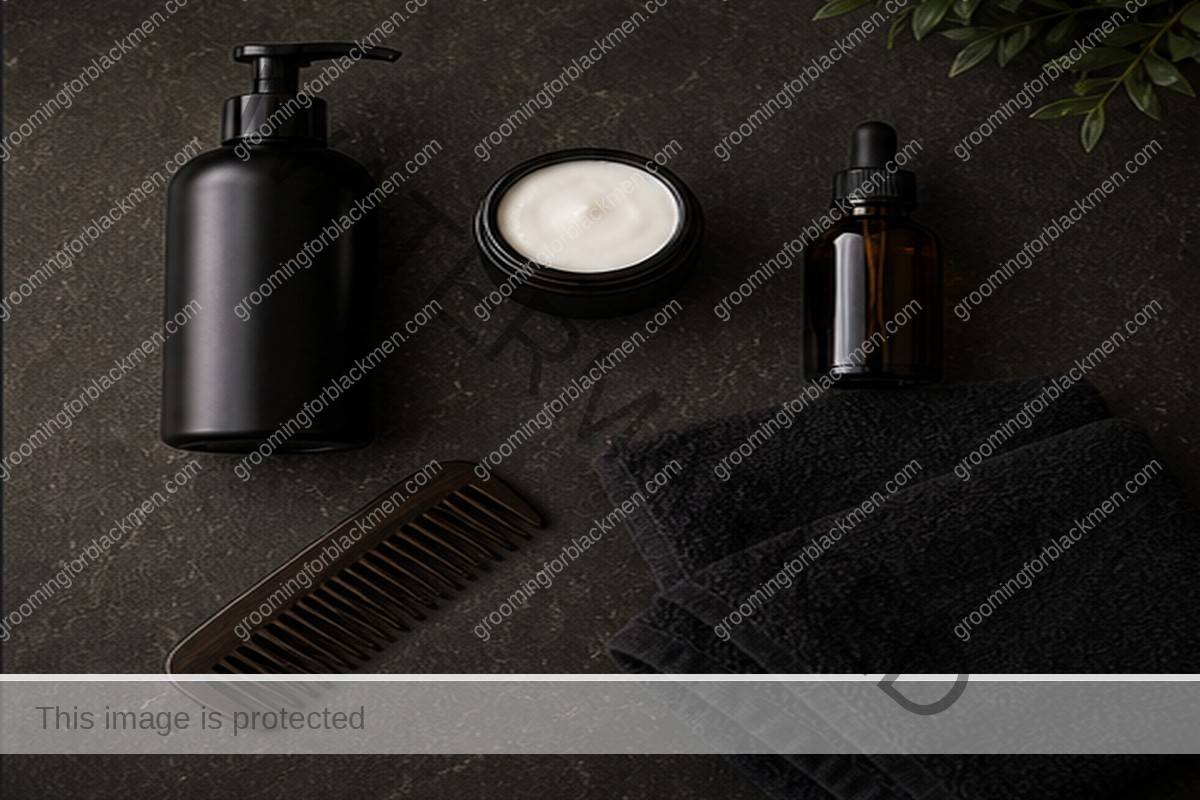
Keep the routine where you can see it: cleanser near the sink, treatment beside it, and moisturizer last in line. That simple setup reduces skipped steps and makes consistent care easier on tired nights.
Keep your products visible and your routine easy to repeat.
Keep the routine centered on a reliable evening skincare routine. Consistent basics, careful technique, and measured changes will do more than a crowded shelf. Review your results monthly, remove steps that repeatedly cause irritation, and get professional help for painful, infected, scarring, or persistent symptoms.