

Dark Neck Marks for Black Men: Practical Grooming Guide
Dark neck marks—patches of deeper pigmentation along the neckline—are a common concern for Black men with rich brown skin. If you’ve noticed these marks, you’re not alone. They can show up as uneven tone, patches, or lines that stand out against your natural complexion. Whether you’re dealing with the aftermath of razor bumps, friction from shirt collars, or irritation from sweat and grooming, these marks can be stubborn. There’s no need for shame or frustration. Understanding what causes dark neck marks and how to address them with a disciplined, practical routine is key.
This guide is built for Black men who want real answers and grounded advice—not hype, not miracle claims, and definitely not one-size-fits-all solutions. It’s about respecting your skin, your grooming routine, and your time. We’ll break down why dark neck marks happen, what to avoid, and how to build a routine that makes sense for your skin’s needs. You’ll also find specific product criteria, troubleshooting tips, and clear guidance on when to see a professional.
If you’re looking for a deeper dive into dark spots and hyperpigmentation for Black men, you’ll find more resources in our main pillar guide. For now, let’s focus on the neck—because your skin deserves respect, and your routine should work for you.
Why This Matters for Black Men

Dark neck marks can affect anyone, but for Black men, they often show up in ways that are unique to our skin. Rich brown skin is more prone to hyperpigmentation—meaning, when your skin reacts to irritation or injury, it can produce more melanin in those spots, leaving behind darker patches. The neck is especially vulnerable because it’s exposed to friction (from shirt collars, chains, or even barbershop capes), sweat, and repeated shaving or trimming.
Ignoring these marks doesn’t make them go away, and harsh treatments can make things worse. For many Black men, dark neck marks aren’t just a cosmetic issue—they’re a sign of how your skin responds to daily life. Addressing them is about more than appearance; it’s about comfort, confidence, and taking control of your grooming routine.
It’s also important to recognize the cultural context. Too often, Black men’s skin concerns are dismissed or misunderstood by mainstream grooming advice. This guide is for you—grounded in real experience, not stereotypes or outdated assumptions.
What Usually Goes Wrong

Let’s be clear: most advice about dark neck marks isn’t made for Black men. Here’s where things often go sideways:
- Over-scrubbing or harsh exfoliation: Aggressive scrubs, chemical peels, or rough washcloths can inflame the skin, making hyperpigmentation worse.
- Alcohol-heavy products: Toners or aftershaves with high alcohol content dry out and irritate the skin, leading to more dark marks.
- Ignoring friction and sweat: Tight collars, chains, or constant rubbing can trigger or worsen dark patches, especially if sweat isn’t washed away promptly.
- DIY “miracle” fixes: Lemon juice, undiluted essential oils, or harsh home remedies can burn or sensitize your skin, leading to more problems.
- Skipping sunscreen: UV exposure deepens existing marks and slows down skin’s natural recovery. Many men skip sunscreen, thinking it’s not needed for dark skin—it is.
- Inconsistent routines: Switching products constantly or not giving your skin time to adjust can stall progress.
For more on what not to do, see our ingredient safety guide for Black men.
What to Do Instead

Here’s a disciplined, practical approach to managing dark neck marks for Black men. No shortcuts—just steps that respect your skin’s needs.
1. Gentle Cleansing
Start and end your day with a gentle body cleanser. Avoid harsh soaps or scrubs. Focus on removing sweat, dirt, and product buildup without stripping your skin’s natural oils. If you work out, sweat heavily, or wear collared shirts, cleanse your neck as soon as possible after sweating to prevent buildup and irritation.
2. Moisturize Consistently
After cleansing, apply a fragrance-free moisturizer to your neck. This helps maintain your skin barrier and reduces irritation from friction or shaving. Choose a formula that absorbs quickly and won’t leave residue on your collar. Shea butter, squalane, or ceramide-rich lotions are solid choices for rich brown skin.
3. Targeted Serums for Dark Marks
Look for serums formulated to address dark spots and hyperpigmentation. Ingredients like niacinamide, licorice root, and azelaic acid can help even tone over time. Vitamin C is also an option, but choose a stable, non-irritating formula. Avoid products that promise instant results or use harsh bleaching agents. Apply your serum after cleansing and before moisturizing, focusing on the affected areas.
4. Sun Protection—Every Day
Yes, Black men need sunscreen. UV rays worsen hyperpigmentation and slow down healing. Choose a sunscreen made for dark skin that won’t leave a gray or purple cast. Apply it to your neck every morning, even if you’re indoors or it’s cloudy. Reapply if you’re outside for extended periods or sweating heavily. For tips on finding the right sunscreen, see our sunscreen for dark marks guide.
5. Manage Friction and Irritation
Loosen tight collars, switch to softer fabrics, and remove chains or necklaces if you notice irritation. If you shave or trim your neckline, use a clean, sharp blade and avoid going over the same area repeatedly. Consider trimming instead of shaving if you’re prone to razor bumps. If you wear uniforms or work attire with stiff collars, use a thin cotton barrier or undershirt to reduce friction.
6. Be Consistent and Patient
Results take time. Stick to your routine for at least 8-12 weeks before expecting visible changes. Don’t switch products too quickly. Take progress photos every few weeks to track subtle improvements. Consistency is more important than intensity—gentle, daily care beats aggressive, sporadic treatments every time.
For a full starter routine, see our dark spots starter routine for Black men.
Product and Tool Criteria
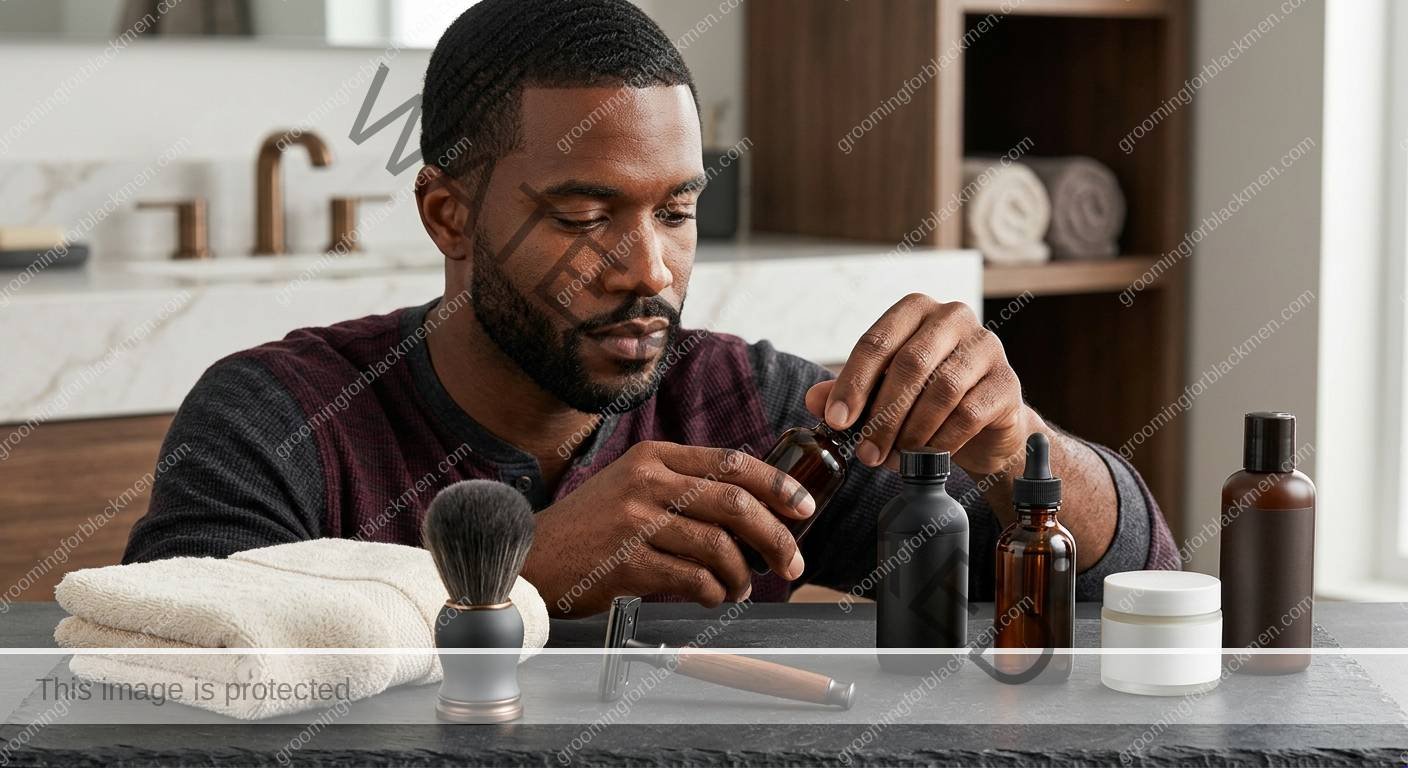
Not all products are created equal. Here’s what to look for when choosing grooming products for dark neck marks:
- Gentle, fragrance-free cleansers: Avoid sulfates and strong fragrances. Look for hydrating ingredients like glycerin or ceramides. A gentle cleanser won’t sting or leave your neck feeling tight.
- Targeted serums: Choose products with niacinamide, licorice root, azelaic acid, or vitamin C. Avoid hydroquinone unless under a dermatologist’s care.
- Moisturizers: Look for non-comedogenic, fragrance-free options. Shea butter, squalane, and hyaluronic acid are good choices. A lightweight lotion is best for daytime; a richer cream can help overnight if your skin is dry.
- Sunscreen: Broad-spectrum SPF 30 or higher, designed for dark skin tones to avoid white cast. Mineral or chemical is fine—just make sure you’ll use it daily. Test on a small patch first to check for residue or irritation.
- Tools: Soft washcloths, not rough loofahs. Clean razors or trimmers, not shared or dull blades. If you use clippers, disinfect them regularly to prevent bacteria buildup.
GFBM may earn a small commission from qualifying purchases, but product examples are included to clarify criteria, not to promise results.
- Gentle body cleanser for men: Look for sulfate-free, fragrance-free options.
- Dark neck serum for men: Seek serums with niacinamide, licorice root, or azelaic acid.
- Sunscreen for dark skin men: Choose a formula that blends well and doesn’t leave residue.
For more on sunscreen and dark marks, see our sunscreen for dark marks guide.
Step-by-Step Routine: Building Discipline Into Your Neck Care
Every Black man’s skin is unique, but a disciplined routine is the foundation for progress. Here’s a practical, step-by-step approach tailored for rich brown skin and coarse or curly hair:
-
Morning Routine:
- Cleanse: Use a gentle, fragrance-free cleanser on your neck. Rinse with lukewarm water—never hot.
- Pat dry: Use a clean, soft towel. Don’t rub.
- Apply serum: If using a dark mark serum, apply a thin layer to affected areas. Let it absorb for 1-2 minutes.
- Moisturize: Smooth on a lightweight, fragrance-free moisturizer.
- Sun protection: Finish with a broad-spectrum sunscreen (SPF 30+), blending thoroughly to avoid residue.
-
Evening Routine:
- Cleanse: Wash away sweat, dirt, and sunscreen from the day.
- Apply serum: Use your targeted treatment again if tolerated.
- Moisturize: Use a richer moisturizer if your skin feels dry overnight.
-
Weekly:
- Gentle exfoliation: If your skin tolerates it, use a mild chemical exfoliant (like a low-strength lactic acid pad) once per week. Avoid physical scrubs and overdoing it—less is more.
- Check for irritation: If you notice redness, burning, or new bumps, scale back and focus on hydration.
For a more detailed approach, see our dark spots starter routine for Black men.
Real-Life Scenarios: Adapting Your Routine
Everyday life throws curveballs. Here’s how to adapt your neck care routine to common situations Black men face:
- Barbershop Visits: Ask your barber to use a clean cape and avoid tight neck closures. If you get line-ups or shaves on your neck, request a fresh blade and minimal pressure.
- Work Uniforms or Dress Shirts: If you wear collared shirts daily, rotate your shirts and choose softer fabrics when possible. Use a thin cotton undershirt to reduce direct friction.
- Sports and Fitness: Sweat can worsen irritation and dark marks. Cleanse your neck as soon as possible after workouts. Carry a travel-size cleanser and towel in your gym bag.
- Travel: Airplane air and hotel soaps can dry out your skin. Pack your own cleanser, moisturizer, and sunscreen. Stick to your routine as much as possible, even on the road.
- Seasonal Changes: Cold weather can dry out your neck, while summer heat increases sweat and friction. Adjust your moisturizer’s richness and reapply sunscreen more often in summer.
For more on adapting routines for real life, see our starter routine for dark spots.
Decision Criteria: Choosing What Works for You
Finding the right products and habits is about knowing your own skin and lifestyle. Here’s how to decide what’s worth your time and money:
- Skin Sensitivity: If your neck stings or burns after applying a product, stop and reassess. Sensitive skin benefits from fewer, gentler ingredients.
- Beard and Hair Patterns: If you have coarse or curly hair, avoid shaving too close. Consider electric trimmers or leaving a short stubble to reduce irritation.
- Time Commitment: Choose a routine you can stick with daily. Simplicity and consistency matter more than expensive, complicated regimens.
- Budget: Effective care doesn’t have to be expensive. Focus on a quality cleanser, moisturizer, and sunscreen first. Add a serum if your budget allows.
- Professional Help: If you’ve tried a disciplined routine for 3-4 months with no improvement, invest in a dermatologist visit. Prescription options or in-office treatments may be needed for stubborn marks.
Troubleshooting and When to Get Help

Sometimes, even with the right routine, progress can be slow. Here’s what to watch for and when to get professional advice:
- If your neck marks are painful, spreading, or showing signs of infection (swelling, pus, heat): see a dermatologist or qualified clinician.
- If you notice scarring, thickening, or persistent irritation that doesn’t respond to gentle care: get a professional assessment.
- If over-the-counter routines aren’t making a difference after 3-4 months: a dermatologist can recommend prescription options or in-office treatments.
- If you have a history of eczema, psoriasis, or other skin conditions: talk to a professional before starting new products.
Don’t dig at ingrown hairs or pick at dark marks. This can worsen hyperpigmentation and increase the risk of scarring. For more on managing razor bumps and related marks, see our razor bumps and dark marks guide.
Adapting Your Routine for Real Life: Work, Barber Visits, and Daily Demands
Managing dark neck marks as a Black man means finding a grooming routine that fits your actual lifestyle. Whether you’re heading to work, sitting in a barber’s chair, hitting the gym, or spending time outdoors, your approach to skincare should be flexible and practical.
- At Work: If your job requires a dress shirt or tie, friction and sweat can aggravate dark marks. Prioritize lightweight, non-greasy moisturizers and sunscreen to protect your neck without staining your collar. Keep a gentle cleansing wipe at your desk for quick refreshes if you sweat during the day.
- Barber Visits: Communicate with your barber about any sensitive areas or dark marks. Ask them to avoid harsh alcohol-based aftershaves on your neck. If you’re prone to razor bumps, request clippers instead of a straight razor and follow up with a soothing, fragrance-free moisturizer at home. For more on this, check the razor bump marks guide.
- Shaving at Home: Use a sharp, single-blade razor or electric trimmer to minimize irritation. Always shave in the direction of hair growth, and apply a calming aftershave balm with ingredients like aloe or niacinamide. Avoid aggressive scrubbing or exfoliation right after shaving.
- Workouts and Outdoor Time: Sweat can trap bacteria and worsen hyperpigmentation if not managed. After exercise or time outside, cleanse your neck with a gentle, non-drying wash. Reapply sunscreen if you’re outdoors for extended periods—UV exposure can deepen dark marks on melanin-rich skin.
- Budget-Friendly Adjustments: You don’t need a shelf full of products. Focus on a gentle cleanser, a fragrance-free moisturizer, and a broad-spectrum sunscreen. If you want to add a treatment, look for affordable serums with niacinamide or vitamin C. For a simple start, see the dark spots starter routine.
- Sensitive Skin: If your neck reacts easily, patch test new products on a small area first. Avoid harsh scrubs, high-strength acids, or products with strong fragrances. Stick to basics and introduce one new product at a time.
Understanding Realistic Progress: What to Expect with Dark Neck Marks
When dealing with dark neck marks, it’s important to set realistic expectations. Melanin-rich skin is resilient, but it can also be slow to show visible changes—especially with hyperpigmentation. Here’s what progress might look like as you follow a practical grooming routine:
- Early Days: In the first weeks, focus on consistency. You may notice your skin feels smoother and less irritated, even if dark marks haven’t faded yet.
- Gradual Changes: Over time, you might see a subtle softening of the edges of dark marks. The area may look less inflamed or red if you’ve cut down on irritation and sun exposure.
- Long-Term Maintenance: Even as marks lighten, ongoing care is key. Stopping your routine too soon or skipping sunscreen can cause marks to darken again. Progress is rarely linear—some weeks you’ll see more improvement than others.
- Patience and Consistency: The most visible changes often come from small, consistent habits rather than drastic measures. Don’t be discouraged if results are slow. Focus on the overall health and comfort of your skin.
If you want to learn more about how hyperpigmentation develops and what to expect, the dark spots and hyperpigmentation guide offers deeper insight.
How to Avoid Making Dark Marks Worse on Melanin-Rich Skin
Melanin-rich skin is unique in its response to irritation, friction, and certain ingredients. Some common habits and products can actually worsen dark neck marks if you’re not careful. Here’s how to avoid setbacks:
- Skip Harsh Scrubs: Physical exfoliants with rough particles can cause micro-tears and trigger more hyperpigmentation. Opt for a soft washcloth or gentle chemical exfoliant (like a mild lactic acid) once or twice a week—never daily.
- Be Careful with Fragrance: Fragranced lotions and aftershaves can irritate sensitive neck skin. Choose fragrance-free or hypoallergenic products.
- Don’t Overuse Actives: Ingredients like retinoids and vitamin C can help, but layering too many actives or using high concentrations can backfire. Start slow, and if you’re new to these, read the retinoids guide or vitamin C guide for safe application tips.
- Protect from the Sun: UV rays are a major trigger for dark marks. Even on cloudy days, apply a broad-spectrum sunscreen to your neck. Reapply if you sweat or spend hours outside.
- Avoid Picking or Scratching: Picking at bumps, ingrown hairs, or scabs can lead to deeper pigmentation. If you struggle with razor bumps, keep your shaving routine gentle and consider switching tools or techniques.
- Watch for Allergic Reactions: If a product stings, burns, or causes redness, stop using it. Irritation can lead to new marks or worsen existing ones.
When to Simplify, Pause, or Consult a Dermatologist
There’s power in knowing when to pull back or seek expert advice. Not every dark neck mark needs an aggressive approach, and sometimes less is more. Here’s how to decide your next step:
- Simplify Your Routine: If your skin feels tight, itchy, or inflamed, strip your routine down to a gentle cleanser and moisturizer. Give your skin a break from actives until it calms down.
- Pause New Products: Introducing too many new products at once can make it hard to pinpoint what’s working—or what’s causing problems. Add one new product at a time, and wait at least two weeks before adding another.
- Consult a Dermatologist If:
- Your dark marks are spreading, changing shape, or not responding to over-the-counter care.
- You experience pain, severe itching, or signs of infection.
- You have a history of keloids or scarring and want to avoid complications.
- You’re unsure which products are safe for your skin tone and type.
- Trust Your Instincts: If something feels off, it’s okay to pause and reassess. Your skin’s needs can change with the seasons, stress, or new routines.
For a practical starting point or to troubleshoot your approach, the dark spots starter routine is a solid reference. If you’re navigating persistent or stubborn marks, a dermatologist can tailor a plan that respects your skin’s unique needs.
Adapting Your Neck Care Routine to Your Lifestyle
When it comes to addressing dark neck marks for Black men, a practical grooming guide should fit your real life. Whether you’re heading to work, hitting the gym, sitting in the barber’s chair, or spending time outdoors, your routine needs to be flexible and sustainable. Here’s how to keep your approach effective and realistic, no matter your schedule or environment.
Work and Busy Schedules
For men balancing demanding jobs or long hours, simplicity is key. Stick to the essentials: a gentle cleanser, a moisturizer with SPF, and a targeted treatment for dark marks. If you’re short on time in the mornings, consider prepping your skin the night before. Applying a serum with ingredients like niacinamide or vitamin C at night can help support your skin’s recovery while you sleep. For more on these ingredients, check out our niacinamide guide and vitamin C guide.
Barber Visits and Shaving
Barber visits are a regular part of grooming for Black men, but the neck area is often exposed to clippers, razors, and sometimes harsh aftershaves. Communicate with your barber about your skin concerns. Ask for clean, sharp tools and avoid alcohol-based products that can irritate and darken marks. If you shave at home, always use a sharp blade and a moisturizing shave gel. Shave in the direction of hair growth to minimize irritation and reduce the risk of razor bumps, which can worsen hyperpigmentation. For more tailored advice, explore our razor bump marks guide.
Workouts and Active Lifestyles
Sweat and friction from collars or gym towels can aggravate dark marks. After workouts, cleanse your neck gently to remove sweat and bacteria. Avoid scrubbing or using harsh exfoliants right after exercise—your skin is more sensitive when heated. Opt for a lightweight, non-comedogenic moisturizer to keep skin hydrated without clogging pores.
Outdoor Time and Sun Protection
Sun exposure can deepen dark marks and slow down your progress. Even on brown skin, UV rays trigger melanin production, making hyperpigmentation more stubborn. Use a broad-spectrum sunscreen on your neck daily, especially if you spend time outdoors. Look for formulas that don’t leave a white cast and are comfortable for daily wear. Hats and high collars can offer extra protection during peak sun hours.
Budget-Friendly Adjustments
Effective neck care doesn’t have to be expensive. Focus on a few quality products that work for your skin. Drugstore cleansers, fragrance-free moisturizers, and affordable sunscreens can be just as effective as high-end options. If you’re on a tight budget, prioritize gentle cleansing and daily sun protection—these two steps make the biggest difference over time.
Managing Sensitive Skin
What Realistic Progress Looks Like
- Edges of dark marks becoming less defined
- Overall tone of the neck appearing more even
- Fewer new marks forming with consistent care
- Skin feeling smoother and less irritated
How to Avoid Making Dark Marks Worse
- Don’t pick or scratch: Picking at bumps or scabs on your neck increases inflammation and can deepen marks.
- Avoid harsh scrubs: Physical exfoliants can cause micro-tears and worsen pigmentation. Stick to gentle chemical exfoliants if your skin tolerates them.
- Limit fragrance and alcohol: These ingredients can irritate and dry out your skin, making marks more noticeable.
- Be mindful with new products: Introducing too many actives at once can overwhelm your skin and trigger more dark marks.
- Protect from the sun: UV exposure is a major factor in persistent hyperpigmentation. Daily sunscreen is non-negotiable.
When to Simplify, Pause, or Consult a Dermatologist
- Persistent irritation: If your neck feels raw, stings, or develops new bumps, pause all actives and focus on gentle cleansing and moisturizing until your skin calms down.
- No improvement after months: If you’ve been consistent for several months with no visible progress, it may be time to consult a dermatologist. They can recommend prescription-strength options or check for underlying conditions.
- Overwhelmed by products: If your routine feels complicated or stressful, simplify to the basics: cleanser, moisturizer, and sunscreen. Add targeted treatments only when your skin is stable.
- Uncertain about ingredients: If you’re unsure which products are right for your skin type or concern, a professional can help tailor a plan that works for you.
Frequently Asked Questions
What causes dark neck marks in Black men?
Dark neck marks are usually caused by a mix of friction (from collars, chains, or shaving), sweat, and your skin’s natural response to irritation. When brown skin is irritated, it often produces more melanin, leading to hyperpigmentation. Sometimes, conditions like post-inflammatory hyperpigmentation or acanthosis nigricans play a role. If marks are persistent, spreading, or painful, see a dermatologist for a professional opinion.
Can I lighten dark neck marks with home remedies?
Most home remedies—like lemon juice, baking soda, or undiluted essential oils—are too harsh and can damage your skin, making marks worse. Stick to gentle, proven ingredients and avoid anything that burns or irritates. Consistent use of targeted serums and sunscreen is safer and more effective over time.
How long does it take to see results with a routine?
Visible improvement usually takes 8-12 weeks of consistent care. Hyperpigmentation fades slowly, especially on the neck. Avoid switching products too often, and give your routine time to work. For stubborn marks, a dermatologist can discuss stronger options.
Is sunscreen really necessary for dark skin?
Yes. UV exposure deepens dark marks and slows down skin’s natural recovery. Black men need sunscreen just as much as anyone else. Choose a formula made for dark skin to avoid residue, and apply it daily—even if you’re indoors or it’s cloudy.
What ingredients should I look for in products?
For dark neck marks, look for niacinamide, licorice root, azelaic acid, and vitamin C. Avoid hydroquinone unless prescribed. Stay away from harsh scrubs, strong fragrances, and alcohol-heavy products. For more on ingredient safety, see our ingredient safety guide.
Can shaving cause or worsen dark neck marks?
Yes. Shaving can irritate the skin, especially if you use dull blades, shave against the grain, or go over the same area repeatedly. This irritation can lead to razor bumps and post-inflammatory hyperpigmentation. Use a clean, sharp blade, shave with the grain, and moisturize after. For prevention tips, see our razor bump prevention guide.
When should I see a dermatologist about dark neck marks?
If your marks are painful, spreading, infected, or not improving after 3-4 months of consistent care, see a dermatologist. Also seek help if you notice scarring, thickening, or have underlying skin conditions. Professional care can offer prescription options and rule out other causes.
What to Do Next
Dark neck marks don’t define you—but a disciplined, practical routine can help you manage them with confidence. Start by building a simple, consistent routine: gentle cleansing, daily moisturizing, targeted serums, and sunscreen. Pay attention to friction and irritation, and give your skin time to respond.
If you’re new to this, check out our starter routine for dark spots or go deeper with our complete guide to dark spots and hyperpigmentation. If you’re dealing with razor bumps, see our razor bumps and dark marks guide.
Above all, respect your skin and your routine. Progress is possible—no hype, just real results over time.