
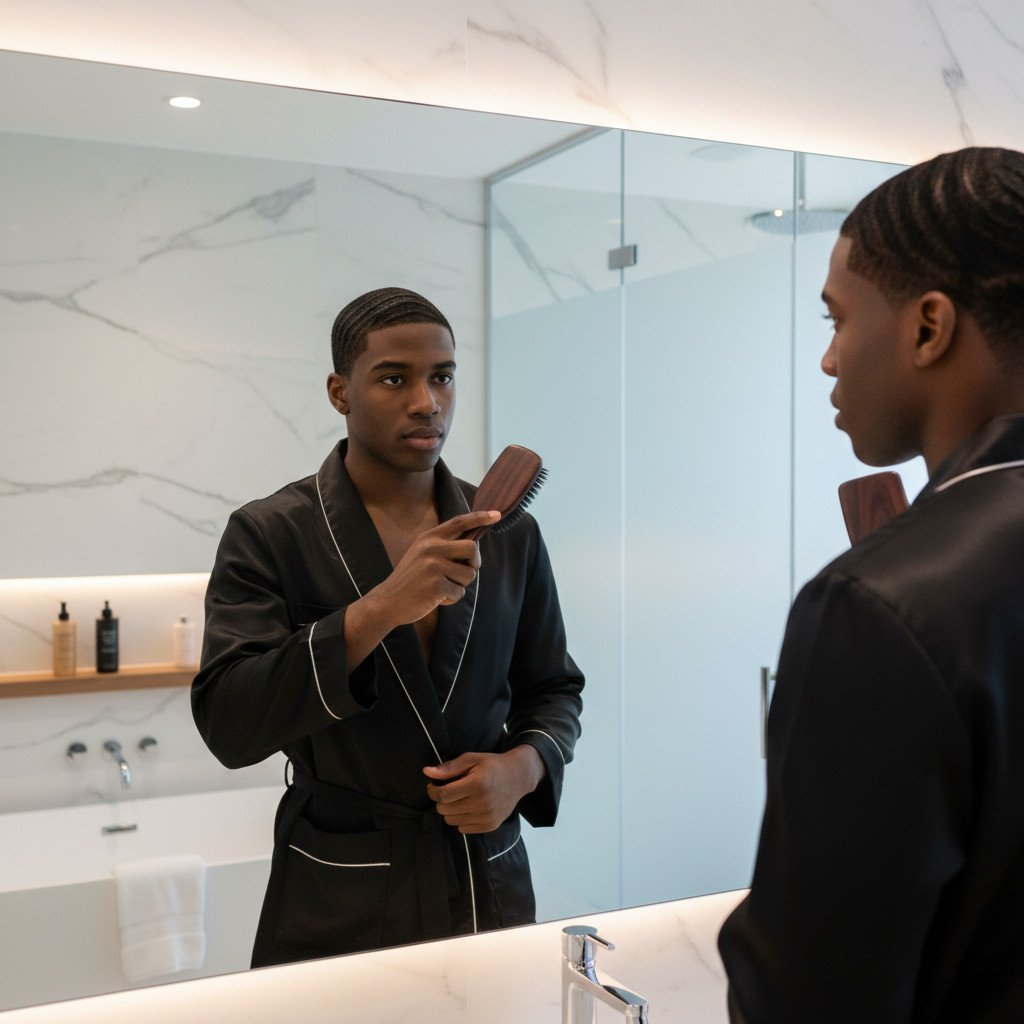
Your waves don’t need a fresh cut every week—they need maintenance
Maintaining pristine 360 waves between barber visits is a commitment to your craft. It’s not about avoiding the barber; it’s about extending the life of your fresh cut and ensuring your wave pattern remains sharp, defined, and healthy. This guide provides the blueprint for consistent, effective wave maintenance, ensuring your progress never falters.
Understanding the nuances of wave maintenance is critical for any man committed to his wave journey. A fresh cut provides the foundation, but your daily and weekly routine builds the structure. Without diligent care, even the deepest waves can lose their definition, leading to a less polished appearance. This isn’t just about aesthetics; it’s about respecting the time and effort you invest in your grooming.
For those dedicated to achieving and maintaining 360 waves for Black men, the period between barber appointments is where true mastery is demonstrated. It’s a test of discipline and consistency. This comprehensive guide will equip you with the strategies and techniques to keep your waves laid, your scalp healthy, and your confidence high, regardless of how long it’s been since your last trim.
The between-cuts schedule (weekly plan)
A structured weekly plan is the backbone of superior wave maintenance. Consistency is non-negotiable. This schedule integrates daily habits with weekly deep-care routines, ensuring every aspect of your wave journey is covered. Adhere to this plan to see tangible, lasting results.
Day 1-2: Post-cut consolidation
Immediately after your barber visit, focus on setting your waves. Your barber has expertly cut your hair to enhance your pattern. Now, it’s your job to reinforce that work. Apply a light pomade or wave cream and brush thoroughly. This initial brushing helps lay the hair down in its new, shorter state, training it to follow the desired pattern. Wear your durag immediately after brushing to compress the hair and lock in the pattern. This is crucial for establishing the foundation for the week.
Continue this routine for the next 24-48 hours. Minimal washing is recommended during this period to avoid disturbing the freshly set pattern. If you must wash, opt for a light co-wash and brush immediately after, then re-durag. The goal is to maximize the compression and training effect while the hair is at its optimal length for wave formation.
Day 3-4: Deep brushing and moisturizing
By mid-week, your waves should be settling in. Increase your brushing sessions significantly. Aim for 3-4 sessions daily, each lasting 15-20 minutes. Use a medium-hard brush to stimulate the scalp and distribute natural oils. Follow with a soft brush to lay the hair down smoothly. Apply a light, water-based moisturizer to keep your hair hydrated without weighing it down. Hydration is key to preventing frizz and breakage, which can disrupt your wave pattern.
This is also a good time to assess your scalp health. Look for any signs of dryness or irritation. If present, consider a targeted scalp treatment. Proper scalp health directly translates to healthy hair growth, which is essential for consistent waves. Remember, a healthy foundation prevents many common wave issues.
Day 5-6: Wash day preparation and light trimming
Prepare for your wash day by ensuring your hair is well-conditioned and detangled. Consider a pre-shampoo treatment or a deep conditioner application the night before. This helps to soften the hair and make the wash process less disruptive to your pattern. On day 6, perform a light trim around your hairline and neck to maintain a clean appearance. This doesn’t replace your barber, but it extends the neatness of your cut.
As an affiliate site, GFBM may earn from qualifying purchases through product links.
Use a liner trimmer with precision. Focus on the edges that tend to grow out quickly. This proactive approach keeps your overall look sharp and polished, giving the impression of a fresher cut. Be careful not to cut into your wave pattern. This is a maintenance trim, not a style change.
Day 7: Wave wash day
This is your dedicated wash day. Follow a structured wave wash routine to cleanse your hair and scalp without undoing your progress. Start by thoroughly wetting your hair, then apply a sulfate-free shampoo. Brush the shampoo through your hair in the direction of your waves. Rinse thoroughly, then apply a conditioner. Brush the conditioner through, let it sit for a few minutes, then rinse. Finish with a cold rinse to close the cuticles and enhance shine. Immediately after, apply a leave-in conditioner or wave butter and brush until dry, then durag.
For a detailed breakdown of the process, refer to our guide on waves wash day routine. This routine is designed to clean effectively while preserving your wave pattern. It’s a critical step in preventing product buildup and maintaining scalp health, which are common issues for wavers.
Ongoing: Nighttime protection
Every single night, without fail, wear a high-quality durag or wave cap. This is non-negotiable. It protects your wave pattern from friction while you sleep, locking in moisture and preventing frizz. A silk or satin durag is preferred as it reduces friction and doesn’t absorb moisture from your hair like cotton can. This consistent protection is what truly sets dedicated wavers apart.
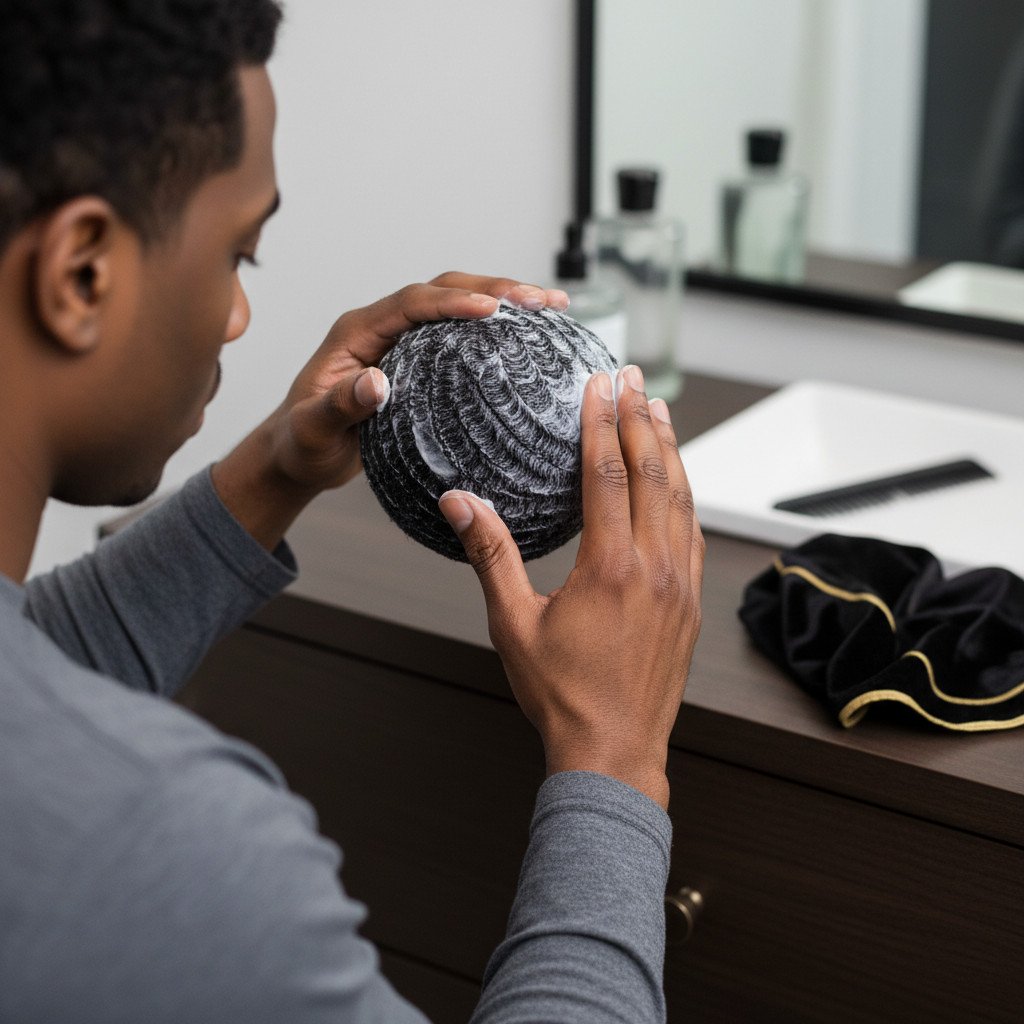
Ensure your durag is tied snugly but not too tight, to avoid creating lines or discomfort. The goal is compression and protection. Neglecting this step, even for one night, can significantly set back your progress, requiring extra brushing to re-lay your waves. This simple habit yields immense returns in wave definition and health.
The maintenance routine (exact steps)
This routine is designed for daily and weekly application, ensuring your waves remain laid and defined. Each step is crucial for optimal results between barber visits.
- Daily Brushing Sessions: Commit to at least 3-4 brushing sessions per day, each lasting 15-20 minutes. Use a hard brush to stimulate the scalp and detangle, followed by a medium brush to work the product in and further lay the hair, and finish with a soft brush for shine and ultimate compression. Brush from your crown outwards in the direction of your wave pattern. This consistent mechanical action trains your hair.
- Moisturize and Condition: Apply a light, water-based moisturizer or wave cream daily. Focus on even distribution without oversaturating your hair. A small amount goes a long way. This keeps your hair hydrated, preventing dryness and frizz, which are enemies of defined waves. Consider a leave-in conditioner every other day for added moisture.
- Scalp Health Check: Regularly inspect your scalp for dryness, irritation, or buildup. A healthy scalp is the foundation for healthy waves. If you notice flakiness, incorporate a gentle scalp exfoliant once a week. For persistent issues, consult a dermatologist. Neglecting scalp health can lead to hair thinning or breakage, impacting your wave pattern.
- Edge and Neckline Touch-ups: Every 3-5 days, use a precision liner trimmer to clean up your hairline and neck. This maintains a sharp, fresh appearance without altering your main cut. Be conservative; only trim the stray hairs that are clearly outside your established line. Use a steady hand and a good hand mirror to ensure symmetry.
- Wash Day Protocol: Once a week, perform a thorough wave wash. Use a sulfate-free shampoo and conditioner. Brush the products through your hair while washing to maintain the pattern. After rinsing, apply a leave-in conditioner, brush until nearly dry, and immediately put on your durag. This process cleanses, conditions, and resets your waves for the week.
- Durag Discipline: Wear a silk or satin durag every night and for at least 30 minutes after any brushing or product application. The durag compresses your hair, locks in moisture, and protects your pattern from friction. This is arguably the most critical step for maintaining deep, defined waves. Consistency here is paramount.
- Strategic Hair Trimming: If your hair starts to get too long between barber visits, consider a very light trim with trimmer guards. This is an advanced technique and should be approached with caution. Use a guard size that is only one or two levels higher than your last cut. The goal is to reduce bulk slightly, not to reshape your style. If unsure, wait for your barber. This helps maintain the optimal length for wave formation.
Table: Problem between cuts → why it happens → fix
| Problem Between Cuts | Why It Happens | Fix |
|---|---|---|
| Frizz and flyaways | Lack of moisture, friction from sleep, improper durag use, humidity. | Increase moisturizing, wear silk/satin durag consistently, cold water rinses, use anti-frizz serum. |
| Loss of wave definition | Insufficient brushing, hair growing too long, inconsistent durag wear, product buildup. | Increase brushing sessions (longer, more frequent), ensure proper durag compression, clarify shampoo weekly, consider a light trim. |
| Dry, flaky scalp | Lack of hydration, harsh shampoos, infrequent washing, product buildup, underlying skin conditions. | Use sulfate-free moisturizing shampoo, apply scalp oil/serum, gentle scalp exfoliation, ensure proper rinsing. |
| Uneven wave pattern | Inconsistent brushing angles, sleeping without a durag, hair growing out unevenly. | Focus on consistent brushing from the crown outwards, ensure durag covers all areas, consult barber for even cut. |
| Breakage or thinning | Over-brushing with hard brush, dryness, chemical damage, poor diet, tight durags. | Use softer brushes, deep condition regularly, balance diet, ensure durag isn’t too tight, avoid harsh chemicals. |
| Product buildup | Using too much product, not washing frequently enough, using heavy, waxy products. | Use lighter, water-based products, wash hair weekly with clarifying shampoo, rinse thoroughly. |
| Hairline looking messy | Natural hair growth, neglecting edge-ups. | Regularly use a precision trimmer for light edge and neckline clean-ups. |
| Waves not connecting | Hair growing in different directions, insufficient training, incorrect brushing technique. | Intensify brushing, ensure consistent angles, use a mirror to check all areas, consider a longer wolfing period. |
Frequently Asked Questions
Final Thoughts
Maintaining your waves between barber visits is a testament to your dedication and attention to detail. It’s a continuous process that rewards consistency with a sharp, defined, and healthy wave pattern. By adhering to a structured schedule, utilizing the right products, and mastering your brushing technique, you can extend the life of your fresh cut and keep your waves looking impeccable. This commitment to self-mastery elevates your entire grooming regimen.
Remember, every brush stroke, every moisturizing application, and every night spent under your durag contributes to the overall health and appearance of your waves. Don’t underestimate the power of these consistent actions. Your waves are a reflection of your discipline and care. Keep pushing, keep brushing, and your efforts will undoubtedly be rewarded with a head full of deep, captivating waves.
Next reads: Mastering 360 Waves, Haircut Maintenance Between Barber Visits, and Troubleshooting Common Wave Problems.
Frequently Asked Questions
How often should I brush my waves between cuts?
You should aim for at least 3-4 dedicated brushing sessions per day, each lasting 15-20 minutes. Consistent and thorough brushing is the cornerstone of maintaining and deepening your wave pattern. This trains the hair to lay down in the desired direction, reinforcing the work done by your barber.
What products are essential for wave maintenance?
Key products include a good quality wave cream or pomade for laying the hair, a water-based moisturizer to prevent dryness, and a sulfate-free shampoo and conditioner for wash days. A high-quality silk or satin durag is also non-negotiable for protecting your waves overnight and after brushing sessions. These products work synergistically to keep your waves healthy and defined.
How do I prevent frizz and flyaways between barber visits?
To combat frizz, ensure consistent moisturizing, always wear a silk or satin durag at night and after brushing, and consider cold water rinses on wash day to close hair cuticles. Humidity can also contribute, so a light anti-frizz serum can be beneficial. Proper compression from your durag is crucial in keeping stray hairs laid down.
Can I trim my own hair between barber visits?
You can perform light touch-ups on your hairline and neck with a precision liner trimmer to maintain a clean appearance. However, avoid attempting to cut or reshape your main wave pattern. If your hair gets too long, a very conservative trim with a higher guard size can be considered, but it’s often best to wait for your barber to avoid mistakes that could set back your progress.
What is the importance of a durag in wave maintenance?
The durag is paramount for wave maintenance. It compresses your hair, locking in your wave pattern and preventing frizz and friction while you sleep or go about your day. It also helps to retain moisture, ensuring your hair remains hydrated and healthy. Consistent durag wear is a non-negotiable habit for serious wavers.
How do I address a dry or flaky scalp when maintaining waves?
A dry or flaky scalp can be addressed by using a moisturizing, sulfate-free shampoo and conditioner, applying a light scalp oil or serum, and incorporating gentle scalp exfoliation once a week. Ensure you rinse all products thoroughly to prevent buildup. If the issue persists, consult a dermatologist, as it might indicate an underlying condition.
How long should I ‘wolf’ for between cuts to deepen my waves?
Wolfing refers to the period of growing your hair out to deepen your wave pattern. The ideal wolfing period varies but typically ranges from 4 to 8 weeks. During this time, consistent brushing is even more critical to train the longer hair. A longer wolfing period allows your waves to set deeper, but it requires diligent maintenance to prevent frizz and tangles.

Shop wave cream on Amazon
Shop moisturizer on Amazon
Shop liner trimmer on Amazon
Shop hand mirror on Amazon
Shop durag on Amazon
Shop trimmer guards on Amazon
Shop sulfate-free shampoo on Amazon
Shop conditioner on Amazon
Shop leave-in conditioner on Amazon
Shop wave butter on Amazon
Shop scalp exfoliant on Amazon
Shop scalp oil on Amazon