Real-Life Beard Routine Scenarios for Patchy Beard Fixes for Black Men
A strong beard routine has to work outside of perfect bathroom-counter conditions. It has to work when you are rushing before work, when your beard feels dry after a long day, when the weather changes, and when your barber has shaped the line cleaner than you expected. For Black men, that routine also has to respect dense curls, coarse strands, sensitive skin under the beard, and the fact that product buildup can hide until the beard starts itching, flaking, or looking dull.
Start by reading the beard before adding more product. If the beard feels rough but the skin underneath is calm, you may need better conditioning, a lighter oil, or more consistent brushing. If the skin feels tight, itchy, or irritated, the answer is usually not more shine. It may be a gentler wash schedule, a cleaner rinse, a lighter hand with balm, or a pause from heavy fragrance. The discipline is in changing one variable at a time so you can tell what actually helped.
For a short beard, keep the routine direct: cleanse when needed, moisturize the skin beneath, use a small amount of oil or balm, and brush enough to distribute product without scraping the skin. For a fuller beard, section the work. Apply product from the skin outward, then shape the hair so the surface looks neat without leaving the roots dry. The fuller the beard gets, the more important it becomes to separate grooming from coating. A beard can look shiny and still be dehydrated underneath.
Budget matters too. You do not need a crowded shelf to manage patchy beard fixes for black men. A dependable wash, one conditioning product, and one tool you actually use will outperform five products that fight each other. If money is tight, upgrade the item that touches your skin or beard most often. If time is tight, simplify the routine instead of skipping care entirely. Consistency beats a complicated plan that only happens twice a month.
How to Audit Your Beard Without Overreacting
Give any beard change enough time to show a pattern. One dry morning does not mean the routine failed. One good beard day does not mean every product is perfect. Track how your beard feels after washing, how the skin underneath feels at night, whether flakes return quickly, and whether the beard holds shape without becoming stiff. Those signals tell you more than packaging claims or social media routines built for a different texture.
If irritation shows up, simplify. Remove the newest product first, reduce fragrance, avoid scratching, and return to a basic cleanse-and-moisturize rhythm. If flakes, soreness, bleeding, swelling, or persistent itching keep coming back, that is a reason to get professional help rather than forcing stronger products into the routine. Grooming should make you look more put together, but it should also leave your skin calmer over time.
Real-Life Beard Routine Scenarios for Patchy Beard Fixes for Black Men
A strong beard routine has to work outside of perfect bathroom-counter conditions. It has to work when you are rushing before work, when your beard feels dry after a long day, when the weather changes, and when your barber has shaped the line cleaner than you expected. For Black men, that routine also has to respect dense curls, coarse strands, sensitive skin under the beard, and the fact that product buildup can hide until the beard starts itching, flaking, or looking dull.
Start by reading the beard before adding more product. If the beard feels rough but the skin underneath is calm, you may need better conditioning, a lighter oil, or more consistent brushing. If the skin feels tight, itchy, or irritated, the answer is usually not more shine. It may be a gentler wash schedule, a cleaner rinse, a lighter hand with balm, or a pause from heavy fragrance. The discipline is in changing one variable at a time so you can tell what actually helped.
For a short beard, keep the routine direct: cleanse when needed, moisturize the skin beneath, use a small amount of oil or balm, and brush enough to distribute product without scraping the skin. For a fuller beard, section the work. Apply product from the skin outward, then shape the hair so the surface looks neat without leaving the roots dry. The fuller the beard gets, the more important it becomes to separate grooming from coating. A beard can look shiny and still be dehydrated underneath.
Budget matters too. You do not need a crowded shelf to manage patchy beard fixes for black men. A dependable wash, one conditioning product, and one tool you actually use will outperform five products that fight each other. If money is tight, upgrade the item that touches your skin or beard most often. If time is tight, simplify the routine instead of skipping care entirely. Consistency beats a complicated plan that only happens twice a month.
How to Audit Your Beard Without Overreacting
Give any beard change enough time to show a pattern. One dry morning does not mean the routine failed. One good beard day does not mean every product is perfect. Track how your beard feels after washing, how the skin underneath feels at night, whether flakes return quickly, and whether the beard holds shape without becoming stiff. Those signals tell you more than packaging claims or social media routines built for a different texture.
If irritation shows up, simplify. Remove the newest product first, reduce fragrance, avoid scratching, and return to a basic cleanse-and-moisturize rhythm. If flakes, soreness, bleeding, swelling, or persistent itching keep coming back, that is a reason to get professional help rather than forcing stronger products into the routine. Grooming should make you look more put together, but it should also leave your skin calmer over time.
Real-Life Beard Routine Scenarios for Patchy Beard Fixes for Black Men
A strong beard routine has to work outside of perfect bathroom-counter conditions. It has to work when you are rushing before work, when your beard feels dry after a long day, when the weather changes, and when your barber has shaped the line cleaner than you expected. For Black men, that routine also has to respect dense curls, coarse strands, sensitive skin under the beard, and the fact that product buildup can hide until the beard starts itching, flaking, or looking dull.
Start by reading the beard before adding more product. If the beard feels rough but the skin underneath is calm, you may need better conditioning, a lighter oil, or more consistent brushing. If the skin feels tight, itchy, or irritated, the answer is usually not more shine. It may be a gentler wash schedule, a cleaner rinse, a lighter hand with balm, or a pause from heavy fragrance. The discipline is in changing one variable at a time so you can tell what actually helped.
For a short beard, keep the routine direct: cleanse when needed, moisturize the skin beneath, use a small amount of oil or balm, and brush enough to distribute product without scraping the skin. For a fuller beard, section the work. Apply product from the skin outward, then shape the hair so the surface looks neat without leaving the roots dry. The fuller the beard gets, the more important it becomes to separate grooming from coating. A beard can look shiny and still be dehydrated underneath.
Budget matters too. You do not need a crowded shelf to manage patchy beard fixes for black men. A dependable wash, one conditioning product, and one tool you actually use will outperform five products that fight each other. If money is tight, upgrade the item that touches your skin or beard most often. If time is tight, simplify the routine instead of skipping care entirely. Consistency beats a complicated plan that only happens twice a month.
How to Audit Your Beard Without Overreacting
Give any beard change enough time to show a pattern. One dry morning does not mean the routine failed. One good beard day does not mean every product is perfect. Track how your beard feels after washing, how the skin underneath feels at night, whether flakes return quickly, and whether the beard holds shape without becoming stiff. Those signals tell you more than packaging claims or social media routines built for a different texture.
If irritation shows up, simplify. Remove the newest product first, reduce fragrance, avoid scratching, and return to a basic cleanse-and-moisturize rhythm. If flakes, soreness, bleeding, swelling, or persistent itching keep coming back, that is a reason to get professional help rather than forcing stronger products into the routine. Grooming should make you look more put together, but it should also leave your skin calmer over time.
Patchy Beard Fixes for Black Men: Practical Grooming Guide

Patchy beards are common among Black men, but that doesn’t mean you have to settle for a look you’re not proud of. If your beard grows in unevenly, with thin spots or bare patches, you’re not alone—and you’re not out of options. The right approach can help you work with your natural growth, create a fuller appearance, and build a grooming routine that fits your lifestyle and your standards.
This guide is about practical, disciplined solutions. No miracle claims, no shame, and no hype. We’ll cover what actually works for rich brown skin and coarse, curly facial hair—without falling for stereotypes or risky shortcuts. You’ll learn how to style, care for, and troubleshoot a patchy beard, so you can look sharp and feel confident on your terms.
If you’re new to beard care or want to build a stronger foundation, check out our Beginner Beard Routine for Black Men. For a broader look at beard health and maintenance, see our Beard Care & Beard Growth pillar page.
Why This Matters for Black Men
Beard care isn’t one-size-fits-all. Black men’s facial hair is typically coarser, curlier, and denser at the follicle—but that doesn’t guarantee even coverage. Genetics, grooming habits, and skin health all play a role in how your beard grows in. Patchiness can be frustrating, but it’s not a character flaw or a sign of poor hygiene.
For Black men, patchy beards can also come with unique challenges:
- Coarse, curly hair: This hair type can make sparse spots more noticeable, especially if the surrounding hair is thick and dark. The contrast between full and thin areas is often sharper on rich brown skin.
- Ingrown hairs and irritation: Curly hair is more likely to curl back into the skin, causing bumps and inflammation. If not managed, these can create new patches or worsen existing ones.
- Hyperpigmentation and razor bumps: Darker skin tones may show more contrast between beard and bare skin, especially if you’re dealing with post-inflammatory hyperpigmentation from shaving or ingrown hairs.
Understanding these factors is the first step to building a routine that works for your beard, not against it. The goal isn’t to chase unrealistic standards—it’s to maximize what you have and keep your skin and hair healthy.
What Usually Goes Wrong
Before you can fix a patchy beard, it helps to know what’s causing the problem. Here are the most common pitfalls:
- Impatience: Many men expect instant results. Beard growth is slow, and patchy areas often fill in with time and consistent care. Giving up too early or constantly changing your approach can sabotage progress.
- Over-trimming: Trying to “even out” your beard with clippers can make patchiness stand out more, especially if you cut too close to the skin. Over-trimming can also disrupt the natural growth pattern, making it harder for sparse areas to catch up.
- Aggressive grooming: Scrubbing, picking, or digging at ingrown hairs can damage follicles and worsen patchiness. Avoid harsh DIY fixes or home remedies that promise quick results—they often do more harm than good.
- Neglecting skin health: Dry, irritated, or poorly moisturized skin can stunt hair growth and make patchy spots more obvious. Healthy skin is the foundation for healthy hair.
- Using the wrong products: Heavy alcohol-based products, undiluted essential oils, or harsh cleansers can irritate both hair and skin, especially for Black men. These can lead to dryness, breakage, and even more patchiness.
It’s also worth noting that some patchiness is genetic. If your father, uncles, or brothers have patchy beards, you might too. That doesn’t mean you can’t improve your look—it just means you’ll need to work with your unique growth pattern, not fight it.
What to Do Instead
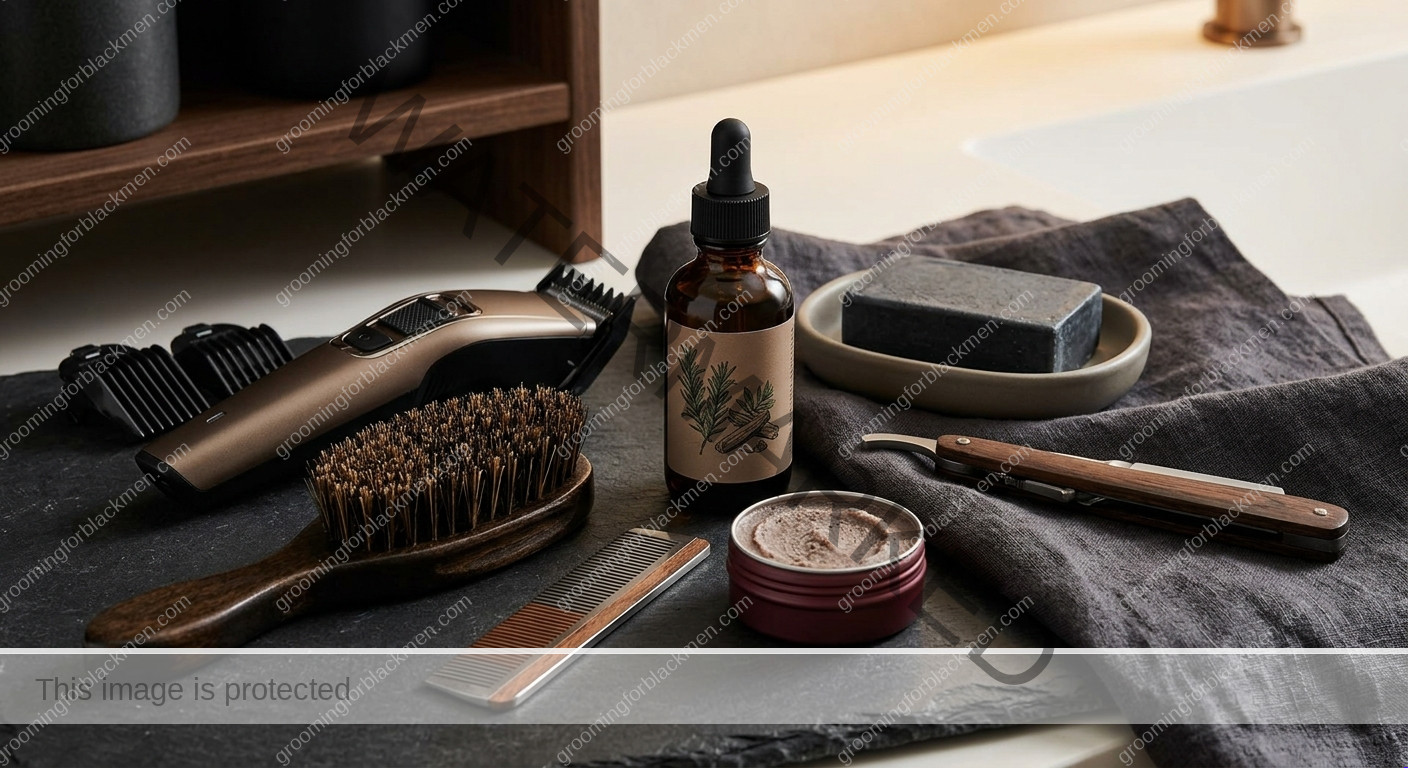
Here’s a disciplined, practical approach to managing a patchy beard as a Black man:
1. Let It Grow—With Patience
Give your beard at least 6-8 weeks without major trimming. Many patchy areas fill in as hair grows longer and curls over sparse spots. Resist the urge to “fix” it too soon. Growth often comes in unevenly at first, but your beard may surprise you with what it can do over time. If you’re tempted to trim, focus only on stray hairs outside your desired shape, not the main body of your beard.
2. Define Your Neckline and Cheeks
Keep your beard edges sharp and clean. A well-defined neckline and cheek line create a fuller, more intentional shape, even if the beard isn’t dense everywhere. A crisp outline draws the eye to the overall shape rather than the patchy areas. For shaping tips, see How to Shape Your Beard as a Black Man.
3. Use Strategic Trimming
Instead of trimming everything to the shortest patch, let fuller areas grow longer. Use a guard to blend patchy spots into thicker sections, creating a fade effect. This works especially well for goatees, chin straps, or short boxed beards. If your cheeks are sparse but your chin and mustache fill in well, consider a goatee or Van Dyke style. For more on blending and styling, see Patchy Beard Fixes for Black Men.
4. Moisturize and Condition Regularly
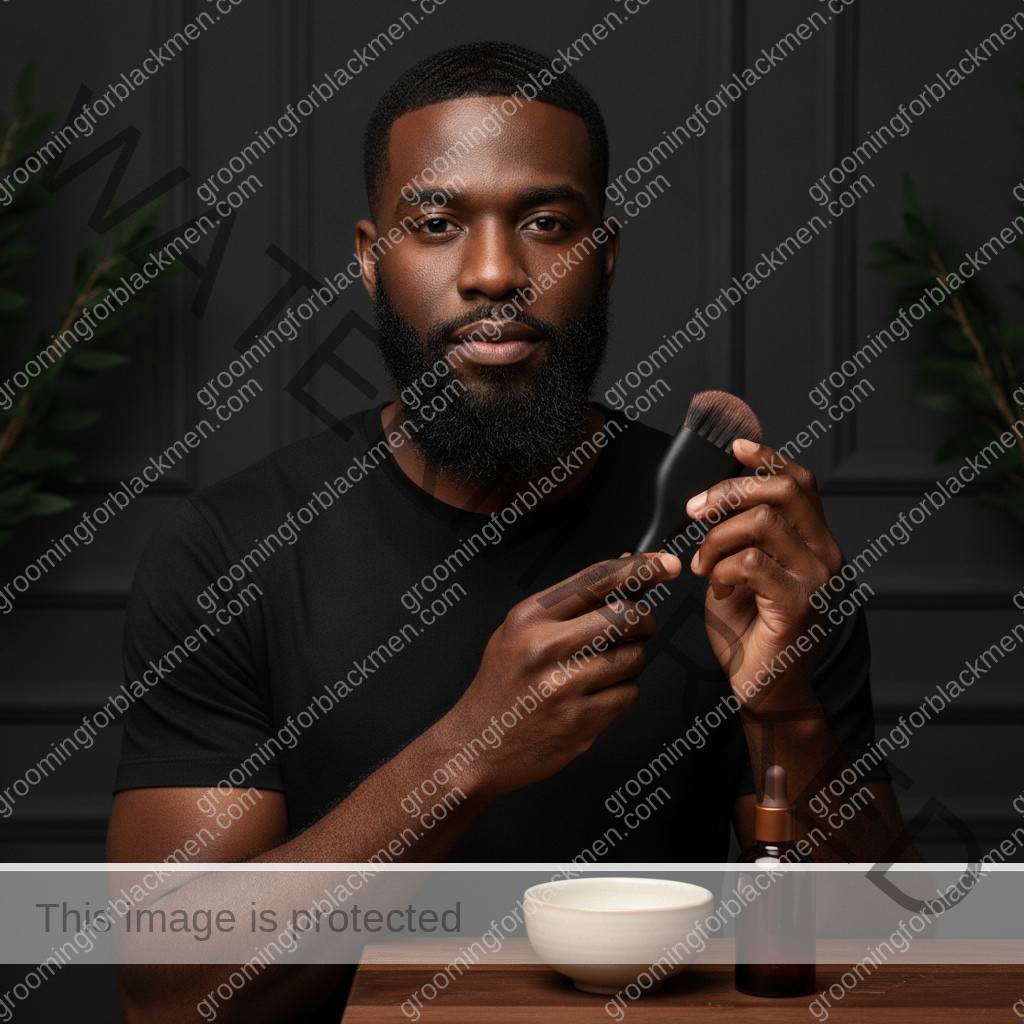
Healthy hair grows best from healthy skin. Use a gentle beard wash (not harsh soap), and follow up with a beard oil or lightweight moisturizer to keep both hair and skin hydrated. Hydrated hair is less likely to break and more likely to cover patchy areas. For product guidance, see Best Beard Oils for Black Men.
5. Brush and Train Your Beard
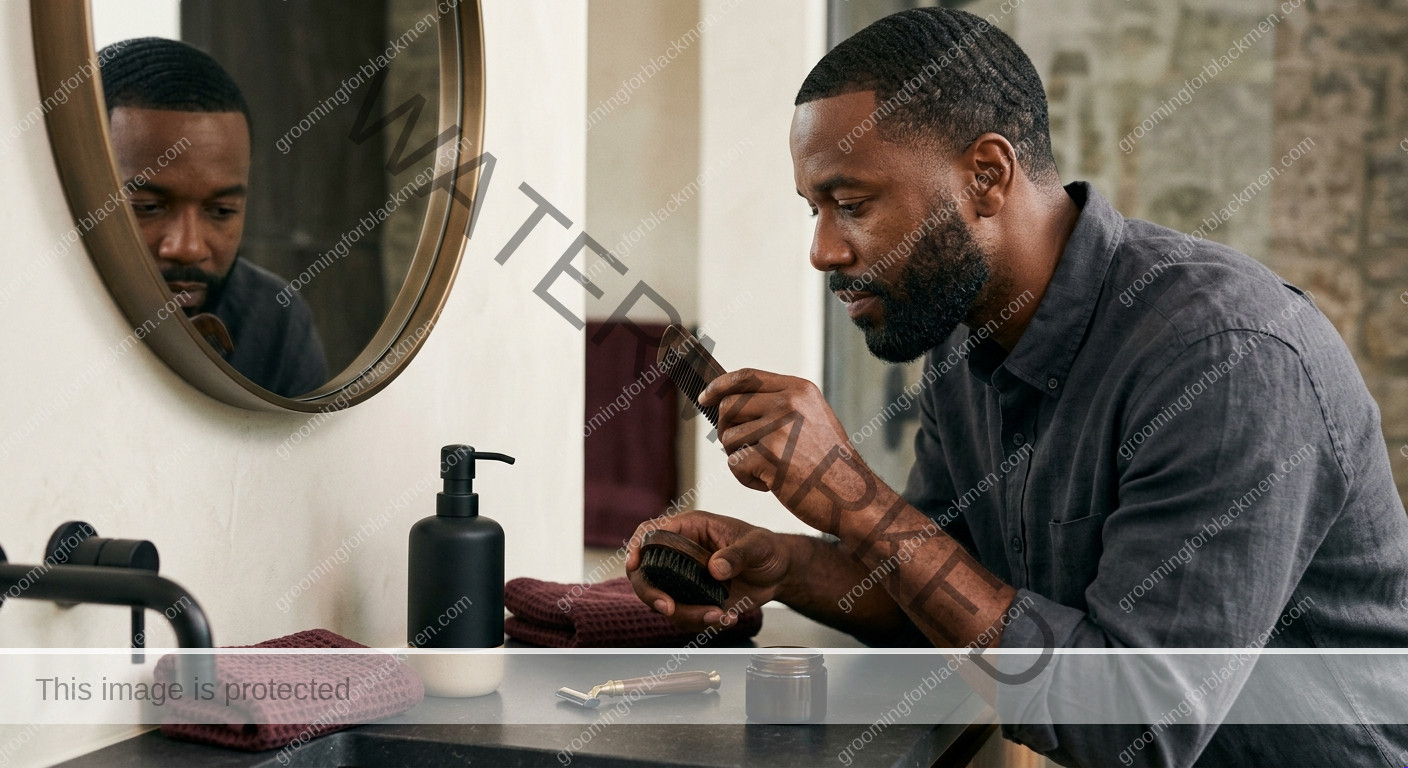
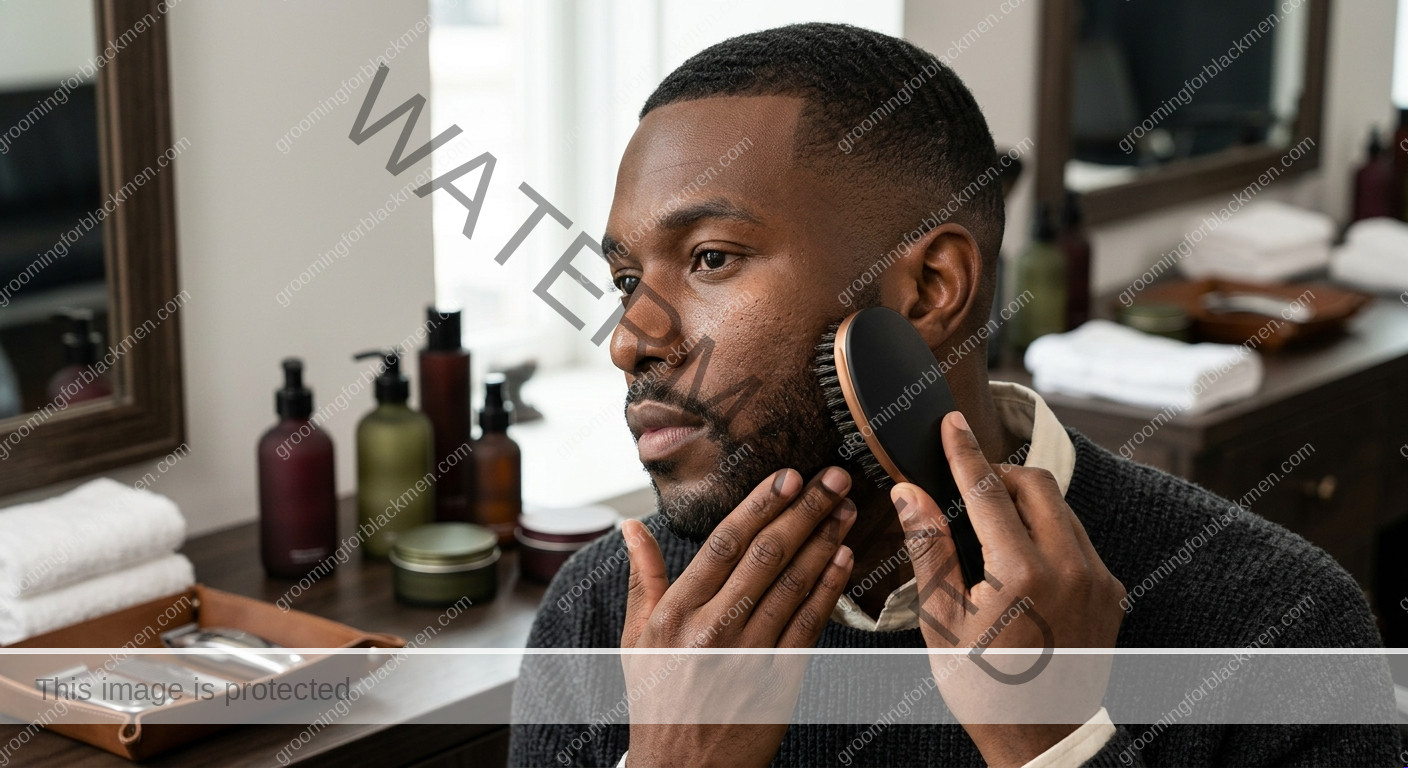
Regular brushing helps distribute oils, train hair to grow in your desired direction, and cover patchy spots. A boar bristle brush works well for coarse, curly hair. Brushing also helps lift and blend longer hairs over thinner areas, creating a fuller look. For tool tips, see Best Beard Brush and Comb for Black Men.
6. Choose a Style That Works With Your Growth
Not every beard has to be a full, thick mane. Goatees, chin straps, and faded styles look sharp and intentional—even with patchy cheeks or jawlines. Play to your strengths and don’t be afraid to experiment. If your mustache and chin connect well, a circle beard or anchor beard can look bold and clean. Check out our beard shaping guide for more style inspiration.
7. Be Consistent
Consistency is key. Stick to your routine for at least 2-3 months before judging results. Real improvement takes time and discipline. Track your progress with photos every couple of weeks so you can see subtle changes that might not be obvious day-to-day.
Building a Step-by-Step Patchy Beard Routine
Here’s how to structure a realistic, effective beard care routine that addresses patchiness and supports healthy growth:
- Cleanse Gently: Wash your beard 2-3 times a week with a sulfate-free beard wash. Avoid hot water, which can dry out skin and hair. Pat dry with a towel—don’t rub aggressively.
- Moisturize Daily: Apply a lightweight beard oil or moisturizer every morning and night. Focus on massaging it into both the hair and the skin beneath. This keeps follicles healthy and prevents dryness.
- Brush or Comb: Use a boar bristle brush or wide-tooth comb to distribute oils and train your beard’s direction. Brush down and out to help cover patchy areas.
- Shape Edges Weekly: Use a trimmer or razor to keep your neckline and cheeks sharp. Don’t over-trim the main body—just clean up stray hairs.
- Strategic Trimming: Every 2-3 weeks, use a guard to blend patchy areas into fuller sections. Avoid trimming everything to the shortest length.
- Exfoliate (Optional): Once a week, use a gentle exfoliant to remove dead skin and help prevent ingrown hairs. Don’t scrub hard—let the product do the work.
Stick to this routine for at least two months before making major changes. Consistency is what delivers results, not drastic overhauls or chasing every new trend.
Real-Life Scenarios: Patchy Beard Solutions in Action
Let’s break down a few common scenarios and how to handle them:
-
Scenario 1: Patchy Cheeks, Full Chin
Focus on a goatee, circle beard, or anchor beard. Keep cheeks clean-shaven or faded short. Let the chin and mustache grow longer for a bold, intentional look. -
Scenario 2: Thin Sides, Strong Jawline
Try a chin strap or short boxed beard. Use a fade to blend thinner sides into fuller jaw and chin areas. Keep edges sharp for a clean finish. -
Scenario 3: Uneven Growth, Ingrown Hairs
Prioritize skin health. Use gentle cleansers, regular moisturizing, and avoid picking at bumps. Brush daily to lift hairs away from the skin and minimize ingrowns. -
Scenario 4: Patchy All Over, But Want to Grow It Out
Let it grow for at least 8 weeks. Use a beard oil daily, brush to train the direction, and avoid heavy trimming. After 2 months, assess which areas fill in and choose a style that works with your pattern.
Product and Tool Criteria for Patchy Beard Fixes

Not every product is made for coarse, curly hair or rich brown skin. Here’s what to look for:
- Beard Brushes: Choose a boar bristle or firm synthetic brush that can handle thick, curly hair without snagging. Avoid cheap plastic bristles that can break hair or scratch your skin.
- Beard Oils: Look for lightweight, non-comedogenic oils (like jojoba or grapeseed) that moisturize without clogging pores. Avoid heavy fragrances and alcohol-based formulas that can irritate skin or dry out hair.
- Beard Washes: Use a sulfate-free, gentle cleanser. Harsh soaps strip natural oils and dry out both hair and skin, making patchiness and irritation worse.
- Trimmers and Clippers: Use adjustable guards for blending. Keep blades clean and sharp to avoid irritation and ingrown hairs. A quality trimmer allows for precise fading and shaping.
GFBM may earn a small commission from qualifying purchases, but product examples are included to clarify criteria, not to promise results.
- Browse beard brushes for Black men on Amazon
- Browse beard oils for Black men on Amazon
- Browse beard trimmers for Black men on Amazon
For more on choosing the right products, read our guide on Beard Oil vs Balm vs Butter for Black Men.
Troubleshooting: When Patchiness Persists
Some patchiness can be improved with time and care. But if you notice any of the following, it’s time to consult a dermatologist or qualified clinician:
- Painful, infected, or spreading bumps
- Persistent irritation or scarring
- Sudden, unexplained hair loss
- Dark patches that change in size or color
Don’t try to dig out ingrown hairs or use harsh DIY remedies. These can cause permanent damage or worsen the problem. If you’re dealing with beard dandruff or itch, see our guides on Beard Dandruff for Black Men and Beard Itch for Black Men for safe, practical solutions.
If you’re experiencing patchiness along with other skin changes (like rapid darkening, swelling, or pain), don’t wait—get a professional opinion. Sometimes underlying skin conditions, hormonal shifts, or nutritional issues are at play, and a dermatologist can help you address them safely.
Frequently Asked Questions
How long should I let my beard grow before judging patchiness?
Give your beard at least 6-8 weeks of uninterrupted growth. Many patchy areas fill in as hair gets longer and curls over sparse spots. Avoid trimming or shaping too early—patience is essential. If you’re unsure, take weekly photos to track progress.
Can brushing help cover patchy spots?
Yes. Regular brushing with a boar bristle brush helps train hair to grow in your desired direction and can cover patchy areas by blending longer hairs over thinner spots. It also distributes natural oils for healthier growth and a more uniform appearance.
Should I shave everything off if my beard is patchy?
Not necessarily. Shaving won’t “reset” your beard or guarantee thicker regrowth. Instead, work with your natural growth pattern and choose a style (like a goatee or faded beard) that complements your strengths. Shaving is a personal choice, but it’s not required for improvement.
What ingredients should I avoid in beard products?
Avoid heavy alcohol-based formulas, undiluted essential oils, and harsh sulfates. These can dry out coarse hair and irritate rich brown skin. Look for lightweight, non-comedogenic oils and gentle cleansers designed for textured hair and sensitive skin.
How can I prevent ingrown hairs in patchy areas?
Keep your skin clean and moisturized, use a gentle exfoliant (no harsh scrubbing), and avoid digging at ingrown hairs. Brushing regularly helps prevent hairs from curling back into the skin. If you have persistent, painful ingrowns, consult a dermatologist for safe, effective treatment.
Is there a way to make my beard look fuller without using risky products?
Yes. Strategic trimming, regular brushing, and choosing a style that works with your growth can all create the appearance of a fuller beard. Moisturizing and conditioning also help hair look healthier and thicker. Consistency and patience are more effective than shortcuts.
When should I see a professional about my patchy beard?
If you notice painful, infected, spreading, or scarring bumps—or if patchiness is sudden and severe—see a dermatologist or qualified clinician. They can help identify underlying causes and recommend safe solutions that fit your skin and hair type.
What to Do Next
Patchy beards are part of the journey for many Black men. The key is to work with your natural growth, not against it. Build a consistent routine, use the right products and tools, and choose a style that fits your unique pattern. Stay patient and disciplined—real results take time.
For more support, explore our Beard Care & Beard Growth hub, or dive deeper into Patchy Beard Fixes for Black Men. If you’re ready to upgrade your daily routine, start with our Beginner Beard Care Routine or learn how to shape your beard for your face.
Your beard, your rules. Stay sharp.