
Beard Growth Expectations for Black Men: Practical Grooming Guide
Every beard journey is personal, but for Black men, the path to a healthy, full beard comes with unique realities. If you’re searching for a straightforward, practical guide—without hype, empty promises, or shame—this is for you. Understanding beard growth expectations for Black men is about more than waiting for hair to fill in. It’s about respecting your genetics, working with your hair’s natural texture, and building a grooming routine that fits your life and skin.
There’s no miracle shortcut—no oil, supplement, or tool will override your DNA. But there are proven ways to make the most of what you have, avoid common pitfalls, and keep your beard and skin healthy at every stage. This guide is grounded in real experience, not influencer trends, and is written for men with rich brown skin and coarse or curly facial hair. Whether you’re starting fresh, dealing with patchiness, or aiming for a fuller look, you’ll find practical advice here—no judgment, no stereotypes, just honest grooming for Black men.
For a deeper dive into beard care, see our Beard Care & Beard Growth pillar.
Real-Life Beard Routine Scenarios for Beard Growth Expectations for Black Men
A strong beard routine has to work outside of perfect bathroom-counter conditions. It has to work when you are rushing before work, when your beard feels dry after a long day, when the weather changes, and when your barber has shaped the line cleaner than you expected. For Black men, that routine also has to respect dense curls, coarse strands, sensitive skin under the beard, and the fact that product buildup can hide until the beard starts itching, flaking, or looking dull.
Start by reading the beard before adding more product. If the beard feels rough but the skin underneath is calm, you may need better conditioning, a lighter oil, or more consistent brushing. If the skin feels tight, itchy, or irritated, the answer is usually not more shine. It may be a gentler wash schedule, a cleaner rinse, a lighter hand with balm, or a pause from heavy fragrance. The discipline is in changing one variable at a time so you can tell what actually helped.
For a short beard, keep the routine direct: cleanse when needed, moisturize the skin beneath, use a small amount of oil or balm, and brush enough to distribute product without scraping the skin. For a fuller beard, section the work. Apply product from the skin outward, then shape the hair so the surface looks neat without leaving the roots dry. The fuller the beard gets, the more important it becomes to separate grooming from coating. A beard can look shiny and still be dehydrated underneath.
Budget matters too. You do not need a crowded shelf to manage beard growth expectations for black men. A dependable wash, one conditioning product, and one tool you actually use will outperform five products that fight each other. If money is tight, upgrade the item that touches your skin or beard most often. If time is tight, simplify the routine instead of skipping care entirely. Consistency beats a complicated plan that only happens twice a month.
How to Audit Your Beard Without Overreacting
Give any beard change enough time to show a pattern. One dry morning does not mean the routine failed. One good beard day does not mean every product is perfect. Track how your beard feels after washing, how the skin underneath feels at night, whether flakes return quickly, and whether the beard holds shape without becoming stiff. Those signals tell you more than packaging claims or social media routines built for a different texture.
If irritation shows up, simplify. Remove the newest product first, reduce fragrance, avoid scratching, and return to a basic cleanse-and-moisturize rhythm. If flakes, soreness, bleeding, swelling, or persistent itching keep coming back, that is a reason to get professional help rather than forcing stronger products into the routine. Grooming should make you look more put together, but it should also leave your skin calmer over time.
Real-Life Beard Routine Scenarios for Beard Growth Expectations for Black Men
A strong beard routine has to work outside of perfect bathroom-counter conditions. It has to work when you are rushing before work, when your beard feels dry after a long day, when the weather changes, and when your barber has shaped the line cleaner than you expected. For Black men, that routine also has to respect dense curls, coarse strands, sensitive skin under the beard, and the fact that product buildup can hide until the beard starts itching, flaking, or looking dull.
Start by reading the beard before adding more product. If the beard feels rough but the skin underneath is calm, you may need better conditioning, a lighter oil, or more consistent brushing. If the skin feels tight, itchy, or irritated, the answer is usually not more shine. It may be a gentler wash schedule, a cleaner rinse, a lighter hand with balm, or a pause from heavy fragrance. The discipline is in changing one variable at a time so you can tell what actually helped.
For a short beard, keep the routine direct: cleanse when needed, moisturize the skin beneath, use a small amount of oil or balm, and brush enough to distribute product without scraping the skin. For a fuller beard, section the work. Apply product from the skin outward, then shape the hair so the surface looks neat without leaving the roots dry. The fuller the beard gets, the more important it becomes to separate grooming from coating. A beard can look shiny and still be dehydrated underneath.
Budget matters too. You do not need a crowded shelf to manage beard growth expectations for black men. A dependable wash, one conditioning product, and one tool you actually use will outperform five products that fight each other. If money is tight, upgrade the item that touches your skin or beard most often. If time is tight, simplify the routine instead of skipping care entirely. Consistency beats a complicated plan that only happens twice a month.
How to Audit Your Beard Without Overreacting
Give any beard change enough time to show a pattern. One dry morning does not mean the routine failed. One good beard day does not mean every product is perfect. Track how your beard feels after washing, how the skin underneath feels at night, whether flakes return quickly, and whether the beard holds shape without becoming stiff. Those signals tell you more than packaging claims or social media routines built for a different texture.
If irritation shows up, simplify. Remove the newest product first, reduce fragrance, avoid scratching, and return to a basic cleanse-and-moisturize rhythm. If flakes, soreness, bleeding, swelling, or persistent itching keep coming back, that is a reason to get professional help rather than forcing stronger products into the routine. Grooming should make you look more put together, but it should also leave your skin calmer over time.
Why This Matters for Black Men
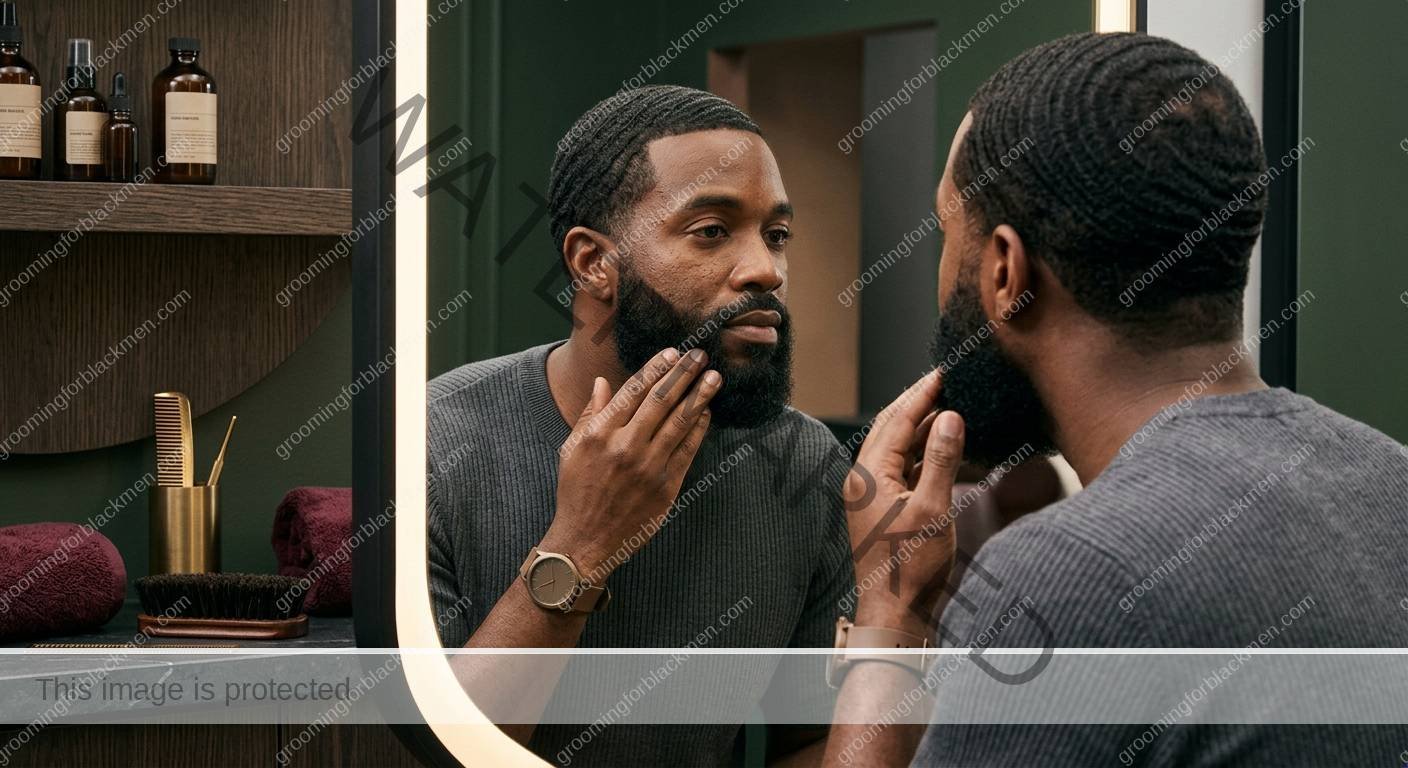
Beard growth isn’t just about looks—it’s about self-respect, discipline, and understanding your own biology. Black men often face unique challenges when growing a beard, including tightly coiled hair, increased risk of ingrown hairs, and skin that’s more prone to dryness or irritation. These aren’t flaws; they’re facts. Knowing what’s normal and what’s not can save you time, frustration, and money.
- Genetics set the baseline. Your beard’s thickness, growth pattern, and coverage are largely inherited. No routine or product can change your follicles’ DNA.
- Curly/coarse hair grows differently. Black men’s facial hair often appears to grow slower or patchier because it curls back toward the skin. This can also make the beard look shorter than it is.
- Skin health is beard health. Dryness, irritation, and ingrown hairs are more common with coarse, curly beards. A good grooming routine protects both hair and skin.
- Patience pays off. Most full beards take months, sometimes years, to mature. Comparing your progress to others—especially those with different hair types—sets you up for disappointment.
Understanding these realities helps you set realistic goals and build a routine that works for you. For more on starting out, check our Beginner Beard Care Routine.
What Usually Goes Wrong

Many Black men run into the same issues on their beard journey. Most of these problems come from unrealistic expectations, misinformation, or using the wrong products and techniques for your hair type. Here’s what to watch out for:
- Chasing “miracle” growth solutions. Oils, pills, and gadgets that promise overnight results are a waste of money. They can also irritate your skin or clog pores.
- Over-grooming or aggressive routines. Excessive brushing, harsh scrubbing, or using alcohol-heavy products can damage hair and skin, leading to breakage and irritation.
- Ignoring patchiness or uneven growth. Most beards start patchy, especially for Black men. Shaving it all off every time you see gaps only resets your progress. Learn more about patchy beard fixes.
- Improper shaving or trimming. Using dull blades, shaving too close, or not prepping your skin can cause razor bumps and ingrown hairs.
- Neglecting skin care under the beard. Dry, flaky skin leads to beard dandruff and itch. If you’re struggling, see our Beard Dandruff Guide and Beard Itch Guide.
Most setbacks are preventable with the right information and a disciplined approach. The key is to work with your natural growth—not against it.
What to Do Instead

Building a strong beard as a Black man means focusing on what you can control: your routine, your patience, and your self-care. Here’s how to set yourself up for success:
- Set realistic expectations. Accept your natural growth pattern. Not every man will have a full, thick beard—and that’s normal. Focus on making your beard look its best, not someone else’s idea of “full.”
- Commit to a consistent routine. Wash, condition, and moisturize your beard regularly. Don’t skip steps because you’re not seeing instant results. Consistency is key.
- Protect your skin. Use gentle, alcohol-free cleansers and moisturizers. Keep the skin under your beard healthy to support strong hair growth.
- Be patient with patchiness. Most beards fill in over time. Give new growth at least 8-12 weeks before judging your progress. For tips, see our patchy beard guide.
- Trim and shape with care. Use sharp tools and don’t cut too close to the skin. Learn how to shape your beard to highlight your best features: How to Shape Your Beard.
- Moisturize and seal in hydration. Use beard oils or butters designed for coarse hair to prevent dryness and breakage. For a breakdown of options, see Beard Oil vs Balm vs Butter.
- Brush and comb gently. Use tools made for coarse hair. Brushing helps distribute oils and train your beard to grow in the right direction. See our Best Beard Brush and Comb guide.
Above all, remember: your beard is yours. The best results come from respecting your own growth and building a routine that fits your hair, skin, and lifestyle.
Understanding Beard Growth Stages: What to Expect Month by Month
Beard growth for Black men is a process that unfolds in stages. Knowing what to expect at each phase helps you avoid frustration and stick with your routine. Here’s a breakdown of the typical journey, with practical advice for each step:
- Weeks 1-4: The Itch and Patch Phase
Your beard may feel itchy, look uneven, and grow in patches. This is normal. Focus on gentle cleansing and daily moisturizing. Resist the urge to shave or trim aggressively—let your hair establish its natural pattern. - Weeks 5-8: Early Coverage
Some areas may start to fill in, while others lag behind. Continue your routine. Use a soft brush to train hair growth direction, and apply beard oil or butter to soften new growth and reduce irritation. - Months 3-6: Defining Shape
By now, your beard’s natural pattern is visible. You may notice denser areas and persistent patches. This is the time to start shaping—use a sharp trimmer to outline your cheeks and neckline, but avoid cutting into the body of your beard. Hydration and patience remain essential. - Months 6-12: Maturity and Maintenance
Your beard reaches its true length and density. Shrinkage from curliness can make it look shorter than it is—stretch a section to see your real progress. Regular trims, deep conditioning, and gentle detangling are key. At this stage, you can experiment with different styles or lengths that suit your features.
For more on shaping and maintaining your beard, see How to Shape Your Beard.
Realistic Beard Styles for Black Men: Working With What You Have
Not every man will grow a full, dense beard—and that’s not a failure. The best beard style is one that works with your natural growth, face shape, and lifestyle. Here are practical options:
- The Short Beard: Keeps things neat and minimizes patchiness. Easy to maintain and less prone to tangling or dryness.
- The Goatee or Van Dyke: Focuses growth on the chin and mustache, ideal if your cheeks are sparse.
- The Chin Strap: Clean lines along the jaw highlight your bone structure. Requires regular shaping but works well with patchy cheeks.
- The Full Beard: For those with denser growth, this style celebrates your natural texture. Requires more maintenance but makes a bold statement.
- The Beardstache: A thick mustache with a shorter beard or stubble. Good for men whose mustache grows faster than their beard.
Experiment to find what suits you. For inspiration and practical tips, check out our guides on shaping and patchy beard fixes.
Step-by-Step Beard Care Routine for Black Men
Consistency is the foundation of healthy beard growth. Here’s a disciplined, realistic routine tailored for coarse, curly hair and rich brown skin:
- Cleanse (2-3 times per week): Use a sulfate-free beard wash or gentle facial cleanser. Avoid hot water, which can dry out your skin and hair.
- Condition (after every wash): Apply a moisturizing beard conditioner or leave-in product. Let it sit for a few minutes before rinsing.
- Moisturize (daily): Massage a lightweight beard oil or butter into your beard and skin. Focus on the roots and areas prone to dryness.
- Detangle and Train (daily or as needed): Use a wide-tooth comb or boar bristle brush. Start at the tips and work up to the roots to avoid breakage.
- Shape and Trim (every 2-4 weeks): Use sharp, clean tools. Define your neckline and cheek lines, but avoid over-trimming the main beard area.
- Protect (as needed): If you’re in harsh weather or sleeping, consider a satin pillowcase or beard bonnet to reduce breakage and dryness.
For more on building your routine, see our Beginner Beard Care Routine.
Product and Tool Criteria for Black Men’s Beard Growth
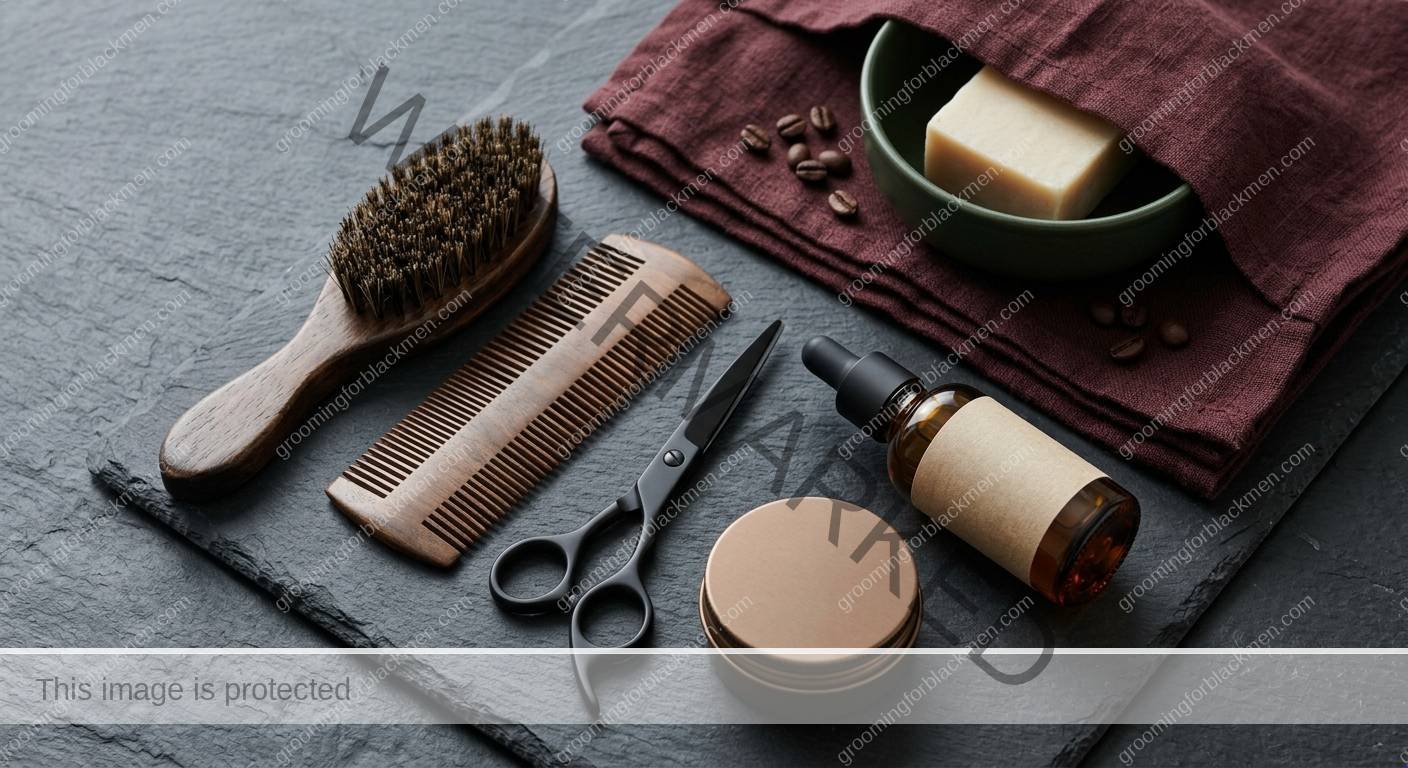
Not every product is made with Black men’s hair and skin in mind. Here’s what to look for—and what to avoid—when choosing beard care essentials:
- Beard washes: Choose sulfate-free, gentle cleansers that won’t strip your skin or hair of natural oils. Avoid anything with heavy alcohol or harsh detergents.
- Conditioners and moisturizers: Look for products with nourishing oils (jojoba, argan, castor) and butters (shea, cocoa). These ingredients help soften coarse hair and lock in moisture.
- Beard oils: Lightweight, non-comedogenic oils work best for daily use. Avoid heavy mineral oils or synthetic fragrances if you’re prone to irritation. For product options, see our Best Beard Oils for Black Men.
- Beard brushes and combs: Use boar bristle brushes or wide-tooth combs designed for coarse, curly hair. Avoid plastic combs with sharp seams, which can snag and break hair.
GFBM may earn a small commission from qualifying purchases, but product examples are included to clarify criteria, not to promise results.
- For brushes, see options at Amazon: beard brush for Black men.
- For oils, see options at Amazon: beard oil for Black men.
- For trimmers, see options at Amazon: beard trimmer for Black men.
For more on choosing between oil, balm, or butter, see this breakdown.
Common Beard Growth Challenges and How to Troubleshoot

Most beard issues can be managed at home with the right routine, but sometimes it’s best to call in a professional. Here’s what to watch for and how to troubleshoot common problems:
- Persistent irritation, pain, or infection: If you notice swelling, pus, or spreading redness, see a dermatologist or qualified clinician. Don’t try to dig out ingrown hairs or treat infections yourself.
- Severe or spreading beard dandruff: Occasional flakes are normal, but if you have persistent, scaly, or painful patches, get a professional opinion. See our Beard Dandruff Guide for more tips.
- Unusual hair loss or scarring: If your beard is thinning rapidly, falling out in patches, or you see scarring, don’t self-diagnose. Seek expert care.
- Chronic ingrown hairs or razor bumps: Adjust your shaving and grooming routine, and use proper tools. For ongoing issues, consult a dermatologist.
- Routine not working after 3-4 months: If you’ve been consistent and still see no progress, it may be time to reassess your expectations or get professional advice.
Remember: seeking help is a sign of discipline, not defeat. Your beard and skin deserve expert care when needed.
Real-Life Scenarios: Navigating Beard Growth Challenges
Every beard journey is different, but certain scenarios come up for many Black men. Here’s how to handle them with confidence and discipline:
- You’re in a professional setting with patchy growth: Keep your beard neatly shaped and moisturized. Use a beard brush to train hair and minimize stray patches. If needed, opt for a goatee or short beard style until your coverage improves.
- You’re dealing with razor bumps after trimming: Pause shaving for a few days. Apply a gentle, alcohol-free moisturizer and avoid picking at bumps. Switch to a single-blade razor or electric trimmer with a guard to reduce future irritation. For more, see our Razor Bump Guide.
- Your beard feels dry and brittle: Increase your use of beard oil or butter, and avoid washing with harsh soaps. Deep condition weekly with a nourishing mask or leave-in conditioner.
- You want to grow your beard longer but it looks “stuck”: Shrinkage from curliness can make your beard appear shorter than it is. Stretch a section to check actual length. Stay patient—growth may be happening, even if it’s not obvious day-to-day.
- You’re tempted to give up because of slow progress: Take progress photos every few weeks to track subtle changes. Connect with other Black men on their beard journeys for support and practical tips.
For more troubleshooting, see our Patchy Beard Fixes and Beard Dandruff Guide.
Frequently Asked Questions
How long does it usually take for Black men to grow a full beard?
For most Black men, growing a full beard takes anywhere from 3 to 12 months. The process is slower if your hair is tightly coiled, and the beard may look shorter than it is because of shrinkage. Patience and consistency are essential. Don’t compare your timeline to men with straighter hair types.
Why does my beard look patchy or uneven?
Patchiness is common, especially in the early stages. Coarse, curly hair grows in different directions and may not cover every area evenly. Genetics play a major role, but many patchy beards fill in with time and proper care. For strategies, see our patchy beard guide.
What’s the best way to prevent ingrown hairs and razor bumps?
Use sharp, clean tools and avoid shaving too close to the skin. Prep your beard with warm water and a gentle cleanser before trimming. Exfoliate gently (not aggressively) to keep pores clear. Avoid digging at ingrown hairs—see a professional if you have persistent issues.
How often should I wash and moisturize my beard?
Wash your beard 2-3 times a week with a gentle, sulfate-free cleanser. Moisturize daily with a beard oil or butter designed for coarse hair. Over-washing can dry out your skin and hair. For more, see our Beard Wash Frequency Guide.
Can beard oils or supplements make my beard grow faster?
No oil or supplement can override your genetics or force new hair to grow. Quality beard oils help moisturize, soften, and protect your hair and skin, which can improve the look and feel of your beard. For product options, see Best Beard Oils for Black Men.
How should I brush or comb my beard?
Use a boar bristle brush or a wide-tooth comb made for coarse hair. Brush gently in the direction you want your beard to grow. This helps distribute oils and train your beard without causing breakage. For tool recommendations, see Best Beard Brush and Comb.
When should I see a dermatologist about my beard?
If you have painful, infected, spreading, or persistent irritation, or if you notice unusual hair loss or scarring, see a dermatologist or qualified clinician. Don’t try to self-treat serious issues—professional care is the disciplined choice.
What to Do Next
Growing a beard as a Black man is about more than just hair—it’s about self-respect, patience, and working with your natural strengths. Set realistic expectations, build a consistent routine, and use products and tools designed for your hair and skin. Don’t chase miracle solutions or compare yourself to others. If you run into trouble, get help from a professional.
For more on building your routine, see our Beginner Beard Care Routine. If you’re struggling with patchiness, check out Patchy Beard Fixes. And for the full range of beard care topics, visit our Beard Care & Beard Growth pillar.
Stay disciplined, stay patient, and respect your own journey. Your beard, your rules.