

Beard Oil for Black Men: Practical Grooming Guide
For Black men, beard care is a disciplined, intentional practice—one that honors the unique structure of coarse, curly facial hair and the needs of rich brown skin. Beard oil isn’t just a trend or a finishing touch; it’s a core tool for comfort, style, and self-respect. Too often, generic advice ignores the realities Black men face: dryness, irritation, razor bumps, patchiness, and routines that don’t fit real life. This guide is built on practical experience, cultural awareness, and a premium approach to grooming—no hype, no empty promises.
Whether you’re just starting your beard journey or refining a seasoned routine, understanding beard oil’s role is essential. The right approach helps you maintain a healthy, comfortable beard—one that looks sharp and feels good, not just for the ‘gram but for your everyday life. This beard oil for Black men practical grooming guide breaks down what works, what doesn’t, and how to build a routine that respects your hair, your skin, and your time.
For a broader look at beard care, see our Beard Care & Beard Growth pillar. If you’re dealing with beard dandruff, itch, or patchiness, you’ll find targeted links throughout this guide to help you troubleshoot and upgrade your grooming game.
Real-Life Beard Routine Scenarios for Beard Oil for Black Men
A strong beard routine has to work outside of perfect bathroom-counter conditions. It has to work when you are rushing before work, when your beard feels dry after a long day, when the weather changes, and when your barber has shaped the line cleaner than you expected. For Black men, that routine also has to respect dense curls, coarse strands, sensitive skin under the beard, and the fact that product buildup can hide until the beard starts itching, flaking, or looking dull.
Start by reading the beard before adding more product. If the beard feels rough but the skin underneath is calm, you may need better conditioning, a lighter oil, or more consistent brushing. If the skin feels tight, itchy, or irritated, the answer is usually not more shine. It may be a gentler wash schedule, a cleaner rinse, a lighter hand with balm, or a pause from heavy fragrance. The discipline is in changing one variable at a time so you can tell what actually helped.
For a short beard, keep the routine direct: cleanse when needed, moisturize the skin beneath, use a small amount of oil or balm, and brush enough to distribute product without scraping the skin. For a fuller beard, section the work. Apply product from the skin outward, then shape the hair so the surface looks neat without leaving the roots dry. The fuller the beard gets, the more important it becomes to separate grooming from coating. A beard can look shiny and still be dehydrated underneath.
Budget matters too. You do not need a crowded shelf to manage beard oil for black men. A dependable wash, one conditioning product, and one tool you actually use will outperform five products that fight each other. If money is tight, upgrade the item that touches your skin or beard most often. If time is tight, simplify the routine instead of skipping care entirely. Consistency beats a complicated plan that only happens twice a month.
How to Audit Your Beard Without Overreacting
Give any beard change enough time to show a pattern. One dry morning does not mean the routine failed. One good beard day does not mean every product is perfect. Track how your beard feels after washing, how the skin underneath feels at night, whether flakes return quickly, and whether the beard holds shape without becoming stiff. Those signals tell you more than packaging claims or social media routines built for a different texture.
If irritation shows up, simplify. Remove the newest product first, reduce fragrance, avoid scratching, and return to a basic cleanse-and-moisturize rhythm. If flakes, soreness, bleeding, swelling, or persistent itching keep coming back, that is a reason to get professional help rather than forcing stronger products into the routine. Grooming should make you look more put together, but it should also leave your skin calmer over time.
Real-Life Beard Routine Scenarios for Beard Oil for Black Men
A strong beard routine has to work outside of perfect bathroom-counter conditions. It has to work when you are rushing before work, when your beard feels dry after a long day, when the weather changes, and when your barber has shaped the line cleaner than you expected. For Black men, that routine also has to respect dense curls, coarse strands, sensitive skin under the beard, and the fact that product buildup can hide until the beard starts itching, flaking, or looking dull.
Start by reading the beard before adding more product. If the beard feels rough but the skin underneath is calm, you may need better conditioning, a lighter oil, or more consistent brushing. If the skin feels tight, itchy, or irritated, the answer is usually not more shine. It may be a gentler wash schedule, a cleaner rinse, a lighter hand with balm, or a pause from heavy fragrance. The discipline is in changing one variable at a time so you can tell what actually helped.
For a short beard, keep the routine direct: cleanse when needed, moisturize the skin beneath, use a small amount of oil or balm, and brush enough to distribute product without scraping the skin. For a fuller beard, section the work. Apply product from the skin outward, then shape the hair so the surface looks neat without leaving the roots dry. The fuller the beard gets, the more important it becomes to separate grooming from coating. A beard can look shiny and still be dehydrated underneath.
Budget matters too. You do not need a crowded shelf to manage beard oil for black men. A dependable wash, one conditioning product, and one tool you actually use will outperform five products that fight each other. If money is tight, upgrade the item that touches your skin or beard most often. If time is tight, simplify the routine instead of skipping care entirely. Consistency beats a complicated plan that only happens twice a month.
How to Audit Your Beard Without Overreacting
Give any beard change enough time to show a pattern. One dry morning does not mean the routine failed. One good beard day does not mean every product is perfect. Track how your beard feels after washing, how the skin underneath feels at night, whether flakes return quickly, and whether the beard holds shape without becoming stiff. Those signals tell you more than packaging claims or social media routines built for a different texture.
If irritation shows up, simplify. Remove the newest product first, reduce fragrance, avoid scratching, and return to a basic cleanse-and-moisturize rhythm. If flakes, soreness, bleeding, swelling, or persistent itching keep coming back, that is a reason to get professional help rather than forcing stronger products into the routine. Grooming should make you look more put together, but it should also leave your skin calmer over time.
Real-Life Beard Routine Scenarios for Beard Oil for Black Men
A strong beard routine has to work outside of perfect bathroom-counter conditions. It has to work when you are rushing before work, when your beard feels dry after a long day, when the weather changes, and when your barber has shaped the line cleaner than you expected. For Black men, that routine also has to respect dense curls, coarse strands, sensitive skin under the beard, and the fact that product buildup can hide until the beard starts itching, flaking, or looking dull.
Start by reading the beard before adding more product. If the beard feels rough but the skin underneath is calm, you may need better conditioning, a lighter oil, or more consistent brushing. If the skin feels tight, itchy, or irritated, the answer is usually not more shine. It may be a gentler wash schedule, a cleaner rinse, a lighter hand with balm, or a pause from heavy fragrance. The discipline is in changing one variable at a time so you can tell what actually helped.
For a short beard, keep the routine direct: cleanse when needed, moisturize the skin beneath, use a small amount of oil or balm, and brush enough to distribute product without scraping the skin. For a fuller beard, section the work. Apply product from the skin outward, then shape the hair so the surface looks neat without leaving the roots dry. The fuller the beard gets, the more important it becomes to separate grooming from coating. A beard can look shiny and still be dehydrated underneath.
Budget matters too. You do not need a crowded shelf to manage beard oil for black men. A dependable wash, one conditioning product, and one tool you actually use will outperform five products that fight each other. If money is tight, upgrade the item that touches your skin or beard most often. If time is tight, simplify the routine instead of skipping care entirely. Consistency beats a complicated plan that only happens twice a month.
How to Audit Your Beard Without Overreacting
Give any beard change enough time to show a pattern. One dry morning does not mean the routine failed. One good beard day does not mean every product is perfect. Track how your beard feels after washing, how the skin underneath feels at night, whether flakes return quickly, and whether the beard holds shape without becoming stiff. Those signals tell you more than packaging claims or social media routines built for a different texture.
If irritation shows up, simplify. Remove the newest product first, reduce fragrance, avoid scratching, and return to a basic cleanse-and-moisturize rhythm. If flakes, soreness, bleeding, swelling, or persistent itching keep coming back, that is a reason to get professional help rather than forcing stronger products into the routine. Grooming should make you look more put together, but it should also leave your skin calmer over time.
Why Beard Oil Matters for Black Men

Beard oil is more than a luxury—it’s a practical solution to the challenges that come with coarse, curly beards and melanin-rich skin. Here’s why it matters, specifically for Black men:
- Moisture retention: Coarse, curly beard hair loses moisture faster than straight hair. Beard oil helps lock in hydration, preventing brittleness, breakage, and that dry, wiry feeling.
- Soothing the skin: The skin beneath your beard is often prone to dryness, irritation, and flaking (“beardruff”). Quality beard oil reduces discomfort and visible flakes, supporting both appearance and comfort.
- Managing texture: Curly beards can tangle, knot, and become unruly. The right oil softens hair, making it easier to comb, brush, and style without pulling or snapping.
- Supporting a disciplined routine: Consistent use of beard oil reinforces good grooming habits, which are essential for healthy beard growth and a polished look.
- Protecting against environmental stress: Urban pollution, dry air, and harsh weather can strip your beard and skin of moisture. Beard oil forms a lightweight barrier, helping you stay comfortable and sharp.
Choosing and using beard oil isn’t about chasing trends—it’s about respecting the structure of your hair and the needs of your skin. For more on building a solid foundation, check out our beginner beard routine.
What Usually Goes Wrong

Beard oil is simple in theory, but the wrong approach can lead to frustration. Here’s where most routines break down for Black men:
- Using generic or harsh products: Many beard oils are made for straight, fine hair and can be too light or contain drying alcohols and fragrances that irritate Black men’s skin.
- Skipping prep: Applying oil to a dirty, dry, or unwashed beard traps dirt and sweat, leading to clogged pores, breakouts, or more flakes. Cleanliness is key.
- Over-applying or under-applying: Too much oil leaves your beard greasy and attracts dust. Too little does nothing for dryness or itch. Finding your balance is critical.
- Ignoring the skin beneath: Focusing only on the hair and neglecting the skin leads to dryness, irritation, and uneven growth. Healthy skin is the foundation for a healthy beard.
- Expecting instant results: Beard oil isn’t a miracle serum. It supports healthy hair and skin over time, not overnight. Consistency and patience matter more than any single product.
- Using the wrong tools: Cheap plastic combs with sharp seams can snag, break, or tear coarse hair. The right tools make a difference in comfort and results.
If you’re struggling with beard dandruff or persistent itch, see our guides on beard dandruff and beard itch for targeted advice.
What to Do Instead: A Realistic Beard Oil Routine

Beard care for Black men is about discipline, not drama. A practical beard oil routine is built on consistency, patience, and the right technique. Here’s a step-by-step approach that respects your hair and skin:
- Start with a clean beard: Wash your beard 2-3 times a week with a gentle, sulfate-free wash designed for coarse hair. Over-washing can strip natural oils, so adjust based on your lifestyle and climate. For guidance, see our beard wash frequency guide.
- Pat dry—don’t rub: Use a clean towel to gently pat your beard dry. Rubbing can cause breakage, frizz, and disrupt curl patterns.
- Apply beard oil to damp (not dripping) hair: This helps lock in moisture. Start with 3-5 drops for a short beard, 6-10 for a medium beard, and more for a full, thick beard. Adjust as needed—your beard will tell you what it needs.
- Massage into skin and hair: Work the oil from root to tip, making sure you reach the skin beneath. Use your fingertips to massage gently in circular motions. This stimulates circulation, supports growth, and ensures even coverage.
- Comb or brush to distribute: Use a wide-tooth comb or a beard brush designed for coarse hair to evenly distribute oil and detangle. Start at the ends and work toward the roots to minimize pulling. For tool recommendations, see our best beard brush and comb guide.
- Repeat daily or as needed: Most Black men benefit from daily use, but adjust based on your beard’s needs, your skin, and your local climate. In humid conditions, you may need less; in dry or cold weather, more frequent application may help.
If you’re dealing with patchy areas, check out patchy beard fixes for realistic strategies. For shaping and maintenance, see how to shape your beard.
Decision Criteria: Choosing Beard Oil and Tools That Work
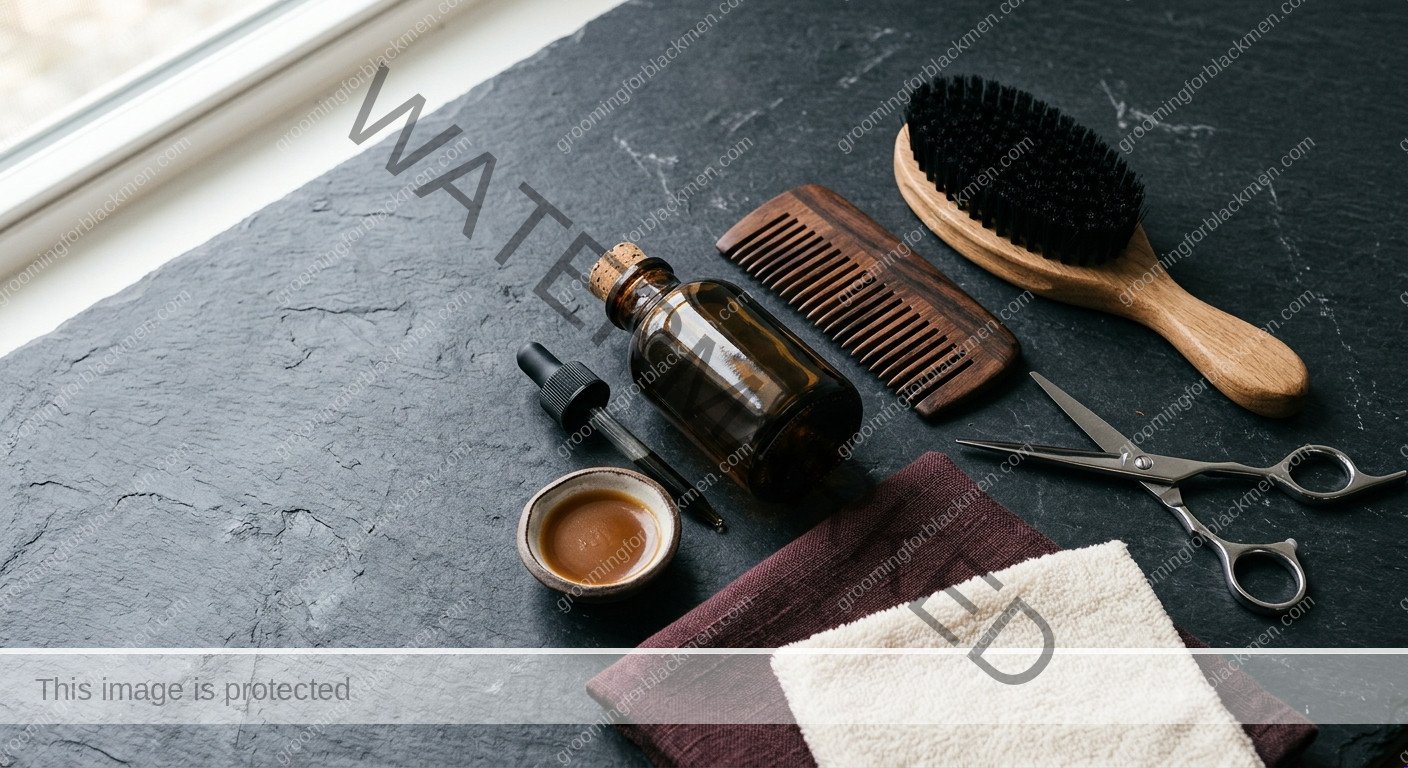
Not all beard oils and tools are created equal. Here’s what matters for Black men’s beard care—so you can invest with confidence and avoid disappointment:
- Ingredients: Look for natural oils that hydrate and soften (jojoba, argan, coconut, grapeseed, castor). These mimic your skin’s natural sebum and penetrate coarse hair. Avoid heavy artificial fragrances, drying alcohols, or harsh chemicals that can irritate or dry out your skin.
- Texture and weight: Coarse, curly beards need a richer oil that won’t evaporate quickly. Lighter oils may not penetrate or last. If your beard feels greasy, try a lighter blend; if it feels dry, look for heavier oils or a mix with shea or mango butter.
- Non-comedogenic: Choose oils that won’t clog pores or cause breakouts, especially if you have sensitive or acne-prone skin. Jojoba and argan are good bets; coconut oil can be too heavy for some.
- Combs and brushes: Use wide-tooth combs or boar bristle brushes designed for coarse hair. Avoid plastic combs with sharp seams that can snag or break hair. Wood or horn combs are gentler and help distribute oil naturally.
- Packaging: Dark glass bottles protect oils from light and oxidation, preserving potency. Dropper tops make dosing easier and more hygienic.
- Brand transparency: Look for brands that list all ingredients and avoid vague “fragrance” or “proprietary blend” labels. If you have allergies or sensitivities, this matters.
GFBM may earn a small commission from qualifying purchases, but product examples are included to clarify criteria, not to promise results.
- For beard oil options that fit these criteria, browse beard oil for Black men.
- For gentle cleansers, see beard wash for Black men.
- For detangling and styling, check beard combs for coarse beard.
For more on choosing the right oil, see our best beard oils for Black men guide. If you’re unsure whether to use oil, balm, or butter, read beard oil vs balm vs butter.
Routine Logic: Building a Routine That Fits Your Life
Every beard is different, and so is every lifestyle. The best beard oil routine is the one you’ll actually follow. Here’s how to adapt the basics to your needs:
- Busy mornings: If you’re short on time, keep a small bottle of beard oil and a comb in your gym bag or at your desk. A quick application after a face rinse can prevent dryness and keep you looking sharp all day.
- Active lifestyles: Sweat and outdoor activity can dry out your beard. Rinse with water after workouts, pat dry, and reapply a small amount of oil if needed. Don’t skip cleansing—trapped sweat can lead to breakouts or odor.
- Travel and climate: Dry, cold, or windy environments demand more frequent oiling. In humid climates, you may need less. Listen to your beard: if it feels rough or looks dull, add oil; if it feels heavy, ease up.
- Shaping and trimming: Oil softens hair, making trims cleaner and reducing split ends. Apply oil before shaping for a smoother cut and after to soothe skin.
- Nighttime care: A light oiling before bed can help prevent overnight dryness. Use a silk or satin pillowcase or beard bonnet to reduce friction and breakage.
For shaping and maintenance, see how to shape your beard. For a full breakdown of beard care, visit our Beard Care & Beard Growth pillar.
Troubleshooting: Real-Life Scenarios and Solutions

Even with the right products and routine, issues can come up. Here’s how to handle common beard oil problems for Black men—and when to get professional help:
- Dryness or flaking: Make sure you’re applying oil to damp, clean hair and massaging into the skin. If flakes persist, see our beard dandruff guide. Sometimes, you may need to exfoliate gently (with a soft brush or mild chemical exfoliant) to remove buildup.
- Itch or irritation: Avoid oils with harsh fragrances or alcohol. Stick to gentle, non-comedogenic formulas. If irritation continues, try patch-testing new products on a small area before full use. Persistent itch? See our beard itch guide.
- Breakouts: Use lighter oils and avoid comedogenic ingredients. Clean your beard tools regularly—dirty combs and brushes can transfer bacteria. If you’re prone to acne, wash your beard after sweating and avoid heavy butters.
- Ingrown hairs: Don’t dig or tweeze. Keep your beard clean, exfoliate gently (no harsh scrubs), and use a clean comb to lift hairs. Ingrowns are common with curly hair, especially after shaving or trimming. If you have painful, infected, spreading, or scarring irritation, see a dermatologist or qualified clinician.
- Uneven growth or patchiness: Beard oil won’t fill in bare spots overnight. Focus on consistent care, patience, and gentle massage to stimulate circulation. For more, read patchy beard fixes.
- Greasy or heavy feel: You may be using too much oil or a formula that’s too heavy for your beard. Try reducing the amount or switching to a lighter blend. Remember, a little goes a long way.
- Odor or buildup: Wash your beard regularly and avoid oils with strong synthetic scents. If you notice a musty smell, it’s time to cleanse and possibly clarify with an apple cider vinegar rinse (diluted, gentle, and infrequent).
If you notice pain, infection, spreading redness, scarring, or persistent irritation, don’t wait—consult a dermatologist or qualified clinician. Beard care should never hurt.
Frequently Asked Questions
How often should Black men use beard oil?
Most Black men benefit from daily use, especially if you have coarse or curly hair that dries out quickly. Adjust frequency based on your beard’s needs, your skin type, and your local climate. If your beard feels dry or rough, try daily application. If it feels greasy, reduce to every other day.
What ingredients should Black men look for in beard oil?
Look for natural oils that hydrate and soften, such as jojoba, argan, castor, grapeseed, and coconut oil. Avoid beard oils with heavy artificial fragrances, drying alcohols, or harsh chemicals. Non-comedogenic oils are best if you have sensitive or acne-prone skin.
Can beard oil help with beard dandruff?
Beard oil can help reduce dryness and flaking by moisturizing the skin and hair. For best results, apply oil to clean, damp skin and hair. If beard dandruff persists, see our beard dandruff guide for more targeted advice.
Is there a difference between beard oil, balm, and butter?
Yes. Beard oil is a liquid moisturizer for daily use and skin hydration. Balm adds light hold and extra conditioning, while butter is heavier and best for deep conditioning or overnight use. For a detailed breakdown, see beard oil vs balm vs butter.
What’s the best way to apply beard oil for coarse, curly beards?
Start with a clean, damp beard. Place a few drops of oil in your palms, rub together, and massage into both your beard and the skin underneath. Use a wide-tooth comb or a beard brush to distribute oil evenly and detangle. Focus on consistency, not quantity.
Will beard oil make my beard grow faster?
Beard oil supports healthy hair and skin, which creates the best environment for growth. It won’t force new hair to grow or fill in bare patches overnight. Consistent care, patience, and genetics all play a role in beard growth.
When should I see a dermatologist for beard issues?
If you experience pain, infection, spreading redness, scarring, or persistent irritation that doesn’t improve with good grooming, see a dermatologist or qualified clinician. Don’t try to treat severe issues at home—professional help is the safest choice.
What to Do Next
Building a disciplined beard oil routine is about respect—for your hair, your skin, and your time. Start with a gentle wash, apply oil to damp hair, massage it in, and use the right tools. Adjust your approach as your beard changes with the seasons, your lifestyle, and your goals.
- For a full breakdown of beard care, visit our Beard Care & Beard Growth pillar.
- If you want to compare oils, see best beard oils for Black men.
- For shaping and maintenance, check how to shape your beard.
- For troubleshooting patchiness, see patchy beard fixes.
Grooming for Black men is about discipline, not drama. Respect your beard, invest in the right products and tools, and stay consistent. Your routine is yours—make it work for you.