
Beard Lineup Care for Black Men: Practical Grooming Guide
There’s power in a sharp beard lineup. For Black men, a clean, well-maintained beard line isn’t just about style—it’s about self-respect, discipline, and showing up for yourself every day. But getting that crisp, defined edge without irritation, bumps, or uneven growth takes more than a steady hand. It demands a routine built for rich brown skin and coarse, curly facial hair. This beard lineup care for Black men practical grooming guide is designed to help you master that process—no hype, no shortcuts, just real results for real routines.
Whether you’re lining up at home or keeping your barber’s work fresh between visits, the right approach protects your skin and preserves your beard’s shape. Too many men deal with razor bumps, ingrown hairs, and patchy edges because they’re using the wrong tools or copying routines that don’t respect the realities of Black men’s hair and skin. We’re here to change that.
This guide breaks down what usually goes wrong, what to do instead, and how to choose tools and products that actually work for you. You’ll also get troubleshooting tips and clear answers to the most common lineup questions. If you’re serious about grooming for Black men and want to keep your beard looking sharp without sacrificing skin health, you’re in the right place.
For a broader look at beard care, see our Beard Care & Beard Growth hub.
Real-Life Beard Routine Scenarios for Beard Lineup Care for Black Men
A strong beard routine has to work outside of perfect bathroom-counter conditions. It has to work when you are rushing before work, when your beard feels dry after a long day, when the weather changes, and when your barber has shaped the line cleaner than you expected. For Black men, that routine also has to respect dense curls, coarse strands, sensitive skin under the beard, and the fact that product buildup can hide until the beard starts itching, flaking, or looking dull.
Start by reading the beard before adding more product. If the beard feels rough but the skin underneath is calm, you may need better conditioning, a lighter oil, or more consistent brushing. If the skin feels tight, itchy, or irritated, the answer is usually not more shine. It may be a gentler wash schedule, a cleaner rinse, a lighter hand with balm, or a pause from heavy fragrance. The discipline is in changing one variable at a time so you can tell what actually helped.
For a short beard, keep the routine direct: cleanse when needed, moisturize the skin beneath, use a small amount of oil or balm, and brush enough to distribute product without scraping the skin. For a fuller beard, section the work. Apply product from the skin outward, then shape the hair so the surface looks neat without leaving the roots dry. The fuller the beard gets, the more important it becomes to separate grooming from coating. A beard can look shiny and still be dehydrated underneath.
Budget matters too. You do not need a crowded shelf to manage beard lineup care for black men. A dependable wash, one conditioning product, and one tool you actually use will outperform five products that fight each other. If money is tight, upgrade the item that touches your skin or beard most often. If time is tight, simplify the routine instead of skipping care entirely. Consistency beats a complicated plan that only happens twice a month.
How to Audit Your Beard Without Overreacting
Give any beard change enough time to show a pattern. One dry morning does not mean the routine failed. One good beard day does not mean every product is perfect. Track how your beard feels after washing, how the skin underneath feels at night, whether flakes return quickly, and whether the beard holds shape without becoming stiff. Those signals tell you more than packaging claims or social media routines built for a different texture.
If irritation shows up, simplify. Remove the newest product first, reduce fragrance, avoid scratching, and return to a basic cleanse-and-moisturize rhythm. If flakes, soreness, bleeding, swelling, or persistent itching keep coming back, that is a reason to get professional help rather than forcing stronger products into the routine. Grooming should make you look more put together, but it should also leave your skin calmer over time.
Real-Life Beard Routine Scenarios for Beard Lineup Care for Black Men
A strong beard routine has to work outside of perfect bathroom-counter conditions. It has to work when you are rushing before work, when your beard feels dry after a long day, when the weather changes, and when your barber has shaped the line cleaner than you expected. For Black men, that routine also has to respect dense curls, coarse strands, sensitive skin under the beard, and the fact that product buildup can hide until the beard starts itching, flaking, or looking dull.
Start by reading the beard before adding more product. If the beard feels rough but the skin underneath is calm, you may need better conditioning, a lighter oil, or more consistent brushing. If the skin feels tight, itchy, or irritated, the answer is usually not more shine. It may be a gentler wash schedule, a cleaner rinse, a lighter hand with balm, or a pause from heavy fragrance. The discipline is in changing one variable at a time so you can tell what actually helped.
For a short beard, keep the routine direct: cleanse when needed, moisturize the skin beneath, use a small amount of oil or balm, and brush enough to distribute product without scraping the skin. For a fuller beard, section the work. Apply product from the skin outward, then shape the hair so the surface looks neat without leaving the roots dry. The fuller the beard gets, the more important it becomes to separate grooming from coating. A beard can look shiny and still be dehydrated underneath.
Budget matters too. You do not need a crowded shelf to manage beard lineup care for black men. A dependable wash, one conditioning product, and one tool you actually use will outperform five products that fight each other. If money is tight, upgrade the item that touches your skin or beard most often. If time is tight, simplify the routine instead of skipping care entirely. Consistency beats a complicated plan that only happens twice a month.
How to Audit Your Beard Without Overreacting
Give any beard change enough time to show a pattern. One dry morning does not mean the routine failed. One good beard day does not mean every product is perfect. Track how your beard feels after washing, how the skin underneath feels at night, whether flakes return quickly, and whether the beard holds shape without becoming stiff. Those signals tell you more than packaging claims or social media routines built for a different texture.
If irritation shows up, simplify. Remove the newest product first, reduce fragrance, avoid scratching, and return to a basic cleanse-and-moisturize rhythm. If flakes, soreness, bleeding, swelling, or persistent itching keep coming back, that is a reason to get professional help rather than forcing stronger products into the routine. Grooming should make you look more put together, but it should also leave your skin calmer over time.
Why Beard Lineup Care Matters for Black Men

Beard lineups are more than a trend—they’re a tradition. For Black men, a clean lineup is a statement of pride and self-discipline. But our hair’s unique curl pattern and our skin’s sensitivity mean that careless lineups can lead to razor bumps, dark spots, and irritation.
Coarse, curly facial hair is more likely to curl back into the skin after shaving or trimming, especially along sharp edges. Combine that with rich melanin, and you’re more prone to hyperpigmentation if things go wrong. That’s why lineup care isn’t just about looking good for the day—it’s about protecting your skin for the long haul.
When you get it right, a lineup can:
- Frame your face and highlight your features
- Make patchy or uneven growth less noticeable
- Reduce the risk of ingrown hairs and bumps
- Help you maintain a professional, polished look between barber visits
- Boost your confidence every time you look in the mirror
But getting it right takes a routine built for you—not for someone with straight hair or different skin needs. That’s what this guide is all about.
What Usually Goes Wrong
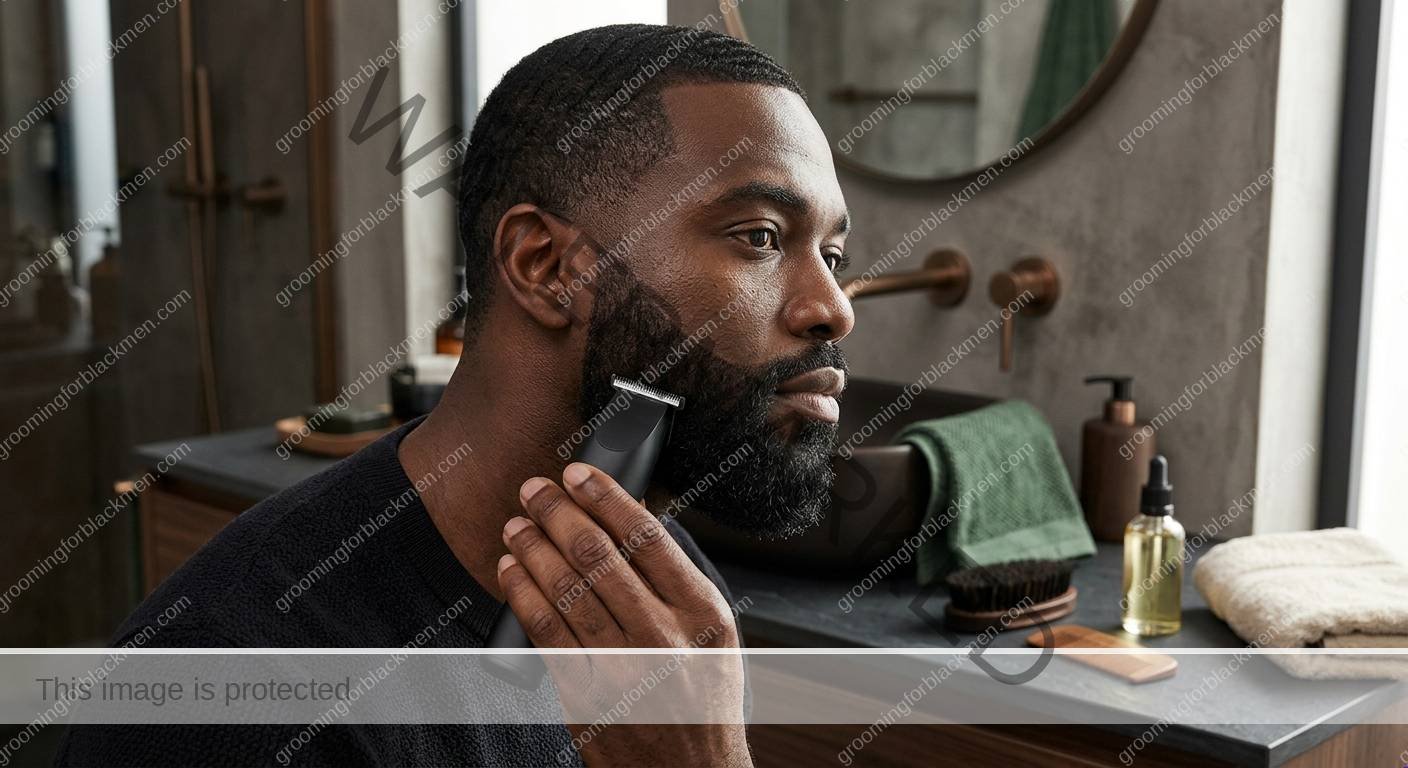
Most problems with beard lineups for Black men come down to a few common mistakes. If you’ve ever dealt with razor bumps, uneven lines, or irritation, chances are one of these issues is at play:
- Using the wrong tools: Cheap trimmers, dull blades, or razors not designed for coarse hair can tug, skip, or cut too close, leading to irritation and ingrowns.
- Going too close: Shaving or trimming below the surface increases the risk of hair curling back into the skin.
- Dry shaving or trimming: Lining up without prepping your skin and hair leads to more friction and damage.
- Ignoring aftercare: Skipping soothing, hydrating steps after lining up leaves skin vulnerable to bumps and dark spots.
- Overdoing it: Lining up too often can stress your skin and disrupt your beard’s natural growth pattern.
- Not following your natural line: Trying to force a shape that doesn’t fit your beard’s natural growth can lead to patchiness and awkward regrowth.
These mistakes are easy to make if you’re copying routines that aren’t built for Black men’s hair and skin. The good news: with the right approach, most of these problems are preventable.
What to Do Instead: A Practical Beard Lineup Routine

As an affiliate site, GFBM may earn from qualifying purchases through product links.
Here’s how to line up your beard at home without sacrificing your skin’s health or your beard’s shape. This routine is built for Black men with coarse or curly facial hair and rich brown skin. Each step is grounded in what works for our hair and skin—not just what looks good on social media.
1. Prep Your Skin and Beard
- Cleanse: Wash your face and beard with a gentle, sulfate-free cleanser. This removes oil, dirt, and product buildup that can clog clippers or irritate skin. Clean skin is less likely to develop bumps or breakouts after trimming.
- Soften: Use warm water or a damp, warm towel on your beard for 2-3 minutes. This softens hair, opens pores, and makes trimming smoother and less irritating. If you have a thick beard, consider a short steam in the shower first.
- Comb or brush: Use a beard brush for Black men to detangle and lay your beard in its natural direction. This helps you see your true line and avoid uneven cuts. For more on brushes and combs, see our beard brush and comb guide.
2. Choose the Right Tools
- Use a quality trimmer: Invest in a beard trimmer for Black men with sharp blades and adjustable guards. Avoid cheap, generic trimmers that snag or cut unevenly. A good trimmer makes all the difference for coarse, curly hair.
- Skip the razor for daily lineups: Razors can cut too close and increase the risk of bumps. If you want a razor-sharp edge, use a single-blade safety razor with care, but not every time. For most, a trimmer is safer and more practical.
- Have a handheld mirror: For symmetry and detail, use a second mirror to check your lines from all angles. This helps prevent lopsided or uneven results.
GFBM may earn a small commission from qualifying purchases, but product examples are included to clarify criteria, not to promise results.
3. Define Your Natural Line
- Follow your beard’s natural growth: Don’t force a line that doesn’t suit your face or hair pattern. Your natural line will always look fuller and grow back more evenly.
- Start above the Adam’s apple: For most Black men, the neckline looks best about one finger’s width above the Adam’s apple. Use your trimmer to create a gentle curve that follows your jawline. Avoid going too high or too low—both can make your beard look awkward as it grows out.
- Cheek line: Use your natural cheek line as a guide. Don’t overcarve—keep it natural for a fuller look. If you have patchy cheeks, a slightly lower line can help create a denser appearance.
- Sideburns: Blend sideburns into your beard for a seamless transition. Avoid harsh, squared-off lines unless that’s your personal style. A gradual fade looks more natural and is easier to maintain.
4. Trim and Line Up
- Work in good light: Natural daylight or a well-lit bathroom helps you see every detail. Shadows can hide mistakes, so take your time.
- Use short, gentle strokes: Don’t rush. Let the trimmer do the work—don’t press too hard. Pressing too hard can lead to irritation and uneven lines.
- Check symmetry: Pause often to check both sides in the mirror. Adjust slowly—once it’s gone, you can’t put it back. If you’re unsure, err on the side of caution and trim less.
- Brush away loose hairs: Use your beard brush to remove trimmed hairs and see your true line. This helps you spot any missed patches or uneven areas.
5. Aftercare Matters
- Rinse with cool water: This calms the skin and closes pores. It also helps remove any leftover hairs or product.
- Apply an alcohol-free aftershave balm: Soothe and hydrate your skin with a gentle, alcohol-free aftershave balm. Avoid products with heavy fragrance or alcohol, which can dry or irritate your skin.
- Moisturize: Use a lightweight, non-comedogenic moisturizer or beard oil to keep skin and hair soft. For more on beard oils, see our best beard oils guide. Hydrated skin is less likely to develop bumps or dark spots.
6. Maintain, Don’t Overdo
- Line up every 3-7 days: Daily lineups can irritate skin. Most men look sharp with a touch-up once or twice a week. Let your skin recover between sessions for healthier results.
- Keep your tools clean: Disinfect trimmer blades after each use to prevent bacteria and bumps. A dirty trimmer is a fast track to irritation and infection.
- Stick to your natural shape: Don’t chase trends that don’t fit your face or growth pattern. A lineup that respects your natural growth will always look better and last longer.
For a more detailed daily beard care routine, check out our beginner beard routine.
Product and Tool Criteria for Beard Lineup Care
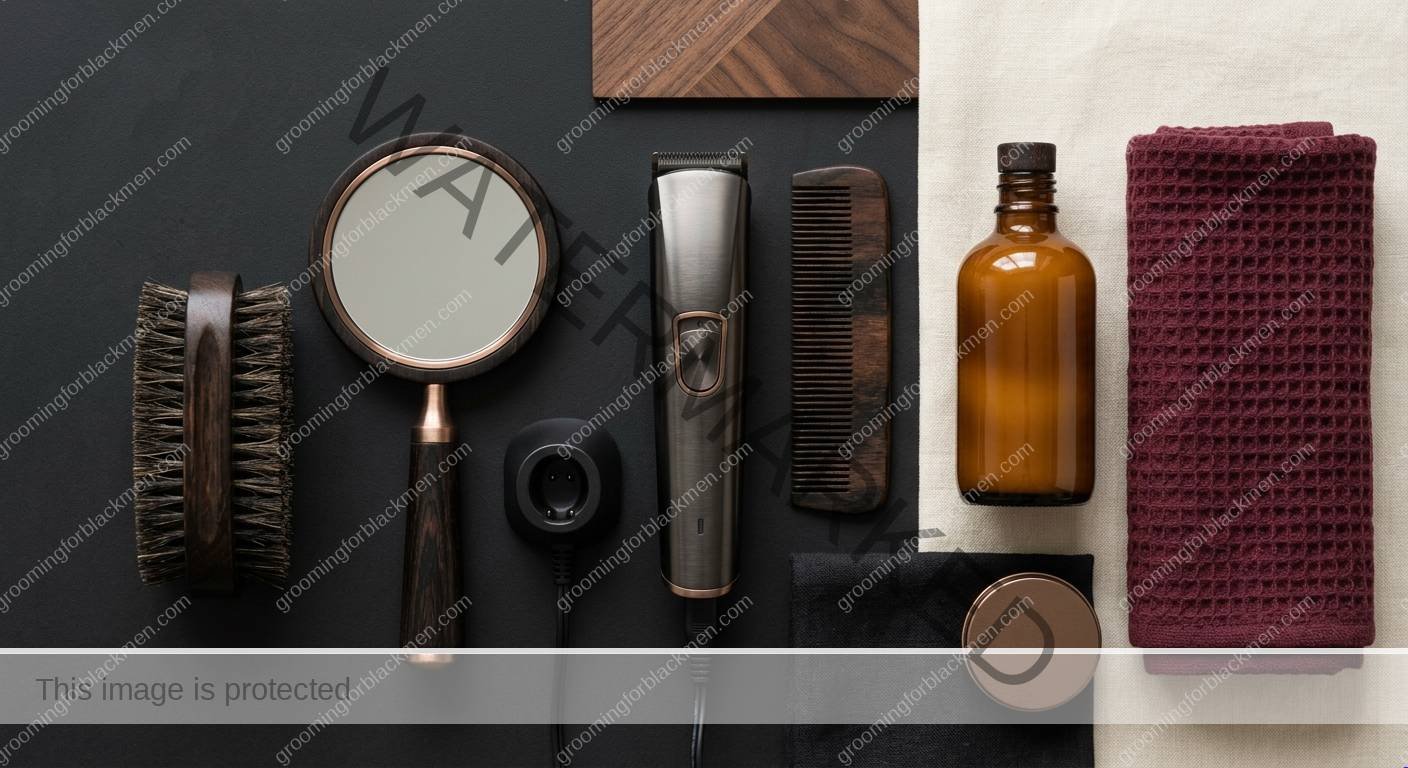
Not all grooming products and tools are created equal—especially for Black men. Here’s what to look for when building your lineup kit:
- Beard trimmer: Choose a trimmer with sharp, stainless steel blades, adjustable guards, and a motor strong enough for coarse hair. Cordless models offer flexibility, but make sure battery life is solid. See options here: beard trimmer for Black men.
- Beard brush: Look for a brush with firm, natural bristles (like boar bristle) to detangle and lay hair flat without scratching your skin. See options here: beard brush for Black men. For more on brushes and combs, see our beard brush and comb guide.
- Aftershave balm: Avoid alcohol-based products. Look for balms with soothing ingredients like aloe, chamomile, or vitamin E. See options here: alcohol free aftershave balm.
- Moisturizer or beard oil: Lightweight, non-comedogenic formulas are best. For a breakdown of oils, balms, and butters, see beard oil vs balm vs butter.
- Mirror setup: A handheld mirror and a fixed mirror help you check symmetry and detail work. This is especially important when lining up areas you can’t see straight on.
- Cleaning supplies: Use a small brush or disinfectant spray to clean trimmer blades after each use. This step is crucial for preventing skin irritation and infection.
Don’t fall for miracle claims or one-size-fits-all kits. Choose products that respect your hair’s texture and your skin’s needs. If you’re not sure what works for you, start with the basics and adjust as you learn what your beard and skin respond to best.
Step-by-Step: Realistic Beard Lineup Routine for Black Men

A disciplined lineup routine doesn’t have to be complicated. Here’s a breakdown of a realistic process that respects your hair and skin, with decision points to help you adjust for your needs:
-
Assess Your Beard Growth
Before you start, check your beard’s density, curl pattern, and any sensitive spots. If you have patchy growth, adjust your lineup to maximize fullness. If you’re prone to irritation, plan for extra aftercare. -
Prep Thoroughly
Cleanse and soften as described above. If you have sensitive skin, use lukewarm water and avoid harsh scrubbing. -
Comb and Map Out Your Line
Use your beard brush to lay hair flat. With your mirrors, visualize your desired line. If you’re unsure, start conservative—you can always take off more, but you can’t put it back. -
Trim Bulk First
If your beard is longer, use a guard to trim down bulk before lining up. This helps you see your natural line more clearly. -
Define Edges with Trimmer
Use your trimmer (no guard or the shortest guard) to outline your cheeks, neckline, and mustache. Keep your hand steady and use gentle, short strokes. For tricky areas, use the corner of the blade. -
Check Symmetry Often
Use your mirrors to check both sides. If you notice unevenness, adjust gradually. Don’t chase perfection—aim for clean, natural lines. -
Detail Work (Optional)
For special occasions, you can use a single-blade razor to sharpen the edge. Always prep the skin with shaving gel and use minimal pressure. -
Aftercare and Moisturize
Rinse with cool water, apply alcohol-free aftershave balm, and finish with beard oil or moisturizer. -
Clean Your Tools
Brush off hair and disinfect blades. Store your trimmer in a dry place.
Adjust this routine based on your beard’s needs and your skin’s response. If you’re new to lineups, take your time and focus on consistency over perfection.
Real-Life Scenarios and Nuance
Every beard is different. Here’s how to adapt your lineup routine for common scenarios Black men face:
Scenario 1: Patchy Beard Growth
If your beard is fuller in some areas than others, don’t try to force a sharp line through sparse patches. Instead, keep your cheek line lower and let the fuller areas set the boundary. Use a beard pencil or filler (sparingly) if you want a more defined look for special occasions. For more, see our patchy beard fixes guide.
Scenario 2: Sensitive or Bump-Prone Skin
If you’re prone to razor bumps, avoid razors altogether and stick to a quality trimmer. Use a gentle cleanser and always moisturize after lining up. If you get bumps, take a break from trimming and focus on soothing the skin. For persistent issues, consult a dermatologist.
Scenario 3: Maintaining a Barber’s Lineup
If you get your beard lined up professionally, your job is to maintain—not recreate—the barber’s work. Use your trimmer to clean up stray hairs and keep the edges tidy. Avoid overlining or trying to “fix” the shape unless you’re confident in your skills. For shaping tips, see how to shape your beard.
Scenario 4: Thick, Coarse Beard with Fast Growth
If your beard grows quickly and thickly, you may need to line up more often. Focus on keeping your tools sharp and clean, and don’t skip aftercare. If you notice irritation, reduce frequency and let your skin recover.
Scenario 5: Itchy or Flaky Beard
Flakes and itch are common, especially if you’re using harsh cleansers or not moisturizing enough. Use a beard-specific wash and follow up with oil or balm. For more, see our beard dandruff guide and beard itch guide.
Troubleshooting and When to Get Help
Even with the best routine, issues can pop up. Here’s how to handle common problems—and when it’s time to see a professional.
- Razor bumps (pseudofolliculitis barbae): If you notice small, irritated bumps after lining up, take a break from shaving or trimming for a few days. Use a gentle cleanser and soothing aftercare. Avoid digging or picking at bumps. For stubborn cases, consult a dermatologist.
- Ingrown hairs: Don’t try to dig them out. Keep the area clean, use a warm compress, and let the hair work its way out naturally. Persistent, painful, or infected ingrowns? See a dermatologist.
- Dark spots (hyperpigmentation): Consistent aftercare and sun protection can help minimize new spots. For stubborn or spreading discoloration, consult a qualified clinician for safe options.
- Itch or dryness: Hydrate with beard oil or a gentle moisturizer. For more tips, see our beard itch guide.
- Flakes or beard dandruff: Use a gentle beard wash and avoid harsh scrubbing. For a focused routine, check our beard dandruff guide.
- Patchy or uneven growth: Don’t overline to chase symmetry. Work with your natural shape and consider tips from our patchy beard fixes guide.
When to get help: If you have painful, infected, spreading, scarring, or persistent irritation after lining up, see a dermatologist or qualified clinician. Don’t try to treat serious issues at home.
Frequently Asked Questions
How often should I line up my beard?
Most Black men look sharp with a lineup every 3-7 days. Daily lineups can irritate skin and increase the risk of bumps. Find a frequency that keeps your lines crisp without stressing your skin.
What’s the best way to prevent razor bumps after a lineup?
Use a quality trimmer instead of a razor for most lineups, prep your skin with warm water, and always use an alcohol-free aftershave balm. Don’t shave below the surface, and avoid aggressive scrubbing or picking at bumps.
Should I use a razor or trimmer for my beard lineup?
For most Black men, a sharp trimmer with adjustable guards is safer and more practical. Razors can give a super crisp edge but also increase the risk of ingrown hairs and irritation. Reserve razors for special occasions, and use with care.
How do I keep my beard lineup symmetrical?
Work in good light, use two mirrors, and pause often to check both sides. Start with small adjustments—don’t chase perfection, as overcorrecting can make lines uneven. Practice and patience matter.
What should I do if I get ingrown hairs after lining up?
Don’t dig or pick at them. Keep the area clean, use a warm compress, and let the hair work its way out naturally. If the area becomes painful, infected, or doesn’t improve, see a dermatologist.
Can I line up my beard if I have sensitive skin?
Yes, but be extra gentle. Use a trimmer instead of a razor, avoid alcohol-based products, and always moisturize after lining up. If irritation persists, reduce lineup frequency and consult a professional.
How do I choose the right neckline for my beard?
For most Black men, a natural neckline sits about one finger’s width above the Adam’s apple and follows the curve of your jaw. Avoid lining up too high or too low—both can make your beard look awkward as it grows out.
What to Do Next
Beard lineup care for Black men isn’t about chasing trends or miracle fixes—it’s about building a disciplined, practical routine that respects your hair and skin. Start by investing in the right tools, following a prep-and-aftercare routine, and lining up only as often as your skin allows.
For more on beard care, explore our Beard Care & Beard Growth pillar. If you’re new to beard routines, our beginner beard routine breaks down the basics. Struggling with flakes or itch? See our guides on beard dandruff and beard itch. For shaping tips, check out how to shape your beard.
Stay disciplined, stay sharp, and remember: your lineup is a reflection of your respect for yourself. Treat it that way.