
How to shape beard for Black men practical grooming guide is not about chasing trends or trying to fit someone else’s mold. It’s about understanding your unique facial hair, respecting your skin, and building a grooming routine that works for you—whether you’re going for a sharp jawline, a full beard, or something in between. For Black men, beard shaping is more than just trimming; it’s a disciplined process that considers coarse, curly textures, rich brown skin, and the realities of daily life. This guide breaks down the steps, tools, and mindset needed to shape your beard with confidence and skill—without hype or shortcuts.
Beard care for Black men is a craft, not a quick fix. Curly and coarse hair types require more intention, and rich, melanin-rich skin demands a gentler, more strategic approach. If you’ve ever dealt with uneven lines, razor bumps, or patchy growth, you’re not alone. The right shaping routine can help you look sharp and feel comfortable, but it starts with understanding what works for you—not just what works on social media. This guide is built for men who want real results, not miracle claims.
We’ll cover why beard shaping matters, common mistakes to avoid, what actually works, and how to pick the right tools. You’ll also find troubleshooting tips, a practical FAQ, and links to deeper beard care resources like our Beard Care & Beard Growth pillar. This is about building a sustainable grooming routine that fits your life and respects your skin and hair.
Real-Life Beard Routine Scenarios for How to Shape Beard for Black Men
A strong beard routine has to work outside of perfect bathroom-counter conditions. It has to work when you are rushing before work, when your beard feels dry after a long day, when the weather changes, and when your barber has shaped the line cleaner than you expected. For Black men, that routine also has to respect dense curls, coarse strands, sensitive skin under the beard, and the fact that product buildup can hide until the beard starts itching, flaking, or looking dull.
Start by reading the beard before adding more product. If the beard feels rough but the skin underneath is calm, you may need better conditioning, a lighter oil, or more consistent brushing. If the skin feels tight, itchy, or irritated, the answer is usually not more shine. It may be a gentler wash schedule, a cleaner rinse, a lighter hand with balm, or a pause from heavy fragrance. The discipline is in changing one variable at a time so you can tell what actually helped.
For a short beard, keep the routine direct: cleanse when needed, moisturize the skin beneath, use a small amount of oil or balm, and brush enough to distribute product without scraping the skin. For a fuller beard, section the work. Apply product from the skin outward, then shape the hair so the surface looks neat without leaving the roots dry. The fuller the beard gets, the more important it becomes to separate grooming from coating. A beard can look shiny and still be dehydrated underneath.
Budget matters too. You do not need a crowded shelf to manage how to shape beard for black men. A dependable wash, one conditioning product, and one tool you actually use will outperform five products that fight each other. If money is tight, upgrade the item that touches your skin or beard most often. If time is tight, simplify the routine instead of skipping care entirely. Consistency beats a complicated plan that only happens twice a month.
How to Audit Your Beard Without Overreacting
Give any beard change enough time to show a pattern. One dry morning does not mean the routine failed. One good beard day does not mean every product is perfect. Track how your beard feels after washing, how the skin underneath feels at night, whether flakes return quickly, and whether the beard holds shape without becoming stiff. Those signals tell you more than packaging claims or social media routines built for a different texture.
If irritation shows up, simplify. Remove the newest product first, reduce fragrance, avoid scratching, and return to a basic cleanse-and-moisturize rhythm. If flakes, soreness, bleeding, swelling, or persistent itching keep coming back, that is a reason to get professional help rather than forcing stronger products into the routine. Grooming should make you look more put together, but it should also leave your skin calmer over time.
Real-Life Beard Routine Scenarios for How to Shape Beard for Black Men
A strong beard routine has to work outside of perfect bathroom-counter conditions. It has to work when you are rushing before work, when your beard feels dry after a long day, when the weather changes, and when your barber has shaped the line cleaner than you expected. For Black men, that routine also has to respect dense curls, coarse strands, sensitive skin under the beard, and the fact that product buildup can hide until the beard starts itching, flaking, or looking dull.
Start by reading the beard before adding more product. If the beard feels rough but the skin underneath is calm, you may need better conditioning, a lighter oil, or more consistent brushing. If the skin feels tight, itchy, or irritated, the answer is usually not more shine. It may be a gentler wash schedule, a cleaner rinse, a lighter hand with balm, or a pause from heavy fragrance. The discipline is in changing one variable at a time so you can tell what actually helped.
For a short beard, keep the routine direct: cleanse when needed, moisturize the skin beneath, use a small amount of oil or balm, and brush enough to distribute product without scraping the skin. For a fuller beard, section the work. Apply product from the skin outward, then shape the hair so the surface looks neat without leaving the roots dry. The fuller the beard gets, the more important it becomes to separate grooming from coating. A beard can look shiny and still be dehydrated underneath.
Budget matters too. You do not need a crowded shelf to manage how to shape beard for black men. A dependable wash, one conditioning product, and one tool you actually use will outperform five products that fight each other. If money is tight, upgrade the item that touches your skin or beard most often. If time is tight, simplify the routine instead of skipping care entirely. Consistency beats a complicated plan that only happens twice a month.
How to Audit Your Beard Without Overreacting
Give any beard change enough time to show a pattern. One dry morning does not mean the routine failed. One good beard day does not mean every product is perfect. Track how your beard feels after washing, how the skin underneath feels at night, whether flakes return quickly, and whether the beard holds shape without becoming stiff. Those signals tell you more than packaging claims or social media routines built for a different texture.
If irritation shows up, simplify. Remove the newest product first, reduce fragrance, avoid scratching, and return to a basic cleanse-and-moisturize rhythm. If flakes, soreness, bleeding, swelling, or persistent itching keep coming back, that is a reason to get professional help rather than forcing stronger products into the routine. Grooming should make you look more put together, but it should also leave your skin calmer over time.
Real-Life Beard Routine Scenarios for How to Shape Beard for Black Men
A strong beard routine has to work outside of perfect bathroom-counter conditions. It has to work when you are rushing before work, when your beard feels dry after a long day, when the weather changes, and when your barber has shaped the line cleaner than you expected. For Black men, that routine also has to respect dense curls, coarse strands, sensitive skin under the beard, and the fact that product buildup can hide until the beard starts itching, flaking, or looking dull.
Start by reading the beard before adding more product. If the beard feels rough but the skin underneath is calm, you may need better conditioning, a lighter oil, or more consistent brushing. If the skin feels tight, itchy, or irritated, the answer is usually not more shine. It may be a gentler wash schedule, a cleaner rinse, a lighter hand with balm, or a pause from heavy fragrance. The discipline is in changing one variable at a time so you can tell what actually helped.
For a short beard, keep the routine direct: cleanse when needed, moisturize the skin beneath, use a small amount of oil or balm, and brush enough to distribute product without scraping the skin. For a fuller beard, section the work. Apply product from the skin outward, then shape the hair so the surface looks neat without leaving the roots dry. The fuller the beard gets, the more important it becomes to separate grooming from coating. A beard can look shiny and still be dehydrated underneath.
Budget matters too. You do not need a crowded shelf to manage how to shape beard for black men. A dependable wash, one conditioning product, and one tool you actually use will outperform five products that fight each other. If money is tight, upgrade the item that touches your skin or beard most often. If time is tight, simplify the routine instead of skipping care entirely. Consistency beats a complicated plan that only happens twice a month.
How to Audit Your Beard Without Overreacting
Give any beard change enough time to show a pattern. One dry morning does not mean the routine failed. One good beard day does not mean every product is perfect. Track how your beard feels after washing, how the skin underneath feels at night, whether flakes return quickly, and whether the beard holds shape without becoming stiff. Those signals tell you more than packaging claims or social media routines built for a different texture.
If irritation shows up, simplify. Remove the newest product first, reduce fragrance, avoid scratching, and return to a basic cleanse-and-moisturize rhythm. If flakes, soreness, bleeding, swelling, or persistent itching keep coming back, that is a reason to get professional help rather than forcing stronger products into the routine. Grooming should make you look more put together, but it should also leave your skin calmer over time.
Why This Matters for Black Men

Beard shaping is not just about appearance—it’s about self-respect, discipline, and comfort. For Black men, the stakes are higher. Coarse, curly hair is more prone to ingrown hairs, razor bumps, and irritation. Rich brown skin can react differently to harsh products or aggressive techniques. A well-shaped beard can highlight your features, frame your face, and project confidence, but only if it’s done with care and intention.
Shaping your beard the right way helps you avoid:
- Ingrown hairs and razor bumps (pseudofolliculitis barbae), which are more common with curly facial hair.
- Uneven lines that distract from your natural bone structure.
- Patchiness or over-thinning that makes your beard look sparse.
- Skin irritation, dryness, or discoloration from harsh products or poor technique.
Grooming for Black men is about more than looking good for others—it’s about feeling comfortable in your own skin and setting your own standard. A disciplined beard shaping routine can help you build that foundation. If you’re new to beard care, check out our beginner beard routine for Black men for a solid starting point.
What Usually Goes Wrong

Most beard shaping problems for Black men come down to a few predictable issues. Understanding these pitfalls is the first step to avoiding them:
- Over-shaving the neckline or cheek line: Going too high or too low can throw off your natural proportions and make your beard look awkward or unnatural.
- Using the wrong tools: Cheap or dull trimmers, scissors, or razors can tug, snag, or irritate coarse hair and sensitive skin.
- Ignoring preparation: Shaping a dry, tangled beard increases the risk of uneven cuts and ingrown hairs.
- Rushing the process: Quick, careless trims lead to mistakes that are hard to fix, especially with curly or dense hair.
- Harsh products or techniques: Alcohol-heavy aftershaves, aggressive scrubbing, or digging at ingrowns can damage skin and hair.
- Neglecting beard care between shapes: Dry, brittle hair is harder to shape and more likely to break or split.
Some men also struggle with patchy or uneven growth, especially if they try to force a style that doesn’t suit their natural pattern. Others overcompensate for slow growth by trimming too often, which can make a beard look thinner. If you’re dealing with patchiness, check out our patchy beard fixes for Black men. For persistent beard dandruff or itch, see our beard dandruff guide and beard itch guide.
What to Do Instead
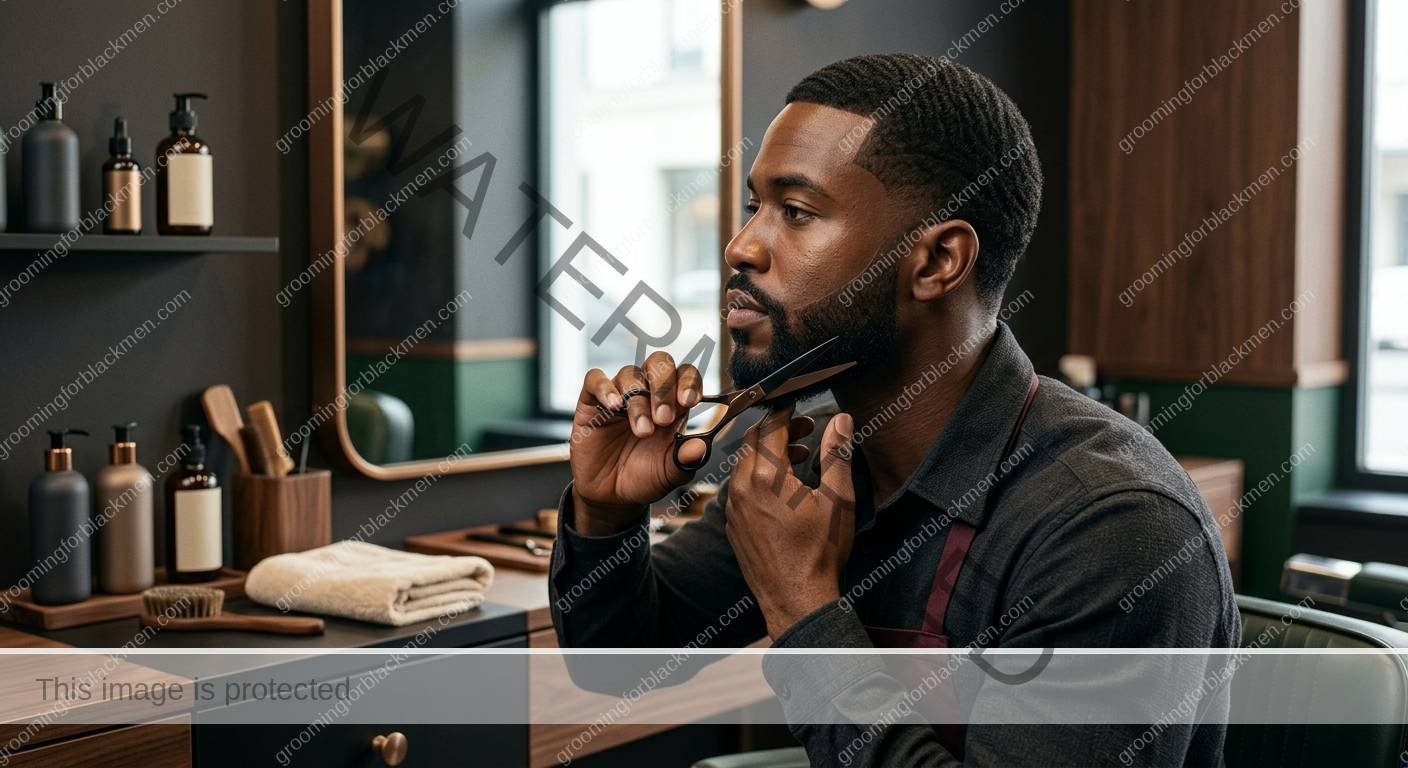
Shaping your beard as a Black man is about discipline, patience, and the right technique. Here’s a step-by-step approach that respects your hair and skin:
1. Prepare Your Beard and Skin
- Wash your beard with a gentle, sulfate-free cleanser to remove dirt and oils. For guidance, see our beard wash frequency guide.
- Soften your hair by applying a warm, damp towel for a few minutes. This opens pores and relaxes coarse curls, making hair easier to trim and less likely to snag.
- Detangle with a beard brush or wide-tooth comb to prevent snags and ensure an even cut. For tool recommendations, see our best beard brush and comb guide.
Real-life scenario: If you’re coming off a long day or a workout, resist the urge to trim without washing. Sweat and buildup make hair more brittle and skin more sensitive. Take five minutes to prep—your beard will thank you.
2. Define Your Beard Shape
- Visualize your natural lines: Use your jawline, cheekbones, and Adam’s apple as reference points. Avoid following generic templates that don’t fit your face.
- Cheek line: For most, a natural, slightly curved line from the sideburn to the mustache looks clean without looking forced. Avoid shaving too low, which can make your beard look thin or artificial.
- Neckline: Place two fingers above your Adam’s apple—this is usually the lowest your beard should go. Shape a gentle curve from ear to ear, following your jaw. A neckline that’s too high can make your beard look disconnected from your face.
Decision criteria: If you have a rounder face, a slightly higher cheek line and fuller jaw can add structure. If your beard grows patchy on the cheeks, keep the line natural and don’t chase a sharp, high arc that isn’t there.
3. Trim and Shape with the Right Tools
- Start with a longer guard on your trimmer and work down gradually. This prevents over-cutting and lets you adjust as you go. For denser or curly beards, a longer guard helps maintain fullness while cleaning up stray hairs.
- Use shaping scissors for detail work and to snip stray hairs. Scissors offer more control for curly or dense patches, especially around the mustache and chin.
- Brush or comb between passes to keep hair aligned and spot uneven areas. This step is crucial for coarse hair, which can spring back and hide missed spots.
Routine logic: Always trim less than you think you need. You can always take more off, but you can’t put it back. If you’re unsure, step back from the mirror, check your lines, and adjust slowly.
4. Moisturize and Protect
- Apply a nourishing beard oil, balm, or butter to soften hair and soothe skin. For a breakdown of what to use, see our beard oil vs balm vs butter guide.
- Avoid alcohol-heavy aftershaves that can dry or irritate skin. Instead, opt for fragrance-free or naturally scented products that hydrate and protect.
Real-life scenario: If your skin feels tight or itchy after trimming, it’s a sign you need more moisture. Don’t skip this step—hydrated skin supports healthy beard growth and reduces irritation.
5. Maintain Between Shapes
- Brush or comb daily to train your beard and prevent tangling. This helps distribute natural oils and keeps your beard looking full.
- Wash and moisturize regularly to keep hair soft and skin healthy. A clean, hydrated beard is easier to shape and less prone to breakage.
- Trim only as needed—don’t chase perfection every day. Let your beard grow and fill in naturally. Over-trimming can create uneven patches and slow your progress.
Tip: If you’re growing your beard out, set a schedule (such as every Sunday) for shaping. This builds discipline and prevents impulsive trims that can set you back.
Product and Tool Criteria for Beard Shaping
As an affiliate site, GFBM may earn from qualifying purchases through product links.
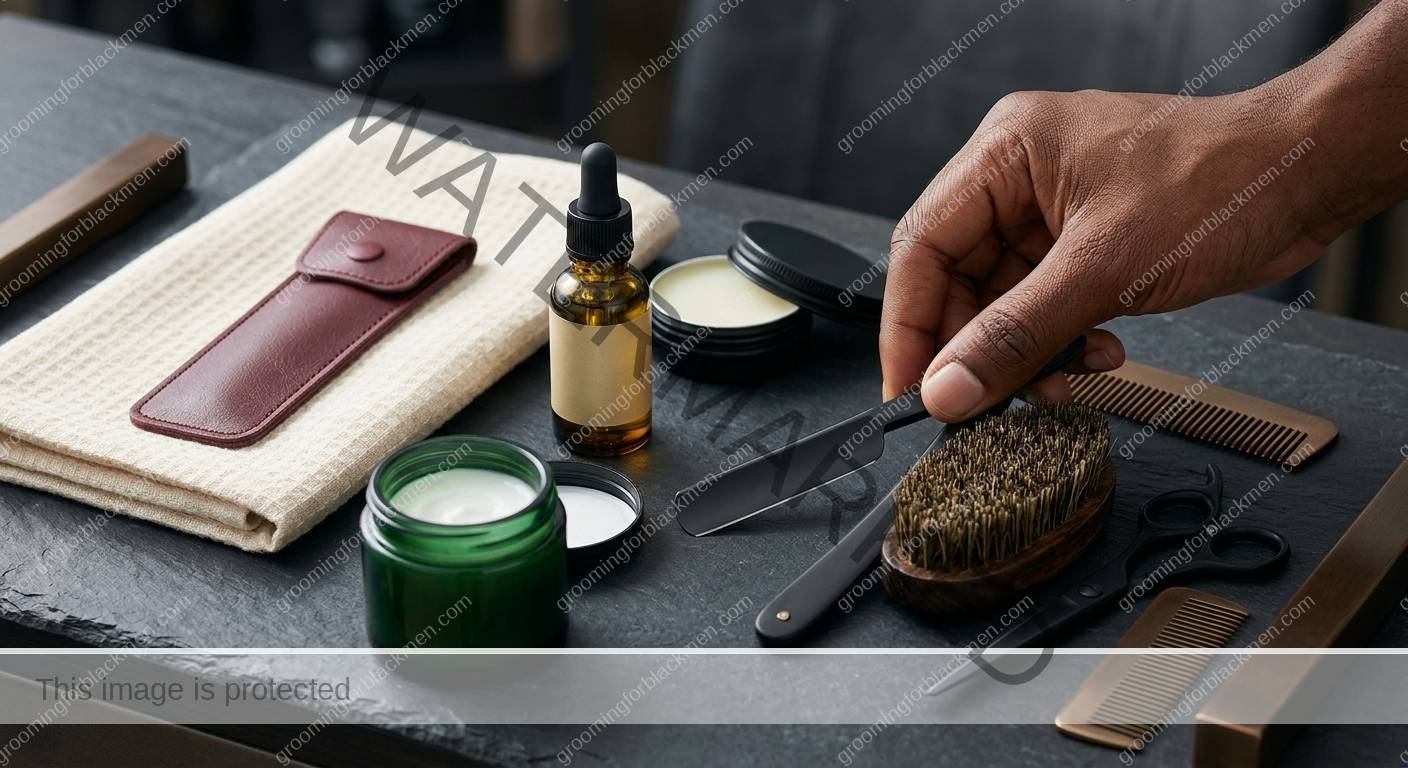
Not every tool is built for coarse, curly hair or sensitive skin. Here’s what to look for when choosing beard shaping tools and products:
- Beard trimmer: Look for adjustable guards, sharp blades, and a motor strong enough for thick hair. Cordless options offer flexibility, but battery life matters for dense beards. See beard trimmer options for Black men.
- Beard shaping scissors: Choose stainless steel, rounded-tip scissors for safety and control. Avoid kitchen or craft scissors. See beard shaping scissors options.
- Beard brush: A boar bristle or firm synthetic brush helps detangle and distribute oils without snagging. See beard brush options for Black men.
- Beard oil, balm, or butter: Look for formulas with natural oils (jojoba, argan, coconut) and no heavy fragrances or alcohols. For product breakdowns, see our best beard oils for Black men guide.
- Beard wash: Use a sulfate-free, gentle cleanser. Avoid harsh soaps or shampoos meant for scalp hair.
Decision criteria: Invest in quality tools once, and you’ll save time and frustration in the long run. Cheap tools can damage hair or irritate skin, leading to more problems than they solve. For more on daily maintenance, see our beginner beard care routine.
Step-by-Step Beard Shaping Routine for Black Men

- Cleanse and soften: Start with a gentle beard wash. Rinse thoroughly, then apply a warm towel for 2–3 minutes to soften hair and open pores.
- Detangle: Use a wide-tooth comb or beard brush to remove knots and align hair in its natural direction.
- Visualize and define lines: Stand in front of a well-lit mirror. Use your natural cheek and jawline as guides. Mark your neckline with your finger or a washable pencil if needed.
- Trim bulk with a guard: Use a trimmer with a longer guard to even out length. Move in the direction of hair growth to reduce irritation.
- Detail with scissors: Snip stray or curly hairs that stick out. Focus on the mustache, chin, and jawline for a clean finish.
- Edge up: If desired, use a trimmer without a guard or a razor to sharpen the cheek and neckline. Use light, gentle strokes and avoid pressing too hard.
- Moisturize: Finish with beard oil, balm, or butter to hydrate and protect both hair and skin.
- Brush and inspect: Brush through your beard to check for missed spots or uneven areas. Make minor adjustments if needed.
Nuance: Every beard is different. Some men need more frequent shaping, while others benefit from letting their beard fill in between trims. If your beard is especially dense or curly, take your time and work in sections. If you’re unsure about your lines, err on the side of caution and consult a barber for your first few shapes.
Troubleshooting and When to Get Help
Even with the best routine, issues can come up. Here’s how to handle common problems—without making things worse:
- Ingrown hairs or razor bumps: Don’t dig, tweeze, or pick at bumps. Keep the area clean, moisturized, and avoid shaving too close. If bumps are painful, spreading, or scarring, see a dermatologist or qualified clinician.
- Itchy or flaky beard: Use a gentle beard wash, moisturize daily, and avoid hot water. Persistent flaking or irritation? Check our beard dandruff guide and itch guide.
- Uneven or patchy growth: Let your beard grow out before reshaping. Don’t over-trim thin areas. See our patchy beard fixes for more strategies.
- Redness or irritation after shaping: Use a fragrance-free moisturizer or beard oil. Avoid alcohol-based products. If irritation is severe or persistent, consult a professional.
- Beard not holding shape: Train your beard daily with a brush and use a small amount of balm or butter for hold.
Real-life scenario: If you notice painful, infected, spreading, or scarring irritation, don’t wait—see a dermatologist or qualified clinician. Your skin and hair deserve professional care when needed.
Frequently Asked Questions
How often should I shape my beard as a Black man?
Most Black men benefit from shaping every 1–2 weeks, depending on growth rate and style. Daily maintenance with a brush and occasional snipping of stray hairs keeps your beard looking sharp between trims. Let your beard grow out fully before major reshaping to avoid over-trimming.
What’s the best way to avoid ingrown hairs when shaping my beard?
Prep your beard by washing and softening with a warm towel. Use sharp, clean tools and avoid shaving too close to the skin. Always trim in the direction of hair growth and don’t dig at bumps. Moisturize after shaping. For persistent ingrowns, see a dermatologist.
Should I use a razor or trimmer for shaping?
For most Black men, a quality trimmer with adjustable guards is safer and more practical than a razor, especially for defining lines and managing coarse, curly hair. Use a razor only for final edge cleanup if your skin tolerates it well, and always with a sharp blade and gentle technique.
How do I find my natural cheek and neckline?
For the cheek line, follow the curve from your sideburn to the top of your mustache—don’t shave too low. For the neckline, place two fingers above your Adam’s apple and shape a gentle curve from ear to ear. Avoid following generic templates that don’t fit your face.
What products should I use after shaping my beard?
Apply a nourishing beard oil, balm, or butter to soften hair and soothe skin. Avoid alcohol-heavy aftershaves or harsh fragrances. Choose products with natural oils and minimal additives. For recommendations, see our best beard oils for Black men guide.
Can I shape my beard if it’s patchy or thin?
Yes, but avoid over-trimming. Focus on defining clean lines and letting patchy areas grow in naturally. Use a brush to train hair and fill in gaps. For more strategies, see our patchy beard fixes guide.
When should I see a professional for beard shaping?
If you’re struggling with persistent ingrown hairs, scarring, or irritation, or if you want a custom shape for your face, a professional barber with experience in Black men’s grooming can help. For medical issues, always consult a dermatologist or qualified clinician.
What to Do Next
Shaping your beard as a Black man is about more than just lines and edges—it’s about building a routine that respects your hair, your skin, and your lifestyle. Start with the basics: gentle washing, quality tools, and a disciplined approach to shaping. Don’t chase perfection or quick fixes. Invest in your grooming routine, and you’ll see the difference in comfort, confidence, and style.
For more on building a complete beard care routine, visit our Beard Care & Beard Growth pillar. If you’re new to beard care, check our beginner beard care routine. For specific issues like beard dandruff, itch, or patchiness, explore our targeted guides. Your beard is yours—shape it with intention and pride.