

Monthly Routine Audit for Black Men: Practical Grooming Guide
Consistency is the backbone of great grooming, but even the most disciplined routines can drift off course. For Black men—whose skin and facial hair have unique needs—a monthly routine audit isn’t just a nice-to-have. It’s a proven, practical way to keep your beard, skin, and confidence in top shape. This guide walks you through a disciplined, premium approach to auditing your grooming habits every month, with a focus on real results for rich brown skin and coarse, curly facial hair. No hype, no stereotypes—just grounded advice that respects your time and your look.
Whether you’re new to beard care or have been shaping your style for years, you know that what worked last month might not be working today. Maybe your beard feels drier, your skin looks dull, or your products aren’t delivering like they used to. That’s where a monthly routine audit comes in. It’s not about chasing perfection or buying every new product—it’s about checking in, making smart adjustments, and keeping your grooming routine aligned with your goals, your lifestyle, and the real needs of your hair and skin.
This guide is built for Black men who want more than generic advice. It’s for those who understand that grooming is about discipline, self-respect, and showing up for yourself every day. We’ll cover why a monthly audit matters, what usually goes wrong, what to do instead, and how to choose tools and products that actually fit your needs. You’ll also find troubleshooting tips, clear criteria for when to seek professional help, and answers to the most common questions about monthly routine audits for Black men.
For a broader foundation on beard care, see our Beard Care & Beard Growth guide.
Real-Life Beard Routine Scenarios for Monthly Routine Audit for Black Men
A strong beard routine has to work outside of perfect bathroom-counter conditions. It has to work when you are rushing before work, when your beard feels dry after a long day, when the weather changes, and when your barber has shaped the line cleaner than you expected. For Black men, that routine also has to respect dense curls, coarse strands, sensitive skin under the beard, and the fact that product buildup can hide until the beard starts itching, flaking, or looking dull.
Start by reading the beard before adding more product. If the beard feels rough but the skin underneath is calm, you may need better conditioning, a lighter oil, or more consistent brushing. If the skin feels tight, itchy, or irritated, the answer is usually not more shine. It may be a gentler wash schedule, a cleaner rinse, a lighter hand with balm, or a pause from heavy fragrance. The discipline is in changing one variable at a time so you can tell what actually helped.
For a short beard, keep the routine direct: cleanse when needed, moisturize the skin beneath, use a small amount of oil or balm, and brush enough to distribute product without scraping the skin. For a fuller beard, section the work. Apply product from the skin outward, then shape the hair so the surface looks neat without leaving the roots dry. The fuller the beard gets, the more important it becomes to separate grooming from coating. A beard can look shiny and still be dehydrated underneath.
Budget matters too. You do not need a crowded shelf to manage monthly routine audit for black men. A dependable wash, one conditioning product, and one tool you actually use will outperform five products that fight each other. If money is tight, upgrade the item that touches your skin or beard most often. If time is tight, simplify the routine instead of skipping care entirely. Consistency beats a complicated plan that only happens twice a month.
How to Audit Your Beard Without Overreacting
Give any beard change enough time to show a pattern. One dry morning does not mean the routine failed. One good beard day does not mean every product is perfect. Track how your beard feels after washing, how the skin underneath feels at night, whether flakes return quickly, and whether the beard holds shape without becoming stiff. Those signals tell you more than packaging claims or social media routines built for a different texture.
If irritation shows up, simplify. Remove the newest product first, reduce fragrance, avoid scratching, and return to a basic cleanse-and-moisturize rhythm. If flakes, soreness, bleeding, swelling, or persistent itching keep coming back, that is a reason to get professional help rather than forcing stronger products into the routine. Grooming should make you look more put together, but it should also leave your skin calmer over time.
Real-Life Beard Routine Scenarios for Monthly Routine Audit for Black Men
A strong beard routine has to work outside of perfect bathroom-counter conditions. It has to work when you are rushing before work, when your beard feels dry after a long day, when the weather changes, and when your barber has shaped the line cleaner than you expected. For Black men, that routine also has to respect dense curls, coarse strands, sensitive skin under the beard, and the fact that product buildup can hide until the beard starts itching, flaking, or looking dull.
Start by reading the beard before adding more product. If the beard feels rough but the skin underneath is calm, you may need better conditioning, a lighter oil, or more consistent brushing. If the skin feels tight, itchy, or irritated, the answer is usually not more shine. It may be a gentler wash schedule, a cleaner rinse, a lighter hand with balm, or a pause from heavy fragrance. The discipline is in changing one variable at a time so you can tell what actually helped.
For a short beard, keep the routine direct: cleanse when needed, moisturize the skin beneath, use a small amount of oil or balm, and brush enough to distribute product without scraping the skin. For a fuller beard, section the work. Apply product from the skin outward, then shape the hair so the surface looks neat without leaving the roots dry. The fuller the beard gets, the more important it becomes to separate grooming from coating. A beard can look shiny and still be dehydrated underneath.
Budget matters too. You do not need a crowded shelf to manage monthly routine audit for black men. A dependable wash, one conditioning product, and one tool you actually use will outperform five products that fight each other. If money is tight, upgrade the item that touches your skin or beard most often. If time is tight, simplify the routine instead of skipping care entirely. Consistency beats a complicated plan that only happens twice a month.
How to Audit Your Beard Without Overreacting
Give any beard change enough time to show a pattern. One dry morning does not mean the routine failed. One good beard day does not mean every product is perfect. Track how your beard feels after washing, how the skin underneath feels at night, whether flakes return quickly, and whether the beard holds shape without becoming stiff. Those signals tell you more than packaging claims or social media routines built for a different texture.
If irritation shows up, simplify. Remove the newest product first, reduce fragrance, avoid scratching, and return to a basic cleanse-and-moisturize rhythm. If flakes, soreness, bleeding, swelling, or persistent itching keep coming back, that is a reason to get professional help rather than forcing stronger products into the routine. Grooming should make you look more put together, but it should also leave your skin calmer over time.
Real-Life Beard Routine Scenarios for Monthly Routine Audit for Black Men
A strong beard routine has to work outside of perfect bathroom-counter conditions. It has to work when you are rushing before work, when your beard feels dry after a long day, when the weather changes, and when your barber has shaped the line cleaner than you expected. For Black men, that routine also has to respect dense curls, coarse strands, sensitive skin under the beard, and the fact that product buildup can hide until the beard starts itching, flaking, or looking dull.
Start by reading the beard before adding more product. If the beard feels rough but the skin underneath is calm, you may need better conditioning, a lighter oil, or more consistent brushing. If the skin feels tight, itchy, or irritated, the answer is usually not more shine. It may be a gentler wash schedule, a cleaner rinse, a lighter hand with balm, or a pause from heavy fragrance. The discipline is in changing one variable at a time so you can tell what actually helped.
For a short beard, keep the routine direct: cleanse when needed, moisturize the skin beneath, use a small amount of oil or balm, and brush enough to distribute product without scraping the skin. For a fuller beard, section the work. Apply product from the skin outward, then shape the hair so the surface looks neat without leaving the roots dry. The fuller the beard gets, the more important it becomes to separate grooming from coating. A beard can look shiny and still be dehydrated underneath.
Budget matters too. You do not need a crowded shelf to manage monthly routine audit for black men. A dependable wash, one conditioning product, and one tool you actually use will outperform five products that fight each other. If money is tight, upgrade the item that touches your skin or beard most often. If time is tight, simplify the routine instead of skipping care entirely. Consistency beats a complicated plan that only happens twice a month.
How to Audit Your Beard Without Overreacting
Give any beard change enough time to show a pattern. One dry morning does not mean the routine failed. One good beard day does not mean every product is perfect. Track how your beard feels after washing, how the skin underneath feels at night, whether flakes return quickly, and whether the beard holds shape without becoming stiff. Those signals tell you more than packaging claims or social media routines built for a different texture.
If irritation shows up, simplify. Remove the newest product first, reduce fragrance, avoid scratching, and return to a basic cleanse-and-moisturize rhythm. If flakes, soreness, bleeding, swelling, or persistent itching keep coming back, that is a reason to get professional help rather than forcing stronger products into the routine. Grooming should make you look more put together, but it should also leave your skin calmer over time.
Why This Matters for Black Men

Grooming for Black men isn’t just about looking sharp—it’s about protecting your skin and hair from issues that are often overlooked in mainstream advice. Rich brown skin tones and coarse, curly beards are more prone to dryness, ingrown hairs, and irritation. Add in environmental stress, product buildup, and the demands of daily life, and it’s easy for small problems to snowball if you’re not paying attention.
A monthly routine audit gives you a disciplined way to:
- Spot changes early. Dry patches, new bumps, or uneven growth can be addressed before they become bigger issues.
- Cut out what’s not working. Products and habits that once helped may now be holding you back.
- Keep your look intentional. Whether you’re growing, shaping, or maintaining, regular check-ins keep your style sharp and your beard healthy.
- Respect your investment. You’ve put time and money into your grooming—auditing your routine protects that investment.
For more on building a strong beard care foundation, check out our Beginner Beard Routine for Black Men.
What Usually Goes Wrong

Even the most committed routines can slip. Here’s what typically derails Black men’s grooming routines over time:
- Product Buildup. Heavy oils, balms, and butters can accumulate, leading to clogged pores, dull skin, and limp beard hair.
- Overwashing or Underwashing. Too much washing strips natural oils; too little leaves dirt and sweat behind. Both can cause dryness and irritation.
- Ignoring Skin Under the Beard. Focusing only on hair leaves the skin dry, flaky, or prone to bumps.
- Inconsistent Trimming and Shaping. Neglecting regular trims can lead to split ends, uneven growth, and a less polished look.
- Using the Wrong Tools. Cheap or inappropriate combs and brushes can break hairs and irritate skin.
- Not Adjusting for Season or Lifestyle Changes. Weather, workouts, and stress can all impact your beard and skin needs.
These issues aren’t about personal failure—they’re the natural result of routines running on autopilot. A monthly audit brings you back into the driver’s seat.
What to Do Instead: The Monthly Routine Audit Step-by-Step
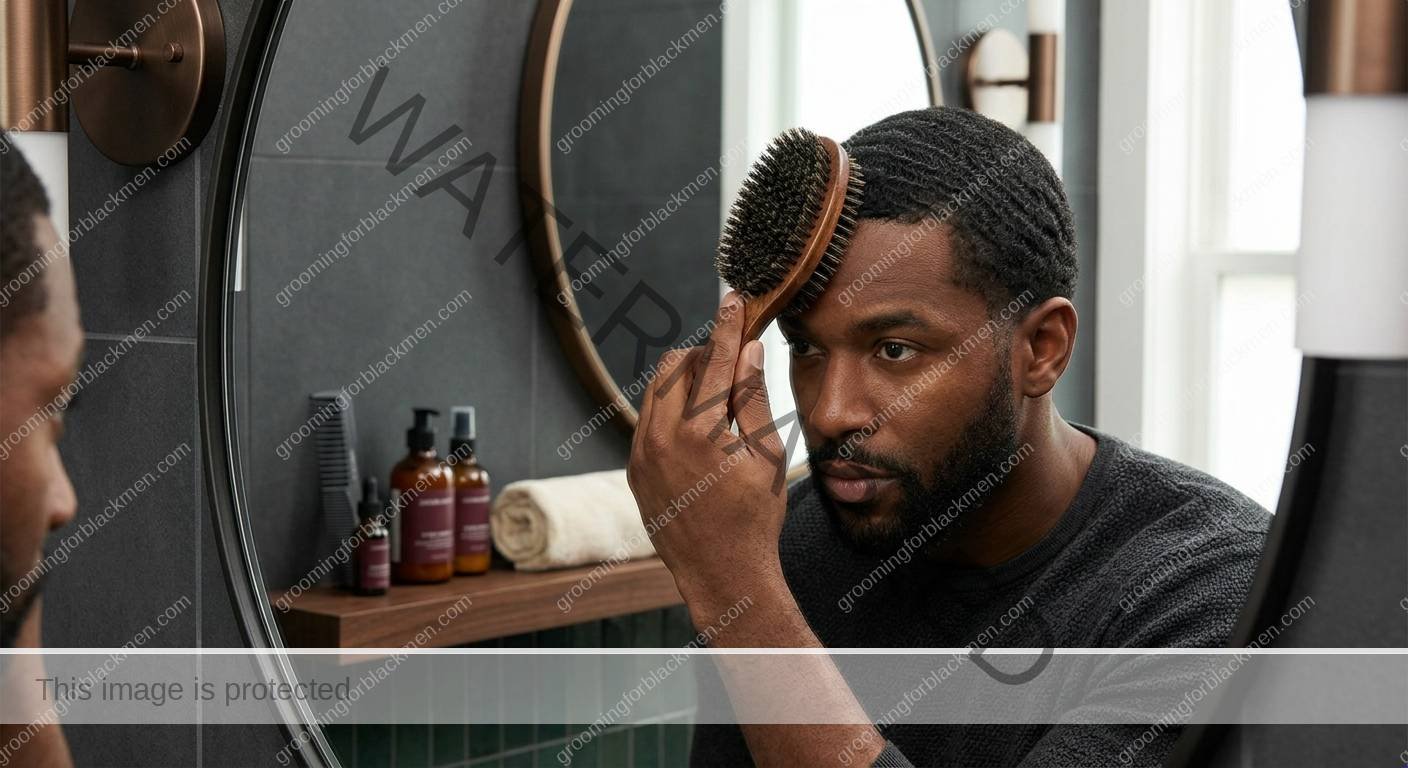
A monthly routine audit for Black men is about honest self-assessment and disciplined tweaks. Here’s how to run a practical, effective audit in less than an hour each month:
1. Assess Your Beard and Skin
- Look and feel. Stand in good light. Run your fingers through your beard. Check for dryness, roughness, bumps, flakes, or uneven patches. Note any areas that feel different from last month.
- Smell. Any lingering odor means sweat, product, or bacteria is hanging around—time to adjust your wash routine.
- Check skin under beard. Use a comb to part your beard and look for irritation, redness, or dry patches. If you notice persistent irritation, review your product ingredients and washing frequency.
- Real-life scenario: If you notice more flakes than usual after a stressful month or a change in weather, it’s likely your routine needs a moisture boost or a gentler cleanser.
2. Review Your Products
- Expiration dates. Toss anything past its prime—old products can irritate skin or lose effectiveness. Don’t risk a breakout or dull beard from expired oils or balms.
- Performance check. Is your beard oil still softening and adding shine? Is your wash leaving hair clean but not stripped? If not, consider a change. If you’re unsure, try using your products on a small patch for a few days and compare the results.
- Ingredient scan. Avoid harsh alcohols, heavy synthetic fragrances, and pore-clogging ingredients. Look for nourishing oils and gentle cleansers. If a product leaves your beard feeling greasy or your skin itchy, it’s time to swap it out.
- Decision criteria: If your skin feels tight or your beard is dull, look for products with humectants like glycerin or aloe. If you’re breaking out, check for comedogenic (pore-clogging) oils or heavy waxes.
3. Audit Your Tools
- Cleanliness. Wash combs, brushes, and trimmers with warm, soapy water. Rinse and dry thoroughly. Built-up oil and skin cells can cause breakouts and dull your beard’s appearance.
- Condition. Replace tools with broken teeth, worn bristles, or dull blades. Damaged tools can snag and break coarse hair, leading to split ends and uneven growth.
- Suitability. Are your combs and brushes designed for coarse, curly hair? If not, upgrade for better results. See our guide on the Best Beard Brush and Comb for Black Men.
- Real-life scenario: If your brush is losing bristles or your trimmer is tugging, don’t wait—replace them. Quality tools protect your investment in your beard.
4. Evaluate Your Routine
- Frequency. Are you washing, oiling, and brushing at the right intervals? Adjust based on your beard’s current needs. For more, see our Beard Wash Frequency Guide.
- Technique. Are you applying products evenly, massaging oil to the skin, and brushing in the right direction? Poor technique can lead to patchiness and irritation.
- Trimming and shaping. Are you maintaining your desired shape? If not, schedule a trim or touch-up. For shaping tips, see How to Shape Your Beard.
- Decision criteria: If your beard is growing unevenly or you’re getting more ingrowns, it may be time to adjust your trimming schedule or switch up your brush technique.
5. Make Adjustments
- Swap out products or tools as needed. If something’s not working, replace it with a better fit for your current needs. Don’t hesitate to try a sample size before committing to a full bottle.
- Set reminders. Schedule your next audit and any needed trims or deep cleans. Consistency is key—set a recurring reminder on your phone or calendar.
- Document changes. Take a quick photo or note what you changed. This helps you track what works over time and spot patterns in what your beard and skin respond to best.
- Real-life scenario: If you switched to a new oil and your beard feels softer and looks shinier, note the brand and ingredients. If a new wash causes dryness, document that too and switch back.
Monthly Audit Logic: Step-by-Step Example
Let’s walk through a realistic monthly audit for a Black man with a full, curly beard and rich brown skin:
- Step 1: Visual and tactile check. You notice your beard feels rougher than last month and you spot a few dry patches near your jawline.
- Step 2: Product review. Your beard oil is almost empty and you realize it’s been open for over a year. You check the label—no expiration date, but it smells off. You toss it and make a note to replace it.
- Step 3: Tool audit. Your boar bristle brush is losing bristles and your wide-tooth comb has a cracked tooth. You clean both, but decide to order replacements for next month.
- Step 4: Routine check. You’ve been washing your beard daily after workouts, but your skin feels tight. You decide to switch to every other day and add a hydrating beard conditioner.
- Step 5: Adjust and document. You take a photo, jot down your changes, and set a reminder to check in again in four weeks.
This disciplined, step-by-step approach keeps your grooming routine intentional and effective.
Product and Tool Criteria: What to Look For
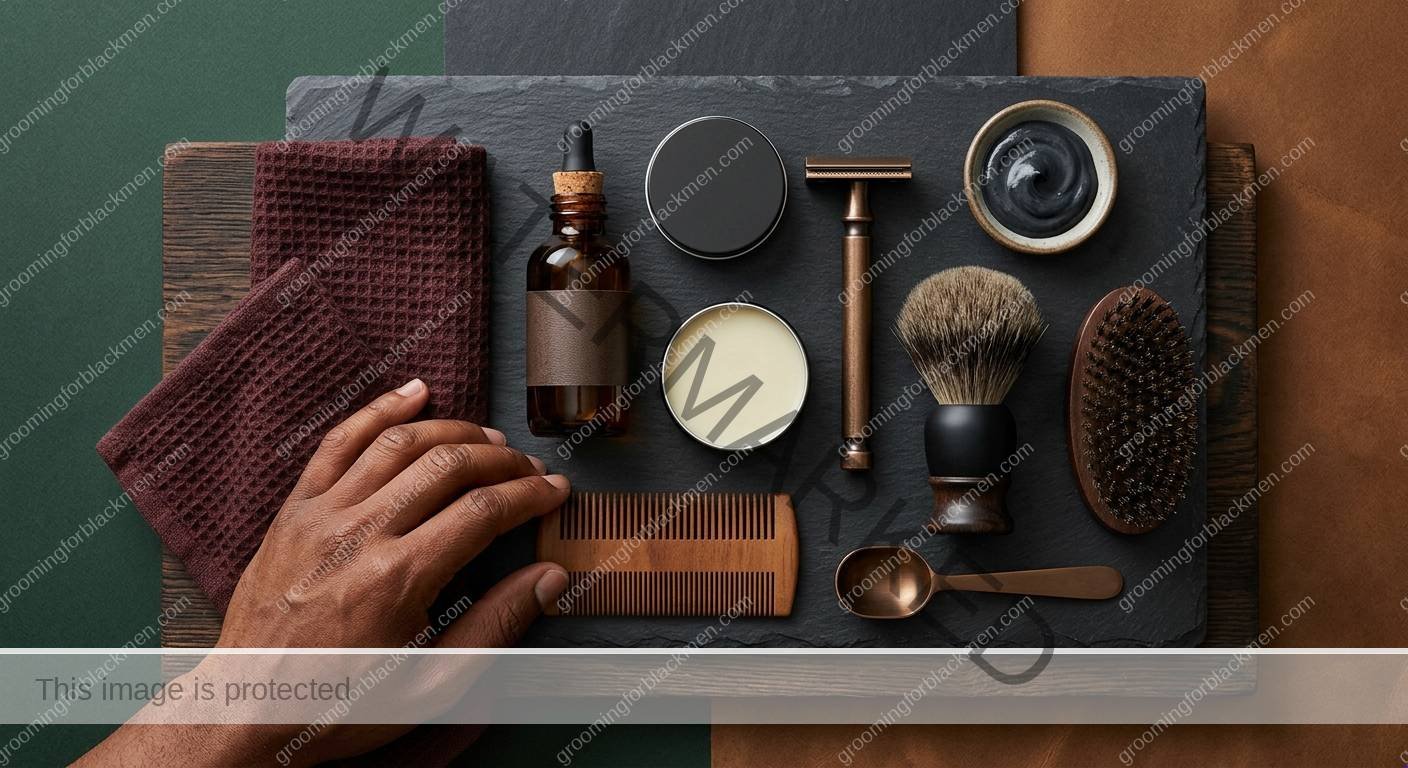
As an affiliate site, GFBM may earn from qualifying purchases through product links.
Not every product or tool is made for coarse, curly beards and rich brown skin. Here’s how to choose wisely:
- Beard Wash: Look for sulfate-free, gentle cleansers that won’t strip natural oils. Avoid harsh alcohols and heavy fragrances. Example: Beard wash for Black men (Amazon search).
- Beard Oil: Choose oils with natural ingredients like jojoba, argan, or grapeseed. They should absorb well and soften both hair and skin. Example: Beard oil for Black men (Amazon search).
- Combs and Brushes: Use wide-tooth combs and boar bristle or firm synthetic brushes designed for thick, curly hair. Avoid plastic combs with sharp seams. For guidance, see our Best Beard Brush and Comb for Black Men.
- Trimmers and Scissors: Keep blades sharp and clean. Invest in quality tools that won’t tug or break hair. A dull blade can cause split ends and irritation, especially on coarse beards.
- Beard Kits: A well-chosen kit can streamline your routine, but always check the ingredient list and tool quality. Example: Beard grooming kit (Amazon search).
GFBM may earn a small commission from qualifying purchases, but product examples are included to clarify criteria, not to promise results.
Key Decision Criteria for Black Men
- Moisture retention: Products should lock in moisture without leaving residue. Look for humectants and lightweight oils.
- Non-comedogenic: Especially important for men prone to razor bumps or acne. Avoid heavy waxes and pore-clogging oils.
- Fragrance: Choose subtle, natural scents or fragrance-free options if you have sensitive skin.
- Tool durability: Invest in tools made for coarse textures—cheap plastic combs and brushes break easily and can damage hair.
Troubleshooting: Real-Life Scenarios and Solutions

Most routine issues can be fixed with small, consistent changes. But some problems need professional attention. Here’s how to tell the difference and what to do in common scenarios:
- Dry, brittle beard: Increase oiling frequency and switch to a richer oil. Reduce washing or switch to a gentler cleanser. For more, see our Best Beard Oils for Black Men.
- Flaky skin or beard dandruff: Add a gentle exfoliation step once a week. Use a beard-specific moisturizer. See Beard Dandruff for more strategies.
- Ingrown hairs or razor bumps: Use a soft brush to exfoliate gently and keep the area clean. Avoid digging or harsh scrubbing. Persistent or painful bumps? See a dermatologist. More tips in our Beard Itch guide.
- Uneven growth or patchiness: Adjust your trimming schedule and ensure you’re massaging oil to the skin. For targeted advice, see Patchy Beard Fixes.
- Product not absorbing: Apply oil after a warm shower when pores are open. If it still sits on top, try a lighter formula or reduce the amount used.
- Persistent irritation or bumps: If irritation doesn’t improve after a month of routine tweaks, consult a dermatologist. Early intervention prevents long-term issues.
When to Get Professional Help
- Normal: Mild dryness, occasional flakes, or a few ingrown hairs that resolve with gentle care and routine tweaks.
- Needs attention: Persistent, painful, spreading, or infected bumps; severe itching; scarring; or irritation that doesn’t improve with basic changes.
If you experience any of the above, see a dermatologist or qualified clinician. Do not dig out ingrown hairs, use harsh DIY scrubs, or apply undiluted essential oils. Gentle, consistent care is the safest approach for most issues. For more targeted troubleshooting, see our guides on Beard Dandruff and Beard Itch.
Frequently Asked Questions
How often should I do a monthly routine audit?
Once every 4 weeks is ideal. This gives you enough time to notice changes but keeps issues from building up. Set a recurring reminder on your phone or calendar to stay consistent.
What’s the biggest mistake Black men make with their beard care routine?
The most common mistake is neglecting the skin under the beard. Healthy skin is the foundation for a strong, comfortable beard. Always massage beard oil down to the skin, and use a gentle beard wash regularly.
Do I need to change products every month?
No. Only swap products if they’re expired, causing irritation, or no longer delivering results. A monthly audit is about checking in, not chasing the latest trend or miracle claim.
How can I tell if my beard tools need replacing?
Look for broken teeth on combs, bent or worn bristles on brushes, and dull blades on trimmers. If tools are tugging, breaking hair, or irritating your skin, it’s time for an upgrade.
What’s the best way to prevent ingrown hairs?
Keep your beard clean, exfoliate gently (never harshly), and use a quality beard oil to soften hair. Avoid digging at ingrowns—if they become painful or persistent, consult a professional.
Can I use regular hair products on my beard?
Most regular hair products are too harsh or heavy for facial hair and the skin beneath. Stick to products formulated for beards and sensitive facial skin for best results.
When should I see a dermatologist about my beard or skin?
If you have painful, infected, spreading, or scarring bumps, or if irritation persists despite routine adjustments, see a dermatologist or qualified clinician. Early intervention prevents long-term issues.
What to Do Next
A monthly routine audit is a disciplined act of self-respect. Set your reminder, gather your tools, and commit to checking in with your beard and skin every month. Track what works, adjust what doesn’t, and don’t hesitate to seek professional help if you notice persistent problems. For more advanced tips on patchy beards, see our Patchy Beard Fixes and our Best Beard Oils for Black Men. If you’re curious about the differences between beard oil, balm, and butter, read Beard Oil vs Balm vs Butter.
Grooming is a journey, not a sprint. Stay disciplined, stay aware, and your beard and skin will show the results.