
Professional Beard Look for Black Men: Practical Grooming Guide
There’s no shortcut to a sharp, professional beard. For Black men, the journey to a well-groomed beard is about more than style—it’s about discipline, understanding your hair and skin, and making choices that respect your unique needs. This professional beard look for Black men practical grooming guide is grounded in real routines, not empty hype. Whether you’re aiming for a corporate edge, a creative statement, or a classic, clean look, the right approach will set you apart for the right reasons.
Rich brown skin and coarse, curly facial hair come with their own grooming realities. Ingrown hairs, uneven growth, and irritation aren’t just minor annoyances—they can undermine your confidence and professionalism. But with the right habits and tools, you can keep your beard looking sharp, healthy, and intentional, not accidental. This guide breaks down what works, what doesn’t, and how to build a routine that fits your lifestyle.
If you’re new to beard care or want to upgrade your routine, you’ll find practical steps here. If you’ve struggled with patchiness, dryness, or razor bumps, you’ll learn how to avoid common mistakes and build a beard that commands respect. For a broader foundation on beard care, see our Beard Care & Beard Growth pillar.
Real-Life Beard Routine Scenarios for Professional Beard Look for Black Men
A strong beard routine has to work outside of perfect bathroom-counter conditions. It has to work when you are rushing before work, when your beard feels dry after a long day, when the weather changes, and when your barber has shaped the line cleaner than you expected. For Black men, that routine also has to respect dense curls, coarse strands, sensitive skin under the beard, and the fact that product buildup can hide until the beard starts itching, flaking, or looking dull.
Start by reading the beard before adding more product. If the beard feels rough but the skin underneath is calm, you may need better conditioning, a lighter oil, or more consistent brushing. If the skin feels tight, itchy, or irritated, the answer is usually not more shine. It may be a gentler wash schedule, a cleaner rinse, a lighter hand with balm, or a pause from heavy fragrance. The discipline is in changing one variable at a time so you can tell what actually helped.
For a short beard, keep the routine direct: cleanse when needed, moisturize the skin beneath, use a small amount of oil or balm, and brush enough to distribute product without scraping the skin. For a fuller beard, section the work. Apply product from the skin outward, then shape the hair so the surface looks neat without leaving the roots dry. The fuller the beard gets, the more important it becomes to separate grooming from coating. A beard can look shiny and still be dehydrated underneath.
Budget matters too. You do not need a crowded shelf to manage professional beard look for black men. A dependable wash, one conditioning product, and one tool you actually use will outperform five products that fight each other. If money is tight, upgrade the item that touches your skin or beard most often. If time is tight, simplify the routine instead of skipping care entirely. Consistency beats a complicated plan that only happens twice a month.
How to Audit Your Beard Without Overreacting
Give any beard change enough time to show a pattern. One dry morning does not mean the routine failed. One good beard day does not mean every product is perfect. Track how your beard feels after washing, how the skin underneath feels at night, whether flakes return quickly, and whether the beard holds shape without becoming stiff. Those signals tell you more than packaging claims or social media routines built for a different texture.
If irritation shows up, simplify. Remove the newest product first, reduce fragrance, avoid scratching, and return to a basic cleanse-and-moisturize rhythm. If flakes, soreness, bleeding, swelling, or persistent itching keep coming back, that is a reason to get professional help rather than forcing stronger products into the routine. Grooming should make you look more put together, but it should also leave your skin calmer over time.
Real-Life Beard Routine Scenarios for Professional Beard Look for Black Men
A strong beard routine has to work outside of perfect bathroom-counter conditions. It has to work when you are rushing before work, when your beard feels dry after a long day, when the weather changes, and when your barber has shaped the line cleaner than you expected. For Black men, that routine also has to respect dense curls, coarse strands, sensitive skin under the beard, and the fact that product buildup can hide until the beard starts itching, flaking, or looking dull.
Start by reading the beard before adding more product. If the beard feels rough but the skin underneath is calm, you may need better conditioning, a lighter oil, or more consistent brushing. If the skin feels tight, itchy, or irritated, the answer is usually not more shine. It may be a gentler wash schedule, a cleaner rinse, a lighter hand with balm, or a pause from heavy fragrance. The discipline is in changing one variable at a time so you can tell what actually helped.
For a short beard, keep the routine direct: cleanse when needed, moisturize the skin beneath, use a small amount of oil or balm, and brush enough to distribute product without scraping the skin. For a fuller beard, section the work. Apply product from the skin outward, then shape the hair so the surface looks neat without leaving the roots dry. The fuller the beard gets, the more important it becomes to separate grooming from coating. A beard can look shiny and still be dehydrated underneath.
Budget matters too. You do not need a crowded shelf to manage professional beard look for black men. A dependable wash, one conditioning product, and one tool you actually use will outperform five products that fight each other. If money is tight, upgrade the item that touches your skin or beard most often. If time is tight, simplify the routine instead of skipping care entirely. Consistency beats a complicated plan that only happens twice a month.
How to Audit Your Beard Without Overreacting
Give any beard change enough time to show a pattern. One dry morning does not mean the routine failed. One good beard day does not mean every product is perfect. Track how your beard feels after washing, how the skin underneath feels at night, whether flakes return quickly, and whether the beard holds shape without becoming stiff. Those signals tell you more than packaging claims or social media routines built for a different texture.
If irritation shows up, simplify. Remove the newest product first, reduce fragrance, avoid scratching, and return to a basic cleanse-and-moisturize rhythm. If flakes, soreness, bleeding, swelling, or persistent itching keep coming back, that is a reason to get professional help rather than forcing stronger products into the routine. Grooming should make you look more put together, but it should also leave your skin calmer over time.
Real-Life Beard Routine Scenarios for Professional Beard Look for Black Men
A strong beard routine has to work outside of perfect bathroom-counter conditions. It has to work when you are rushing before work, when your beard feels dry after a long day, when the weather changes, and when your barber has shaped the line cleaner than you expected. For Black men, that routine also has to respect dense curls, coarse strands, sensitive skin under the beard, and the fact that product buildup can hide until the beard starts itching, flaking, or looking dull.
Start by reading the beard before adding more product. If the beard feels rough but the skin underneath is calm, you may need better conditioning, a lighter oil, or more consistent brushing. If the skin feels tight, itchy, or irritated, the answer is usually not more shine. It may be a gentler wash schedule, a cleaner rinse, a lighter hand with balm, or a pause from heavy fragrance. The discipline is in changing one variable at a time so you can tell what actually helped.
For a short beard, keep the routine direct: cleanse when needed, moisturize the skin beneath, use a small amount of oil or balm, and brush enough to distribute product without scraping the skin. For a fuller beard, section the work. Apply product from the skin outward, then shape the hair so the surface looks neat without leaving the roots dry. The fuller the beard gets, the more important it becomes to separate grooming from coating. A beard can look shiny and still be dehydrated underneath.
Budget matters too. You do not need a crowded shelf to manage professional beard look for black men. A dependable wash, one conditioning product, and one tool you actually use will outperform five products that fight each other. If money is tight, upgrade the item that touches your skin or beard most often. If time is tight, simplify the routine instead of skipping care entirely. Consistency beats a complicated plan that only happens twice a month.
How to Audit Your Beard Without Overreacting
Give any beard change enough time to show a pattern. One dry morning does not mean the routine failed. One good beard day does not mean every product is perfect. Track how your beard feels after washing, how the skin underneath feels at night, whether flakes return quickly, and whether the beard holds shape without becoming stiff. Those signals tell you more than packaging claims or social media routines built for a different texture.
If irritation shows up, simplify. Remove the newest product first, reduce fragrance, avoid scratching, and return to a basic cleanse-and-moisturize rhythm. If flakes, soreness, bleeding, swelling, or persistent itching keep coming back, that is a reason to get professional help rather than forcing stronger products into the routine. Grooming should make you look more put together, but it should also leave your skin calmer over time.
Why This Matters for Black Men

Beard grooming isn’t just about looking good—it’s about showing up as your best self, especially in professional settings where first impressions count. For Black men, the stakes are higher. Coarse, curly hair is more prone to ingrown hairs, dryness, and uneven texture. Rich brown skin can react to harsh products or poor technique with irritation, dark spots, or bumps. A professional beard look signals discipline, attention to detail, and self-respect. It’s a subtle but powerful way to counter stereotypes and set your own standard.
Professional environments often have unspoken rules about grooming. A beard that’s well-shaped, clean, and healthy reads as intentional and polished. A beard that’s patchy, unkempt, or irritated can be unfairly judged as careless. This isn’t about changing who you are—it’s about mastering the details so you control the narrative. The right routine protects your skin, prevents common issues, and helps you walk into any room with confidence.
Common Pitfalls: What Usually Goes Wrong

Many Black men run into the same obstacles when aiming for a professional beard look:
- Ingrown hairs and razor bumps: Coarse, curly hair grows back into the skin easily, especially with improper shaving or trimming techniques. This can lead to painful bumps and scarring if not managed with care.
- Patchy or uneven growth: Genetics play a role, but poor grooming habits can make patchiness worse or highlight uneven lines. Inconsistent trimming or neglecting certain areas can make a beard look accidental instead of intentional.
- Dryness and flaking: Rich brown skin and coarse hair need more moisture. Skipping hydration leads to beard dandruff, itch, and a dull appearance. Hard water and harsh cleansers can strip natural oils, compounding the problem.
- Harsh products: Alcohol-heavy aftershaves, undiluted essential oils, or aggressive cleansers can irritate skin and worsen dark spots. Many mainstream products are not formulated for coarse hair or melanin-rich skin.
- Over-trimming or poor shaping: Using the wrong tools or trimming without a plan can ruin your beard’s shape and make it look unprofessional. Uneven lines or too-sharp angles can draw unwanted attention.
- Neglecting the neckline and cheeks: Messy edges or stray hairs can make an otherwise good beard look sloppy. A clean neckline and natural cheek line are essential for a polished appearance.
These issues aren’t about laziness—they’re about not having the right information or tools for your specific hair and skin. For more on common beard challenges, see our guides on patchy beard fixes and beard dandruff.
What to Do Instead: Building a Professional Beard Routine

Building a professional beard routine means working with your natural texture, not against it. Here’s how to set yourself up for a beard that looks sharp and feels healthy, day in and day out:
- Wash your beard regularly, but not excessively. Use a gentle, sulfate-free beard wash 2-3 times per week. Over-washing strips natural oils and dries out coarse hair. Rinse with lukewarm water to avoid shocking your skin. For more, see our beard wash frequency guide.
- Moisturize and seal in hydration. Apply beard oil or balm daily, especially after washing. Focus on both the hair and the skin underneath. Choose products with natural oils (like jojoba or argan) and butters (like shea) without heavy fragrances or alcohol. For a breakdown, see beard oil vs balm vs butter.
- Brush and comb daily. Use a boar bristle beard brush or a wide-tooth comb to distribute oils, detangle, and train your beard to grow in the right direction. This also helps prevent ingrown hairs and keeps your beard looking neat. See our best beard brush and comb guide.
- Shape with discipline. Define your neckline and cheek lines with a quality trimmer. Keep lines clean but natural—avoid sharp, unnatural angles unless that’s your signature style. Trim stray hairs weekly, but don’t overdo it. For shaping tips, visit how to shape your beard.
- Address irritation early. If you notice bumps, redness, or persistent itch, pause shaving or trimming and focus on gentle cleansing and moisture. Don’t dig at ingrown hairs or use harsh scrubs. If irritation is painful, spreading, or doesn’t improve, see a dermatologist.
- Be patient and consistent. A professional beard look doesn’t happen overnight. Stick to your routine and adjust as needed. If you’re just starting out, see our beginner beard routine.
Step-by-Step: The Professional Beard Routine
Consistency is the foundation of a professional beard. Here’s a practical daily and weekly routine tailored for Black men:
- Morning:
- Lightly splash your beard with water to refresh and soften hair.
- Apply a few drops of beard oil, working it into the skin and hair.
- Brush or comb to distribute oil and train the beard’s direction.
- Check for stray hairs or uneven lines; tidy up with a trimmer if needed.
- Evening:
- If you’ve been exposed to sweat, pollution, or heavy product, rinse your beard with water or use a gentle cleanser.
- Apply a nourishing beard balm or butter for overnight moisture.
- Weekly:
- Wash your beard with a sulfate-free cleanser 2-3 times per week.
- Deep condition with a beard mask or oil treatment if your beard feels dry or brittle.
- Trim and shape your beard, focusing on the neckline, cheeks, and mustache. Use a mirror and good lighting for precision.
Adjust frequency based on your skin type, activity level, and climate. If you’re active or live in a dry environment, you may need to moisturize more often. If your skin is oily, use lighter oils and avoid heavy butters.
Decision Criteria: Choosing Your Beard Style
Not every beard style suits every face or professional environment. Consider these factors:
- Face shape: Round faces benefit from longer beards with defined lines; angular faces can handle fuller cheeks or goatees.
- Growth pattern: If your beard is patchy, opt for shorter styles or intentional stubble. If you have full growth, experiment with length and shape.
- Work culture: Some industries are conservative, favoring closely trimmed beards or goatees. Creative fields may allow for more expression, but neatness is always respected.
- Maintenance commitment: Longer beards require more time and product. If you prefer low-maintenance, keep it short and sharp.
For more on matching style to your lifestyle, see how to shape your beard.
Product and Tool Criteria for a Professional Beard Look
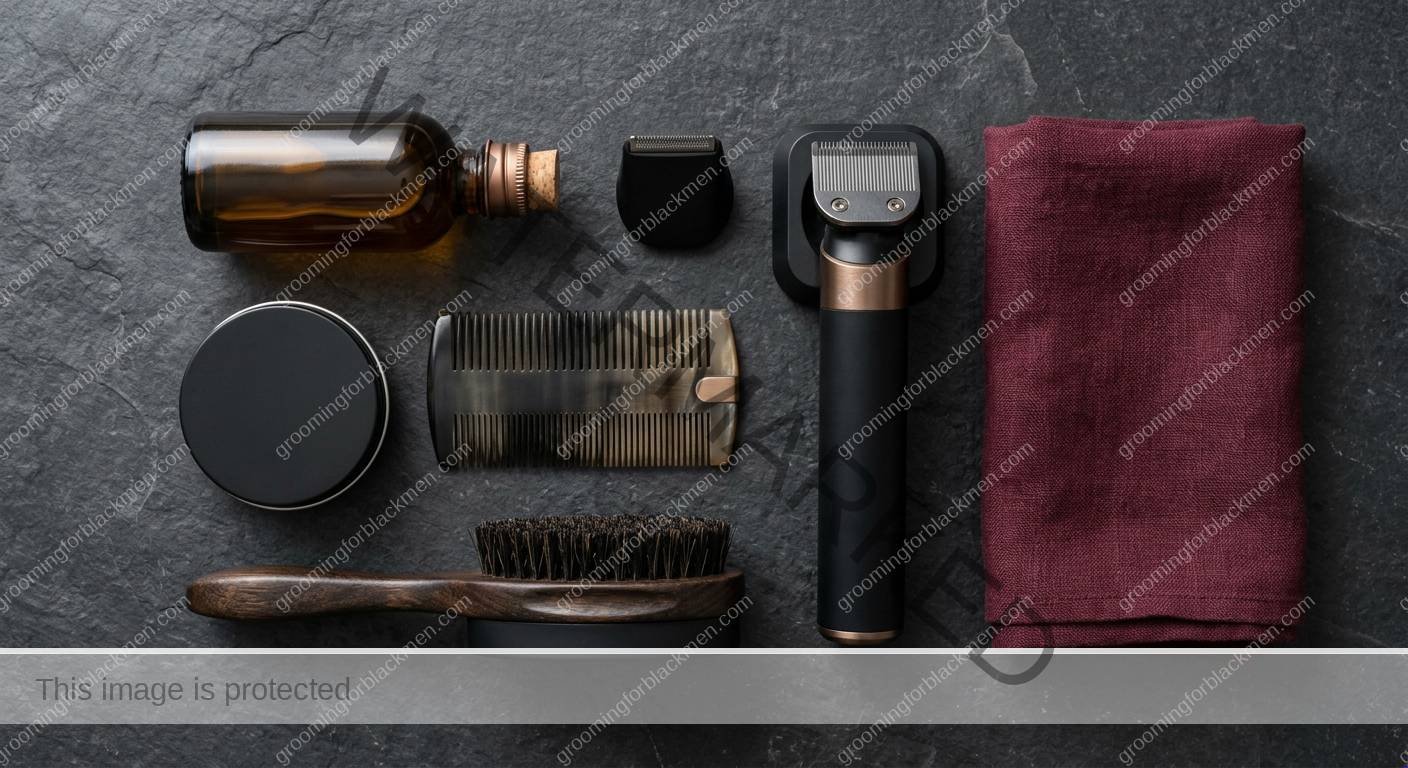
Not all beard products are created equal—especially for Black men with coarse, curly hair and rich brown skin. Here’s what to look for in each category:
- Beard Wash: Gentle, sulfate-free, low-foam cleansers that won’t strip natural oils or irritate skin. Avoid strong fragrances and alcohols.
- Beard Oil/Balm: Look for natural oils (jojoba, argan, grapeseed) and butters (shea, mango) high on the ingredient list. Avoid mineral oil, petrolatum, and heavy synthetic fragrances. Balms add hold and extra moisture—ideal for shaping and taming coarse hair.
- Beard Brush/Comb: Boar bristle brushes help distribute oils and smooth coarse hair. Wide-tooth combs are best for detangling without breakage.
- Beard Trimmer: Adjustable guards, sharp blades, and a motor strong enough for thick, curly hair. Cordless models with long battery life are practical for daily use.
GFBM may earn a small commission from qualifying purchases, but product examples are included to clarify criteria, not to promise results.
- Beard balm for Black men: Look for balms that list shea butter and natural oils at the top of the ingredient list.
- Beard trimmer for Black men: Choose a trimmer with multiple guards and a strong motor for coarse hair.
- Beard brush for Black men: A boar bristle brush helps smooth and train your beard without causing breakage.
For deeper product breakdowns and ingredient analysis, see best beard oils and oil vs balm vs butter.
Real-Life Scenarios: Navigating Professional Spaces
Every Black man’s beard journey is unique, but certain situations come up again and again. Here’s how to handle them with confidence:
Scenario 1: Job Interview or Promotion
You want to look intentional, not experimental. In the week leading up, keep your beard trimmed and lines clean. Avoid trying a new style or product right before the big day—stick with what works for your skin and hair. Focus on a well-moisturized, neat look. If you’re unsure about your shape, visit a trusted barber for a tune-up.
Scenario 2: Dealing with Patchiness
Maybe your cheeks are sparse or your mustache grows slower. Don’t force a full beard if it’s not there yet. Instead, embrace a goatee, short boxed beard, or intentional stubble. Use balm to add volume and keep edges sharp. For more, see patchy beard fixes.
Scenario 3: Managing Beard Dandruff at Work
Flakes on a dark shirt can undermine your look. If you’re prone to beard dandruff, increase your use of beard oil and avoid harsh soaps. Keep a travel-size beard brush at your desk for quick touch-ups. For more, see beard dandruff guide.
Scenario 4: Traveling or Busy Weeks
When your schedule is packed, simplify your routine. Prioritize cleansing, moisturizing, and brushing. Use a balm for quick styling and skip lengthy trims—just keep edges tidy. Pack travel-size products and a compact brush to stay sharp on the go.
Troubleshooting and When to Get Help

Even with the best routine, issues can come up. Here’s how to handle the most common problems:
- Persistent irritation or painful bumps: Stop shaving or trimming the area. Cleanse gently, moisturize, and avoid picking. If bumps are painful, spreading, or not improving, see a dermatologist or qualified clinician.
- Patchy growth: Focus on shaping and keeping the beard neat. Avoid over-trimming. Some areas may fill in with time and consistent care. For more, read patchy beard fixes.
- Dryness and beard dandruff: Increase moisture with beard oil or balm, and avoid washing with harsh soaps. For a deeper dive, see our beard dandruff guide.
- Itch: Usually a sign of dryness or new growth. Moisturize more often and use a soft brush. See our beard itch guide for more solutions.
- Dark spots or scarring: Avoid picking or aggressive scrubbing. Use gentle products and sun protection. For persistent or spreading spots, consult a dermatologist. For more on professional options, see professional treatments for dark spots.
Frequently Asked Questions
How often should I trim my beard for a professional look?
Trim your beard every 1-2 weeks to maintain clean lines and remove stray hairs. Use a quality trimmer with adjustable guards to avoid cutting too much. Focus on the neckline, cheeks, and mustache for a tidy appearance. If you’re shaping your beard for the first time, go slow and check your work in natural light.
What’s the best way to prevent ingrown hairs and razor bumps?
Use a sharp trimmer instead of shaving close to the skin. Always trim in the direction of hair growth. Exfoliate gently with a soft brush or washcloth—never scrub aggressively. Keep your beard and skin moisturized. If you’re prone to bumps, avoid multi-blade razors and harsh aftershaves.
Can I get a professional beard look if my beard is patchy?
Yes. Focus on keeping the beard neat and well-shaped. Use a beard balm to add volume and define the edges. Sometimes a shorter, even stubble or goatee looks more intentional than trying to force a full beard. For more strategies, see our patchy beard guide.
What ingredients should I avoid in beard products?
Avoid products with high alcohol content, mineral oil, petrolatum, and strong synthetic fragrances. These can dry out your hair and irritate your skin. Look for natural oils and butters, and patch test new products before full use.
How do I keep my beard looking neat between trims?
Brush and comb your beard daily to keep hairs aligned and distribute oils. Use a beard balm to tame flyaways and add light hold. Clean up your neckline and cheeks with a trimmer as needed, but avoid over-trimming. Consistency is key.
What should I do if my beard is always dry or itchy?
Increase your use of beard oil or balm, and avoid washing with harsh soaps. Make sure you’re drinking enough water and protecting your beard from harsh weather. For persistent dryness or itch, see our beard itch guide for more solutions.
When should I see a dermatologist about beard issues?
If you have painful, spreading, or persistent bumps, irritation, or dark spots that don’t improve with gentle care, it’s time to see a dermatologist or qualified clinician. Early intervention can prevent scarring and more serious problems.
What to Do Next
Building a professional beard look is a process, not a quick fix. Start by setting a regular routine: wash, moisturize, brush, and trim with intention. Choose products and tools that respect your hair and skin, and don’t chase miracle claims. If you run into trouble, troubleshoot calmly and get professional help if needed. For more in-depth routines and product breakdowns, explore our guides on best beard oils, oil vs balm vs butter, and how to shape your beard.
Above all, remember: a professional beard isn’t about chasing trends or pleasing others. It’s about discipline, self-respect, and showing up as your best self—on your own terms.