
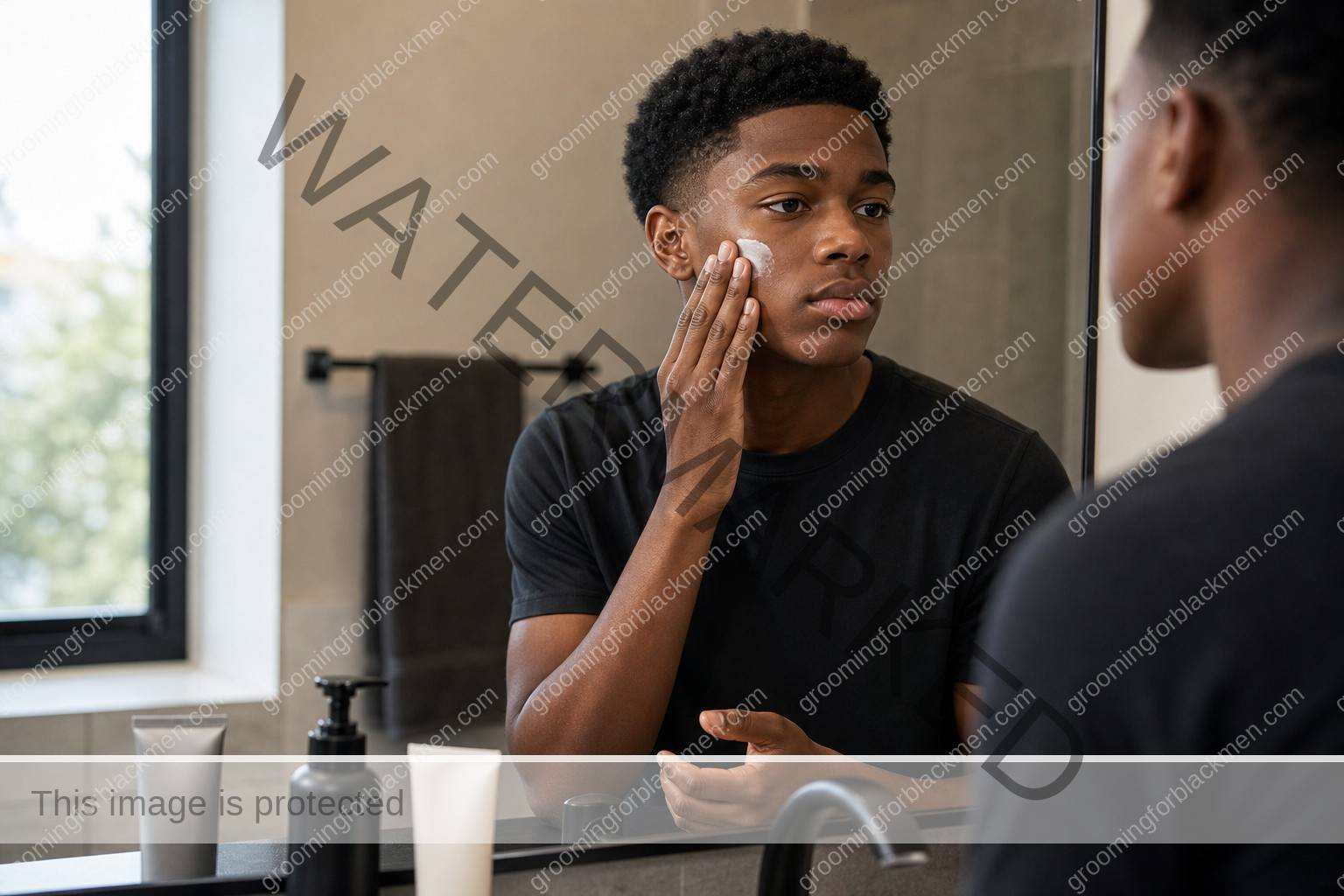
This guide focuses on a simple routine a teen can follow consistently. The aim is a routine that is clear, repeatable, and comfortable, without unnecessary products or aggressive technique.
Use it to assess hormonal acne, oil, sweat, dark marks, sensitivity, and early shaving irritation. Start with the basics, change one variable at a time, and judge progress over several weeks rather than after one application.
For the broader foundation, use the GFBM skincare hub for Black men.
How to Put This Guide Into Practice

The most useful way to apply this guide is to make one controlled change at a time. Start by writing down what you currently use, how often you use it, and what your skin or hair does during the following twenty-four hours. That short record prevents guesswork. It also helps you separate a product problem from a technique problem, a weather change, or simple inconsistency.
For this topic, the central goal is a simple routine a teen can follow consistently. Build around that goal before adding optional products. Keep the core routine visible and easy to reach. Store the items in application order, clean the tools that touch your face, and remove anything that repeatedly burns, stings, flakes, or leaves heavy buildup. A routine should be easy to repeat on a rushed morning and a tired night, not only when you have extra time.
Week 1: Establish a Baseline
During the first week, avoid chasing fast results. Use the smallest dependable routine and observe hormonal acne, oil, sweat, dark marks, sensitivity, and early shaving irritation. Take two clear photos in the same lighting: one at the start and one after seven days. Note comfort after cleansing, midday oil or tightness, the condition of the beard and neck, and any new bumps or marks. Do not judge progress from a single mirror check after a bad shave or a long day.
Week 2: Correct Technique Before Buying More
In the second week, examine pressure, timing, product amount, water temperature, and tool cleanliness. Many grooming problems are intensified by rushing, repeated passes, aggressive scrubbing, or using far more product than the skin can comfortably handle. Correcting technique is inexpensive and gives every product a fairer test. If you introduce something new, patch test it and keep the rest of the routine stable.
Week 3: Add One Targeted Upgrade
Choose one upgrade that directly addresses the most important concern you recorded. That may be a gentler cleanser, a lighter or richer moisturizer, a different shaving tool, a targeted treatment, or a sunscreen that blends without a distracting cast. Use it according to the label and resist combining several strong ingredients. When irritation appears, return to the basic routine instead of trying to treat the reaction with more actives.
Week 4: Review Results and Set the Next Month
At the end of four weeks, compare your notes and photos. Look for fewer new bumps, less tightness, better hydration, more predictable oil control, improved comfort, or a routine that is simply easier to complete. Dark marks and texture often require more time, so judge whether the process is moving in the right direction rather than demanding a finished result. Keep what works, remove what does not, and choose only one priority for the next month.
A Practical Decision Framework
| What you notice | Likely adjustment | What not to do |
|---|---|---|
| Burning, persistent stinging, or sudden sensitivity | Pause strong treatments and use a gentle cleanser and moisturizer | Add another acid, scrub, or fragranced product |
| New bumps after shaving | Review beard direction, pressure, blade condition, and shave closeness | Pick the bumps or repeatedly shave over them |
| Dryness or visible ashiness | Use lukewarm water and apply a suitable moisturizer to slightly damp skin | Use harsher soap or longer hot showers |
| Heavy oil or product buildup | Reduce product amount and choose lighter textures | Strip the face several times a day |
| Dark marks that are not improving | Prevent new inflammation, use sunscreen, and stay consistent with one treatment | Scrub aggressively or change products every few days |
Seek a dermatologist when you have painful or cystic acne, spreading irritation, signs of infection, severe or scarring razor bumps, unexplained hair loss, or a skin change that persists. A grooming routine can support healthy habits, but it cannot diagnose or replace medical care.
Embracing Your Melanin: Why Skincare for Black Men is Unique
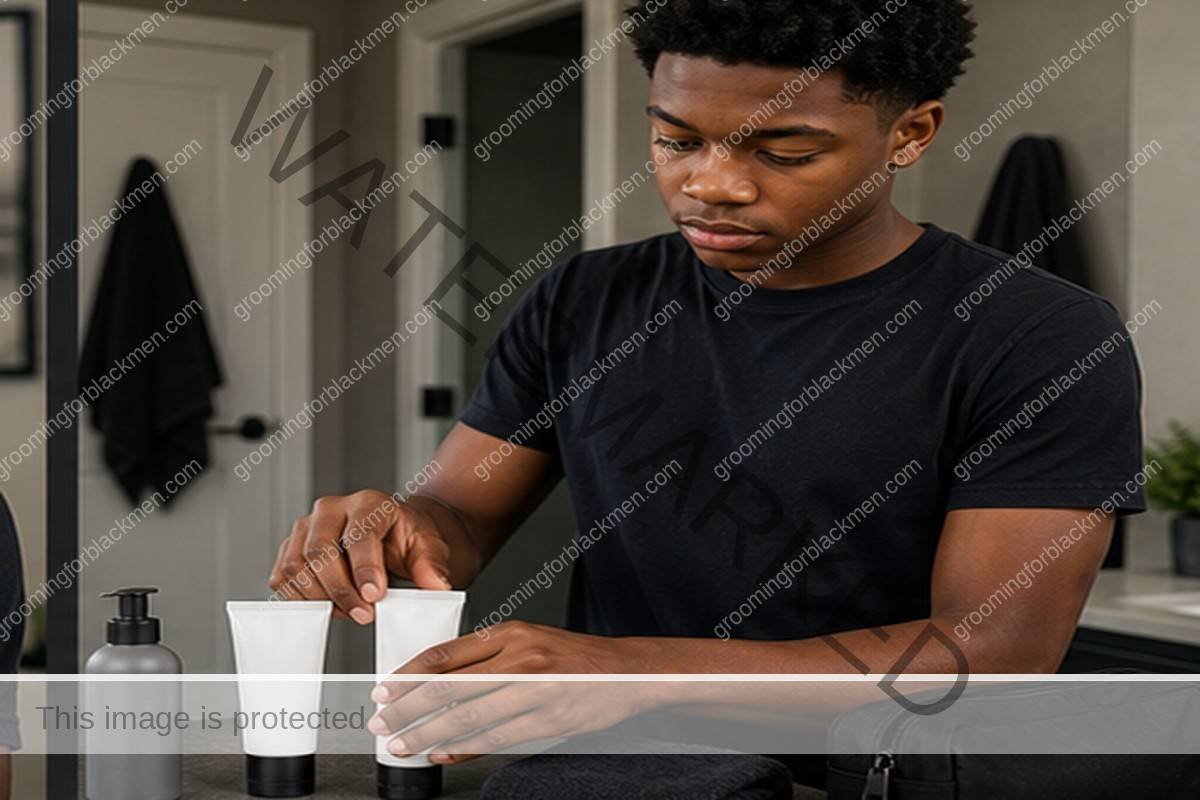
Before we dive into the specifics, let’s acknowledge the melanin-rich skin that is Black skin. Rich in melanin, it offers more melanin, which does not eliminate UV damage and boasts a youthful appearance for longer. However, this very richness also predisposes it to certain conditions that require thoughtful attention. Understanding these unique characteristics is the first step toward a truly effective skincare regimen.
Common Skin Concerns for Teen Black Men
- Post-Inflammatory Hyperpigmentation (PIH): Those dark spots left behind after a pimple or cut? That’s PIH. Melanin-rich skin is more prone to producing excess pigment in response to inflammation, leading to these stubborn marks.
- Acne Vulgaris: Hormonal fluctuations during teenage years often lead to increased oil production, clogging pores and causing breakouts. While common for all teens, PIH makes managing acne even more critical for Black skin.
- Pseudofolliculitis Barbae (PFB) or Razor Bumps: Shaving can be a particular challenge. Coarsely curled hairs, when cut too short, can curl back into the skin, causing inflammation, bumps, and potential scarring.
- Dryness and Ashiness: While often perceived as oily, Black skin can also experience dryness, especially in colder climates or with improper care, leading to a dull, ashy appearance.
- Keloids: Though less common for general skincare, it’s worth noting that Black skin has a higher predisposition to keloids, which are raised scars that grow beyond the original wound site. Gentle handling of skin and avoiding aggressive treatments is key.
By understanding these predispositions, we can select products and practices that not only treat current issues but also prevent future ones, fostering healthy, radiant skin.
The Essential Skincare Routine: A Step-by-Step Guide
A consistent routine is the cornerstone of healthy skin. We’re breaking it down into simple, manageable steps that fit seamlessly into a busy teen’s life. Consistency, not complexity, is the key here.
Step 1: The Cleanse – Starting Fresh
Cleansing is non-negotiable. It removes dirt, excess oil, sweat, and impurities that accumulate throughout the day and night. For teen Black men, choosing the right cleanser is paramount to avoid stripping the skin or exacerbating existing conditions.
Choosing Your Cleanser
Look for gentle, pH-balanced cleansers. If acne is a concern, ingredients like salicylic acid or benzoyl peroxide can be beneficial, but always start with a lower concentration to assess skin tolerance.
- For Oily/Acne-Prone Skin: A foaming or gel cleanser with salicylic acid (BHA) to penetrate oil and exfoliate pores, or benzoyl peroxide to kill acne-causing bacteria.
- For Normal/Combination Skin: A gentle, hydrating cleanser that removes impurities without leaving the skin feeling tight.
- For Dry/Sensitive Skin: A cream or milky cleanser that adds hydration while cleaning. Avoid harsh sulfates.
How to Cleanse
Use lukewarm water, not hot, as hot water can strip natural oils. Gently massage the cleanser onto your face for 30-60 seconds, then rinse thoroughly. Pat dry with a clean towel. Do this twice a day: morning and night.
Step 2: The Treatment – Targeting Specific Concerns
After cleansing, your skin is ready to absorb targeted treatments. This step is where you address specific issues like acne, hyperpigmentation, or texture concerns.
Acne Treatments
For persistent breakouts, consider spot treatments or all-over serums.
- Salicylic Acid (BHA): Excellent for blackheads, whiteheads, and general pore congestion. It’s oil-soluble, meaning it can penetrate deep into pores.
- Benzoyl Peroxide: Kills acne-causing bacteria. Can be drying, so use sparingly and moisturize well.
- Niacinamide: A multi-tasking ingredient that helps reduce inflammation, reduce the appearance of pores, and improve skin barrier function. Great for preventing PIH.
Hyperpigmentation Treatments
For those lingering dark spots, patience and consistent use of brightening ingredients are key.
- Vitamin C: A powerful antioxidant that brightens skin, evens tone, and protects against environmental damage.
- Alpha Arbutin or Kojic Acid: Gentle brightening agents that inhibit melanin production.
- Azelaic Acid: Reduces inflammation, kills acne bacteria, and helps fade PIH.
Step 3: The Moisturize – Hydration is Key
Moisturizing is crucial for all skin types, especially for Black skin, to maintain its natural barrier, prevent dryness, and keep it supple. Don’t skip this step, even if your skin is oily!
Choosing Your Moisturizer
Look for non-comedogenic (won’t clog pores) and fragrance-free formulas.
- For Oily/Acne-Prone Skin: A lightweight, gel-based or oil-free lotion.
- For Normal/Combination Skin: A balanced lotion that provides adequate hydration without feeling heavy.
- For Dry/Sensitive Skin: A richer cream with ingredients like ceramides, hyaluronic acid, or shea butter.
How to Moisturize
Apply a dime-sized amount to your face and neck, gently massaging it in until absorbed. Do this immediately after cleansing and treating, while your skin is still slightly damp, to lock in moisture. Twice a day, every day.
Step 4: The Protect – Sunscreen is Your Best Friend
This is arguably the most overlooked yet critical step, especially for melanin-rich skin. While our skin offers natural protection, it is NOT immune to sun damage. UV rays cause premature aging, increase the risk of skin cancer, and, crucially for Black skin, worsen hyperpigmentation.
Choosing Your Sunscreen
Look for broad-spectrum SPF 30 or higher. Many mineral sunscreens (zinc oxide, titanium dioxide) can leave a white cast on darker skin tones. Chemical sunscreens (oxybenzone, avobenzone, octinoxate) tend to blend in seamlessly. However, newer formulations of mineral sunscreens are becoming more cosmetically elegant. Look for “sheer,” “tinted,” or “no white cast” labels.
- For All Skin Types (No White Cast Options):
How to Apply Sunscreen
Apply a generous amount (about a nickel-sized dollop for your face and neck) as the last step in your morning routine, at least 15 minutes before sun exposure. Reapply every two hours if you’re outdoors, sweating, or swimming.
Advanced Care: Taking Your Routine to the Next Level
Once the basic routine is established, these steps can be incorporated 1-3 times a week to enhance results.
Exfoliation: Gentle Renewal
Exfoliation helps remove dead skin cells, revealing brighter, smoother skin and preventing clogged pores. For Black skin, gentle chemical exfoliants are generally preferred over harsh physical scrubs, which can cause micro-tears and lead to PIH.
Chemical Exfoliants
- AHAs (Alpha Hydroxy Acids) like Glycolic or Lactic Acid: Work on the skin’s surface to dissolve dead skin cells, improving texture and tone. Start with lower concentrations (5-8%).
- BHAs (Beta Hydroxy Acids) like Salicylic Acid: As mentioned, great for oily and acne-prone skin as they penetrate oil to clear pores.
Frequency: Start with 1-2 times a week, gradually increasing if your skin tolerates it. Always use sunscreen diligently when using exfoliants.
Masks: A Weekly Treat
Face masks can provide an extra boost of hydration, purification, or calming benefits.
- Clay Masks: Excellent for oily or acne-prone skin to draw out impurities and absorb excess oil.
- Hydrating Masks: For all skin types, especially dry or dull skin, to infuse moisture.
Frequency: 1-2 times a week, as needed.
Shaving & Grooming: Navigating the Beard Journey

For teen Black men, shaving can be a source of frustration due to pseudofolliculitis barbae (razor bumps). A thoughtful approach to hair removal is crucial.
Preventing Razor Bumps (Pseudofolliculitis Barbae)
This condition occurs when curly hairs, after being cut, coil back into the skin, causing inflammation and bumps. Prevention is key.
- Prepare Your Skin: Always shave after a warm shower. The steam softens the hair and soften facial hair and loosen surface buildup. Use a pre-shave oil to create a protective barrier.
- Choose the Right Tool:
- Electric Clippers/Trimmers: The safest option. They cut hair slightly above the skin’s surface, preventing ingrowns. Look for models designed for close cuts without irritation.
- Single-Blade Razor: If wet shaving, a single-blade safety razor or a razor designed for sensitive skin is better than multi-blade razors, which cut hair too short and can pull it.
- Electric Clippers/Trimmers: The safest option. They cut hair slightly above the skin’s surface, preventing ingrowns. Look for models designed for close cuts without irritation.
- Shave with the Grain: Always shave in the direction your hair grows, not against it. This reduces irritation and the chance of hairs curling back into the skin.
- Use a Quality Shaving Cream/Gel: Look for hydrating, non-foaming creams that provide cushion and glide. Avoid harsh aerosols.
- Post-Shave Care: Rinse with cool water, pat dry, and apply a soothing, alcohol-free aftershave balm or serum with ingredients like witch hazel, aloe vera, or salicylic acid to prevent bumps.
Beard Care (If Applicable)
For those embracing facial hair, proper care keeps it soft, healthy, and itch-free.
- Cleanse: Use a dedicated beard wash (not harsh shampoo) 2-3 times a week.
- Condition: Follow with a beard conditioner or leave-in treatment.
- Moisturize: Apply beard oil or balm daily to hydrate the hair and the skin underneath, preventing dryness and itchiness.
- Comb/Brush: Use a beard comb or boar bristle brush to detangle, distribute products, and train the hair.
Lifestyle & Diet: The Inside-Out Approach
Skincare isn’t just about what you put on your face; it’s also about how you nourish your body.
Hydration
Drink plenty of water throughout the day. Hydrated skin is healthy, plump skin.
Nutrition
A balanced diet rich in fruits, vegetables, lean proteins, and healthy fats supports overall skin health. Limit processed foods, excessive sugar, and dairy if you notice they trigger breakouts.
Sleep
Aim for 7-9 hours of quality sleep. Your skin repairs and regenerates overnight.
Stress Management
Stress can exacerbate skin conditions like acne. Find healthy ways to manage stress, whether through exercise, hobbies, or mindfulness.
Building Your Personalized Routine: A Quick Reference
Here’s a simplified table to help teen Black men quickly build their routine based on common skin types and concerns.
| Step | Oily/Acne-Prone Skin | Normal/Combination Skin | Dry/Sensitive Skin |
|---|---|---|---|
| Morning Cleanse | Foaming cleanser with Salicylic Acid or Benzoyl Peroxide | Gentle foaming or gel cleanser | Creamy, hydrating cleanser |
| Morning Treatment (Optional) | Niacinamide serum or Vitamin C serum | Vitamin C serum | Hydrating serum (Hyaluronic Acid) |
| Morning Moisturize | Lightweight, oil-free gel or lotion | Balanced, non-comedogenic lotion | Rich cream with ceramides |
| Morning Protect | Broad-spectrum SPF 30+ (no white cast) | Broad-spectrum SPF 30+ (no white cast) | Broad-spectrum SPF 30+ (no white cast) |
| Evening Cleanse | Foaming cleanser with Salicylic Acid or Benzoyl Peroxide | Gentle foaming or gel cleanser | Creamy, hydrating cleanser |
| Evening Treatment (Optional) | Salicylic Acid (BHA) or Benzoyl Peroxide spot treatment | Niacinamide or gentle AHA/BHA (2-3x/week) | Azelaic Acid (for PIH) or hydrating serum |
| Evening Moisturize | Lightweight, oil-free gel or lotion | Balanced, non-comedogenic lotion | Rich cream with ceramides |
| Weekly Add-ons | Clay mask, BHA exfoliant (1-2x/week) | Hydrating mask, gentle AHA/BHA (1x/week) | Hydrating mask, very gentle enzyme exfoliant (1x/week) |
When to See a Professional
While this guide offers a robust foundation, some skin concerns warrant professional attention. Encourage your teen to see a dermatologist if they experience:
- Severe, persistent, or painful acne (cystic acne).
- Acne that doesn’t respond to over-the-counter treatments after several weeks.
- Significant hyperpigmentation that isn’t fading with consistent treatment.
- Recurrent or painful razor bumps that lead to infection or scarring.
- Any unusual skin growths or changes.
A dermatologist, especially one experienced with skin of color, can provide prescription-strength treatments, professional procedures, and personalized advice.
Use a Minimum Routine on Busy Days
A routine only works when it survives real life. Decide in advance what you will do when you are tired, traveling, short on time, or dealing with irritation. For this topic, the minimum should still support a simple routine a teen can follow consistently. Keep the essential products together, use them in the same order, and avoid adding an untested product simply because the full routine feels inconvenient.
On a busy day, protect the steps that prevent new problems. That usually means gentle cleansing when needed, careful technique, moisturizer, and daytime sunscreen on exposed skin. Optional treatments can wait. Skipping one treatment is usually less disruptive than rushing through several strong products and creating irritation that takes days to settle.
Track Comfort as Well as Appearance
Use a short weekly note to track hormonal acne, oil, sweat, dark marks, sensitivity, and early shaving irritation. Record burning, itching, tightness, new bumps, flaking, and how long discomfort lasts. Also note changes in weather, shaving frequency, workouts, or a new product. This makes it easier to identify patterns and prevents you from blaming the wrong step.
Judge progress over several weeks. Fewer new bumps, less stinging, steadier hydration, and faster recovery are meaningful improvements even when dark marks have not fully faded. Change one variable at a time and give your skin a fair chance to respond.
Know When Home Care Is Not Enough
Stop a new product if it causes persistent burning, swelling, blistering, or a spreading rash. Seek a dermatologist for painful or cystic acne, signs of infection, scarring razor bumps, unexplained hair loss, or symptoms that keep worsening despite a simplified routine. Grooming guidance can support daily care, but it cannot diagnose a medical condition.
Run a Monthly Routine Review
Once a month, place every product and tool you use in front of you. Check expiration guidance, cleanliness, remaining product, and whether each item still serves a simple routine a teen can follow consistently. Remove duplicates and products you keep using only because you paid for them. A product that repeatedly causes discomfort is not a better value because the bottle is still full.
Compare your current notes with the previous month. Look for changes in hormonal acne, oil, sweat, dark marks, sensitivity, and early shaving irritation. Keep the steps that are comfortable and repeatable. If results have stalled, adjust the most likely cause first: technique, frequency, product amount, tool condition, or one product category. Avoid replacing the entire routine at once.
Season, travel, workouts, shaving frequency, medication, and stress can all change how a routine feels. Treat the review as maintenance, not a reason to chase novelty. The goal is a smaller routine with a clear purpose for every step.
Related GFBM Guides
Use these guides to extend the routine without adding unrelated steps:
- beginner skincare routine for Black men
- acne guide for Black men
- no-white-cast sunscreen guide
- post-acne marks guide
- skin-type guide
Product Categories Worth Comparing
Affiliate disclosure: GFBM may earn a commission from qualifying Amazon purchases, at no extra cost to you.
Choose by function rather than hype. Patch test leave-on products, introduce one change at a time, and stop using anything that causes persistent burning, swelling, or worsening irritation.
- Gentle Facial Cleanser: compare ingredient lists, fragrance level, texture, and return policy before buying. Browse gentle facial cleanser options on Amazon.
- Non-Comedogenic Moisturizer: compare ingredient lists, fragrance level, texture, and return policy before buying. Browse non-comedogenic moisturizer options on Amazon.
- No-Cast Sunscreen: compare ingredient lists, fragrance level, texture, and return policy before buying. Browse no-cast sunscreen options on Amazon.
Frequently Asked Questions (FAQ)
Q1: Can teen Black men use gender-neutral skincare products?
A1: Yes. Choose skincare by skin type, concern, ingredients, texture, and tolerance rather than packaging. A gentle cleanser, non-comedogenic moisturizer, and broad-spectrum sunscreen can work regardless of how the product is marketed. Fragrance and heavy textures matter more than the label on the bottle.
Q2: How long does it take to see results from a new skincare routine?
A2: Patience is a virtue in skincare. It typically takes at least 4-6 weeks of consistent use to see noticeable improvements, as skin cells have a turnover cycle. For issues like hyperpigmentation, it can take several months. Stick with your routine diligently, and avoid constantly switching products, which can irritate the skin and hinder progress. If you don’t see any improvement after 2-3 months, it might be time to adjust your products or consult a dermatologist.
Q3: My son plays sports and sweats a lot. How should he adjust his routine?
A3: For active teens, post-workout cleansing is crucial. Encourage him to cleanse his face immediately after sweating to prevent clogged pores and breakouts, especially around the hairline or areas where gear rubs. A quick rinse with a gentle cleanser followed by moisturizer is sufficient. He should also shower after sports to prevent body acne. Using a lightweight, sweat-resistant sunscreen before outdoor activities is also paramount.
Q4: What’s the best way to deal with dark spots (hyperpigmentation) from old pimples?
A4: Fading hyperpigmentation requires a multi-pronged approach and patience. Consistent daily use of sunscreen is the most critical step to prevent existing spots from getting darker and new ones from forming. Incorporate brightening ingredients like Vitamin C, Niacinamide, Alpha Arbutin, or Azelaic Acid into the routine. Gentle chemical exfoliation (AHAs/BHAs) 1-2 times a week can also help speed up cell turnover and reveal brighter skin. Avoid picking at pimples, as this almost always worsens PIH.
Q5: My son is worried about using too many products. What’s the absolute minimum he needs?
A5: We understand the desire for simplicity! The absolute minimum for healthy skin is a gentle cleanser, a good moisturizer, and broad-spectrum sunscreen (in the morning). If acne or hyperpigmentation is a significant concern, adding one targeted treatment (like a salicylic acid serum for acne or a Vitamin C serum for dark spots) is highly recommended. Start with these basics, and once consistent, he can gradually introduce other steps if needed.
Q6: Are natural remedies like lemon juice or baking soda good for teen skin?
A6: While “natural” sounds appealing, many DIY remedies can be detrimental to the skin, especially for melanin-rich skin. Lemon juice is highly acidic and photosensitizing, meaning it can cause severe irritation, burns, and worsen hyperpigmentation when exposed to the sun. Baking soda is too alkaline and can disrupt the skin’s natural pH barrier, leading to dryness, irritation, and breakouts. Stick to professionally formulated skincare products that have been tested for safety and efficacy, particularly those designed for sensitive skin or skin of color.
Q7: My son is developing razor bumps even with careful shaving. What else can he do?
A7: If razor bumps persist despite careful shaving techniques (shaving with the grain, single-blade razor, pre-shave prep, post-shave balm), consider letting the hair grow out for a few days to a week to allow existing bumps to heal. For ongoing maintenance, using an electric trimmer that leaves a slight stubble (rather than a completely smooth shave) is often the best solution. Products containing salicylic acid or glycolic acid in the post-shave routine can also help exfoliate and keep pores clear. If the problem is severe or leads to infection, a dermatologist can offer prescription treatments or discuss permanent hair reduction options like laser hair removal.
A Legacy of Radiance

Keep the routine centered on a simple routine a teen can follow consistently. Consistent basics, careful technique, and measured changes will do more than a crowded shelf. Review your results monthly, remove steps that repeatedly cause irritation, and get professional help for painful, infected, scarring, or persistent symptoms.
Build the Supporting Routine
Use the simple three-step skincare routine for Black men as the foundation. If you are unsure how rich or light your products should feel, first identify your skin type.
Before adding a leave-on treatment, follow the GFBM patch-test process. Men dealing with shaving irritation should also review the guide to preventing razor bumps on Black skin.