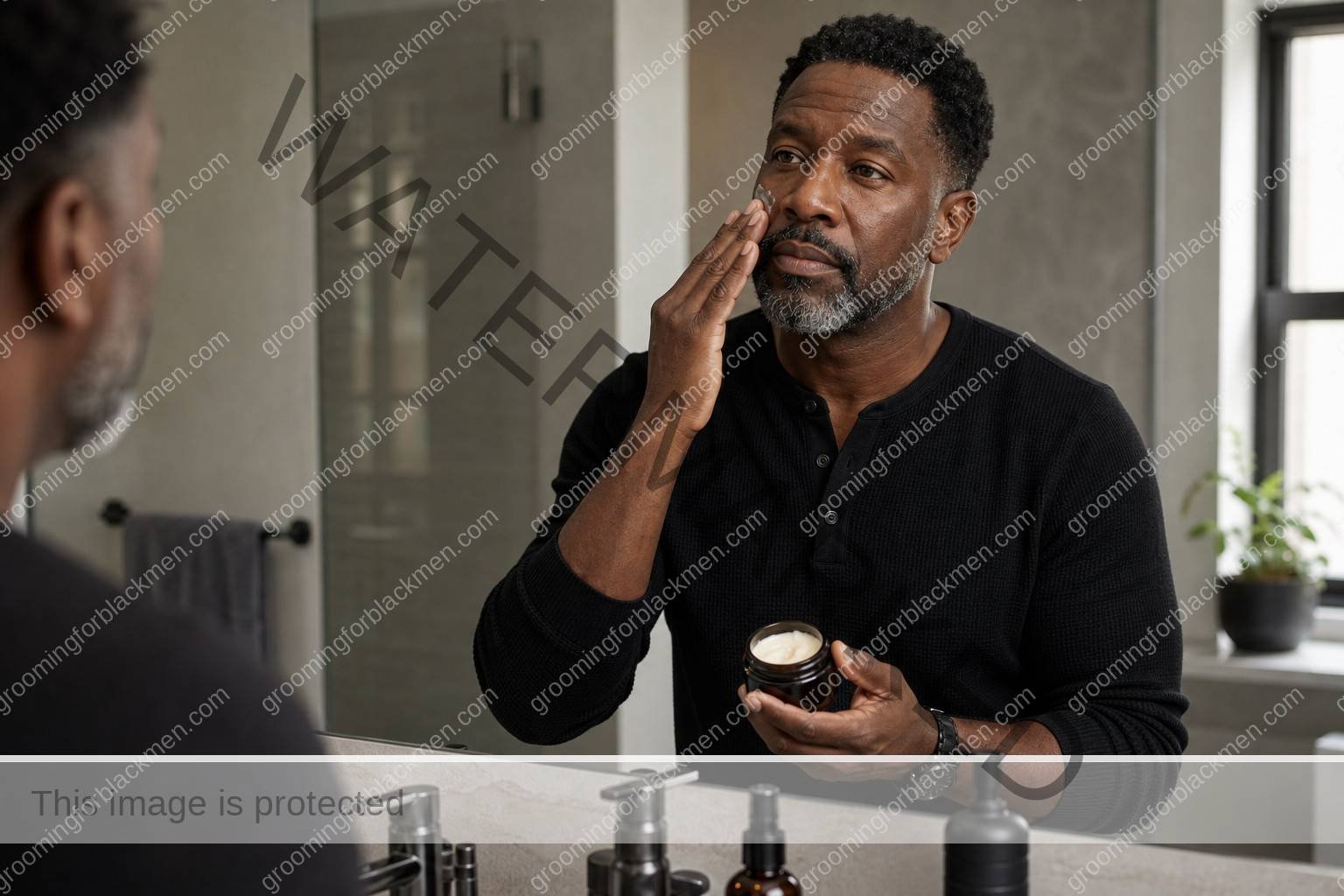
This guide focuses on a sustainable routine for mature skin. The aim is a routine that is clear, repeatable, and comfortable, without unnecessary products or aggressive technique.
Use it to assess dryness, uneven tone, slower recovery, texture, shaving irritation, and loss of firmness. Start with the basics, change one variable at a time, and judge progress over several weeks rather than after one application.
For the broader foundation, use the GFBM skincare hub for Black men.
How to Put This Guide Into Practice
The most useful way to apply this guide is to make one controlled change at a time. Start by writing down what you currently use, how often you use it, and what your skin or hair does during the following twenty-four hours. That short record prevents guesswork. It also helps you separate a product problem from a technique problem, a weather change, or simple inconsistency.
For this topic, the central goal is a sustainable mature-skin routine. Build around that goal before adding optional products. Keep the core routine visible and easy to reach. Store the items in application order, clean the tools that touch your face, and remove anything that repeatedly burns, stings, flakes, or leaves heavy buildup. A routine should be easy to repeat on a rushed morning and a tired night, not only when you have extra time.
Week 1: Establish a Baseline
During the first week, avoid chasing fast results. Use the smallest dependable routine and observe dryness, uneven tone, slower recovery, texture, shaving irritation, and loss of firmness. Take two clear photos in the same lighting: one at the start and one after seven days. Note comfort after cleansing, midday oil or tightness, the condition of the beard and neck, and any new bumps or marks. Do not judge progress from a single mirror check after a bad shave or a long day.
Week 2: Correct Technique Before Buying More
In the second week, examine pressure, timing, product amount, water temperature, and tool cleanliness. Many grooming problems are intensified by rushing, repeated passes, aggressive scrubbing, or using far more product than the skin can comfortably handle. Correcting technique is inexpensive and gives every product a fairer test. If you introduce something new, patch test it and keep the rest of the routine stable.
Week 3: Add One Targeted Upgrade
Choose one upgrade that directly addresses the most important concern you recorded. That may be a gentler cleanser, a lighter or richer moisturizer, a different shaving tool, a targeted treatment, or a sunscreen that blends without a distracting cast. Use it according to the label and resist combining several strong ingredients. When irritation appears, return to the basic routine instead of trying to treat the reaction with more actives.
Week 4: Review Results and Set the Next Month
At the end of four weeks, compare your notes and photos. Look for fewer new bumps, less tightness, better hydration, more predictable oil control, improved comfort, or a routine that is simply easier to complete. Dark marks and texture often require more time, so judge whether the process is moving in the right direction rather than demanding a finished result. Keep what works, remove what does not, and choose only one priority for the next month.
A Practical Decision Framework

| What you notice | Likely adjustment | What not to do |
|---|---|---|
| Burning, persistent stinging, or sudden sensitivity | Pause strong treatments and use a gentle cleanser and moisturizer | Add another acid, scrub, or fragranced product |
| New bumps after shaving | Review beard direction, pressure, blade condition, and shave closeness | Pick the bumps or repeatedly shave over them |
| Dryness or visible ashiness | Use lukewarm water and apply a suitable moisturizer to slightly damp skin | Use harsher soap or longer hot showers |
| Heavy oil or product buildup | Reduce product amount and choose lighter textures | Strip the face several times a day |
| Dark marks that are not improving | Prevent new inflammation, use sunscreen, and stay consistent with one treatment | Scrub aggressively or change products every few days |
Seek a dermatologist when you have painful or cystic acne, spreading irritation, signs of infection, severe or scarring razor bumps, unexplained hair loss, or a skin change that persists. A grooming routine can support healthy habits, but it cannot diagnose or replace medical care.
How Black Men’s Skin Can Change Over Time: Understanding Black Skin Over 40
Melanin-rich skin possesses unique characteristics that offer both advantages and specific considerations, particularly as we mature. The natural abundance of melanin provides a built-in shield against sun damage, often delaying the visible signs of aging like fine lines and wrinkles. However, this doesn’t mean it’s impervious to time or neglect. In fact, Black skin can be more prone to certain concerns that become more pronounced with age, such as hyperpigmentation, dryness, and a loss of elasticity.
As men enter their 40s, hormonal shifts, environmental stressors, and years of accumulated habits begin to manifest. Collagen production, the scaffolding of youthful skin, naturally declines, leading to a subtle slackening. Cell turnover slows, making skin appear duller. And for many Black men, issues like post-inflammatory hyperpigmentation (PIH) from shaving bumps or acne can become more stubborn, leaving behind lasting dark spots. Understanding these nuances is the first step toward crafting a skincare regimen that truly serves your distinguished complexion.
Unique Skincare Challenges for Black Men Over 40
- Hyperpigmentation (Dark Spots): A common concern, often exacerbated by sun exposure, inflammation from shaving, or acne. These spots can be persistent and require targeted treatment.
- Pseudofolliculitis Barbae (Shaving Bumps): While not exclusive to over 40, years of improper shaving techniques can lead to chronic inflammation, ingrown hairs, and subsequent hyperpigmentation.
- Dryness and Ashiness: As skin matures, its ability to retain moisture can diminish, leading to increased dryness, especially in cooler climates or with harsh products.
- Loss of Firmness and Elasticity: The natural decline in collagen and elastin production can lead to a less taut appearance, particularly around the jawline and neck.
- Uneven Skin Tone and Texture: A combination of sun damage, hyperpigmentation, and slower cell turnover can result in a less uniform complexion.
- Sensitivity: Some men may experience increased skin sensitivity with age, reacting to ingredients that were once tolerated.
Building Your Skincare Foundation: The Essential Regimen

A robust skincare routine doesn’t need to be overly complicated. It’s about consistency and selecting the right products for your skin’s unique needs. Think of it as a daily ritual of self-care—a moment to pause, reflect, and nourish the skin that carries you through life.
Step 1: The Gentle Cleanse (Morning & Night)
Cleansing is the cornerstone of any effective skincare routine. It removes impurities, excess oil, and pollutants without stripping the skin of its natural moisture. For mature Black skin, a gentle, hydrating cleanser is paramount.
- Why it’s crucial: Prepares the skin for subsequent products, prevents clogged pores, and maintains a healthy skin barrier.
- What to look for: Creamy, hydrating, or gel-based cleansers that are sulfate-free and non-foaming. Ingredients like glycerin, ceramides, and hyaluronic acid are excellent.
- What to avoid: Harsh soaps, abrasive scrubs, or cleansers with strong detergents that can dry out the skin and exacerbate irritation.
Step 2: The Targeted Treatment (Morning & Night)
This is where you address specific concerns like hyperpigmentation, texture, or fine lines. Serums are concentrated formulations designed to deliver potent active ingredients deep into the skin.
Morning Treatment: Antioxidant Protection
A powerful antioxidant serum in the morning acts as a shield against environmental damage.
- Why it’s crucial: Protects against free radicals from UV radiation and pollution, which contribute to premature aging and hyperpigmentation.
- What to look for: Vitamin C (L-ascorbic acid) is a powerhouse antioxidant that also brightens skin and stimulates collagen. Ferulic acid and Vitamin E enhance its efficacy.
Night Treatment: Repair and Renewal
Nighttime is when your skin goes into repair mode. This is the ideal time to introduce ingredients that promote cell turnover and collagen production.
- Why it’s crucial: Accelerates cell renewal, reduces the appearance of dark spots, smooths texture, and boosts collagen.
- What to look for:
- Retinoids (Retinol, Retinaldehyde): The gold standard for anti-aging. Start with a low concentration a few times a week and gradually increase as tolerated.
- Niacinamide (Vitamin B3): Excellent for reducing inflammation, improving skin barrier function, and fading hyperpigmentation. Can be used daily.
- Alpha Hydroxy Acids (AHAs) like Glycolic or Lactic Acid: Exfoliate the skin’s surface, improving texture and tone. Use a few times a week, alternating with retinoids.
Step 3: The Hydrating Moisturizer (Morning & Night)
Moisturizing is non-negotiable. It locks in hydration, supports the skin barrier, and keeps your skin supple and comfortable.
- Why it’s crucial: Prevents dryness, reduces the appearance of fine lines, and maintains skin elasticity.
- What to look for: Non-comedogenic (won’t clog pores) formulas rich in humectants (hyaluronic acid, glycerin), emollients (ceramides, fatty acids), and occlusives (shea butter, squalane).
- For oily skin: Opt for a lightweight gel-cream.
- For dry skin: Choose a richer cream.
Step 4: The Non-Negotiable SPF (Morning)
This is arguably the most critical step for Black men, regardless of age, but especially over 40. While melanin offers some natural protection, it is not enough to prevent sun damage, hyperpigmentation, or the risk of skin cancer.
- Why it’s crucial: Prevents premature aging, dark spots from worsening, and protects against skin cancer.
- What to look for: A broad-spectrum SPF 30 or higher. Mineral sunscreens (zinc oxide, titanium dioxide) are often preferred as they are less irritating and can leave less of a white cast with newer formulations. Look for tinted versions or those designed for darker skin tones.
Beyond the Basics: Advanced Care for the Mature Man
Once your foundational routine is established, consider incorporating these elements for an elevated approach to skincare.
Targeting the Eye Area
The skin around the eyes is thinner and more delicate, making it prone to fine lines, puffiness, and dark circles. A dedicated eye cream can make a noticeable difference.
- What to look for: Ingredients like peptides (for firmness), hyaluronic acid (for hydration), caffeine (for puffiness), and Vitamin C or K (for dark circles).
- Application: Gently tap a small amount with your ring finger around the orbital bone, morning and night.
Exfoliation: The Key to Radiance
Regular exfoliation helps remove dead skin cells, revealing brighter, smoother skin and allowing other products to penetrate more effectively. For Black men over 40, gentle chemical exfoliants are often preferred over harsh physical scrubs.
- Chemical Exfoliants (AHAs/BHAs):
- AHAs (Glycolic, Lactic Acid): Work on the skin’s surface to improve texture and tone. Good for hyperpigmentation and dullness.
- BHAs (Salicylic Acid): Penetrate oil to unclog pores, excellent for men prone to ingrown hairs or breakouts.
- Frequency: 1-3 times a week, depending on skin sensitivity and other active ingredients in your routine.
Masks: A Weekly Indulgence
Facial masks offer a concentrated boost of beneficial ingredients. Consider incorporating one into your weekly routine.
- Hydrating Masks: For dryness and dullness.
- Clay Masks: For excess oil and pore purification (use sparingly if skin is dry).
- Brightening Masks: To address hyperpigmentation and uneven tone.
The Art of Shaving: A Ritual, Not a Chore
For many Black men, shaving can be a source of irritation and ingrown hairs. Mastering the art of shaving is crucial for maintaining clear, healthy skin, especially as you age.
Pre-Shave Preparation
Proper preparation is key to a comfortable shave and preventing irritation.
- Warm Shower/Hot Towel: Softens hair andsoften facial hair and loosen surface buildup.
- Pre-Shave Oil: Creates a protective barrier, allowing the razor to glide smoothly.
The Shave Itself
- Sharp Razor: Always use a fresh, sharp blade. Dull blades tug and pull, leading to irritation. Consider a single-blade safety razor or an electric shaver designed for sensitive skin.
- Shaving Cream/Gel: Opt for a rich, moisturizing formula that creates a thick lather. Avoid aerosol foams with harsh chemicals.
- Shave with the Grain: Shave in the direction of hair growth to minimize irritation and ingrown hairs. If a closer shave is desired, a second pass across the grain can be done carefully.
- Rinse Blade Frequently: Keeps the blade clear of hair and shaving cream.
Post-Shave Care
Soothe and protect your skin immediately after shaving.
- Cold Rinse: cool and calm the skin and calms the skin.
- Aftershave Balm (Alcohol-Free): Hydrates, soothes, and reduces redness. Avoid alcohol-based aftershaves that can dry out and irritate the skin.
- Targeted Treatment: If prone to ingrown hairs, apply a product with salicylic acid or glycolic acid to prevent bumps.
Holistic Wellness: Beyond the Bottle

True skin health is an inside-out endeavor. What you put into your body and how you live your life profoundly impacts your complexion.
Nutrition for Radiant Skin
A balanced diet rich in antioxidants, healthy fats, and lean proteins is fundamental.
- Antioxidants: Berries, leafy greens, colorful vegetables protect against cellular damage.
- Omega-3 Fatty Acids: Salmon, flaxseeds, walnuts reduce inflammation and support skin barrier function.
- Water: Stay hydrated! It keeps skin plump and aids in cleansing and rebalancing.
- Limit: Processed foods, excessive sugar, and alcohol, which can contribute to inflammation and breakouts.
The Power of Sleep
Adequate sleep is when your body repairs and regenerates. Aim for 7-9 hours of quality sleep per night.
- Benefits: Reduces dark circles, improves skin tone, and allows for optimal product absorption.
- Tip: Change your pillowcase regularly to prevent bacterial buildup.
Stress Management
Chronic stress can trigger hormonal imbalances, leading to breakouts, dullness, and accelerated aging.
- Techniques: Meditation, exercise, spending time in nature, hobbies, or deep breathing can help manage stress levels.
Regular Exercise
Boosts circulation, delivering oxygen and nutrients to skin cells, and helps support overall health.
- Tip: Always cleanse your face after a workout to prevent sweat and bacteria from clogging pores.
Putting It All Together: Your Daily Regimen at a Glance
Consistency is the secret ingredient to seeing results. Here’s a simplified overview of your daily and weekly routine.
| Time of Day | Step | Product Type | Purpose |
|---|---|---|---|
| Morning Routine | 1. Cleanse | Gentle Hydrating Cleanser | Removes overnight impurities |
| 2. Treat | Vitamin C Serum | Antioxidant protection, brightening | |
| 3. Moisturize | Hydrating Moisturizer + Eye Cream | Locks in moisture, targets delicate eye area | |
| 4. Protect | Broad-Spectrum SPF 30+ | Shields from UV damage and hyperpigmentation | |
| Evening Routine | 1. Cleanse | Gentle Hydrating Cleanser | Removes sunscreen or grooming products, dirt, and oil from the day |
| 2. Treat | Retinoid or Niacinamide Serum | Cell renewal, anti-aging, hyperpigmentation | |
| 3. Moisturize | Hydrating Moisturizer + Eye Cream | Nourishes and repairs overnight | |
| Weekly Additions | Exfoliate (1-3x/week) | AHA/BHA Exfoliant | Removes dead skin, improves texture |
| Mask (1x/week) | Hydrating or Brightening Mask | Targeted boost for specific concerns |
Navigating Product Choices: Ingredients to Embrace and Avoid
Understanding ingredients empowers you to make informed decisions for your skin.
Key Ingredients to Seek Out
- Hyaluronic Acid: A powerful humectant that draws and holds moisture in the skin, keeping it plump and hydrated.
- Glycerin: Another excellent humectant, often found in cleansers and moisturizers.
- Ceramides: Essential lipids that form the skin’s barrier, helping to retain moisture and protect against environmental aggressors.
- Niacinamide (Vitamin B3): Reduces inflammation, minimizes pore appearance, improves skin tone, and strengthens the skin barrier.
- Vitamin C (L-Ascorbic Acid): A potent antioxidant that brightens skin, fades dark spots, and boosts collagen production.
- Retinoids (Retinol, Retinaldehyde): Vitamin A derivatives that accelerate cell turnover, reduce wrinkles, and improve skin texture and tone.
- Alpha Hydroxy Acids (AHAs – Glycolic, Lactic Acid): Exfoliate the skin’s surface, improving brightness and texture.
- Beta Hydroxy Acids (BHAs – Salicylic Acid): Oil-soluble exfoliant that penetrates pores, ideal for acne and ingrown hairs.
- Peptides: Small chains of amino acids that signal the skin to produce more collagen, improving firmness.
- Shea Butter, Squalane, Jojoba Oil: Emollients that provide deep hydration and nourish the skin.
- Zinc Oxide & Titanium Dioxide: Mineral sunscreen ingredients that provide broad-spectrum UV protection with minimal irritation.
Ingredients to Approach with Caution or Avoid
- Harsh Sulfates (e.g., Sodium Lauryl Sulfate): Can strip natural oils, leading to dryness and irritation.
- High Concentrations of Alcohol (e.g., Alcohol Denat., Isopropyl Alcohol): Can be drying and irritating, especially in aftershaves.
- Artificial Fragrances and Dyes: Common irritants that can cause sensitivity and allergic reactions.
- Abrasive Physical Scrubs: Can create micro-tears in the skin, leading to irritation and potentially worsening hyperpigmentation.
- Parabens (Controversial): While not universally harmful, some prefer to avoid them due to potential endocrine disruption concerns.
- Phthalates (Controversial): Similar to parabens, often avoided for potential health concerns.
When to Seek Professional Guidance
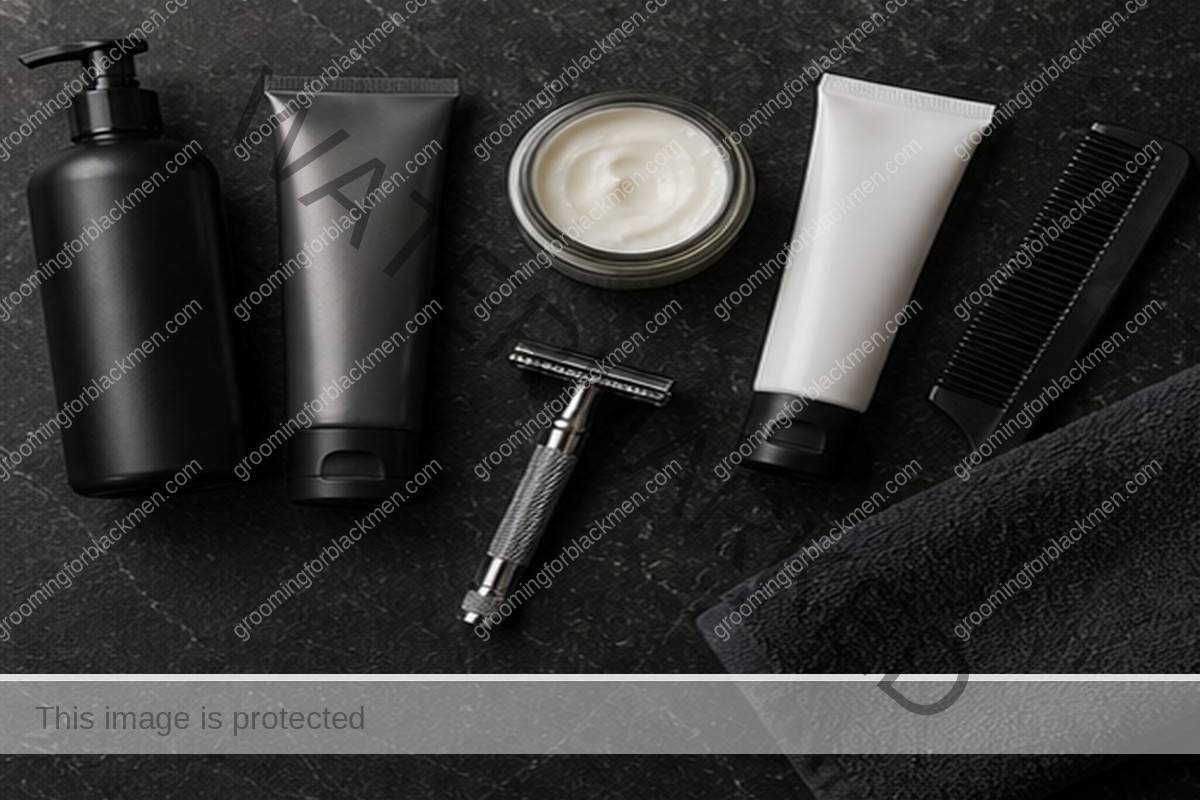
While a consistent at-home routine is powerful, there are times when consulting a professional dermatologist is beneficial.
- Persistent Acne or Breakouts: If over-the-counter solutions aren’t working.
- Stubborn Hyperpigmentation: A dermatologist can offer stronger prescription treatments or in-office procedures like chemical peels or laser therapy.
- Chronic Ingrown Hairs/Pseudofolliculitis Barbae: A professional can provide solutions and advice for managing this condition.
- Unusual Moles or Skin Changes: Regular skin checks are crucial for early detection of skin cancer.
- Advanced Anti-Aging Concerns: For deeper wrinkles, significant loss of firmness, or other concerns that require more intensive treatments.
Related GFBM Guides
Use these guides to extend the routine without adding unrelated steps:
- dry and ashy skin guide
- no-white-cast sunscreen guide
- dark-spots hub
- skin-barrier repair guide
- sensitive-skin hub
Product Categories Worth Comparing
Affiliate disclosure: GFBM may earn a commission from qualifying Amazon purchases, at no extra cost to you.
Choose by function rather than hype. Patch test leave-on products, introduce one change at a time, and stop using anything that causes persistent burning, swelling, or worsening irritation.
- Hydrating Cleanser: compare ingredient lists, fragrance level, texture, and return policy before buying. Browse hydrating cleanser options on Amazon.
- Beginner Retinol: compare ingredient lists, fragrance level, texture, and return policy before buying. Browse beginner retinol options on Amazon.
- No-Cast Sunscreen: compare ingredient lists, fragrance level, texture, and return policy before buying. Browse no-cast sunscreen options on Amazon.
Frequently Asked Questions About Skincare for Black Men Over 40
Q1: Is SPF really necessary for Black men, especially if I don’t burn easily?
A: Absolutely, yes. While melanin provides some natural protection, it is not a complete shield against harmful UV rays. Black skin can still experience sun damage, which manifests as hyperpigmentation (dark spots), uneven skin tone, premature aging (fine lines and loss of elasticity), and, most critically, an increased risk of skin cancer. Skin cancer in Black individuals is often diagnosed at later, more dangerous stages due to the misconception that it doesn’t affect darker skin. Daily use of a broad-spectrum SPF 30 or higher is non-negotiable for preserving skin health and preventing future damage.
Q2: My skin feels dry and ashy, even after moisturizing. What am I doing wrong?
A: Several factors could be contributing to persistent dryness. First, check your cleanser—are you using a harsh, stripping formula? Switch to a gentle, hydrating, sulfate-free cleanser. Second, ensure your moisturizer is rich enough for your skin type; look for ingredients like ceramides, hyaluronic acid, shea butter, or squalane. Third, consider adding a hydrating serum with hyaluronic acid underneath your moisturizer to draw more moisture into the skin. Lastly, environmental factors (dry air, hot showers) and internal hydration (not drinking enough water) also play a significant role. Exfoliating 1-2 times a week can also help remove dead skin cells that prevent moisturizers from penetrating effectively.
Q3: How can I effectively reduce dark spots and hyperpigmentation?
A: Addressing hyperpigmentation requires a multi-pronged approach and patience.
- Sun Protection: This is paramount. Without consistent SPF, any efforts to fade dark spots will be undermined.
- Exfoliation: Gentle chemical exfoliants like AHAs (glycolic, lactic acid) or BHAs (salicylic acid) can help shed pigmented skin cells.
- Brightening Ingredients: Incorporate serums with ingredients like Vitamin C, Niacinamide, Alpha Arbutin, Kojic Acid, or Azelaic Acid. These ingredients inhibit melanin production.
- Retinoids: Over-the-counter retinol or prescription retinoids accelerate cell turnover, helping to fade dark spots over time.
- Patience: Hyperpigmentation can take months to fade. Consistency is key. For stubborn spots, a dermatologist can recommend stronger prescription creams or in-office treatments.
Q4: What’s the best way to prevent shaving bumps and ingrown hairs?
A: Preventing pseudofolliculitis barbae (shaving bumps) is crucial for Black men.
- Preparation: Always shave after a warm shower or with a hot towel to soften hair. Use a pre-shave oil to create a protective barrier.
- Sharp Blade: Use a fresh, sharp single-blade safety razor, or an electric shaver designed for sensitive skin. Multi-blade razors can cut hair too short, allowing it to curl back into the skin.
- Shave with the Grain: Always shave in the direction of hair growth. Avoid stretching the skin tightly.
- Moisturizing Shave Cream: Use a rich, lubricating shaving cream, not a drying foam.
- Post-Shave Care: Rinse with cold water, then apply an alcohol-free aftershave balm. Consider a product with salicylic acid or glycolic acid to keep pores clear and prevent ingrowns.
- Consider Alternatives: For severe cases, consider growing a beard, using depilatories (with caution), or laser hair removal.
Q5: At what age should I start using anti-aging products like retinol?
A: While many start in their late 20s or early 30s, it’s never too late to begin! For men over 40, incorporating anti-aging ingredients like retinoids (retinol or retinaldehyde) is highly beneficial. Retinoids are proven to reduce fine lines, wrinkles, improve skin texture, and fade hyperpigmentation by boosting collagen production and accelerating cell turnover. Start with a low concentration (e.g., 0.25% or 0.3%) a few times a week, gradually increasing frequency and strength as your skin tolerates it. Always use SPF during the day when using retinoids, as they can increase sun sensitivity.
Q6: My skin is sensitive. Are there specific ingredients I should avoid or look for?
A: Yes, sensitive skin requires a more careful approach.
- Avoid: High concentrations of alcohol (especially in aftershaves), strong artificial fragrances, harsh sulfates, and abrasive physical scrubs.
- Look For:
- Gentle Cleansers: Creamy, hydrating, sulfate-free formulas.
- Soothing Ingredients: Niacinamide, ceramides, hyaluronic acid, colloidal oatmeal, aloe vera, centella asiatica (Cica).
- Mineral Sunscreens: Zinc oxide and titanium dioxide are generally less irritating than chemical sunscreens.
- Patch Testing: Always patch test new products on a small area of skin before applying them all over your face.
- Introduce Actives Slowly: When introducing new active ingredients like retinoids or AHAs, start with a lower concentration and use them less frequently to build tolerance.
Q7: How often should I exfoliate, and what type is best for Black skin over 40?
A: For mature Black skin, gentle chemical exfoliation is generally preferred over harsh physical scrubs, which can cause micro-tears and worsen hyperpigmentation.
- Type: Look for AHAs (Alpha Hydroxy Acids) like glycolic or lactic acid for surface exfoliation and brightening, or BHAs (Beta Hydroxy Acids) like salicylic acid if you’re prone to ingrown hairs or clogged pores.
- Frequency: Start with 1-2 times a week. If your skin tolerates it well and you’re not using other strong actives (like daily retinoids), you might increase to 3 times a week. Listen to your skin—if you experience redness, dryness, or irritation, reduce frequency.
- Caution: If you’re using a retinoid, alternate your exfoliant on different nights, or use a very gentle exfoliant on non-retinoid nights to avoid over-exfoliation.
Embrace Your Radiance: A Final Word

Keep the routine centered on a sustainable routine for mature skin. Consistent basics, careful technique, and measured changes will do more than a crowded shelf. Review your results monthly, remove steps that repeatedly cause irritation, and get professional help for painful, infected, scarring, or persistent symptoms.
Build the Supporting Routine
Use the simple three-step skincare routine for Black men as the foundation. If you are unsure how rich or light your products should feel, first identify your skin type.
Before adding a leave-on treatment, follow the GFBM patch-test process. Men dealing with shaving irritation should also review the guide to preventing razor bumps on Black skin.