

Brush and Comb for Black Men: Practical Grooming Guide
When it comes to grooming for Black men, the right brush and comb aren’t just nice-to-haves—they’re essential tools for maintaining a healthy, sharp beard. If you’ve got rich brown skin and coarse or curly facial hair, you already know that generic advice doesn’t cut it. Your beard deserves more than a one-size-fits-all approach. The right grooming tools can mean the difference between an even, comfortable beard and a patchy, irritated mess. This guide breaks down what actually works, what to avoid, and how to build a routine that respects your texture, your time, and your look.
Whether you’re growing your beard for the first time or you’ve been at it for years, you’ll face unique challenges: dryness, tangles, ingrown hairs, and uneven growth. The brush and comb you choose—and how you use them—can help address these issues without causing damage or discomfort. Forget miracle claims and influencer hype. This is about practical, disciplined beard care that fits real routines and real results.
We’ll cover why brush and comb selection matters specifically for Black men, common mistakes that hold you back, and what to do instead. You’ll get clear criteria for choosing tools, troubleshooting tips, and honest answers to the most common questions. If you want to level up your beard game without the guesswork, you’re in the right place. For a broader look at beard care, check out our Beard Care & Beard Growth pillar.
Real-Life Beard Routine Scenarios for Brush and Comb for Black Men
A strong beard routine has to work outside of perfect bathroom-counter conditions. It has to work when you are rushing before work, when your beard feels dry after a long day, when the weather changes, and when your barber has shaped the line cleaner than you expected. For Black men, that routine also has to respect dense curls, coarse strands, sensitive skin under the beard, and the fact that product buildup can hide until the beard starts itching, flaking, or looking dull.
Start by reading the beard before adding more product. If the beard feels rough but the skin underneath is calm, you may need better conditioning, a lighter oil, or more consistent brushing. If the skin feels tight, itchy, or irritated, the answer is usually not more shine. It may be a gentler wash schedule, a cleaner rinse, a lighter hand with balm, or a pause from heavy fragrance. The discipline is in changing one variable at a time so you can tell what actually helped.
For a short beard, keep the routine direct: cleanse when needed, moisturize the skin beneath, use a small amount of oil or balm, and brush enough to distribute product without scraping the skin. For a fuller beard, section the work. Apply product from the skin outward, then shape the hair so the surface looks neat without leaving the roots dry. The fuller the beard gets, the more important it becomes to separate grooming from coating. A beard can look shiny and still be dehydrated underneath.
Budget matters too. You do not need a crowded shelf to manage brush and comb for black men. A dependable wash, one conditioning product, and one tool you actually use will outperform five products that fight each other. If money is tight, upgrade the item that touches your skin or beard most often. If time is tight, simplify the routine instead of skipping care entirely. Consistency beats a complicated plan that only happens twice a month.
How to Audit Your Beard Without Overreacting
Give any beard change enough time to show a pattern. One dry morning does not mean the routine failed. One good beard day does not mean every product is perfect. Track how your beard feels after washing, how the skin underneath feels at night, whether flakes return quickly, and whether the beard holds shape without becoming stiff. Those signals tell you more than packaging claims or social media routines built for a different texture.
If irritation shows up, simplify. Remove the newest product first, reduce fragrance, avoid scratching, and return to a basic cleanse-and-moisturize rhythm. If flakes, soreness, bleeding, swelling, or persistent itching keep coming back, that is a reason to get professional help rather than forcing stronger products into the routine. Grooming should make you look more put together, but it should also leave your skin calmer over time.
Real-Life Beard Routine Scenarios for Brush and Comb for Black Men
A strong beard routine has to work outside of perfect bathroom-counter conditions. It has to work when you are rushing before work, when your beard feels dry after a long day, when the weather changes, and when your barber has shaped the line cleaner than you expected. For Black men, that routine also has to respect dense curls, coarse strands, sensitive skin under the beard, and the fact that product buildup can hide until the beard starts itching, flaking, or looking dull.
Start by reading the beard before adding more product. If the beard feels rough but the skin underneath is calm, you may need better conditioning, a lighter oil, or more consistent brushing. If the skin feels tight, itchy, or irritated, the answer is usually not more shine. It may be a gentler wash schedule, a cleaner rinse, a lighter hand with balm, or a pause from heavy fragrance. The discipline is in changing one variable at a time so you can tell what actually helped.
For a short beard, keep the routine direct: cleanse when needed, moisturize the skin beneath, use a small amount of oil or balm, and brush enough to distribute product without scraping the skin. For a fuller beard, section the work. Apply product from the skin outward, then shape the hair so the surface looks neat without leaving the roots dry. The fuller the beard gets, the more important it becomes to separate grooming from coating. A beard can look shiny and still be dehydrated underneath.
Budget matters too. You do not need a crowded shelf to manage brush and comb for black men. A dependable wash, one conditioning product, and one tool you actually use will outperform five products that fight each other. If money is tight, upgrade the item that touches your skin or beard most often. If time is tight, simplify the routine instead of skipping care entirely. Consistency beats a complicated plan that only happens twice a month.
How to Audit Your Beard Without Overreacting
Give any beard change enough time to show a pattern. One dry morning does not mean the routine failed. One good beard day does not mean every product is perfect. Track how your beard feels after washing, how the skin underneath feels at night, whether flakes return quickly, and whether the beard holds shape without becoming stiff. Those signals tell you more than packaging claims or social media routines built for a different texture.
If irritation shows up, simplify. Remove the newest product first, reduce fragrance, avoid scratching, and return to a basic cleanse-and-moisturize rhythm. If flakes, soreness, bleeding, swelling, or persistent itching keep coming back, that is a reason to get professional help rather than forcing stronger products into the routine. Grooming should make you look more put together, but it should also leave your skin calmer over time.
Real-Life Beard Routine Scenarios for Brush and Comb for Black Men
A strong beard routine has to work outside of perfect bathroom-counter conditions. It has to work when you are rushing before work, when your beard feels dry after a long day, when the weather changes, and when your barber has shaped the line cleaner than you expected. For Black men, that routine also has to respect dense curls, coarse strands, sensitive skin under the beard, and the fact that product buildup can hide until the beard starts itching, flaking, or looking dull.
Start by reading the beard before adding more product. If the beard feels rough but the skin underneath is calm, you may need better conditioning, a lighter oil, or more consistent brushing. If the skin feels tight, itchy, or irritated, the answer is usually not more shine. It may be a gentler wash schedule, a cleaner rinse, a lighter hand with balm, or a pause from heavy fragrance. The discipline is in changing one variable at a time so you can tell what actually helped.
For a short beard, keep the routine direct: cleanse when needed, moisturize the skin beneath, use a small amount of oil or balm, and brush enough to distribute product without scraping the skin. For a fuller beard, section the work. Apply product from the skin outward, then shape the hair so the surface looks neat without leaving the roots dry. The fuller the beard gets, the more important it becomes to separate grooming from coating. A beard can look shiny and still be dehydrated underneath.
Budget matters too. You do not need a crowded shelf to manage brush and comb for black men. A dependable wash, one conditioning product, and one tool you actually use will outperform five products that fight each other. If money is tight, upgrade the item that touches your skin or beard most often. If time is tight, simplify the routine instead of skipping care entirely. Consistency beats a complicated plan that only happens twice a month.
How to Audit Your Beard Without Overreacting
Give any beard change enough time to show a pattern. One dry morning does not mean the routine failed. One good beard day does not mean every product is perfect. Track how your beard feels after washing, how the skin underneath feels at night, whether flakes return quickly, and whether the beard holds shape without becoming stiff. Those signals tell you more than packaging claims or social media routines built for a different texture.
If irritation shows up, simplify. Remove the newest product first, reduce fragrance, avoid scratching, and return to a basic cleanse-and-moisturize rhythm. If flakes, soreness, bleeding, swelling, or persistent itching keep coming back, that is a reason to get professional help rather than forcing stronger products into the routine. Grooming should make you look more put together, but it should also leave your skin calmer over time.
Why This Matters for Black Men

Coarse, curly, or tightly coiled facial hair is common among Black men. This texture is both a strength and a challenge. It’s resilient, but it also demands respect—especially when it comes to grooming. The wrong brush or comb can snag, break, or irritate your beard and skin. The right tools, on the other hand, help distribute natural oils, detangle without damage, and keep your beard looking full and healthy.
Here’s why this matters:
- Texture-specific needs: Coarse and curly beards are more prone to dryness, knots, and ingrown hairs. Standard plastic combs or hard brushes can make things worse.
- Even growth and shape: Regular, gentle brushing and combing can help train your beard to grow in the direction you want, reducing patchiness and uneven spots.
- Skin health: The right brush or comb helps exfoliate the skin beneath your beard, preventing buildup and irritation—key for avoiding beard dandruff and itch. For more on this, see our beard dandruff guide and beard itch guide.
- Respect for your look: Your beard is part of your identity. The right tools help you maintain a sharp, disciplined appearance that fits your style and culture.
Grooming is about more than just appearance—it’s about comfort, confidence, and self-respect. That’s why choosing the right brush and comb is a foundational move in any beard care routine for Black men.
What Usually Goes Wrong

Most problems with beard grooming for Black men come down to using the wrong tools or using them the wrong way. Here are the most common issues:
- Breakage and split ends: Cheap plastic combs or stiff brushes can snag and break coarse hair, leading to split ends and a scraggly look.
- Ingrown hairs: Aggressive brushing or combing, especially against the grain, can push hairs back into the skin, causing painful bumps and irritation.
- Dryness and flaking: Over-brushing or using harsh tools strips away natural oils, leaving your beard dry and your skin flaky. This can make beard dandruff worse.
- Uneven growth and patchiness: Inconsistent grooming or using the wrong technique can cause your beard to grow in unevenly, with some areas looking fuller than others. For more on this, see our patchy beard fixes.
- Irritation and discomfort: Using tools that are too rough or not designed for your hair type can leave your skin red, sore, or itchy.
Many men also fall for marketing hype—buying expensive tools that don’t suit their beard type or skipping essential steps in their routine. The result? Frustration, wasted money, and a beard that never quite looks or feels right.
What to Do Instead

Building a disciplined, effective beard grooming routine starts with the right brush and comb—and knowing how to use them. Here’s what works for Black men with coarse or curly facial hair:
- Choose the right brush: Opt for a natural boar bristle brush or a high-quality synthetic designed for coarse hair. These brushes are gentle, distribute oils evenly, and help detangle without causing breakage.
- Pick a wide-tooth comb: Avoid fine-tooth plastic combs. Instead, use a wide-tooth comb made from wood or hard rubber, which glides through thick hair without snagging.
- Brush and comb when moisturized: Always brush or comb your beard after applying beard oil, balm, or butter. This reduces friction, prevents breakage, and helps distribute moisture. For help choosing products, see our best beard oils and beard oil vs balm vs butter guides.
- Work in sections: If your beard is thick or long, divide it into sections and work through each one gently, starting at the ends and moving toward the roots.
- Be consistent: Regular, gentle brushing and combing—once or twice a day—is enough for most men. Overdoing it can cause more harm than good.
- Clean your tools: Wash your brush and comb regularly to remove oil, product buildup, and shed hairs. This keeps your tools effective and your beard cleaner.
For a step-by-step routine, see our beginner beard routine. If you’re shaping your beard, combine brushing and combing with careful trimming—see how to shape your beard for practical tips.
Choosing the Right Tools: Decision Criteria That Matter
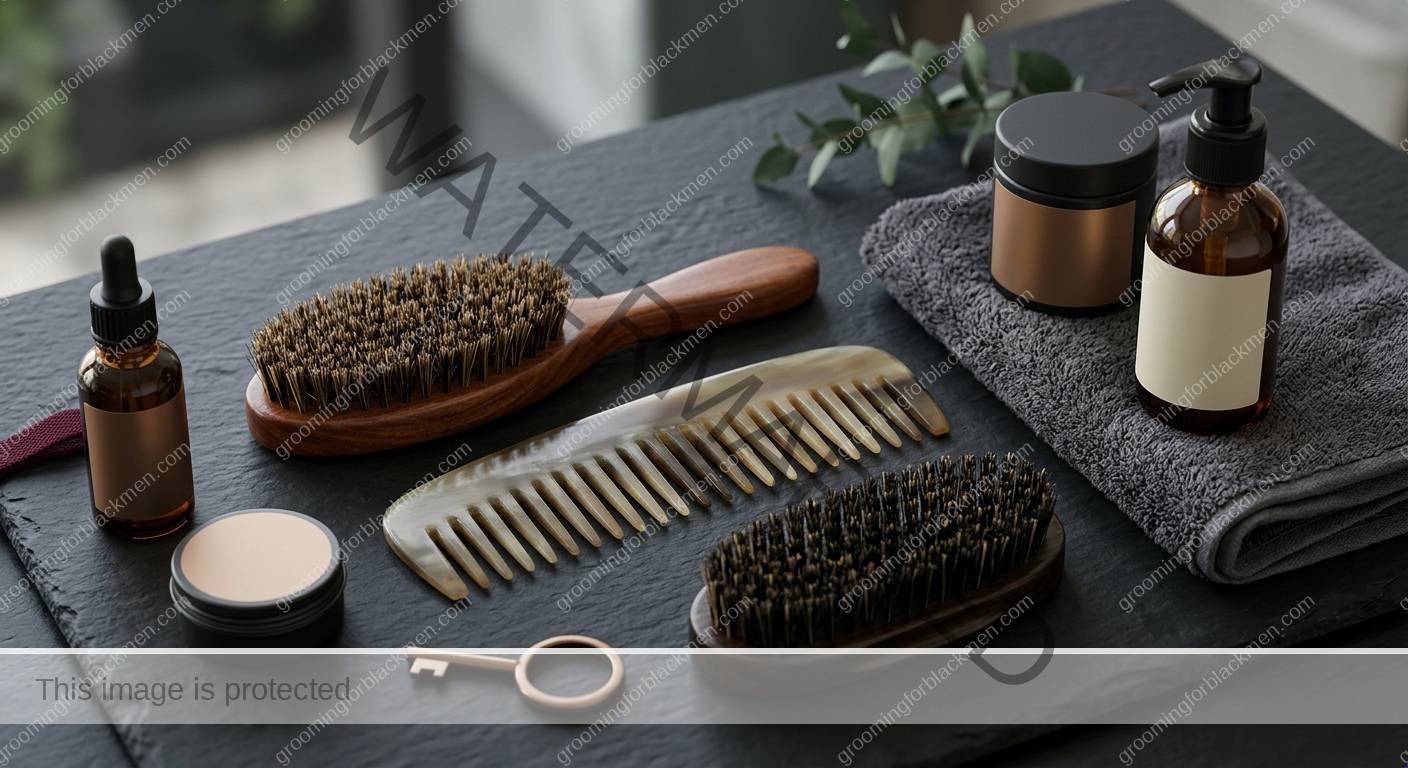
Not all brushes and combs are created equal. Your beard’s health and look depend on tools that respect your hair’s density, curl pattern, and your skin’s needs. Here’s what to look for when choosing tools for your beard:
- Bristle type: For brushes, natural boar bristles are ideal—they’re firm enough to penetrate coarse hair but gentle on skin. Synthetic bristles can work if they’re soft and densely packed.
- Comb material: Wood and hard rubber combs are best for coarse beards. They reduce static, glide smoothly, and are less likely to snag or break hair.
- Tooth width: Wide-tooth combs are essential for detangling thick, curly hair. Fine-tooth combs can cause breakage and discomfort.
- Handle comfort: Choose tools with ergonomic handles that fit comfortably in your hand—this makes regular grooming easier and more precise.
- Build quality: Invest in sturdy, well-made tools. Cheap plastic combs and flimsy brushes wear out quickly and can damage your beard.
Consider your beard’s length, density, and your daily routine. If you have a short beard, a small boar bristle brush may be enough. For medium to long beards, a wide-tooth comb is essential for detangling before brushing. If you travel, look for compact, durable tools that fit your lifestyle.
GFBM may earn a small commission from qualifying purchases, but product examples are included to clarify criteria, not to promise results.
- For a range of beard brushes designed for Black men, see this Amazon search.
- For combs built for coarse beards, check this Amazon search.
- If you prefer a boar bristle beard brush, browse these options.
Remember: the best tool is the one that fits your beard, your hands, and your routine. Don’t get distracted by hype—focus on quality and practicality.
Step-by-Step Beard Grooming Routine for Black Men
Consistency and technique matter as much as the tools themselves. Here’s a practical, disciplined routine that respects your time and delivers real results:
- Cleanse: Start with a gentle beard wash or mild cleanser. Avoid harsh soaps that strip away natural oils. Pat your beard dry with a towel—don’t rub.
- Moisturize: Apply beard oil, balm, or butter while your beard is still slightly damp. Focus on working the product into both your hair and the skin beneath.
- Detangle: Use your fingers first to gently separate any major knots, especially if your beard is long or tightly curled.
- Comb: With a wide-tooth comb, start at the ends and work upward toward the roots. Move slowly and don’t force through tough tangles—add more product if needed.
- Brush: After detangling, use a boar bristle brush to distribute oils and shape your beard. Brush in the direction you want your beard to grow. For most men, that’s downward on the cheeks and chin, outward on the sides, and downward on the neck.
- Shape and finish: If you trim or line up your beard, do so after brushing and combing, when your beard is at its fullest and most even. For shaping tips, see how to shape your beard.
- Clean your tools: Remove shed hairs after each use. Wash your brush and comb weekly with warm water and mild soap or beard shampoo. Rinse thoroughly and let them air dry.
For more on building a routine from scratch, visit our beginner beard routine. If you’re focused on growth, see our beard growth strategies.
Real-Life Scenarios: Adapting Your Routine
Your lifestyle, climate, and beard goals all affect how you use your brush and comb. Here’s how to adapt:
- Active lifestyle: If you sweat often or wear a mask daily, cleanse and moisturize more frequently. Carry a travel-sized comb for quick touch-ups and to prevent matting.
- Dry or cold climates: Use richer beard butters and avoid over-washing. Brush gently to avoid static and breakage.
- Busy mornings: Prioritize moisturizing and quick detangling with a wide-tooth comb. Save detailed brushing for evenings when you have more time.
- Growing out a new beard: Focus on gentle combing and avoid over-brushing. Let your beard fill in naturally and be patient with patchy areas—see patchy beard fixes for more.
- Dealing with razor bumps: Avoid aggressive brushing or combing over irritated areas. Use a soft brush and keep your tools clean to prevent further irritation. For more, see our razor bump guide.
Adapting your routine to your real life means fewer setbacks and better results. Don’t be afraid to adjust frequency, technique, or products as your needs change.
Troubleshooting and When to Get Help

Even with the right tools and routine, you might run into issues. Here’s how to handle common problems:
- Persistent breakage or split ends: Double-check your technique and tool quality. Make sure you’re not brushing too aggressively or on a dry beard. Trim split ends regularly to prevent further damage.
- Ingrown hairs: Use a gentle, wide-tooth comb and avoid digging or picking at bumps. If ingrowns become painful, infected, or widespread, see a dermatologist or qualified clinician.
- Dryness and flaking: Make sure you’re moisturizing before brushing or combing. If you still have issues, review your beard wash routine—over-washing can strip natural oils. See our beard wash frequency guide for more.
- Redness or irritation: Switch to a softer brush or a comb with smoother teeth. Avoid alcohol-heavy products and aggressive scrubbing.
- Unmanageable tangles: Apply more beard oil or butter, use your fingers to gently separate knots, and work in small sections with a wide-tooth comb.
If you notice pain, infection, spreading bumps, scarring, or persistent irritation that doesn’t improve with good grooming habits, consult a dermatologist or qualified clinician. Don’t risk your skin or beard health with harsh DIY fixes or unproven treatments.
Frequently Asked Questions
How often should Black men brush or comb their beard?
Once or twice a day is enough for most men. Over-brushing can cause breakage and irritation, especially with coarse or curly hair. Aim for consistency and use gentle, even strokes—always after moisturizing.
Should I use a brush or a comb for my beard?
Both have their place. Use a wide-tooth comb for detangling and a boar bristle brush for distributing oils and shaping. Many men use a comb first, then finish with a brush for a fuller look.
Can brushing or combing help my beard grow?
Brushing and combing won’t make your beard grow faster, but they can help train your beard to grow evenly and look fuller. They also help distribute oils, which supports healthier hair and skin.
What’s the best way to clean my beard brush and comb?
Remove shed hairs after each use. Wash brushes and combs weekly with warm water and a mild soap or beard shampoo. Rinse thoroughly and let them air dry. This prevents buildup and keeps your tools working well.
Is it bad to brush or comb a dry beard?
Yes—brushing or combing dry, coarse hair increases the risk of breakage and split ends. Always apply beard oil, balm, or butter first to reduce friction and protect your hair.
What should I do if my beard is patchy?
Focus on gentle grooming, regular moisturizing, and patience. Avoid over-brushing or trying to force growth in patchy areas. For more practical strategies, see our patchy beard fixes.
How do I know if I need a new brush or comb?
If your brush or comb has missing bristles, rough edges, or causes discomfort, it’s time for a replacement. High-quality tools last longer, but regular inspection ensures you’re not causing unnecessary damage to your beard.
What to Do Next
Ready to upgrade your grooming routine? Start by assessing your current tools. If you’re using a cheap plastic comb or a stiff, synthetic brush, it’s time to switch. Invest in a quality boar bristle brush and a wide-tooth wooden or hard rubber comb. Use them consistently, always after moisturizing, and clean them regularly.
If you’re new to beard care or want to tighten up your approach, check out our beginner beard routine for a step-by-step guide. For more on choosing the best tools, see our best beard brush and comb breakdown. If you’re dealing with specific issues like beard dandruff, itch, or shaping, explore our targeted guides linked above.
Grooming for Black men is about discipline, respect, and practical care. With the right brush and comb, you’re not just maintaining your beard—you’re investing in your comfort, confidence, and style.