
Waves Troubleshooting for Black Men: Practical Grooming Guide
Waves are more than a hairstyle—they’re a discipline. For Black men with rich brown skin and coarse or curly hair, the pursuit of clean, defined 360 waves is a test of patience, skill, and self-care. But even with the right intentions, waves don’t always cooperate. Maybe your pattern looks patchy, your crown won’t lay, or you’re battling dryness and breakage. If you’re frustrated by slow progress or uneven results, you’re not alone. Most wave guides gloss over the real challenges Black men face when building and maintaining elite waves. This guide goes deeper, offering practical troubleshooting grounded in the realities of our hair and scalp.
This isn’t about miracle products or overnight fixes. It’s about understanding your hair’s needs, building a routine that works for your lifestyle, and adjusting when things go sideways. Whether you’re new to waves or a seasoned brusher, you’ll find actionable advice for every stage of the journey. We’ll cover what usually goes wrong, how to course-correct, and when it’s time to seek professional help. If you’re looking for hype-free, culturally aware guidance on grooming for Black men, you’re in the right place.
For a broader look at hair and scalp health, see our Hair & Scalp Health Guide. For a step-by-step process for building waves, try our 360 Waves Guide. This article focuses on troubleshooting—solving problems and getting your waves back on track.
Real-Life Hair and Waves Scenarios for Waves Troubleshooting for Black Men
A waves or scalp routine has to work after the bathroom mirror, not just during the first ten minutes after brushing. Black men often have to balance dense curls, scalp comfort, haircut timing, durag habits, sweat, product buildup, and the pressure to keep the pattern looking clean every day. That is why waves troubleshooting for black men needs a practical system instead of random brushing, heavy product, or panic changes whenever the pattern looks uneven.
Start by separating three questions. First, what is the hair doing? It may be dry, overcoated, frizzy, compressed unevenly, or not trained enough yet. Second, what is the scalp doing? Tightness, flakes, itching, or soreness usually means the routine needs gentler cleansing, cleaner tools, better rinsing, or less buildup. Third, what is your schedule doing? If you work out, wear hats, sweat heavily, or sleep without consistent compression, your routine has to account for that reality.
The goal is not to force the hair into a pattern overnight. The goal is to create steady conditions: clean scalp, moisturized hair, consistent brushing direction, reasonable compression, and enough patience to let the curl pattern train over time. For many Black men, the mistake is not lack of effort. It is too much inconsistent effort: changing brushes every few days, adding more product when the scalp needs washing, or brushing aggressively until the scalp feels tender.
Tools matter, but standards matter more. A wave brush should match your hair length and texture. A durag or wave cap should hold the hair down without leaving painful lines. Wash day should clean the scalp without stripping it so hard that the hair feels brittle. Product should support moisture and control, not bury the scalp under a waxy layer. When those basics are consistent, the routine starts to feel less like guesswork.
How to Audit Waves and Scalp Progress Without Overreacting
Audit the routine weekly, not every hour. Look at whether the pattern is becoming more consistent, whether the scalp feels calmer, whether flakes or itch are improving, and whether the hair still has movement after product. A clean routine should not make the scalp feel trapped. If the hair only looks controlled because it is stiff, greasy, or coated, the routine may be hiding a problem instead of solving it.
If progress stalls, change one variable at a time. Adjust brush firmness, brushing direction, wash frequency, compression time, or product amount separately so you can tell what helped. If the scalp becomes painful, inflamed, bleeding, or persistently flaky, pause aggressive styling and consider a dermatologist or qualified clinician. A polished look should not require ignoring discomfort. The best routine is the one that trains the hair while protecting the scalp underneath.
Real-Life Hair and Waves Scenarios for Waves Troubleshooting for Black Men
A waves or scalp routine has to work after the bathroom mirror, not just during the first ten minutes after brushing. Black men often have to balance dense curls, scalp comfort, haircut timing, durag habits, sweat, product buildup, and the pressure to keep the pattern looking clean every day. That is why waves troubleshooting for black men needs a practical system instead of random brushing, heavy product, or panic changes whenever the pattern looks uneven.
Start by separating three questions. First, what is the hair doing? It may be dry, overcoated, frizzy, compressed unevenly, or not trained enough yet. Second, what is the scalp doing? Tightness, flakes, itching, or soreness usually means the routine needs gentler cleansing, cleaner tools, better rinsing, or less buildup. Third, what is your schedule doing? If you work out, wear hats, sweat heavily, or sleep without consistent compression, your routine has to account for that reality.
The goal is not to force the hair into a pattern overnight. The goal is to create steady conditions: clean scalp, moisturized hair, consistent brushing direction, reasonable compression, and enough patience to let the curl pattern train over time. For many Black men, the mistake is not lack of effort. It is too much inconsistent effort: changing brushes every few days, adding more product when the scalp needs washing, or brushing aggressively until the scalp feels tender.
Tools matter, but standards matter more. A wave brush should match your hair length and texture. A durag or wave cap should hold the hair down without leaving painful lines. Wash day should clean the scalp without stripping it so hard that the hair feels brittle. Product should support moisture and control, not bury the scalp under a waxy layer. When those basics are consistent, the routine starts to feel less like guesswork.
How to Audit Waves and Scalp Progress Without Overreacting
Audit the routine weekly, not every hour. Look at whether the pattern is becoming more consistent, whether the scalp feels calmer, whether flakes or itch are improving, and whether the hair still has movement after product. A clean routine should not make the scalp feel trapped. If the hair only looks controlled because it is stiff, greasy, or coated, the routine may be hiding a problem instead of solving it.
If progress stalls, change one variable at a time. Adjust brush firmness, brushing direction, wash frequency, compression time, or product amount separately so you can tell what helped. If the scalp becomes painful, inflamed, bleeding, or persistently flaky, pause aggressive styling and consider a dermatologist or qualified clinician. A polished look should not require ignoring discomfort. The best routine is the one that trains the hair while protecting the scalp underneath.
Why This Matters for Black Men

Waves are more than a grooming trend; they’re a statement of discipline, culture, and self-respect. For Black men, the process of waving up is rooted in both personal style and community tradition. But our hair and scalp come with unique challenges—tight curls, coarse texture, and a tendency toward dryness or irritation. These factors mean that generic advice often falls short. If you want consistent, healthy waves, you need a routine built for your hair type and skin tone, not a one-size-fits-all solution.
Waves also require daily maintenance. Brushing, moisturizing, and protecting your hair at night aren’t just cosmetic—they’re essential for scalp health and hair strength. When problems arise, ignoring them can lead to breakage, thinning, or irritation. Addressing issues early keeps your waves looking sharp and your scalp healthy. That’s why practical, culturally aware troubleshooting is so important.
What Usually Goes Wrong

Even with dedication, most wave journeys hit roadblocks. Here are the most common issues Black men face when building or maintaining waves:
- Patchy or uneven wave pattern: Some areas wave up faster than others, especially the crown, back, or sides.
- Dryness and flaking: Coarse hair and rich brown skin often need more moisture than generic routines provide.
- Breakage and thinning: Over-brushing, harsh products, or neglecting the scalp can lead to weak, brittle hair.
- Stubborn crown area: The crown is the trickiest part to train and often looks messy or undefined.
- Product buildup: Heavy pomades or infrequent washing can clog pores and dull your waves.
- Frizz and loss of definition: Humidity, sweat, or skipping the durag can make waves lose their shape.
- Ingrown hairs and irritation: Tight curls are prone to bumps, especially if the scalp isn’t clean or tools are dirty.
Most of these problems have practical solutions. The key is understanding the root cause—then making disciplined, sustainable changes.
Understanding Your Hair: The Foundation of Troubleshooting
Before you can fix what’s wrong, you need to know what you’re working with. Black men’s hair isn’t one-size-fits-all. The curl pattern, density, porosity, and scalp sensitivity all affect how your waves form and how you should care for them. Here’s how to assess your hair and scalp so you can tailor your troubleshooting:
- Curl pattern: Most Black men have Type 3 (curly) or Type 4 (coily/kinky) hair. The tighter the curl, the more patience and moisture you’ll need for waves.
- Porosity: High-porosity hair absorbs moisture quickly but loses it fast. Low-porosity hair resists moisture and product buildup is more likely. Test by placing a clean strand in water—if it sinks quickly, you have high porosity.
- Density: Thick, dense hair can handle more brushing and product, while fine or sparse hair requires a gentler touch.
- Scalp health: If your scalp is often dry, itchy, or flaky, address that first. Healthy waves start with a healthy scalp.
For more on understanding your hair, see our Hair & Scalp Health Guide.
What to Do Instead: Step-by-Step Troubleshooting

Effective waves troubleshooting for Black men starts with disciplined routines and realistic expectations. Here’s how to address the most common issues, with step-by-step logic and real-life scenarios:
1. Patchy or Uneven Waves
Scenario: Your sides wave up, but your crown or back stays stubbornly straight or undefined.
- Use a hand mirror to check your brushing angles. Most patchiness is caused by brushing against the natural grain or skipping areas.
- Brush in slow, deliberate strokes, especially around the crown. The crown often grows in a swirl—find your pattern and follow it.
- Don’t expect overnight results. Some areas may take months to catch up, especially if you’re new to waves or recently cut your hair low.
- Consider a wolfing phase (growing your hair out for 4-8 weeks) to help stubborn areas connect. For more, see our Wolfing for 360 Waves Guide.
2. Dryness and Flaking
Scenario: Your scalp is itchy, and you see flakes on your brush or durag.
- Moisturize daily with a water-based leave-in conditioner or cream. Avoid heavy greases that sit on top of the hair.
- Massage your scalp gently with your fingertips to boost circulation and distribute moisture.
- Drink enough water—hydration starts from within.
- If flakes persist, use a gentle, sulfate-free shampoo weekly and follow with a moisturizing conditioner. For persistent scalp issues, see a dermatologist.
3. Breakage and Thinning
Scenario: You notice short, broken hairs or your waves look less full.
- Switch to a softer or medium brush if your scalp is sensitive or your hair is short. Hard brushes can cause breakage on delicate hair.
- Limit brushing sessions to 10-20 minutes, once or twice a day. More isn’t always better.
- Trim split ends every 4-6 weeks to prevent breakage from traveling up the hair shaft.
- Protect your hair at night with a satin or silk durag to minimize friction and breakage.
4. Stubborn Crown Area
Scenario: The rest of your waves are coming in, but your crown looks messy or undefined.
- Use a small, soft brush or a crown brush to target this area. Brush in a spiral or swirl pattern that matches your natural growth.
- Spend extra time on your crown during each brushing session. It often needs more attention than other areas.
- Keep your crown covered with a durag or wave cap, especially at night and after brushing.
- If you’re unsure about your crown pattern, ask a skilled barber for guidance.
5. Product Buildup
Scenario: Your hair feels greasy, looks dull, or your scalp feels clogged.
- Wash your hair weekly with a gentle, sulfate-free shampoo. If you use heavy products, consider a clarifying shampoo once a month.
- Rinse thoroughly to remove all residue. Follow with a moisturizing conditioner to restore hydration.
- Use lightweight, water-based products for daily maintenance. Avoid piling on pomade every day.
6. Frizz and Loss of Definition
Scenario: Your waves look fuzzy, especially after sweating or skipping your durag.
- Always wear a satin or silk durag at night and during naps. This locks in moisture and keeps your pattern crisp.
- If you sweat during the day, brush your hair and re-tie your durag to reset your pattern.
- Use a light moisturizer after brushing to smooth frizz and add shine.
7. Ingrown Hairs and Irritation
Scenario: You notice painful bumps or irritation, especially after a fresh cut or lineup.
- Keep your scalp clean and avoid scratching or picking at bumps.
- Disinfect your brushes and tools regularly to prevent bacteria buildup.
- If irritation is painful, spreading, or persistent, see a dermatologist. Don’t try to dig out ingrown hairs yourself.
For a detailed routine, see our Waves Wash Day Guide. Consistency is more important than perfection—stick with your routine and adjust as needed.
Routine Logic: Building a Sustainable Waves Routine
Consistency is the backbone of elite waves. Here’s a sample routine logic, with decision points for troubleshooting:
- Morning: Remove durag, lightly mist hair with water, brush for 10-15 minutes following your pattern. Apply a lightweight moisturizer if needed.
- Midday (optional): If you sweat or your hair feels dry, brush again and reapply a small amount of moisturizer.
- Evening: Brush for 10-15 minutes, apply moisturizer, and seal with a small amount of pomade if your hair is dry. Put on your durag before bed.
- Weekly: Wash hair with a sulfate-free shampoo and follow with a moisturizing conditioner. Deep condition every 2-4 weeks for extra hydration.
- Monthly: Trim split ends and check for signs of breakage or buildup. Adjust your routine based on what you see and feel.
Decision criteria: If your hair feels dry, increase moisture. If your scalp is irritated, reduce product use and check for buildup. If waves are patchy, focus brushing on stubborn areas. If you’re not seeing progress after 4-6 weeks, consult a barber or adjust your routine.
Product and Tool Criteria for Waves Troubleshooting
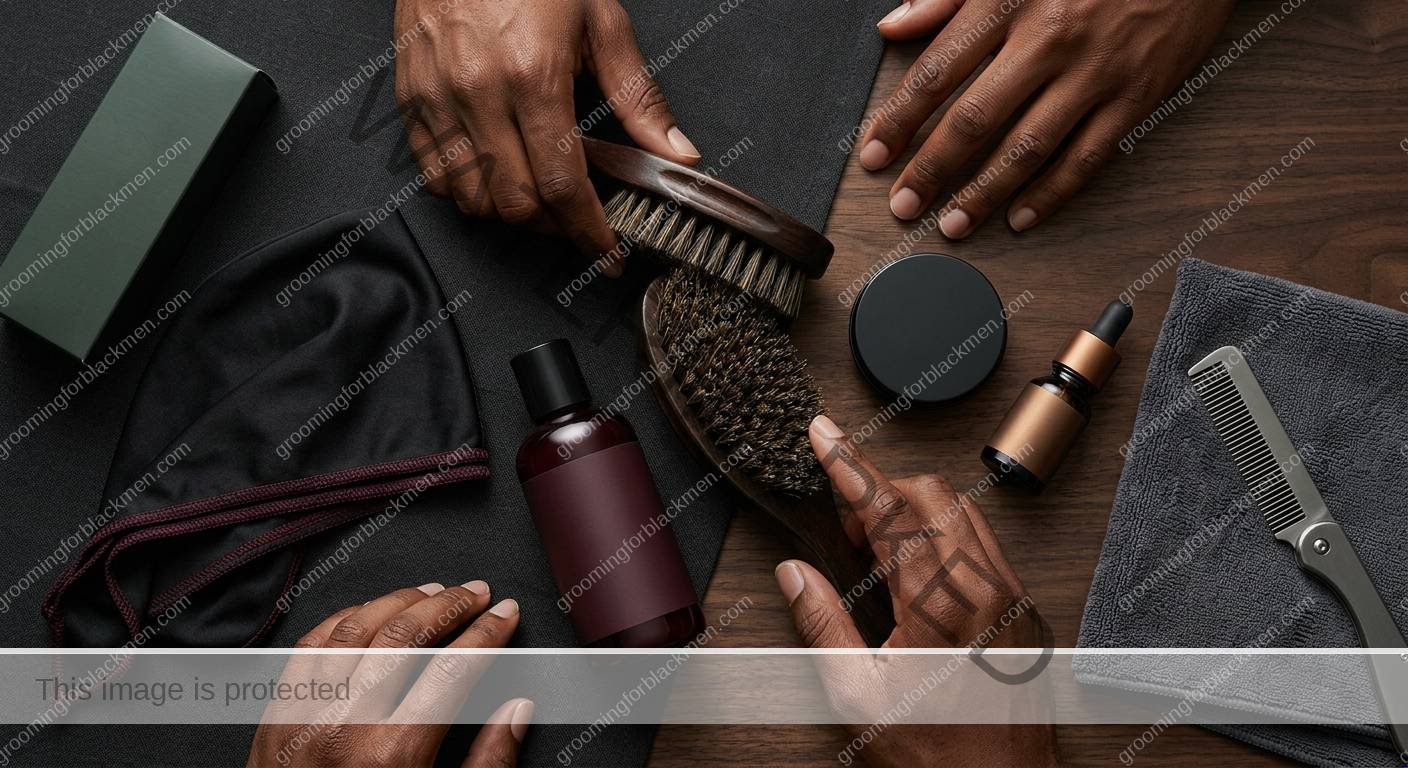
GFBM may earn a small commission from qualifying purchases, but product examples are included to clarify criteria, not to promise results.
The right tools and products make a difference, but don’t get caught up in hype or branding. Here’s what to look for:
- Wave brush: Choose a brush with natural or high-quality synthetic bristles. Soft or medium firmness is best for most Black men, especially if your hair is short or your scalp is sensitive. See examples here: wave brush for Black men.
- Durag or wave cap: Satin or silk materials protect your pattern and reduce friction. Avoid rough fabrics that can snag hair or cause breakage. See examples here: durag for waves. For a comparison, read our Durag vs Wave Cap Guide.
- Pomade or moisturizer: Look for lightweight, water-based options that won’t clog pores. Avoid heavy petrolatum-based products if you’re prone to buildup. See examples here: pomade for waves.
- Shampoo and conditioner: Sulfate-free, moisturizing formulas are best for coarse, curly hair. Don’t skip the conditioner—hydration is key.
For more on brush selection, see our Wave Brush Selection Guide.
Advanced Troubleshooting: Real-Life Scenarios and Nuance
Every wave journey is unique. Here’s how to troubleshoot when things get complicated:
Scenario 1: You’ve Been Brushing for Months, but Your Waves Won’t Connect
- Check your brushing angles with a mirror. Most connection issues come from inconsistent angles, especially around the crown and back.
- Wolf for 4-8 weeks to allow hair to grow and connect. This gives stubborn areas time to catch up.
- Use a medium brush for depth, then switch to a soft brush for finishing. Don’t skip moisturizing—dry hair won’t lay down.
- Consider a professional haircut to even out your pattern and remove weak spots.
Scenario 2: Your Scalp Is Always Itchy, Even After Washing
- Check your products for alcohol, sulfates, or heavy fragrances—these can irritate sensitive scalps.
- Try a gentle, fragrance-free moisturizer and avoid piling on multiple products.
- If itching persists, see a dermatologist. Persistent scalp irritation can signal underlying issues that need professional care.
Scenario 3: You Get Razor Bumps or Ingrown Hairs After Every Cut
- Ask your barber to use clean, sharp blades and avoid cutting too close to the scalp.
- At home, keep your scalp clean and moisturized. Avoid scratching or picking at bumps.
- For more on bump prevention, see our Razor Bumps Guide.
Scenario 4: You Travel Frequently and Can’t Stick to Your Routine
- Pack travel-sized versions of your essentials: brush, moisturizer, durag, and shampoo.
- Even on the go, prioritize brushing and wearing your durag at night. Consistency is more important than perfection.
- If you miss a day, don’t stress—just get back on track as soon as possible.
Scenario 5: You Want to Switch Products but Don’t Want to Start Over
- Introduce new products one at a time, and give each at least 2-3 weeks before judging results.
- If you notice irritation or buildup, stop using the new product and return to your previous routine.
- Keep your routine simple—less is often more for healthy waves and scalp.
Troubleshooting and When to Get Help

Most wave problems can be fixed with patience and the right routine. But some issues need professional attention. Here’s when to troubleshoot at home, and when to see a barber or dermatologist:
- Try at home: If your waves are patchy, dry, or frizzy, adjust your brushing, moisturizing, and washing routine. Give changes at least 2-4 weeks to show results.
- See a barber: If your haircut is uneven, your crown is hard to find, or you’re unsure about your pattern, a skilled barber can help you reset your foundation.
- See a dermatologist or clinician: If you have painful, infected, spreading, scarring, or persistent irritation, don’t try to fix it yourself. Professional care is the safest route for your scalp and hair health.
Never dig at ingrown hairs or use harsh scrubs. Avoid undiluted essential oils, alcohol-heavy products, or aggressive brushing. Healthy waves are built on discipline, not shortcuts.
Frequently Asked Questions
How long does it take to see progress with waves?
Most Black men see early wave definition within 3-6 weeks of consistent brushing, moisturizing, and protection. Full, deep waves can take several months. Genetics, hair texture, and routine discipline all play a role.
Why are my waves patchy in certain areas?
Patchiness is usually caused by uneven brushing, inconsistent moisture, or natural growth patterns. Focus extra attention on stubborn areas, use a mirror, and stay patient. The crown and back often take longer to train.
How often should I wash my hair when waving?
Weekly washing is a good baseline for most Black men. Use a gentle, sulfate-free shampoo and always follow with a conditioner. If you sweat heavily or use a lot of product, you may need to wash more often.
What’s the best way to keep my waves moisturized?
Apply a lightweight, water-based moisturizer daily after brushing. Seal with a small amount of pomade if needed. Avoid heavy greases and always wear a durag at night to lock in moisture.
Can I get waves if my hair is very coarse or tightly curled?
Yes. Coarse and tightly curled hair is well-suited for waves, but may require extra patience, consistent brushing, and diligent moisture. The process may be slower, but the results are often deeper and more defined.
How do I fix frizzy or undefined waves?
Frizz is usually a sign of dryness or skipped protection. Moisturize daily, brush with a soft or medium brush, and always wear a durag at night. If you sweat during the day, reapply your durag to reset your pattern.
When should I see a professional for scalp or wave issues?
If you have painful, infected, spreading, scarring, or persistent irritation, see a dermatologist or qualified clinician. For pattern or haircut issues, a skilled barber can help you reset your foundation.
What to Do Next
Waves are a journey, not a destination. If you’re troubleshooting, remember that progress comes from disciplined routines and realistic expectations—not hype or shortcuts. Start by identifying your main challenge, adjust your routine, and give changes time to work. If you hit a wall, don’t hesitate to consult a barber or dermatologist. Your hair and scalp deserve the best care you can give.
For more on building and maintaining healthy waves, see our 360 Waves Guide and Hair & Scalp Health Guide. For specific tool tips, check our Wave Brush Selection Guide. For wash day specifics, see our Waves Wash Day Guide. Stay disciplined, stay sharp, and keep your grooming routine rooted in what works for you.