
You wash your beard, the flakes return, and the next bottle promises to solve the problem. That cycle is frustrating, especially when flakes sit visibly against a dark beard or land on a black shirt before you leave home. It does not mean you are careless. It does mean that another layer of oil may not answer the question you actually have: is this loose product, dry or irritated skin, or a recurring skin condition that needs a different approach?
This guide is for Black men who have already tried a basic beard routine and still need a clearer way to read what is happening under the hair. Our foundational beard dandruff guide covers the broader condition and routine. Here, we focus on a practical reset: observe the pattern, remove one likely irritant at a time, choose products by purpose, and know when self-care is no longer enough. You do not have to diagnose yourself to make better decisions.
Start with the skin beneath the beard

Flakes are a clue, not a diagnosis. Dry skin, leftover styling product, irritation from fragrance, and seborrheic dermatitis can all produce a messy-looking beard. More than one problem can be present at once. Seborrheic dermatitis is a common inflammatory skin condition that can affect the skin under a beard, as well as the eyebrows, ears, or scalp. On brown skin, the rash may not look bright red. Discoloration, scale, or a change in texture may be more noticeable. A clinician can distinguish it from other conditions that look similar.
Before you change your routine, part the beard gently in good light. Look at the skin, not only the flakes caught in the hair. Are the flakes loose and concentrated where you apply balm? Does the skin feel tight after washing? Is there a persistent patch with visible scale and itch? Do you also have similar symptoms around your brows or scalp? None of those observations proves a cause. Together, they help you describe the problem accurately if you need a dermatologist.
A short beard may let you see the skin more easily. With a fuller, tightly coiled beard, you may need to section the hair with clean fingers and a wide-tooth comb. Keep the pressure light. You are looking for a pattern, not scraping flakes off to make the area appear clean. If the skin hurts, cracks, oozes, or develops painful bumps, stop the home experiment and seek care. That is a more useful signal than the number of flakes on your shirt.
It helps to notice where and when the problem appears. Residue may be most obvious after a heavy product dries. Irritation may begin soon after a new scented wash. A recurring rash can continue even when you change styling products. These are possibilities, not a home diagnostic chart. The point is to avoid treating every white speck with the same bottle. If you need a basic cleanse-and-moisturize starting point, the GFBM beard-care pillar lays out that foundation; this article picks up where the basics have not settled the flakes.
Keep a one-week record before buying another product

You do not need a spreadsheet. For about a week, write down the products touching the beard and the skin underneath it, when you use them, and what changes afterward. Include the wash, conditioner, oil, balm, fragrance, and anything your barber applies near the beard line. Note whether the flakes are powdery or greasy-looking, whether the skin feels itchy or sore, and whether the problem is localized or also appears on the scalp or brows. A phone note and two clear photos in similar lighting are enough.
Record your normal routine first. If you switch five products on day one, you will not know what helped or what irritated you. If a recently added product is followed by stinging or a rash, stop that product and simplify. If symptoms are severe, do not wait out a tracking week. The record is for a manageable, non-urgent pattern; it is not a substitute for assessment of pain, infection, spreading rash, or hair loss.
Ask two practical questions each day. First: did the skin itself feel better, worse, or unchanged? Second: did the visible flakes appear before or after styling products dried? A beard can look glossy while the skin underneath remains uncomfortable. Conversely, a little dried product on the hair does not necessarily mean you have a medical rash. Looking at both the skin and the product sequence keeps the decision grounded.
Keep the observations fair. A cold, dry week, extra sweating, or a fresh trim may change what you notice. Write those down without treating them as proof. If you see the same flare after the same product more than once, that is a useful reason to pause that product. If no simple relationship emerges and the skin continues to scale, bring the notes and photos to a dermatologist. A concise record can save a long conversation about every bottle in your cabinet.
Make a gentle product reset, one step at a time
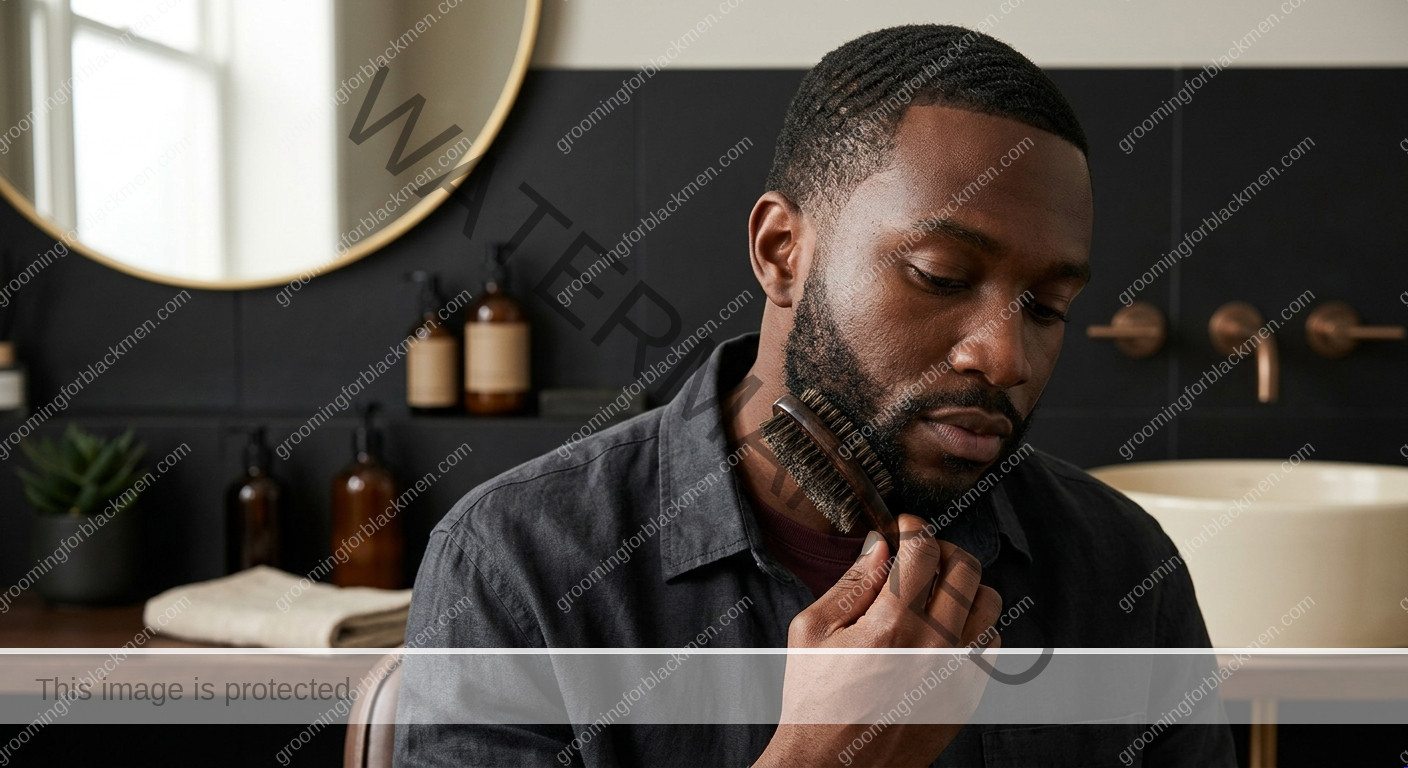
A reset is not a punishment and does not require throwing away every product. Begin with the simplest routine your skin tolerates: a gentle cleanser, a thorough rinse, and a fragrance-free moisturizer if the skin feels dry. The American Academy of Dermatology advises gentle washing and moisturizing for easily irritated skin. Hot water, aggressive brushing, and heavily fragranced products may make an already uncomfortable area harder to manage. Use your fingertips rather than your nails to reach the skin under the beard.
Keep styling product off the skin when you can. Balm and butter are often chosen for hold or hair feel, not because they treat inflammation beneath the beard. If you have been layering oil, butter, and balm, reduce the stack. Rinse well at your next wash and notice whether visible residue changes. A lighter routine can make the skin easier to inspect and helps you identify what each product is doing. It will not, by itself, diagnose or cure seborrheic dermatitis.
Do not assume all shampoos are too harsh or that a beard-only label makes a formula medically better. For ordinary cleansing, gentleness and tolerance matter more than marketing language. For a recurring scaly rash, a dermatologist may advise a medicated cleanser or dandruff shampoo for the beard area. That is different from adding a random hair shampoo every night. Use a treatment only as directed on its label or by your clinician, keep it away from eyes and lips, rinse as instructed, and stop if it causes significant irritation. The beard-wash frequency guide can help with routine cleansing, but it cannot replace an individualized treatment plan.
Brush only enough to arrange the hair or gently lift loose scale before washing. Hard bristles, scraping, and repeated exfoliation can make tender skin worse. You do not need to scrub until the area feels raw. If you use a brush or comb, clean it regularly and keep it personal. A wide-tooth comb may make it easier to part a dense beard without pulling. See the beard brush and comb guide for tool-selection context, not a promise that a tool will treat the underlying skin.
If your beard is short, the reset can be as simple as a gentle wash and a small amount of moisturizer on the skin. If it is full, section it to rinse the roots and let the hair dry without leaving a thick coating at the base. The same principle applies at both lengths: keep the skin comfortable and observable. You can add back one styling product later if you miss its hold or finish. Do not reintroduce several products on the same day, or you lose the ability to tell which one your skin accepts.
Separate cosmetic comfort from treatment
A moisturizer may ease the feeling of dryness. An oil may change how beard hair feels. A balm may help with shape. Those jobs are useful, but they are not interchangeable with treatment of an inflammatory skin condition. If the skin stays itchy or scaly while the hair looks conditioned, adding another oil is not automatically progress. The next useful step may be assessment, not a richer product.
Read the label for purpose and tolerance. A gentle, fragrance-free cleanser is a reasonable basic choice for sensitive skin. A moisturizer for facial skin should feel comfortable without stinging. If your clinician recommends an anti-dandruff product for the beard area, follow that specific plan rather than guessing frequency from a scalp routine. The American Academy of Dermatology notes that use can differ for curly or tightly coiled hair. A schedule copied from someone with different hair, skin, and symptoms is a poor substitute for advice tailored to you.
There is no need to buy a premium set to run this test. If you already own a gentle cleanser and moisturizer that your skin tolerates, use them. Avoid making a product claim simply because a label says “natural,” “for men,” or “beard dandruff.” An essential oil is not safer because it comes from a plant, and undiluted oils can irritate facial skin. If a product burns or triggers a new rash, stop using it. If you are using prescription treatment, ask the prescriber before changing that plan.
For readers comparing product types after understanding the criteria, the existing GFBM examples remain below. These are shopping searches, not endorsements of every listing or substitutes for diagnosis. Check ingredients, label directions, seller, price, and suitability for your skin before buying. GFBM may earn a commission from qualifying purchases. The examples should help you recognize product categories, not make you feel that you need all three.
- Beard dandruff shampoo: If you suspect a recurring scaly rash, ask a clinician whether a medicated product belongs in your plan; compare labeled active ingredients and directions rather than fragrance or hype.
- Beard wash for Black men: For ordinary cleansing, look for a formula your facial skin tolerates and that rinses clean. A beard-specific label alone is not proof of benefit.
- Beard oil for dry skin: Consider this for hair feel or comfort only if your skin tolerates it. It is not a treatment for persistent inflammatory flakes.
If you are deciding between oil, balm, and butter for styling, the oil, balm, and butter comparison explains their different roles. Keep that grooming choice separate from the question of why the skin is flaking.
Use the pattern to choose the next decision

If flakes appear mainly after styling: First examine the amount and placement of balm, butter, or oil. Reduce one product, rinse thoroughly at the next wash, and see whether the hair and skin respond differently. Dried residue can mimic flakes, but residue and a skin condition can coexist. Do not use one improved-looking morning to declare the underlying issue solved.
If the skin stings after a new product: Stop that new product and return to the last comfortable, simple routine. Check whether fragrance, alcohol, or an active ingredient may be involved, but do not assume you have an allergy from timing alone. If the reaction is significant, widespread, or does not settle, ask a clinician. Do not cover an active rash with more styling product to make it less visible.
If the skin is persistently scaly or itchy: A basic wash-and-oil routine may not be enough. Seborrheic dermatitis is one possibility, but eczema, psoriasis, contact dermatitis, and other conditions can look similar. A dermatologist can examine the skin and decide whether a medicated wash or another treatment is appropriate. This is especially useful when the same problem recurs on the brows, ears, or scalp. Bring your product list and observations instead of trying to remember every change at the appointment.
If bumps, pain, broken skin, drainage, or hair loss appear: Treat that as a reason for prompt professional assessment, not a cue to exfoliate harder. Beards can hide the skin beneath them, so the severity may be easy to miss until you part the hair. The beard itch guide covers general comfort, but a painful or changing lesion needs a clinician’s eyes, not another generic grooming routine.
Throughout the process, change one thing at a time. You are not trying to win a perfect beard day or reach an arbitrary deadline. You are learning whether the problem is a product choice, a care habit, or something a professional should assess. That distinction saves money and reduces unnecessary irritation. It also respects your time: a workable routine should fit your actual mornings and evenings, not require a counter full of bottles.
Make the reset fit the beard day you actually have
On a rushed work morning: Do not turn your beard into a treatment project at the bathroom sink. Check whether the skin is comfortable, use the gentle routine you already know you tolerate, and skip a new scented product. If you need a neat finish, use the smallest amount of the styling product that has not bothered you before. Notice whether flakes appear before or after it dries. Put that observation in your phone later. A short note is more valuable than five hurried product changes.
If you wear dark uniforms or sit under bright office lighting, visible flakes may feel especially public. That feeling is real; it still does not require you to scrub until the skin is sore. You can remove loose flakes gently from the hair, then leave the underlying skin alone. When you have more time, part the beard and look at the skin properly. An attempt to hide every speck while rushing can keep you from seeing a recurring rash that deserves care.
After sweat or a long shift: Your beard may hold sweat, dust, or residue from a product used earlier. Rinse or cleanse in a way your skin tolerates, then let the beard dry enough to see what remains. If the flakes disappear with rinsing and the skin feels normal, write that down without declaring the problem solved. If the skin remains scaly or itchy, that is different information. Do not keep adding oil on top of sweat and old product simply because the hair feels rough. A clean baseline lets you judge what is happening beneath the hair.
For men who work outdoors, wear a mask, or exercise often, the routine may need to account for extra contact and sweat. That does not create a universal wash frequency. Too little cleansing may leave residue; too much or too harsh a wash may irritate. If you cannot tell where the balance sits, simplify the products first and ask a dermatologist about persistent symptoms. A clinician’s recommendation can take account of your actual workday, beard length, and skin sensitivity instead of an internet schedule.
After a barber visit: A fresh line can make the skin more exposed and the styling product more obvious. Ask what was applied if you notice a repeat pattern after appointments. If a particular scented finishing spray or balm seems to precede stinging, request that it be skipped next time and observe the difference. If the problem appears along the shaved edge as painful bumps rather than scale under the beard, it may be a separate concern. Do not label every post-cut reaction “dandruff.” Describe the exact location and sensation when you seek help.
A dependable reset is one you can repeat, not a set of products you can afford only once. Keep the cleanser and moisturizer that agree with your skin. Add back a styling product only if it serves a real purpose, such as hold on a full beard, and only after the skin is comfortable. If you are taking photos to track a patch, use similar light and angle. Do not judge progress by a filtered close-up or a beard that has just been coated. Look for comfort and a stable pattern over time.
Use an appointment to answer the question, not collect another bottle
If the flakes keep returning, an appointment should do more than produce a shopping list. Tell the clinician when the problem began, where it appears, whether it also involves your scalp or eyebrows, and what the skin feels like when no product is on it. Bring your product list, photos, and any notes on stinging, itch, or painful bumps. Mention treatments you have already tried, including over-the-counter dandruff products, without guessing that they failed because they were not strong enough.
Ask what diagnosis best fits the skin they can see, what else could look similar, and how you would know whether the plan is helping. If a medicated product is recommended for the beard, clarify where it goes, how often to use it, how long it stays on before rinsing, and what reaction should make you stop and call. Those questions matter especially when a product was marketed for scalp use but your concern is facial skin. Do not copy a scalp schedule into the beard without confirming it belongs there.
If your hair is tightly coiled or you keep a longer beard, explain the way you normally wash and style it. Dermatology guidance notes that dandruff-shampoo use may be adjusted for curly or tightly coiled hair. That does not mean every person needs the same adjustment; it means your routine is worth discussing. A plan should be practical enough for you to follow without irritating the skin or undoing a style you maintain for work or preference.
Also ask what to do if the rash settles and then returns. Recurrence does not automatically mean you failed or that you need to buy a stronger product on your own. Some conditions need a maintenance plan or a different diagnosis. If you experience pain, drainage, broken skin, or hair loss, mention that early rather than waiting until the end of the visit. A good appointment gives you a clearer decision path, including when to follow up, not just a promise of permanent, flake-free skin.
Frequently asked questions
Are flakes under a Black man’s beard always dandruff?
No. Visible flakes can be loose skin, product residue, or part of a skin condition, and those possibilities can overlap. The color of the beard or skin can make flakes easier to notice without telling you what caused them. Part the hair and look at the skin itself. Notice whether it is comfortable, itchy, scaly, sore, or changing color. A dermatologist can make a diagnosis when the pattern is persistent or unclear; a product label cannot.
Should I stop using every beard product at once?
Not necessarily. A simple reset is more informative when you pause the newest likely irritant or reduce a heavy product stack, then keep the rest of the routine stable. If a product burns or causes a pronounced reaction, stop using it. If you rely on a prescribed medication, do not discontinue it based on this article; ask the clinician who prescribed it. The goal is to identify a tolerable baseline, not to make your beard feel neglected.
Can beard oil clear persistent skin flakes?
Oil may change the feel of beard hair and can help some people with cosmetic dryness, but it is not a substitute for treatment of a recurring inflammatory rash. If your hair looks shiny while the skin underneath remains scaly or itchy, do not keep increasing the dose. Consider whether the oil itself is leaving residue or irritating you. A clinician can help identify when the skin needs a different approach.
Do I need a beard-specific shampoo?
For routine cleansing, look for a gentle cleanser that your facial skin tolerates and that rinses well. A beard-only label is not a medical guarantee. If a clinician thinks you have seborrheic dermatitis, they may recommend a particular medicated cleanser or dandruff shampoo for the beard area, with directions suited to your skin and hair. That is a different choice from using any harsh shampoo simply because it removes visible flakes for a day.
What if flakes return right after a barber visit?
Write down what touched your beard and skin during the visit: cleanser, fragrance, edge product, oil, balm, or a close trim. The timing may help you identify a product to avoid next time, but it does not prove the barber caused the problem. If the skin is raw or painful, pause irritating products and seek assessment. If it is comfortable and only coated with visible residue, a gentle rinse may help you judge the situation more clearly.
Can I brush flakes away every day?
Gentle brushing can lift loose scale before washing and arrange the hair. Scraping or repeated forceful brushing can irritate the skin and may make symptoms harder to interpret. Use a clean, comfortable tool and stop if the skin becomes sore. If the flakes keep returning despite gentle care, brushing harder is not a treatment plan. The next step is to understand the skin beneath the hair.
When should I see a dermatologist?
Get an assessment when the rash persists, repeatedly returns, spreads, or is accompanied by pain, broken skin, acne-like bumps, drainage, or hair loss. A dermatologist can distinguish seborrheic dermatitis from other conditions and tailor care for your skin and beard. Seek prompt medical help for severe symptoms. Take your product list and clear photos if you have them. You deserve an explanation, not a cycle of buying stronger products without knowing what you are treating.
What to do next
Choose one practical step today: part the beard and look at the skin, write down the products that touch it, or stop the newest product that seems to cause irritation. Keep the basic routine gentle while you observe. If a recurring rash or warning sign remains, arrange a professional assessment. You do not have to settle the diagnosis yourself, and you do not have to be embarrassed by visible flakes.
For the broad overview, revisit the beard dandruff foundation guide. For a basic routine, use the beard-care pillar. This page has a narrower purpose: helping you decide what to change, what to leave alone, and when the skin beneath the beard needs clinical attention. Good grooming is not about piling on products. It is about using the right information to care for the beard and the person wearing it.