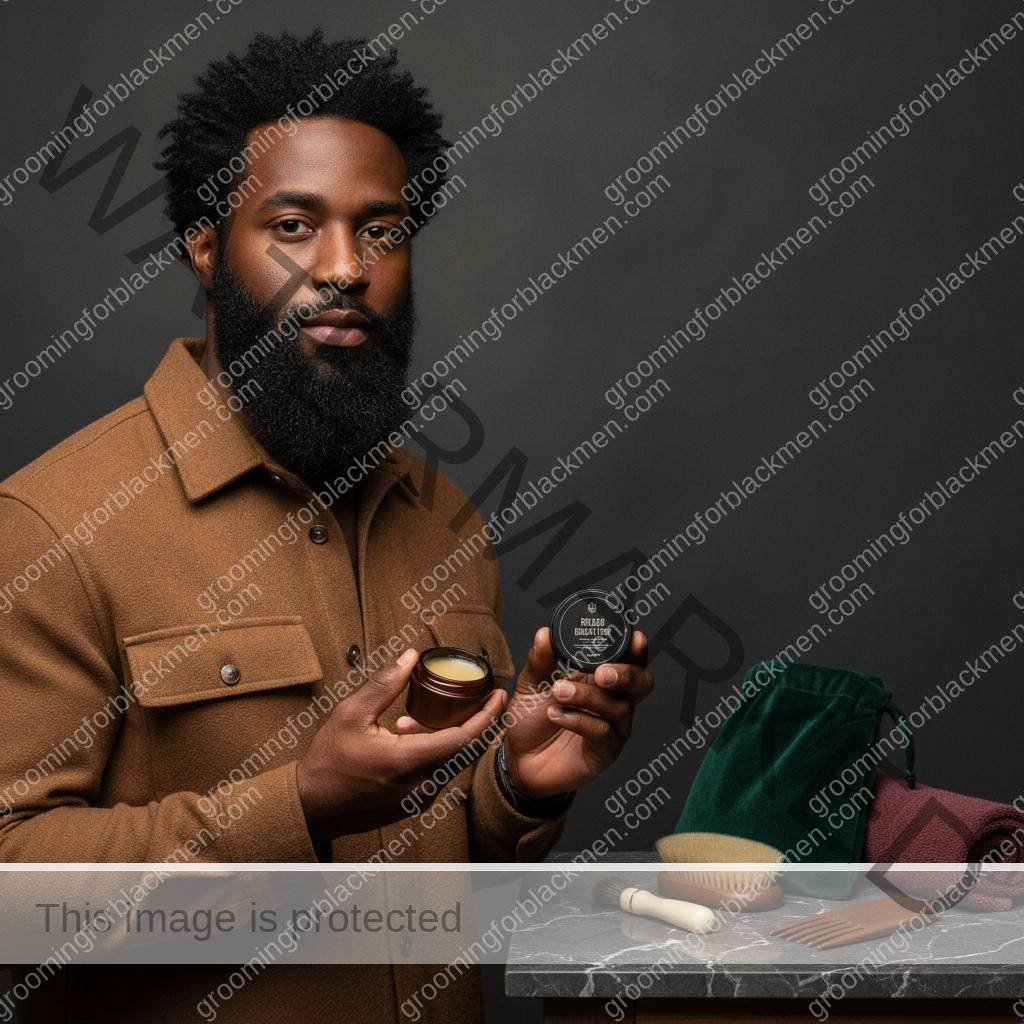
You do not need two jars because the shelf has room for them. If you are choosing between beard balm and beard butter, start with the result you actually want: a little more control at the edges, a softer-feeling finish, or less fuss getting ready.
For Black men with curly, coily, or coarse facial hair, that choice can get buried under advice to buy an entire system. Oil first. Butter at night. Balm every morning. Before long, you are following a schedule without knowing which product is doing anything useful.
A better starting point is one clear job and one product that makes sense for it. Your beard does not need to lose its texture to look considered. Nor does a full beard automatically require a heavy finish. What matters is whether you like the result and can use the product comfortably.
The Beard Care guide covers the wider routine. This comparison is the buying-and-application step: how to read two labels, choose between them, use the selected product without unnecessary layering, and decide whether it earns a place in your routine.
The quick answer: choose the job before the jar
If you want help arranging the beard’s outline, look for a product with the stated hold and application directions to match. If you mainly want a soft, flexible feel, look for conditioning and finish information rather than the strongest hold. Balm and butter are useful shopping categories, but they are not complete specifications.
You may find a soft balm or a butter advertised with light hold. Read the actual formula and description. Neither name tells you whether the product will suit your skin, and neither makes buying both necessary. If your current routine already gives you the finish you want, keeping it is a valid choice.
Start with the finish you want to see and feel
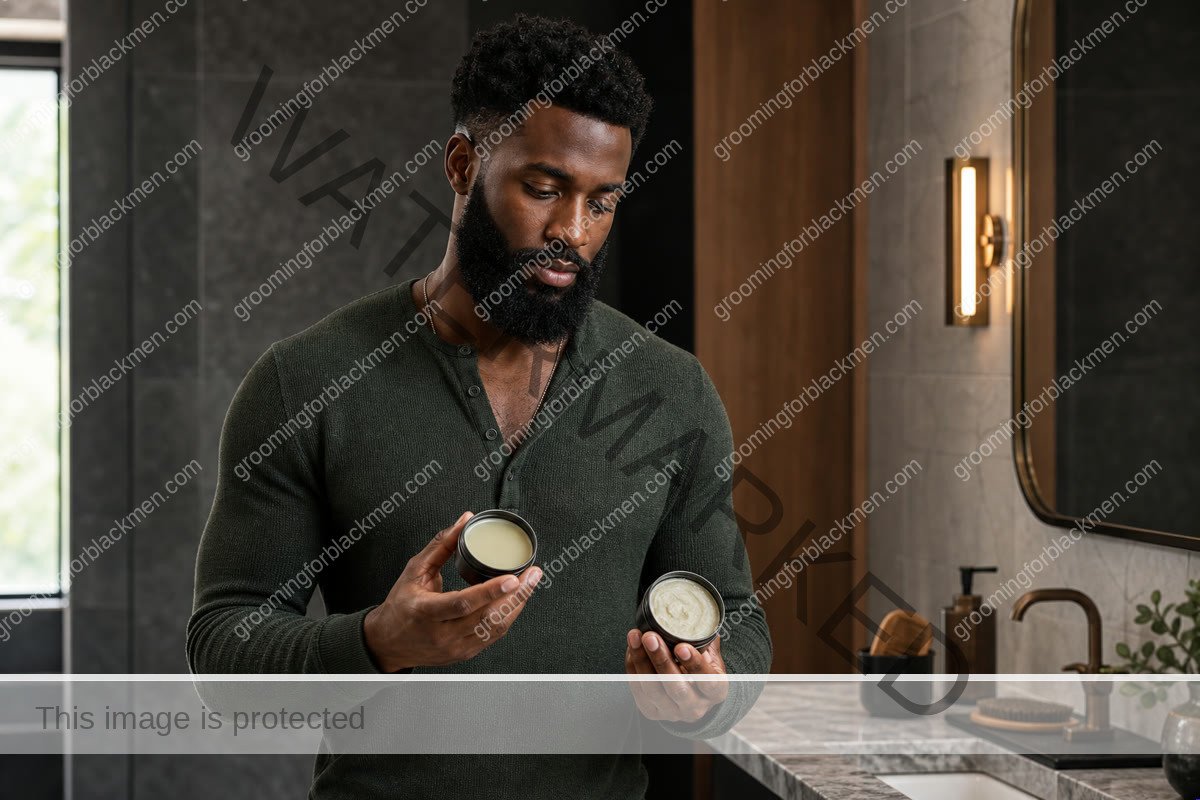
Stand back from the mirror and identify the part of the finish you want to change. Perhaps the sides look wider than you prefer after you put on a shirt. Perhaps the beard feels heavily coated even though its outline looks fine. Those are different requests, and buying a richer product will not necessarily answer both.
Write one ordinary sentence before shopping: “I want the sides to stay arranged without a hard feel,” or “I want a softer finish without extra shine.” That sentence is your comparison standard. It is more useful than trying to build the universally best beard routine.
Separate shape from softness
Shape is the arrangement you want to see. Softness is the feel you prefer when the hair moves. A product might help with both, but decide which matters most for this purchase. Otherwise, a product can seem disappointing simply because you expected a conditioning finish to behave like a firm styling product.
Do not use a photograph of a different beard as the specification. Length, density, curl pattern, trimming, lighting, and styling all affect that image. Describe a change that makes sense on your own beard. A flexible, textured outline can be just as intentional as a closely arranged one.
Decide what you do not want
Your limits belong in the decision too. You might dislike fragrance near your nose, a finish that transfers to a shirt collar, or a product that needs more handling than your morning allows. These are legitimate reasons to pass, even when someone else’s review is enthusiastic.
Keep the list short: one desired result and two limits. For example, “light control, no strong scent, easy to distribute.” You are choosing a tool for your day, not trying to predict every possible beard situation.
Leave skin discomfort out of the styling contest
The American Academy of Dermatology’s healthy-beard guidance makes skin type part of the care decision. Its recommendations distinguish among conditioner, oil, and a gentle moisturizer according to the skin beneath the beard. That is a different question from how firmly you want to arrange the hair.
If you are shopping because the skin keeps burning or itching, do not make “stronger balm versus richer butter” the only options. The recurring beard-itch troubleshooting guide helps you organize that concern separately. A pleasing finish is not proof that a skin complaint has been resolved.
Read the formula instead of trusting the name
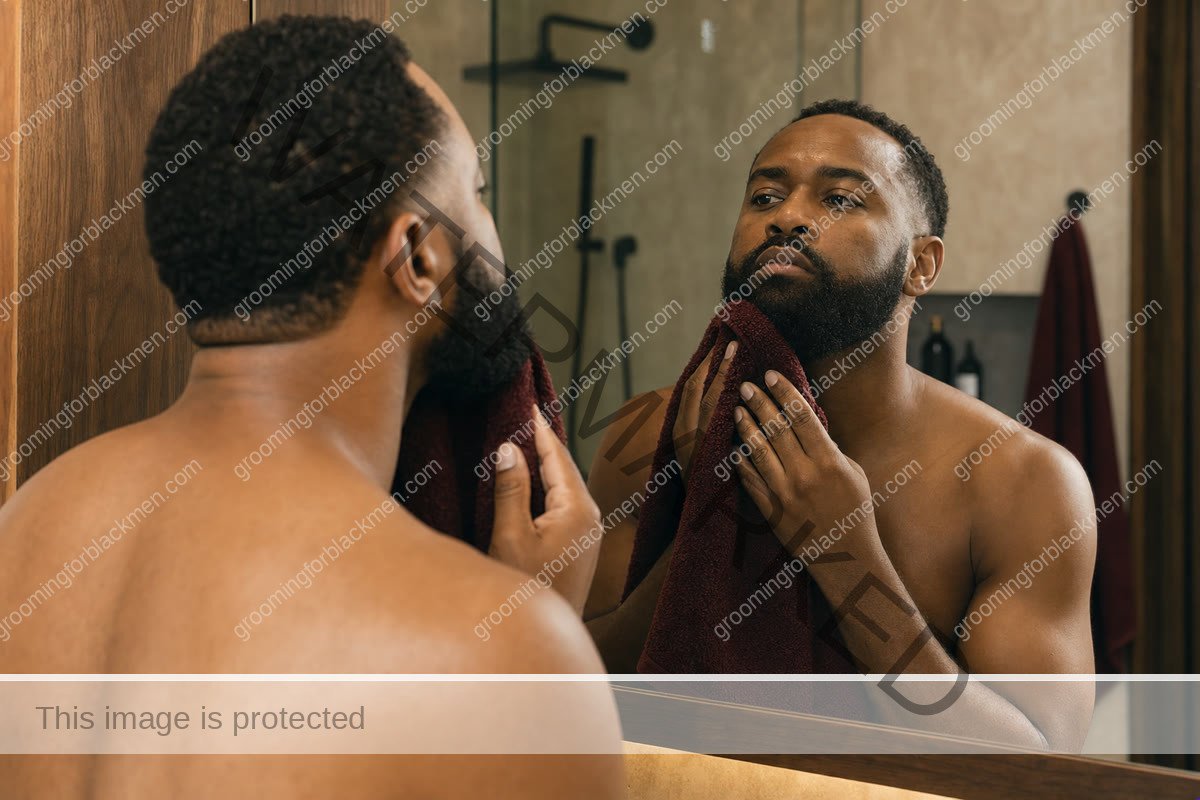
The front of a jar gives you a product name and a promise. The back gives you information you can compare. Look at the ingredient list, directions, stated hold, warnings, and intended use before deciding which category sounds more impressive.
A balm is often sold with shaping in mind, while a butter is often sold around conditioning and feel. Treat those descriptions as starting points. Do not turn them into rules that every balm must be stiff or every butter must contain no wax.
Use examples to understand the overlap
The official Honest Amish balm ingredient list includes oils, several butters, beeswax, and candelilla wax together. Meanwhile, Every Man Jack’s butter page lists water first and describes light hold. Those examples show why the category name alone is not enough.
They are formulation examples, not GFBM wear tests or recommendations for your skin. We are not adopting either manufacturer’s claims about growth, irritation, or performance. Check the current product and variant yourself; a familiar name does not guarantee an unchanged formula.
Read ingredient order without inventing percentages
The FDA’s cosmetic-labeling summary explains that ingredients are generally listed by predominance, with exceptions that include ingredients at one percent or less and color additives. This helps you read the panel, but it does not reveal an exact recipe or predict how much hold you will experience.
Use the list to ask better questions, not to perform home formulation mathematics. Does the brand explain the finish? Can it clarify whether the product is intended for damp or dry hair? Are the directions available before purchase? An unanswered practical question is a reasonable reason to keep looking.
Check scent and sensitivity language carefully
If your skin is sensitive, “unscented” is not the same assurance as “fragrance-free.” The AAD’s skin-care advice for men notes that unscented products can contain masking fragrance. Natural scent and botanical branding are not guarantees of tolerance either.
Avoid turning this into an ingredient fear list. A long name is not evidence that an ingredient is harmful, and a familiar oil is not evidence that the finished product is right for you. If you have a known allergy, use the advice you have been given and ask for clarification when a label is unclear.
Make sure you are comparing the same version
A review may describe an older formula, a different scent, or another product in the same range. Before relying on it, match the exact name and size to the item you are considering. Check whether the listing photograph and written ingredient panel agree.
If they do not, ask the seller or manufacturer which information belongs to the item being supplied. Do not fill in the missing details from a similar-looking jar. Clear information is part of a useful purchase, not an unreasonable extra demand.
Compare two options without buying the whole collection
Open a note and put one candidate under “balm” and one under “butter.” You are not trying to prove one category superior. You are checking which particular product answers the sentence you wrote before shopping.
For each candidate, record the exact product and variant, stated hold, described finish, application directions, size, total purchase cost, and anything still unanswered. Keep manufacturer descriptions separate from your own observations. “Advertised as light hold” is accurate; “will hold my beard all day” is not something you know yet.
Use four questions to narrow the choice
- Does it match the main job? Look for information relevant to the finish you want, rather than a longer benefits list.
- Can you use it as directed? Consider when you groom, the time available, and whether the method fits your usual setup.
- Does it fit your limits? Scent, handling, budget, and clarity of labeling can rule out a product before its category matters.
- What would count as a useful result? Name something observable, such as an outline you like or less of a coated feel.
If both candidates look similar, you do not need to buy both to settle the tie. Choose the one with clearer directions, a manageable purchase size, or a return policy you understand. If neither answers the job well, wait. A comparison can end without a purchase.
Compare cost without guessing how long a jar lasts
Check the total amount you will pay, not just the price displayed beside the product. Delivery charges, a minimum order, or a subscription selected by default can change the decision. Compare the same unit of size where possible, but remember that price per ounce is not the same as cost per successful use.
You do not yet know how much you will use or whether you will enjoy finishing the jar. A large container is not automatically better value for a first purchase. It may be sensible to pay less overall for an amount you can realistically try, rather than commit to a bundle for a lower unit price.
Give your existing product a fair place on the sheet
Add a third column labeled “what I already own.” Record what it does well and the one thing you want to improve. This keeps the comparison honest. You may discover that the new options make the same promises as an item you already use comfortably.
Do not replace a dependable product just because it is called a balm and you have heard that Black men should use butter. Your experience matters more than a category rule. Likewise, you can stop using an unsuitable item without buying its opposite immediately.
Use one finishing product before building a layered routine
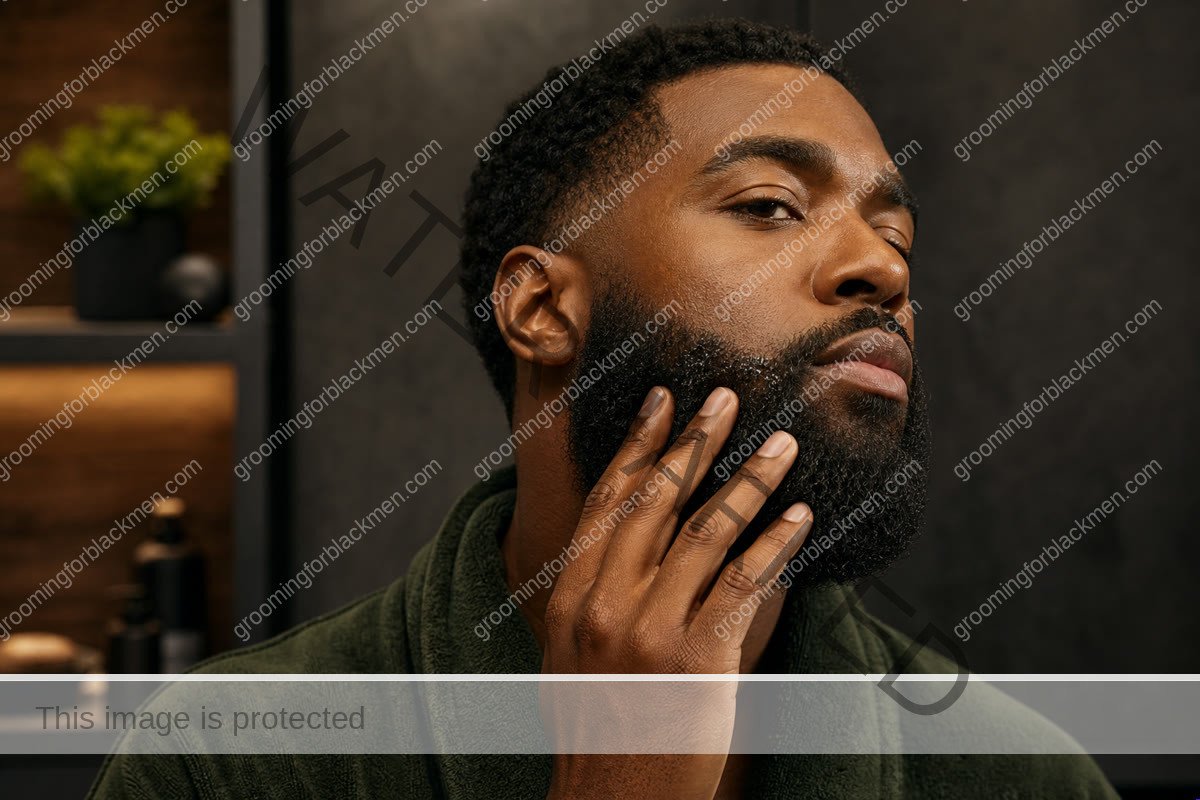
Once you choose, separate first-use safety from judging the finish. A new product does not earn a full-beard application simply because its ingredient list looks familiar. Read the directions and any warnings before opening your grooming routine to another variable.
Complete the small-area check first
The AAD’s product-testing guidance recommends a small-area test twice daily for seven to ten days, using the normal amount and usual exposure time. Follow its full instructions, including how wash-off products differ. This is not clinical allergy patch testing or a guarantee against a later reaction.
If a product causes a reaction, wash it off gently and stop using it. Do not keep applying it to complete a test. Seek professional advice for a severe or continuing reaction. If you have previously reacted significantly to that product or have an active skin problem, ask a clinician before experimenting.
Let the actual directions set the starting point
Check whether the product is intended for damp or dry hair and whether it is leave-in or wash-off. Do not assume every jar follows the same method. Use its stated amount as a reference rather than borrowing a scoop size from someone with a different beard and a different formula.
Make the setup simple: clean hands, your usual grooming space, and the product instructions where you can read them. You do not need to create a special ritual. You do need to know which item you used and how you applied it.
Distribute deliberately, without chasing perfect uniformity
Follow the label’s method for working the product through the beard. Move carefully enough that you can tell where you have applied it. Do not keep adding more simply because one side appears different in the bathroom light.
If you normally comb afterward, use a familiar approach that does not tug. The goal is the finish you chose, not forcing every curl into the same direction. Stop if handling becomes uncomfortable. A styling result is not worth repeated scraping or pulling.
Wait before making the next adjustment
Once the product is distributed, step away long enough to judge the finished result rather than the wet or freshly worked stage. Follow any setting or use instructions the product provides. Keep the first check ordinary: does the beard sit as you wanted, feel acceptable, and fit the rest of your morning?
Do not add oil, then butter, then balm in response to three quick mirror checks. If you apply several new things, you lose the ability to say which finish came from which product. When you later decide to combine familiar items, give each one a specific job. Layering is an option to evaluate, not a requirement.
Keep a short first-use note
Record the amount in a way you can repeat, the application method, and the result you noticed. “Followed the label on damp hair; easy to spread; more shine than I wanted” is useful. “This butter is bad for Black beards” makes a much broader claim than your experience supports.
Save the label information with the note. If you contact the brand, you can describe the product and ask a precise question. If you stop because of a reaction, that same information can help a clinician; do not turn the note into a reason to try the product again.
Where the product searches fit, and where they do not
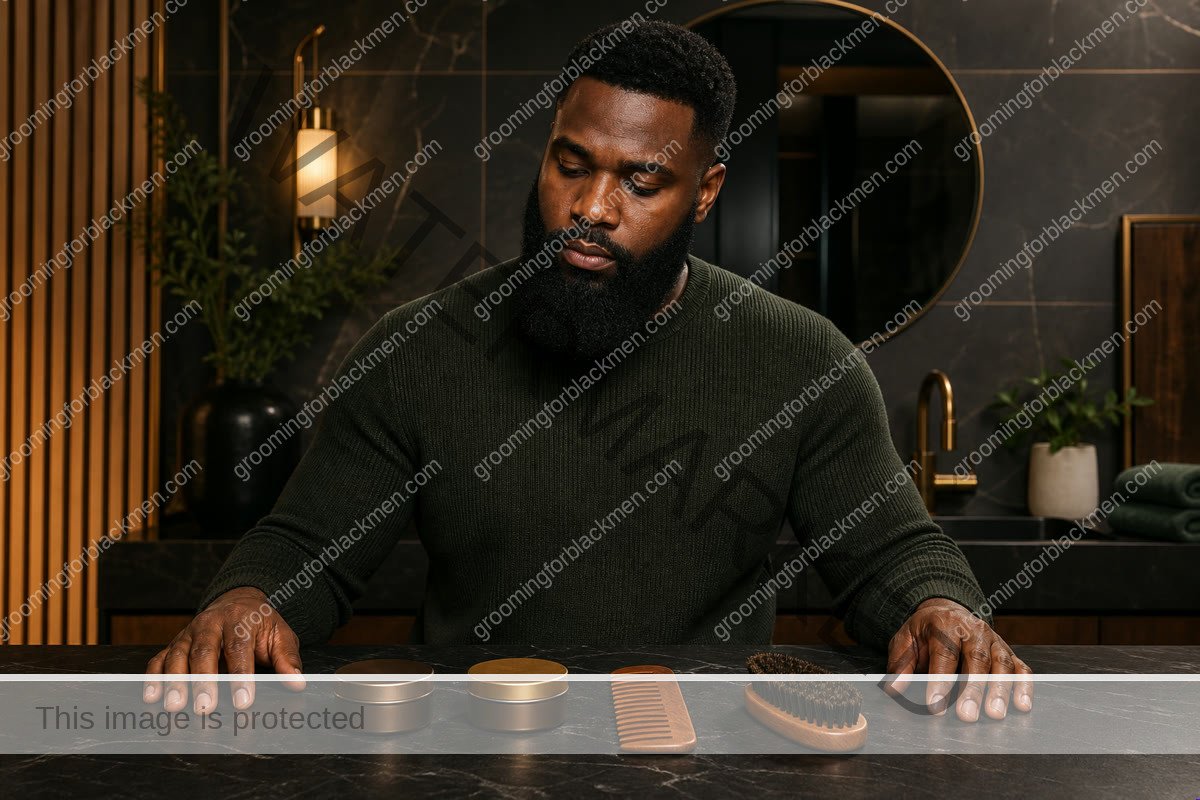
Shopping is most useful after you know the job, the limits, and the information you need from a label. The searches below are optional starting points for comparison. They are not a tested shortlist, a treatment plan, or a recommendation to purchase all three categories.
GFBM may earn a small commission from qualifying purchases. Product examples clarify shopping choices; they do not promise results.
Compare a balm and a butter by the same standard
Use this search as a starting point for a shaping-focused comparison: Browse beard balms for Black men on Amazon. Check the individual listing for stated hold, directions, and the exact variant. The search phrase itself does not verify a product’s suitability.
Use this search when comparing options for a softer-feeling, flexible finish: Browse beard butters for Black men on Amazon. Apply the same checks. Do not assume that every result is wax-free, fragrance-free, or interchangeable with the example you saw elsewhere.
Keep oil optional rather than adding a third assignment
If oil is the category you actually mean to compare, start here: Browse beard oils for Black men on Amazon. This is another comparison starting point, not an instruction to put oil beneath every balm or butter.
For a broader explanation of the three categories, use the oil, balm, and butter overview. Keep that background separate from today’s purchase. One missing styling function does not automatically create three missing products.
Check the finish in the situation you bought it for

A product can look convincing immediately after application and still be the wrong fit for your day. Review it against the original job when you are actually getting dressed, leaving the house, or returning from work. Do not change the standard halfway through because a new product promises something else.
When you want a tidy outline for work
Suppose your aim was to arrange the sides before a meeting without making the beard feel rigid. Check that result after your normal preparation, not after twenty extra minutes of brushing. If it takes more work than you can give it most mornings, that matters even if the final photograph looks good.
If the finish is comfortable but offers less control than you wanted, review the stated hold and directions before increasing the amount. You may have chosen a product for a different job. More of the same formula is not always the answer to a mismatch in expectations.
When you want softness without a coated feel
Suppose the beard already sits where you want it, but you dislike a heavy finish. Judge the selected product on that basis. Notice the feel during ordinary movement and whether you are happy with the shine. Do not start treating the absence of extra hold as a failure when hold was never your priority.
If the product feels heavier than you expected, compare your use with its directions. On a later use, and only if it is otherwise comfortable, consider whether a permitted smaller amount fits better. Do not immediately cover it with another product or wash repeatedly to force the day into a perfect comparison.
Use a keep, adjust, or skip decision
Keep means the product meets the main job, fits your limits, and is practical to use. Adjust means a small, label-consistent change might improve a comfortable result. Skip means it does not fit the job, costs more effort than you want, or causes a problem. This is an editorial shopping aid, not a medical assessment.
You are not required to finish a jar to justify deciding against it. If a rash or other skin problem continues, stop treating the situation as a finish comparison. The AAD explains that professional assessment of contact reactions can involve your full product history and, when appropriate, clinical testing. The ingredient responsible is not something this worksheet can identify.
Frequently Asked Questions
1. Is beard balm always stronger than beard butter?
No. The names are not a reliable ranking of styling strength. Look for the specific product’s stated hold, formula information, and use directions. A butter may be advertised with light hold, while a particular balm may focus more on conditioning. Start with the finish you want and compare the actual options against it. Do not pay for an entire category reputation when the individual product description does not answer your question.
2. Do I need both if my beard is coarse or tightly curled?
Not automatically. Texture alone does not tell you that two finishing products are missing. Ask what each would add to the routine you already use. If one provides an acceptable finish, buying the second may not solve a separate problem. If you eventually use both, be able to explain their different jobs. There is no requirement to flatten your curl pattern or maintain a morning-and-night styling schedule to have a well-kept beard.
3. Can I put butter on top of balm if the result feels wrong?
Do not make adding another layer the automatic correction. First identify what feels wrong: the finish, the handling, the amount, or actual skin discomfort. Review the original product’s directions and stop if it causes a reaction. For an otherwise comfortable but disappointing finish, note the result and reconsider the choice before the next use. Combining products may make your observations less clear. You do not need to rescue every grooming attempt by adding something else.
4. Which should I buy for a short beard?
Begin with whether you need a finishing product at all. A short beard does not create an automatic need for balm or butter. Describe the result that is missing, check the directions on the candidate, and consider whether the existing routine already does enough. If you want modest styling control, evaluate that job; if you only want a different feel, evaluate that instead. Do not use a fuller beard’s product list as a shopping requirement for yours.
5. Is fragrance-free butter always the safest choice?
No category or label guarantees that you will tolerate a product. Fragrance-free can be a useful selection criterion when sensitivity is a concern, but the whole formula and your individual history still matter. Unscented is not necessarily the same thing. Follow appropriate first-use guidance, and ask a clinician about known allergies or recurring reactions. You are choosing an individual product, not proving that every butter is safer than every balm or every botanical ingredient is harmless.
6. How long should I wait before deciding whether it works?
Separate the small-area safety check from your assessment of the finish. Follow the AAD testing instructions linked above before broader first use; that check is not a promise against all reactions. Once you are using the product appropriately, judge the cosmetic result against your original aim during an ordinary day. There is no universal number of days you must endure a finish you dislike. Stop a product that causes a reaction rather than waiting to complete a trial.
7. Will choosing the right balm or butter fill a sparse area?
This comparison does not establish a growth benefit for either product. Arranging the beard you have is different from growing new hair, and an attractive product photograph does not prove a change in density. Choose a finish that suits your current beard rather than buying around a promise to fill every gap. A new or concerning change in hair growth deserves professional advice, not a stronger styling product or a larger order of the same one.
What to do next
Before adding anything to your basket, finish this sentence: “I want this product to help me with…” Keep the answer about one observable result. Then write the two limits that would make you pass, such as a strong scent or more handling than you have time for.
Compare one balm and one butter against that small brief. Read the exact labels, account for the full purchase cost, and keep the product you already own in the comparison. Clearer information may matter more than a larger tin or an impressive benefits list.
If you choose a new product, complete the appropriate first-use check and follow its directions. Keep the first application uncomplicated. Judge the result in the situation that prompted the purchase, not against a different beard in a promotional image. A short note about the finish is enough; you do not need to make grooming another research project.
The broader oil, balm, and butter overview linked above is there if you need category background. If the real concern is continuing skin discomfort, take that question out of the styling comparison and use the recurring-itch guide or seek professional advice as appropriate.
A good decision might be a balm, a butter, or no new product. The useful outcome is a beard routine you understand and can maintain, with a finish that feels like yours.