
Short beard maintenance for Black men is about more than just looking sharp—it’s about respecting your skin, your hair, and your time. If you’ve got rich brown skin and coarse or curly facial hair, you already know the challenges: razor bumps, dryness, uneven growth, and irritation. The good news? You don’t need a shelf full of miracle products or hours in the mirror. You just need a practical, disciplined routine that works with your texture, not against it.
This guide is built for real life. Whether you keep a close shadow, a neat chin strap, or a cropped goatee, short beard maintenance is about more than trimming. It’s about keeping your skin healthy, your hair soft, and your look intentional. No hype, no stereotypes, no empty promises—just grounded, premium advice for grooming for Black men.
If you’re new to beard care or looking to refine your routine, you’re in the right place. We’ll break down what actually works, what to avoid, and how to keep your beard looking its best without unnecessary stress. For a broader look at beard care, see our Beard Care & Beard Growth guide.
Real-Life Beard Routine Scenarios for Short Beard Maintenance for Black Men
A strong beard routine has to work outside of perfect bathroom-counter conditions. It has to work when you are rushing before work, when your beard feels dry after a long day, when the weather changes, and when your barber has shaped the line cleaner than you expected. For Black men, that routine also has to respect dense curls, coarse strands, sensitive skin under the beard, and the fact that product buildup can hide until the beard starts itching, flaking, or looking dull.
Start by reading the beard before adding more product. If the beard feels rough but the skin underneath is calm, you may need better conditioning, a lighter oil, or more consistent brushing. If the skin feels tight, itchy, or irritated, the answer is usually not more shine. It may be a gentler wash schedule, a cleaner rinse, a lighter hand with balm, or a pause from heavy fragrance. The discipline is in changing one variable at a time so you can tell what actually helped.
For a short beard, keep the routine direct: cleanse when needed, moisturize the skin beneath, use a small amount of oil or balm, and brush enough to distribute product without scraping the skin. For a fuller beard, section the work. Apply product from the skin outward, then shape the hair so the surface looks neat without leaving the roots dry. The fuller the beard gets, the more important it becomes to separate grooming from coating. A beard can look shiny and still be dehydrated underneath.
Budget matters too. You do not need a crowded shelf to manage short beard maintenance for black men. A dependable wash, one conditioning product, and one tool you actually use will outperform five products that fight each other. If money is tight, upgrade the item that touches your skin or beard most often. If time is tight, simplify the routine instead of skipping care entirely. Consistency beats a complicated plan that only happens twice a month.
How to Audit Your Beard Without Overreacting
Give any beard change enough time to show a pattern. One dry morning does not mean the routine failed. One good beard day does not mean every product is perfect. Track how your beard feels after washing, how the skin underneath feels at night, whether flakes return quickly, and whether the beard holds shape without becoming stiff. Those signals tell you more than packaging claims or social media routines built for a different texture.
If irritation shows up, simplify. Remove the newest product first, reduce fragrance, avoid scratching, and return to a basic cleanse-and-moisturize rhythm. If flakes, soreness, bleeding, swelling, or persistent itching keep coming back, that is a reason to get professional help rather than forcing stronger products into the routine. Grooming should make you look more put together, but it should also leave your skin calmer over time.
Real-Life Beard Routine Scenarios for Short Beard Maintenance for Black Men
A strong beard routine has to work outside of perfect bathroom-counter conditions. It has to work when you are rushing before work, when your beard feels dry after a long day, when the weather changes, and when your barber has shaped the line cleaner than you expected. For Black men, that routine also has to respect dense curls, coarse strands, sensitive skin under the beard, and the fact that product buildup can hide until the beard starts itching, flaking, or looking dull.
Start by reading the beard before adding more product. If the beard feels rough but the skin underneath is calm, you may need better conditioning, a lighter oil, or more consistent brushing. If the skin feels tight, itchy, or irritated, the answer is usually not more shine. It may be a gentler wash schedule, a cleaner rinse, a lighter hand with balm, or a pause from heavy fragrance. The discipline is in changing one variable at a time so you can tell what actually helped.
For a short beard, keep the routine direct: cleanse when needed, moisturize the skin beneath, use a small amount of oil or balm, and brush enough to distribute product without scraping the skin. For a fuller beard, section the work. Apply product from the skin outward, then shape the hair so the surface looks neat without leaving the roots dry. The fuller the beard gets, the more important it becomes to separate grooming from coating. A beard can look shiny and still be dehydrated underneath.
Budget matters too. You do not need a crowded shelf to manage short beard maintenance for black men. A dependable wash, one conditioning product, and one tool you actually use will outperform five products that fight each other. If money is tight, upgrade the item that touches your skin or beard most often. If time is tight, simplify the routine instead of skipping care entirely. Consistency beats a complicated plan that only happens twice a month.
How to Audit Your Beard Without Overreacting
Give any beard change enough time to show a pattern. One dry morning does not mean the routine failed. One good beard day does not mean every product is perfect. Track how your beard feels after washing, how the skin underneath feels at night, whether flakes return quickly, and whether the beard holds shape without becoming stiff. Those signals tell you more than packaging claims or social media routines built for a different texture.
If irritation shows up, simplify. Remove the newest product first, reduce fragrance, avoid scratching, and return to a basic cleanse-and-moisturize rhythm. If flakes, soreness, bleeding, swelling, or persistent itching keep coming back, that is a reason to get professional help rather than forcing stronger products into the routine. Grooming should make you look more put together, but it should also leave your skin calmer over time.
Real-Life Beard Routine Scenarios for Short Beard Maintenance for Black Men
A strong beard routine has to work outside of perfect bathroom-counter conditions. It has to work when you are rushing before work, when your beard feels dry after a long day, when the weather changes, and when your barber has shaped the line cleaner than you expected. For Black men, that routine also has to respect dense curls, coarse strands, sensitive skin under the beard, and the fact that product buildup can hide until the beard starts itching, flaking, or looking dull.
Start by reading the beard before adding more product. If the beard feels rough but the skin underneath is calm, you may need better conditioning, a lighter oil, or more consistent brushing. If the skin feels tight, itchy, or irritated, the answer is usually not more shine. It may be a gentler wash schedule, a cleaner rinse, a lighter hand with balm, or a pause from heavy fragrance. The discipline is in changing one variable at a time so you can tell what actually helped.
For a short beard, keep the routine direct: cleanse when needed, moisturize the skin beneath, use a small amount of oil or balm, and brush enough to distribute product without scraping the skin. For a fuller beard, section the work. Apply product from the skin outward, then shape the hair so the surface looks neat without leaving the roots dry. The fuller the beard gets, the more important it becomes to separate grooming from coating. A beard can look shiny and still be dehydrated underneath.
Budget matters too. You do not need a crowded shelf to manage short beard maintenance for black men. A dependable wash, one conditioning product, and one tool you actually use will outperform five products that fight each other. If money is tight, upgrade the item that touches your skin or beard most often. If time is tight, simplify the routine instead of skipping care entirely. Consistency beats a complicated plan that only happens twice a month.
How to Audit Your Beard Without Overreacting
Give any beard change enough time to show a pattern. One dry morning does not mean the routine failed. One good beard day does not mean every product is perfect. Track how your beard feels after washing, how the skin underneath feels at night, whether flakes return quickly, and whether the beard holds shape without becoming stiff. Those signals tell you more than packaging claims or social media routines built for a different texture.
If irritation shows up, simplify. Remove the newest product first, reduce fragrance, avoid scratching, and return to a basic cleanse-and-moisturize rhythm. If flakes, soreness, bleeding, swelling, or persistent itching keep coming back, that is a reason to get professional help rather than forcing stronger products into the routine. Grooming should make you look more put together, but it should also leave your skin calmer over time.
Why Short Beard Maintenance Matters for Black Men

Short beards are popular among Black men for a reason: they’re versatile, low-maintenance, and look clean. But maintaining a short beard comes with unique challenges if you have coarse, curly, or tightly coiled hair. Here’s why it matters:
- Curly hair is more prone to ingrown hairs and razor bumps. When hair curls back into the skin, it can cause irritation, inflammation, and dark spots.
- Rich brown skin is more likely to show irritation and hyperpigmentation. Even minor mistakes can leave marks that last.
- Short beards need regular upkeep. Unlike longer beards, a short beard shows every stray hair, dry patch, or uneven line.
- Healthy skin means a better-looking beard. Dryness, flakiness, and itch can make even the sharpest beard look neglected.
Short beard maintenance for Black men is about more than appearance—it’s about confidence, comfort, and self-respect. A disciplined routine helps you avoid common issues and keeps your look intentional, not accidental.
How Your Hair Texture and Skin Tone Shape Your Routine
Black men’s facial hair is often tightly curled, grows in multiple directions, and can be coarse or wiry. This texture is more likely to curl back into the skin, causing bumps or ingrown hairs, especially if trimmed too close. Rich brown skin, while resilient, can be sensitive to irritation and prone to post-inflammatory hyperpigmentation—dark marks that linger after bumps or cuts. The right routine respects both your hair and your skin, keeping both healthy and comfortable.
Short Beard Styles and Their Unique Demands
Whether you prefer a close shadow, a neat goatee, or a defined chin strap, each style brings its own maintenance needs. A shadow beard (stubble) requires frequent trimming to maintain a uniform look, while a chin strap or goatee needs precise edging and regular shaping. All short styles demand attention to detail—stray hairs, dry patches, and uneven lines are more visible when your beard is cropped close. The right tools and a steady routine are essential for keeping your look intentional, not accidental.
What Usually Goes Wrong

Even with the best intentions, short beard care can go sideways fast. Here’s what trips up most Black men:
- Over-trimming or using the wrong tools. Cheap clippers or dull blades can tug, cut unevenly, or irritate the skin.
- Shaving too close. Going for a “baby smooth” look with a razor can increase the risk of ingrown hairs and bumps.
- Skipping moisture. Coarse hair and rich brown skin need hydration. Dryness leads to itch, flaking, and a dull look.
- Neglecting the skin underneath. Focusing only on hair and ignoring the skin can cause buildup, irritation, and breakouts.
- Using harsh products. Alcohol-heavy aftershaves, strong soaps, or undiluted essential oils can strip moisture and irritate skin.
- Ignoring irritation or bumps. Powering through pain or ignoring persistent issues can make them worse.
Most problems come from trying to force your beard or skin to do something it’s not built for. The goal isn’t to fight your texture—it’s to work with it.
Real-Life Scenarios: Where Short Beard Routines Break Down
- The rushed morning trim: You’re late, so you grab the trimmer and go over your beard quickly, skipping guard adjustments and missing stray hairs. The result: uneven patches and irritation from going too close in some spots.
- The “one-size-fits-all” product trap: You pick up a generic beard product that’s heavy on alcohol or synthetic fragrance. Your skin feels tight and itchy by noon, and flakes start showing up.
- The “set it and forget it” approach: You trim once a week but skip daily moisturizing or brushing. By midweek, your beard feels rough, looks patchy, and bumps start to form.
Short beard maintenance is about consistency and choosing what works for your unique hair and skin, not just what’s quick or popular.
What to Do Instead: A Practical Short Beard Routine
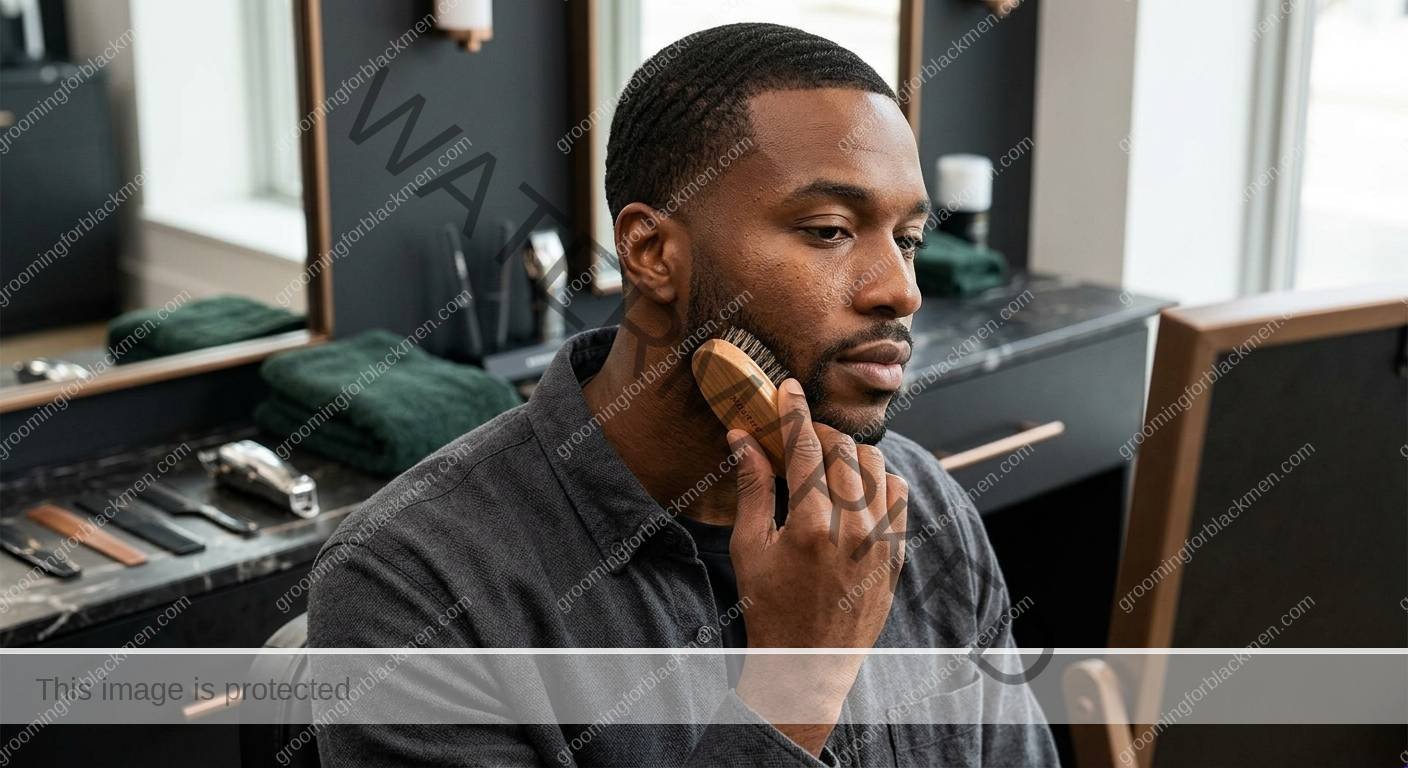
Short beard maintenance for Black men doesn’t have to be complicated. Here’s a premium, disciplined routine that respects your hair and skin. This routine is built for real life—whether you’re a beginner or looking to refine your approach.
1. Cleanse Gently
- Use a mild facial cleanser or a dedicated beard wash 2-3 times per week. Avoid harsh soaps that strip natural oils and increase dryness.
- On off-days, rinse with lukewarm water to remove sweat and surface dirt. Never use hot water—it can dry out both hair and skin.
- Massage cleanser into your beard and skin with your fingertips, not nails, to avoid microtears or irritation.
- For more on beard wash frequency, see this guide.
2. Moisturize Daily
- Apply a lightweight, non-comedogenic moisturizer to your face and beard area after cleansing. Look for ingredients like hyaluronic acid, glycerin, or aloe.
- Follow with a beard oil designed for coarse or curly hair. This softens hair, helps prevent dryness and itch, and adds a healthy sheen without feeling greasy.
- Rub a few drops of oil between your palms and massage into your beard and skin underneath. Focus on dry or itchy areas.
- For product examples, see the section below.
3. Brush or Comb to Train Hair
- Use a soft-bristle beard brush or a wide-tooth comb to gently detangle and lay hair flat. This helps prevent ingrown hairs and keeps your beard looking neat.
- Brush in the direction you want your beard to grow. This trains the hair over time and reduces the risk of hairs curling back into the skin.
- Brushing also helps distribute natural oils and beard oil evenly, keeping hair and skin conditioned.
- For brush and comb recommendations, see our brush and comb guide.
4. Trim with Care
- Invest in a quality beard trimmer with adjustable guards. Avoid razors or bare blades if you’re prone to bumps.
- Trim every 3-7 days, depending on your growth rate and preferred length. Don’t chase perfection—focus on a clean, even look.
- Always trim on dry hair for the most accurate length. Wet hair appears longer and can lead to over-trimming.
- Clean your trimmer regularly to avoid bacteria buildup. Use a brush to remove hair and disinfect the blades after each use.
- For shaping tips, see how to shape your beard.
5. Address Bumps and Irritation Early
- If you notice bumps, switch to a higher guard or let your beard grow slightly longer. Shorter cuts increase the risk of ingrown hairs.
- Avoid digging at ingrown hairs or using harsh scrubs. Instead, gently exfoliate with a soft brush or washcloth 1-2 times a week to help prevent buildup.
- If irritation is painful, spreading, or persistent, see a dermatologist. Early intervention prevents long-term marks or scarring.
- For more on beard itch and dandruff, see our guides on beard itch and beard dandruff.
6. Keep Your Routine Consistent
- Short beard maintenance is about discipline, not perfection. Stick to your routine, adjust as needed, and don’t chase quick fixes.
- Track what works for your skin and hair. If a product or technique causes irritation, switch it up—your comfort comes first.
Sample Step-by-Step Short Beard Routine
- Morning: Rinse beard with lukewarm water. Pat dry. Apply moisturizer and a few drops of beard oil. Brush or comb to style.
- Evening (2-3 times a week): Cleanse with beard wash or gentle facial cleanser. Rinse thoroughly. Moisturize and apply beard oil again if needed.
- Trim: Every 3-7 days, use a trimmer with your preferred guard. Outline edges with a detail trimmer, avoiding razors if you’re bump-prone. Brush to finish.
Product and Tool Criteria for Short Beard Maintenance
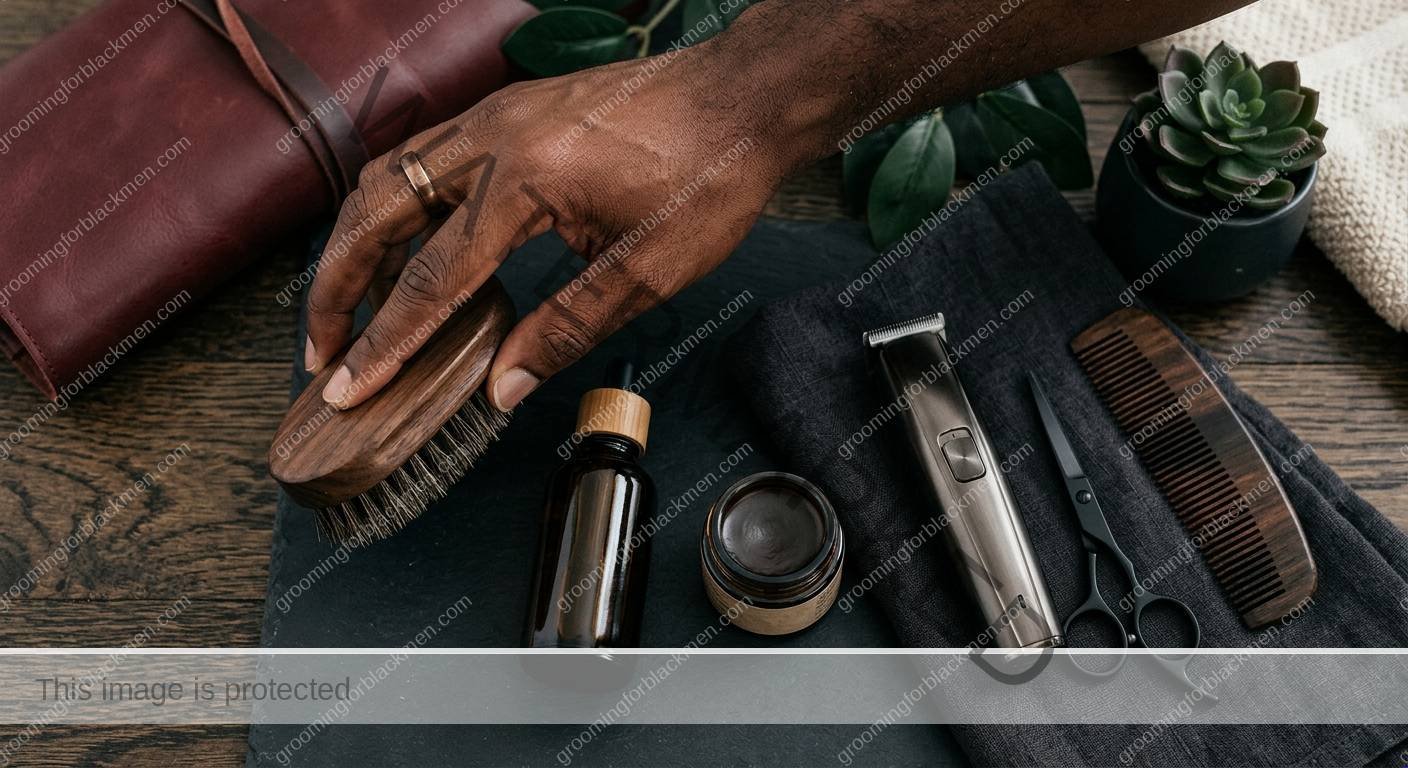
GFBM may earn a small commission from qualifying purchases, but product examples are included to clarify criteria, not to promise results. Choose products that respect your hair’s curl pattern and your skin’s needs.
Beard Trimmer for Black Men
- Choose a trimmer with adjustable guards (1mm–10mm) for precise length control. This helps you avoid cutting too close and reduces the risk of bumps.
- Look for sharp, hypoallergenic blades to reduce tugging and irritation. Ceramic or titanium blades are less likely to rust or dull quickly.
- Easy cleaning and cordless options are a plus for convenience. A waterproof trimmer can be rinsed after each use, reducing buildup.
- See options: beard trimmer for Black men
Beard Oil for Black Men
- Look for oils with jojoba, argan, or grapeseed oil as a base. These moisturize without clogging pores and absorb quickly.
- Avoid heavy fragrances or alcohol-based formulas, which can irritate sensitive skin or cause dryness.
- Natural oils with vitamin E can help soothe and protect skin, especially if you’re prone to irritation.
- See examples: beard oil for Black men
- For more on choosing the right oil, see best beard oils for Black men and oil vs balm vs butter.
Beard Brush for Black Men
- Soft or medium boar bristles work well for short, coarse beards. They help distribute oil and lay hair flat without scratching the skin.
- Avoid hard or synthetic bristles that can scratch the skin and cause irritation.
- Choose a brush with a comfortable handle and a size that fits your beard area for better control.
- See options: beard brush for Black men
Other Useful Tools
- Wide-tooth comb: Ideal for detangling without pulling or breaking coarse hair.
- Detail trimmer: For outlining beard lines and keeping edges sharp without using a razor. See how to shape your beard for more.
- Gentle exfoliating brush or washcloth: For occasional exfoliation to prevent buildup and ingrown hairs. Use no more than once or twice a week.
What to Avoid
- Heavy, greasy products that sit on top of hair and clog pores.
- Alcohol-heavy aftershaves or toners.
- Harsh scrubs or undiluted essential oils.
- Cheap, dull trimmers or blades that tug or irritate skin.
Troubleshooting and When to Get Help

Even with the best short beard maintenance routine, issues can come up. Here’s how to handle common problems:
- Razor bumps or ingrown hairs: Let your beard grow out slightly and use a higher trimmer guard. Avoid shaving too close. Don’t dig at bumps—this can cause infection or scarring.
- Dryness or flaking: Increase your use of beard oil and moisturizer. Consider washing less often or switching to a gentler cleanser. For persistent flakes, see our beard dandruff guide.
- Itch or irritation: Stick to fragrance-free, alcohol-free products. Don’t scratch—use a soft brush to soothe the skin. For more, see our beard itch guide.
- Uneven growth or patches: Keep your beard trimmed to a uniform length. If you have persistent patchiness, see patchy beard fixes for strategies.
When to see a dermatologist or clinician:
- Painful, infected, or spreading bumps
- Persistent irritation or scarring
- Dark spots that don’t fade over time
Professional help is a sign of discipline, not defeat. Don’t wait if something feels wrong—early intervention can prevent long-term issues and help you maintain your look with confidence.
Real-World Troubleshooting Scenarios
- Scenario: You develop a cluster of bumps after switching trimmers.
Solution: Stop using the new trimmer, let your beard grow out a few millimeters, and apply a soothing, fragrance-free moisturizer. Clean and disinfect your tools. If bumps persist, consult a dermatologist. - Scenario: Your beard feels rough and looks dull by midweek.
Solution: Increase your beard oil use and brush daily to distribute oils. Check your cleanser—switch to a gentler formula if needed. - Scenario: You notice dark spots along your beard line.
Solution: Avoid shaving or trimming too close. Use a higher guard and keep skin moisturized. If spots linger, see a professional for advice on fading hyperpigmentation safely.
Frequently Asked Questions
How often should I trim my short beard?
Most Black men with short beards benefit from trimming every 3–7 days, depending on growth rate and desired length. Use a trimmer with adjustable guards to maintain an even look and avoid shaving too close to the skin.
What’s the best way to prevent razor bumps with a short beard?
Use a trimmer instead of a razor, and avoid cutting hair below the skin line. Brush your beard daily to train hair to grow outward, not inward. Keep skin moisturized and avoid harsh products that can irritate or dry out your skin.
Should I use beard oil if my beard is short?
Yes. Beard oil softens coarse hair, reduces itch, and keeps both hair and skin hydrated. Even with a short beard, a few drops daily can make a noticeable difference. For more, see our best beard oils guide.
How do I keep my beard line sharp without causing bumps?
Use a trimmer with a detail attachment or a high guard to outline your beard. Avoid razors or bare blades if you’re prone to bumps. For shaping tips, check out how to shape your beard.
What’s the difference between beard oil, balm, and butter for short beards?
Beard oil is lightweight and best for hydration and softness. Balm adds light hold and is good for shaping, while butter is heavier and ideal for deep conditioning. For short beards, oil is usually enough. Learn more in our oil vs balm vs butter guide.
How do I deal with beard dandruff or flakes?
Use a gentle beard wash 2-3 times a week and moisturize daily with beard oil. Avoid harsh shampoos or soaps. For persistent flakes, see our beard dandruff guide.
When should I see a professional about beard or skin problems?
If you have painful, infected, spreading, or persistent irritation, bumps, or dark spots, see a dermatologist or qualified clinician. Early intervention can prevent scarring and long-term issues.
What to Do Next
Short beard maintenance for Black men is about discipline, not perfection. Start with a simple routine: gentle cleansing, daily moisture, regular trimming, and the right tools. Adjust as needed for your texture and skin. If you run into trouble, don’t hesitate to get professional advice—it’s a smart investment in your look and your comfort.
For more on building a routine from scratch, see our beginner beard care routine. If you’re dealing with patchy spots, check out patchy beard fixes. To explore the full range of beard care topics, visit the Beard Care & Beard Growth hub.
Stay consistent, stay sharp, and respect your routine. Your beard—and your skin—will thank you.