
Dandruff for Black Men: Practical Grooming Guide
Dandruff doesn’t care about your schedule, your style, or your plans. It shows up—sometimes as flakes on your shoulders, sometimes as itch that won’t quit, sometimes as dry patches that mess with your confidence. If you’re a Black man with rich brown skin and coarse or curly hair, you already know: your scalp is different, your hair is different, and what works for everyone else doesn’t always work for you. That’s why you need a dandruff for Black men practical grooming guide built for your reality—not generic advice, not miracle claims, just grounded, effective routines that respect your hair, your scalp, and your time.
This guide is for men who want to understand what’s really going on with their scalp, cut through the noise, and get practical steps that fit into a real grooming routine. You’ll learn why dandruff often hits differently for Black men, what usually goes wrong with common advice, and what to do instead—without harsh chemicals, aggressive scrubbing, or empty promises. We’ll cover product and tool criteria, troubleshooting, and when it’s time to call in a professional. You’ll also find answers to the most common questions about dandruff, scalp health, and grooming for Black men.
If you’re serious about keeping your hair and scalp healthy—whether you’re working on 360 waves, growing a beard, or just want to keep things clean and comfortable—this is your starting point. For a broader look at hair and scalp health, see our Hair & Scalp Health Guide for Black Men.
Real-Life Hair and Waves Scenarios for Dandruff for Black Men
A waves or scalp routine has to work after the bathroom mirror, not just during the first ten minutes after brushing. Black men often have to balance dense curls, scalp comfort, haircut timing, durag habits, sweat, product buildup, and the pressure to keep the pattern looking clean every day. That is why dandruff for black men needs a practical system instead of random brushing, heavy product, or panic changes whenever the pattern looks uneven.
Start by separating three questions. First, what is the hair doing It may be dry, overcoated, frizzy, compressed unevenly, or not trained enough yet. Second, what is the scalp doing Tightness, flakes, itching, or soreness usually means the routine needs gentler cleansing, cleaner tools, better rinsing, or less buildup. Third, what is your schedule doing If you work out, wear hats, sweat heavily, or sleep without consistent compression, your routine has to account for that reality.
The goal is not to force the hair into a pattern overnight. The goal is to create steady conditions: clean scalp, moisturized hair, consistent brushing direction, reasonable compression, and enough patience to let the curl pattern train over time. For many Black men, the mistake is not lack of effort. It is too much inconsistent effort: changing brushes every few days, adding more product when the scalp needs washing, or brushing aggressively until the scalp feels tender.
Tools matter, but standards matter more. A wave brush should match your hair length and texture. A durag or wave cap should hold the hair down without leaving painful lines. Wash day should clean the scalp without stripping it so hard that the hair feels brittle. Product should support moisture and control, not bury the scalp under a waxy layer. When those basics are consistent, the routine starts to feel less like guesswork.
How to Audit Waves and Scalp Progress Without Overreacting
Audit the routine weekly, not every hour. Look at whether the pattern is becoming more consistent, whether the scalp feels calmer, whether flakes or itch are improving, and whether the hair still has movement after product. A clean routine should not make the scalp feel trapped. If the hair only looks controlled because it is stiff, greasy, or coated, the routine may be hiding a problem instead of solving it.
If progress stalls, change one variable at a time. Adjust brush firmness, brushing direction, wash frequency, compression time, or product amount separately so you can tell what helped. If the scalp becomes painful, inflamed, bleeding, or persistently flaky, pause aggressive styling and consider a dermatologist or qualified clinician. A polished look should not require ignoring discomfort. The best routine is the one that trains the hair while protecting the scalp underneath.
Real-Life Hair and Waves Scenarios for Dandruff for Black Men
A waves or scalp routine has to work after the bathroom mirror, not just during the first ten minutes after brushing. Black men often have to balance dense curls, scalp comfort, haircut timing, durag habits, sweat, product buildup, and the pressure to keep the pattern looking clean every day. That is why dandruff for black men needs a practical system instead of random brushing, heavy product, or panic changes whenever the pattern looks uneven.
Start by separating three questions. First, what is the hair doing It may be dry, overcoated, frizzy, compressed unevenly, or not trained enough yet. Second, what is the scalp doing Tightness, flakes, itching, or soreness usually means the routine needs gentler cleansing, cleaner tools, better rinsing, or less buildup. Third, what is your schedule doing If you work out, wear hats, sweat heavily, or sleep without consistent compression, your routine has to account for that reality.
The goal is not to force the hair into a pattern overnight. The goal is to create steady conditions: clean scalp, moisturized hair, consistent brushing direction, reasonable compression, and enough patience to let the curl pattern train over time. For many Black men, the mistake is not lack of effort. It is too much inconsistent effort: changing brushes every few days, adding more product when the scalp needs washing, or brushing aggressively until the scalp feels tender.
Tools matter, but standards matter more. A wave brush should match your hair length and texture. A durag or wave cap should hold the hair down without leaving painful lines. Wash day should clean the scalp without stripping it so hard that the hair feels brittle. Product should support moisture and control, not bury the scalp under a waxy layer. When those basics are consistent, the routine starts to feel less like guesswork.
How to Audit Waves and Scalp Progress Without Overreacting
Audit the routine weekly, not every hour. Look at whether the pattern is becoming more consistent, whether the scalp feels calmer, whether flakes or itch are improving, and whether the hair still has movement after product. A clean routine should not make the scalp feel trapped. If the hair only looks controlled because it is stiff, greasy, or coated, the routine may be hiding a problem instead of solving it.
If progress stalls, change one variable at a time. Adjust brush firmness, brushing direction, wash frequency, compression time, or product amount separately so you can tell what helped. If the scalp becomes painful, inflamed, bleeding, or persistently flaky, pause aggressive styling and consider a dermatologist or qualified clinician. A polished look should not require ignoring discomfort. The best routine is the one that trains the hair while protecting the scalp underneath.
Real-Life Hair and Waves Scenarios for Dandruff for Black Men
A waves or scalp routine has to work after the bathroom mirror, not just during the first ten minutes after brushing. Black men often have to balance dense curls, scalp comfort, haircut timing, durag habits, sweat, product buildup, and the pressure to keep the pattern looking clean every day. That is why dandruff for black men needs a practical system instead of random brushing, heavy product, or panic changes whenever the pattern looks uneven.
Start by separating three questions. First, what is the hair doing It may be dry, overcoated, frizzy, compressed unevenly, or not trained enough yet. Second, what is the scalp doing Tightness, flakes, itching, or soreness usually means the routine needs gentler cleansing, cleaner tools, better rinsing, or less buildup. Third, what is your schedule doing If you work out, wear hats, sweat heavily, or sleep without consistent compression, your routine has to account for that reality.
The goal is not to force the hair into a pattern overnight. The goal is to create steady conditions: clean scalp, moisturized hair, consistent brushing direction, reasonable compression, and enough patience to let the curl pattern train over time. For many Black men, the mistake is not lack of effort. It is too much inconsistent effort: changing brushes every few days, adding more product when the scalp needs washing, or brushing aggressively until the scalp feels tender.
Tools matter, but standards matter more. A wave brush should match your hair length and texture. A durag or wave cap should hold the hair down without leaving painful lines. Wash day should clean the scalp without stripping it so hard that the hair feels brittle. Product should support moisture and control, not bury the scalp under a waxy layer. When those basics are consistent, the routine starts to feel less like guesswork.
How to Audit Waves and Scalp Progress Without Overreacting
Audit the routine weekly, not every hour. Look at whether the pattern is becoming more consistent, whether the scalp feels calmer, whether flakes or itch are improving, and whether the hair still has movement after product. A clean routine should not make the scalp feel trapped. If the hair only looks controlled because it is stiff, greasy, or coated, the routine may be hiding a problem instead of solving it.
If progress stalls, change one variable at a time. Adjust brush firmness, brushing direction, wash frequency, compression time, or product amount separately so you can tell what helped. If the scalp becomes painful, inflamed, bleeding, or persistently flaky, pause aggressive styling and consider a dermatologist or qualified clinician. A polished look should not require ignoring discomfort. The best routine is the one that trains the hair while protecting the scalp underneath.
Why This Matters for Black Men
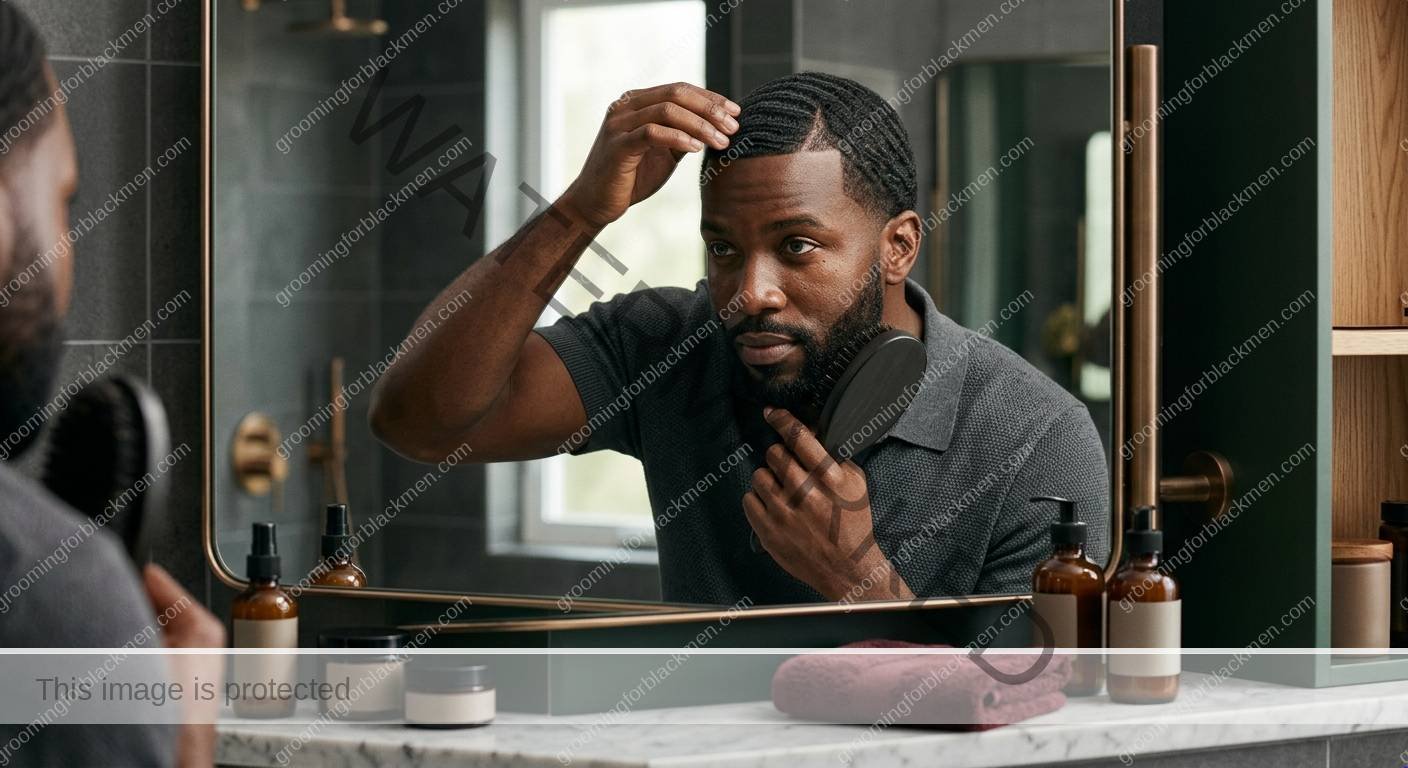
Dandruff isn’t just about flakes. For Black men, it’s about comfort, confidence, and the health of your hair and scalp. Coarse, curly hair and rich brown skin come with unique needs. Your scalp’s natural oils (sebum) move slowly through tight curls, making dryness and buildup more likely. Many Black men wash their hair less often to avoid stripping moisture, but this can allow dead skin and product to accumulate, setting the stage for dandruff.
Dandruff can also look different on brown skin. Flakes may be less visible, but itching, irritation, or dull patches can be more noticeable. Over-scrubbing or using harsh products can leave your scalp feeling raw, while under-washing can make buildup worse. If you’re working on 360 waves, using durags, or keeping a close cut, scalp health directly affects your results. Dandruff can disrupt your wave pattern, cause discomfort under headwear, and make grooming routines more frustrating.
Ignoring dandruff isn’t just about looks—it can lead to chronic irritation, breakage, or even scarring if left unchecked. Addressing it with a routine that respects your hair type and skin tone is about taking ownership of your grooming, not just covering up flakes.
Understanding Dandruff: The Root Causes
Before you can manage dandruff, you need to know what you’re dealing with. Dandruff is a scalp condition marked by flaking, itching, and sometimes redness. For Black men, the most common causes include:
- Malassezia yeast overgrowth: This naturally occurring yeast can multiply when conditions are right—think excess oil, product buildup, or infrequent washing.
- Dry scalp: Not all flakes are dandruff. Dryness from under-washing, harsh weather, or stripping products can mimic dandruff symptoms.
- Contact dermatitis: Sensitivity to certain hair products or dyes can trigger irritation and flaking.
- Seborrheic dermatitis: A more severe form of dandruff, often with redness and greasy yellowish flakes.
It’s common for more than one factor to be at play. The key is to observe your scalp’s response to your routine and adjust accordingly. For more on scalp conditions, see our Scalp Care Guide for Black Men.
What Usually Goes Wrong

Most mainstream dandruff advice assumes straight hair, frequent washing, and lighter skin. Here’s why that often fails Black men:
- Over-washing: Daily shampooing can strip natural oils, leaving coarse or curly hair dry, brittle, and prone to breakage.
- Harsh shampoos: Many anti-dandruff shampoos contain sulfates or alcohols that can irritate brown skin and dry out textured hair.
- Aggressive scrubbing: Digging at flakes or using hard brushes can cause micro-tears, irritation, and even worsen flakes.
- Ignoring moisture: Skipping conditioner or scalp oils can leave the scalp dry, making flaking and itching worse.
- Heavy product buildup: Using thick pomades, greases, or gels without regular cleansing can trap dead skin and feed dandruff-causing yeast.
- DIY mistakes: Home remedies like undiluted tea tree oil, vinegar, or baking soda can burn or irritate sensitive scalps.
These missteps don’t just fail to fix dandruff—they can make it worse, leading to more flakes, more itch, and more frustration. The key is a balanced approach that cleanses, soothes, and protects your scalp without sacrificing the health of your hair.
What to Do Instead

Here’s a practical, disciplined approach to managing dandruff for Black men. This routine respects your hair’s texture, your scalp’s needs, and your time.
1. Wash Regularly—But Not Excessively
Most Black men don’t need to shampoo daily. Aim for once or twice a week, depending on your hair’s needs, sweat, and product use. This helps remove flakes, buildup, and excess oil without stripping moisture. If you’re active or use heavy products, you may need to wash more often. If your scalp feels dry, stretch washes a bit further, but don’t skip them entirely.
Decision criteria: If you notice itching, visible flakes, or a heavy feeling at your roots, it’s time to wash. If your scalp feels tight or your hair is brittle, you may be washing too often. Adjust based on these cues.
2. Use a Gentle, Targeted Shampoo
Look for anti-dandruff shampoos that are sulfate-free and formulated for textured hair. Ingredients like pyrithione zinc, selenium sulfide, or ketoconazole can help control flakes and itching. Avoid shampoos with high alcohol content or harsh detergents. Lather gently with your fingertips, not your nails.
Step-by-step: Wet your hair thoroughly. Apply shampoo to your scalp, focusing on problem areas. Massage gently for 1-2 minutes. Rinse thoroughly. Repeat if needed, especially if you use heavy products.
3. Condition Every Time
Follow every shampoo with a moisturizing conditioner for curly or coarse hair. This restores hydration, softens strands, and soothes the scalp. Leave the conditioner on for at least 3-5 minutes for best results. If your scalp feels tight or dry after washing, you may need a richer formula or a leave-in conditioner.
For more on conditioner selection, see our Conditioner Selection Guide for Black Men.
4. Moisturize Your Scalp—But Don’t Smother It
After washing and conditioning, apply a lightweight, non-comedogenic scalp oil or lotion to keep your scalp supple. Avoid heavy greases or pomades that can clog pores and trap flakes. Jojoba, argan, or grapeseed oil are good options. Use sparingly—your scalp should feel comfortable, not greasy.
Routine logic: Apply oil to fingertips, then massage gently into your scalp. Focus on dry or itchy areas. If you notice increased flakes or a heavy feeling, reduce the amount or frequency.
5. Brush or Massage Gently
Use a soft-bristled brush or a silicone scalp massager to help lift flakes and stimulate circulation. Do this before shampooing to loosen buildup, or gently while shampooing to help cleanse. Avoid digging or scratching, which can cause irritation and worsen flakes.
For men with waves, use a wave brush with soft bristles and avoid brushing too aggressively over irritated spots. See our Wave Brush Selection Guide for more tips.
6. Keep Your Tools Clean
Wash your brushes, combs, durags, and pillowcases regularly. Dirty tools can reintroduce flakes, oil, and bacteria to your scalp. Use mild soap and let them dry completely before reuse.
Real-life scenario: If you notice flakes returning quickly after washing, check your headwear and pillowcases—they may be the culprit.
7. Be Consistent
Managing dandruff is about routine, not quick fixes. Stick to your schedule, adjust as needed, and give products time to work. If you switch products, give each at least 2-4 weeks before judging results—unless you experience irritation.
Consistency is especially important if you’re working on 360 waves or growing out your hair. For wave-specific routines, see our Waves Wash Day Guide.
Product and Tool Criteria for Dandruff Control

GFBM may earn a small commission from qualifying purchases, but product examples are included to clarify criteria, not to promise results.
- Anti-dandruff shampoo for Black men: Choose sulfate-free formulas with active ingredients like pyrithione zinc or ketoconazole. Avoid strong fragrances or alcohols. Browse examples on Amazon.
- Scalp brush for dandruff: Look for soft silicone bristles that won’t scratch or tear. Use for gentle massage, not aggressive scrubbing. Browse examples on Amazon.
- Moisturizing conditioner for curly hair: Pick formulas with shea butter, coconut oil, or glycerin. Avoid heavy silicones or waxes that can cause buildup. Browse examples on Amazon.
For more on selecting the right tools for textured hair, see our Wave Brush Selection Guide.
Step-by-Step Dandruff Routine for Black Men
- Pre-wash prep: Before washing, gently brush or massage your scalp to loosen flakes. Use a soft brush or silicone massager—never your nails.
- Shampoo: Wet your hair thoroughly. Apply a quarter-sized amount of anti-dandruff shampoo to your scalp. Massage gently for 1-2 minutes, focusing on itchy or flaky areas. Rinse well.
- Condition: Apply a moisturizing conditioner from roots to ends. Let it sit for 3-5 minutes. Rinse thoroughly.
- Moisturize: Pat hair and scalp dry with a clean towel. Apply a lightweight oil or scalp lotion to your scalp, focusing on dry spots.
- Style: Use minimal product. If you use pomades or gels, choose lightweight, water-based options and avoid applying directly to the scalp.
- Maintain: Clean your brushes, combs, and headwear weekly. Change pillowcases regularly.
This routine can be adapted for short fades, 360 waves, or longer styles. If you have a beard, see our Beard Dandruff Guide for Black Men for beard-specific steps.
Real-Life Scenarios: Troubleshooting Dandruff
- Scenario 1: Persistent flakes despite regular washing. Try switching to a shampoo with a different active ingredient (e.g., from pyrithione zinc to ketoconazole). Check if you’re using too much product or not rinsing thoroughly. Make sure you’re conditioning every time.
- Scenario 2: Scalp feels tight, dry, or sore after washing. You may be over-washing or using a harsh shampoo. Reduce wash frequency and switch to a gentler, more moisturizing formula. Add a leave-in conditioner or lightweight oil.
- Scenario 3: Flakes return quickly after washing. Check your tools and headwear for cleanliness. Make sure you’re not applying heavy products directly to the scalp. Consider increasing wash frequency slightly.
- Scenario 4: Beard dandruff or irritation under facial hair. Use a gentle beard shampoo and conditioner. Moisturize your beard and the skin underneath. For more, see our Beard Dandruff Guide.
Troubleshooting and When to Get Help

Most dandruff can be managed with consistent care, but sometimes you need backup. Here’s when to troubleshoot and when to see a professional:
- If flakes persist after 4-6 weeks of routine care: Try switching to a different active ingredient in your shampoo, or adjust your wash frequency.
- If you notice redness, swelling, pain, or pus: These are signs of possible infection or another scalp condition. See a dermatologist or qualified clinician.
- If you develop bald patches, scarring, or severe itching: These may indicate a more serious issue like psoriasis, eczema, or alopecia. Get a professional assessment.
- If over-the-counter products cause burning, stinging, or rash: Discontinue use and consult a professional for alternatives.
- If you’re struggling with beard dandruff: See our Beard Dandruff Guide for Black Men for tailored advice.
Never dig at ingrown hairs, use undiluted essential oils, or try harsh DIY scrubs. If in doubt, a board-certified dermatologist or trichologist can help you identify the cause and build a safe plan.
Frequently Asked Questions
How often should Black men wash their hair to control dandruff
Most Black men do best with shampooing once or twice a week. Adjust based on your scalp’s needs, activity level, and product use. Washing too often can dry out textured hair, while washing too little can allow buildup. Listen to your scalp—if it feels itchy, oily, or flaky, it may be time for a wash.
What ingredients should I look for in an anti-dandruff shampoo for Black men
Look for active ingredients like pyrithione zinc, selenium sulfide, or ketoconazole. Choose sulfate-free formulas to avoid stripping moisture from coarse or curly hair. Avoid heavy fragrances, alcohols, and harsh detergents.
Can I use oils or butters on my scalp if I have dandruff
Lightweight oils like jojoba, argan, or grapeseed can help moisturize the scalp without clogging pores. Avoid heavy butters or greases, which can trap flakes and feed dandruff-causing yeast. Always apply oils sparingly and monitor for buildup or irritation.
Is it safe to use a scalp brush for dandruff
Yes, if you use a soft silicone brush and gentle pressure. Scalp brushes can help lift flakes and stimulate circulation, but avoid aggressive scrubbing or using hard bristles, which can irritate the scalp and worsen dandruff.
What’s the difference between dandruff and dry scalp
Dandruff is usually caused by an overgrowth of yeast (Malassezia) and results in oily, yellowish flakes and itching. Dry scalp flakes are smaller, whiter, and come from lack of moisture. Both can occur together, especially if your scalp is sensitive or you use harsh products. If you’re unsure, a dermatologist can help you identify the cause.
Can wearing durags or wave caps make dandruff worse
Durags and wave caps themselves don’t cause dandruff, but wearing them for long periods without washing can trap sweat, oil, and flakes against your scalp. Wash your headwear regularly and keep your scalp clean to avoid buildup. For more on headwear and scalp health, see our Durag vs Wave Cap Guide.
When should I see a dermatologist about dandruff
If you have painful, infected, spreading, or persistent irritation that doesn’t improve after 4-6 weeks of consistent care, see a dermatologist or qualified clinician. Also seek help if you notice scarring, bald patches, or severe itching. Professional guidance is key for chronic or severe scalp issues.
What to Do Next
Dandruff is manageable, but it takes the right routine and a disciplined approach. Start by assessing your current products and habits—are you over-washing, using harsh shampoos, or skipping conditioner Build a routine that cleanses, conditions, and moisturizes your scalp without smothering it. Use tools that respect your hair’s texture and your scalp’s sensitivity.
Stay consistent, keep your tools clean, and pay attention to how your scalp responds. If you hit a wall, don’t hesitate to consult a professional. For more on keeping your hair and scalp healthy, check out our Hair & Scalp Health Guide and our Waves Wash Day Guide if you’re working on 360 waves. Remember: healthy hair starts with a healthy scalp, and the best results come from routines built for you.