

Beginner Beard Routine for Black Men: Practical Grooming Guide
Building a beard routine as a Black man isn’t about chasing trends or hoping for overnight miracles. It’s about learning what your beard needs, working with your natural texture, and developing habits that keep your skin and facial hair healthy. If you’re just starting your beard journey, you may already know that coarse, curly, or tightly coiled hair comes with its own set of grooming challenges—and strengths. This beginner beard routine for Black men practical grooming guide is designed to cut through the noise, give you real steps, and help you avoid the common pitfalls that can leave you frustrated or uncomfortable.
Whether you’re growing your beard for the first time or trying to get more disciplined about your routine, you don’t need a shelf full of products or a barber’s license. You need a clear understanding of what works for your skin and hair type, a few quality tools, and the willingness to keep at it. This guide will walk you through the basics—what to do, what to avoid, and how to troubleshoot common problems like dryness, itch, or patchiness. You’ll also find practical product examples, but remember: the real results come from consistency, not hype.
For a deeper dive into beard care and growth, visit our Beard Care & Beard Growth hub. If you want a step-by-step starter routine, keep reading. This guide is built for Black men with rich brown skin, coarse or curly facial hair, and real-world routines—no shame, no stereotypes, no empty promises.
Real-Life Beard Routine Scenarios for Beginner Beard Routine for Black Men
A strong beard routine has to work outside of perfect bathroom-counter conditions. It has to work when you are rushing before work, when your beard feels dry after a long day, when the weather changes, and when your barber has shaped the line cleaner than you expected. For Black men, that routine also has to respect dense curls, coarse strands, sensitive skin under the beard, and the fact that product buildup can hide until the beard starts itching, flaking, or looking dull.
Start by reading the beard before adding more product. If the beard feels rough but the skin underneath is calm, you may need better conditioning, a lighter oil, or more consistent brushing. If the skin feels tight, itchy, or irritated, the answer is usually not more shine. It may be a gentler wash schedule, a cleaner rinse, a lighter hand with balm, or a pause from heavy fragrance. The discipline is in changing one variable at a time so you can tell what actually helped.
For a short beard, keep the routine direct: cleanse when needed, moisturize the skin beneath, use a small amount of oil or balm, and brush enough to distribute product without scraping the skin. For a fuller beard, section the work. Apply product from the skin outward, then shape the hair so the surface looks neat without leaving the roots dry. The fuller the beard gets, the more important it becomes to separate grooming from coating. A beard can look shiny and still be dehydrated underneath.
Budget matters too. You do not need a crowded shelf to manage beginner beard routine for black men. A dependable wash, one conditioning product, and one tool you actually use will outperform five products that fight each other. If money is tight, upgrade the item that touches your skin or beard most often. If time is tight, simplify the routine instead of skipping care entirely. Consistency beats a complicated plan that only happens twice a month.
How to Audit Your Beard Without Overreacting
Give any beard change enough time to show a pattern. One dry morning does not mean the routine failed. One good beard day does not mean every product is perfect. Track how your beard feels after washing, how the skin underneath feels at night, whether flakes return quickly, and whether the beard holds shape without becoming stiff. Those signals tell you more than packaging claims or social media routines built for a different texture.
If irritation shows up, simplify. Remove the newest product first, reduce fragrance, avoid scratching, and return to a basic cleanse-and-moisturize rhythm. If flakes, soreness, bleeding, swelling, or persistent itching keep coming back, that is a reason to get professional help rather than forcing stronger products into the routine. Grooming should make you look more put together, but it should also leave your skin calmer over time.
Real-Life Beard Routine Scenarios for Beginner Beard Routine for Black Men
A strong beard routine has to work outside of perfect bathroom-counter conditions. It has to work when you are rushing before work, when your beard feels dry after a long day, when the weather changes, and when your barber has shaped the line cleaner than you expected. For Black men, that routine also has to respect dense curls, coarse strands, sensitive skin under the beard, and the fact that product buildup can hide until the beard starts itching, flaking, or looking dull.
Start by reading the beard before adding more product. If the beard feels rough but the skin underneath is calm, you may need better conditioning, a lighter oil, or more consistent brushing. If the skin feels tight, itchy, or irritated, the answer is usually not more shine. It may be a gentler wash schedule, a cleaner rinse, a lighter hand with balm, or a pause from heavy fragrance. The discipline is in changing one variable at a time so you can tell what actually helped.
For a short beard, keep the routine direct: cleanse when needed, moisturize the skin beneath, use a small amount of oil or balm, and brush enough to distribute product without scraping the skin. For a fuller beard, section the work. Apply product from the skin outward, then shape the hair so the surface looks neat without leaving the roots dry. The fuller the beard gets, the more important it becomes to separate grooming from coating. A beard can look shiny and still be dehydrated underneath.
Budget matters too. You do not need a crowded shelf to manage beginner beard routine for black men. A dependable wash, one conditioning product, and one tool you actually use will outperform five products that fight each other. If money is tight, upgrade the item that touches your skin or beard most often. If time is tight, simplify the routine instead of skipping care entirely. Consistency beats a complicated plan that only happens twice a month.
How to Audit Your Beard Without Overreacting
Give any beard change enough time to show a pattern. One dry morning does not mean the routine failed. One good beard day does not mean every product is perfect. Track how your beard feels after washing, how the skin underneath feels at night, whether flakes return quickly, and whether the beard holds shape without becoming stiff. Those signals tell you more than packaging claims or social media routines built for a different texture.
If irritation shows up, simplify. Remove the newest product first, reduce fragrance, avoid scratching, and return to a basic cleanse-and-moisturize rhythm. If flakes, soreness, bleeding, swelling, or persistent itching keep coming back, that is a reason to get professional help rather than forcing stronger products into the routine. Grooming should make you look more put together, but it should also leave your skin calmer over time.
Real-Life Beard Routine Scenarios for Beginner Beard Routine for Black Men
A strong beard routine has to work outside of perfect bathroom-counter conditions. It has to work when you are rushing before work, when your beard feels dry after a long day, when the weather changes, and when your barber has shaped the line cleaner than you expected. For Black men, that routine also has to respect dense curls, coarse strands, sensitive skin under the beard, and the fact that product buildup can hide until the beard starts itching, flaking, or looking dull.
Start by reading the beard before adding more product. If the beard feels rough but the skin underneath is calm, you may need better conditioning, a lighter oil, or more consistent brushing. If the skin feels tight, itchy, or irritated, the answer is usually not more shine. It may be a gentler wash schedule, a cleaner rinse, a lighter hand with balm, or a pause from heavy fragrance. The discipline is in changing one variable at a time so you can tell what actually helped.
For a short beard, keep the routine direct: cleanse when needed, moisturize the skin beneath, use a small amount of oil or balm, and brush enough to distribute product without scraping the skin. For a fuller beard, section the work. Apply product from the skin outward, then shape the hair so the surface looks neat without leaving the roots dry. The fuller the beard gets, the more important it becomes to separate grooming from coating. A beard can look shiny and still be dehydrated underneath.
Budget matters too. You do not need a crowded shelf to manage beginner beard routine for black men. A dependable wash, one conditioning product, and one tool you actually use will outperform five products that fight each other. If money is tight, upgrade the item that touches your skin or beard most often. If time is tight, simplify the routine instead of skipping care entirely. Consistency beats a complicated plan that only happens twice a month.
How to Audit Your Beard Without Overreacting
Give any beard change enough time to show a pattern. One dry morning does not mean the routine failed. One good beard day does not mean every product is perfect. Track how your beard feels after washing, how the skin underneath feels at night, whether flakes return quickly, and whether the beard holds shape without becoming stiff. Those signals tell you more than packaging claims or social media routines built for a different texture.
If irritation shows up, simplify. Remove the newest product first, reduce fragrance, avoid scratching, and return to a basic cleanse-and-moisturize rhythm. If flakes, soreness, bleeding, swelling, or persistent itching keep coming back, that is a reason to get professional help rather than forcing stronger products into the routine. Grooming should make you look more put together, but it should also leave your skin calmer over time.
Why This Matters for Black Men

Beard care isn’t one-size-fits-all. Black men often have facial hair that’s tightly coiled, coarse, or grows in unique patterns. This texture is strong, but it’s also more likely to curl back into the skin, leading to ingrown hairs, bumps, and irritation. The skin beneath can be sensitive, prone to dryness, or react to harsh products. That’s why generic advice—like using any old beard wash or scrubbing hard—often backfires.
Taking the time to learn a routine that works for your hair and skin type isn’t just about looking good. It’s about comfort, confidence, and protecting your skin’s health. A disciplined grooming routine can help prevent common issues like beard itch, flaking, and razor bumps. It also helps your beard look fuller, softer, and more defined, whether you’re aiming for a short goatee or a full, thick beard.
Most importantly, a practical beard routine is about self-respect. It’s a way to invest in yourself, show up with intention, and take control of how you present to the world. You don’t need to follow every trend or buy every product—just the ones that serve your needs.
What Usually Goes Wrong

Many Black men run into the same beard problems, especially in the early stages:
- Ingrown hairs and bumps: Coarse, curly hair is more likely to curl back into the skin, causing irritation and razor bumps.
- Dryness and flaking: The skin under your beard can dry out easily, leading to beard dandruff or “beardruff.”
- Beard itch: New growth and dry skin can make your face itch, especially in the first few weeks.
- Patchy growth: Many men notice uneven or slow-growing areas, which can be frustrating but is often normal.
- Product overload: Using too many products, harsh cleansers, or alcohol-heavy aftershaves can strip moisture and make problems worse.
- Rough handling: Scrubbing hard, digging at ingrown hairs, or using cheap plastic combs can damage hair and skin.
Most of these issues don’t require drastic action. They need a routine that respects your hair’s natural pattern and your skin’s needs. If you’re dealing with painful, infected, spreading, or persistent irritation, see a dermatologist or qualified clinician.
What to Do Instead

Here’s a disciplined, practical beginner beard routine for Black men. Stick to these basics and adjust as your beard grows:
- Cleanse gently, not aggressively: Use a beard wash or gentle cleanser 2-3 times a week. Over-washing can dry out your skin. For more, see our beard wash frequency guide.
- Moisturize daily: Apply a beard oil or lightweight moisturizer to soften hair and hydrate skin. Focus on massaging it down to the roots and skin beneath. For product comparisons, see beard oil vs balm vs butter.
- Brush or comb gently: Use a boar bristle beard brush or wide-tooth comb to distribute oils and detangle. Don’t force through knots—work slowly and with care. Our best beard brush and comb guide explains more.
- Trim and shape with intention: Keep your neckline and cheeks clean, but avoid over-shaving. Use clippers or a trimmer with guards—never dry shave. For shaping tips, read how to shape your beard.
- Be patient with patchiness: Most beards fill in with time. Don’t rush to fill gaps with heavy products or harsh treatments. For more, see patchy beard fixes.
- Address itch and flaking early: Don’t ignore beard itch or flakes. Moisturize, brush gently, and avoid scratching. See our beard itch guide and beard dandruff guide.
Consistency is key. Stick to the basics, avoid harsh shortcuts, and give your beard time to settle into its natural pattern.
Understanding Your Beard: Texture, Growth, and Expectations
Every beard is unique, but Black men’s facial hair often shares certain traits: tightly coiled, coarse, and sometimes growing in multiple directions. This texture is both a strength and a challenge. Coarse hair can look fuller and more defined, but it’s also more likely to trap dirt, tangle, and curl back into the skin. Growth rates vary—some men see quick progress, while others notice slow, uneven patches.
Set realistic expectations. Most beards take several months to fill in, and patchiness is common in the early stages. Genetics play a role, but routine and patience matter just as much. Avoid comparing your progress to filtered social media images or celebrities with different hair types. Your beard journey is your own.
Step-by-Step Beginner Beard Routine for Black Men
Let’s break down a practical daily and weekly routine, with reasoning behind each step. Adjust as needed for your lifestyle, work schedule, or beard goals.
Morning Routine
- Rinse with lukewarm water: This removes overnight sweat and light debris without stripping natural oils. Avoid hot water, which can dry out your skin and hair.
- Apply beard oil or moisturizer: While your beard is slightly damp, work a few drops of beard oil or a lightweight moisturizer through your beard and down to the skin. This locks in moisture and keeps both hair and skin soft.
- Brush or comb: Use a boar bristle brush or wide-tooth comb to distribute oil and detangle. Brush in the direction of growth, starting from the roots. This helps train your beard to grow in your preferred style and prevents knots.
Evening Routine
- Cleanse (2-3 times a week): Use a sulfate-free beard wash or gentle facial cleanser. Massage gently with your fingertips, focusing on the skin beneath the beard. Rinse thoroughly and pat dry with a clean towel.
- Moisturize again (if needed): If your beard or skin feels dry, apply a small amount of beard oil or moisturizer before bed. Nighttime is when your skin repairs itself, so hydration helps prevent flaking and itch.
Weekly Maintenance
- Trim and shape: Once a week (or as needed), use clippers or a trimmer with guards to clean up your neckline, cheeks, and any stray hairs. Don’t chase sharp lines—focus on a natural, tidy look.
- Deep condition (optional): If your beard feels especially dry or brittle, use a beard conditioner or a small amount of beard butter once a week. Leave it in for 10-15 minutes, then rinse thoroughly.
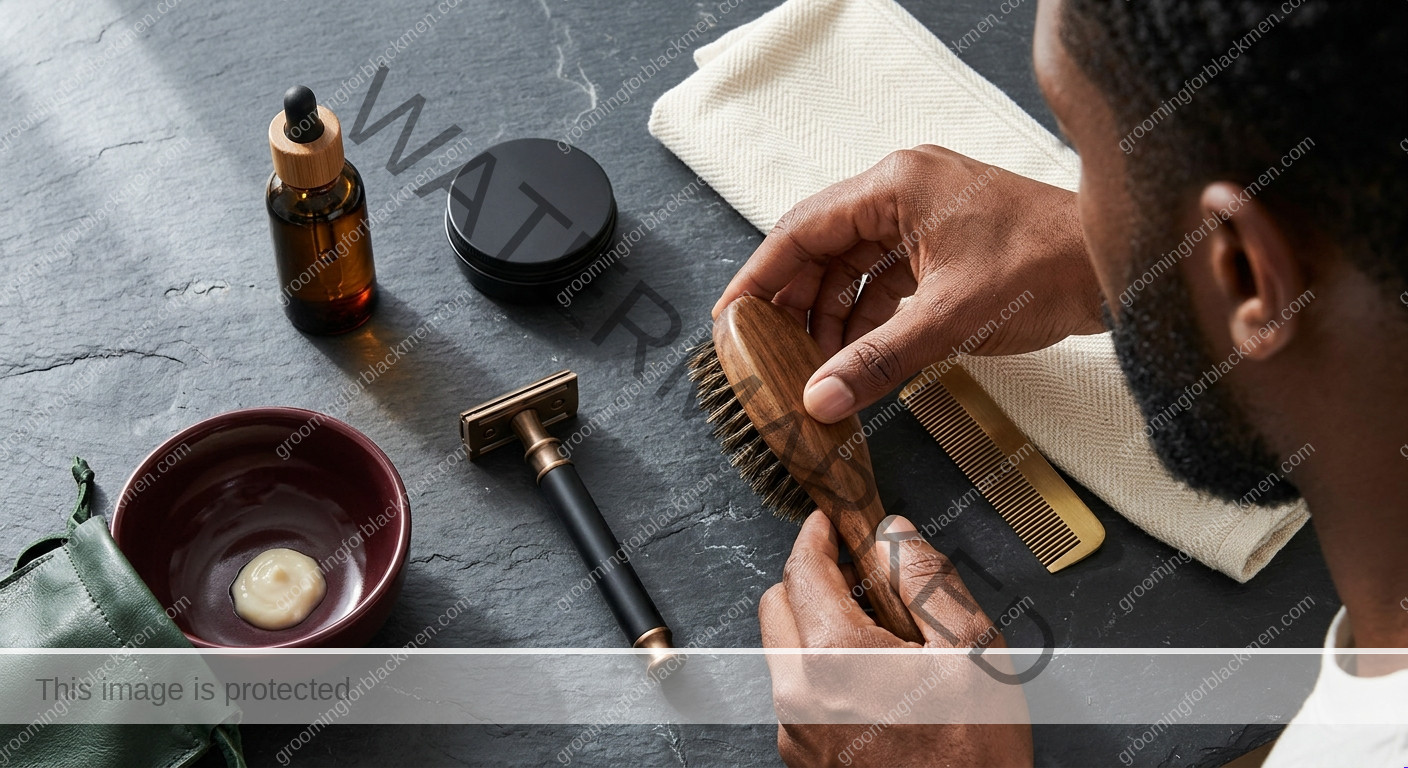
Product and Tool Criteria for Beginner Beard Care
You don’t need a dozen products, but the right basics make a difference. Here’s what to look for:
- Beard wash: Choose a sulfate-free, gentle cleanser made for beards. Avoid harsh soaps or anything that leaves your skin tight or dry.
GFBM may earn a small commission from qualifying purchases, but product examples are included to clarify criteria, not to promise results.
Example search: beard wash for Black men - Beard oil: Look for oils with jojoba, argan, or grapeseed as main ingredients. Avoid heavy fragrances or alcohol. Oils help soften coarse hair and reduce itch.
Example search: beard oil for Black men - Beard brush: A boar bristle brush helps distribute oils and smooths curls without pulling. Avoid cheap plastic brushes or fine-tooth combs.
Example search: boar bristle beard brush - Trimmer or clippers: Use a quality trimmer with adjustable guards to shape and maintain your beard. Clean blades after each use.
- Moisturizer: If you prefer, you can use a lightweight, fragrance-free facial moisturizer under your beard, especially if your skin is very dry.
Stick to these basics. Avoid undiluted essential oils, alcohol-heavy aftershaves, and harsh scrubs. Your beard and skin will thank you.
How to Choose the Right Products for Your Beard
When shopping for beard products, focus on ingredients and function, not just branding. Here’s how to make smart choices:
- Read ingredient lists: Look for natural oils (jojoba, argan, grapeseed) near the top. Avoid mineral oil, heavy fragrances, and alcohols that can dry out your skin.
- Test for sensitivity: If you have sensitive skin, patch test new products on a small area before applying to your whole beard. Watch for redness or irritation.
- Prioritize quality over quantity: A few well-chosen products will serve you better than a crowded shelf of trendy bottles.
- Consider your climate: If you live in a dry or cold climate, you may need heavier moisturizers or butters. In humid areas, lighter oils may be best.
Real-Life Scenarios: Adapting Your Beard Routine
No two days are the same. Here’s how to adjust your routine for real-world situations:
After a Workout
Sweat and salt can dry out your beard and skin. Rinse your face and beard with lukewarm water after exercise. If you’re especially sweaty, use a gentle cleanser. Reapply a light layer of beard oil or moisturizer to restore hydration.
During Seasonal Changes
Cold weather and indoor heating can dry out your beard. Increase moisturizing and consider using a beard butter at night. In summer or humid climates, switch to lighter oils and cleanse more frequently if you sweat a lot.
Travel or Long Workdays
Keep a small bottle of beard oil or moisturizer in your bag. If your beard feels dry or itchy during the day, rub a drop between your palms and smooth it over your beard. Avoid over-applying—too much product can attract dust or clog pores.
Troubleshooting: Common Beard Problems and Solutions

- Ingrown hairs or bumps: Don’t dig or pick at them. Keep the area clean, moisturized, and avoid shaving too close. Persistent or painful bumps? See a dermatologist.
- Dryness or flaking: Increase moisturizing and avoid over-washing. If flakes persist, check our beard dandruff guide.
- Itch: Usually improves with regular moisturizing and gentle brushing. If it’s severe or doesn’t improve, consult a clinician.
- Patchiness: Give it time. Most patchy areas fill in over months. See patchy beard fixes for more tips.
- Redness, pain, or spreading irritation: Don’t wait—see a dermatologist or qualified clinician. Some conditions need medical attention.
Never use harsh scrubs, undiluted essential oils, or alcohol-heavy products to “fix” beard problems. These often make things worse.
Realistic Beard Growth: What to Expect Month by Month
Beard growth is a marathon, not a sprint. Here’s a rough timeline for what you might experience as a Black man starting your beard journey:
- Weeks 1-2: Stubble appears. Itch and irritation are common as new hairs break through the skin. Moisturize daily to manage discomfort.
- Weeks 3-4: Hairs start to curl and thicken. Patchiness may be obvious. Stick to your routine—don’t rush to fill in gaps.
- Months 2-3: Beard takes on shape and density. Some areas may still lag behind. Stay patient and avoid over-trimming.
- Months 4-6: Most men see fuller coverage. You’ll start to notice your beard’s true growth pattern. Adjust your routine as needed for length and density.
Remember, genetics set the framework, but your habits and patience fill in the details. Stay disciplined and trust the process.
Frequently Asked Questions
How often should I wash my beard as a beginner?
2-3 times a week is usually enough for most Black men. Over-washing can dry out your skin and hair. On non-wash days, rinse with water and moisturize. For more, see our beard wash frequency guide.
What’s the best way to moisturize a coarse or curly beard?
Use a beard oil with natural oils like jojoba or argan. Work it down to the skin beneath your beard. If your skin is very dry, layer a lightweight, fragrance-free facial moisturizer underneath. See our best beard oils guide for examples.
How do I prevent ingrown hairs and razor bumps?
Trim instead of shaving close, use a single-direction motion, and keep your skin moisturized. Avoid digging at bumps. If you get frequent or painful bumps, consult a dermatologist.
Is it normal for my beard to grow in patchy?
Yes, especially in the early months. Most beards fill in with time and consistent care. Avoid harsh treatments or “miracle” products. For more, see patchy beard fixes.
What kind of brush or comb should I use?
A boar bristle beard brush or a wide-tooth comb works best for coarse, curly hair. Avoid plastic combs with sharp seams. See our best beard brush and comb guide for details.
How do I deal with beard itch?
Moisturize daily, brush gently, and avoid scratching. Beard itch is common, especially with new growth. If it’s severe or persistent, check our beard itch guide or see a clinician.
Should I use beard oil, balm, or butter?
Start with a beard oil for daily use. Balms and butters are heavier and can be added if you need more hold or moisture. For a full breakdown, read beard oil vs balm vs butter.
What to Do Next
Start simple. Build your routine around cleansing, moisturizing, and gentle grooming. Give your beard time to settle and adjust your routine as you learn what works for your hair and skin. Don’t chase every new product or trend—focus on consistency and quality. If you hit a roadblock, check our beginner beard care routine for a step-by-step walkthrough, or explore the Beard Care & Beard Growth hub for more guides and troubleshooting tips.
Your beard is yours—own the process, stay disciplined, and take pride in the results you build for yourself.