
Beard Itch for Black Men: Practical Grooming Guide
Beard itch is more than a minor annoyance—it can turn growing and maintaining a beard into a frustrating experience, especially for Black men with coarse, curly, or tightly coiled facial hair. If you’re tired of scratching, flaking, or feeling self-conscious about your beard, you’re not alone. The right approach to beard care can make a real difference, but it’s easy to get lost in hype, misinformation, or routines that just don’t work for our hair and skin types.
This guide cuts through the noise. Here, you’ll find practical, culturally aware advice for handling beard itch, grounded in the realities of rich brown skin and textured hair. There’s no shame in facing beard itch, and there’s no need for miracle claims or harsh routines. Instead, you’ll get disciplined steps, clear criteria for products and tools, and a focus on what actually works for grooming for Black men. If you want to understand why beard itch happens, how to prevent it, and what to do when it strikes, you’re in the right place.
For a broader look at beard care, see our Beard Care & Beard Growth pillar. This article focuses specifically on beard itch, but you’ll find links to related topics throughout for deeper dives on everything from beard dandruff to the best beard oils for Black men.
Real-Life Beard Routine Scenarios for Beard Itch for Black Men
A strong beard routine has to work outside of perfect bathroom-counter conditions. It has to work when you are rushing before work, when your beard feels dry after a long day, when the weather changes, and when your barber has shaped the line cleaner than you expected. For Black men, that routine also has to respect dense curls, coarse strands, sensitive skin under the beard, and the fact that product buildup can hide until the beard starts itching, flaking, or looking dull.
Start by reading the beard before adding more product. If the beard feels rough but the skin underneath is calm, you may need better conditioning, a lighter oil, or more consistent brushing. If the skin feels tight, itchy, or irritated, the answer is usually not more shine. It may be a gentler wash schedule, a cleaner rinse, a lighter hand with balm, or a pause from heavy fragrance. The discipline is in changing one variable at a time so you can tell what actually helped.
For a short beard, keep the routine direct: cleanse when needed, moisturize the skin beneath, use a small amount of oil or balm, and brush enough to distribute product without scraping the skin. For a fuller beard, section the work. Apply product from the skin outward, then shape the hair so the surface looks neat without leaving the roots dry. The fuller the beard gets, the more important it becomes to separate grooming from coating. A beard can look shiny and still be dehydrated underneath.
Budget matters too. You do not need a crowded shelf to manage beard itch for black men. A dependable wash, one conditioning product, and one tool you actually use will outperform five products that fight each other. If money is tight, upgrade the item that touches your skin or beard most often. If time is tight, simplify the routine instead of skipping care entirely. Consistency beats a complicated plan that only happens twice a month.
How to Audit Your Beard Without Overreacting
Give any beard change enough time to show a pattern. One dry morning does not mean the routine failed. One good beard day does not mean every product is perfect. Track how your beard feels after washing, how the skin underneath feels at night, whether flakes return quickly, and whether the beard holds shape without becoming stiff. Those signals tell you more than packaging claims or social media routines built for a different texture.
If irritation shows up, simplify. Remove the newest product first, reduce fragrance, avoid scratching, and return to a basic cleanse-and-moisturize rhythm. If flakes, soreness, bleeding, swelling, or persistent itching keep coming back, that is a reason to get professional help rather than forcing stronger products into the routine. Grooming should make you look more put together, but it should also leave your skin calmer over time.
Real-Life Beard Routine Scenarios for Beard Itch for Black Men
A strong beard routine has to work outside of perfect bathroom-counter conditions. It has to work when you are rushing before work, when your beard feels dry after a long day, when the weather changes, and when your barber has shaped the line cleaner than you expected. For Black men, that routine also has to respect dense curls, coarse strands, sensitive skin under the beard, and the fact that product buildup can hide until the beard starts itching, flaking, or looking dull.
Start by reading the beard before adding more product. If the beard feels rough but the skin underneath is calm, you may need better conditioning, a lighter oil, or more consistent brushing. If the skin feels tight, itchy, or irritated, the answer is usually not more shine. It may be a gentler wash schedule, a cleaner rinse, a lighter hand with balm, or a pause from heavy fragrance. The discipline is in changing one variable at a time so you can tell what actually helped.
For a short beard, keep the routine direct: cleanse when needed, moisturize the skin beneath, use a small amount of oil or balm, and brush enough to distribute product without scraping the skin. For a fuller beard, section the work. Apply product from the skin outward, then shape the hair so the surface looks neat without leaving the roots dry. The fuller the beard gets, the more important it becomes to separate grooming from coating. A beard can look shiny and still be dehydrated underneath.
Budget matters too. You do not need a crowded shelf to manage beard itch for black men. A dependable wash, one conditioning product, and one tool you actually use will outperform five products that fight each other. If money is tight, upgrade the item that touches your skin or beard most often. If time is tight, simplify the routine instead of skipping care entirely. Consistency beats a complicated plan that only happens twice a month.
How to Audit Your Beard Without Overreacting
Give any beard change enough time to show a pattern. One dry morning does not mean the routine failed. One good beard day does not mean every product is perfect. Track how your beard feels after washing, how the skin underneath feels at night, whether flakes return quickly, and whether the beard holds shape without becoming stiff. Those signals tell you more than packaging claims or social media routines built for a different texture.
If irritation shows up, simplify. Remove the newest product first, reduce fragrance, avoid scratching, and return to a basic cleanse-and-moisturize rhythm. If flakes, soreness, bleeding, swelling, or persistent itching keep coming back, that is a reason to get professional help rather than forcing stronger products into the routine. Grooming should make you look more put together, but it should also leave your skin calmer over time.
Why This Matters for Black Men

Beard itch isn’t just a universal grooming problem—it has unique angles for Black men. Our facial hair is often thicker, curlier, and more prone to dryness than other hair types. Our skin, especially when rich in melanin, can be more sensitive to irritation, razor bumps, and harsh products. That means generic beard advice doesn’t always apply, and what works for others may leave us with more itch, flakes, or even ingrown hairs.
Ignoring beard itch or using the wrong products can lead to:
- Persistent discomfort and scratching
- Visible flakes (sometimes mistaken for “beard dandruff”)
- Inflamed or irritated skin beneath the beard
- Increased risk of ingrown hairs and razor bumps
- Patchy beard growth from repeated trauma or irritation
Understanding the root causes and tailoring your routine is not about vanity—it’s about comfort, confidence, and protecting your skin’s health. With the right approach, you can keep your beard looking sharp and your skin feeling calm, even if you’re starting from a place of frustration.
What Usually Goes Wrong

Beard itch for Black men is often the result of a few common missteps. Recognizing these patterns is the first step to breaking the itch cycle. Let’s break down the most frequent sources of trouble and how they show up in real life:
- Using harsh cleansers or regular shampoo: Most shampoos and soaps strip natural oils, leaving both hair and skin dry and tight. Dryness is a major trigger for itch. If you notice your beard feels squeaky or your skin feels tight after washing, your cleanser is likely too harsh.
- Skipping moisturizing steps: Coarse, curly beard hair needs regular hydration. Without it, hair becomes brittle and skin gets flaky. If you see white flakes or your beard feels rough, you’re likely missing this step.
- Overwashing or underwashing: Washing too often can dry out your beard; not washing enough can lead to buildup, irritation, and itch. Finding the right balance is key. See our guide on how often to wash your beard. If your beard feels greasy or smells off, you may need to wash more often; if it’s dry and brittle, scale back.
- Neglecting the skin beneath: It’s easy to focus on the beard itself and forget about the skin underneath, which needs care to stay healthy and itch-free. If you’re only applying product to the hair and not massaging it into the skin, you’re missing a crucial step.
- Using the wrong tools: Cheap plastic combs, rough brushes, or aggressive scrubbing can cause micro-tears, irritation, and more itch. Learn more about the best beard brushes and combs for Black men. If you hear snapping sounds or feel tugging, swap out your tools.
- Ignoring underlying issues: Persistent, painful, or spreading irritation may signal something more serious. In these cases, it’s important to consult a dermatologist. Don’t try to “tough it out” if you see pus, severe redness, or swelling.
These missteps are common, but they’re not inevitable. With a disciplined, tailored routine, you can avoid most causes of beard itch. Pay attention to how your skin and beard respond—small adjustments make a big difference.
What to Do Instead

Addressing beard itch for Black men means building a routine that respects your hair and skin’s unique needs. Here’s a practical, step-by-step approach, with logic behind each step and tips for troubleshooting along the way:
-
Cleanse gently, not aggressively:
- Use a beard wash designed for sensitive skin and textured hair. Avoid regular shampoos or bar soaps.
- Wash 2-3 times per week (or as needed based on your lifestyle and environment). If you work out daily or sweat heavily, you may need to rinse more often, but always use a gentle cleanser.
- Decision point: If your beard feels dry or tight after washing, try reducing frequency or switching to a milder product.
-
Moisturize daily:
- Apply a beard oil or moisturizer while your beard is still slightly damp. This locks in hydration and softens both hair and skin.
- Focus on massaging product down to the skin beneath your beard, not just the hair. This helps prevent flaking and itch at the source.
- For guidance, see our best beard oils for Black men roundup.
- If you notice greasiness or breakouts, use less product or switch to a lighter oil.
-
Detangle with care:
- Use a wide-tooth comb or a soft boar bristle brush. Start at the tips and work upward, never forcing through knots.
- This reduces breakage and irritation, which can trigger itch and ingrowns.
- If your beard is especially tangled, apply a bit of oil before combing to ease the process.
-
Exfoliate, but gently:
- Once a week, use a soft-bristled brush or a dedicated beard exfoliator to lift dead skin and prevent buildup.
- Avoid harsh scrubs or aggressive rubbing, which can cause microtears and worsen irritation.
- If you have sensitive skin, test exfoliation on a small area first and adjust frequency as needed.
-
Protect your beard at night:
- Sleeping on a satin or silk pillowcase, or using a beard bonnet, helps reduce friction and moisture loss.
- This step is especially important if you wake up with a dry, itchy beard or notice breakage.
-
Trim and shape with discipline:
- Keep lines neat with a sharp trimmer, and avoid shaving too close if you’re prone to bumps or ingrowns.
- See our guide on how to shape your beard.
- If you notice irritation after trimming, clean your tools regularly and avoid going over the same area multiple times.
-
Listen to your skin:
- If you notice persistent redness, swelling, pain, or spreading irritation, consult a qualified clinician or dermatologist.
- Don’t ignore warning signs—early intervention prevents bigger problems.
For a complete beginner routine, check out our beginner beard care routine for Black men.
Product and Tool Criteria for Beard Itch Relief
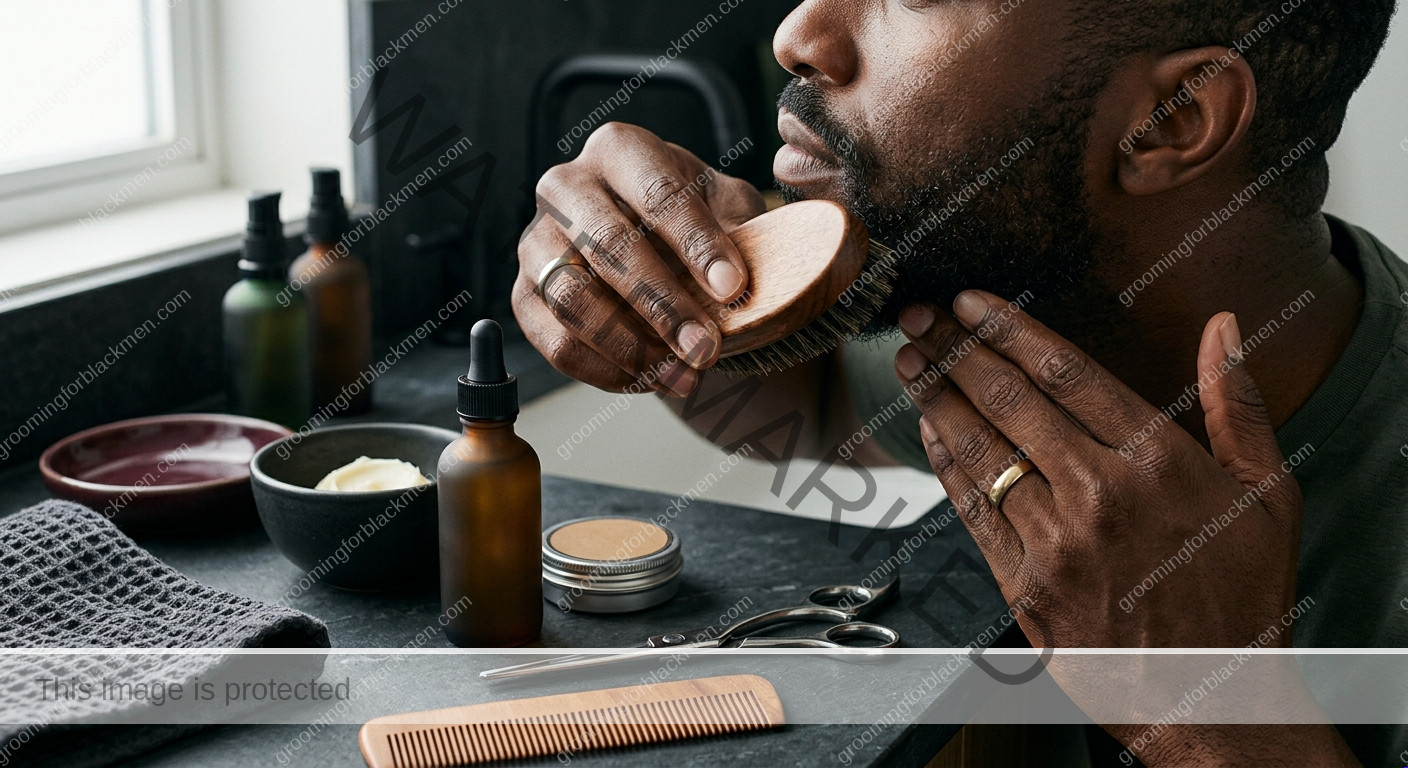
Choosing the right products and tools is essential for reducing beard itch. Here’s what to look for—and what to avoid. These criteria are based on what works for rich brown skin and coarse, curly hair, not just what’s trending.
- Beard Wash: Look for sulfate-free, fragrance-free, and alcohol-free formulas. Ingredients like aloe, oat, or chamomile are gentle on sensitive skin. Avoid anything labeled “deep cleansing” or “clarifying” unless specifically made for beards. If your wash leaves your skin feeling stripped, it’s not the right fit.
- Beard Oil: Lightweight, non-comedogenic oils (like jojoba, argan, or grapeseed) are ideal. Avoid heavy mineral oils or products with lots of synthetic fragrance. If you’re acne-prone, patch test new oils before full use.
- Beard Moisturizer: Creams or balms with shea butter, cocoa butter, or natural oils help lock in moisture. Avoid products with high alcohol content or harsh preservatives. If you notice a sticky residue, try a lighter formula or use less product.
- Combs and Brushes: Use a wide-tooth comb (wood or high-quality plastic) and a soft boar bristle brush. Avoid metal combs or anything with rough seams. If your comb snags or your brush feels scratchy, upgrade your tools.
GFBM may earn a small commission from qualifying purchases, but product examples are included to clarify criteria, not to promise results.
- Beard wash for sensitive skin (Amazon)
- Beard oil for Black men (Amazon)
- Beard moisturizer for men (Amazon)
For more on oil, balm, and butter differences, see our beard oil vs balm vs butter guide.
Step-by-Step Beard Itch Routine for Black Men
Let’s break down a disciplined daily and weekly routine, with decision points and troubleshooting tips for every stage:
-
Morning Routine:
- Rinse or cleanse: If you sweat overnight or notice buildup, use a gentle beard wash. Otherwise, a quick rinse with lukewarm water is enough.
- Pat dry: Use a soft towel. Don’t rub aggressively—friction can irritate skin and rough up hair cuticles.
- Apply beard oil or moisturizer: While your beard is still slightly damp, massage in oil or balm, working down to the skin. This step is non-negotiable for itch prevention.
- Detangle: Use a wide-tooth comb or soft brush, starting at the tips and working up. If you hit a snag, add a drop of oil and gently work it out.
-
Night Routine:
- Reapply moisturizer if needed: If your beard feels dry or you’ve been exposed to wind, cold, or sun, add a light layer of oil or balm before bed.
- Protect your beard: Sleep on a satin or silk pillowcase, or wear a beard bonnet to reduce friction and moisture loss.
-
Weekly Routine:
- Exfoliate: Once a week, use a soft-bristled brush or beard exfoliator to lift dead skin and prevent buildup. If your skin is sensitive, try every other week.
- Deep cleanse: If you use heavy products or live in a polluted area, do a deeper cleanse with a gentle beard wash once a week.
- Trim and shape: Use a sharp trimmer to keep your lines neat and prevent split ends. Clean your tools after each use to avoid bacteria buildup.
Adjust frequency based on your lifestyle, environment, and how your beard and skin respond. If you notice new irritation, scale back and simplify until things calm down.
Real-Life Scenarios: Troubleshooting Beard Itch
Let’s walk through a few common situations and how to handle them:
-
Scenario 1: You’ve just started growing your beard, and the itch is intense.
This is common as new hairs break through the skin. Stick to gentle cleansing, daily moisturizing, and avoid scratching. The itch usually subsides as your skin adjusts. If it persists, check your products for irritants.
-
Scenario 2: You notice flakes and itch after switching products.
New products sometimes contain hidden irritants. Eliminate one product at a time to isolate the cause. Switch to fragrance-free, hypoallergenic options and monitor for improvement.
-
Scenario 3: Your beard feels dry and itchy after a workout.
Sweat can dry out skin and hair. Rinse your beard with water post-workout, pat dry, and reapply a small amount of beard oil or moisturizer.
-
Scenario 4: You’re dealing with ingrown hairs and bumps along with itch.
Avoid picking or digging at bumps. Stick to gentle exfoliation and avoid shaving too close. If bumps persist or worsen, see a dermatologist.
-
Scenario 5: Your beard is patchy and itchy in certain spots.
Patchiness can be caused by uneven growth or irritation. Be patient, keep up with moisturizing, and avoid over-manipulating those areas. See our patchy beard fixes for Black men for more strategies.
Common Mistakes to Avoid
- Scratching aggressively: This can damage skin and hair follicles, leading to more irritation and even infection.
- Layering too many products: More isn’t always better. Stick to a simple, consistent routine and introduce new products one at a time.
- Ignoring persistent symptoms: If you see pus, severe redness, or spreading bumps, don’t wait—consult a professional.
- Using hot water: Hot water strips natural oils and worsens dryness. Always use lukewarm water when cleansing your beard.
How to Choose Products: Decision Criteria
When shopping for beard care, keep these criteria in mind:
- Ingredients: Look for natural, gentle ingredients. Avoid sulfates, parabens, and synthetic fragrances.
- Texture: Lightweight oils and creams absorb better and are less likely to clog pores.
- Packaging: Pump bottles or droppers are more hygienic than open jars.
- Brand transparency: Brands that clearly list ingredients and target textured hair are more likely to deliver results for Black men.
- Patch test: Always test new products on a small area before full use, especially if you have sensitive skin.
Troubleshooting and When to Get Help

Most beard itch can be managed with the right routine, but sometimes it signals a deeper issue. Here’s how to troubleshoot:
- If itch persists despite routine changes: Re-examine your products for hidden irritants or allergens. Try eliminating one product at a time to isolate the culprit.
- If you notice flakes, redness, or bumps: These could be signs of beard dandruff or mild irritation. See our beard dandruff guide for more targeted advice.
- If you develop painful, spreading, or infected-looking bumps: Do not dig, squeeze, or use harsh DIY remedies. This can worsen irritation or cause scarring. Seek help from a dermatologist or qualified clinician.
- If you have a history of eczema, seborrheic dermatitis, or other skin conditions: Stick to fragrance-free, hypoallergenic products and consult a professional for personalized advice.
- If you’re struggling with patchiness or uneven growth: Some itch is caused by new hair breaking through. See our patchy beard fixes for Black men for more on this topic.
Never ignore persistent pain, severe redness, swelling, or symptoms that don’t improve with disciplined grooming. Getting professional help early can prevent long-term problems.
Frequently Asked Questions
What causes beard itch for Black men?
Beard itch is usually caused by dryness, buildup of dead skin, irritation from harsh products, or ingrown hairs. Coarse, curly hair is more likely to trap debris and pull on the skin, which can trigger itch. Using the wrong cleansers or skipping moisturizer makes the problem worse.
How often should I wash my beard to prevent itch?
Most Black men do best washing their beard 2-3 times per week with a gentle, sulfate-free beard wash. Daily washing can strip natural oils and increase dryness. Adjust frequency based on your sweat, environment, and personal comfort. See our beard wash frequency guide for details.
What ingredients should I avoid in beard products?
Avoid sulfates, drying alcohols, strong synthetic fragrances, and harsh preservatives. These ingredients can dry out both hair and skin, leading to more itch and irritation. Look for products labeled “gentle,” “fragrance-free,” or “for sensitive skin.”
Can beard oil really help with itch?
Yes, beard oil can help soften hair and hydrate the skin beneath, reducing dryness and itch. Choose lightweight, non-comedogenic oils and apply daily after cleansing. For options, see our best beard oils for Black men guide.
Is beard dandruff the same as beard itch?
No, but they’re related. Beard dandruff is visible flaking, often caused by dry skin or mild irritation. Beard itch can happen with or without visible flakes. Both can be managed with gentle cleansing, regular moisturizing, and avoiding harsh products. For more, see our beard dandruff guide.
Should I exfoliate my beard area?
Gentle exfoliation can help prevent buildup and ingrown hairs, but avoid harsh scrubs or aggressive brushing. Use a soft-bristled brush or a dedicated beard exfoliator once a week. If you have sensitive skin or a history of irritation, consult a professional before adding exfoliation to your routine.
When should I see a dermatologist about beard itch?
If your itch is painful, spreading, persistent, or leads to scarring, see a dermatologist or qualified clinician. This is especially important if you notice pus, severe redness, swelling, or symptoms that don’t improve with careful grooming. Professional help can prevent long-term skin issues.
What to Do Next
Beard itch doesn’t have to be a permanent part of your grooming routine. Start by reviewing your current products and habits. Swap out harsh cleansers for gentle beard washes, add daily moisturizing with a quality beard oil, and treat your beard and skin with respect. If you’re new to beard care, our beginner beard care routine is a solid starting point.
For more advanced tips, explore our guides on best beard brushes and combs, how to shape your beard, and beard oil vs balm vs butter. If you’re dealing with flakes or patchiness, check out our resources on beard dandruff and patchy beard fixes.
Above all, be patient and disciplined. The right routine pays off over time, not overnight. If you ever feel stuck or notice signs of something more serious, don’t hesitate to reach out to a professional. Your comfort and confidence are worth it.