
Dry scalp is a common frustration for Black men, but it doesn’t have to be a permanent struggle. If you’re dealing with flakes, tightness, or irritation, you’re not alone—and you’re not stuck. The right grooming approach can make a real difference, especially when you understand what your scalp actually needs. This guide is built for Black men with rich brown skin and coarse or curly hair, offering practical, grounded advice that respects your routine and your time.
Many mainstream solutions miss the mark for our hair and scalp types. Generic advice rarely addresses the unique structure of curly or coily hair, the density of our beards, or the impact of frequent fades and waves routines. That’s why this dry scalp for Black men practical grooming guide is different: it’s direct, culturally aware, and based on what actually works for our community. No miracle claims. No shaming. No stereotypes. Just clear, disciplined steps to help you understand, prevent, and manage dry scalp.
If you’re looking for the basics of hair and scalp health or want to compare dry scalp to dandruff, you’ll find those resources linked throughout this guide. For now, let’s focus on what matters most—keeping your scalp healthy, comfortable, and ready for whatever style you choose next.
Real-Life Hair and Waves Scenarios for Dry Scalp for Black Men
A waves or scalp routine has to work after the bathroom mirror, not just during the first ten minutes after brushing. Black men often have to balance dense curls, scalp comfort, haircut timing, durag habits, sweat, product buildup, and the pressure to keep the pattern looking clean every day. That is why dry scalp for black men needs a practical system instead of random brushing, heavy product, or panic changes whenever the pattern looks uneven.
Start by separating three questions. First, what is the hair doing It may be dry, overcoated, frizzy, compressed unevenly, or not trained enough yet. Second, what is the scalp doing Tightness, flakes, itching, or soreness usually means the routine needs gentler cleansing, cleaner tools, better rinsing, or less buildup. Third, what is your schedule doing If you work out, wear hats, sweat heavily, or sleep without consistent compression, your routine has to account for that reality.
The goal is not to force the hair into a pattern overnight. The goal is to create steady conditions: clean scalp, moisturized hair, consistent brushing direction, reasonable compression, and enough patience to let the curl pattern train over time. For many Black men, the mistake is not lack of effort. It is too much inconsistent effort: changing brushes every few days, adding more product when the scalp needs washing, or brushing aggressively until the scalp feels tender.
Tools matter, but standards matter more. A wave brush should match your hair length and texture. A durag or wave cap should hold the hair down without leaving painful lines. Wash day should clean the scalp without stripping it so hard that the hair feels brittle. Product should support moisture and control, not bury the scalp under a waxy layer. When those basics are consistent, the routine starts to feel less like guesswork.
How to Audit Waves and Scalp Progress Without Overreacting
Audit the routine weekly, not every hour. Look at whether the pattern is becoming more consistent, whether the scalp feels calmer, whether flakes or itch are improving, and whether the hair still has movement after product. A clean routine should not make the scalp feel trapped. If the hair only looks controlled because it is stiff, greasy, or coated, the routine may be hiding a problem instead of solving it.
If progress stalls, change one variable at a time. Adjust brush firmness, brushing direction, wash frequency, compression time, or product amount separately so you can tell what helped. If the scalp becomes painful, inflamed, bleeding, or persistently flaky, pause aggressive styling and consider a dermatologist or qualified clinician. A polished look should not require ignoring discomfort. The best routine is the one that trains the hair while protecting the scalp underneath.
Real-Life Hair and Waves Scenarios for Dry Scalp for Black Men
A waves or scalp routine has to work after the bathroom mirror, not just during the first ten minutes after brushing. Black men often have to balance dense curls, scalp comfort, haircut timing, durag habits, sweat, product buildup, and the pressure to keep the pattern looking clean every day. That is why dry scalp for black men needs a practical system instead of random brushing, heavy product, or panic changes whenever the pattern looks uneven.
Start by separating three questions. First, what is the hair doing It may be dry, overcoated, frizzy, compressed unevenly, or not trained enough yet. Second, what is the scalp doing Tightness, flakes, itching, or soreness usually means the routine needs gentler cleansing, cleaner tools, better rinsing, or less buildup. Third, what is your schedule doing If you work out, wear hats, sweat heavily, or sleep without consistent compression, your routine has to account for that reality.
The goal is not to force the hair into a pattern overnight. The goal is to create steady conditions: clean scalp, moisturized hair, consistent brushing direction, reasonable compression, and enough patience to let the curl pattern train over time. For many Black men, the mistake is not lack of effort. It is too much inconsistent effort: changing brushes every few days, adding more product when the scalp needs washing, or brushing aggressively until the scalp feels tender.
Tools matter, but standards matter more. A wave brush should match your hair length and texture. A durag or wave cap should hold the hair down without leaving painful lines. Wash day should clean the scalp without stripping it so hard that the hair feels brittle. Product should support moisture and control, not bury the scalp under a waxy layer. When those basics are consistent, the routine starts to feel less like guesswork.
How to Audit Waves and Scalp Progress Without Overreacting
Audit the routine weekly, not every hour. Look at whether the pattern is becoming more consistent, whether the scalp feels calmer, whether flakes or itch are improving, and whether the hair still has movement after product. A clean routine should not make the scalp feel trapped. If the hair only looks controlled because it is stiff, greasy, or coated, the routine may be hiding a problem instead of solving it.
If progress stalls, change one variable at a time. Adjust brush firmness, brushing direction, wash frequency, compression time, or product amount separately so you can tell what helped. If the scalp becomes painful, inflamed, bleeding, or persistently flaky, pause aggressive styling and consider a dermatologist or qualified clinician. A polished look should not require ignoring discomfort. The best routine is the one that trains the hair while protecting the scalp underneath.
Real-Life Hair and Waves Scenarios for Dry Scalp for Black Men
A waves or scalp routine has to work after the bathroom mirror, not just during the first ten minutes after brushing. Black men often have to balance dense curls, scalp comfort, haircut timing, durag habits, sweat, product buildup, and the pressure to keep the pattern looking clean every day. That is why dry scalp for black men needs a practical system instead of random brushing, heavy product, or panic changes whenever the pattern looks uneven.
Start by separating three questions. First, what is the hair doing It may be dry, overcoated, frizzy, compressed unevenly, or not trained enough yet. Second, what is the scalp doing Tightness, flakes, itching, or soreness usually means the routine needs gentler cleansing, cleaner tools, better rinsing, or less buildup. Third, what is your schedule doing If you work out, wear hats, sweat heavily, or sleep without consistent compression, your routine has to account for that reality.
The goal is not to force the hair into a pattern overnight. The goal is to create steady conditions: clean scalp, moisturized hair, consistent brushing direction, reasonable compression, and enough patience to let the curl pattern train over time. For many Black men, the mistake is not lack of effort. It is too much inconsistent effort: changing brushes every few days, adding more product when the scalp needs washing, or brushing aggressively until the scalp feels tender.
Tools matter, but standards matter more. A wave brush should match your hair length and texture. A durag or wave cap should hold the hair down without leaving painful lines. Wash day should clean the scalp without stripping it so hard that the hair feels brittle. Product should support moisture and control, not bury the scalp under a waxy layer. When those basics are consistent, the routine starts to feel less like guesswork.
How to Audit Waves and Scalp Progress Without Overreacting
Audit the routine weekly, not every hour. Look at whether the pattern is becoming more consistent, whether the scalp feels calmer, whether flakes or itch are improving, and whether the hair still has movement after product. A clean routine should not make the scalp feel trapped. If the hair only looks controlled because it is stiff, greasy, or coated, the routine may be hiding a problem instead of solving it.
If progress stalls, change one variable at a time. Adjust brush firmness, brushing direction, wash frequency, compression time, or product amount separately so you can tell what helped. If the scalp becomes painful, inflamed, bleeding, or persistently flaky, pause aggressive styling and consider a dermatologist or qualified clinician. A polished look should not require ignoring discomfort. The best routine is the one that trains the hair while protecting the scalp underneath.
Why This Matters for Black Men

Dry scalp isn’t just about appearance—it’s about comfort, confidence, and long-term hair health. For Black men, the stakes are higher because our hair and scalp have unique characteristics:
- Curly and coily hair makes it harder for natural oils to travel from the scalp down the hair shaft. This can leave both hair and scalp drier than straight hair types.
- Frequent haircuts, fades, and waves routines expose the scalp more often, making dryness and irritation more visible and sometimes more uncomfortable.
- Rich brown skin may show flakes or dryness more clearly, and harsh products can cause irritation or discoloration if not chosen carefully.
- Beard grooming adds another layer—coarse facial hair can trap flakes and make scalp or skin dryness feel even worse.
Ignoring dry scalp can lead to more than just flakes. Persistent dryness can cause itching, soreness, or even impact your hair’s ability to grow strong and healthy. If you’re working on 360 waves, rocking a close fade, or keeping a full beard, a dry scalp will get in the way of your goals. That’s why a disciplined, practical approach to scalp care is essential—not just for looks, but for your overall grooming confidence.
What Usually Goes Wrong

Most Black men with dry scalp have tried a few things that didn’t work—or made things worse. Here’s where routines often break down:
- Over-washing or under-washing: Washing too often strips natural oils, while not washing enough lets buildup and flakes accumulate.
- Harsh shampoos: Many store brands contain sulfates or heavy fragrances that dry out the scalp or cause irritation, especially on rich brown skin.
- Skipping scalp moisture: Applying oil to hair but not to the scalp, or using products that sit on top without actually hydrating the skin underneath.
- Ignoring product buildup: Heavy pomades, gels, or wave greases can clog pores and trap flakes if not washed out properly.
- Rough brushing or scratching: Using hard brushes or fingernails to “fix” flakes only causes more irritation and can damage the scalp.
- DIY shortcuts: Raw oils, undiluted essential oils, or aggressive scrubbing can backfire, leading to more dryness or even burns.
These missteps are common because most advice isn’t designed for our hair and scalp realities. The good news: a few disciplined changes can make a big difference.
Understanding the Root Causes of Dry Scalp
Before you overhaul your routine, it pays to know what’s really driving your dry scalp. For Black men, the causes are rarely just “bad luck.” They’re a mix of genetics, grooming habits, environment, and product choices:
- Genetics: Curly and coily hair shapes mean sebum (your scalp’s natural oil) doesn’t travel as easily down the hair shaft. This leaves both scalp and hair more prone to dryness.
- Climate and environment: Cold, dry weather or indoor heating can sap moisture from your scalp. Even hot, humid climates can cause you to overwash, stripping away needed oils.
- Water quality: Hard water (high in minerals) can leave a residue that blocks moisture and causes buildup.
- Frequent haircuts and fades: Clippers and razors expose new skin, which is more sensitive and prone to dryness.
- Product overload: Layering heavy pomades, gels, or wave creams without proper cleansing leads to buildup that suffocates the scalp.
- Not enough scalp care: Focusing only on hair or beard, while neglecting the skin underneath, leaves the scalp dry, tight, and flaky.
Understanding these drivers helps you make smarter, more disciplined decisions about your grooming routine—no guesswork, just results.
What to Do Instead: A Step-by-Step Routine
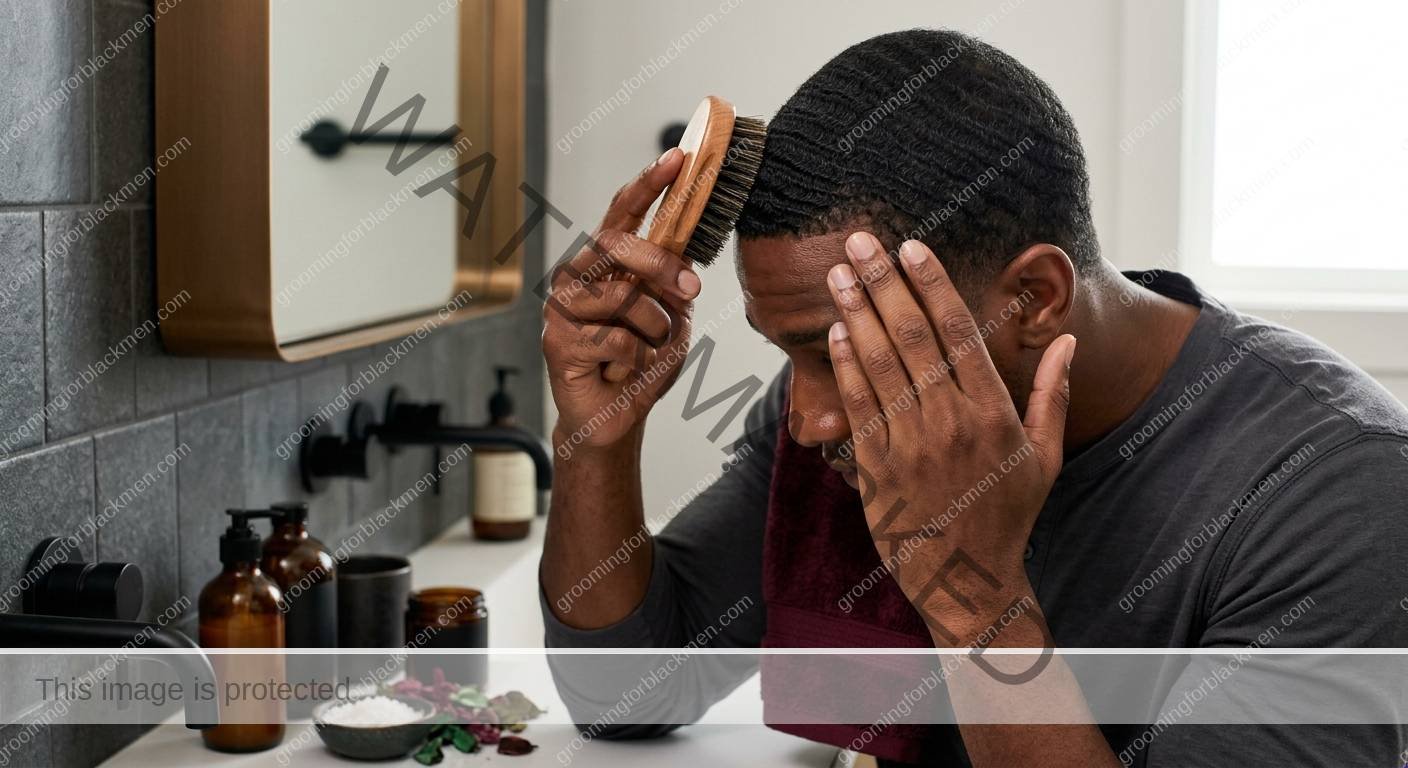
Managing dry scalp as a Black man is about balance and consistency. Here’s a premium, practical approach that respects your hair type, skin tone, and grooming goals:
1. Choose the Right Shampoo Routine
- Frequency: Most Black men do best washing hair and scalp once a week or every 10 days. If you work out daily or use heavy products, adjust as needed but avoid daily washing unless recommended by a professional.
- Product type: Use a gentle, sulfate-free shampoo designed for dry or curly hair. Avoid harsh cleansers and opt for formulas with moisturizing ingredients.
- Technique: Focus shampoo on the scalp, not just the hair. Use your fingertips (not nails) to gently massage and lift buildup. Rinse thoroughly to avoid residue.
2. Moisturize the Scalp—Not Just the Hair
- After washing: Apply a lightweight, non-comedogenic scalp moisturizer or oil blend directly to the scalp, not just the hair. Look for ingredients like aloe, jojoba, or shea butter.
- Daily or as needed: If your scalp feels tight or looks ashy, use a small amount of moisturizer between washes. Don’t overload—just enough to restore comfort and flexibility.
- Massage: Use the pads of your fingers to gently massage the moisturizer in. This boosts circulation and helps distribute product evenly.
3. Address Product Buildup and Flakes
- Clarify occasionally: If you use heavy pomades, gels, or wave products, use a clarifying shampoo once a month to remove buildup. Follow with a deep conditioner to restore moisture.
- Brush gently: Use a soft or medium wave brush to lift flakes and distribute oils, but never scratch or dig at the scalp.
- Scalp exfoliation: Consider a gentle scalp brush or a mild, pre-shampoo scalp scrub once a month to remove stubborn buildup. Avoid harsh scrubs or aggressive exfoliants.
4. Protect the Scalp Overnight
- Silk or satin durags, wave caps, or pillowcases help retain moisture and reduce friction that can worsen dryness or cause breakage.
- For more on nighttime protection, see the durag vs wave cap guide.
- Nighttime routine: If you moisturize at night, use a small amount and cover with a silk or satin wrap to lock in hydration and prevent transfer to your pillow.
5. Adjust for Beards and Fades
- If you keep a beard, use a beard-specific moisturizer or oil on the skin underneath. Don’t let flakes collect in facial hair.
- For close fades, make sure to moisturize exposed scalp after every cut and avoid alcohol-based aftershaves on the scalp.
- For bald or very low cuts, apply a lightweight, non-greasy moisturizer daily to keep the scalp supple and comfortable.
6. Stick to a Consistent Routine
- Consistency beats intensity. A simple, repeatable routine will keep your scalp healthier than chasing miracle fixes or switching products every week.
- Track what works: If you change products or routines, give your scalp at least 2-3 weeks to respond before making further adjustments.
Real-Life Scenarios: Troubleshooting Dry Scalp
Every Black man’s grooming journey is unique, but certain scenarios come up time and again. Here’s how to troubleshoot common situations:
Scenario 1: You Just Got a Fresh Fade and Your Scalp Feels Tight
Fresh cuts expose new skin, which is more sensitive. Skip alcohol-based aftershaves and apply a fragrance-free, lightweight moisturizer right after your cut. If you notice flakes within a day or two, gently brush with a soft wave brush and reapply moisturizer. For more on fade maintenance, see Fade Haircut Maintenance for Black Men.
Scenario 2: You’re Building 360 Waves and Noticing Flakes
Wave routines often involve heavy pomades and frequent brushing. If flakes appear, clarify with a gentle, sulfate-free shampoo and follow with a deep conditioner. Use a soft brush to lift flakes and avoid over-applying wave grease. For more, check out the Waves Wash Day Routine and Waves Troubleshooting Tips.
Scenario 3: Your Beard is Trapping Flakes
Coarse beard hair can trap scalp or facial skin flakes, making dryness more obvious. Wash your beard 1-2 times per week with a gentle cleanser, and use a beard oil or balm with natural emollients. Massage into the skin beneath the beard, not just the hair. For more, see Beard Moisturizer Guide for Black Men.
Scenario 4: You Work Out Daily and Sweat a Lot
Sweat can cause buildup and itchiness if not managed. Rinse your scalp with water or use a damp cloth between washes, and moisturize lightly. Avoid overwashing—stick to your regular shampoo routine unless your scalp feels genuinely dirty.
Scenario 5: Your Scalp Gets Dry in Winter or with Indoor Heat
Dry air saps moisture fast. Increase your scalp moisturizing frequency, use a humidifier at home, and double-check that your products aren’t loaded with alcohol or harsh fragrances.
Product and Tool Criteria for Dry Scalp
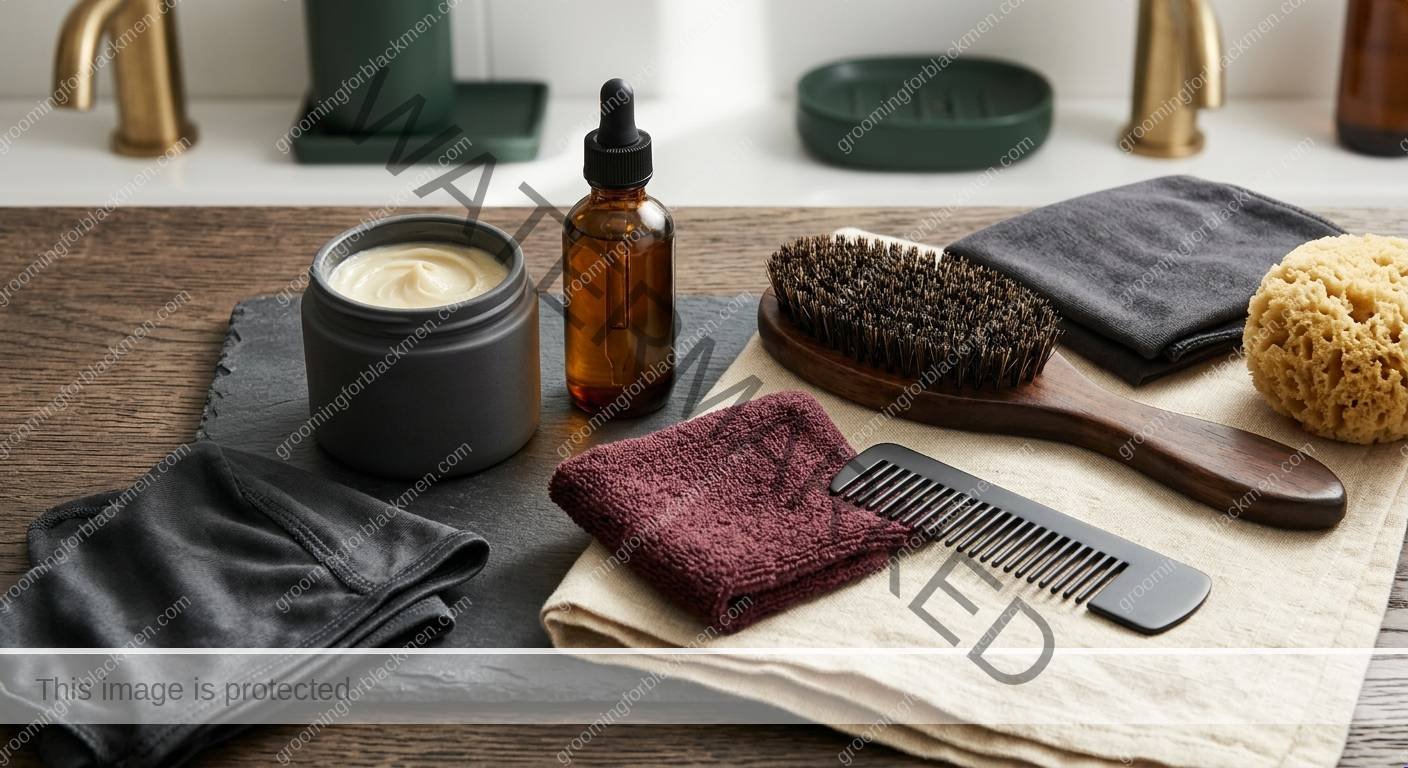
Not every product is made for our hair and scalp. Here’s what to look for—and what to avoid—when shopping for dry scalp solutions:
- Sulfate-free shampoos: Look for gentle cleansers that won’t strip natural oils. Avoid sodium lauryl sulfate and sodium laureth sulfate.
- Moisturizers and oils: Choose products with natural emollients like jojoba oil, shea butter, aloe vera, or squalane. Avoid heavy mineral oils or petrolatum if you’re prone to buildup.
- Fragrance: Unscented or lightly scented products are less likely to irritate sensitive scalp skin.
- Non-comedogenic: Especially for men with short fades or bald styles, use products that won’t clog pores or cause breakouts on the scalp.
- Brushes and combs: Use soft or medium bristles for waves and gentle detangling. Avoid hard brushes that scratch the scalp.
- Deep conditioners: Once or twice a month, use a deep conditioner with humectants (like glycerin or honey) to restore moisture after clarifying or during dry seasons.
- Scalp massagers: Consider a silicone scalp massager for gentle cleansing and improved circulation (not required, but can be helpful for some routines).
GFBM may earn a small commission from qualifying purchases, but product examples are included to clarify criteria, not to promise results.
- Browse dry scalp shampoos for Black men for gentle cleansing options.
- Explore scalp moisturizers for Black men with lightweight, non-greasy formulas.
- See sulfate-free shampoos for curly hair for options that respect your natural oils.
For more on choosing the right tools, see the wave brush selection guide.
Building a Realistic Weekly Routine

Consistency is the backbone of scalp health. Here’s a sample weekly routine for Black men with dry scalp, adaptable to your lifestyle and grooming goals:
- Once a week: Shampoo with a gentle, sulfate-free cleanser. Focus on the scalp, rinse thoroughly. Follow with a moisturizing conditioner.
- After washing: Apply a lightweight scalp moisturizer or oil blend. Massage gently.
- 2-3 times a week: If needed, lightly moisturize the scalp between washes, especially if it feels tight or ashy.
- Monthly: Use a clarifying shampoo if you use heavy products, followed by a deep conditioner.
- Daily: Protect your scalp at night with a silk or satin durag, wave cap, or pillowcase. For beards, apply a beard moisturizer or oil to the skin beneath the hair.
- After haircuts or fades: Moisturize exposed scalp immediately after the cut. Avoid alcohol-based products.
Adjust this template based on your hair length, style, and product use. Track how your scalp responds and tweak as needed—discipline and observation are key.
Troubleshooting and When to Get Help
Even with a disciplined routine, dry scalp can flare up. Here’s how to troubleshoot and when to seek professional support:
- Persistent flakes or itching: If you’ve tried gentle shampooing, moisturizing, and reducing product buildup for several weeks with no improvement, it may be time to consult a dermatologist.
- Pain, redness, swelling, or infection: Don’t ignore these signs. If your scalp is sore, inflamed, or shows signs of infection, see a qualified clinician promptly.
- Scarring or hair loss: If you notice bald patches, scarring, or significant hair thinning, get a professional evaluation. Early intervention matters.
- Product reactions: If you experience burning, severe itching, or hives after using a new product, discontinue use and seek medical advice if symptoms persist.
Remember, no grooming routine can fix every scalp issue. For medical conditions like severe seborrheic dermatitis, psoriasis, or infections, only a licensed dermatologist can provide diagnosis and treatment. For most men, though, a disciplined, practical routine will keep your scalp comfortable and your style on point.
Frequently Asked Questions
How can I tell if I have dry scalp or dandruff
Dry scalp usually means small, white flakes and a tight, itchy feeling—especially after washing or in cold weather. Dandruff often involves larger, oily flakes and sometimes redness or irritation. For a detailed comparison, see Dandruff vs Dry Scalp for Black Men.
How often should Black men wash their hair and scalp
Most Black men do best washing once a week or every 10 days. Adjust if you work out daily or use heavy products, but avoid daily washing unless a professional recommends it. Over-washing strips natural oils and can worsen dryness.
What ingredients should I avoid in shampoos for dry scalp
Avoid sulfates (like sodium lauryl sulfate), heavy fragrances, and alcohol-based cleansers. These can strip moisture and irritate the scalp, especially on rich brown skin.
Can I use oils like coconut or olive oil for my scalp
Lightweight oils like jojoba or argan are usually better for the scalp than heavy oils like coconut or olive, which can cause buildup or clog pores. Always use oils sparingly and avoid undiluted essential oils, which can irritate the skin.
What’s the best way to moisturize my scalp between washes
Apply a small amount of a non-comedogenic scalp moisturizer or lightweight oil blend directly to the scalp. Massage gently—don’t overload. If you wear waves or a fade, use a soft brush to distribute the product evenly.
Is it normal for my scalp to feel dry after a haircut or fade
Yes, especially if clippers or razors expose new skin. Always moisturize the scalp after a cut and avoid alcohol-based aftershaves on the scalp. If irritation persists, switch to a gentler moisturizer or consult a barber experienced with Black hair and scalp.
When should I see a dermatologist for scalp issues
If you have pain, infection, spreading irritation, scarring, or persistent dryness that doesn’t improve with routine care, see a dermatologist or qualified clinician. Early intervention can prevent long-term problems.
What to Do Next
Dry scalp doesn’t have to hold you back. Start by reviewing your current routine—how often you wash, what products you use, and how you moisturize your scalp. Make one disciplined change at a time and give your scalp a few weeks to adjust. Stay consistent, avoid harsh shortcuts, and protect your scalp at night with silk or satin.
If you want to take your grooming further, explore these resources:
- Complete Hair & Scalp Health Guide for Black Men
- 360 Waves Guide
- Waves Wash Day Routine
- Waves Troubleshooting Tips
Remember: a healthy scalp is the foundation for any style you choose. Stay disciplined, stay informed, and keep your grooming routine working for you.