Scalp Exfoliation for Black Men: Practical Grooming Guide
Scalp exfoliation is often overlooked in men’s grooming routines, but for Black men with rich brown skin and coarse or curly hair, it’s a foundational move for maintaining a healthy scalp and achieving your best hair. Whether you’re focused on keeping your scalp clear, growing a full beard, or building deep 360 waves, understanding how to exfoliate your scalp—without overdoing it—can make a real difference. This scalp exfoliation for Black men practical grooming guide is built for real routines, not hype or miracle promises.
Here’s the reality: our hair grows from a scalp that’s prone to buildup, dryness, and irritation. Sweat, product residue, and dead skin cells don’t just disappear on their own. If you’re brushing for waves, wearing durags, or using heavier creams and pomades, that buildup can get in the way of progress and comfort. But aggressive scrubbing, harsh products, or trendy DIY hacks can do more harm than good—especially for our skin and hair type.
This guide breaks down what scalp exfoliation actually is, why it matters for Black men, what usually goes wrong, and how to get it right. You’ll get clear, practical steps, product criteria, troubleshooting advice, and real-life scenarios. If you’re serious about grooming for Black men—whether you’re chasing waves, keeping a close cut, or growing your hair out—this is for you.
Real-Life Hair and Waves Scenarios for Scalp Exfoliation for Black Men
A waves or scalp routine has to work after the bathroom mirror, not just during the first ten minutes after brushing. Black men often have to balance dense curls, scalp comfort, haircut timing, durag habits, sweat, product buildup, and the pressure to keep the pattern looking clean every day. That is why scalp exfoliation for black men needs a practical system instead of random brushing, heavy product, or panic changes whenever the pattern looks uneven.
Start by separating three questions. First, what is the hair doing It may be dry, overcoated, frizzy, compressed unevenly, or not trained enough yet. Second, what is the scalp doing Tightness, flakes, itching, or soreness usually means the routine needs gentler cleansing, cleaner tools, better rinsing, or less buildup. Third, what is your schedule doing If you work out, wear hats, sweat heavily, or sleep without consistent compression, your routine has to account for that reality.
The goal is not to force the hair into a pattern overnight. The goal is to create steady conditions: clean scalp, moisturized hair, consistent brushing direction, reasonable compression, and enough patience to let the curl pattern train over time. For many Black men, the mistake is not lack of effort. It is too much inconsistent effort: changing brushes every few days, adding more product when the scalp needs washing, or brushing aggressively until the scalp feels tender.
Tools matter, but standards matter more. A wave brush should match your hair length and texture. A durag or wave cap should hold the hair down without leaving painful lines. Wash day should clean the scalp without stripping it so hard that the hair feels brittle. Product should support moisture and control, not bury the scalp under a waxy layer. When those basics are consistent, the routine starts to feel less like guesswork.
How to Audit Waves and Scalp Progress Without Overreacting
Audit the routine weekly, not every hour. Look at whether the pattern is becoming more consistent, whether the scalp feels calmer, whether flakes or itch are improving, and whether the hair still has movement after product. A clean routine should not make the scalp feel trapped. If the hair only looks controlled because it is stiff, greasy, or coated, the routine may be hiding a problem instead of solving it.
If progress stalls, change one variable at a time. Adjust brush firmness, brushing direction, wash frequency, compression time, or product amount separately so you can tell what helped. If the scalp becomes painful, inflamed, bleeding, or persistently flaky, pause aggressive styling and consider a dermatologist or qualified clinician. A polished look should not require ignoring discomfort. The best routine is the one that trains the hair while protecting the scalp underneath.
Real-Life Hair and Waves Scenarios for Scalp Exfoliation for Black Men
A waves or scalp routine has to work after the bathroom mirror, not just during the first ten minutes after brushing. Black men often have to balance dense curls, scalp comfort, haircut timing, durag habits, sweat, product buildup, and the pressure to keep the pattern looking clean every day. That is why scalp exfoliation for black men needs a practical system instead of random brushing, heavy product, or panic changes whenever the pattern looks uneven.
Start by separating three questions. First, what is the hair doing It may be dry, overcoated, frizzy, compressed unevenly, or not trained enough yet. Second, what is the scalp doing Tightness, flakes, itching, or soreness usually means the routine needs gentler cleansing, cleaner tools, better rinsing, or less buildup. Third, what is your schedule doing If you work out, wear hats, sweat heavily, or sleep without consistent compression, your routine has to account for that reality.
The goal is not to force the hair into a pattern overnight. The goal is to create steady conditions: clean scalp, moisturized hair, consistent brushing direction, reasonable compression, and enough patience to let the curl pattern train over time. For many Black men, the mistake is not lack of effort. It is too much inconsistent effort: changing brushes every few days, adding more product when the scalp needs washing, or brushing aggressively until the scalp feels tender.
Tools matter, but standards matter more. A wave brush should match your hair length and texture. A durag or wave cap should hold the hair down without leaving painful lines. Wash day should clean the scalp without stripping it so hard that the hair feels brittle. Product should support moisture and control, not bury the scalp under a waxy layer. When those basics are consistent, the routine starts to feel less like guesswork.
How to Audit Waves and Scalp Progress Without Overreacting
Audit the routine weekly, not every hour. Look at whether the pattern is becoming more consistent, whether the scalp feels calmer, whether flakes or itch are improving, and whether the hair still has movement after product. A clean routine should not make the scalp feel trapped. If the hair only looks controlled because it is stiff, greasy, or coated, the routine may be hiding a problem instead of solving it.
If progress stalls, change one variable at a time. Adjust brush firmness, brushing direction, wash frequency, compression time, or product amount separately so you can tell what helped. If the scalp becomes painful, inflamed, bleeding, or persistently flaky, pause aggressive styling and consider a dermatologist or qualified clinician. A polished look should not require ignoring discomfort. The best routine is the one that trains the hair while protecting the scalp underneath.
Real-Life Hair and Waves Scenarios for Scalp Exfoliation for Black Men
A waves or scalp routine has to work after the bathroom mirror, not just during the first ten minutes after brushing. Black men often have to balance dense curls, scalp comfort, haircut timing, durag habits, sweat, product buildup, and the pressure to keep the pattern looking clean every day. That is why scalp exfoliation for black men needs a practical system instead of random brushing, heavy product, or panic changes whenever the pattern looks uneven.
Start by separating three questions. First, what is the hair doing It may be dry, overcoated, frizzy, compressed unevenly, or not trained enough yet. Second, what is the scalp doing Tightness, flakes, itching, or soreness usually means the routine needs gentler cleansing, cleaner tools, better rinsing, or less buildup. Third, what is your schedule doing If you work out, wear hats, sweat heavily, or sleep without consistent compression, your routine has to account for that reality.
The goal is not to force the hair into a pattern overnight. The goal is to create steady conditions: clean scalp, moisturized hair, consistent brushing direction, reasonable compression, and enough patience to let the curl pattern train over time. For many Black men, the mistake is not lack of effort. It is too much inconsistent effort: changing brushes every few days, adding more product when the scalp needs washing, or brushing aggressively until the scalp feels tender.
Tools matter, but standards matter more. A wave brush should match your hair length and texture. A durag or wave cap should hold the hair down without leaving painful lines. Wash day should clean the scalp without stripping it so hard that the hair feels brittle. Product should support moisture and control, not bury the scalp under a waxy layer. When those basics are consistent, the routine starts to feel less like guesswork.
How to Audit Waves and Scalp Progress Without Overreacting
Audit the routine weekly, not every hour. Look at whether the pattern is becoming more consistent, whether the scalp feels calmer, whether flakes or itch are improving, and whether the hair still has movement after product. A clean routine should not make the scalp feel trapped. If the hair only looks controlled because it is stiff, greasy, or coated, the routine may be hiding a problem instead of solving it.
If progress stalls, change one variable at a time. Adjust brush firmness, brushing direction, wash frequency, compression time, or product amount separately so you can tell what helped. If the scalp becomes painful, inflamed, bleeding, or persistently flaky, pause aggressive styling and consider a dermatologist or qualified clinician. A polished look should not require ignoring discomfort. The best routine is the one that trains the hair while protecting the scalp underneath.
Why Scalp Exfoliation Matters for Black Men

Healthy hair starts at the scalp. For Black men, the unique structure of our hair—coarse, curly, or tightly coiled—means the scalp can be harder to access and more prone to buildup. Here’s why scalp exfoliation is a smart move:
- Removes buildup: Pomades, oils, creams, and sweat can clog pores and dull hair. Exfoliation clears the way for fresh growth and a cleaner look.
- Reduces flakes and dryness: Dead skin cells can collect on the scalp, causing visible flakes and itchiness. Gentle exfoliation helps keep things smooth.
- Supports wave formation: For men working on 360 waves, a clean scalp is essential for brushing and product absorption. Exfoliation can help keep your pattern sharp.
- Improves comfort under durags and hats: Buildup can cause irritation and itching, especially if you wear head coverings often. Exfoliating keeps your scalp feeling fresher.
- Promotes a balanced scalp environment: A clean, well-exfoliated scalp is less likely to feel greasy or overly dry, supporting overall hair and scalp health.
Scalp exfoliation isn’t about scrubbing away your problems or promising instant results. It’s about disciplined, regular care that respects your skin and hair type. For more on the basics of hair and scalp health for Black men, see our full guide.
Real-Life Scenario: The Wave Builder
Marcus, a 27-year-old with tight curls, is dedicated to his 360 wave journey. He brushes daily, wears a durag at night, and uses pomade for hold. But after a few weeks, he notices his scalp feels itchy and his waves look dull. The culprit Product buildup and dead skin. By introducing gentle scalp exfoliation every two weeks, Marcus clears the way for better product absorption and sharper wave definition—without irritation or dryness.
Real-Life Scenario: The Low-Cut King
Jamal keeps a close fade year-round. He sweats a lot at the gym and uses light oils for shine. After skipping scalp care, he starts to notice flakes and tightness. A simple, gentle exfoliation routine every week—paired with a lightweight leave-in—restores comfort and keeps his scalp looking fresh under the clippers.
What Usually Goes Wrong

Before you grab the nearest scrub or brush, it’s worth knowing the common mistakes that can set you back:
- Over-exfoliating: Too much scrubbing or using harsh products can strip your scalp, leading to dryness, irritation, or even breakouts.
- Using the wrong tools: Stiff brushes, rough scrubs, or products with large, jagged particles can scratch or inflame the scalp, especially if you have coarse or curly hair.
- Ignoring scalp sensitivity: If you already deal with irritation, bumps, or flakes, aggressive exfoliation can make things worse.
- DIY gone wrong: Undiluted essential oils, baking soda, or salt scrubs can be too harsh and disrupt your scalp’s natural balance.
- Skipping moisture: Exfoliation without following up with hydration can leave your scalp dry, tight, or flaky.
Nuance: Not All Scalp Issues Need Exfoliation
Some scalp problems—like eczema, psoriasis, or severe dandruff—can be made worse by exfoliation. If you have persistent irritation, pain, infection, or scarring, see a dermatologist or qualified clinician for help. Exfoliation is for maintenance, not for treating medical conditions.
Decision Criteria: When to Exfoliate
- If your scalp feels itchy or tight between washes, consider exfoliating.
- If you see visible flakes or dullness, exfoliation may help.
- If you’re using heavy products or sweating often, exfoliation can clear buildup.
- If your scalp is already sore, red, or inflamed, skip exfoliation and focus on gentle cleansing and moisture.
What to Do Instead: Practical Scalp Exfoliation Routine
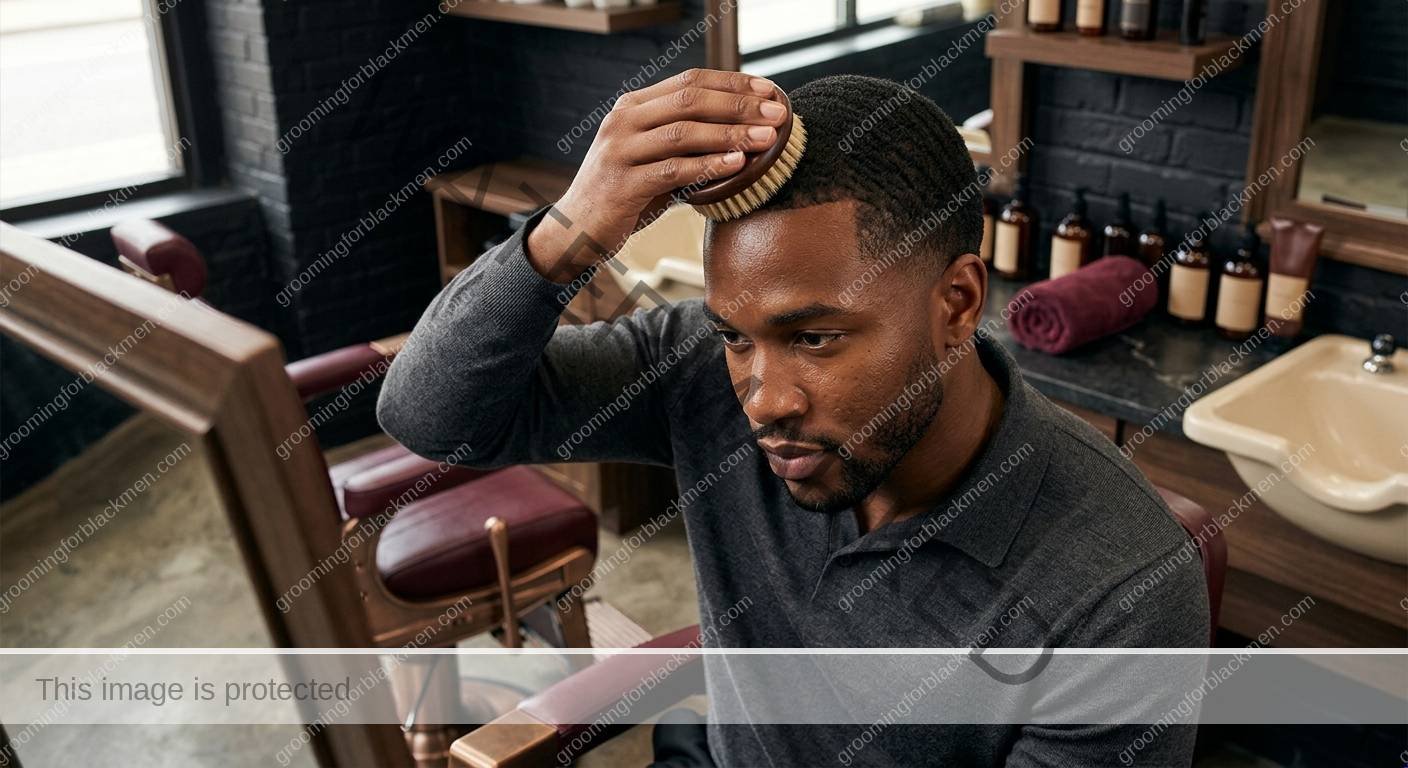
For most Black men, scalp exfoliation should be gentle, regular, and paired with proper moisture. Here’s a step-by-step approach that fits real routines:
1. Choose the Right Frequency
Once every 1-2 weeks is usually enough. If you use a lot of products, sweat heavily, or wear durags/hats often, you might exfoliate weekly. If your scalp is sensitive, stretch it to every other week. Consistency is more important than frequency—avoid the urge to exfoliate just because you see flakes after a few days.
2. Start with a Clean Slate
Exfoliate on wash day, after rinsing out most product buildup. Use a gentle, sulfate-free shampoo to remove surface dirt and oils first. This ensures the exfoliant can reach your scalp instead of just sitting on top of product residue. If you’re working on waves, see our waves wash day routine for the right prep steps.
3. Use Gentle Tools or Products
Pick a scalp exfoliating brush with soft, flexible bristles, or a mild scalp scrub designed for men. Avoid anything with sharp or rough particles. For men with longer hair, sectioning can help you reach the scalp without tugging or breaking strands.
4. Apply with Care
Section your hair if needed. Apply a small amount of scrub (or use the brush in gentle circles) to damp scalp. Don’t press hard—let the tool or product do the work. Focus on areas where you notice buildup or flakes, but don’t overdo it. For those with tender scalps, use your fingertips or a very soft brush, and keep sessions short—no more than 2-3 minutes total.
5. Rinse Thoroughly
Make sure to rinse away all product and debris. Leftover scrub can cause irritation or buildup. If you have thick or long hair, rinse in sections and use your fingers to help remove residue.
6. Follow with Moisture
After exfoliating, use a lightweight, non-comedogenic oil or leave-in conditioner to restore hydration and comfort. Jojoba oil, argan oil, or a water-based leave-in designed for textured hair are solid choices. Avoid heavy greases or mineral oil, which can undo your hard work by causing more buildup.
7. Monitor Your Scalp
Pay attention to how your scalp feels over the next few days. If you notice redness, burning, or increased flakes, scale back or switch to a gentler routine. Track how your scalp responds to different products and adjust as needed. If you’re new to exfoliation, start slow and build up only if your scalp tolerates it well.
Routine Logic: Matching Exfoliation to Your Lifestyle
- Active lifestyle: If you sweat daily, exfoliate weekly and use a clarifying shampoo monthly.
- Heavy product user: Exfoliate every 1-2 weeks and use a lightweight moisturizer after.
- Short hair or bald: Use a soft brush or gentle scrub, and moisturize immediately after showering.
- Building waves: Pair exfoliation with your wave brush routine, but avoid over-brushing right after exfoliating to prevent irritation.
Troubleshooting: If Your Routine Isn’t Working
- If you’re still seeing flakes, check your shampoo and moisturizer—harsh cleansers or heavy oils may be the real issue.
- If your scalp feels tight or sore, you may be exfoliating too often or using a product that’s too strong.
- If you notice bumps or ingrown hairs, ease up on pressure and avoid scrubs until your scalp calms down.
Product and Tool Criteria for Scalp Exfoliation
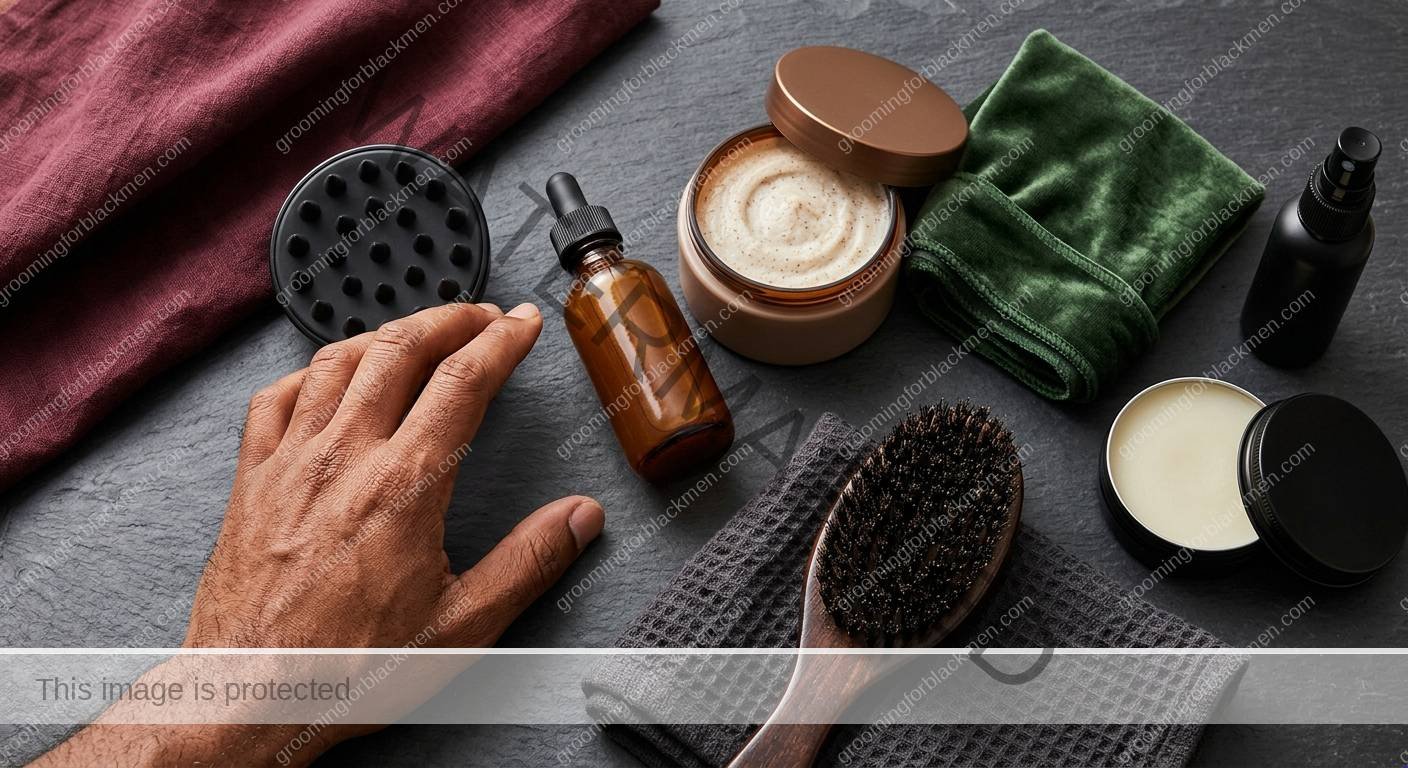
Not every brush or scrub is made for our hair and scalp. Here’s what to look for:
- Scalp exfoliating brushes: Choose soft, flexible silicone bristles. Avoid hard plastic or metal tips. Brushes should glide over the scalp without scratching. See options here:
GFBM may earn a small commission from qualifying purchases, but product examples are included to clarify criteria, not to promise results.
Browse scalp exfoliating brushes on Amazon - Scalp scrubs for men: Look for scrubs with fine, rounded particles (like jojoba beads), not salt or sugar crystals. Avoid heavy fragrances or alcohols. See examples here:
Browse scalp scrubs for men on Amazon - Clarifying shampoos for curly hair: If you use a lot of product, a clarifying shampoo once every 2-4 weeks can help. Look for formulas made for curly or textured hair, free from harsh sulfates. See options here:
Browse clarifying shampoos for curly hair on Amazon
For more on choosing the right tools for waves, see our wave brush selection guide.
Internal Link: Moisturizing After Exfoliation
After exfoliation, it’s crucial to lock in moisture. For tips on the best oils and leave-ins for Black men, check our best hair oils guide.
Internal Link: Budget-Friendly Scalp Care
If you’re on a budget, see our tips for budget hair and scalp care for Black men for affordable, safe options.
Troubleshooting and When to Get Help

Even with the right routine, issues can come up. Here’s how to handle common problems:
- Increased flakes or dryness: You may be exfoliating too often or using a product that’s too harsh. Scale back and focus on moisture.
- Redness or burning: Stop exfoliating and switch to a gentler shampoo. If symptoms persist or worsen, see a dermatologist.
- Bumps or ingrown hairs: Avoid digging or picking. Use a soft brush and avoid scrubs until the area calms down. Persistent or painful bumps require professional care.
- Oily scalp after exfoliation: Over-exfoliating can trigger excess oil production. Reduce frequency and use a lightweight leave-in conditioner.
- Persistent irritation, infection, or scarring: Don’t try to self-treat. See a qualified clinician for proper diagnosis and care.
If you’re struggling to find a routine that works, check our waves troubleshooting guide for more targeted advice.
Scenario: When to See a Pro
If you notice bleeding, pus, or severe pain after exfoliating, stop immediately and book an appointment with a dermatologist. Scalp health is foundational—don’t risk long-term damage by ignoring serious symptoms.
Frequently Asked Questions
How often should Black men exfoliate their scalp
For most, once every 1-2 weeks is enough. If your scalp is sensitive or you don’t use much product, every other week is fine. Over-exfoliating can lead to dryness or irritation.
Can scalp exfoliation help with 360 waves
Yes, a clean, balanced scalp helps wave patterns form and makes brushing more effective. Exfoliate gently to avoid irritation, and pair with your regular wave routine. For more, see our 360 waves guide.
What’s the best way to exfoliate if I have short hair or a bald head
Use a soft silicone brush or a gentle scrub. Apply with light pressure on damp skin. Avoid rough scrubs or hard brushes, which can scratch or irritate the scalp.
Should I exfoliate before or after shampooing
Exfoliate after rinsing out most product and dirt with shampoo. This allows the exfoliant to reach your scalp more effectively and prevents buildup from being pushed deeper into pores.
What ingredients should I avoid in scalp scrubs
Avoid scrubs with large, sharp particles (like salt or sugar), heavy fragrances, alcohol, or undiluted essential oils. These can irritate or dry out your scalp.
Is scalp exfoliation safe for sensitive scalps
Yes, if you use gentle tools and products, and don’t exfoliate too often. If you notice pain, burning, or persistent redness, stop and consult a dermatologist.
Can I use a regular body scrub on my scalp
No. Body scrubs are often too rough for the scalp and can cause irritation, especially for Black men with coarse or curly hair. Use a product made specifically for the scalp.
Keep the standard simple: your scalp should feel cleaner, calmer, and easier to manage after exfoliation, not raw or tight. That steady comfort is the real sign the routine is serving you.
What to Do Next
Scalp exfoliation is a disciplined, practical step in grooming for Black men. Start with a gentle routine, use the right tools, and pay attention to how your scalp responds. Combine exfoliation with regular cleansing, moisture, and protective styling for your best results—whether you’re building waves, keeping a close cut, or growing your hair out.
For more in-depth guidance, see our hair and scalp health guide, troubleshoot your wave journey with our waves troubleshooting guide, or learn the difference between durags and wave caps for scalp protection. Stay consistent, stay disciplined, and keep your scalp at its best.