
Bald Head Care for Black Men: Practical Grooming Guide
There’s nothing basic about keeping a bald head looking sharp, healthy, and confident—especially for Black men. Whether you’re embracing your baldness by choice or genetics, your scalp is now front and center. That means your grooming routine needs to step up, not scale back. Bald head care for Black men isn’t just about a clean shave; it’s about protecting your skin, preventing irritation, and presenting your best self every day. This guide breaks down what works, what doesn’t, and how to build a routine that respects your skin, your time, and your standards.
Black men with rich brown skin and coarse or curly hair face unique challenges when it comes to bald head care. Shaving bumps, dryness, uneven tone, and sun sensitivity are all real concerns. But with the right approach, you can avoid the pitfalls and keep your scalp looking smooth, even, and healthy. Forget miracle claims and hype-heavy routines—this is about discipline, smart choices, and practical steps. If you’re ready to level up your bald head care, you’re in the right place.
For a deeper dive into hair and scalp health for Black men, check out our Hair & Scalp Health Guide. Now, let’s get into what makes bald head care different for us—and how to do it right.
Real-Life Hair and Waves Scenarios for Bald Head Care for Black Men
A waves or scalp routine has to work after the bathroom mirror, not just during the first ten minutes after brushing. Black men often have to balance dense curls, scalp comfort, haircut timing, durag habits, sweat, product buildup, and the pressure to keep the pattern looking clean every day. That is why bald head care for black men needs a practical system instead of random brushing, heavy product, or panic changes whenever the pattern looks uneven.
Start by separating three questions. First, what is the hair doing It may be dry, overcoated, frizzy, compressed unevenly, or not trained enough yet. Second, what is the scalp doing Tightness, flakes, itching, or soreness usually means the routine needs gentler cleansing, cleaner tools, better rinsing, or less buildup. Third, what is your schedule doing If you work out, wear hats, sweat heavily, or sleep without consistent compression, your routine has to account for that reality.
The goal is not to force the hair into a pattern overnight. The goal is to create steady conditions: clean scalp, moisturized hair, consistent brushing direction, reasonable compression, and enough patience to let the curl pattern train over time. For many Black men, the mistake is not lack of effort. It is too much inconsistent effort: changing brushes every few days, adding more product when the scalp needs washing, or brushing aggressively until the scalp feels tender.
Tools matter, but standards matter more. A wave brush should match your hair length and texture. A durag or wave cap should hold the hair down without leaving painful lines. Wash day should clean the scalp without stripping it so hard that the hair feels brittle. Product should support moisture and control, not bury the scalp under a waxy layer. When those basics are consistent, the routine starts to feel less like guesswork.
How to Audit Waves and Scalp Progress Without Overreacting
Audit the routine weekly, not every hour. Look at whether the pattern is becoming more consistent, whether the scalp feels calmer, whether flakes or itch are improving, and whether the hair still has movement after product. A clean routine should not make the scalp feel trapped. If the hair only looks controlled because it is stiff, greasy, or coated, the routine may be hiding a problem instead of solving it.
If progress stalls, change one variable at a time. Adjust brush firmness, brushing direction, wash frequency, compression time, or product amount separately so you can tell what helped. If the scalp becomes painful, inflamed, bleeding, or persistently flaky, pause aggressive styling and consider a dermatologist or qualified clinician. A polished look should not require ignoring discomfort. The best routine is the one that trains the hair while protecting the scalp underneath.
Real-Life Hair and Waves Scenarios for Bald Head Care for Black Men
A waves or scalp routine has to work after the bathroom mirror, not just during the first ten minutes after brushing. Black men often have to balance dense curls, scalp comfort, haircut timing, durag habits, sweat, product buildup, and the pressure to keep the pattern looking clean every day. That is why bald head care for black men needs a practical system instead of random brushing, heavy product, or panic changes whenever the pattern looks uneven.
Start by separating three questions. First, what is the hair doing It may be dry, overcoated, frizzy, compressed unevenly, or not trained enough yet. Second, what is the scalp doing Tightness, flakes, itching, or soreness usually means the routine needs gentler cleansing, cleaner tools, better rinsing, or less buildup. Third, what is your schedule doing If you work out, wear hats, sweat heavily, or sleep without consistent compression, your routine has to account for that reality.
The goal is not to force the hair into a pattern overnight. The goal is to create steady conditions: clean scalp, moisturized hair, consistent brushing direction, reasonable compression, and enough patience to let the curl pattern train over time. For many Black men, the mistake is not lack of effort. It is too much inconsistent effort: changing brushes every few days, adding more product when the scalp needs washing, or brushing aggressively until the scalp feels tender.
Tools matter, but standards matter more. A wave brush should match your hair length and texture. A durag or wave cap should hold the hair down without leaving painful lines. Wash day should clean the scalp without stripping it so hard that the hair feels brittle. Product should support moisture and control, not bury the scalp under a waxy layer. When those basics are consistent, the routine starts to feel less like guesswork.
How to Audit Waves and Scalp Progress Without Overreacting
Audit the routine weekly, not every hour. Look at whether the pattern is becoming more consistent, whether the scalp feels calmer, whether flakes or itch are improving, and whether the hair still has movement after product. A clean routine should not make the scalp feel trapped. If the hair only looks controlled because it is stiff, greasy, or coated, the routine may be hiding a problem instead of solving it.
If progress stalls, change one variable at a time. Adjust brush firmness, brushing direction, wash frequency, compression time, or product amount separately so you can tell what helped. If the scalp becomes painful, inflamed, bleeding, or persistently flaky, pause aggressive styling and consider a dermatologist or qualified clinician. A polished look should not require ignoring discomfort. The best routine is the one that trains the hair while protecting the scalp underneath.
Real-Life Hair and Waves Scenarios for Bald Head Care for Black Men
A waves or scalp routine has to work after the bathroom mirror, not just during the first ten minutes after brushing. Black men often have to balance dense curls, scalp comfort, haircut timing, durag habits, sweat, product buildup, and the pressure to keep the pattern looking clean every day. That is why bald head care for black men needs a practical system instead of random brushing, heavy product, or panic changes whenever the pattern looks uneven.
Start by separating three questions. First, what is the hair doing It may be dry, overcoated, frizzy, compressed unevenly, or not trained enough yet. Second, what is the scalp doing Tightness, flakes, itching, or soreness usually means the routine needs gentler cleansing, cleaner tools, better rinsing, or less buildup. Third, what is your schedule doing If you work out, wear hats, sweat heavily, or sleep without consistent compression, your routine has to account for that reality.
The goal is not to force the hair into a pattern overnight. The goal is to create steady conditions: clean scalp, moisturized hair, consistent brushing direction, reasonable compression, and enough patience to let the curl pattern train over time. For many Black men, the mistake is not lack of effort. It is too much inconsistent effort: changing brushes every few days, adding more product when the scalp needs washing, or brushing aggressively until the scalp feels tender.
Tools matter, but standards matter more. A wave brush should match your hair length and texture. A durag or wave cap should hold the hair down without leaving painful lines. Wash day should clean the scalp without stripping it so hard that the hair feels brittle. Product should support moisture and control, not bury the scalp under a waxy layer. When those basics are consistent, the routine starts to feel less like guesswork.
How to Audit Waves and Scalp Progress Without Overreacting
Audit the routine weekly, not every hour. Look at whether the pattern is becoming more consistent, whether the scalp feels calmer, whether flakes or itch are improving, and whether the hair still has movement after product. A clean routine should not make the scalp feel trapped. If the hair only looks controlled because it is stiff, greasy, or coated, the routine may be hiding a problem instead of solving it.
If progress stalls, change one variable at a time. Adjust brush firmness, brushing direction, wash frequency, compression time, or product amount separately so you can tell what helped. If the scalp becomes painful, inflamed, bleeding, or persistently flaky, pause aggressive styling and consider a dermatologist or qualified clinician. A polished look should not require ignoring discomfort. The best routine is the one that trains the hair while protecting the scalp underneath.
Why This Matters for Black Men

Going bald isn’t just a style choice—it’s a statement. For Black men, the look is iconic, but the maintenance is serious business. Our skin tends to be drier and more prone to hyperpigmentation. Coarse, curly hair means that shaving can trigger bumps, ingrown hairs, and irritation if you’re not careful. Add in the fact that a bald scalp is fully exposed to the sun, pollution, and the elements, and you’ve got a recipe for trouble if you don’t have a plan.
Here’s why a disciplined bald head care routine matters:
- Prevents razor bumps and ingrown hairs: Coarse hair is more likely to curl back into the skin, causing painful bumps and dark spots.
- Protects against dryness and flaking: Without hair, your scalp loses moisture faster. Dryness can lead to itching, ashy patches, and visible flakes.
- Reduces uneven tone and dark spots: Shaving and sun exposure can trigger post-inflammatory hyperpigmentation, especially on brown skin.
- Shields from sun damage: Melanin offers some natural protection, but a bald scalp is still vulnerable to burns and long-term sun damage.
- Keeps you looking sharp: A well-groomed bald head projects confidence and discipline. Neglect shows—fast.
Bottom line: Bald head care for Black men is about more than looking good. It’s about protecting your skin, your health, and your image every day.
What Usually Goes Wrong

Even the most disciplined brothers can run into trouble with bald head care. Here’s what trips up most routines:
- Skipping prep: Shaving without softening the hair and skin first leads to nicks, bumps, and irritation.
- Using dull blades or the wrong tools: Cheap razors and clippers tug at coarse hair, increasing the risk of ingrowns and uneven cuts.
- Neglecting moisture: A bald scalp dries out faster than you think. Skipping moisturizer leads to flakes, ashy patches, and discomfort.
- Ignoring sun protection: Many men underestimate how quickly a bald scalp can burn, even on cloudy days.
- Over-scrubbing or harsh products: Alcohol-heavy aftershaves, aggressive scrubs, and undiluted essential oils can strip your skin and trigger irritation.
- Trying to “dig out” ingrown hairs: This can cause infection, scarring, and dark spots—especially on melanin-rich skin.
- Not cleaning tools properly: Dirty clippers and razors introduce bacteria, leading to breakouts and bumps.
Most of these issues come from rushing, cutting corners, or following routines that aren’t made for our hair and skin. The good news With some practical adjustments, you can avoid most of these problems.
What to Do Instead: Step-by-Step Bald Head Routine
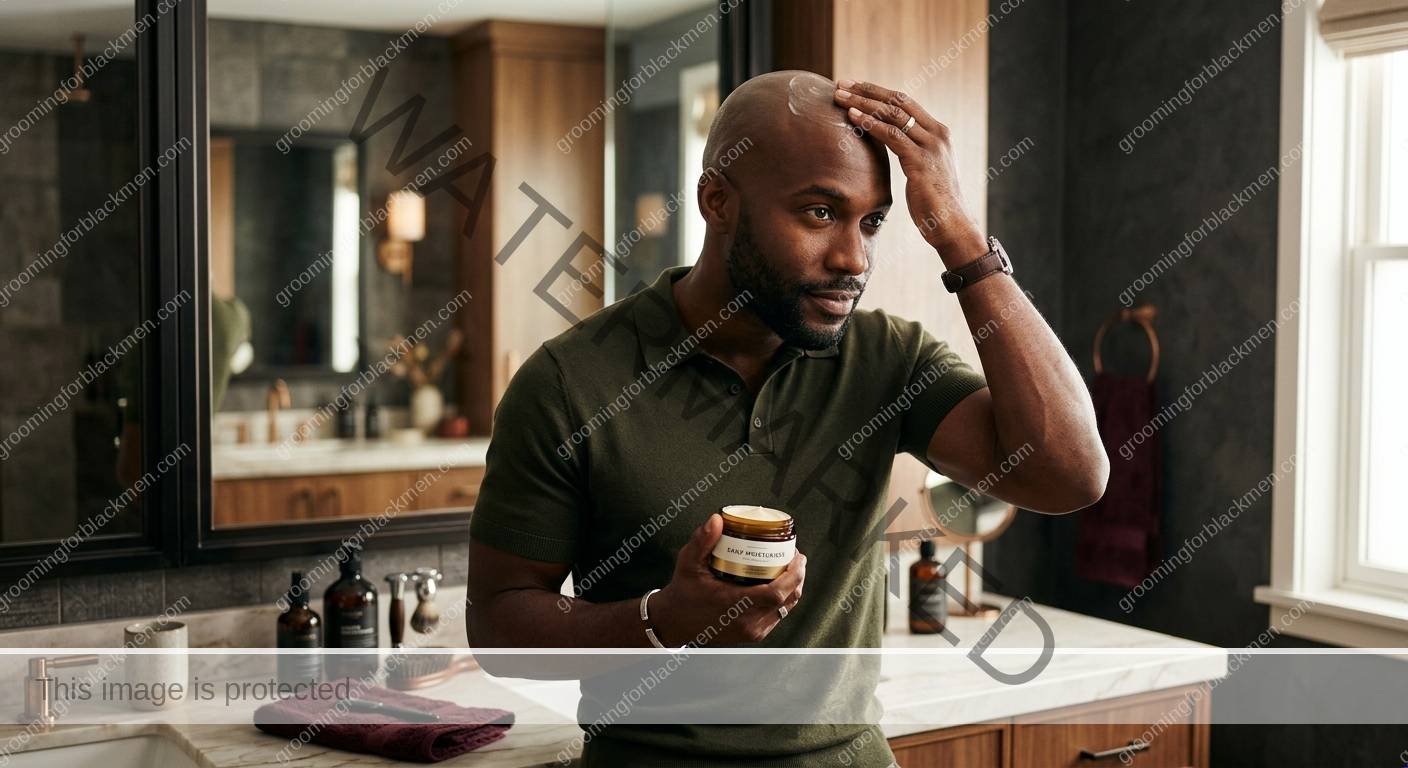
A disciplined bald head routine for Black men is about consistency, not complexity. Here’s a practical, step-by-step guide to keeping your scalp healthy, smooth, and even-toned.
1. Prep the Scalp
- Cleanse gently: Use a mild, non-drying cleanser to remove oil, sweat, and buildup. Avoid bar soaps or harsh detergents that strip moisture. If you work out, sweat a lot, or live in a hot climate, this step is non-negotiable.
- Soften hair and skin: Shave after a warm shower or apply a warm, damp towel to your scalp for a few minutes. This opens pores and softens coarse hair for a smoother shave. If your hair is especially thick or curly, a pre-shave oil (lightweight, non-comedogenic) can help reduce friction.
2. Choose the Right Shaving Method
- Manual razor: Go for a fresh, sharp blade. Use short, gentle strokes with the grain (in the direction your hair grows). Don’t press too hard. Rinse the blade after every pass to avoid clogging and dragging.
- Electric shaver: Modern rotary or foil shavers designed for coarse hair can give a close, comfortable shave with less risk of nicks and bumps. Clean your shaver after every use. If you’re new to electric, give your scalp a week or two to adjust.
- Clippers: If you prefer a close buzz rather than a completely smooth scalp, use clippers with no guard for a low-maintenance look with less risk of irritation. Clippers are also a good option if you’re dealing with active bumps or irritation and need to let your scalp recover.
3. Use a Protective Shave Product
- Choose a shave gel, cream, or butter that cushions the blade and hydrates skin. Avoid products with heavy alcohol content or strong fragrances. For sensitive skin, look for formulas with aloe, oat, or shea butter.
- Apply a thin, even layer—don’t overload your scalp, as too much product can clog blades and obscure your view.
4. Post-Shave Care
- Rinse with cool water: This calms the skin and helps close pores. Avoid hot water, which can increase irritation.
- Pat dry—don’t rub: Use a clean towel and gentle pressure. Rubbing can irritate freshly shaved skin and trigger flakes or redness.
- Moisturize: Apply a fragrance-free, non-comedogenic moisturizer designed for scalp skin. Look for ingredients like shea butter, aloe, or ceramides. If your scalp feels tight or ashy, reapply as needed.
5. Daily Maintenance
- Cleanse daily: Even if you don’t shave every day, wash your scalp to remove sweat and oil. This prevents buildup that can clog follicles and trigger bumps.
- Moisturize morning and night: A bald scalp loses moisture quickly. Consistent hydration keeps your skin even and comfortable. In dry climates or winter, you may need a richer formula.
- Apply sunscreen: Every morning, use a broad-spectrum SPF 30 or higher. Reapply if you’re outside for extended periods. This is non-negotiable for preventing burns and hyperpigmentation. Choose a sunscreen that blends well on brown skin and doesn’t leave a heavy cast.
6. Weekly and As-Needed Care
- Exfoliate gently: Once a week, use a mild exfoliant (chemical, not harsh scrubs) to prevent buildup and ingrown hairs. Avoid overdoing it—once a week is enough. Look for products with lactic acid or salicylic acid, not gritty scrubs.
- Check for bumps or irritation: If you notice persistent bumps, spreading redness, or painful spots, pause shaving and consult a qualified clinician. Don’t try to “dig out” ingrowns—this can cause scarring and dark spots.
Real-Life Scenarios: Adapting Your Routine
Every scalp is different. Here’s how to adapt your routine to real-world situations:
- Active lifestyle: If you sweat heavily or wear hats/helmets, cleanse your scalp after workouts and reapply moisturizer. Consider a water-resistant sunscreen for outdoor activities.
- Travel: Dry airplane air or new climates can dry out your scalp. Bring travel-sized moisturizer and sunscreen. If you forget your usual products, opt for fragrance-free, gentle options over hotel bar soaps or harsh lotions.
- Busy mornings: If you’re short on time, prioritize cleansing, moisturizing, and sunscreen. Shave the night before if needed, but never skip sun protection.
- Transitioning to bald: If you’re new to shaving your head, expect a short adjustment period. Your scalp may be more sensitive at first. Start slow, use gentle products, and don’t chase perfection on day one.
Product and Tool Criteria: What to Look For
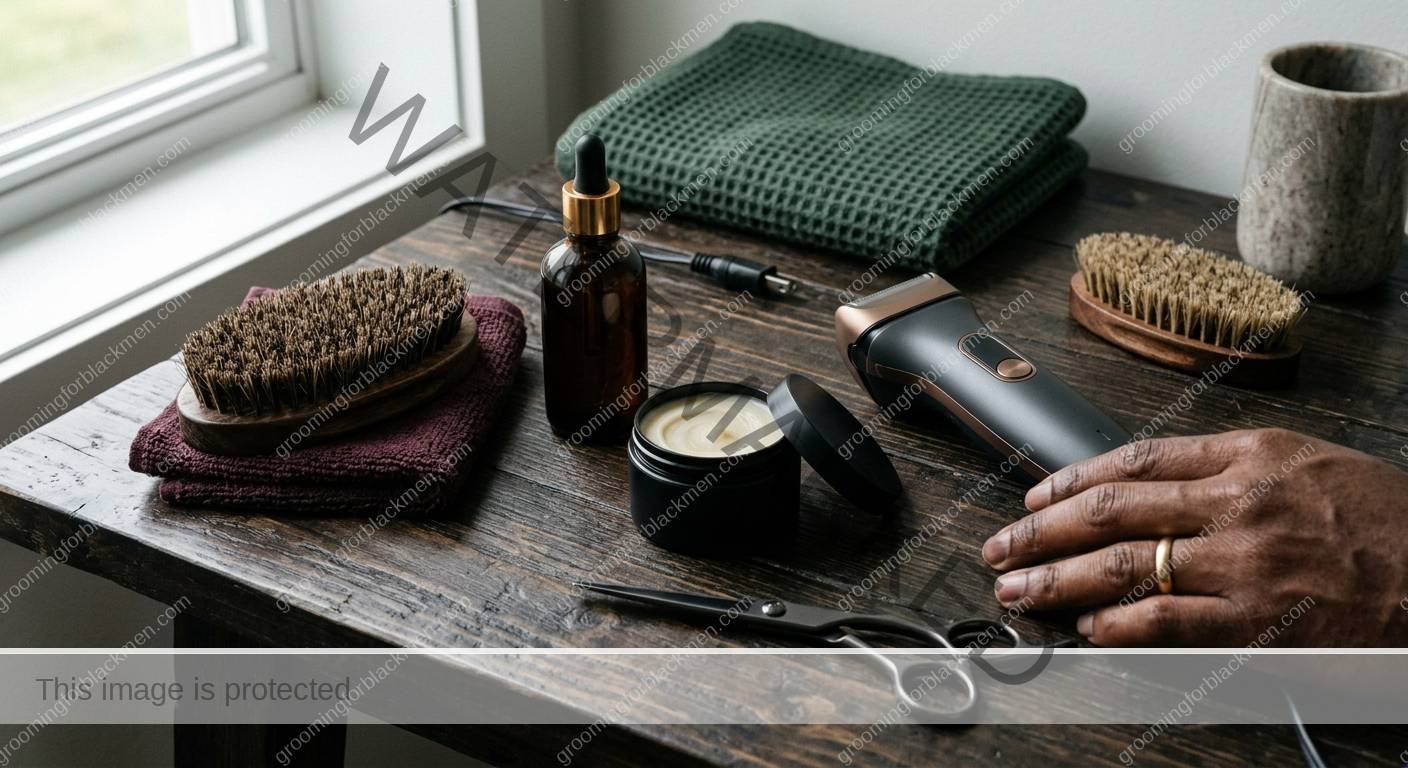
Choosing the right products and tools is crucial for bald head care, especially for Black men with coarse or curly hair. Here’s what to look for—and what to avoid.
Moisturizers
- Hydrating but not greasy: Look for lightweight creams or lotions with shea butter, aloe, or ceramides. Avoid heavy oils that can clog pores and attract dust or dirt.
- Fragrance-free or low fragrance: Strong scents can irritate sensitive scalp skin. If you want a scent, opt for naturally derived, subtle options.
- Non-comedogenic: Won’t clog pores or trigger breakouts. This is especially important if you’re prone to scalp acne or folliculitis.
GFBM may earn a small commission from qualifying purchases, but product examples are included to clarify criteria, not to promise results.
Sunscreen
- SPF 30 or higher: Broad-spectrum protection is a must. Don’t settle for less, even if you rarely burn.
- Non-greasy, blends well: Choose formulas that don’t leave a heavy white cast. Gel or lotion textures often work best for brown skin. Matte finishes help avoid shine.
- Water-resistant: Especially important if you sweat or are active outdoors. Reapply after swimming or heavy sweating.
Shavers and Clippers
- Designed for coarse hair: Look for electric head shavers or clippers that handle curly, thick hair without tugging or pulling. Adjustable settings can help you control closeness and comfort.
- Easy to clean: Removable heads and washable parts reduce bacteria buildup. Clean tools last longer and protect your skin.
- Quality blades: Sharp, durable blades minimize irritation and give a smoother finish. Replace blades or foils regularly—don’t wait until you feel tugging or see rust.
What to Avoid
- Alcohol-heavy aftershaves: These dry out the scalp and can sting freshly shaved skin.
- Undiluted essential oils: Potent oils can irritate and even burn scalp skin, especially after shaving.
- Harsh scrubs or rough exfoliating gloves: These can create microtears and worsen irritation.
- Products with heavy fragrance or dyes: These add no benefit and increase the risk of sensitivity.
- Old, dull blades or dirty tools: These introduce bacteria and increase the risk of nicks, bumps, and infection.
Troubleshooting and When to Get Help

Even with a disciplined routine, issues can pop up. Here’s how to handle common problems—and when it’s time to call in a pro.
Razor Bumps and Ingrown Hairs
- Pause shaving until irritation calms down. Let your scalp recover before resuming your routine.
- Apply a gentle, alcohol-free moisturizer. Look for calming ingredients like aloe or oat extract.
- Don’t dig or tweeze ingrown hairs—this can cause infection and scarring. If you see a visible loop or hair above the surface, a sterile, gentle approach may help, but don’t force it.
- If bumps are persistent, painful, or spreading, see a dermatologist for tailored advice. Chronic razor bumps may require prescription solutions or a change in shaving method.
Dryness and Flaking
- Increase moisturizing frequency—morning and night is standard, but add a midday touch-up if needed.
- Switch to a richer, fragrance-free moisturizer if needed. Shea butter and ceramides work well for most men.
- Limit hot showers and harsh cleansers. Tepid water and gentle cleansers protect your scalp’s barrier.
Uneven Tone or Dark Spots
- Be consistent with sunscreen every day. Sun exposure is a major trigger for hyperpigmentation.
- Use gentle, non-irritating products—avoid harsh scrubs or peels. Over-exfoliating can make dark spots worse.
- For persistent discoloration, consult a dermatologist for safe options. Prescription creams or professional treatments may be needed for stubborn spots.
Redness, Pain, or Infection
- If you notice spreading redness, pain, pus, or scabbing, stop shaving and see a qualified clinician. These signs could indicate infection or folliculitis.
- Don’t self-treat with harsh chemicals or home remedies. Professional care is safer and more effective.
General Tips
- Clean all tools after every use to prevent bacteria buildup. Use alcohol or a disinfectant spray on blades and shaver heads.
- Replace blades or shaver heads regularly. Dull tools cause more trauma to the scalp.
- Stick to a consistent routine—don’t skip steps when you’re in a rush. Discipline is the foundation of healthy bald head care.
Frequently Asked Questions
How often should I shave my bald head
It depends on your hair growth and personal preference. Most Black men find that shaving every 1-3 days keeps the scalp smooth without excessive irritation. If you’re prone to bumps, give your skin a day or two between shaves to recover. If you prefer a shadow or stubble, clippers every few days may be your best bet.
What’s the best way to prevent razor bumps on a bald head
Prep your scalp with warmth, use a sharp blade or quality electric shaver, shave with the grain, and apply a gentle, hydrating moisturizer after. Avoid digging at bumps or using harsh aftershaves. If bumps persist, consult a dermatologist. For more, see our Razor Bump Prevention Guide.
Do I really need sunscreen on my bald head if I have dark skin
Yes. While melanin offers some protection, a bald scalp is much more exposed and can burn or develop dark spots. Use a broad-spectrum SPF 30 or higher daily, even on cloudy days. For more on sun protection, see our Hair & Scalp Health Guide.
What kind of moisturizer works best for a bald scalp
Look for lightweight, non-greasy moisturizers with ingredients like shea butter, aloe, or ceramides. Avoid heavy oils and strong fragrances. Apply morning and night for best results. If you’re dealing with flakes, a richer cream may help.
How can I even out the tone of my scalp
Consistent sun protection and gentle moisturizing are key. Avoid harsh scrubs or peels. If you have persistent dark spots or uneven tone, see a dermatologist for safe, effective options. For more strategies, check our Scalp Hyperpigmentation Guide.
Is it better to use a razor, electric shaver, or clippers for a bald head
It depends on your skin and hair type. Razors give the closest shave but can increase the risk of bumps for coarse hair. Electric shavers designed for Black men are a good balance of closeness and comfort. Clippers are lowest risk but leave a slight shadow. Choose what works best for your skin and routine. For more, see our Best Head Shavers Guide.
What should I do if I get a painful or infected bump
Stop shaving the area and avoid picking or digging at the bump. Apply a gentle moisturizer and keep the area clean. If the bump is painful, spreading, or not improving, see a dermatologist or qualified clinician for proper care.
What to Do Next
Bald head care for Black men is about discipline, consistency, and respect for your skin. Build a routine that fits your lifestyle and stick with it. Start with the basics: gentle cleansing, quality shaving, daily moisturizing, and non-negotiable sun protection. Upgrade your tools and products as needed, but don’t chase hype or miracle claims—focus on what works for your skin and your standards.
For more on hair and scalp health, see our Hair & Scalp Health Guide. If you’re interested in waves, check out our 360 Waves Guide, Wave Brush Selection Guide, and Durag vs Wave Cap Guide. For troubleshooting scalp or wave issues, visit our Waves Troubleshooting Guide.
Stay sharp, stay consistent, and take pride in your routine. Your scalp deserves it.