
Receding Hairline Styling for Black Men: Practical Grooming Guide
There’s no need to hide from a receding hairline. Black men with rich brown skin and coarse, curly hair deserve grooming advice that’s direct, practical, and rooted in real experience. If your hairline is moving back, you’re not alone. Genetics, age, and even grooming habits play a role. But a receding hairline doesn’t mean your style options are limited—it means your approach needs to be intentional.
This guide is built for Black men who want to look sharp and feel confident, without hype, shame, or empty promises. We’ll cover what actually works for receding hairline styling for Black men, practical grooming routines, and how to keep your hair and scalp healthy. You’ll find clear, premium advice—no miracle claims, no colorist language, and no influencer drama. Just a grounded, disciplined approach to looking your best at every stage of your hair journey.
For a deeper dive into hair and scalp health for Black men, you’ll find more resources on our parent pillar. This article focuses on styling choices and routines that respect your hair’s unique texture and your personal style, while keeping things realistic and culturally aware.
Real-Life Hair and Waves Scenarios for Receding Hairline Styling for Black Men
A waves or scalp routine has to work after the bathroom mirror, not just during the first ten minutes after brushing. Black men often have to balance dense curls, scalp comfort, haircut timing, durag habits, sweat, product buildup, and the pressure to keep the pattern looking clean every day. That is why receding hairline styling for black men needs a practical system instead of random brushing, heavy product, or panic changes whenever the pattern looks uneven.
Start by separating three questions. First, what is the hair doing It may be dry, overcoated, frizzy, compressed unevenly, or not trained enough yet. Second, what is the scalp doing Tightness, flakes, itching, or soreness usually means the routine needs gentler cleansing, cleaner tools, better rinsing, or less buildup. Third, what is your schedule doing If you work out, wear hats, sweat heavily, or sleep without consistent compression, your routine has to account for that reality.
The goal is not to force the hair into a pattern overnight. The goal is to create steady conditions: clean scalp, moisturized hair, consistent brushing direction, reasonable compression, and enough patience to let the curl pattern train over time. For many Black men, the mistake is not lack of effort. It is too much inconsistent effort: changing brushes every few days, adding more product when the scalp needs washing, or brushing aggressively until the scalp feels tender.
Tools matter, but standards matter more. A wave brush should match your hair length and texture. A durag or wave cap should hold the hair down without leaving painful lines. Wash day should clean the scalp without stripping it so hard that the hair feels brittle. Product should support moisture and control, not bury the scalp under a waxy layer. When those basics are consistent, the routine starts to feel less like guesswork.
How to Audit Waves and Scalp Progress Without Overreacting
Audit the routine weekly, not every hour. Look at whether the pattern is becoming more consistent, whether the scalp feels calmer, whether flakes or itch are improving, and whether the hair still has movement after product. A clean routine should not make the scalp feel trapped. If the hair only looks controlled because it is stiff, greasy, or coated, the routine may be hiding a problem instead of solving it.
If progress stalls, change one variable at a time. Adjust brush firmness, brushing direction, wash frequency, compression time, or product amount separately so you can tell what helped. If the scalp becomes painful, inflamed, bleeding, or persistently flaky, pause aggressive styling and consider a dermatologist or qualified clinician. A polished look should not require ignoring discomfort. The best routine is the one that trains the hair while protecting the scalp underneath.
Real-Life Hair and Waves Scenarios for Receding Hairline Styling for Black Men
A waves or scalp routine has to work after the bathroom mirror, not just during the first ten minutes after brushing. Black men often have to balance dense curls, scalp comfort, haircut timing, durag habits, sweat, product buildup, and the pressure to keep the pattern looking clean every day. That is why receding hairline styling for black men needs a practical system instead of random brushing, heavy product, or panic changes whenever the pattern looks uneven.
Start by separating three questions. First, what is the hair doing It may be dry, overcoated, frizzy, compressed unevenly, or not trained enough yet. Second, what is the scalp doing Tightness, flakes, itching, or soreness usually means the routine needs gentler cleansing, cleaner tools, better rinsing, or less buildup. Third, what is your schedule doing If you work out, wear hats, sweat heavily, or sleep without consistent compression, your routine has to account for that reality.
The goal is not to force the hair into a pattern overnight. The goal is to create steady conditions: clean scalp, moisturized hair, consistent brushing direction, reasonable compression, and enough patience to let the curl pattern train over time. For many Black men, the mistake is not lack of effort. It is too much inconsistent effort: changing brushes every few days, adding more product when the scalp needs washing, or brushing aggressively until the scalp feels tender.
Tools matter, but standards matter more. A wave brush should match your hair length and texture. A durag or wave cap should hold the hair down without leaving painful lines. Wash day should clean the scalp without stripping it so hard that the hair feels brittle. Product should support moisture and control, not bury the scalp under a waxy layer. When those basics are consistent, the routine starts to feel less like guesswork.
How to Audit Waves and Scalp Progress Without Overreacting
Audit the routine weekly, not every hour. Look at whether the pattern is becoming more consistent, whether the scalp feels calmer, whether flakes or itch are improving, and whether the hair still has movement after product. A clean routine should not make the scalp feel trapped. If the hair only looks controlled because it is stiff, greasy, or coated, the routine may be hiding a problem instead of solving it.
If progress stalls, change one variable at a time. Adjust brush firmness, brushing direction, wash frequency, compression time, or product amount separately so you can tell what helped. If the scalp becomes painful, inflamed, bleeding, or persistently flaky, pause aggressive styling and consider a dermatologist or qualified clinician. A polished look should not require ignoring discomfort. The best routine is the one that trains the hair while protecting the scalp underneath.
Why This Matters for Black Men
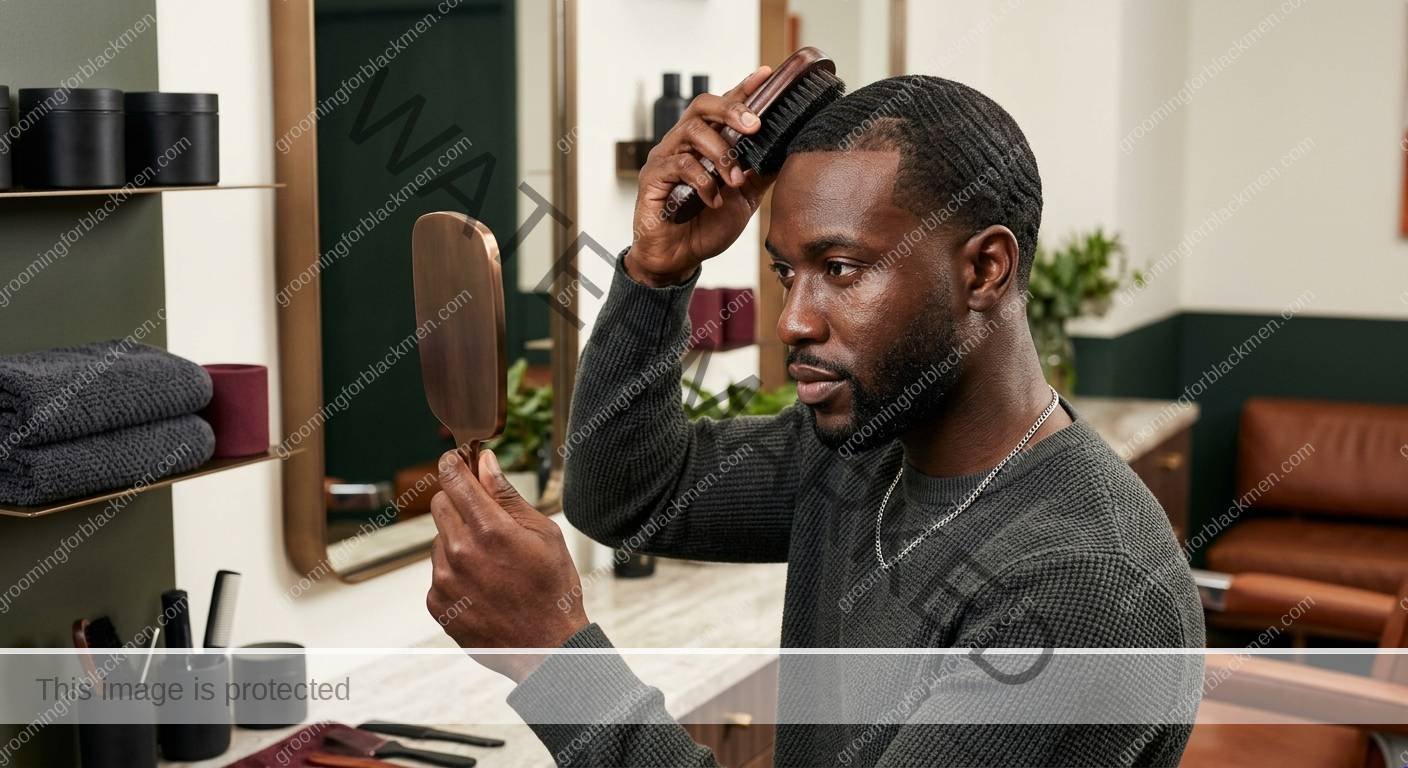
Black men’s hair is distinct. Tight curls, coils, and waves mean that receding hairlines show up differently compared to straight or wavy hair. The contrast between your hairline and skin tone can make changes more noticeable, especially with certain cuts or styles. That’s why receding hairline styling for Black men isn’t just about hiding—it’s about adapting with confidence and understanding what works for your hair and scalp.
There’s also a cultural dimension. Hairlines are a point of pride, and edge-ups, fades, and waves are all part of the Black grooming tradition. When your hairline starts to shift, it can feel like you’re losing a piece of that tradition. But with the right approach, you can own your look and keep your grooming routine sharp, disciplined, and authentic.
Healthy hair and scalp practices matter, too. Overly tight styles, harsh chemicals, and aggressive brushing can accelerate hairline recession. The right routine protects what you have and makes the most of your natural texture. For more on keeping your scalp in top shape, see our hair and scalp health guide.
What Usually Goes Wrong

Most mistakes with receding hairline styling for Black men come from trying to force old routines to work, or chasing quick fixes. Here’s what to watch out for:
- Overly sharp edge-ups: Constantly pushing your edge-up further back can make the recession look worse and stress your hairline.
- Heavy product buildup: Gels, pomades, and waxes can clog pores and weigh down thinning hair, making the hairline look thinner.
- Too-tight braids or twists: Styles that pull at the hairline can cause traction alopecia—hair loss from tension.
- Ignoring scalp health: Dryness, flaking, or irritation can make receding areas more visible and uncomfortable.
- Trying to cover up with hats or scarves all the time: This can create breakage and doesn’t address the underlying issue.
- Falling for miracle growth products: There’s no shortcut to reversing a receding hairline. Focus on realistic, healthy grooming instead.
Trying to “fix” a receding hairline with harsh chemicals, aggressive brushing, or DIY hacks usually backfires. Instead, adapt your style and routine to work with your hair’s natural strengths.
What to Do Instead
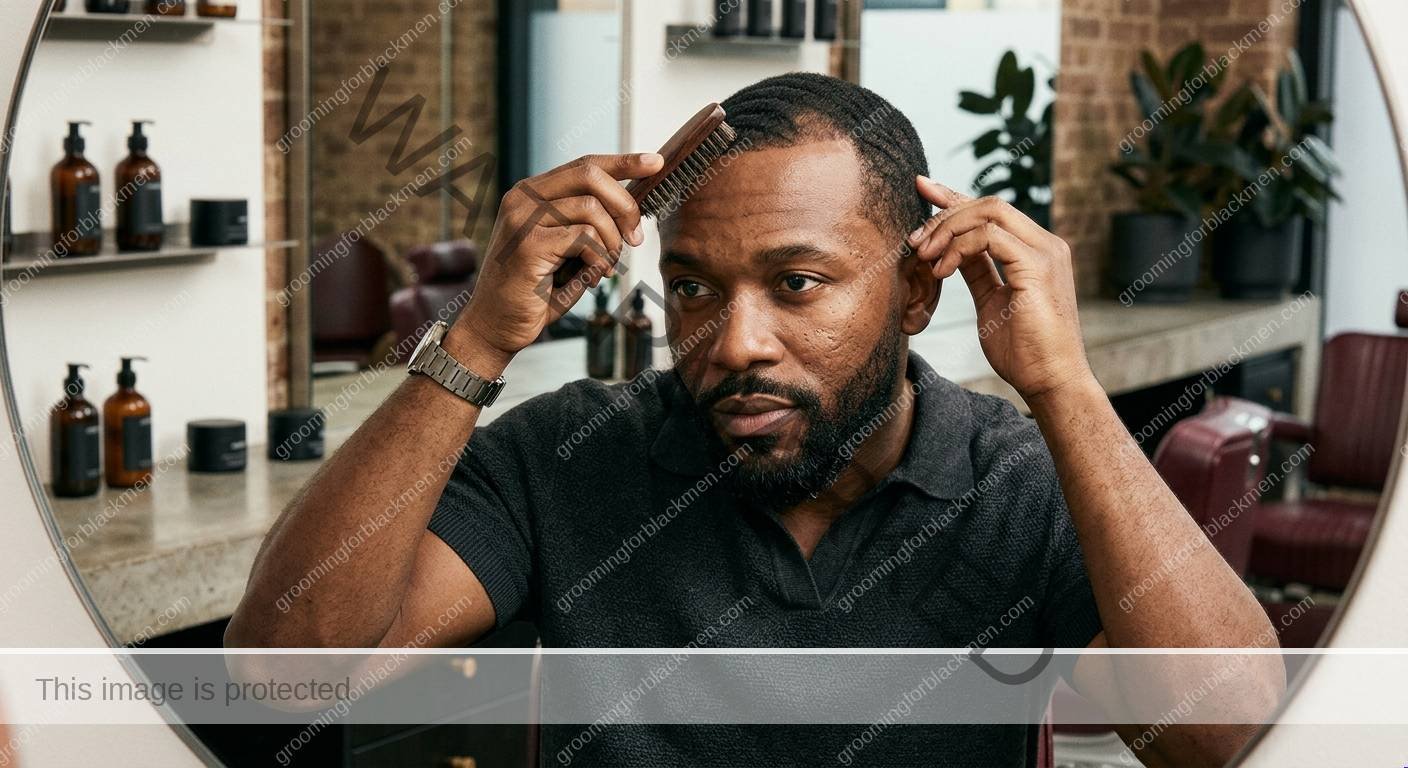
Receding hairline styling for Black men works best when you play to your strengths—texture, shape, and confidence. Here’s a disciplined, practical approach:
1. Choose the Right Cut
- Low fades: A low fade blends the sides and back, drawing attention away from the hairline and toward your face. Ask your barber for a fade that suits your head shape and hair density.
- Short, even cuts: Keeping hair short and uniform minimizes contrast at the hairline and looks clean. A classic Caesar or even all-over brush cut works well.
- 360 waves: If you still have good coverage on top, waves can help mask recession and showcase your hair’s natural pattern. Learn more in our 360 waves guide.
- Buzz cuts: Going very short is a bold move that puts confidence front and center. It’s low-maintenance and highlights strong features.
- Beard balance: A well-groomed beard can shift focus from your hairline to your jawline. Keep facial hair neat and shaped for a premium look.
As an affiliate site, GFBM may earn from qualifying purchases through product links.
When choosing a cut, consider your hair’s density, curl pattern, and how much coverage you have at the temples and crown. If your hairline is receding unevenly, ask your barber for a cut that tapers or blends the thinner areas rather than drawing a harsh line. A skilled barber can use the natural flow of your hair to create a look that’s intentional and sharp, not forced.
2. Edge-Up Discipline
- Don’t chase your old hairline. Ask your barber to keep edge-ups natural, following your current growth instead of pushing too far forward.
- Use edge control for men to keep edges neat without over-manipulating. GFBM may earn a small commission from qualifying purchases, but product examples are included to clarify criteria, not to promise results.
- Limit edge-ups to every 2-3 weeks to reduce stress on the hairline.
Edge-ups are a signature of Black men’s grooming, but when your hairline starts to move, it’s time to adjust your approach. Instead of forcing a straight, sharp line, let your natural shape guide your edge-up. This keeps your look authentic and reduces unnecessary tension on fragile hair. If you do your own edge-ups at home, use a trimmer with a guard and avoid pressing too hard. For more on maintaining your grooming tools, see our wave brush selection guide.
3. Texture Matters
- Embrace your natural curl or wave pattern. Avoid chemical relaxers or texturizers, which can weaken hair at the root.
- Use a soft wave brush to style without excessive tension. This keeps hair healthy and helps create uniform waves or curls.
- Apply a matte styling cream for Black men for hold and definition without shine or buildup.
Texture is your ally. Coarse, curly hair can be shaped and styled to create the illusion of fullness, even as the hairline recedes. If you’re working with waves, keep your brushing routine gentle and consistent. For those with tighter curls, a twist sponge or finger coils can add volume and definition without stressing the hairline. Avoid heavy gels or waxes that can weigh hair down and make thinning areas more obvious.
4. Scalp Care Routine
- Wash with a gentle, sulfate-free shampoo 1-2 times per week to avoid stripping natural oils.
- Moisturize your scalp with a lightweight, non-comedogenic oil or leave-in conditioner.
- Massage gently to boost circulation—never scratch or scrub aggressively.
- Protect your hair at night with a satin durag or wave cap. For differences, see our durag vs wave cap guide.
Healthy scalp equals healthy hair. If your scalp is dry, flaky, or irritated, your hairline will look more pronounced. Stick to products formulated for textured hair and avoid anything with harsh sulfates or drying alcohols. A regular scalp massage—using just your fingertips—can help stimulate blood flow and support healthy growth. At night, a satin durag or wave cap reduces friction and protects fragile edges. For more on scalp care, check our hair and scalp health guide.
5. Confidence Is Key
- Own your look. A receding hairline is nothing to hide or be ashamed of.
- Focus on grooming for Black men that highlights your best features—skin, beard, and personal style.
- Stay disciplined with your routine and adjust as your hair changes.
Confidence is the foundation of every sharp look. Whether you keep your hair short, rock waves, or go for a clean shave, your attitude sets the tone. A disciplined grooming routine, paired with self-respect, always stands out. If you’re growing a beard to balance your look, check out our beard care guide for tips on keeping facial hair healthy and defined.
Product and Tool Criteria
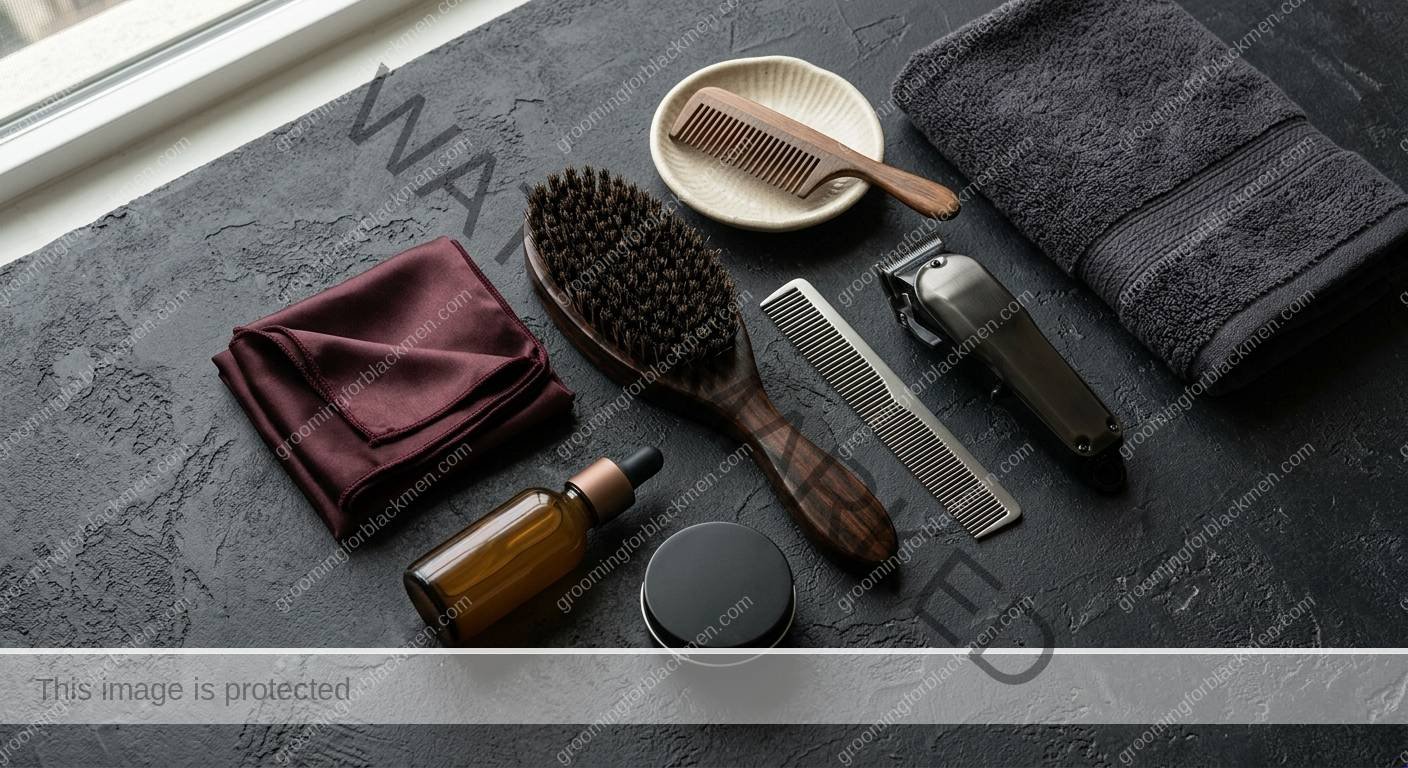
Choosing the right products and tools makes a difference in receding hairline styling for Black men. Here’s what to look for:
- Edge control for men: Should be lightweight, non-flaking, and free of harsh alcohols. Look for products that hold without stiffness or buildup. See edge control for men for examples.
- Matte styling cream: Matte finish avoids drawing attention to thinning areas. Choose creams with natural oils and no heavy waxes. See matte styling cream for Black men for options.
- Soft wave brush: Bristles should be soft to medium—not hard—so you don’t irritate the scalp or pull at the hairline. See soft wave brush for examples.
- Shampoo and conditioner: Sulfate-free, moisturizing, and designed for textured hair. Avoid anything that leaves your scalp dry or itchy.
- Durags or wave caps: Satin or silk materials prevent friction and breakage. For more, check our durag vs wave cap guide.
Remember, these are examples to clarify what to look for. No product can reverse a receding hairline, but the right choices support healthy, sharp styling.
What Makes a Product “Right” for Receding Hairlines
Look for products that match your hair’s needs and your grooming goals. For example, if your scalp is sensitive or prone to irritation, avoid anything with strong fragrances or drying alcohols. If you’re working on waves, pick a brush that glides through your curls without pulling. For edge control, a non-flaking formula keeps your look polished without leaving residue on your hairline. Always check ingredient lists and test new products on a small area before full use.
How to Build a Minimalist Grooming Kit
You don’t need a shelf full of products. For most Black men with a receding hairline, a basic kit includes:
- Soft wave brush or detangling brush
- Matte styling cream or lightweight edge control
- Sulfate-free shampoo and moisturizing conditioner
- Satin durag or wave cap
- Beard trimmer or shaping tool (if you wear facial hair)
Keep your kit clean and replace brushes or caps when they show signs of wear. For more on selecting and maintaining grooming tools, see our wave brush selection guide.
Step-by-Step Routine Logic for Receding Hairlines
Adapting your routine to your hairline’s reality is about discipline and self-awareness. Here’s a practical, stepwise approach:
-
Assess Your Hairline and Density:
- Stand in good light and use a handheld mirror to check your hairline from all angles.
- Notice areas of thinning, patchiness, or uneven growth.
- Decide if you want to blend, mask, or embrace the recession with a bold cut.
-
Choose a Cut That Works for You:
- Discuss your goals and concerns with your barber. Bring photos if needed.
- Ask for a cut that follows your natural hairline and blends thinner areas.
- If you cut your own hair, start with longer guards and work down gradually.
-
Edge-Up with Intention:
- Keep lines soft and natural, not forced or overly sharp.
- Limit edge-ups to every 2-3 weeks, and avoid pushing the line forward.
- Use edge control sparingly to keep edges neat between cuts.
-
Maintain Texture and Moisture:
- Brush or style gently, using a soft wave brush or your fingers.
- Apply matte styling cream or lightweight oil for hold and definition.
- Moisturize your scalp regularly, especially after washing.
-
Protect at Night:
- Wear a satin durag or wave cap to reduce friction and breakage.
- Wash your cap or durag weekly to prevent buildup.
-
Monitor and Adjust:
- Check your hairline and scalp weekly for changes.
- Adjust your cut, products, or routine as needed. Don’t be afraid to try a new style if your hairline shifts.
Real-Life Scenarios and Nuance
Every hairline is different. Here are a few scenarios and how to handle them with discipline and style:
Scenario 1: Early Recession at the Temples
You notice your temples are creeping back, but the center of your hairline is still strong. Opt for a low fade or a tapered cut that follows your natural line. Avoid sharp, straight edge-ups—let your barber round the corners for a softer, more natural look. If you wear waves, keep them uniform and avoid over-brushing at the temples.
Scenario 2: Thinning at the Crown and Hairline
If you’re thinning at both the crown and hairline, a short, even brush cut or a buzz cut can create a balanced look. Pair it with a well-groomed beard to draw attention to your jawline. Keep scalp moisturized and avoid heavy products that settle into thinning areas. For more on beard care, see our beard care guide.
Scenario 3: Patchy or Uneven Recession
Patchiness can be frustrating. Ask your barber for a cut that blends the uneven areas into the rest of your hair. Avoid styles that require a perfectly straight hairline. If you’re self-conscious, a matte styling cream can help add texture and make patchy spots less noticeable. Stay consistent with your scalp care routine to support healthy growth.
Scenario 4: Embracing the Bald Look
Some Black men choose to go fully bald when the recession is advanced. This is a bold, confident move that requires its own routine. Keep your scalp clean, moisturized, and protected from the sun. Use a gentle exfoliating brush once a week to prevent ingrown hairs. If you keep facial hair, keep it sharp and defined for balance.
Scenario 5: Growing Out the Top, Fading the Sides
If you still have density on top, a high-top fade or curly top with faded sides can work. Just be careful not to pull the hairline forward with tight styles or heavy edge-ups. Keep the top moisturized and shaped, and let the fade blend into your natural hairline. For more on maintaining healthy curls, see our hair and scalp health guide.
Troubleshooting and When to Get Help

Even with the best routine, you might hit some snags. Here’s how to handle common issues:
- Itching, flaking, or irritation: Switch to a gentler shampoo and moisturize regularly. If symptoms persist, worsen, or become painful, see a dermatologist.
- Excessive shedding or rapid hair loss: Some shedding is normal, but sudden or patchy loss deserves professional attention.
- Ingrown hairs or bumps at the hairline: Avoid digging or picking. Use a soft brush and keep the area clean. Persistent or painful bumps should be checked by a qualified clinician.
- Breakage at the hairline: Loosen up styles, minimize heat, and avoid harsh chemicals. Moisturize and protect at night.
For more troubleshooting, see our waves troubleshooting guide—many of the same principles apply to receding hairlines. If you notice pain, infection, spreading, scarring, or persistent irritation, consult a dermatologist or qualified clinician for a proper assessment.
Frequently Asked Questions
How can I make a receding hairline less noticeable without shaving my head
Choose low fades, even brush cuts, or 360 waves to blend the hairline naturally. Keep edges soft and avoid sharp, artificial lines. Use matte styling products to reduce shine and draw less attention to thinning areas.
Are there any hairstyles I should avoid with a receding hairline
Avoid styles that pull tightly at the hairline, like cornrows, tight braids, or high ponytails. Skip sharp, high edge-ups that push the line back further. Long, slicked-back styles can also highlight recession.
Does brushing or styling too often make my hairline recede faster
Over-brushing, especially with hard bristles or excessive force, can stress the hairline. Use a soft wave brush and avoid aggressive styling. Stick to gentle, disciplined routines for best results.
Can I still get waves if my hairline is receding
Yes, if you have coverage on top, you can develop waves. Focus on brushing, moisturizing, and using a satin durag at night. For a full routine, see our 360 waves guide.
What’s the best way to keep my scalp healthy as my hairline recedes
Wash with a gentle, sulfate-free shampoo, moisturize regularly, and protect your scalp from friction. Avoid heavy products and harsh chemicals. For more, see our hair and scalp health guide.
Should I use edge control or styling cream on thinning hair
Yes, but choose lightweight, non-flaking products. Edge control can keep edges neat, while matte styling cream adds hold without shine or buildup. Avoid heavy gels or waxes that can weigh hair down.
When should I see a dermatologist about my receding hairline
If you notice pain, infection, spreading, scarring, or persistent irritation, consult a dermatologist or qualified clinician. They can assess your scalp and recommend safe, effective options.
What to Do Next
Receding hairline styling for Black men is about adapting with confidence, discipline, and care. Start by choosing a cut that works for your texture and growth pattern. Keep your edge-ups natural, use products that respect your scalp, and protect your hair at night. Focus on what you can control—healthy routines, sharp grooming, and a look that fits your style.
For more on grooming for Black men, explore our hair and scalp health pillar. If you’re interested in wave styling, check our 360 waves guide and wave brush selection guide. For wash day routines and troubleshooting, see our waves wash day guide and waves troubleshooting guide.
Stay disciplined, stay sharp, and remember—your hairline doesn’t define your confidence. Your grooming routine does.